JenREES 6/11/23

Last week I heard the following repeated themes:
- What are we going to do with dryland crops/pivot corners/endrows?
- I just keep lying awake at nights trying to figure out how to feed livestock. I need to sell cows.
- I’m exhausted and it’s only early June.
- I have no idea how I should be irrigating right now.
- This may sound crazy, but I’m thinking…
For the majority of us, this is unchartered territory for making decisions and seeking to advise. Yes, we’ve had drought before. The extra significance with this year is the fact that, for the majority of us in our lifetimes, we haven’t experienced this lack of subsoil moisture. As I continue to probe fields, non-irrigated subsoil moisture doesn’t often go below 8-10” into the ground and irrigated subsoil moisture doesn’t often go below 20-24”. We all know this; we desperately needed this past weekend’s rains which too many in the area didn’t receive.

With every challenge is opportunity, and for me, the opportunity here is learning. I keep listening to stories from older generations or those out west. Even those out west who experience drought shared that they usually have some subsoil moisture and corn often gets to at least waist tall before dying. Corn dying at ankle to knee high for us is very hard to see.
Consider talking with others. There may not be ‘right’ answers, but instead, making the best decisions we can with the information we have right now. We’re learning together.
Several mentioned trying to keep some armor (residue/plants with roots) on the soil to protect pastures which means getting cattle off earlier in spite of forage being tight. The hardest conversations have been around selling cows because that’s a livelihood and people have built up genetics.
For irrigation, the comment many of us shared was trying to get moisture down into the profile for later in the season as water levels continue to decline and with low capacity wells. Steve Melvin and team wrote a CropWatch article that shares additional thoughts: https://go.unl.edu/80w2.
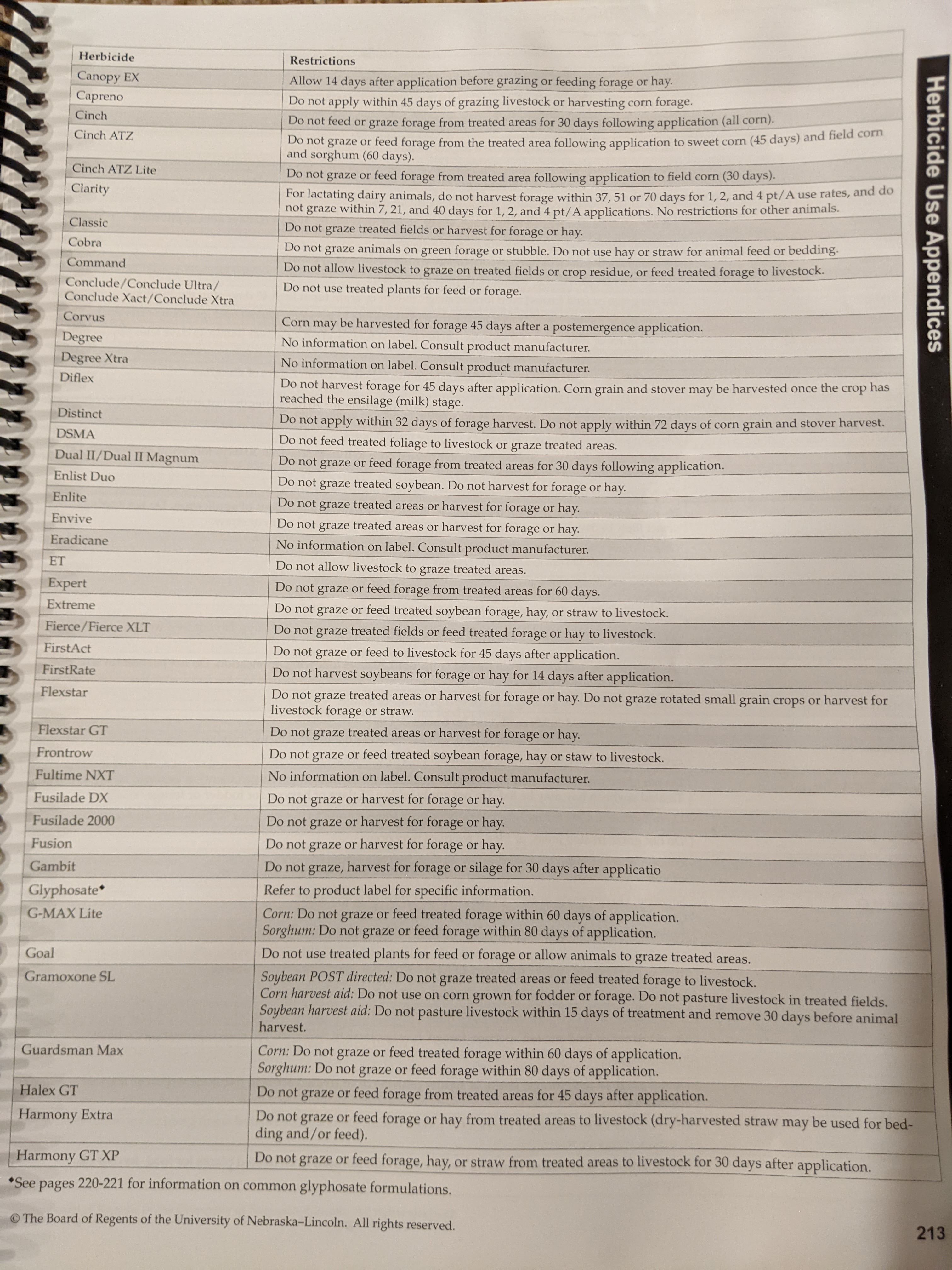
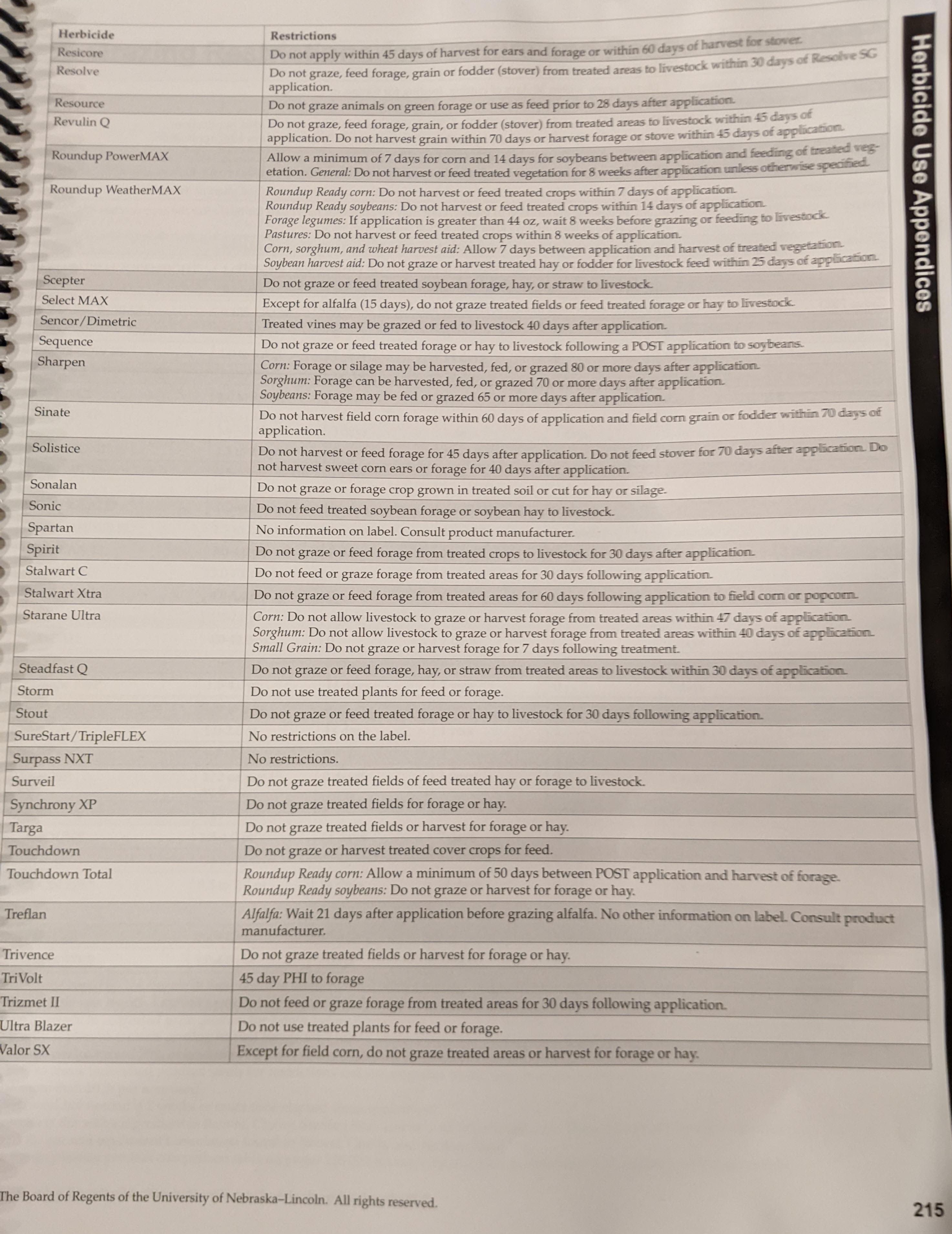
For non-irrigated crops, forage has been on my mind all year. Thus, why I wasn’t recommending full chem loads and side-dress nitrogen applications depending on the individual field situations. My thought has been these non-irrigated crops become opportunities for grazing where that’s applicable. There’s considerations first such as being released by crop insurance, waiting till the crops have died as today’s hybrids and varieties are more resilient than the past, and checking herbicide grazing restrictions (I have pics of those from the UNL Weed Guide on my blog). I’ve been talking to a lot of people about how to graze corn and soybeans or other options and will share in future weeks if we need to go there.
For those considering planting an annual forage species (sorghum or millet species) after non-irrigated corn and soybean (that died from drought), we need 4-6” of rain to germinate seeds and for some subsoil moisture as that profile would’ve been completely depleted from the previous crop. We may not have enough moisture till closer to August. In the meantime, would recommend checking herbicide plant-back restrictions and that you consider the opportunity for annual forage insurance. There’s upcoming workshops (Beatrice & Hastings on June 20) where you can learn more: https://go.unl.edu/ubyt.
By the end of last week, I realized I was doing a poor job of encouraging people and finding positives in situations. I needed a change in perspective. For me, I have nothing without my faith and renewing my hope in a much larger eternal perspective was necessary. It helped me to get away to a Christian concert festival with friends and family and to hear an encouraging sermon at church. What may help you may differ, but I’d encourage you to take some time to de-stress and seek encouragement through positive activities. Whether through your faith, spending time in nature, music, exercise, journaling, reading, woodworking, seeing friends, etc., be intentional to take time away with positive activities. Also rest. Brandy VanDeWalle also shared thoughts on drought’s impacts on people in her blog: https://vandewalleviews.com/2023/06/09/drought-impacts-on-people/.




Posted on June 11, 2023, in Drought, JenREES Columns and tagged drought, drought 2023. Bookmark the permalink. 1 Comment.


 JenResources
Reblogged this on Views from VanDeWalle and commented:
Here are some tips on dealing with the drought from my colleague, Jenny Rees.