JenREES 6/25/23
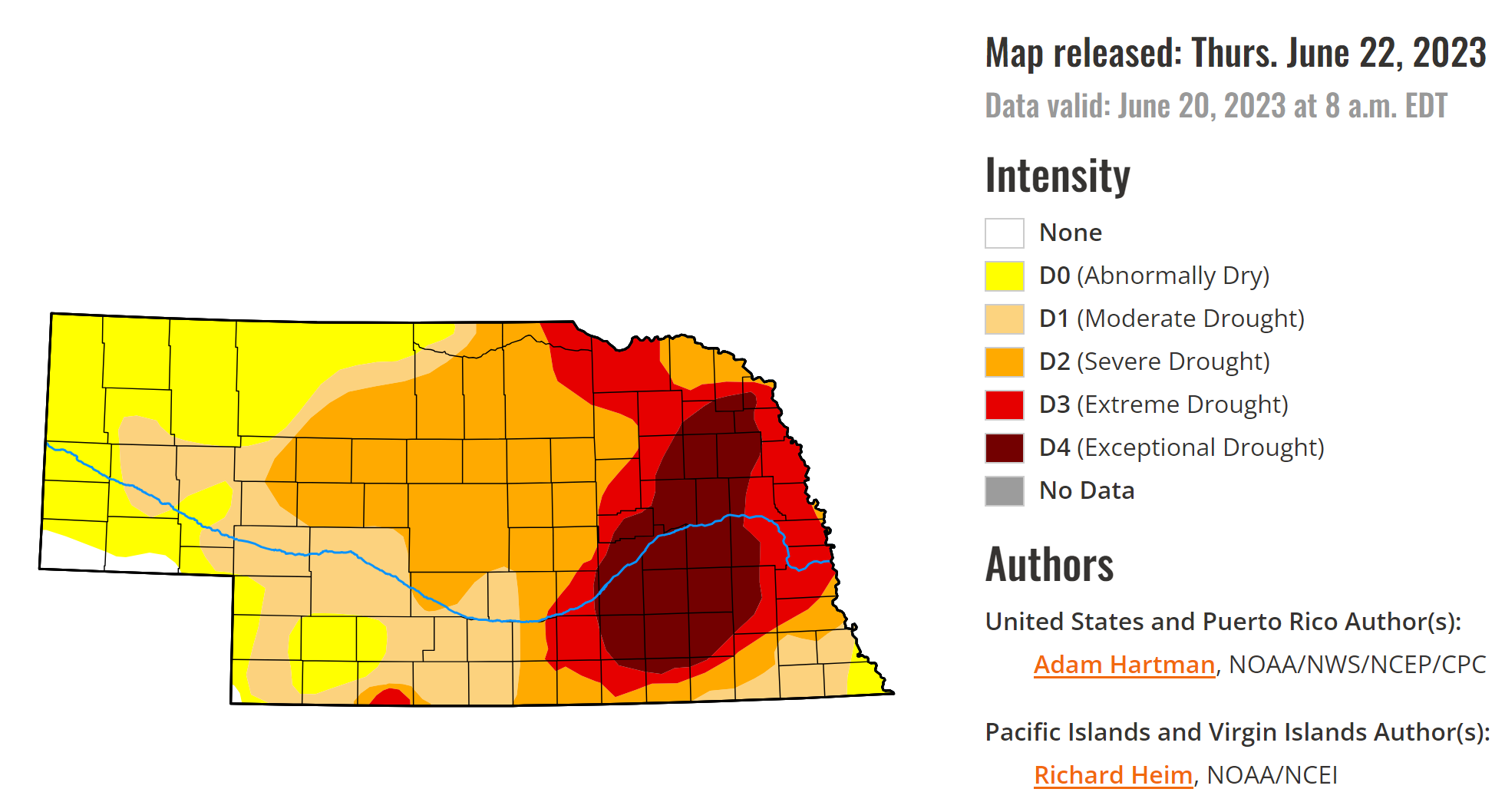
Crop Updates: Irrigated crops are moving along with corn approaching the late vegetative stages and many beans in beginning to full flowering. Spidermites in stressed fields; no point doing anything. Small grasshoppers and Japanese beetle adults starting to emerge…sorry everyone, I groaned too!
Soy Problems: Past 10 days received calls and texts from a large area regarding soybean often having yellowing to some extent, growing slowly, some with stacked internodes and some dying. Chem may not have broken down with the dry conditions from last year’s corn herbicides. Most situations had some type of Group 27 chemistry and yellowing of newer trifoliates and buds could be seen. In irrigated fields, the soybeans are growing out of it with water and time. In non-irrigated fields, the drought isn’t helping with plant metabolism and breakdown of herbicide.
Also, a number of reports of soybean plants dying. Work through each situation to determine if herbicide carryover, drought, seedling disease, other issues, or a combination of factors are the issue. Many times I’m seeing a combination of factors. Seeing some plants in non-irrigated situations have a red lesion on the stem with rotted roots, which can be an indication of Rhizoctonia root rot (disease that occurs with stress, particularly herbicide injury and drought). Some soybeans dying in irrigated situations were replanted beans that didn’t have a seed treatment fungicide on them and they have characteristic phytophthora root rot (dark lesion from soil line up and rotted roots), sometimes also in combination with herbicide carryover symptoms. Many have mentioned beans are short and not growing quickly. Dry conditions and often also Group 15 products can result in slowed growth as the beans are trying to metabolize those products. Most are aware of the heart-shape/club shape as normal to leaves of beans from metabolizing Group 15 products.
Crop Insurance Question: Several asked about gravity irrigated soybeans that are too small to ridge in gravity irrigated fields and pivot corners if they could just change the designation to non-irrigated beans. Another consideration, some wells are sucking air and they’re concerned about keeping pivots going. In talking with someone from crop insurance, he said that designations are based on whatever the intent at planting was and that can’t be changed. However, they are receiving the same questions and being unable to ridge beans can be an insurable cause of loss, so please talk with your crop insurance agent about your specific situation.
Irrigating Beans: Glad to see moisture has been pushed into the third foot in more corn fields. Typically we’d avoid irrigating soybean at flowering to avoid disease onset such as sudden death syndrome and white mold, but this year depends on your current soil moisture status, if it’s canopied or not (less favorable for disease if it isn’t yet), and the disease history of the particular field. If there’s no subsoil in bean fields with minimal canopy cover, I’ve been saying to irrigate deeply and less frequently during soybean flowering.
ET (Evaporation from the soil surface and Transpiration of water through the leaves) has been higher in our area this year. Factors that contribute to ET include humidity, temperature, wind, cloud cover. We’ve had low humidity (unusual for us-thus lack of rainfall), intense sun with minimal cloud cover, and a few days with some wind. Knowing ET helps one understand how the crop uses water to better schedule irrigations. UBBNRD sends out ET info. from the York 2W mesonet station; please let Terry Julesgard know if you’d like to receive it. Otherwise ET info. at: https://cropwatch.unl.edu/gdd-etdata.
Forage insurance webinar on June 29th at Noon. Info. at: https://go.unl.edu/k6s7.
Weed Science Field Day June 28th at South Central Ag Lab near Clay Center where a number of corn and soybean herbicide programs are showcased. Herbicide programs with planting green, interseeding cover crops also shown. 9 a.m.-1 p.m. (Reg. at 8:30 a.m.). RSVP: https://agronomy.unl.edu/fieldday
Graze Master Event June 28-29th in Seward County featuring tours of area producers’ operations and many speakers. Info. and RSVP: https://www.grazemastergroup.com/events.
Tomato leaves curling: Lots of reasons. Lower leaves curling often due to heat/water stress. Upper leaves curling could be virus, insects, or herbicide damage. Look at all plants in the garden. If only tomato plants impacted, and only certain ones with upper leaves, most likely a virus-remove those plants. If upper leaves curling due to growth regulator (2,4-D/dicamba) injury, I say remove any current fruit on the plants and just keep watering to dilute it in the plant. If new growth in several weeks looks normal, you can eat new fruit. More info. from Backyard Farmer video: https://youtu.be/gsaWvzghaYQ.
Please take care of yourselves! Recent webinar recording about stress: https://go.unl.edu/5oje Nebraska Rural Response Hotline: 1-800-464-0258.


Posted on June 25, 2023, in Crop Updates, Drought, JenREES Columns and tagged drought 2023, drought and irrigation, herbicide carryover, soybean problems. Bookmark the permalink. Leave a comment.


 JenResources
Leave a comment
Comments 0