Fruit Flies and Fungus Gnats
Hope you had a blessed Thanksgiving! For whatever reason, I’ve received a number of questions about “tiny flies” in homes “flying around their faces” in the past 10 days. All had different situations but each situation led to the culprit being either fruit flies or fungus gnats. So, sharing on the differences between the two insects and some strategies for management should you or someone you know also end up dealing with them. The first key is identification with the second being locating where the pest is breeding and eliminating that source before seeking to trap and eliminate them.
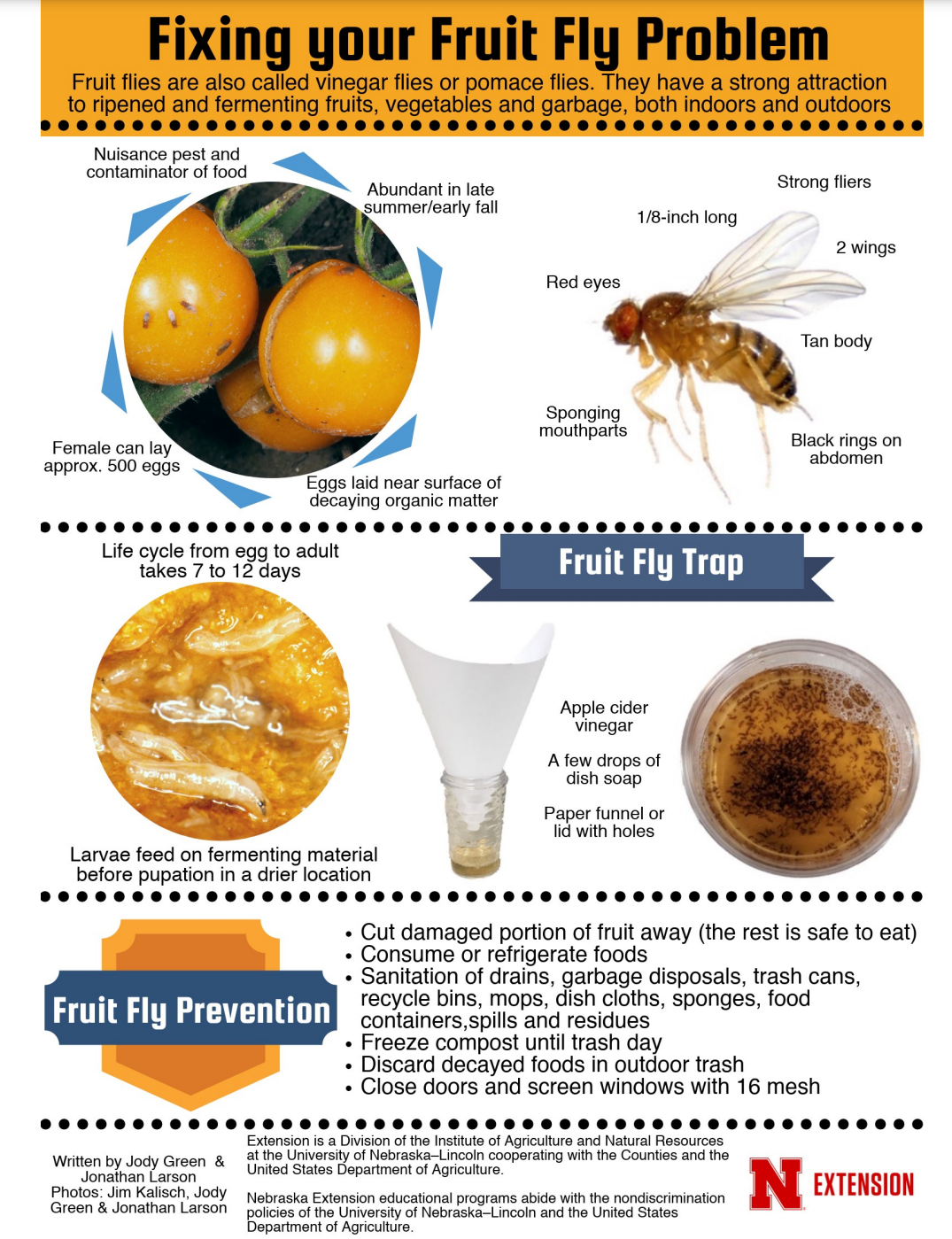
Fruit Flies: Jody Green, Extension entomologist, shares, “Fruit flies are 1/8-inch long and typically have red eyes. They are one of the smallest and most common flies in homes or anywhere food ripens, rots and ferments. Fruit flies begin as eggs before they hatch into legless larvae or maggots. The maggots enter a pupal stage to develop into mature, winged adult flies. They are active year round indoors, but their life cycle will slow in cooler temperatures. Under optimal conditions in the summer, they can complete their life cycle in 7–10 days. Prior to pupation, the maggots will migrate to a drier location nearby. Adults are good fliers, attracted to lights and therefore found flying around people’s faces away from the source of the infestation.”
We commonly see fruit flies in the summer as garden produce gets picked or bought, ripens on counters, and especially as bananas and tomatoes get overripe. However, fruit flies can be attracted to other places beyond the kitchen counter in our homes. These places can include: anywhere where non-refrigerated produce is stored like pantry and cupboards (ex. potatoes); trash, compost, recycled collection areas (ex. pop cans, discarded food containers); lunch boxes and forgotten storage containers; drains and garbage disposal (these can be called fruit or drain flies but need drain sanitation or there’s natural products on the market for purchase); any type of pet food bowl/terrarium; and anywhere a moist film of fermenting material remains such as on mops and dishcloths. Determining the breeding site in your particular situation is key to helping eliminate the fruit flies.
Once the breeding site is eliminated, homemade traps can then be used to trap and remove any additional fruit flies from the home. I was recommending vinegar water in a bowl or cup and discarding each day so no larvae were able to hatch and crawl out. In following up, most said that did the trick. Extension entomologists shared two other trap options using home-made items that you can keep for up to one week on the kitchen counter.
1-Using a salt shaker, fill ¼ full with apple cider vinegar, add 2 drops of dish soap, and replace cap or use a paper funnel. Discard within 7 days.
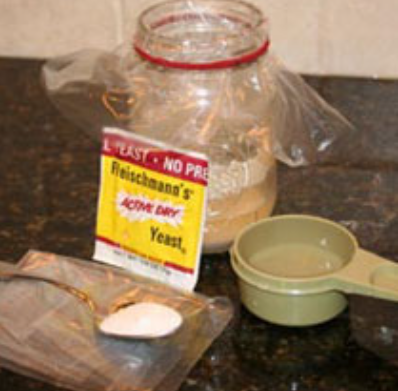
2-“Use a one-pint glass jar. Add 1/4 – 1/3 cup of warm (not boiling) water. Sprinkle a package of activated dry yeast over the water. Add one teaspoon of sugar to activate the yeast. Swirl the yeast liquid. In a few minutes, the sugar will cause the yeast to foam and expand and start producing CO2. Take a small plastic bag (like a sandwich Baggie®) and place over the mouth of the jar with one corner reaching into the jar. . Poke a small hole (no more than 1/8-inch diameter) in the corner of the bag with a pencil. Secure the bag around the rim with a rubber band or canning ring. Fruit flies will immediately be attracted”-Barb Ogg. Be sure to discard the trap in seven days.

Fungus Gnats: These can be confused with fruit flies but they complete their life cycle in the top layers of soil of house plants, especially when they are overwatered. Jodi Green shares, “Adults are grayish-black, about 1/8-inch long and have one pair of wings. Females lay 100–150 eggs in moist potting soil and the larvae feed and develop on the fungi and organic matter. Fungus gnat larvae are white, slender, legless maggots with translucent bodies and dark heads. Larval feeding sometimes includes gnawing on the roots and stems of plants. In warm conditions, overlapping generations may occur, producing large populations which can cause spotting, curling, yellowing or plant death. After pupating in the soil, they emerge as winged adults, bothering people by flying around faces, lights, windows and food items. In order to eliminate a fungus gnat infestation, the life cycle must be broken. This can be done by removing the fungus in which they breed, while simultaneously reducing the number of breeding and egg-laying adults. A non-chemical approach is to reduce the topsoil moisture by less frequent watering, drying out the soil and changing the plant medium to provide better drainage. To catch flying adults, yellow sticky card traps are available at garden stores and placed at the soil surface. In addition, there are biological control products such as the microorganism, Bacillus thuringiensis (Bt), which is applied to the soil to kill larvae after ingestion. Bt is selective to insect larvae, non-toxic to humans, pets and contains no harmful residues.”

Posted on November 26, 2023, in Insects, JenREES Columns and tagged fruit flies, fungus gnats. Bookmark the permalink. Leave a comment.


 JenResources
Leave a comment
Comments 0