Monthly Archives: May 2024
JenREES 5/26/24
Memorial Day: All the flags in cemeteries are extra striking this time of year. Thank you to all who take the time to put them up and take them down for the Memorial Day weekend! This weekend can provide a number of emotions and memories of people gone before us and is a special time to remember family members and friends. Many in the military community know of someone who didn’t come back home to their spouses/parents/kids left behind. Sometimes it’s hard to respond when people say, “Happy Memorial Day”. I was reading a post on Twitter from a military member. It shared what he’s doing by saying something to the effect of, “It’s a good day to remember (insert a person’s name and share about their service to keep their memory alive)”. I liked that idea. May we never forget those who paid the ultimate sacrifice for our Country and for their families left behind!
Storms: Last Tuesday was one of the craziest days for an Extension program that I can remember. We were dealing with the flooding closing roads around the Eastern NE Research and Education Center near Mead in addition to three tornado warnings and a fire alarm. The attendees at the crop scouting clinic were great as were all my colleagues at adapting and we were all grateful to get out of there before the last road out closed too.
I’m grateful that we haven’t had the massive flooding of fields like what has occurred there. The winds have created damage to pivots, buildings, and bins. They’ve also created some damage to crops, and I’m getting more calls about that. I’ve seen where tornadoes will literally suck plants out of the ground leaving small holes in rows. Straight-line winds are shearing plants off at ground level or a little above, particularly in fields with bare soil.
For corn, the growing point is still below ground till V5-6, so we will need to watch for any new recovery from the whorls. Sometimes corn that gets silted in when cut off doesn’t recover well if bacterial diseases set in, so watch for recovery. For soybeans, plants cut off below the cotyledons won’t survive. If the beans are just sticks with no leaves, there are two growing points at the cotyledons, 2 at the unifoliates, and a number in the buds once the beans hit the first trifoliate. Individual plants vary a lot, but we will need to watch recovery of these plants and then take stand counts to determine any need to replant or patch in areas of fields.
Stands and Replant Decisions: The chart in this article (https://go.unl.edu/doi2) shows the considerations between stands and yield losses. Note that the yield reductions listed in this table may be greater than what actually occurs in 2024. I’d love to see updated research as we know planting windows have changed with corn through the years and we saw how well late June replanted corn yielded in 2022.
For soybeans, I realize people struggle with low populations, and I get it from the weed control aspect. We ultimately recommend to aim for a final plant stand of 100,000 plants/acre. After disaster events, I’ve often recommended leaving stands at 50,000 plants/acre. Based on research and observations of soybeans compensating for reduced stands due to increased branching, we recommend leaving an early planted soybean stand of at least 50,000 plants per acre that has fairly uniform spacing throughout the field. We realize that can be hard! University of Wisconsin found only a 2 bu/ac yield increase when replanting early soybeans between 50,000 and their optimum stand of 100,000-135,000 plants/acre. For stands less than 50,000 plants per acre, plant a similar maturity into the existing stand; don’t tear out or kill an existing stand as early planted soybeans have a higher yield potential. If you’d like to test this for yourself, consider an on-farm research study! Simply leave a planter pass of your existing stand, plant into your existing stand for a planter pass, and alternate this across your field. Please see this protocol for more information.
Memorial Day Prayer: This was shared by my church this weekend. May we never forget the sacrifice of those who paid the ultimate price for our freedom and their families left behind.
Gratitude
Grateful. The past few weeks I’ve just been thinking about gratitude for where we’re at this growing season, for the fact that we’ve all received some rain at some point this spring, and for the rain in the past 24 hours. It just totally changed the outlook for this growing season from the conversations I was having prior to the rains! And, grateful for some rest on rainy days like this!
While some have been frustrated at planting delays, we’re not late. I’m grateful for how quickly acres get planted and for how many finished up this past weekend, including our family. Smaller rains have helped with soil crusting, activating herbicide, and helping with grass establishment for the number of people who are trying to improve lawns and pastures. Grateful we’re not running pivots at the same time as planting like we were last year. Grateful for red and black cows on green grass! 😊 I find the color contrast so pretty. That site didn’t exist at this time last year. It’s just such a blessing to have green grass in pastures and lawns this year! The alfalfa, rye, and wheat have been tremendous too!
20 years ago, I began my Extension career in Clay and Webster Counties. The primary question I kept receiving was on common mullein control in pastures, which began my on-farm research journey. I still remember the tornado damage my first weekend on the job and I think of all the tornadoes, hailstorms, windstorms, flooding and drought we have dealt with since. While devastating, I’m grateful for all I’ve learned with each storm to hopefully help others the next time one occurs. There’s so much community in neighbors helping neighbors. There’s such resiliency and optimism to keep going and reliance upon one’s faith!
Reflecting, I think of how blessed I am to have served people in a lot of counties since then, for all the wonderful people I’ve met and learned from. My only regret has been being spread so thin to serve people the way I like. Grateful for this blog and media that help me share more broadly when I couldn’t always be physically present. Grateful for my mentors. Grateful for those who gave a young girl out of college a chance to prove herself looking at fields and working with them. Grateful for all the youth I’ve had an opportunity to work with through the years as well! The people of Clay County and that area will always hold a special place in my heart for how you accepted me and helped me in learning how to juggle the ag, 4-H program, and horticulture questions I received and for the grace given in the mistakes I made along the way.
I’ve always been fairly driven. Yet, I’m grateful for those, some still with us and others not, who instilled in me early on the importance of people in addition to my work tasks by making me stop to talk after a field visit or if I was in the area. While I still make mistakes, it changed my outlook early on how I approach work; everything we do ultimately impacts people and each interaction is important. I’m so blessed by all the friends who stop in when they see my truck, call/text/email me just to check in, and for the number of people who send me field updates. Grateful and blessed by all the farmers who’ve allowed me to walk alongside of them in their journeys through the years via on-farm research, who share ideas of things to try, and the farmers and ag industry professionals who invite me to look at problems when they occur-sometimes even fields without problems. Ultimately, I just feel so blessed that God has allowed me the opportunity to serve people and for the freedom I have to do so in my Extension career!
Heuermann Lecture: There may be interest for some to attend the next Heuermann Lecture on May 29 around Innovation in Ag Tech: Cultivating Tomorrow’s Farms, 3:00 p.m., Nebraska Innovation Campus, https://heuermannlectures.unl.edu/ . In the past, they’ve also been livestreamed and recorded. I can’t tell if it will be livestreamed, but check the website that day if you can’t attend in person, or to view the recording later.
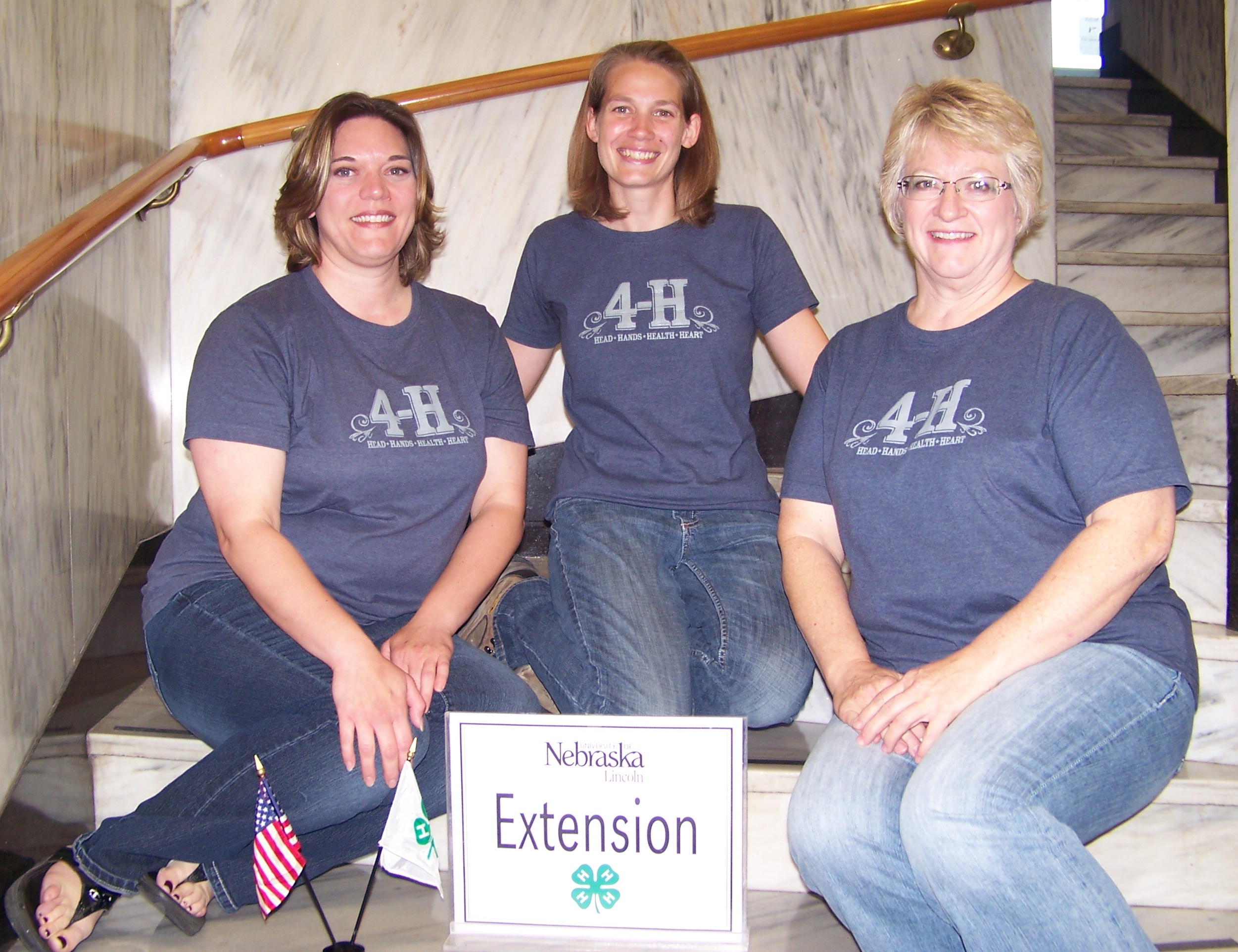

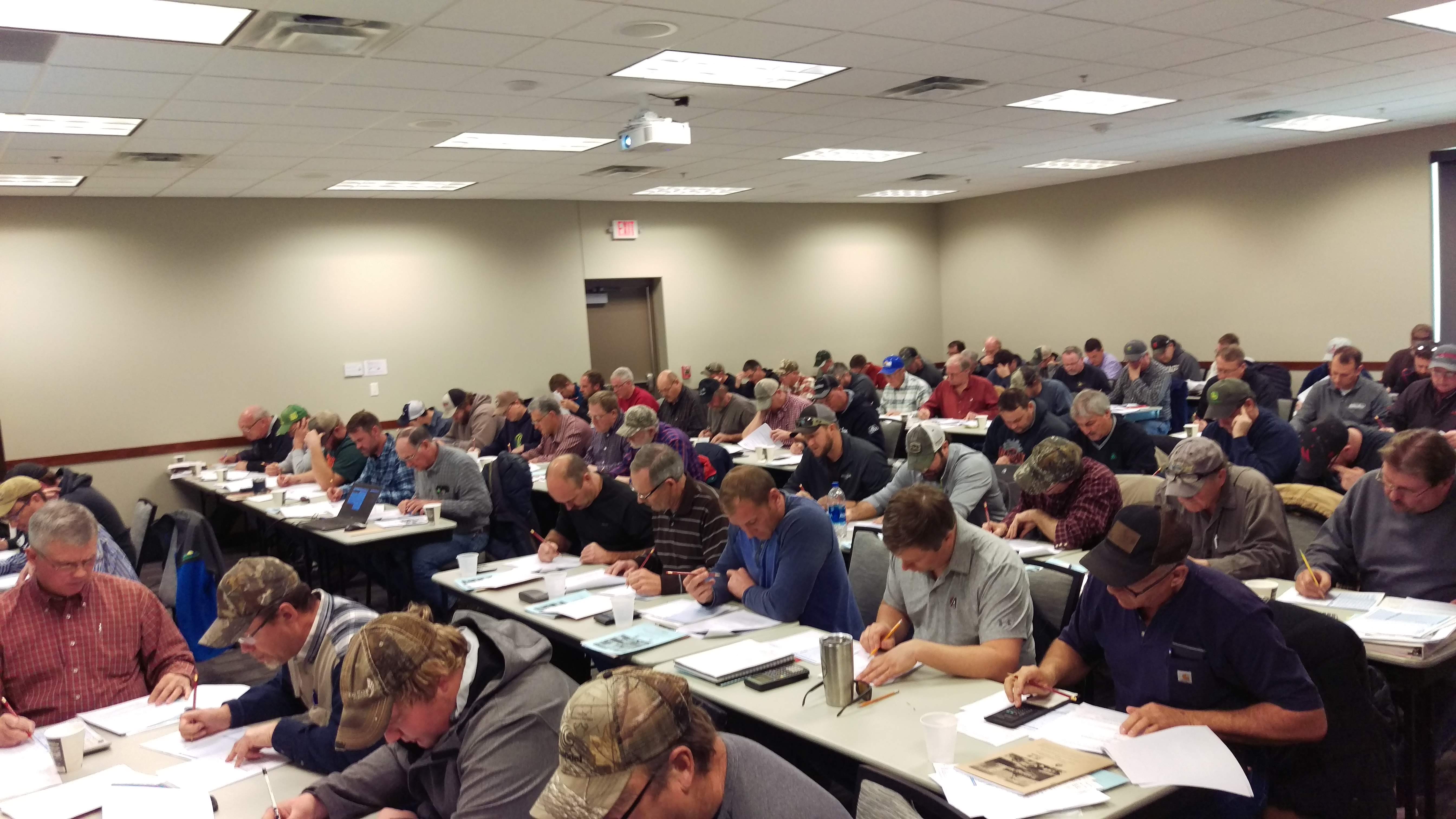

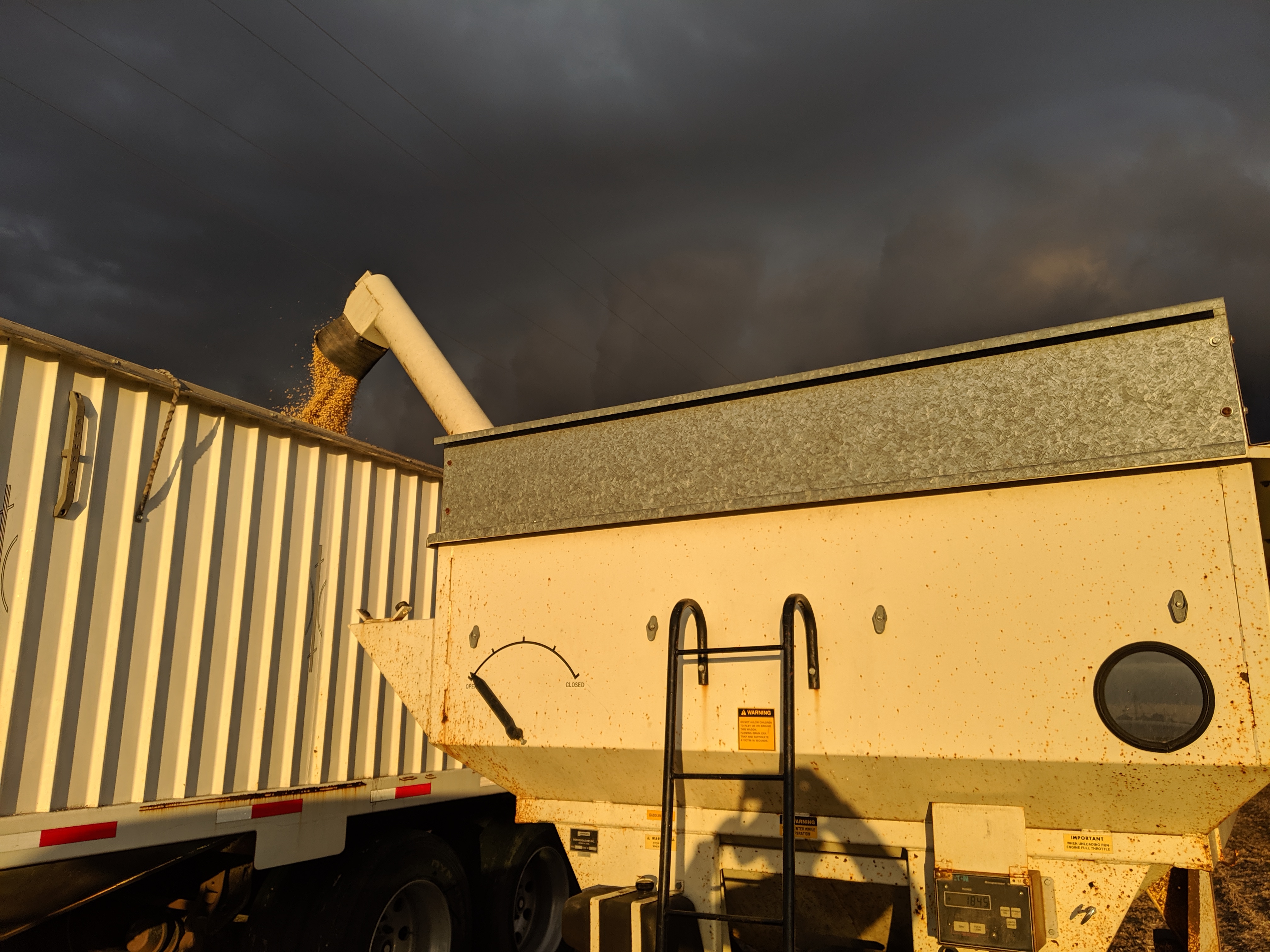

A few pics through the years (avoiding all the crop damage ones). Good memories (well other than the farmers may not have thought so about the chemigation test!) but there were farmers from several counties represented in that pic. Also, for clarity, I’m not planning on going anywhere. I’m just grateful to have served in Extension for 20 years thus far.
JenREES 5/13/24
Wheat Fungicide Considerations: Part of the area receiving this news column grows wheat for grain as it’s a great crop in rotation. The wheat has looked tremendous this year! Varieties that are susceptible to stripe rust are showing low to medium disease pressure. Wheat ranges from the flag leaf through late boot/early heading stages. Last week, the question was if growers should spray a fungicide to protect the flag leaf from stripe rust. I’m unsure how many still have that question this week but am writing about the tradeoffs I talked about with growers.
We did have a few growers choose to apply fungicide to protect the flag leaf as their wheat had good yield potential and the variety was very susceptible. That was most likely the best decision for these specific field situations with how quickly stripe rust was setting in in their wheat with the cooler conditions and the high humidity within the canopy. It’s important to know one’s economics to make that individual situation as there’s potential we may need a fungicide application for wheat scab (fusarium head blight) prevention as well. A map of where stripe rust has been observed can be found at: https://go.unl.edu/98zy Please note the map doesn’t reflect the fact that it’s also observed in Nuckolls and Webster counties.
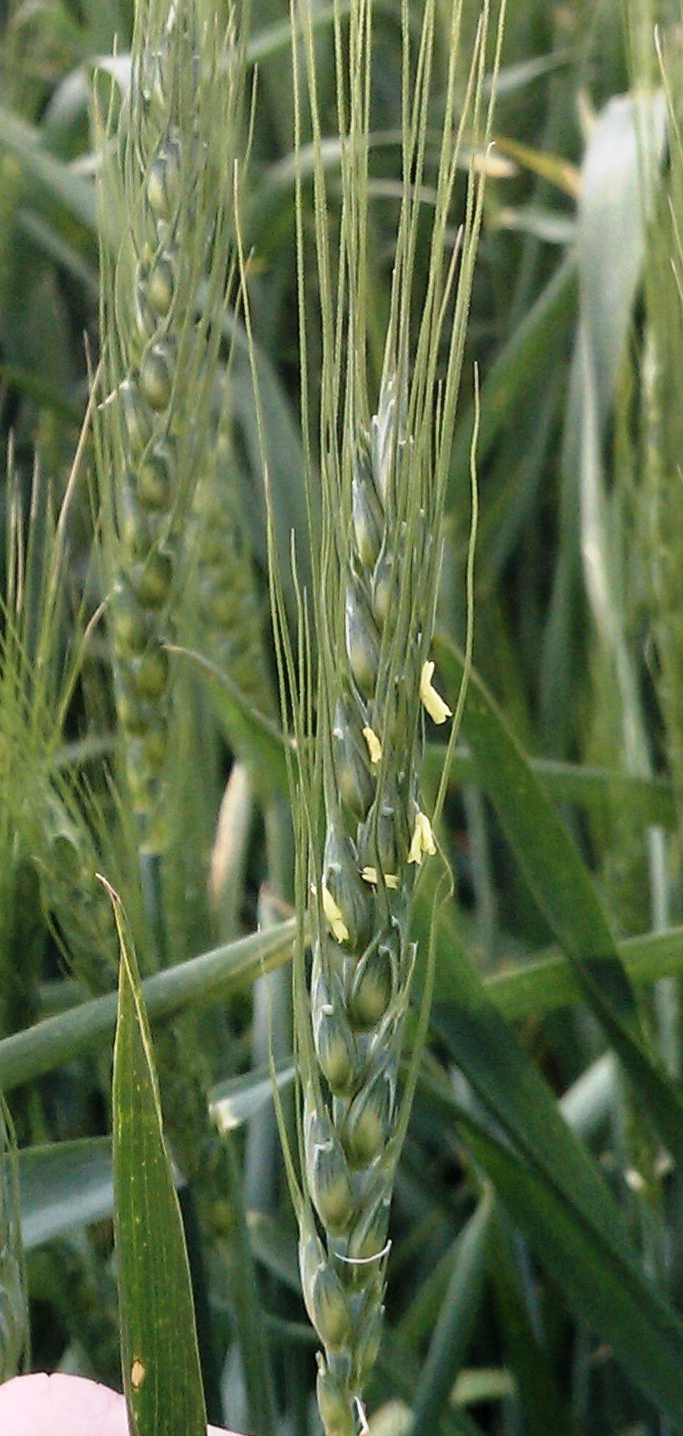
With non-irrigated wheat and the economics of it, many try seeing if we could get by with one fungicide application at flowering. A fungicide app at flowering to prevent wheat scab will also kill any fungi present on the leaf surfaces. Fungicide options include: Prosaro, Prosaro Pro, Caramba, Proline, Miravis Ace, and Sphaerex. Applying when 30% of the wheat is at beginning flowering (seeing yellow anthers in the center of the head) provides the best timing and efficacy. Applying too early before flowering or after the majority of the wheat is past 50% flowering doesn’t provide as good of efficacy. I realize the timing is tough. We normally have a 3-5 day window to get fungicides applied timely and efficacy isn’t guaranteed to be greater than 70%. Efficacy also improves when we can increase the gallonage of aerial apps to 4-5 gallons/acre. You can monitor the potential for wheat scab risk at: https://www.wheatscab.psu.edu/.
Roller Crimping Workshop May 22: For growers and ag industry professionals interested in learning more about roller crimping, Nebraska Extension is hosting a roller crimper workshop from 9:30-11.30 am. Wednesday, May 22 at the University of Nebraska Eastern Nebraska Research, Extension and Education Center, 1071 County Rd G, Ithaca. We’re also seeking growers to speak about their experiences with roller crimping at this workshop, so please let us know if you’re interested in that.
Roller crimpers are used to mechanically terminate cover crops without soil disturbance and ideally create a thick mulch that will act as a weed barrier. Crimpers are used by organic farmers, regenerative farmers and others who, for various reasons, want to reduce herbicide inputs and/or improve weed management with their cover crops.
During this short program, we will show a roller crimper in action, invite farmers to share their experiences with crimping, and discuss what conditions must be met to be successful with this termination method. Demonstration plots with small grains of barley, oats, rye, triticale, and wheat will be showcased to compare the differences amongst them side by side. On-site registration begins at 9 a.m. For more information, please contact Katja Koehler-Cole at kkoehlercole2@unl.edu. This event is sponsored by Nebraska Extension and the USDA Transition to Organic Partnership Program.
Intro Crop Scouting: Also, for those interested in learning about introductory crop scouting, we’ll be having a clinic on May 21st at ENREEC near Mead. More info: https://go.unl.edu/29qk.
JenREES 5/6/24
I’m so grateful for the rain and the green is so beautiful!!! The rain has led to some questions.
Corn Yields: it’s still early! I’ve mentioned this often to people the past week. We now set at May 5. In 2023, Dr. Jim Specht led a CropWatch article looking at NASS yields and 50% planting progress over 43 years (https://go.unl.edu/dge7). A summary of the data showed, delays in the Nebraska corn 50% progress date that occur within the May 2-12 planting period do not seem to have an appreciable impact on resultant corn yield. You have heard me and others talk about planting windows for several years based on data that Dr. Roger Elmore had previously shared and that information has been consistent with data from Iowa, Indiana and the U.S that corn yield doesn’t appear impacted till after mid-May. For perspective, think about the 2022 replant corn yields.
Regarding soybeans, Dr. Specht shared (in 2023), “one other notable feature is that Nebraska producers have advanced the 50% soybean progress date from a 43-year mean of May 22 by eight days to a projected date of May 14 for the year 2023. That eight-day shift to earlier soybean planting in Nebraska would have generated 0.99 x 8 = ~ 8 bu/ac greater yield for irrigated soybean producers and 0.54 x 8 = ~ 4 bu/ac greater yield for rainfed soybean producers.” The soybean planting date is more critical than corn. A number of producers have either finished soybeans before corn or have been planting at the same time to take advantage of increased soybean yields.
Pre-Plant Nitrogen movement with rains: In short, “it depends” is the best answer based on soil type, nitrogen source, soil moisture, amount of nitrate in the soil, and soil temp. Additional sampling such as soil, tissue, or using tools like Sentinel Fertigation can help in season to better understand plant nitrogen needs. University of Minnesota shares, “As a rule of thumb, with each inch of water moving down through the soil, nitrates will move down with that water five to six inches in silt loam and clayey soils, and up to 12 inches in sandy soils.” Ammonia binds to soil particles and is more stable in the soil. Urea will move with water if applied shortly before a heavy rain and can leach; however, it also quickly converts to ammonium in the soil, which is a stable source of nitrogen not easily leachable. A CropWatch article written in 2013 helps in a year like this without a full soil moisture profile, “If nitrogen was applied as a surface broadcast application immediately before rainfall (to a silt loam soil), it would move down with the rainfall. Its distribution in the soil would not be uniform, but 3 inches of infiltrated rain would distribute the nitrogen in the top 18 inches of soil. There would still be some nitrogen in the top 6 inches, but the “bulge” of the nitrate concentration would be at about 12 inches. Corn roots will grow into that nitrogen and there should not be an N deficiency as early plant needs would be met.” (https://go.unl.edu/76yw)
University of Minnesota shares that microbes will convert various nitrogen sources to nitrate twice as fast with each 10F temperature rise. Their example was, “urea that takes 24 days to fully convert to nitrate at 50°F will fully convert to nitrate in six days at 70°F.” For perspective, we’ve been holding around 58F for the past week. So the short answer is for most situations, we most likely haven’t lost much if any pre-plant nitrogen beyond the root zone due to the soil conditions thus far. Use in season tools and sampling to understand specific field situations.
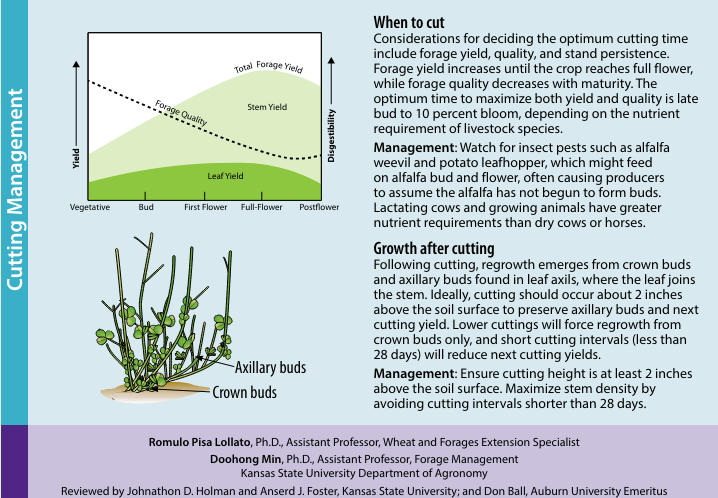
Alfalfa Weevil Control Tradeoffs: With current hay prices and alfalfa in the late vegetative to early bud stage, we’re looking at alfalfa weevil thresholds of 1.5-2 weevil larvae per stem (threshold charts here: https://go.unl.edu/p6ym). The challenging decision right now is if you wish to cut alfalfa early or treat with a shorter pre-harvest interval product. Reports in the Holdrege area have shared weevil resistance to products with lambda-cyhalothrin (Warrior, etc.). Steward is a product that contains a different active ingredient (indoxacarb) and is safer for beneficial insects, but costs more. It could be an option for those of you further out from first cutting. For those of you getting towards early bud, perhaps the option is to take an early first cutting and watch regrowth of second cutting if you’re at the economic threshold?


 JenResources