Windbreak Care
Windbreak Care: With new windbreak establishment, I’ve been seeing some transplant shock where the needles, twigs, and entire seedlings were turning brown. In talking with a district forester, he shared that environmental stresses of tree planting are likely when considering the trees are going from a 36F cooler and planted when air temperatures were in the 70’s and 80’s. He also mentioned two other environmental culprits to browning of needles: air pockets in the soil around the tree roots and/or planting depth issues. To get a feel if trees will survive or not, gently bend twigs to see if they are flexible or brittle. If flexible, they should still survive. If brittle, check on several tree twigs to see if there are a few twigs that won’t survive on the majority of the tree. In the case of the new transplants I looked at, the twigs were still pliable and not brittle. Also look closely at the axillary buds (where twigs meet the main stem) to determine if any new green bud growth is present. I saw new buds on most of the newly planted trees I’ve looked at, which is good and shows they will hopefully look greener in 3-4 weeks. Photos of what I’m describing are at: https://jenreesources.com.
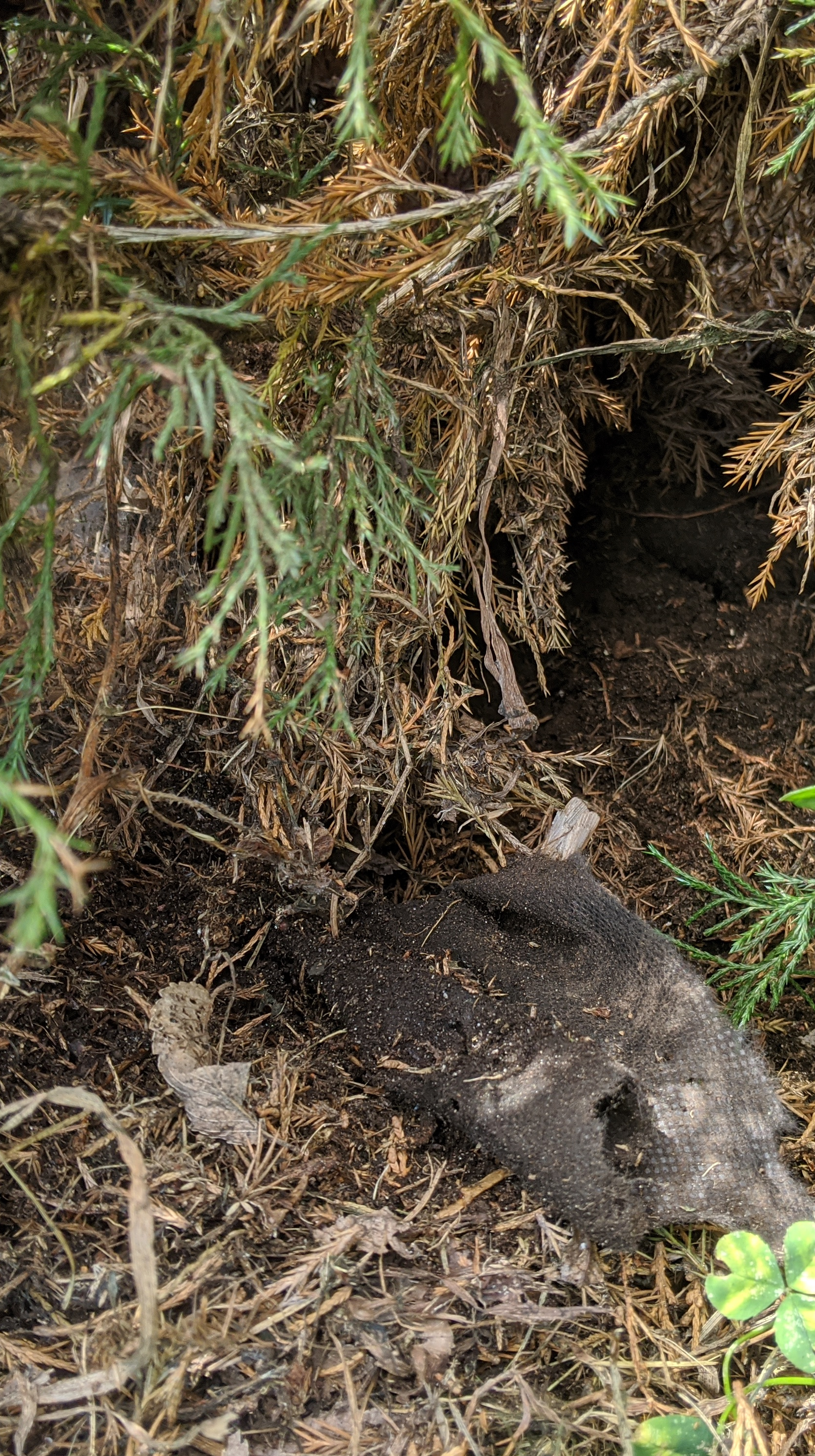
In established windbreaks, I continue to find the problem of landscape fabric harming and killing trees that are 7-20 years established. For anyone with windbreaks where landscape fabric was placed, I’d encourage you to wear gloves and long sleeves and check under the trees for the following things. (Also watch for critters as you get under the trees and examine them!)
1-The “brome mat”…or essentially a mat of needles, grass, weeds that create a mat on top of the fabric beneath the tree. This mat makes it hard to find the fabric and keeps one from realizing the problem that’s occurring. The mat prevents any decomposition of the fabric and prevents moisture from getting to the tree. Many are surprised how dry the soil is under the fabric where the mat was.
2-Check to see where the fabric is in comparison to the tree trunk. Normally I find the fabric growing into the trunk of the tree as the fabric doesn’t expand as the trunk enlarges. This creates a “girdling” effect where the tree essentially chokes itself. Often when I’m called out to established windbreaks that are suddenly dying or where the needles are browning, the landscape fabric and girdling of the trunks is partly the culprit.
So what can you do? Windbreak maintenance. For anyone who has windbreaks where fabric for weed barrier was placed, it should be removed no longer than 5 years after the trees are planted. For those who had windbreaks planted in the past 1-3 years, you really should go and cut the holes larger around each tree if you’re not removing the fabric yet. What I kept finding this year is that the trees were placed against one side of the fabric compared to the center of the holes, which can also create problems down the road with girdling. For those with more established windbreaks, do your best to remove the weed barrier fabric now. It will take harder work and effort to get under the trees and cut the fabric. Some were using anything with hooks to try to grab and pull it loose-but sometimes it’s hard to find the fabric with the mat layer. Some were then using loaders to pull the fabric between trees in the row. Again, it’s hard work and not fun with how poky the needles are, but it will help you in saving your trees.
For those who chose to not use the weed barrier fabric, wood chips can be used instead as long as they are kept 3-5” from the tree trunk. It takes a lot of wood chips for a windbreak, so they often are not used in those situations even though they’d be recommended. It’s not recommended to use grass clippings or straw as those mulches can attract rodents that can cause damage to new seedlings. Planting directly into the grass is also an option, or killing the grass directly where the trees will be planted is an option for weed control as well. The brome will compete with the seedlings for moisture and the trees may establish more slowly as a result. For more specific information on windbreak care, including information on insects and diseases, please see the following publication: https://nfs.unl.edu/publications/windbreak-management.

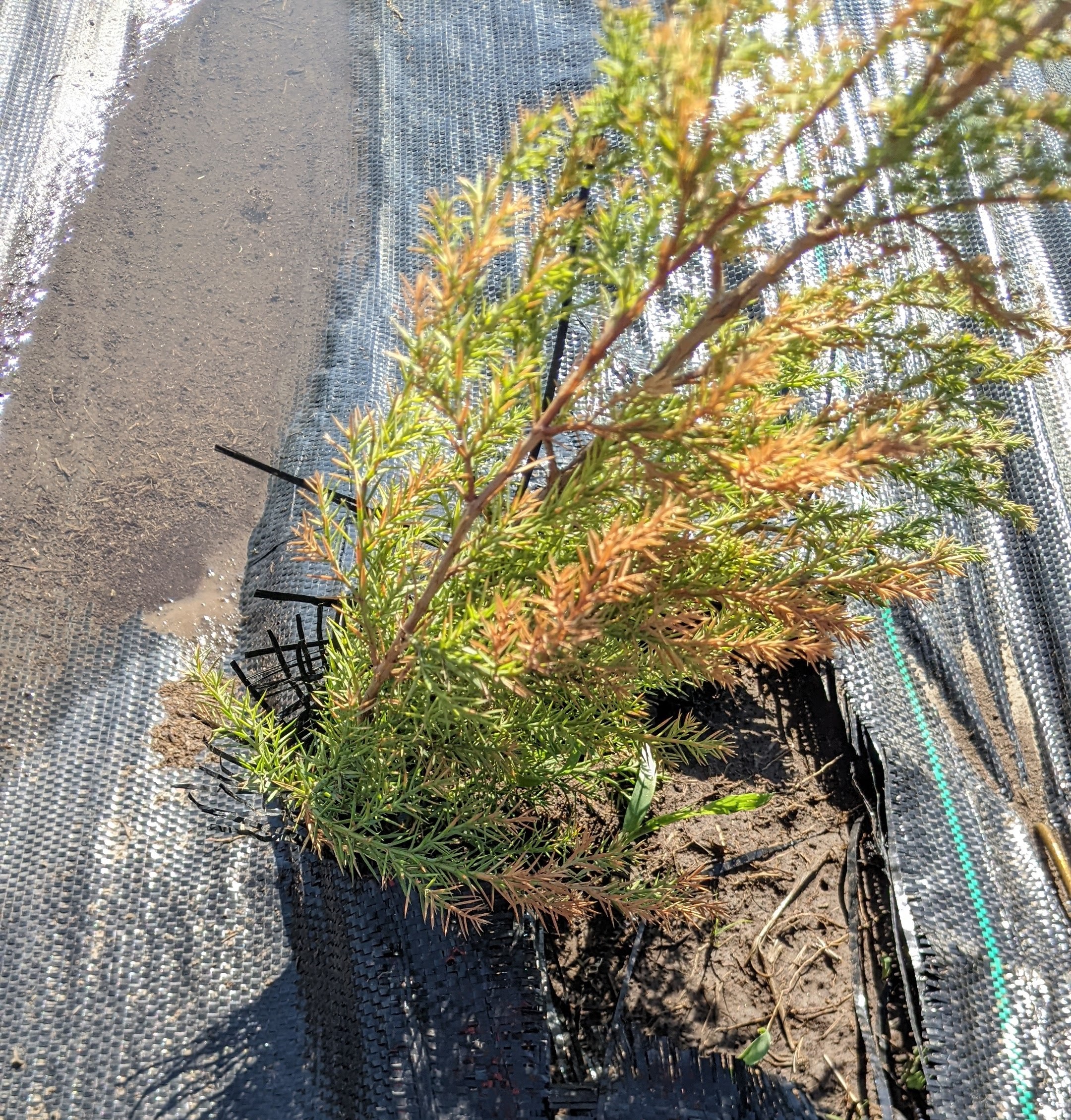
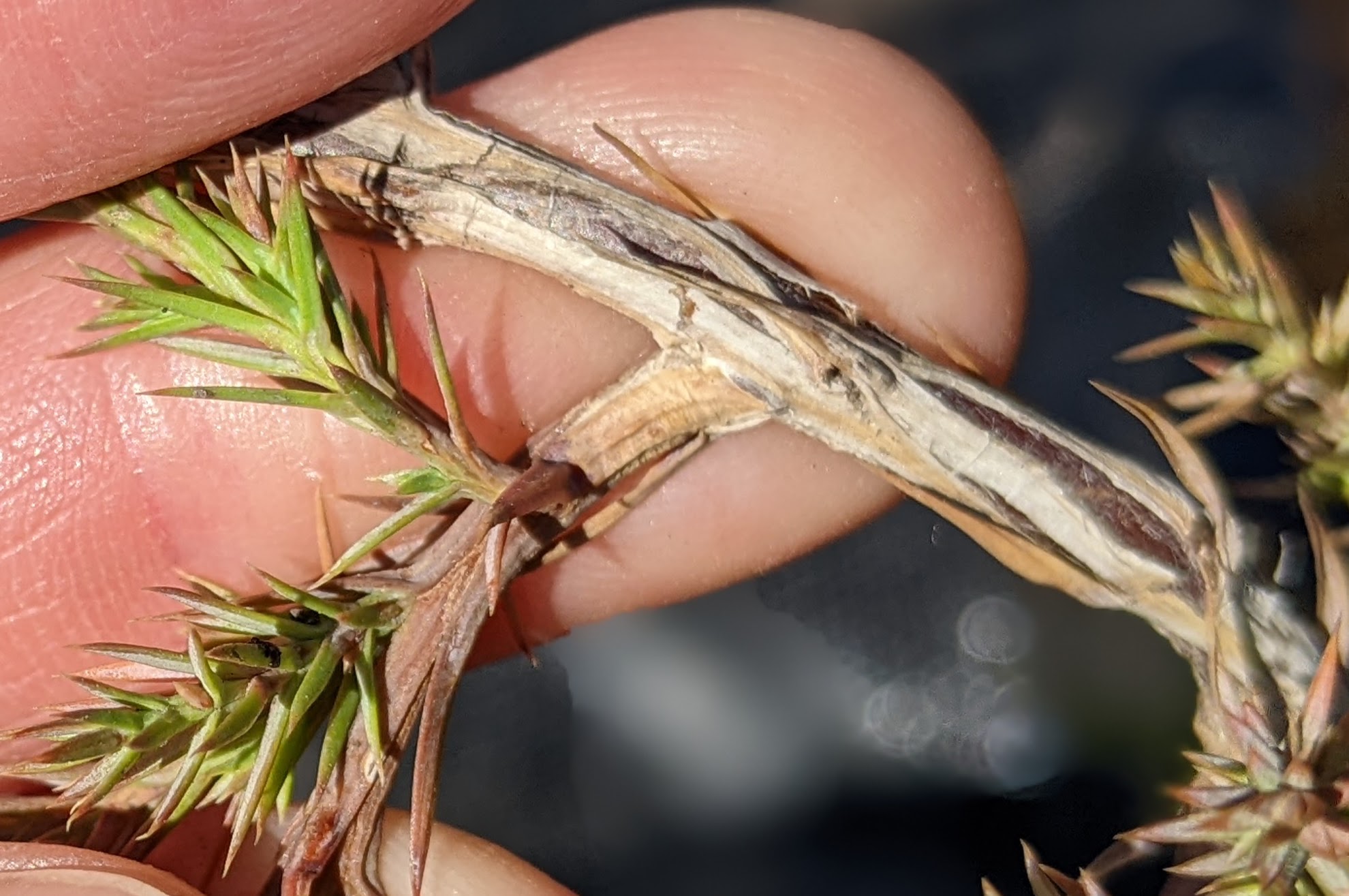
New growth observed in axillary buds on this tree seedling. It should look greener in 3-4 weeks.

Posted on June 16, 2024, in JenREES Columns, Trees and tagged Trees, trees in windbreaks dying, weed barrier fabric in windbreaks, windbreaks. Bookmark the permalink. Leave a comment.


 JenResources
Leave a comment
Comments 0