JenREES 6/30/24

Holiday Food Safety: The Fourth of July is the most popular U.S. holiday for grilling, according to a 2020 survey of American grill owners. Some 68 percent of respondents like to throw barbecue parties on that day. Food safety can be challenging when eating outside. Did you know that you are more likely to get food poisoning (foodborne illness) during the summer months than any other time of the year? Given the right environment, harmful bacteria can quickly multiply on food to large numbers. To prevent a food borne illness, check out this resource: https://go.unl.edu/o2n0.
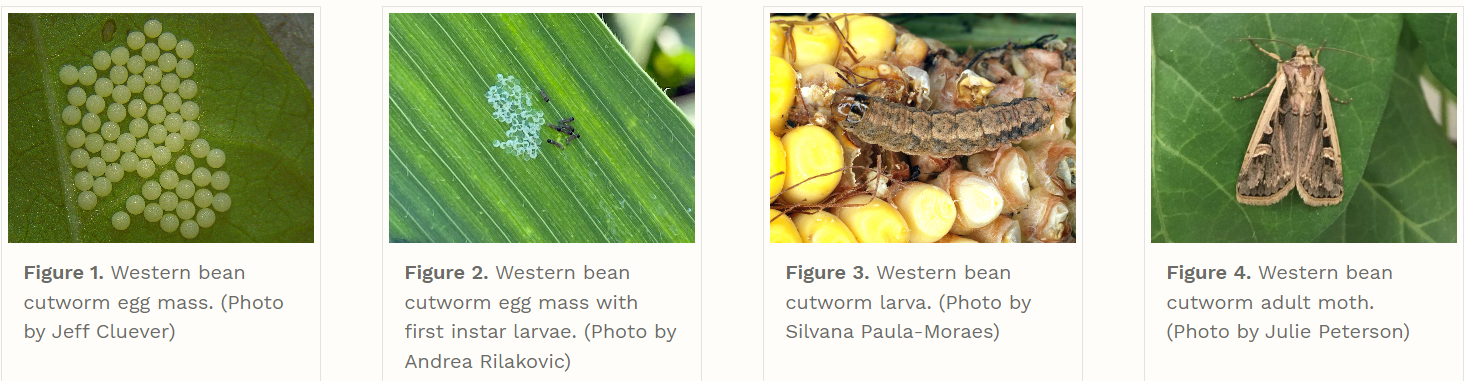
Western Bean Cutworm GDDs: With corn beginning to near tasseling, it’s time to be scouting corn for western bean cutworms. The updated Western Bean Cutworm degree day model was developed in Nebraska by Drs. Bob Wright and Tom Hunt in collaboration with entomologists in Minnesota. It’s really done a good job the past few years. The model is based on a lower threshold of 38°F and upper threshold of 75°F beginning on March 1. It’s recommended to start scouting when 25% of moth flight occurs based on accumulating 2,577 degree-days. Lincoln hit 25% on June 29th, Grand Island is predicted to reach 25% on July 4, Columbus July 5, York July 6th, and Clay Center July 6th. The economic threshold is 5-8% egg masses/live larvae.
When scouting, we typically find western bean cutworm egg masses on upper leaf surfaces of corn leaves with masses containing 50-85 eggs. Normally we’re taught to look at the upper portion of the plants closer to the tassels, but with silks emerging prior to tassels most of the time, I tend to also find masses on leaves around the ear leaf and sometimes directly on the husks (especially during periods of high heat). Egg masses are white and raised when newly hatched; they turn a purplish color when they’re getting closer to hatching. Larvae have two dark rectangular spots right behind their heads. More western bean cutworm info. including the dates for predicted flight moth percentages can be found at: https://go.unl.edu/60s2. You can view all the light trap data throughout the State at: https://entomology.unl.edu/fldcrops/lightrap.
Fertigating during pollination is ok. Dr. Tom Hoegemeyer had shared that pollination mostly occurs between 8:30 a.m. and noon. Heat kills pollen when the temperature is 90°F to 95°F and is seldom viable past 2 p.m. That leaves lots of time to run pivots, apply N, etc. when it won’t harm pollination. Silks tend to be viable for three or four days at these temperatures, so if a plant isn’t pollinated one day, generally the next day will work just fine. The UNL recommendation for fertigation is to use 30 lb of N with 0.25″ of water or 50-60 lb of N with 0.50″ of water. With a high capacity pump, you can apply up to 60 lb of N in 0.25” of water.

Earwigs: These insects look menacing. There’s been several calls on them. Indoors, they seek areas with moisture like basements, bathrooms, etc. They don’t harm humans or pets as they only feed on living and dead plants and small insects. They get into homes via cracks/crevices and often one tends to see them more when there’s a lot of landscaping around the home with cracks in the foundation, gutters that aren’t cleaned out, etc. Prevention includes caulking, sealant or weather stripping to eliminate pest entry. Perimeter sprays (ex. Ortho Home Defense) or any that list earwigs can help. Water landscaping around the home earlier in the day (as they’re active during the evening). For more info., please visit the following resource: https://go.unl.edu/n2kc.
Japanese Beetle Management Resource: https://go.unl.edu/xgd6.
4 R’s of Nutrient Management Field Day will be held July 11th. More info: https://go.unl.edu/c5d2.
(end of news column)
Cover Crop Survey: Researchers at Kansas State University are asking 15-30 Nebraska farmers to take a questionnaire about video messages related to cover crops, regardless of your current use of cover crops. This questionnaire will take you about 10 minutes to complete; it measures knowledge and perceptions about cover crops, and after watching a 90-second video about cover crops, there are several questions about your reactions to the video message. After receiving your response to these questions, along with your feedback about the questions, we will send the questionnaire to Kansas farmers as part of a research study. Thank you for your time and feedback. If you have any questions related to this study, please feel free to contact Katie Starzec.

Posted on June 30, 2024, in JenREES Columns and tagged earwigs, july 4th food safety, western bean cutworms. Bookmark the permalink. Leave a comment.


 JenResources
Leave a comment
Comments 0