Monthly Archives: August 2024
JenREES 8/26/24
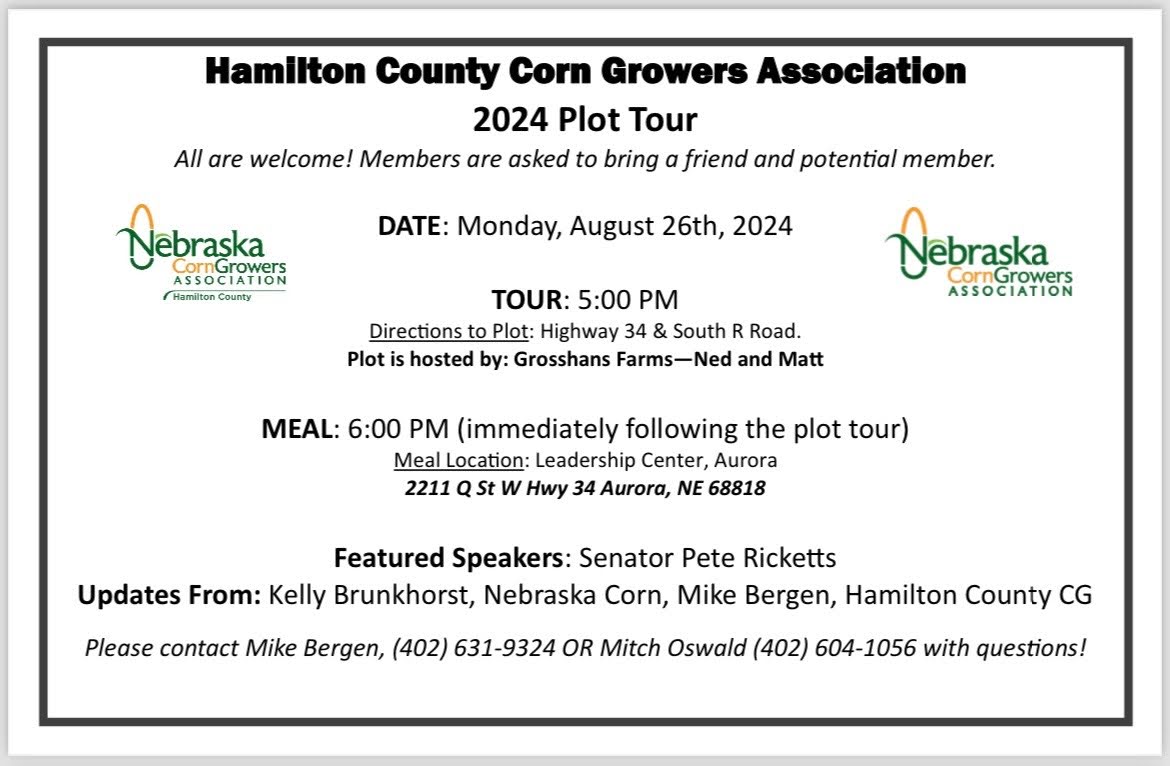
Corn diseases have been the main question this past week. A few weeks ago, splitting open stalks revealed stalk rot setting into nodes while internodes looked healthy. The root crown of plants was also rotted. As I walked fields last week, an increasing number of plants are showing white/pink fungal growth on the outside of nodes and/or plants that are broken/bent a few nodes above the soil line. I believe all of this is mostly due to Fusarium crown rot. The diagnostician at the plant and pest diagnostic lab in Lincoln also felt that was the biggest culprit. It always stinks sharing news like this before harvest, but if you’re seeing plants breaking over in your fields, consider harvesting those fields earlier.


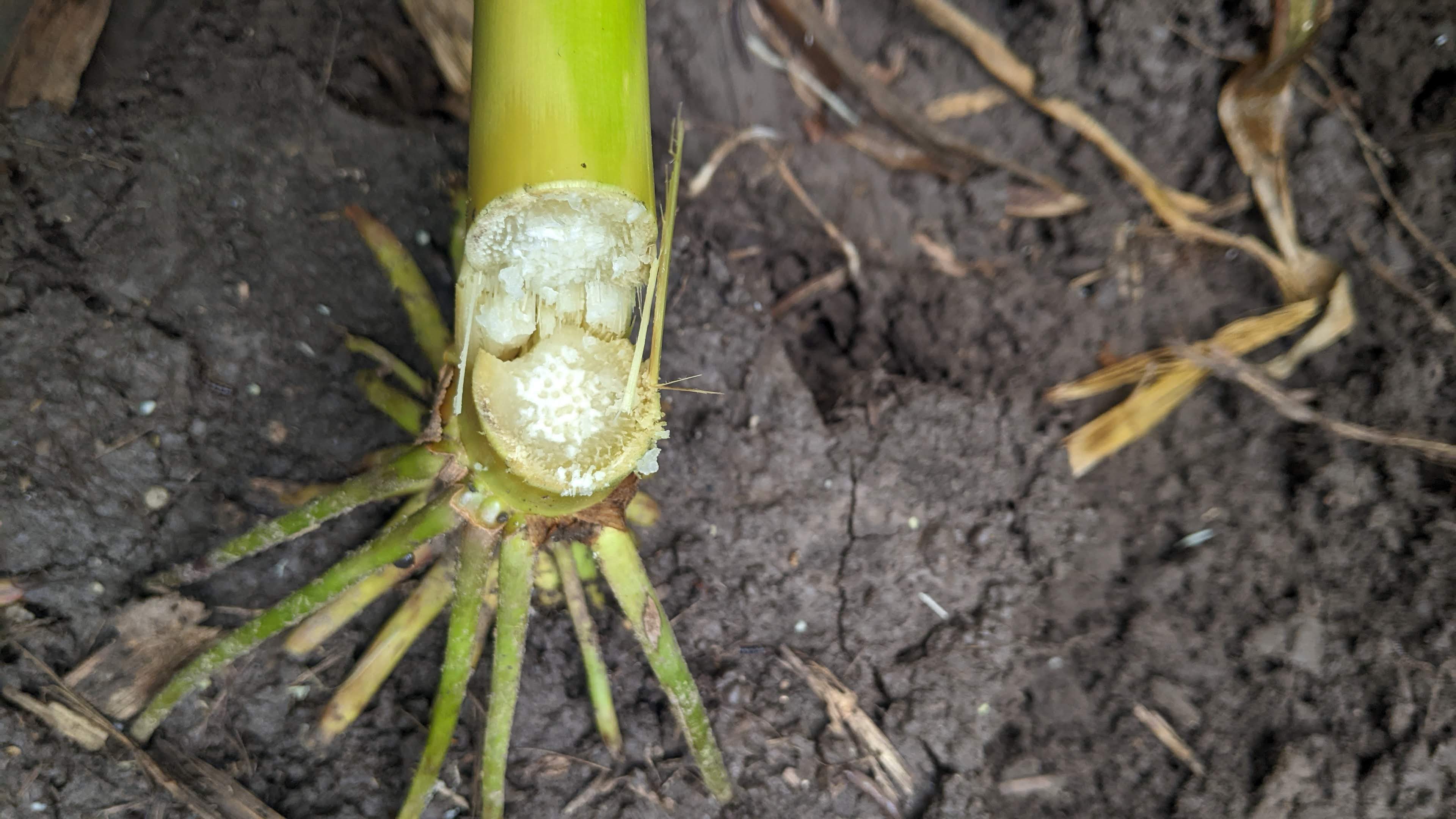
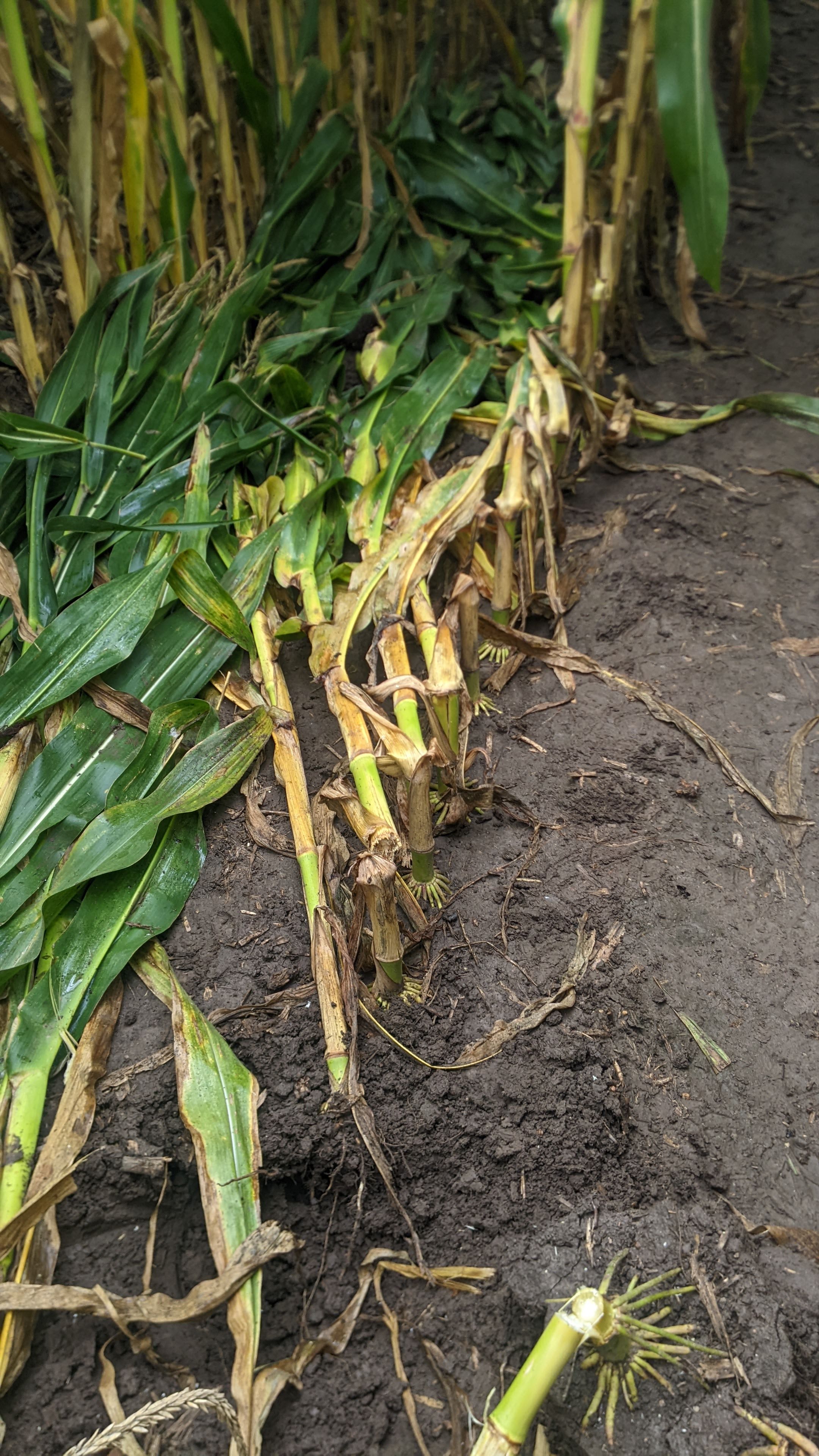
Goss’ wilt continues to be a problem in some corn fields as well. We’ve seen the systemic version since V7 this year, primarily in York, Seward, and Hamilton counties. We’re seeing more of the foliar type now, but if you see whole plants dying, most likely it contains the systemic version of the bacterium too. The way to tell systemic Goss’ wilt is to cut a cross section of the stalk. Orange/brown discoloration of the vascular bundles indicates potential systemic Goss’ wilt.

As southern rust changes spore types from the orange uredineospores to the black teliospores, there’s been numerous questions if they have tar spot. Tar spot will be on both sides of the leaf, raised, and won’t rub off on your fingers or with water. The black teliospores of southern rust tend to be concentrated around the midrib of corn leaves, from what I’m seeing now, and they will only occur on one side of the leaf. A helpful resource with pictures differentiating southern rust, tar spot, and saprophytic diseases can be found here: https://go.unl.edu/46uw.
York County Corn Growers will have a plot tour on Tuesday, September 3rd from 5:30-7:30 p.m. Doug, Jason, and Karah Perdue hosted the large plot this year and we’re grateful for their efforts! Come hear about the hybrids from the companies represented and enjoy a shrimp boil (shrimp, sausage, corn, and potatoes). Guess the highest yield without going over and win a $50 gas card (must be present to win at the winter corn grower banquet). All are welcome and corn grower members are asked to bring friends. For questions please contact Jason at: 402-366-2821 or Jenny Rees at 402-362-5508.
Soil Health Field Day in conjunction with the Upper Big Blue NRD and The Nature Conservancy will be held at Jordan Uldrich’s farm near Milligan on September 4th from 2-4 p.m. Gather first at Charlie’s Pub (524 Main St, Milligan) with refreshments and introductions before heading to the field. Jordan will share his experiences with interseeding cover crops into corn fields. It’s also an opportunity to network with producers and share ideas. For questions please contact: Valerie Paul at 402-362-6601 / vpaul@upperbigblue.org or Nicholas Arneson at 402-676-1618/ nicholas.arneson@tnc.org.
Nebraska Sorghum Producers Field Day will also be held on September 4th beginning at 5 p.m. at the Mike Baker farm near Trenton, NE. From Highway 25 north of Trenton go to County Rd 717, then west 4.5 miles.
Husker Harvest Days near Grand Island are September 10-12 this year. New this year is free admission if you register online ahead of time at: https://huskerharvestdays.com. Otherwise they are $25 at the gate for adults, $10 for youth ages 13-17, and free for youth 12 and under. The show hours have also been adjusted this year to 9 a.m.-4 p.m. all three days.


JenREES 8/19/24
Crop Update: One thing I’ve observed since the hot week the first week of August was corn plants going from milk to beginning dent and seemingly skipping the dough stage. Dr. Tom Hoegemeyer and I shared observations of this last week. Not only were the days hot, but the nights were warm (70’s-80’s) too leading to plant respiration at night. This means they were burning sugars instead of storing them leading to the plants pushing development, which can lead to smaller kernels and potentially lower yields. We’ll have to see how this plays out in the end with yield. This past week of cloudy/foggy, cool mornings with heavy dews and high humidity can lead to increased fungal disease going forward in our crops as well. Overall, crops in the area are looking good though.
Last irrigation: (days listed are based on GDUs, so consider this for your crop growth stage and field soil moisture levels so you can start tapering off). This tool helps you calculate potential black layer date based on your planting date and relative maturity: https://mygeohub.org/groups/u2u/purdue_gdd. What I’m currently seeing is that 2024 growing degree days are tracking slightly lower for York than the 30 year average.
- Corn at Dough needs 7.5” (approximately 34 days to maturity)
- Corn at Beginning Dent needs 5” of water (approximately 24 days to maturity)
- Corn at ¼ milk needs 3.75” (approximately 19 days to maturity)
- Corn at ½ milk (Full Dent) needs 2.25” (approximately 13 days to maturity)
- Soybean at beginning seed (R5) needs around 6.5” (approx. 29 days to maturity)
- Soybean at full seed (R6) needs 3.5” (approx. 18 days to maturity)
- Soybean with leaves beginning to yellow (R6.5) needs 1.9” (approx. 10 days to maturity)

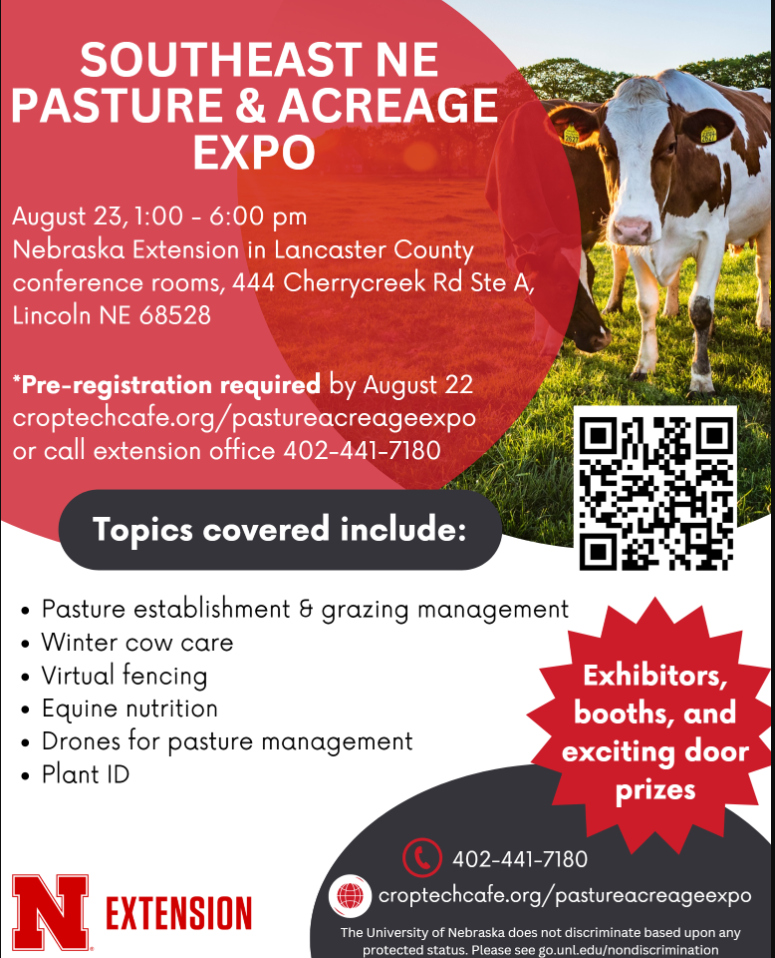
Pasture and Acreage Expo: I often receive questions about pasture management from landowners, tenants, and acreage owners. New this year is a Pasture and Acreage Expo to be held this Friday, Aug. 23 at the Lancaster Extension Center in Lincoln (444 Cherrycreek Rd Suite A) from 1-6 p.m. The program goal is for landowners to maximize the value of their properties and livestock operations. The registration and trade show begin at 1 p.m. with educational programs beginning at 1:30 p.m. Topics include: equine nutrition, virtual fencing, pasture establishment/grazing management, winter cow care, pasture weed management, plant and weed identification, and windbreak management. There is no charge for this event but pre-registration is requested at: https://croptechcafe.org/pastureacreageexpo/. The full agenda can also be viewed at that website. For more information or if you’re interested in being a vendor for this event, please contact John Nelson at: (402) 441-7180.
Renovating Lawns: August 15-September 15 are the best times to seed cool season grasses. Improving Turf in the Fall at https://go.unl.edu/2bn5 is a great resource to walk you through renovation depending on your situation. Some lawns can be easily improved by adding fall fertilizer. Sarah Browning, Extension Horticultural Educator shares, “Lawns that are 10-15 or more years old typically need only two fertilizer applications a year. Make the fall application in late August or early September. On younger lawns, two fertilizer applications during fall are recommended. Make the first one in late August/early September, and the second in mid-late October.”
If overseeding is needed to fill in thinned areas but more than 50% of good turf remains, mow the existing grass 2.5” tall to make the soil prep easier. For lawns needing total renovation, start with a glyphosate (Roundup application) followed by waiting at least 7-10 days to kill the lawn. Mow dead vegetation as short as mower goes to then aerate the lawn three times. Full seeding rate for tall fescue is 6-8 lbs./1,000 sq.ft., and 2-3 lbs. for Kentucky bluegrass. When overseeding into an existing lawn, the seeding rate can be cut in half. Drilling the seed is perhaps best, otherwise, use a drop seeder. Seed half the seed north/south and the other half east/west for even distribution. Then lightly rake to ensure seed to soil contact.
Aug. 28-29 Soil Health and Corn/Soy Clinics will be held at ENREEC near Mead. More details at: https://go.unl.edu/o80f.
Disease and Fungicides
Disease and Fungicides: Tar spot has been found in Polk and York counties at moderate incidence on leaves below the ears in the Shelby/Gresham/Benedict areas thus far. So far, all the samples and photos received have been in fields that were already sprayed. I’ve received a number of questions the past few weeks on why disease is present on fields that were sprayed with a fungicide. In the samples and questions received, I ask where the disease (mostly southern rust or tar spot) is located on the plant. If located below the ear, most likely, the product didn’t penetrate the canopy below the ear leaf. Some producers have asked for increased gallonage (3 gal/acre+) in order to better penetrate the plant canopy. In nearly every case of the questions/samples received, the diseases are below the ear leaf and not above.
If the disease is above the ear leaf in fields sprayed with a fungicide, it’s possible the spores had infected the leaves but hadn’t produced visible signs of lesions until after the fungicide was applied. Products containing triazoles (Group 3) can have some curative (killing) activity to what is already present on the leaf, but they will only work if the fungus was present a few hours to a few days before a leaf was sprayed with a fungicide. It’s also possible with very tall hybrids and lower ear placement that the coverage didn’t reach the ear leaf in some of those situations. Group 7 and 11 fungicides should provide 21-28 days of control. For fields where fungicide was automatically applied at tassel, that residual has most likely worn off or will soon. I’m not aware of any fungicide resistance issues yet in corn in Nebraska.
In corn fields that haven’t been sprayed, I’ve seen low incidence of southern rust at the ear leaf and below. At some point, it may worsen, but as many fields approach dough to dent, it’s helpful that disease didn’t explode yet. Info. about fungicide app if needed at these later development stages is below. Another observation is I tend to see more disease in fields that have been sprayed that had higher rates of nitrogen applied at one time vs. spoon-feeding over time. It’s just an observation and may not hold true, but it’s something observed thus far.
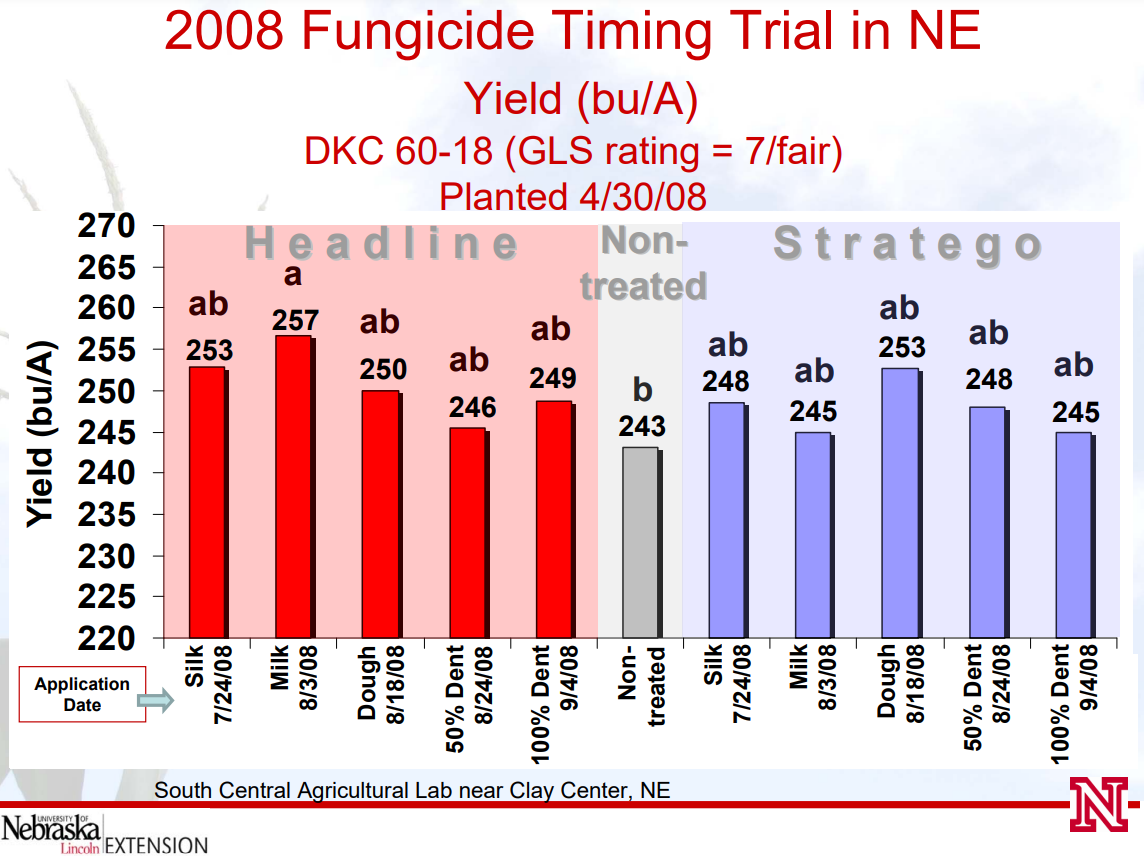
Dr. Tamra Jackson-Ziems had a fungicide timing study for two years (2008 and 2009) at South Central Ag Lab which showed fungicides could be applied through 100% dent (watch pre-harvest intervals) and had no yield difference compared to tassel in a year without southern rust pressure but heavy gray leaf spot pressure. I think we’d be more comfortable with applying no later than dough/early dent instead of 100% dent. The data is why I recommend delaying fungicide apps till needed. Several asked about the need for second fungicide apps if fields have higher disease pressure at ear leaf and below. That’s going to be a farmer/agronomist and field by field decision. The economics are tough this year with one app much less two.

Soybean Management Field Days: Would like to encourage and remind you of the upcoming Soybean Management Field Day at Scott Richert’s farm near Ulysses on Thursday, Aug. 15 from 6-8 p.m. (Reg. at 5:30 p.m.). Google map pin of the location at https://go.unl.edu/smfd3. It’s on the Butler/Seward Co. line on Rd. 21 (Ashland Rd) between Roads D and E in Butler Co. and Roads 434 and 420 in Seward Co. I’m grateful we were able to change this program to be more relevant to the area and showcase what the farmers are doing. If you’re interested in hearing more about how small grains like rye can help with palmer and white mold control, hear about learning experiences with roller crimping, and learn about various soybean seed treatments, we hope you’ll join us! Please RSVP for meal count but walk-ins are welcome (402-624-8030 or https://enreec.unl.edu/soydays).

Fair and Drone Conferences
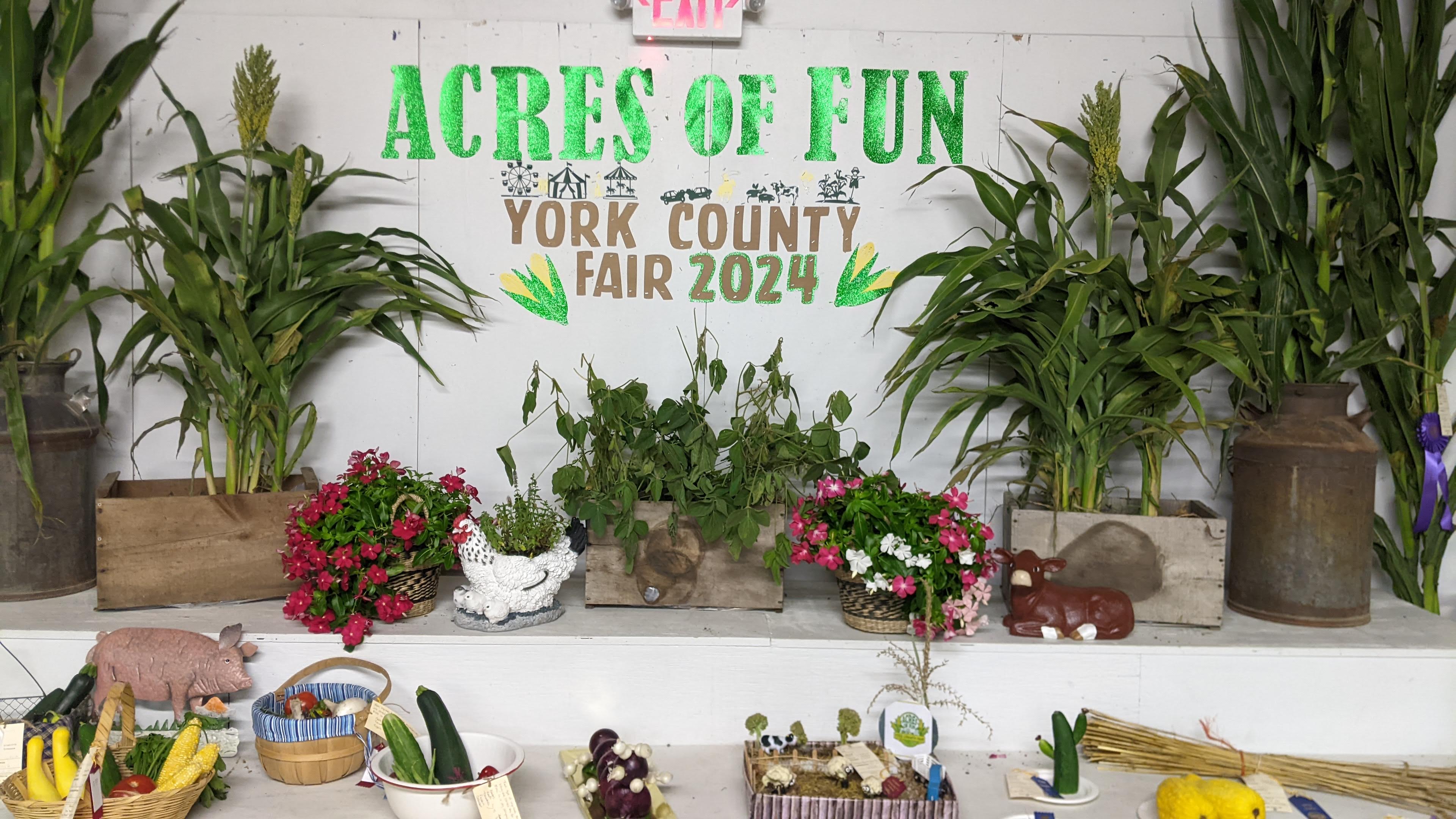
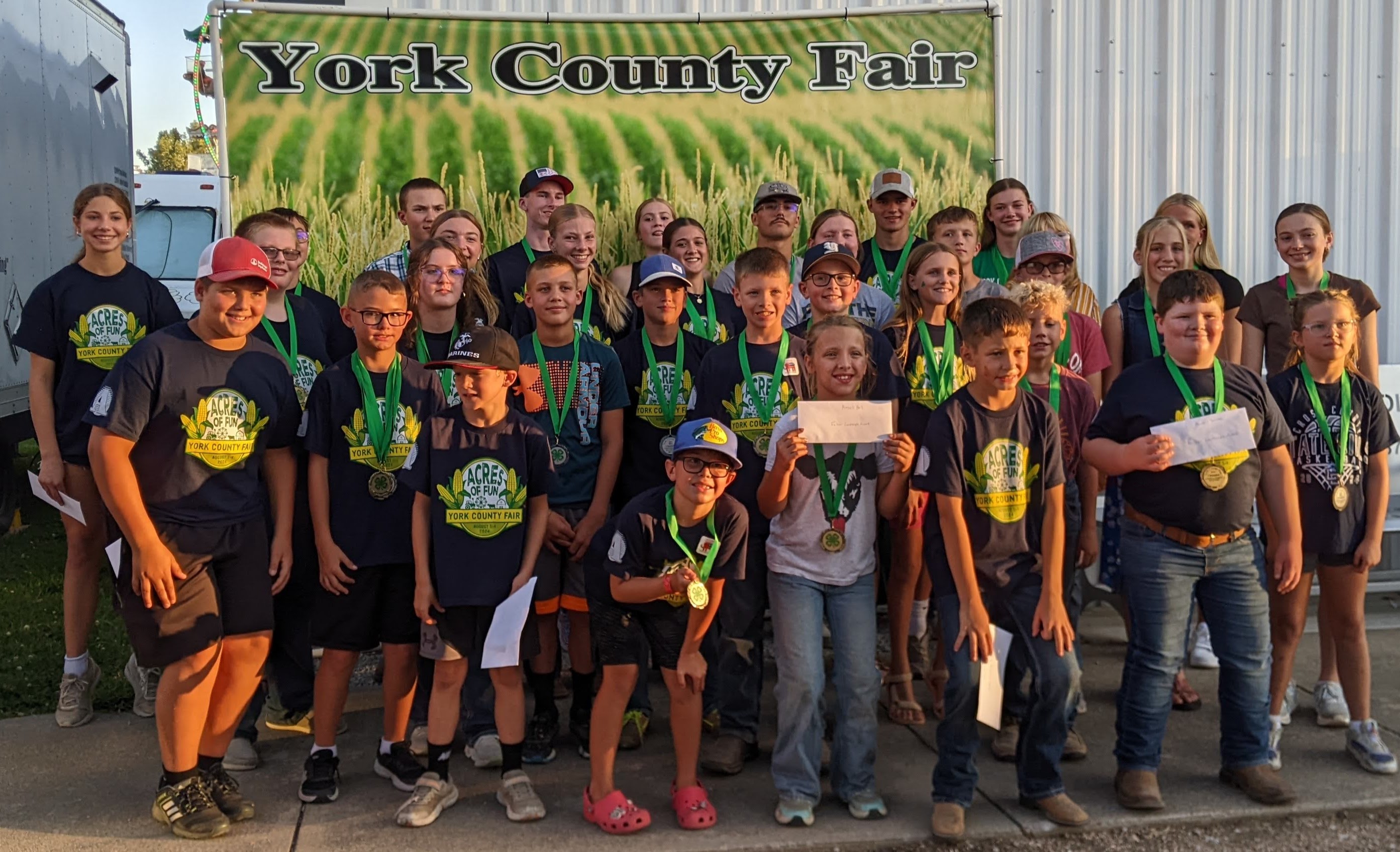
A special Thank You to everyone who helped make the 2024 York County Fair a success! I get to serve with nearly 60 volunteers who serve in Ag Hall each year. Most have served nearly 20 years or more! It’s fun for me to see the buildings and grounds come alive with projects. It’s also fun to observe people catching up with each other and to catch up with people myself. Perhaps my favorite part of fair is seeing the youth awarded for their projects and proudly wearing their medals around the fairgrounds. I’ve been blessed my entire career to work with wonderful people at county fairs and in counties where all the entities work together for the good of the youth, families, and community. Thank You to all the Ag Society, 4-H Council, Extension Board and staff, volunteers, families, sponsors, vendors, police/security who make the York County Fair a success each year! Wishing everyone exhibiting at Seward County Aug. 8-11 all the best as well!
Drone Conference: Nebraska Extension is hosting two drone conferences on Wednesday, Aug. 14 and Thursday, Aug. 15 at West Central Research, Extension and Education Center in North Platte, Nebraska. On Aug. 14th, the Drones in Agriculture Conference will feature Jonathan Rupprecht, Esq. of Rupprecht Law, P.A. Rupprecht is a lawyer, commercial pilot and flight instructor who combines these experiences to help businesses and individuals navigate the complex system of laws for unmanned aircraft systems.
On Aug. 15th, The Nebraska Spray Drone Conference will feature Dr. Steve Li, associate professor and extension specialist of weed science at Auburn University. His research team works on evaluating the application efficiency of spray drones and understanding how to optimize flight and spray parameters to mitigate spray drift.
In addition to these speakers, the conferences will feature presenters from Federal Aviation Administration, Nebraska Department of Agriculture, Nebraska Extension, Pix4D Agriculture, Lifted Vision, Aurora Cooperative, Agri Spray Drones, and Volitant Technologies. Spray drone demonstrations will be provided by Agri Spray Drones and Volitant Technologies. Please refer to the registration page for more information on speakers and conference agendas.
The conference registration fee is $150 per conference, or $250 when registering for both. An educational discount is available to students and educators through an application process available on the registration page. For more information and to RSVP, please go to: https://go.unl.edu/ihd5.
Extension Educator, Dirk Charlson, is also hosting a Part 107 Remote Pilot Exam Prep Course on August 16th from 9 a.m.-5 p.m. for more information and to register for that, please register at: https://cvent.me/x1AQD2. Please contact Dr. Dirk Charlson for more information on this course and/or the drone conference at Email: dirk.charlson@unl.edu or Cell: 402-460-0742 (Text or Call).
Forage Field Day Webinar will begin at 12:30 p.m. on Tues. Aug. 6th. Topics include: Alfalfa revenue insurance program; Sustainable ag and forage management; Summer annual for forage and soil health; Digestible forages in dairy rotations; Optimizing forage availability with cover crop grazing; Making a “safe” harvest plan; and Alfalfa diseases and pests. More information and online registration is required at: https://go.unl.edu/ad2y.
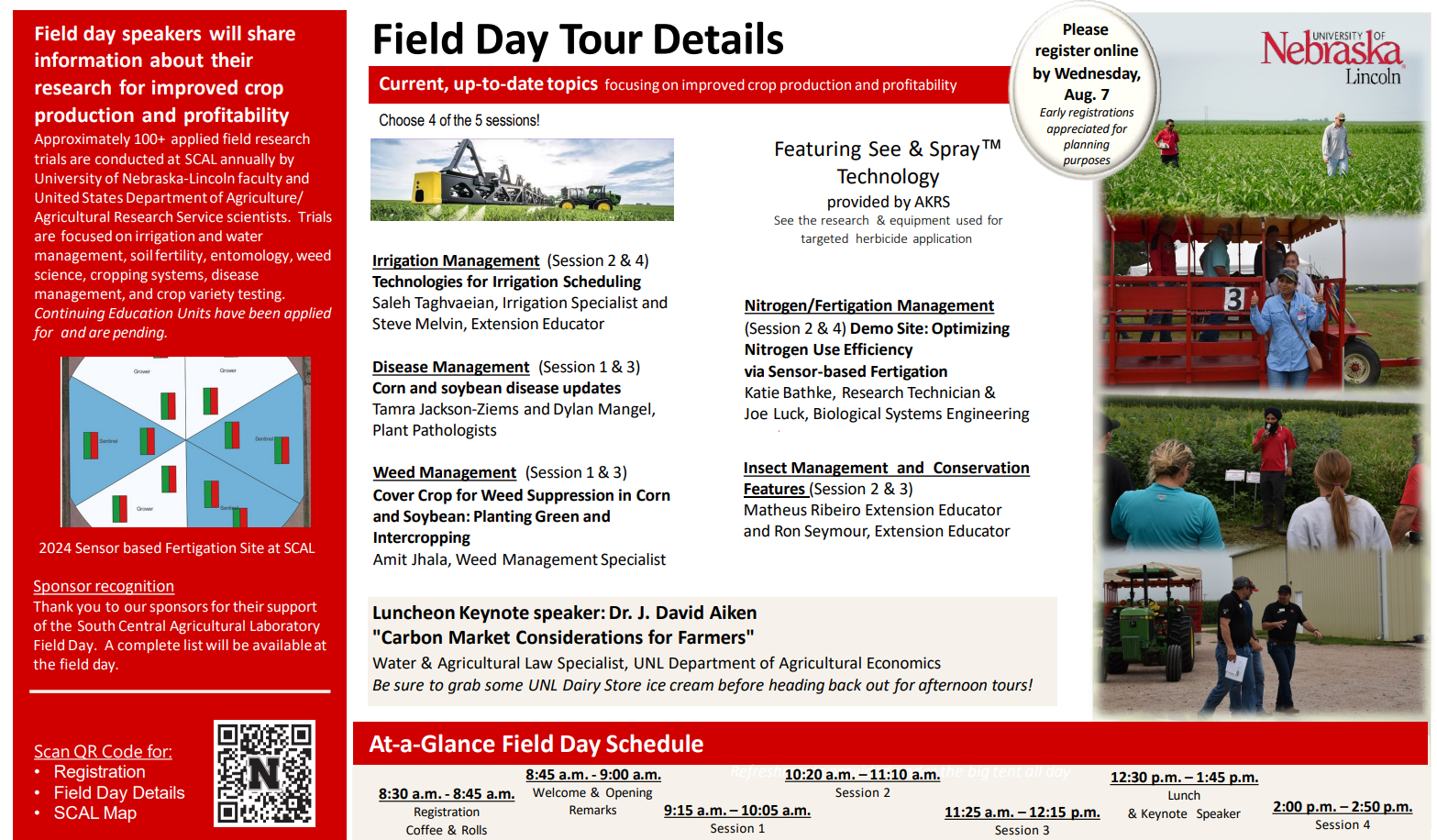
Reminder on Aug. 8 of UNL’s South Central Ag Lab Field Day near Harvard and also the Soil Health Event at the 4-H Building in York.


 JenResources