Monthly Archives: September 2024
Soybean Seed Size-Yield Impacts
Soybean Seed Size and Yield: It’s been awhile since we’ve seen full pods throughout plants (instead of flat pods with shrunken seed) and I’ve also noticed more 4-bean pods on upper nodes of plants this year. It has been deceiving in that soybeans with greener stems and some leaves were right at that point of being ready to harvest in the 13-14.5% range. Now I’m hearing a lot of dry beans are coming out again.
For the most part, soybeans have been of good seed size and quality. There are areas where “bb’s” are being observed again. I’ve heard reports of this from producers in the non-irrigated portions of southern Seward county and Saline counties. In those situations, plants often held onto leaves and just died due to lack of moisture; however, the seed number is still allowing for decent yields. This made me think of information I shared last year from Dr. Jim Specht, Emeritus UNL Soybean Physiologist, so resharing.
During soybean reproductive development, three stages — R1-R2 (flowering), R3-R4 (podding), and R5-R6 (seed-filling) — occur successively during July and August in the growing season. Soybean yield is ultimately a function of two components: the harvested seed number (in terms of unit land area), and the seed mass (weight of the average harvested seed). Seed number is set during the R1 to R4 stages of flowering and podding, though abortion of pods or seeds in those pods can occur in the later R stages. Seed mass (i.e., size) is set during the R5 to R6 stages of seed-filling, as the seeds undergo enlargement until the R6 stage ends at the onset of the R7 (physiological maturity) stage.
Jim and colleagues conducted a 3-year study in the 1980’s looking at the drought-stress sensitivity of seed number and seed size during different R stages. It involved 14 Group 0-Group 4 soybean varieties using seven treatments — each consisting of a single irrigation application, but each treatment differed with respect to the R stage coinciding with the single irrigation event.
When the single irrigation was applied during flowering, they saw a substantial increase in seed number, yet also a lower seed mass compared to the control rainfed treatment. This indicated that when water stress is mitigated during flowering (but not thereafter), soybean plants will set more seeds, but also end up making those seeds smaller when water is not adequate thereafter. We normally don’t recommend irrigation during flowering to avoid disease onset. This year we had some rains with cloudy conditions during a portion of the flowering period. However, rains shut off for the most part after that. I think that’s why we’re seeing the smaller seed size with lots of beans in some of the extremely dry areas.
In contrast, when a single irrigation is applied during seed-fill (R5-R6), fewer seeds are set (and/or retained) due to prior water stress, but the mass of those fewer seeds is optimized due to the late-applied single irrigations that mitigate any coincident water stress.
They also found a response pattern coinciding with an irrigation event occurring at R3.5 and R4.5 (podding) that showed plants in that stage are conditioned to enhance seed mass while still increasing seed number to some degree. Irrigating at this stage resulted in the highest yields among treatments. Thus, why we typically encourage first irrigation of soybeans at R3 in our silt-loam soils. Additional research in the early 2000’s verified this.
The research also showed a full-season multiple irrigation treatment that resulted in maximized seed number, but seed mass was not increased beyond the increase achieved with single irrigation at R3.5. Thus, by irrigating all season (or in a season where rainfall provides no water stress), seed number (which is set before seed mass) is prioritized by stress-free plants relative to optimization. While the weather is outside our control, I hope this is helpful in thinking through this past year. For risk mitigation going forward, I think it shows the importance of planting varying maturity groups to help spread risk with variations in weather conditions each year.
The full articles can be found at UNL CropWatch: One contains a quick method to determine yields using seed size just prior to harvest. The other is about water stress timing.
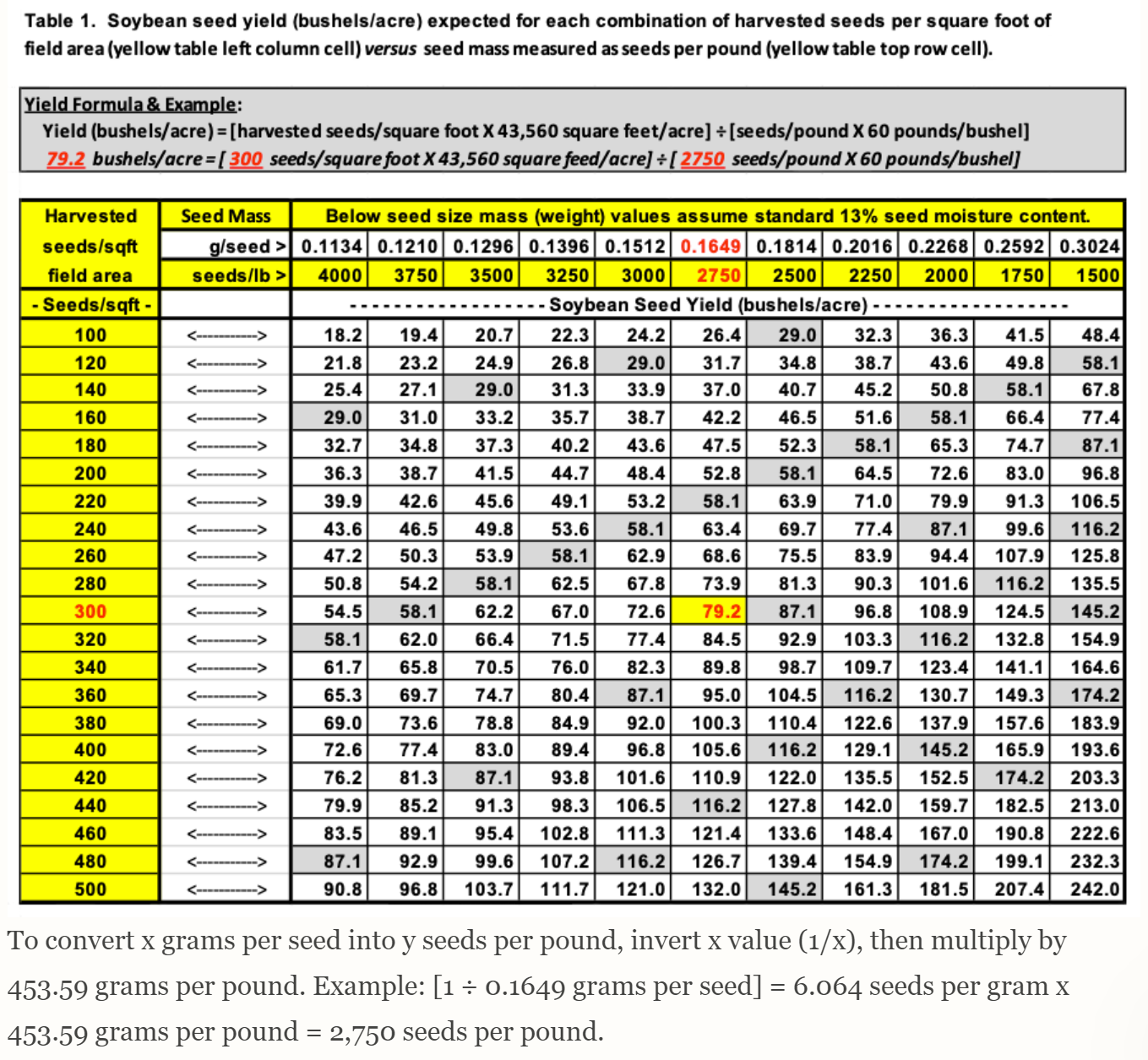
For Alex Harrell from Georgia with the record breaking yield of 218 bu/ac in 2024, he mentioned aiming for large seed size. Based on this chart, assuming around 450 seeds per square foot, he’d be achieving around a 1500 seeds/pound seed size.
In 2023, Alex Harrell reported a record soybean yield of 206.8 bushels/acre in 2023, and he suggested that the harvested seed in field likely had a seed mass of around 1,675 seeds/pound. Thus, a large seed size with (doing the math) around 477 seeds per square foot on a plant population of 77,000 plants/ac.
JenREES 9/22/24
Harvest is here and it’s been wonderful to see some good yields thus far! I was not expecting what we’re seeing for non-irrigated corn yields with how dry it’s been. And, it’s wonderful to finally see good soybean yields again! So far, non-irrigated, depending on area, is going 50-70 bu/ac and irrigated is going 70-high 80’s. The beans are also beautiful in size and quality so far this year!
Harvest Safety: For all of us as we’re on the roads, please be alert and slow down. It’s also important to talk about safety with teens who drive. Key things for us all: don’t pass in any designated “no passing zones”. Also don’t pass within 100 feet of an intersection, bridge, or railroad crossing. Don’t assume a tractor is going to turn right (another reason not to pass within 100 feet of an intersection). I always appreciated how dad pulled off into the right-hand side of the intersection when on highways or paved roads if he wanted to make a left-hand turn in a tractor because one never knows what vehicles behind you will do.
It’s so dry and hard to see on gravel roads when there’s traffic. Please be safe, slow down/stop at intersections and railroad crossings, headlights on, and be watchful/slow down as you come up on slow moving vehicles. For our farm families, we know things happen so quickly so please think safety with machinery, watch for people and objects around you, watch for power lines, and take your time on machinery and bin steps. Brandy VanDeWalle, Extension Educator, shares additional info. on her blog: http://vandewalleviews.com/2024/09/13/harvest-safety-12/. Here’s wishing everyone safety and good yields this harvest season!
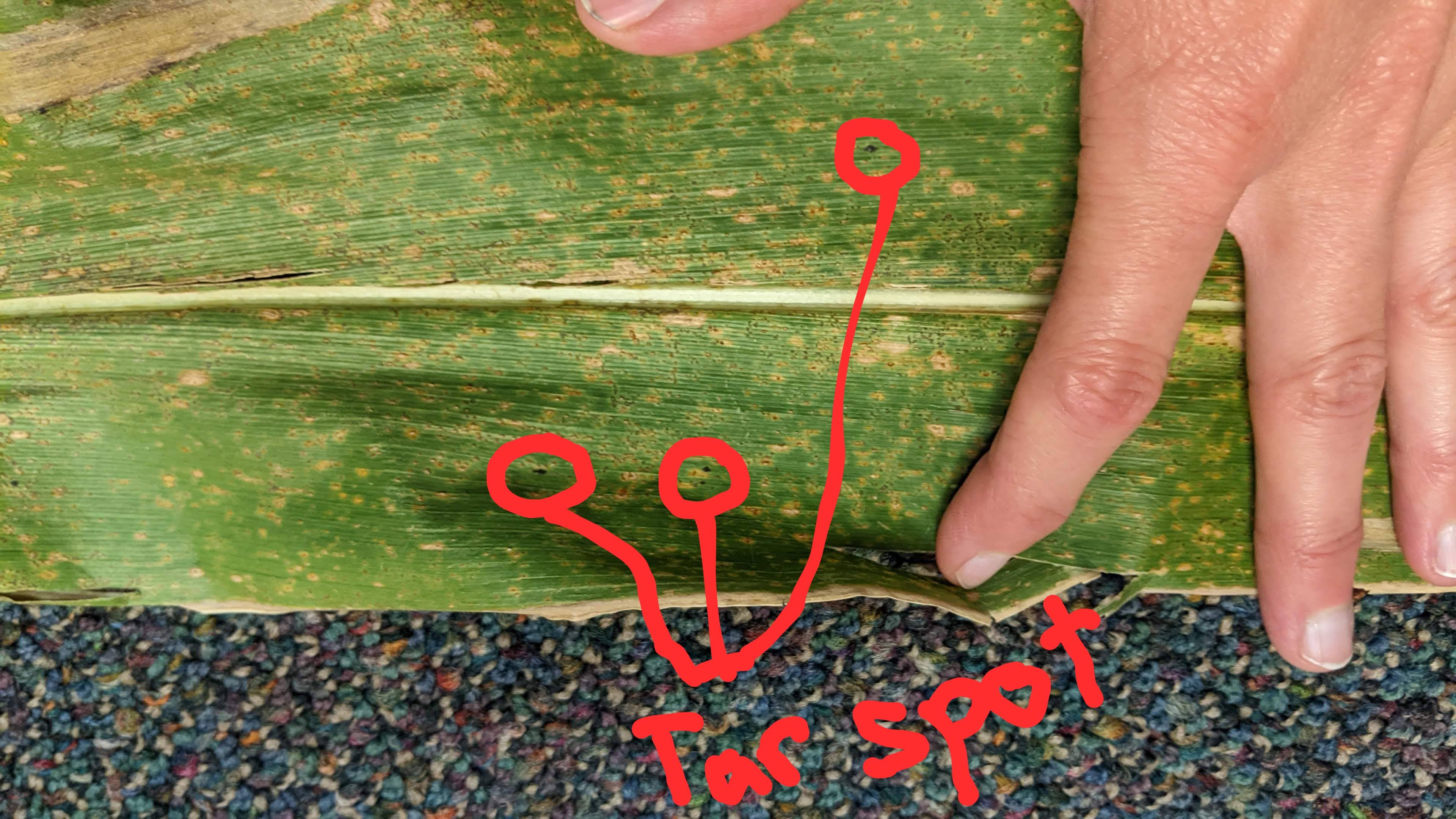
Tar Spot vs. Southern Rust: With corn leaves drying down, people are wondering about the black spots they’re seeing on leaves. Right now, the majority of what is seen is either southern rust teliospores or saprophytic fungi feeding on dead/decaying material. Both of those can make for a dusty harvest. I have photos on my blog showing differences again between southern rust teliospores and tar spot. Tar spot just has a totally different look and color of black compared to what southern rust looks like. Hopefully the photos help ease people’s minds as most of what is out there is southern rust.
UNL Beef Extension online learning opportunities: Nebraska Beef Extension has planned several online learning opportunities that cover a variety of topics (listed below). For more information and registration please visit https://beef.unl.edu.
- Increasing Feed Value of Grazed Corn Residue: Sept. 24, 10 a.m. – 3 p.m. (CDT)
- 2025 Beef Heifer Replacement Price Forecast: Sept. 26, Noon (CDT)
- UNL Heifer Development Center First Year Wrap-up: Oct. 2, 10 a.m. – 3 p.m.
- Cornstalk Grazing Fundamentals, Leases and Agronomic Impacts Webinar Series 7 p.m.:
- Oct. 8, Corn Residue Grazing Fundamentals
- Oct. 10: Grazing Leases, Prices and Finding and Renting Residue
- Oct. 15, Agronomic Impacts for Grazing Corn Residue
- Oct. 17: Producer Panel-Challenges and Opportunities
- Knowing, Growing and Grazing Grass: Oct. 14, 17, 21, 24, 28 & 31, 7:30 – 8:45 p.m. (CDT)
- Pasture, Rangeland, Forage Insurance for Livestock Producers: Oct. 24, Noon (CDT)
- Leveraging Genetics to Improve Profitability: Nov. 4 & Nov. 6, 6:30 – 7:45 p.m. (CDT)
- Cattle Cost of Production, part of the Ag Smart Money Week series: Nov. 4
- Fundamentals of Feeding the Cow: Nov. 11, 14, 18 & 21, 7:30 pm – 8:45 pm

Differentiating Soybean Problems
Crop Update: It was great catching up briefly with so many people at Husker Harvest Days last week! We didn’t get the traditional rain anytime during husker harvest days and soybeans and non-irrigated crops turned quickly. Please slow down and watch out for slow moving vehicles as harvest has started in the area. Here’s wishing everyone a safe harvest season!
For about 10 days I was getting called to fields and answering calls about sudden death syndrome in soybeans. The majority of the situations I was called out to actually wasn’t sudden death syndrome. So, I’d like to share what to look for in order to differentiate soybean diseases. Even though soybeans are turning now, it’s helpful to know what you’re truly dealing with as you think about soybean varieties in the future.
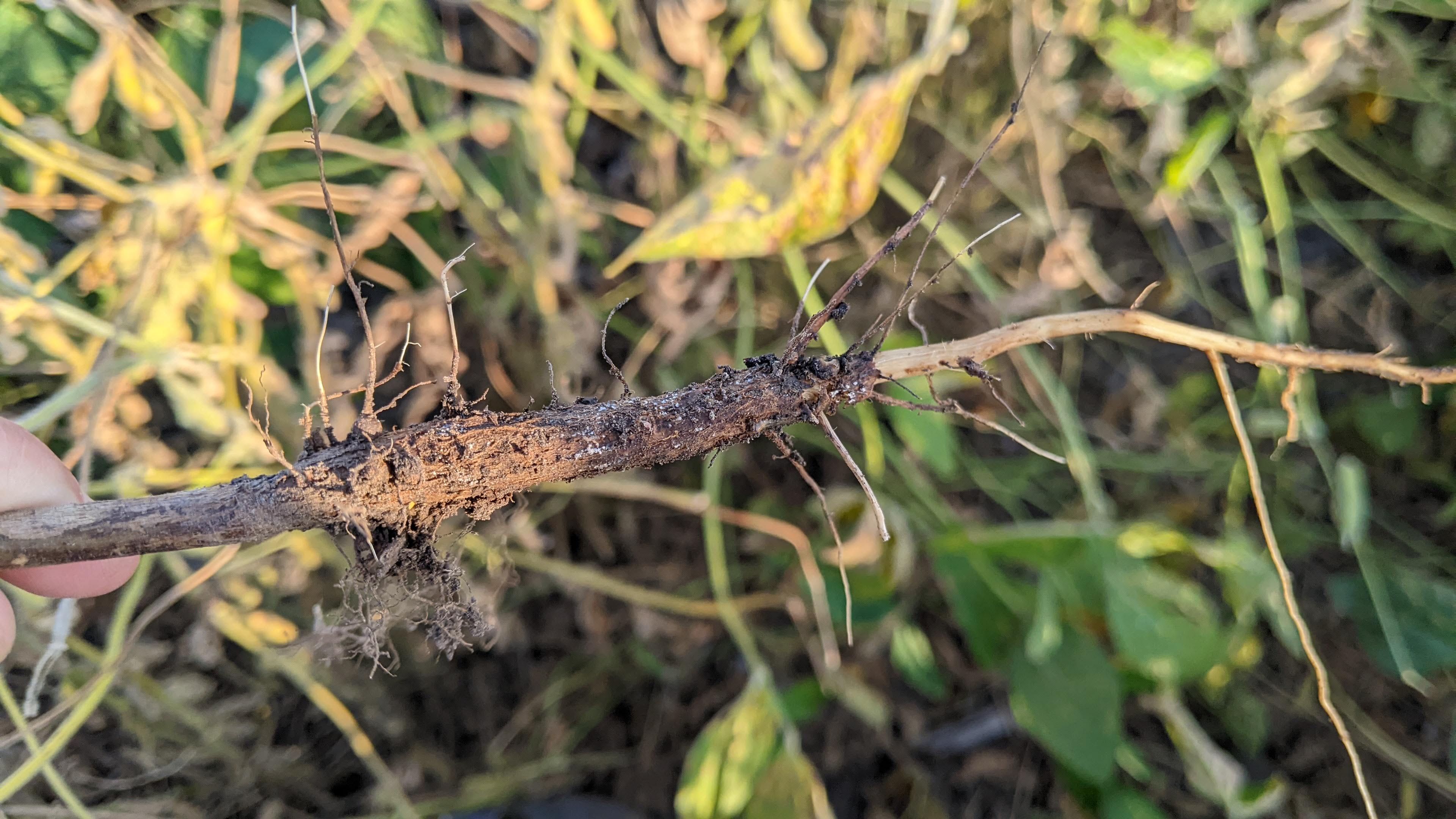
Sudden Death Syndrome (SDS) and Brown Stem Rot (BSR) are both soil-borne fungal diseases in which the fungus is in the root and/or stem but toxins from the fungus create yellowing/brown between leaf veins on the plants. For SDS, I can usually pull those plants very easily from the soil as there’s a clear rotted taproot associated with that disease. Sometimes, you will see gray/blue fungal growth on the rotted taproot as well.
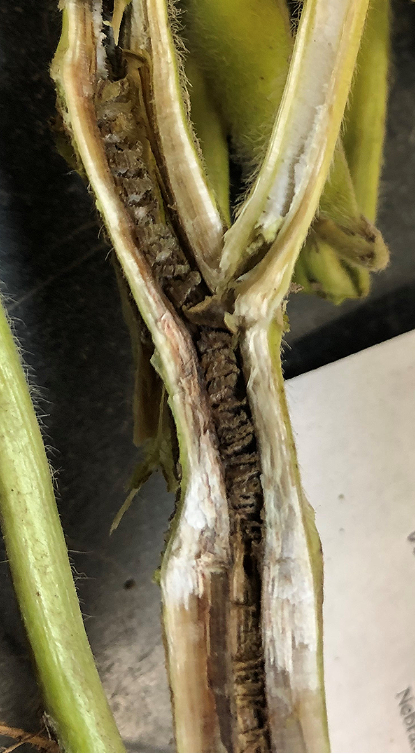
I also split the stem open, especially if the plant didn’t pull easily yet had the leaf symptoms. If the pith is brown in discoloration and is “stacked” like there’s layers of plates of tissue in it, the culprit is most likely brown stem rot. There are instances where you will have both a rotted taproot and a brown stem. In those cases, both SDS and BSR are present.
Brown pith tissue that is hollowed out and has sawdust in it is from dectes (soybean) stem borer. Dectes will not cause the leaf symptoms that SDS and BSR will. It will create a petiole with a trifoliate leaf that “flags”, meaning, it looks wilted and dying.
To be honest, the most common thing I’ve seen is the lack of a disease present. Most of the time, the taproot is in tact with a good root system, and often, there’s either whole fields or “lines” to where the symptoms are present. In those cases, I’ve suggested that this isn’t a disease issue but instead, Triazole fungicide phytotoxicity. These symptoms typically occur 2-3 weeks after a fungicide has been sprayed and either follow a spray pattern (including drift in some cases) or have field-wide distribution. Triazoles are in the Group 3 fungicide class and they move in the xylem (water-carrying vessels of the plant). Thus, their movement is dependent upon moisture. Plants that are drought-stressed lead to the fungicide product being in the tissue longer, allowing for greater injury. Other characteristics that impact the level of triazole phytotoxicity include the fungicide rate, adjuvants used, soybean genetics, and environmental conditions at the time of application. Usually leaves in the upper canopy are impacted as they were undergoing cell division (expanding) during the time of the fungicide application. For more info. please see: https://go.unl.edu/t4cg and https://cropprotectionnetwork.org/news/fungicide-phytotoxicity-on-soybean-triazole-injury-sparks-concern.
Why is this important to know? Because the next time you grow soybeans, it’d be helpful to know if you need to look for specific disease resistance in the variety selected or if one needs to consider a seed treatment for SDS. If the culprit ends up being triazole fungicide phytotoxicity, take note on the fungicide and adjuvants used and also the specific soybean variety as all those factors make a difference.
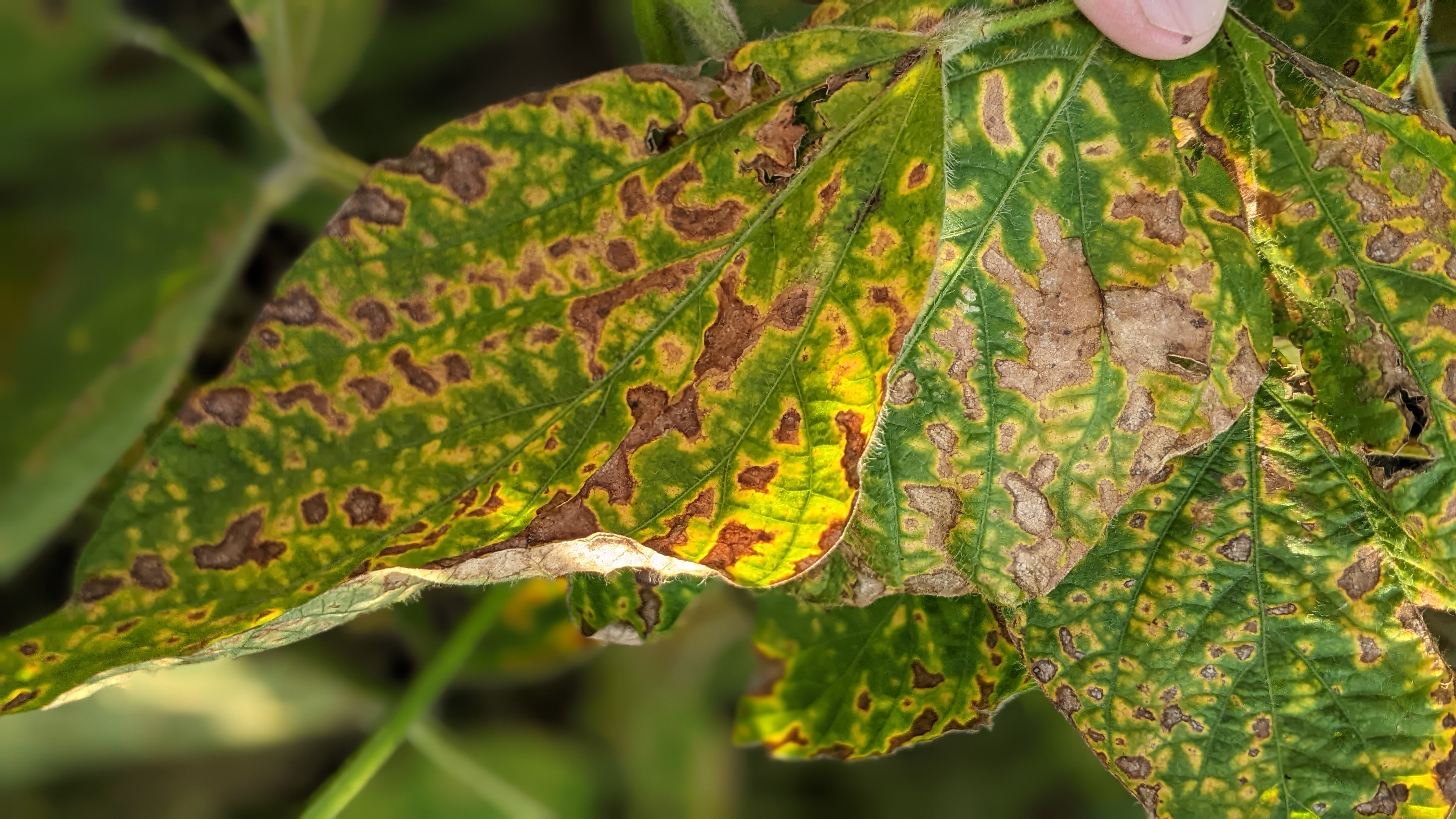
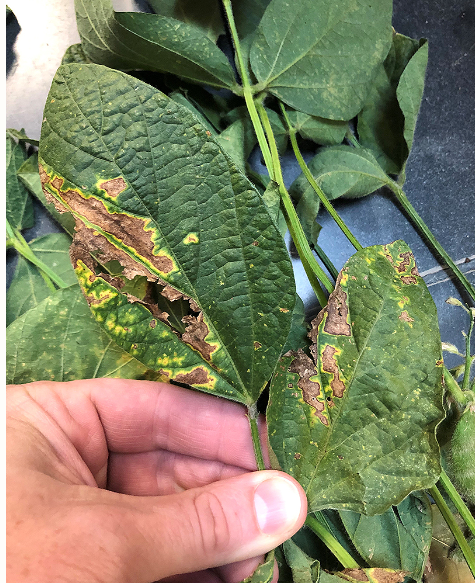
(Above photo captions): Yellow/brown chlorosis between the leaf veins in the left photo due to SDS (but very similar with BSR) (photo by Jenny Rees). Right photo shows yellow/brown chlorosis between the leaf veins due to triazole fungicide phytotoxicity which looks very similar to the leaf symptoms on SDS and BSR. (Photo via Kyle Broderick).


Photos Above: Dectes stem borer hollowed out the pith of this stem. Notice the hollowed out look and absence of “stacking” in the pith. One will also observe sawdust if dectes is present. Splitting the stem further the dectes stem borer can be found (right picture-I accidentally cut it). I don’t worry about dectes for causing yield loss; we’ve been dealing with it in Nuckolls/Thayer counties since before I started in Extension. It eats out the pith but the vascular bundles in soybean are on the outside (think of tree rings)…so they’re not causing xylem and phloem disruption (or very minimal if so). The main issue with dectes is creating lodging if a windstorm occurs prior to harvest.
JenREES 9/8/24
Water use till maturity for Corn: Beginning Dent 5”, ¼ milk 3.75”; ½ milk 2.25”; ¾ milk 1”.
Water use till maturity for Beans: Beg. Seed 6.5”; Full Seed 3.5”; Leaves beg yellow 1.9”.
Crop Update: The past few weeks have resulted in a rapid decline in non-irrigated crops and crops that have been impacted by Goss’ wilt, Fusarium crown rot, and stalk rots. There’s already been quite a bit of discussion about this, but prioritizing harvest for those fields is important.
Even though we haven’t had as long of an irrigation season as 2023, the breakdowns experienced by farmers this year has made it feel long. We unfortunately haven’t received that last August rain that normally finishes us up on corn. Corn still needs 1″ of soil moisture at 3/4 starch. Be careful not to quit applying water too early on beans. Soybeans still need nearly 2″ of water when the leaves begin to turn yellow. Technically, when the white membrane has separated from the seed inside the top several pods, they are no longer using moisture. Evaluating the soil moisture status in each field will help you determine if/how much more irrigation you need. Here’s wishing a safe finish to the growing season and harvest to all!

Fall Planting: Kelly Feehan, Extension Horticulture Educator shares the following, “Fall is a good time to plant, but timing is important. For lawns, seeding is recommended by September 15, especially turf-type tall fescue. Kentucky bluegrass could be seeded a little later and be fine, unless there is an early hard freeze. Fall is a very good time to plant many shrubs, shade trees and evergreens. Shade trees can be planted almost up until soil freeze. Evergreens are best planted in September or early October to allow time for root establishment and reduce the risk of winter dessication. While it’s getting late to plant most vegetables, cool season vegetables with short days to maturity could be planted in early September for a fall crop. This would include vegetables like radishes, green onions, and lettuce. Spring flowering bulbs and garlic are best planted after soil temperatures have cooled, usually in early October. It’s important to keep the soil of newly planted plants moist, but not saturated, up until the soil freezes.
Early September is the best time to divide peonies. While peonies can go years without division, dividing them can increase blooming for many years. Peony division also helps reduce disease and provides more plants for the garden. To divide peonies, first cut the stems to near ground level. Next, dig up the plant, saving as many roots as possible. Remove soil from roots gently by hosing it off. Using a sharp knife, divide the root clump into small sections. Each division should have healthy roots and three to five buds, which are usually pinkish. When replanting, select a location with at least half a day of full sunlight, but more is better. Dig a hole large enough to hold the root ball, but shallow enough so buds are only covered by one to two inches of soil. Planting peonies too deep can prevent them from blooming. After planting, water thoroughly; then keep the soil moist up until the ground freezes to encourage root growth.”
JenREES 9/1/24
Reminder this week of York Co. Corn Growers Plot Tour 5:30-7:30 p.m. near Doug Perdue’s on Sept. 3rd and the Interseeding Cover Crops Field Day at Jordan Uldrich’s near Milligan from 2-4 p.m. on Sept. 4th.

Fleas: I hope we’re past this situation, but sharing in case. For about two weeks, we received a number of calls about fleas in homes from the York/Polk County area. I’m unsure why we’re seeing higher numbers here compared to other counties. I was even seeing them coming into buildings when doors were left open and would suggest closing doors. The majority of these situations involved cats that were infested, but a few also involved situations with no indoor pets. According to Kait Chapman, Extension Entomologist, optimal conditions for flea development is 70-85F and 70% humidity. We’ve certainly had a lot of humidity but those cooler conditions happened either before or after the first week of August.
Regarding bites, adults typically get bit below the knee and children all over the torso. Families without pets can get fleas from wildlife and feral animals. Flea larvae look like legless worms that live in pet resting areas; adults can live there too. We’ve received a couple of calls on treating animals and would recommend you contact a veterinarian instead of us. Wash and vacuum all pet resting areas. Vacuuming alone is difficult to control the larvae. Professional companies can provide insecticide applications. External treatment may be needed regardless if one owns pets or not. Wildlife removal of outdoor animals nesting under the porch or crawlspace is also a management tool. For more information, please see: https://go.unl.edu/oz96. Another resource with more in depth information is: https://www.hud.gov/sites/documents/HUDGB7C6GUID.PDF.
Pricing Silage: I’ve had a few questions regarding silage. Shannon Sand, Extension Ag Economist, shared the following, “Determining a fair market value for silage involves several considerations. UNL research has shown that corn silage priced standing in the field before harvest should be valued at 7.65 x the price per bushel of corn where a ton of corn silage is harvested at 60-65% moisture. This multiplier value is consistent regardless of corn price. As of August 20, 2024, December, corn for the West Central part of Nebraska is estimated to be at $3.71 per bushel. Corn at $3.71x$7.65=$28.38 per ton. This accounts for harvest grain price, not having to combine or haul grain to market, increased grain price due to storage and the cost of silage storage.
When estimating costs in the silo, harvest, hauling and packing expenses can vary. The 2024 Nebraska Farm Custom Rates publication showed an average custom rate of $15.13 per ton. At $28.38 per ton in the field plus $15.10 per ton for harvesting, hauling, and packing we come out to $43.48 per ton in the pile. When $3 per ton is added for storage expense, the price per ton is $46.48.
When valuing silage out of storage and into the bunk, remember the ensiling process will cause shrink and dry matter loss from 10-20% or more from when silage is packed into the silo until it is removed to be fed. With 10% dry matter shrink, the value of silage delivered to the bunk would be $51.13 per ton. Ultimately, the price of silage is a dynamic factor influenced by market conditions, production costs, and more. By utilizing some calculations, Nebraska producers can gain a greater understanding of their operation’s finances.”
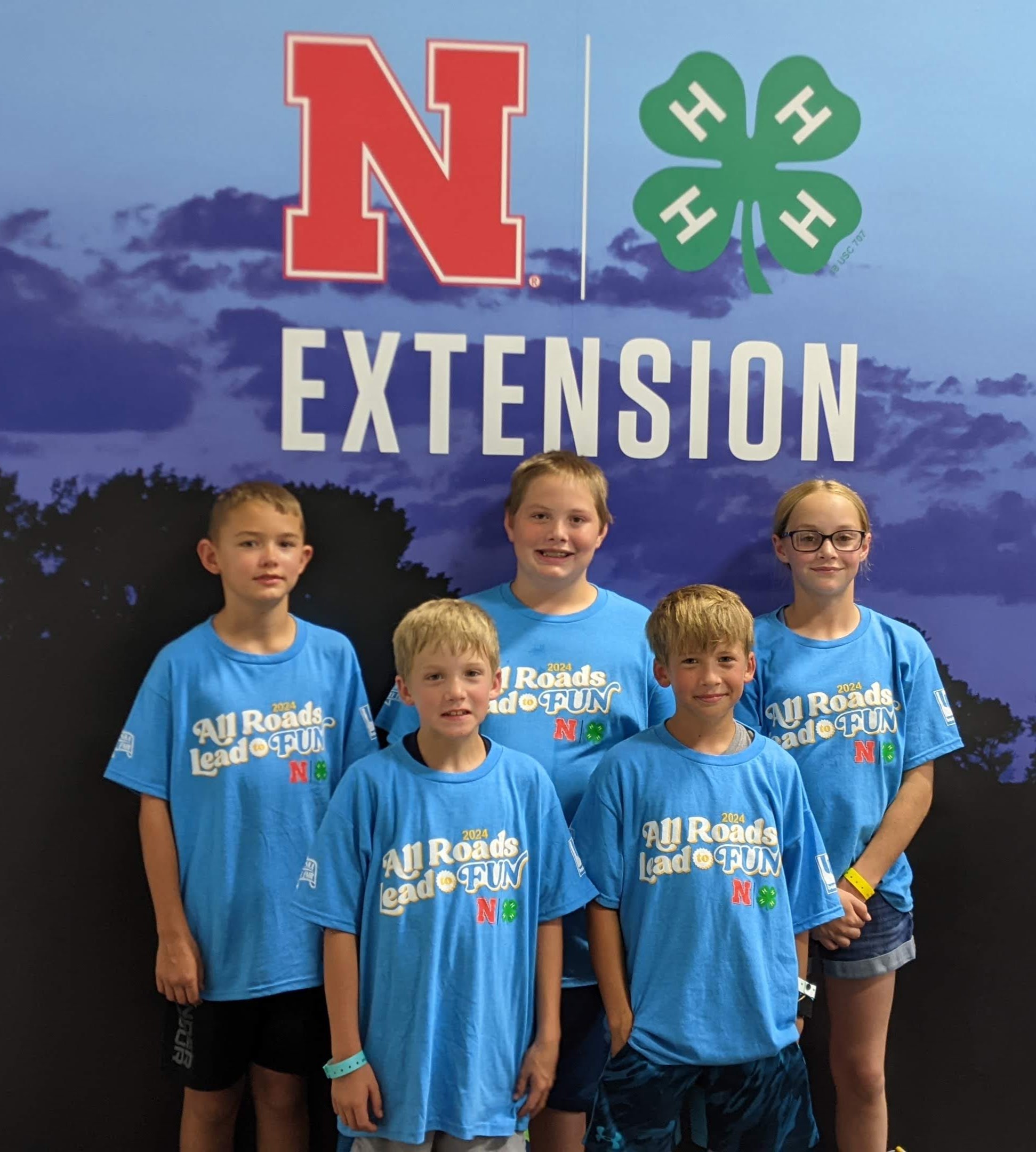
State Fair: Congrats to all the 4-H and FFA youth who exhibited at the Nebraska State Fair! I’m especially grateful for and proud of a group of youth who have worked really hard with plant and insect identification through the years. Some of them chose to compete at State Fair this year. York County youth won 1st place in the Junior, Intermediate, and Senior Team divisions of the 4-H Weed and Grass ID Contests at State Fair this year! It’s exciting to see youth continue to learn and grow and develop these life skills!




 JenResources