JenREES 9/22/24
Harvest is here and it’s been wonderful to see some good yields thus far! I was not expecting what we’re seeing for non-irrigated corn yields with how dry it’s been. And, it’s wonderful to finally see good soybean yields again! So far, non-irrigated, depending on area, is going 50-70 bu/ac and irrigated is going 70-high 80’s. The beans are also beautiful in size and quality so far this year!
Harvest Safety: For all of us as we’re on the roads, please be alert and slow down. It’s also important to talk about safety with teens who drive. Key things for us all: don’t pass in any designated “no passing zones”. Also don’t pass within 100 feet of an intersection, bridge, or railroad crossing. Don’t assume a tractor is going to turn right (another reason not to pass within 100 feet of an intersection). I always appreciated how dad pulled off into the right-hand side of the intersection when on highways or paved roads if he wanted to make a left-hand turn in a tractor because one never knows what vehicles behind you will do.
It’s so dry and hard to see on gravel roads when there’s traffic. Please be safe, slow down/stop at intersections and railroad crossings, headlights on, and be watchful/slow down as you come up on slow moving vehicles. For our farm families, we know things happen so quickly so please think safety with machinery, watch for people and objects around you, watch for power lines, and take your time on machinery and bin steps. Brandy VanDeWalle, Extension Educator, shares additional info. on her blog: http://vandewalleviews.com/2024/09/13/harvest-safety-12/. Here’s wishing everyone safety and good yields this harvest season!
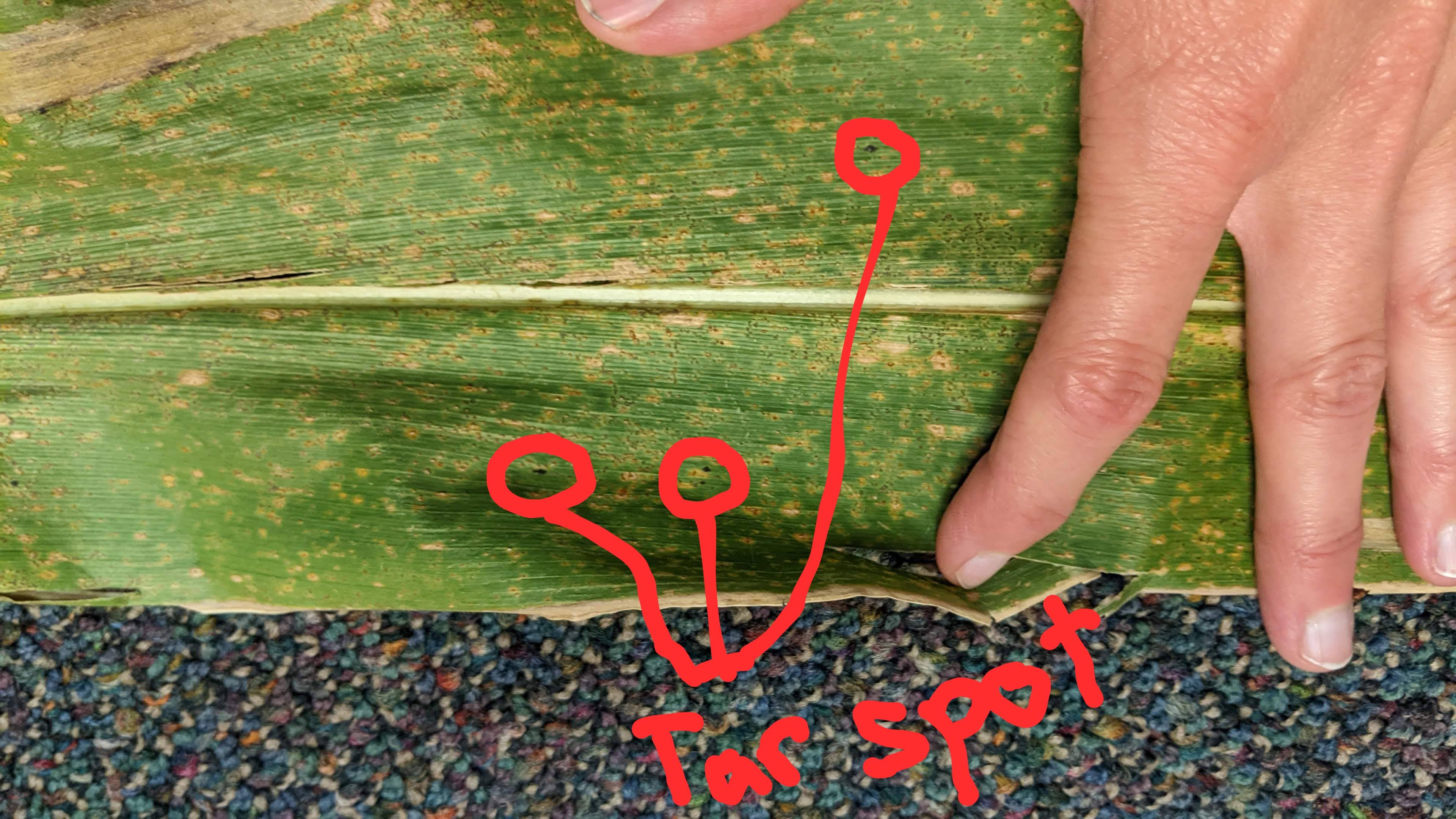
Tar Spot vs. Southern Rust: With corn leaves drying down, people are wondering about the black spots they’re seeing on leaves. Right now, the majority of what is seen is either southern rust teliospores or saprophytic fungi feeding on dead/decaying material. Both of those can make for a dusty harvest. I have photos on my blog showing differences again between southern rust teliospores and tar spot. Tar spot just has a totally different look and color of black compared to what southern rust looks like. Hopefully the photos help ease people’s minds as most of what is out there is southern rust.
UNL Beef Extension online learning opportunities: Nebraska Beef Extension has planned several online learning opportunities that cover a variety of topics (listed below). For more information and registration please visit https://beef.unl.edu.
- Increasing Feed Value of Grazed Corn Residue: Sept. 24, 10 a.m. – 3 p.m. (CDT)
- 2025 Beef Heifer Replacement Price Forecast: Sept. 26, Noon (CDT)
- UNL Heifer Development Center First Year Wrap-up: Oct. 2, 10 a.m. – 3 p.m.
- Cornstalk Grazing Fundamentals, Leases and Agronomic Impacts Webinar Series 7 p.m.:
- Oct. 8, Corn Residue Grazing Fundamentals
- Oct. 10: Grazing Leases, Prices and Finding and Renting Residue
- Oct. 15, Agronomic Impacts for Grazing Corn Residue
- Oct. 17: Producer Panel-Challenges and Opportunities
- Knowing, Growing and Grazing Grass: Oct. 14, 17, 21, 24, 28 & 31, 7:30 – 8:45 p.m. (CDT)
- Pasture, Rangeland, Forage Insurance for Livestock Producers: Oct. 24, Noon (CDT)
- Leveraging Genetics to Improve Profitability: Nov. 4 & Nov. 6, 6:30 – 7:45 p.m. (CDT)
- Cattle Cost of Production, part of the Ag Smart Money Week series: Nov. 4
- Fundamentals of Feeding the Cow: Nov. 11, 14, 18 & 21, 7:30 pm – 8:45 pm


Posted on September 22, 2024, in JenREES Columns and tagged Beef online learning opportunities, harvest safety, southern rust vs. tar spot. Bookmark the permalink. Leave a comment.


 JenResources
Leave a comment
Comments 0