Category Archives: Professional Development
Peer Groups
This past week I attended the National Association of County Agricultural Agents meeting in Dallas, TX. It’s a joy to see my ag educator/agent friends serving people through the U.S. and its territories, to talk through local issues, learn from and encourage each other. Extension is truly like a big family, both within Nebraska, and outside of it, and I’m grateful for that and for peer groups in my life over time. Even though I took care of clientele during my time away, it’s also nice to physically get away at times to reset.
A highlight of these meetings is a tour of local ag for that State. My tour was on cotton production including touring a cotton gin. Others of you probably know this, but I didn’t realize the cotton flowers were so beautiful! They begin white when they bloom. Once they pollinate, they turn pink, then turn into the boll which eventually form burs around it. Cotton is either stripped with a stripper header like some harvest wheat (which essentially leaves the stalk standing), or it is harvested by picking where only the bolls are removed. Most of the farmers in this area of Texas use stripper headers. Some fun facts: a cotton boll has 4 compartments, each with 7 seeds in it. Each bale of cotton removed from a field goes through the gin individually. It comes in at about 10-12% moisture and is dried to 6-7% to allow for easier cleaning. The cottonseed, burrs, sticks, etc. are removed from it and the cleaned cotton is baled and bagged with a sticker tracing that bale back to the original field. The grower is paid for the cleaned cotton and the cottonseed (and often more money is made from the cottonseed than the cotton). The rotation in the area I toured was corn/cotton.
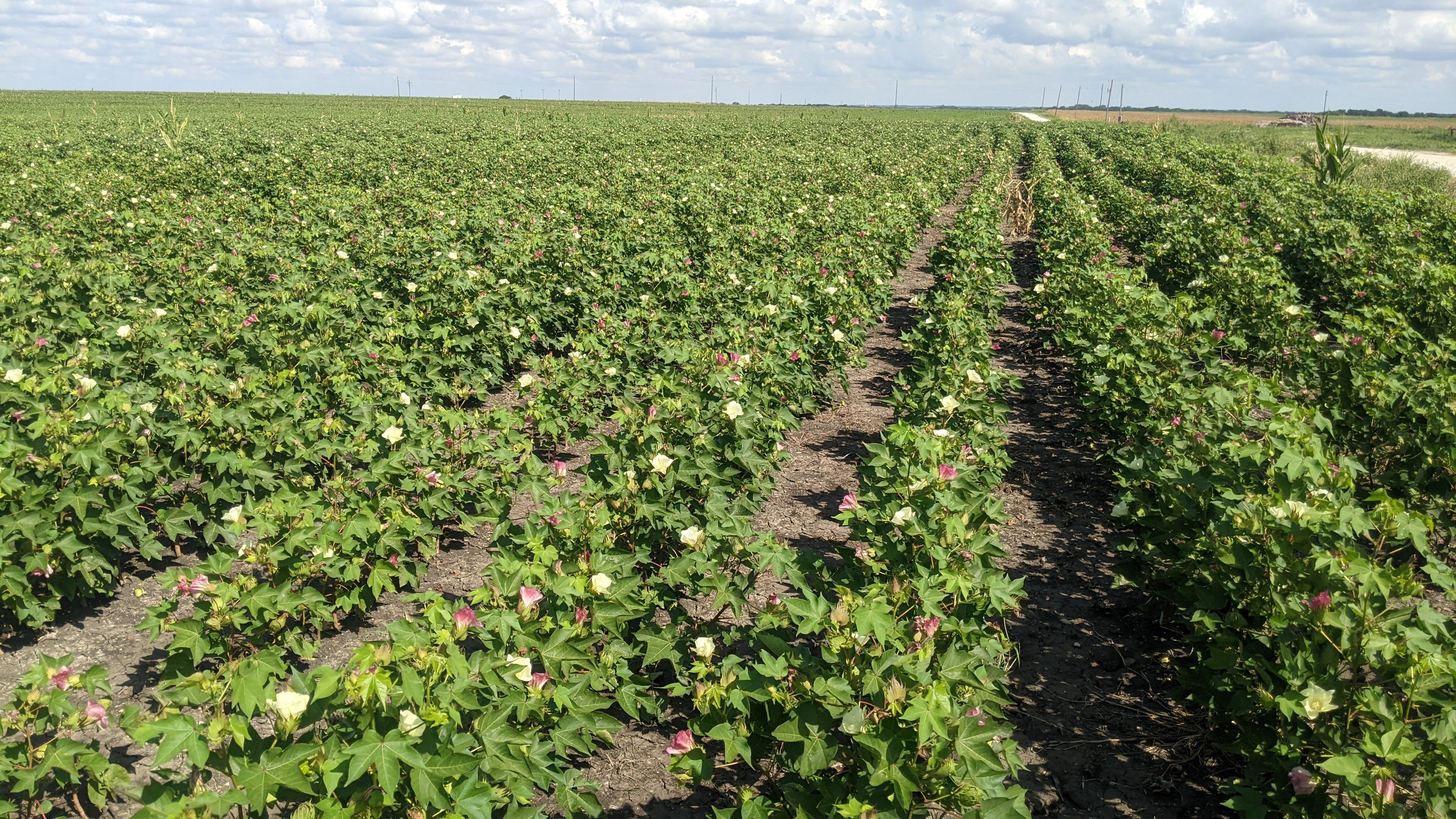


(Captions for photos above: Cotton field (top left); Several flower and boll stages in this pic (top right); First flowers are this beautiful white color but don’t smell (bottom left); How cotton comes into the gin compared to cleaned cotton (bottom middle); cottonseed compared to the remaining material removed from the cleaned cotton (bottom right).)

I also presented on the importance of peer groups. Participating in peer groups with like-minded individuals (regardless of one’s career or the topic) is a rewarding way to learn, encourage, and be more innovative. In 2020, in the midst of covid while serving a large area, one grower encouraged me to connect him to the growers I was telling him about who were like-minded in their thinking regarding regenerative agriculture. So, we started a small soil health support group with growers from three counties and myself, met via zoom at first, then did a late summer driving tour of farms. I’ve watched deep friendships develop, sharing of equipment across county lines, and supporting each other’s businesses including cover crop seed sales, biological product sales, seed treatment, and seed cleaning. These specific peer groups have grown to around 30 farmers in a few groups from 6 counties. The goals were connection of like-minded farmers who were humble and vulnerable in sharing successes and failures, openminded in trying new things, and ultimately that collectively we could “fail forward faster” in finding meaningful solutions to reducing chemical and nutrient inputs.
Because the growers wanted to obtain data around some of their efforts, since 2020, they’ve completed 19 Nebraska On-Farm Research Studies in the regenerative ag space. And because farmers like to hear from other farmers, they have shared on these studies at 13 Ag Industry and Extension meetings thus far. In ag, it’s so easy to isolate and feel alone. Perhaps many careers are this way? Would encourage anyone to consider joining or creating a peer group with like-minded individuals if you’re not already in one.
On-Farm Research: I’m so grateful for all the farmers who have/continue to work with me/my peers via on-farm research to collect meaningful data that benefits all of us! The Nebraska Soybean Board followed a few of our farmers with on-farm research efforts last harvest season and had the following short video created that highlights the importance of on-farm research if you’d like to know more: https://youtu.be/XUyouEjYgIU?si=KIVfrXrDR9pSuN_D.


Public Issues Leadership Development Experience
As President-elect of the Nebraska Agricultural Agents Association, I had the opportunity to participate in the Public Issues Leadership Development (PILD) Conference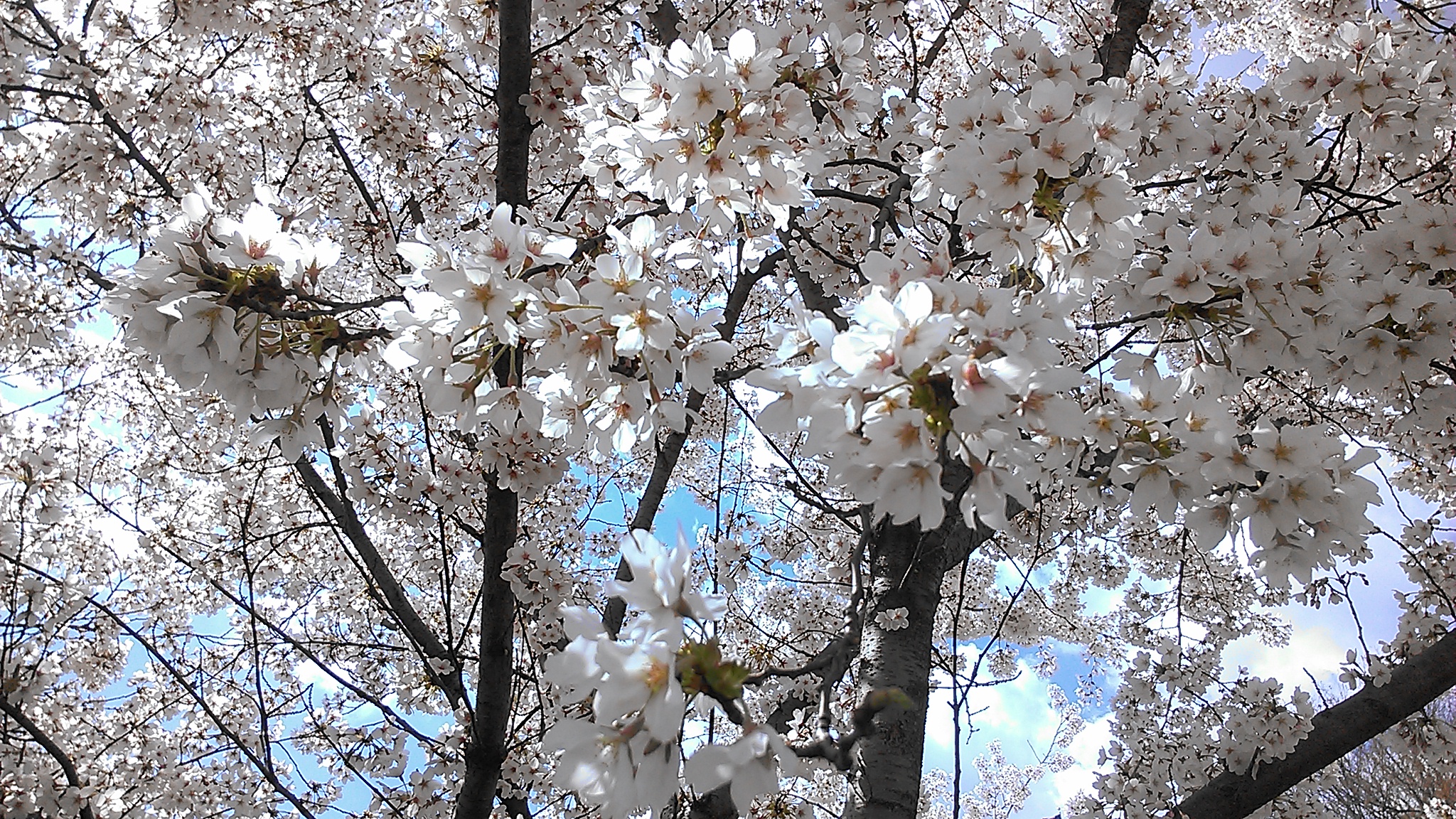 in April of 2014. The goal of PILD is professional development and public issues education. I never had the opportunity to visit D.C. that time of year before and the cherry blossoms were just opening when the group of us from Nebraska arrived. By the time we left they were in full bloom-just beautiful with an amazing fragrance! Our delegation was Monte Stauffer (representing 4-H), Patricia Jones (representing Food/Nutrition), Diane Vigna (representing community development), and myself along with our Dean and Director Dr. Chuck Hibberd.
For me, these conferences are about networking and people and I truly enjoyed seeing my Ag Extension colleagues from across the U.S. The conference was very much focused on celebrating 100 years of Cooperative Extension and the challenges/opportunities Extension faces in the next 100 years.
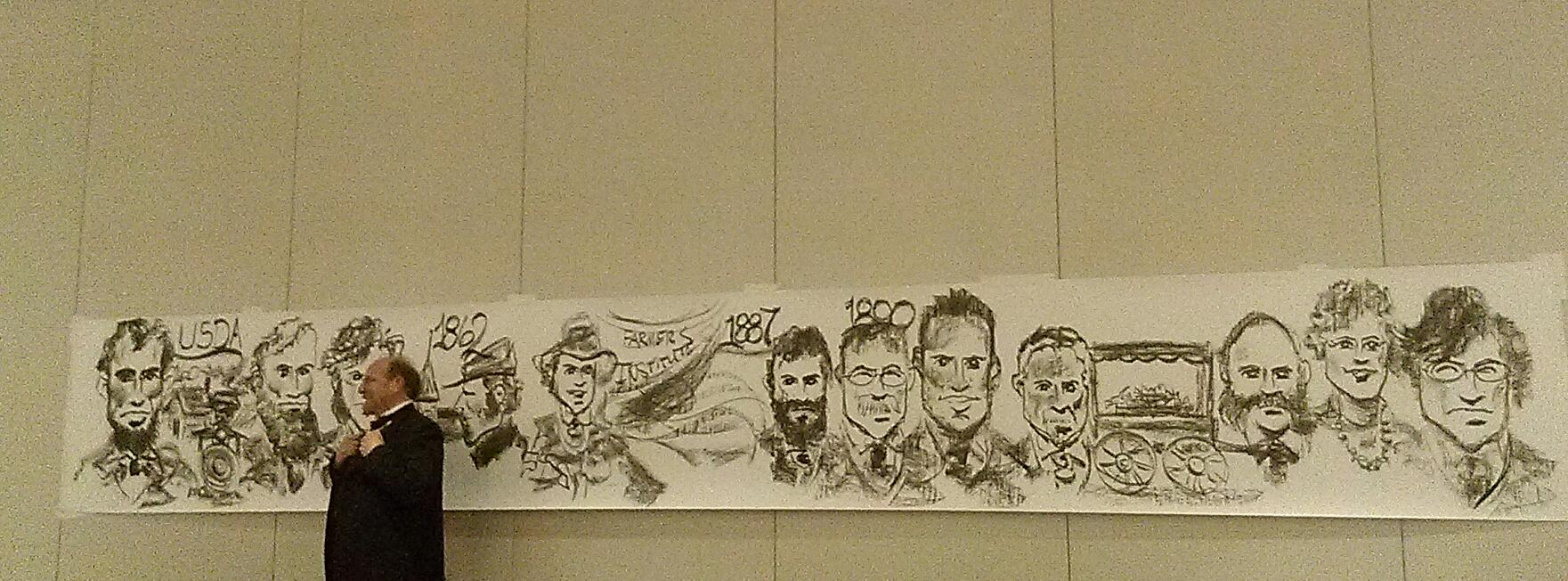
Presentation on the History of Cooperative Extension by a North Dakota State University alum where he does charcoal drawings as he speaks. I had seen this at an NACAA conference in the past; he is so talented!
Sessions included discussing how to determine public value of what we do and the debate continues to be how do we extrapolate information and who gets the credit. I think Nebraska is on track with much of what we do in this area as we’ve had many similar discussions here. There were also discussions about the relevance of Extension and the need to share information several ways; again, I think we have people in Nebraska leading the way in this effort. But it is critically important for ALL of Extension to be repackaging our information several ways to reach our customers where they view information.
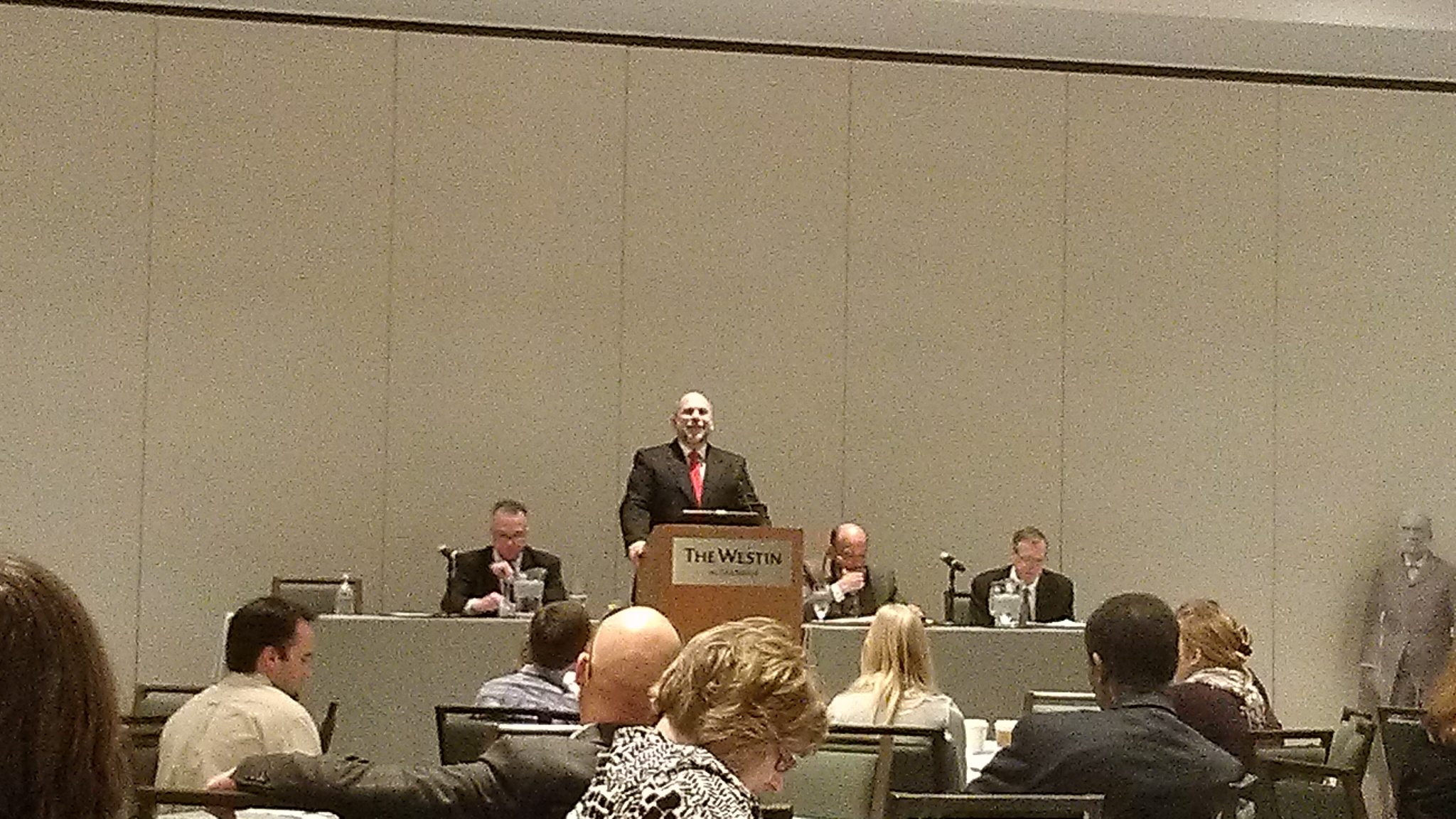
John Wilson presented on the Missouri River Flood in a panel discussion regarding controversial issues in Cooperative Extension. He did a great job as always! Additional controversial issues included fracking and the oil boom in other states.
We had the opportunity to interact with National Institute of Food and Agriculture program leaders to express the critical needs for the people we serve in hopes of influencing where research and extension initiatives should be focused in future grant releases. We also spent a large portion of time discussing different bills of importance to all of our States and determining the key messages we wished to share on the Hill with our Congressmen and Senators.

Wednesday was the highlight for me. On Wednesday, each State visits their Congressmen and Senators on the Hill. The Ag Section rep typically sets up the visits, so I was thankful for my experiences in organizing CWF trips! We began the morning at the Nebraska Breakfast and had the opportunity to visit with Senator Fischer immediately afterward. We had the amazing opportunity to meet with all of our representatives and/or their staffers that day: Congressman Smith, Senator Johanns, and then Monte and I split up so he visited Congressman Terry’s Office while I visited Congressman Fortenberry’s Office. In between we also had a Capitol tour and visited the Senate Gallery as Monte and Pat had never experienced that before. It was a wonderful day with great visits sharing the great things Extension has done and continues to do for the people of Nebraska! Our Senators and Congressmen also supported the Smith-Lever bill for recognizing 100 years of Cooperative Extension, so we were happy about that!
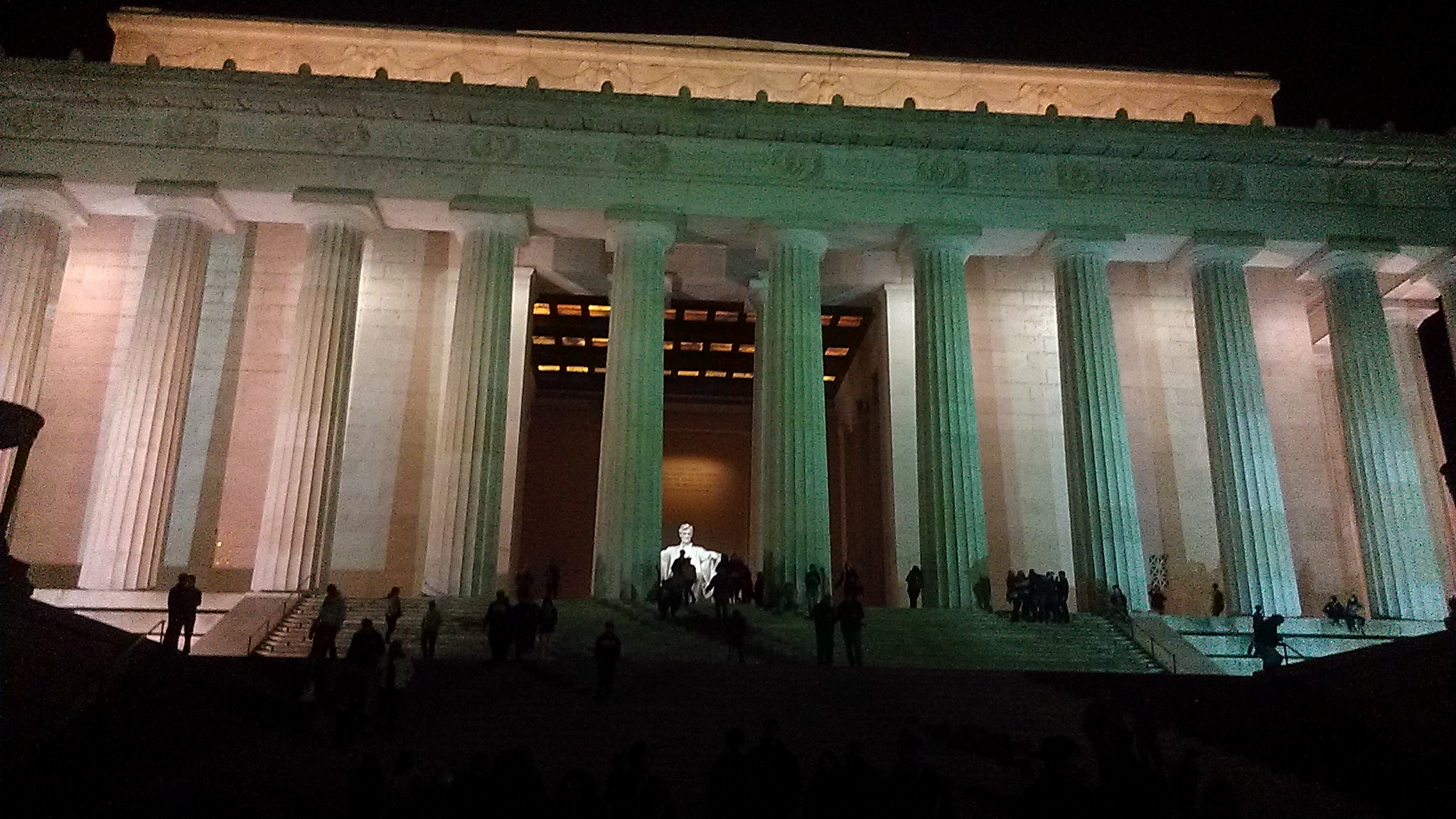
Lincoln Memorial during night tour of memorials and monuments the first evening-always neat to see.

We had an amazing seafood supper during one of the evenings with Dr. Hibberd who graciously paid for our meals.
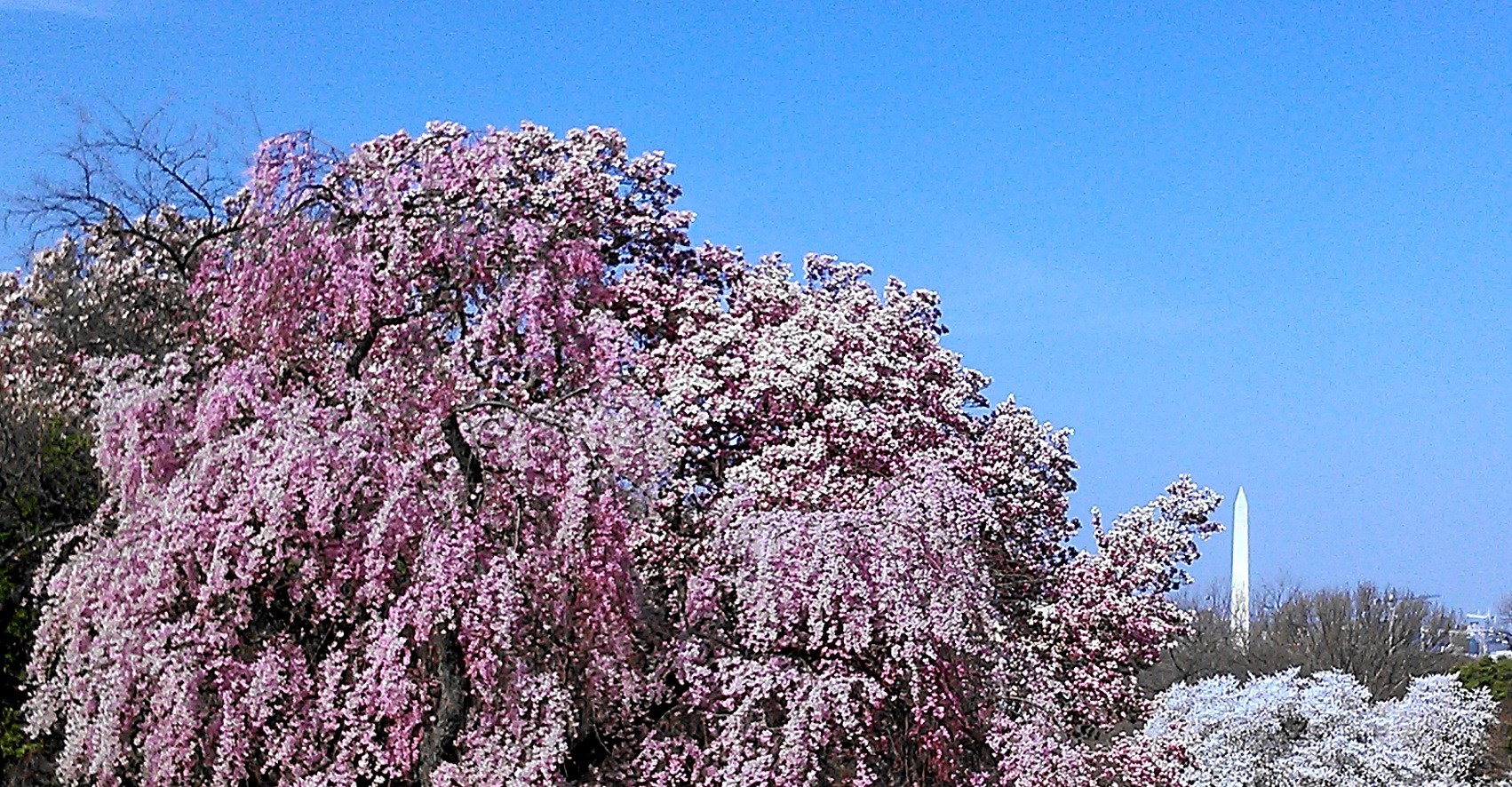
It was an honor to represent the Nebraska Ag Agents at the 2014 PILD Conference and I thank our Ag Section and Dr. Hibberd for paying my expenses for this trip! This photo is of cherry blossoms with the Washington Monument in the background.


 JenResources