Category Archives: Trees
JenResources 4/21/25
Hope you had a blessed Easter with your families/friends! It was wonderful for those who also received some rain! Quite a bit got planted last week with the warmer soil temperatures. Continue to monitor soil moisture for individual fields to have proper seeding depth into moisture. Eric Hunt, Extension Meteorologist, mentioned March 2025 had the highest wind gusts on record in Nebraska. That’s not a desirable stat, but it does help explain why so many asked if it’s normally this windy, why the surface soil moisture dried so quickly, and why small grains and pastures haven’t grown much in spite of warm soil temps. For vegetable gardens, I placed the planting guide at: https://jenreesources.com/2025/04/14/vegetable-planting-reference/.
Crabgrass Preventer for lawns is best applied when soil temps have been 55F at 4” depth for several days. Last week we were fairly close; watch soil temperatures this week at: https://cropwatch.unl.edu/soil-temperature/. For new lawn seedings, there’s options of a couple products to prevent crabgrass. Siduron (commonly sold as Tupersan) and mesotrione (found in Scotts Turf Builder Triple Action Built for Seeding) are available options.
Roundup Products for Homeowners: It’s important to read the active ingredients on the label when shopping for products. “Typical Roundup” contains the active ingredient glyphosate which is non-selective and will kill any green plants not resistant to it. Any product containing glyphosate that is sprayed on the lawn will kill the lawn.
The product labeled “Roundup for Lawns” does not contain glyphosate, which can be confusing. Active ingredients in this product include MCPA, quinclorac, dicamba and sulfentrazone. These herbicides are effective on a broad range of weeds that might infest the lawn such as dandelion, crabgrass and nutsedge, without harming the lawn when used properly.
“Roundup 365” is a product that contains glyphosate, imazapic, and diquat. This product can provide 12 month control of weeds and is labeled for use on driveways, patios, sidewalks, and gravel areas. Just know that nothing can be safely planted back into that area for at least 12 months.
To remove undesirable trees that grow within evergreen trees or hedges like lilacs, use glyphosate instead of Tordon on the cut stumps. This is because the glyphosate doesn’t have additional soil activity and stays within the root system of the plant it’s been applied to. Just be careful to only use a product with glyphosate with nothing else added to it. Ultimately, please read the labels to ensure you’re using a product that is labeled for the place you wish to use it, for any restrictions on the product, and what pests it lists to control.
Tree Planting: With Arbor Day this week, it’s important to not plant trees too deep. Kelly Feehan shares, “If a tree is planted at the same depth it was in its container, and the soil in the planting hole beneath the root ball is loosened, odds are very good the tree will be planted too deep. Since planting trees at the same depth they are in their containers and loosening soil in the bottom of planting holes is often done, too deep of planting occurs frequently. To plant a tree at the correct depth, wait to dig the hole until after a tree’s first lateral root at the base of the trunk is located. Soil may need to be scraped off the top of the root ball to do this. Only then dig the hole just deep enough so the root ball will sit on firm, undisturbed soil and the first root is just below ground level. Dig planting holes one to two times wider than the root balls diameter to loosen soil and encourage outward tree root growth.”
For those who have put their faith, trust, and repentance in Christ alone for salvation, Easter, and every single day, holds gratitude of the price that was paid in full for sin. We serve a Risen King! “All Praise to the Name Above All Names!”
Pruning Fruit and Shade Trees
Pruning Fruit and Shade Trees: Sarah Browning, Extension Horticulture Educator, shared great information at the spring gardening program last Saturday! February-March is a good time to prune most trees. It’s best to not remove more than 12-15% of a tree at one time, no more than 20% if it’s pruned heavier.
She shared a study where they found that wood rot enters trees more through improper pruning cuts vs. other damage to the tree. I have a diagram sharing how to properly prune using the 3-cut method at jenreesources.com. Sarah shared the following below in an article she wrote:
“Many gardeners have questions at this time of year about spring pruning…it’s important to understand woody plant leaf and flower buds were formed last fall. They are already present on branch twigs, so you should be able to find dormant buds when doing a close examination of your plant now. The presence of buds now is normal and does not mean plants are actively growing yet. Does pruning cause early leaf and flower bud development? No, pruning actually has a slight delaying effect on bud growth.
After pruning, a plant has to adjust and begin sending growth hormones to new buds, since the preferred buds at the tips of branches removed are now gone. This process could take about 10 days, so bud development is slowed down a little. Note: it’s risky for growers to use pruning to slow down and “protect” flower buds.
Best time to prune fruit trees: Less winter-hardy fruit trees like peach, apricot, and sweet cherry, should always be pruned late, usually mid-March to early April, no matter how much warm mid-winter weather we experience. Pruning is done just before new growth starts. This is also the best practice for the more cold-hardy fruits, like pear, apple, plum, and tart cherry, as well as shade trees. Pruning at this time has two big benefits. First, there is less chance of cold damage at the pruning sites. Second, plants heal pruning wounds much faster if the cuts are made just before new growth begins.
There’s still plenty of time for cold late winter temperatures and freezes, which will slow bud development down. Early pruning leaves plants susceptible to cold temperature injury at the pruning sites.
Best time to prune shade trees: For homeowners who can choose the ideal time to prune, shade trees should also be pruned just before growth begins in spring. If you need to hire an arborist to prune a large tree, anytime before early May would be a great time to do it. When seeking a tree company, ask if they have someone on staff that is certified with the Nebraska Arborist Association or International Society of Arborists. It’s best if the company is not only a member of one of these associations but also has a certified arborist on staff.
Additional resources with diagrams on which limbs to prune can be found at: Pruning Fruit Trees (https://go.unl.edu/z75s) and https://byf.unl.edu/pruning-trees-shrubs/.
Seward County Ag Banquet will be held Monday, March 24, 2025 at the Fairgrounds in Seward. Tickets for the prime rib dinner are $35 and can be purchased by contacting Nick Bauer (402-429-6119) or Shelly Hansen (402-643-3636). Come out and enjoy an evening celebrating agriculture and the Kiwanis Farm Family, SDDP Agribusiness, and youth scholarship award winners!

ridge and angles down and slightly away from the stem, avoiding injury to the branch collar. Do not make flush cuts that remove the branch collar.”


Windbreak Care
Windbreak Care: With new windbreak establishment, I’ve been seeing some transplant shock where the needles, twigs, and entire seedlings were turning brown. In talking with a district forester, he shared that environmental stresses of tree planting are likely when considering the trees are going from a 36F cooler and planted when air temperatures were in the 70’s and 80’s. He also mentioned two other environmental culprits to browning of needles: air pockets in the soil around the tree roots and/or planting depth issues. To get a feel if trees will survive or not, gently bend twigs to see if they are flexible or brittle. If flexible, they should still survive. If brittle, check on several tree twigs to see if there are a few twigs that won’t survive on the majority of the tree. In the case of the new transplants I looked at, the twigs were still pliable and not brittle. Also look closely at the axillary buds (where twigs meet the main stem) to determine if any new green bud growth is present. I saw new buds on most of the newly planted trees I’ve looked at, which is good and shows they will hopefully look greener in 3-4 weeks. Photos of what I’m describing are at: https://jenreesources.com.
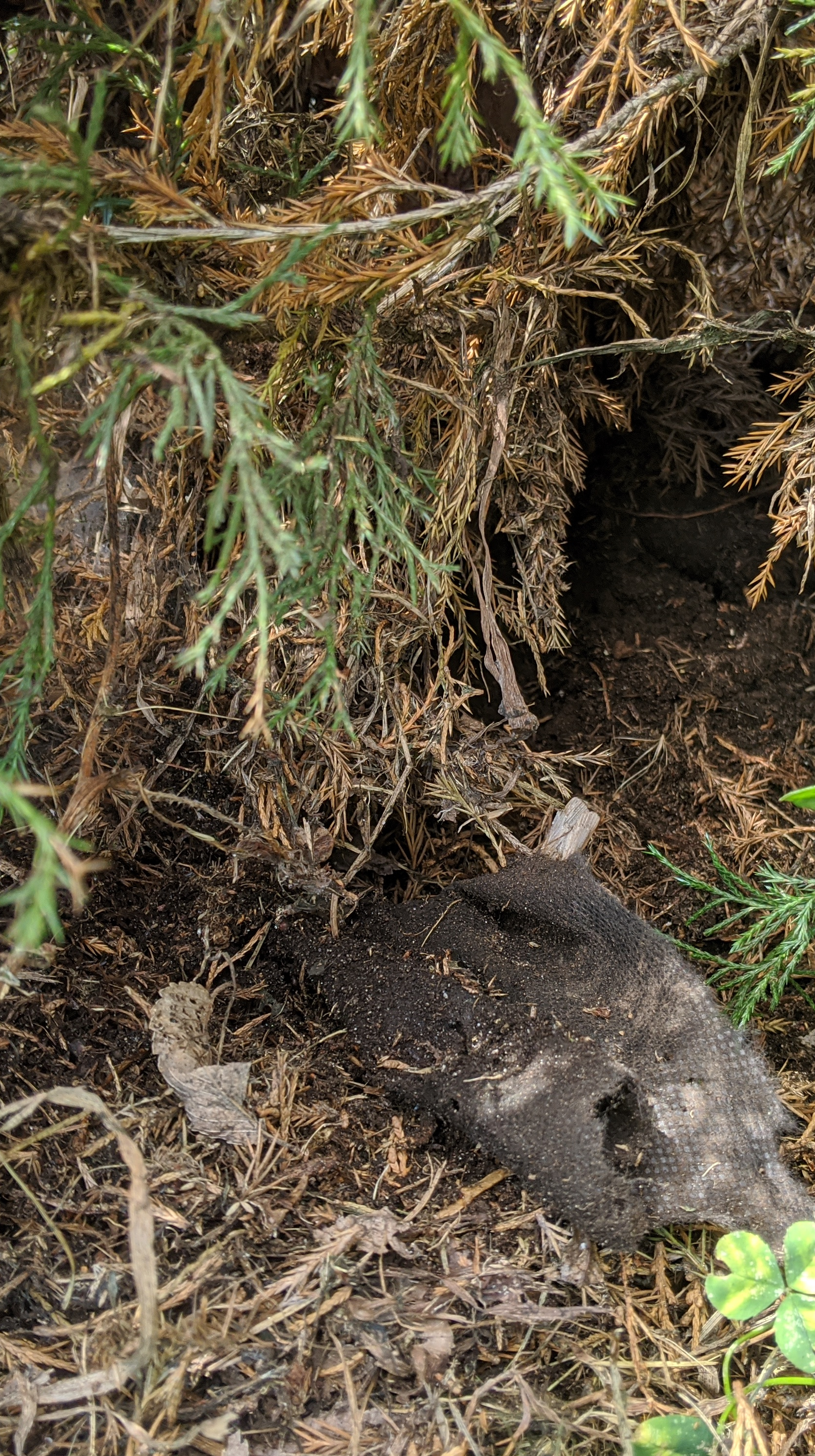
In established windbreaks, I continue to find the problem of landscape fabric harming and killing trees that are 7-20 years established. For anyone with windbreaks where landscape fabric was placed, I’d encourage you to wear gloves and long sleeves and check under the trees for the following things. (Also watch for critters as you get under the trees and examine them!)
1-The “brome mat”…or essentially a mat of needles, grass, weeds that create a mat on top of the fabric beneath the tree. This mat makes it hard to find the fabric and keeps one from realizing the problem that’s occurring. The mat prevents any decomposition of the fabric and prevents moisture from getting to the tree. Many are surprised how dry the soil is under the fabric where the mat was.
2-Check to see where the fabric is in comparison to the tree trunk. Normally I find the fabric growing into the trunk of the tree as the fabric doesn’t expand as the trunk enlarges. This creates a “girdling” effect where the tree essentially chokes itself. Often when I’m called out to established windbreaks that are suddenly dying or where the needles are browning, the landscape fabric and girdling of the trunks is partly the culprit.
So what can you do? Windbreak maintenance. For anyone who has windbreaks where fabric for weed barrier was placed, it should be removed no longer than 5 years after the trees are planted. For those who had windbreaks planted in the past 1-3 years, you really should go and cut the holes larger around each tree if you’re not removing the fabric yet. What I kept finding this year is that the trees were placed against one side of the fabric compared to the center of the holes, which can also create problems down the road with girdling. For those with more established windbreaks, do your best to remove the weed barrier fabric now. It will take harder work and effort to get under the trees and cut the fabric. Some were using anything with hooks to try to grab and pull it loose-but sometimes it’s hard to find the fabric with the mat layer. Some were then using loaders to pull the fabric between trees in the row. Again, it’s hard work and not fun with how poky the needles are, but it will help you in saving your trees.
For those who chose to not use the weed barrier fabric, wood chips can be used instead as long as they are kept 3-5” from the tree trunk. It takes a lot of wood chips for a windbreak, so they often are not used in those situations even though they’d be recommended. It’s not recommended to use grass clippings or straw as those mulches can attract rodents that can cause damage to new seedlings. Planting directly into the grass is also an option, or killing the grass directly where the trees will be planted is an option for weed control as well. The brome will compete with the seedlings for moisture and the trees may establish more slowly as a result. For more specific information on windbreak care, including information on insects and diseases, please see the following publication: https://nfs.unl.edu/publications/windbreak-management.

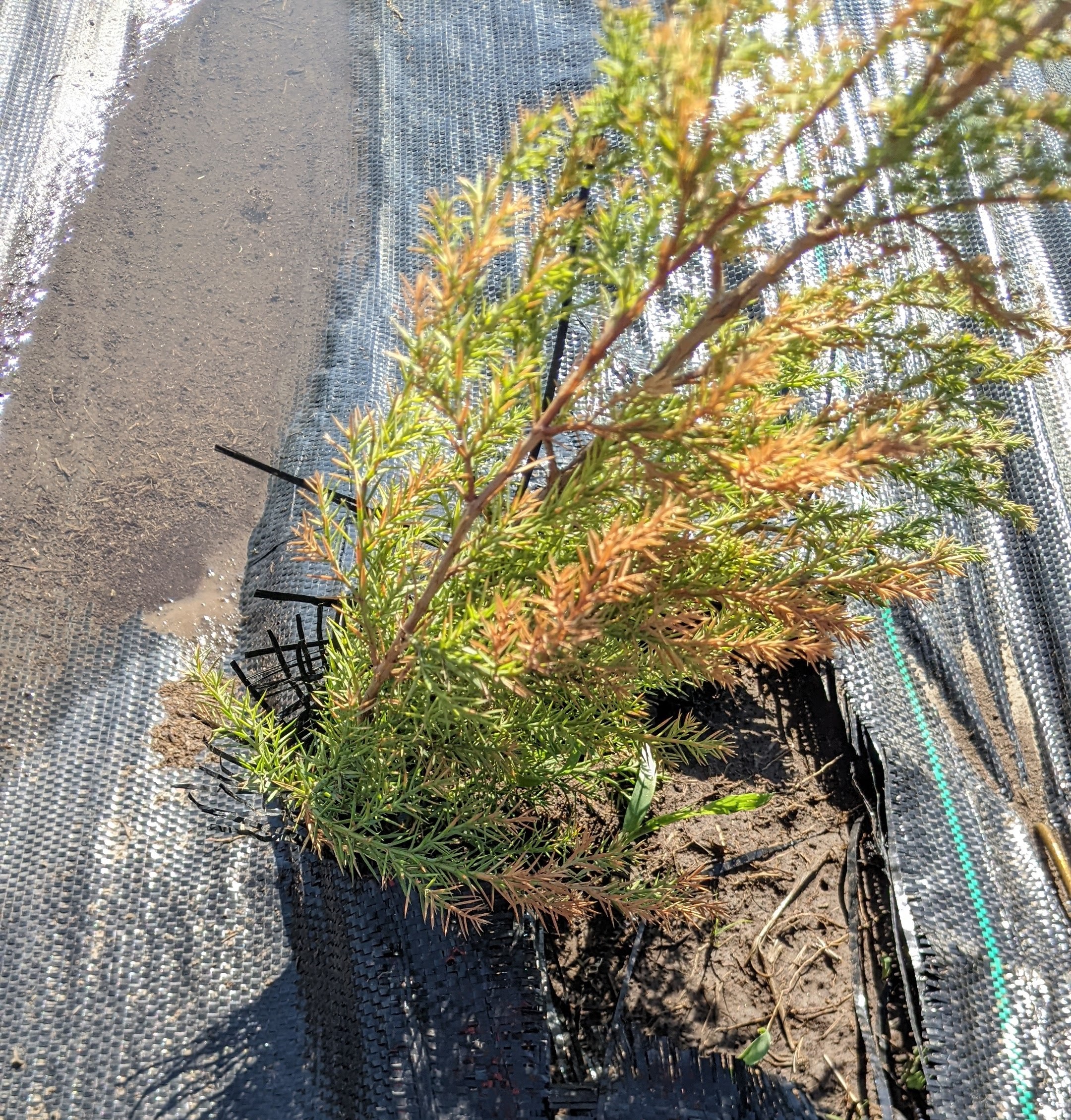
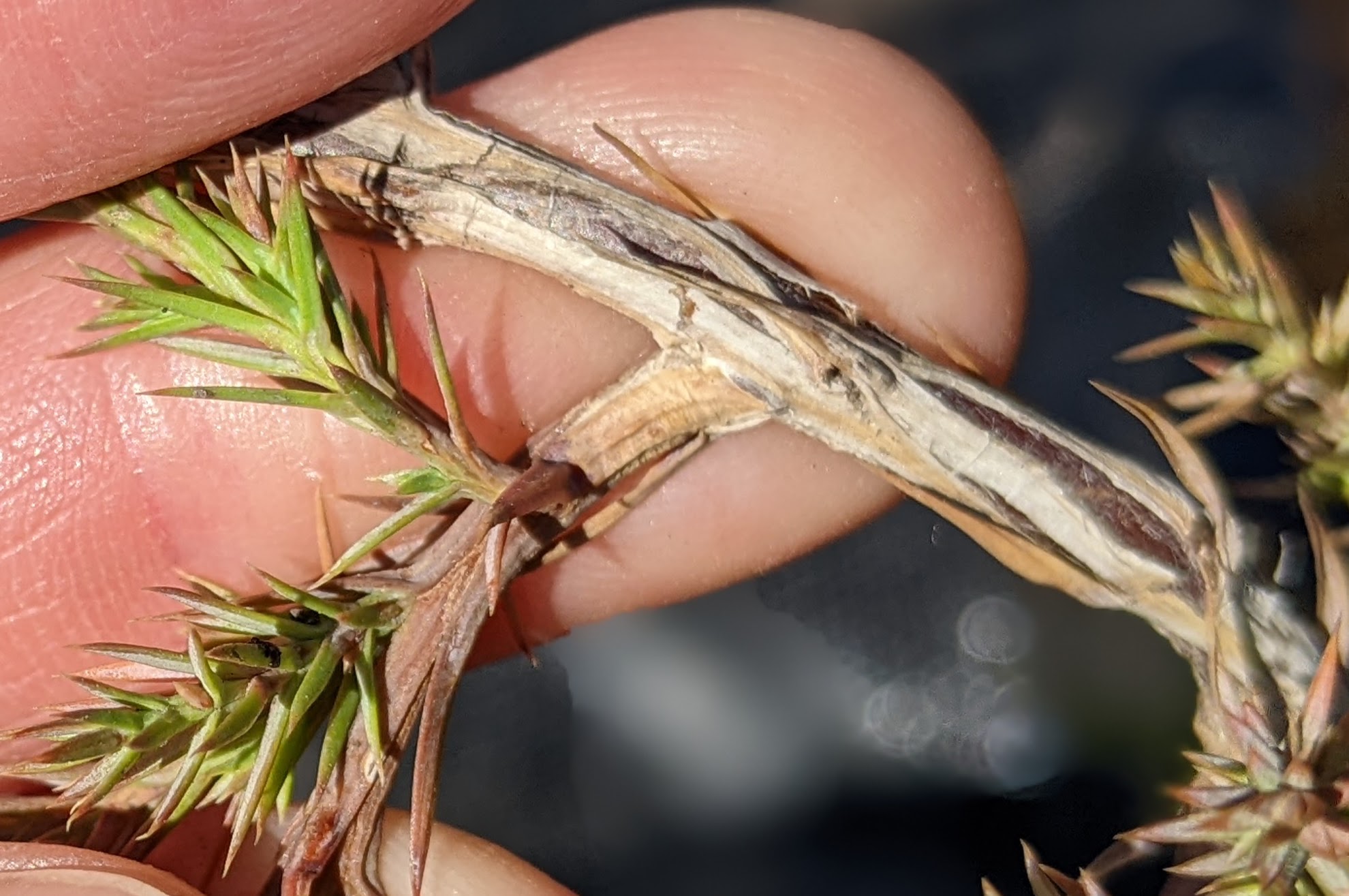
New growth observed in axillary buds on this tree seedling. It should look greener in 3-4 weeks.
Smaller Trees for Landscapes
What a blessing to receive rain!!! Also a blessing for all the acres planted the past week in good conditions!
Crabgrass Preventer timing: Crabgrass germinates when soil temperatures are maintained at 55F for 5-7 consecutive days. As I write this, soil temps for the York area have averaged 55F for the past week. So, it would be a good idea apply crabgrass preventer soon. You can consider splitting your crabgrass herbicide application by applying half of the highest labeled rate now and the other half 6-8 weeks later. Often there’s a flush of crabgrass later in the season and splitting the application can help with that.
Paraquat Training Webinars for anyone who needs certification or re-certification for Paraquat Handling. Paraquat Training Webinar Registration 2024 (https://syngenta.zoom.us/webinar/register/WN_D4RPlS2_RAyWTDJ_tBtv3A#/registration). The registration link will require: first and last name, email address, and certification license #. There is a mandatory quiz at the end of the webinar that will be conducted thru zoom, so attendees have to attend the entire webinar and take the quiz. Webinar dates: April 30th from 1-2 p.m. and May 1 from 2-3 p.m.
Smaller Trees for Landscapes: Last Friday was Arbor Day and Kelly Feehan, Extension horticulture educator, shared information on smaller trees to consider for landscapes. “Following are suggestions for smaller trees for Nebraska. These are hardy trees under 30 feet tall that are aesthetically pleasing for more than one season. Be careful of selecting trees with one good characteristic, like leaf color, but have nuisance characteristic like root suckering such as Canada red or Schubert chokecherry and Quaking aspen.
A small ornamental tree we need more of is Serviceberry (Amelanchier sp). Trees range from 15 to 25 feet tall and are native or regionally native depending on the species. They have white April blooms, making them a replacement for overplanted ornamental pear. Edible fruit produced in June attracts songbirds who devour all the fruit. Most have orangish fall color like the cultivar “Autumn Brilliance”.
Hardy northern sources of Eastern redbud (Cercis canadensis) are good to plant. With purplish pink blooms in April, they stand out each spring. They are native and prefer part shade, especially afternoon shade in hot Nebraska. ‘Alba’ and ‘Royal White’ are white booming cultivars.
Ironwood or American Hophornbeam (Ostrya virginiana) is a tough, durable tree. It tolerates alkaline soil and dry sites. Another native, it typically grows 25 to 30 feet tall and has interesting fruit and bark. The bark is flaky and the fruit, resembling clusters of hops, appear in July or August.
Hawthorns are also tough trees but many have thorns. Thornless cockspur Hawthorn (Crataegus cusgalli var. inermis) is a good choice. These 15 to 25 foot tall tree has glossy green leaves, white spring flowers, and persisting red fruit. When fruit persists into winter, they add winter interest and provide food for wildlife. Hawthorns tolerates alkaline soils and dry or wet sites.
Japanese tree lilac (Syringa reticulata) is a tree form of lilac growing up to 20 to 30 feet. They bloom in June with white, fragrant flowers and are proving to be tolerant of clay soils and urban conditions. Peking tree lilac is a subspecies. The cultivar ‘Copper Curls’ has exfoliating coppery bark and trees are growing in the Blair NE arboretum and at the North Platte research station.
Corneliancherry dogwood (Cornus mas) is hardier than flowering dogwood (Cornus florida) and has yellow flowers in April. It grows to 15 to 25 feet and has sour but edible fruit for use in jams and jellies. Kousa dogwood (Cornus kousa) has interesting white flowers in May and red fall color. It needs uniform moisture or leaves can scorch causing the edges to turn brown.
Fringetree (Chionanthus virginicus) ranges in height from 12 to 20 feet. It has very interesting white flowers that resemble fringes and bloom in May. They are fragrant and followed by bluish fruit to attract songbirds. With yellow fall color and good adaptability to urban sites, it’s worth trying.
A smaller maple to use is Shantung maple (Acer truncatum). The leaves resemble Japanese maple leaves, but this maple is hardier. It has orangish yellow fall color and reaches 20 to 25 feet tall. It is listed as having good drought and heat tolerance once established.”

I took a picture of this so here is a clickable link to register for the webinars: https://go.unl.edu/annualforagewebinar.
JenREES 10/8/23
Soybean Cyst Nematode: 2023 was a year for soybean diseases. I’ve been thinking about the soybean disease problems we’ve had and am planning a series of columns to talk through thoughts on management. Will focus on soybean cyst nematode for this week.
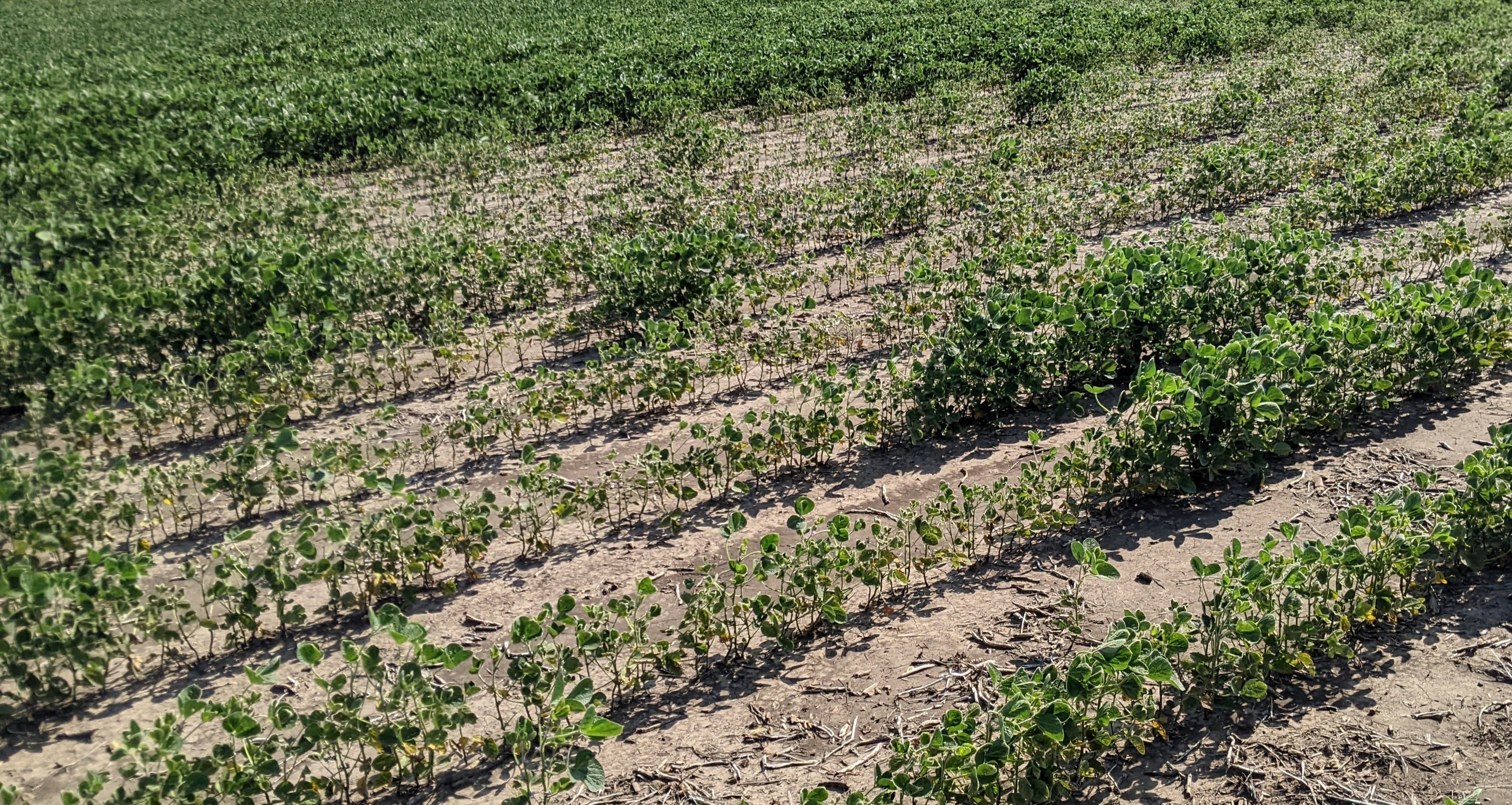
After soybean harvest is a prime time to sample for soybean cyst nematode as they’ll be at their highest levels in the soil. Soybean cyst nematode (SCN) is considered the #1 soybean disease in the U.S. as it can rob yield (up to 40%) with or without the presence of symptoms on soybean plants. When symptoms are present, they can include patchy areas of fields that may contain chlorotic and/or stunted plants. Digging up plants and carefully looking around the roots, one may observe tiny white specks that look like sand grains. With closer observation, if it is SCN, the specks will appear lemon-shaped as the female soybean cyst nematode. Technically, when the female body turns brown and dies is when it is called a ‘cyst’. Each cyst protects and contains up to 400 eggs each. When soybean is planted, juvenile nematodes hatch from eggs within the cysts during the right moisture and temperature conditions. The nematodes migrate to soybean roots where they infect, feed, breed, and then females produce new cysts full of eggs. This lifecycle occurs 3-4 times during the summer, thus, SCN populations can rapidly increase in a field in one year.
I saw that this year, a handful of times. Most field situations didn’t only have SCN as the problem, but I saw SCN populations rapidly increase from the first time fields were sampled to the next time. As you or agronomists are taking soil fertility samples this fall, split part of the 0-8” (or 0-6”) sample for testing for SCN. Or, take the soil sample in areas where the yield monitor showed yields were very low, patches where you saw disease, or field entryways. It’s also wise to take a sample from a good portion of the field for comparison. In soybean fields, take the sample a few inches off the old soybean row. However, SCN samples can also be taken from corn or other crop fields to help inform decisions if rotating to soybean next year. Place the sample cores (12-20 in total) in a plastic bucket, mix, then place in your sampling bag. I use quart-sized ziplock type bags, but there’s also SCN sampling bags available at local Extension Offices or directly from the UNL Plant and Pest Diagnostic clinic (402-472-2559). Label the bag with your contact info., field name, and that you want SCN analysis. Also be sure to fill out a completed sample submission form requesting SCN analysis and mail the samples to the UNL Plant & Pest Diagnostic Clinic (1875 North 38th Street, 448 Plant Science Hall, Lincoln, NE 68583-0722). There’s no charge for the sample analysis thanks to the Nebraska Soybean Board and your checkoff dollars. Knowing if you have SCN is the first step in management. Will share more on management in future columns.
Caring for Drought-stressed trees/shrubs: With the continuing dry conditions, this is a critical time to prepare woody plants for winter and prevent winter injury, especially to evergreens. Dry fall conditions can reduce the number of leaves, blooms and fruits trees produce the next season. Trees often delay the appearance of drought-stress-sometimes months or years after the stress occurs. Drought-stressed trees are more susceptible to secondary attack by insect pests and disease problems, such as borers and canker diseases, which can cause tree death. When watering, moisten the soil around trees and shrubs, up to just beyond the dripline (outside edge of tree leaf/needle canopy), to a depth of 8 to 12”. Avoid overwatering; but continue to water until the ground freezes as long as dry conditions persist. Use a screwdriver pushed into the soil to gauge the depth of watering.
Cedar beetles (Cicada parasite beetles): Have gotten a few calls about numerous beetles on ash and other trees that were crawling on them and flying around. The ones I’ve received samples of are cedar beetles, also known as cicada parasite beetles, which were new for me to learn about. They are about one inch long, and dark brown or black. The males have short, comb-like antennae. The beetles are harmless to trees and are laying eggs in the bark cracks. Larvae hatch, travel down tree cracks and burrow through soil looking for cicada nymphs to feed on their blood. So, they’re considered a parasite of cicadas, not of trees, and no control is needed.

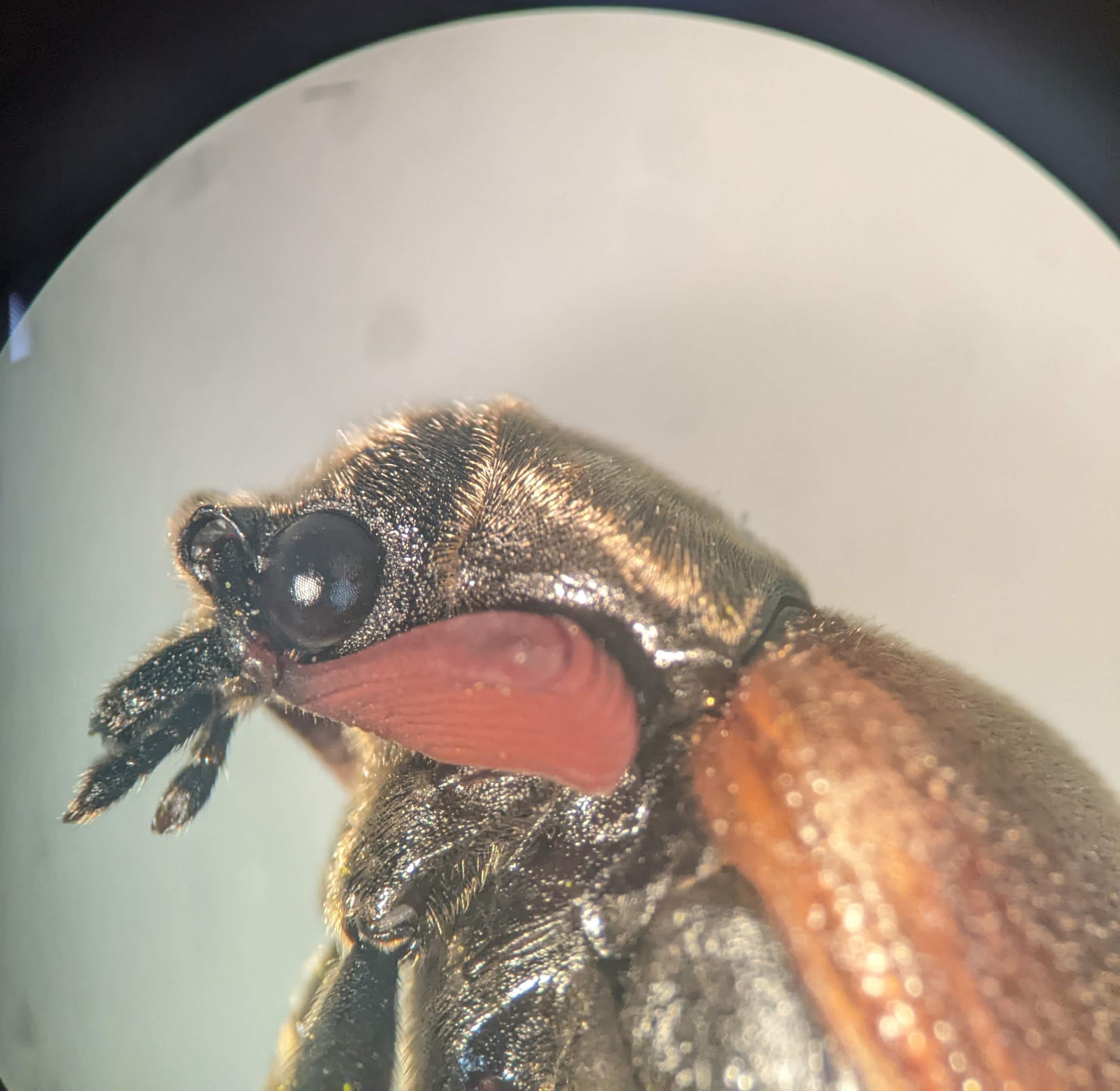

Cedar beetles/Cicada parasite beetles
JenREES 9/17/23
It was great getting to see and catch up with several people at Husker Harvest Days last week! The main update I have is that tar spot is being found more in this area of the State. Grateful it has only ever occurred at the end of the season for us. Next week I’ll share on an invasive grass that cattle won’t eat being found in some area warm-season pastures.
Harvest Safety: With harvest, it’s up to all of us to be safe and watchful on the roads. It’s so dry and hard to see on gravel roads when there’s traffic. Please be safe, slow down at intersections and railroad crossings, lights on, and be watchful/slow down as you come up on slow moving vehicles. For our farm families, we know things happen so quickly so please think safety with machinery, watch for people and objects around you, watch for power lines, and take your time on machinery and bin steps. Brandy VanDeWalle, Extension Educator, shares additional info. on her blog: https://vandewalleviews.com/2023/09/15/harvest-safety-11/. Here’s wishing everyone safety this harvest season!
Pricing corn silage: This was written by Shannon Sand, UNL ag economist, “According to UNL research, corn silage priced standing in the field before harvest would be valued at 7.65 times the price per bushel of corn, where a ton of corn silage is harvested at 60-65% moisture. For example, corn near $5.00/ bushel at harvest puts corn at $38.25 per ton. This accounts for not having to combine or haul grain to market but should also be harvest corn prices as we add storage costs to silage. According to the 2022 Nebraska farm custom rates publication, the average for harvest, hauling and packing of corn silage was $13.50 per ton. At $38.25 per ton plus $13.50 per ton for custom work, this gives us $51.75 per ton in the pile. When $3.00 per ton is added for storage, the price is now $54.75.” Additional information can be found in the following NebGuide: https://go.unl.edu/mik9.
Planting Trees: Fall is tree planting time and sometimes tree problems I diagnose are the result of incorrect planting. Kelly Feehan, Extension horticulture educator shares, “It is very important not to plant trees too deep. If a tree is planted the same depth it is in the container; or, the soil beneath the root ball is loosened when digging; then the tree is likely planted too deep. When I diagnose tree problems, I look at the trunk near the soil line. If it looks like a telephone pole going into the ground and there is no trunk taper at the base, I know the tree was planted too deep and that may be the cause of decline. Planting trees too deep leads to slower growth, decline and girdled roots that can cause tree failure. To plant a tree at the correct depth, never dig the hole until you find the first lateral root growing off of the trunk. Soil may need to be scraped away to locate this root. Once found, dig a hole that is a depth where the first root will remain just below or at the soil line. Do not disturb the soil under the root ball; but dig the hole one to two feet wider than the root ball.”
Lawn Weed Control: Those without irrigation systems struggled with thin lawns and both annual and perennial weeds this year. Perennials weeds have included dandelions, ground ivy, and bindweed. Annual weeds have included crabgrass, prostrate spurge, and purslane. So what can you do for the future? Late September through mid-October is the best time to control perennial broadleaf weeds with herbicides labeled for their control in grass. During the fall, the weeds will take the chemical into the root system increasing the opportunity for their death. Annual weeds will die with a hard frost. You can hand-pull or power-rake if you’re still working on reseeding lawns, but seed most likely has been produced. In May next year, you can apply a pre-emergence herbicide to prevent the weed seeds from emerging. Because we often get another flush of weed seeds germinating, if you had a lot of weed pressure this year and have a thin lawn, you can consider making a second pre-emergence application 8-10 weeks later. Thicker lawns help reduce weed seed germination if you can get a thicker lawn established as well.


I realized for all those who subscribe to my blog but don’t receive my email that I haven’t been posting the irrigation needs each week like I have on my email. So, adding that again as a reference for everyone finishing up.
JenRees 6/18/23

Drought: Several have asked about the yield potential of non-irrigated pivot corners if they were irrigated at this point. I don’t know if anyone really knows. This column reaches such a wide area. There’s part of the area I serve that I don’t think there’s any yield potential. For other places, my guess is ears wouldn’t be more than 4-8 rows around. I asked a plant breeder for his perspective. He shared it could be possible for 100-120 bu/ac with rain, depending on how long it had been rolled, and for corn further along (late vegetative stages). I’m seeing non-irrigated corn in most area drought-stressed fields are 4-7 leaf vs. 8-12 leaf in the pivot irrigated portion. The research I found says, from Emergence to 12 leaf corn, an estimated 1-3% yield loss occurs for each day after 4 consecutive days of stress. Some corn in the area has been rolled for nearly 18 days. Here’s some math for consideration if it can help (I’m going to use 20 days of stress). Let’s say you typically receive 180 bu/ac non-irrigated yield. 1% yield loss/day for 20 days would result in a loss of 36 bu/ac. A 2% yield loss/day for 20 days would result in a loss of 72 bu/ac and a 3% yield loss/day for 20 days would result in a loss of 108 bu/ac.


I’m honestly surprised that the drought-stressed corn is still gray-blue/green in color overall with only a few scattered plants firing now. I know it’s hard to see the corn dying. Each situation varies regarding well capacity and if there’s other wells to water corners, how long the corn has been stressed, etc. Overall, my suggestion has been to not divert water from pivots to save corners. For beans, they’re putting energy into deeper roots with less above-ground growth. These small beans will most likely flower shortly and yield loss will be from aborted flowers, pods, or death of plants if we don’t get rain.
Several have also commented on weed control difficulties with drought-stressed weeds. There’s two well-written articles in this week’s CropWatch https://cropwatch.unl.edu about drought-stressed weeds.
ET/GDD info: The CropWatch ET (evapotranspiration) info. is now available at: https://cropwatch.unl.edu/gdd-etdata.
2nd Cutting Alfalfa: Non-irrigated alfalfa fields are short (6-12”) with some blooming. Received a question regarding to cut or not. Dr. Bruce Anderson had shared in previous years that one needs to obtain at least 0.5 ton/acre in order to pay for harvesting costs. With higher hay prices and short forage, you can determine what’s best for your situation. Alfalfa that goes dormant will regrow when rains occur. By leaving it alone, the alfalfa will go dormant and eventually lose the leaves from the stems. If you hay or shred it, it may try to regrow, but with no moisture, it will also go dormant. There’s also potential to damage crowns from driving on extremely stressed alfalfa. If you can fence it and have water access, grazing full-bloomed alfalfa is also an option and is low-risk for bloat at that stage.
Lawn Watering: Lawns are really showing drought stress. Kentucky bluegrass is shallower-rooted and doesn’t take heat as well as fescue. However, bluegrass will go dormant without dying, whereas fescue, even though it’s deeper rooted and more drought-tolerant, doesn’t go dormant from drought-stress, so it can die. After bluegrass has reached three weeks of dormancy and fescue has changed color, it’s recommended to water 0.5”/week to keep both grass species from dying.
Oak Leaf Tatters: Received calls in the Henderson/Bradshaw area about oak trees with leaves that looked like they’d been eaten; no insects were present. Several calls earlier in the year were regarding malformed oak leaves, primarily on young oak trees (1-5 years old). Oak leaf tatters is a condition characterized by Iowa State, where cold stress when tree leaves are emerging coupled with herbicide injury causes oak leaves to look deformed, tattered, or look like they’ve been eaten. I see problems every year with oak trees, primarily in lawns when ‘weed and feed’ products are applied when oak tree leaves are emerging. So, in the future, avoid those products in lawns during leaf emergence. There were also some late cold snaps that likely impacted oak trees when leaves were ready to emerge. There’s nothing to do other than to water to avoid drought stress. All the trees I looked at are developing new growth; they’ll look more ‘normal’ in 10-14 days. The cold snaps may have also impacted apple and other fruit tree varieties that were in the pink/white bud stage or already starting to bloom, thus why some trees don’t have fruit.


Please take care of yourselves! Rural Wellness website: https://ruralwellness.unl.edu/ and Nebraska Rural Response Hotline: 1-800-464-0258.
Japanese Beetle Organic and Conventional Products Found Locally
With the Japanese beetle invasion in the area and their territory spreading further each year, I checked with local retailers (nurseries, lawn/garden centers, farm stores, Wal-Mart, Ace) to see what they have on hand to hopefully be of help.
First, Please Read the Label on any product before you purchase it to make sure:
1: the product says it controls Japanese beetle adults
2: the product is labeled for where you wish to apply it (vegetables, trees, ornamentals, fruit trees, berries, etc.)
3: follow all pre-harvest intervals (PHI) for when you can safely harvest vegetables, fruits, and berries after a product is applied.
Last year I had to unfortunately tell three people they couldn’t eat the produce from their gardens due to the product they sprayed.
Second, there are a number of insecticide options available. Know that most anything applied to flowering plants will also impact pollinators. For flowering plants like roses, cannas, etc., knocking the beetles off around 7 p.m. in the evening into soapy water will protect pollinators visiting them.
There are also ready to use and concentrate versions of chemicals available. The easiest are ones where you simply attach the garden hose and spray. Others need to be mixed with water into a sprayer.
Organic Insecticide Options include Neem, Pyola, Spinosad Soap, Pyrethrin products (ex. Beetle and Boxelder bug killer), and Bt. Neem may repel more than kill Japanese beetle adults. These products will all last around 3-7 days and will need to be reapplied. Products containing these active ingredients should be safe on fruits, vegetables, in addition to using on flowers, shrubs, and trees. Be sure to read and follow directions as there may be a temperature restriction on applying some of them that contain oils to avoid burning leaf tissue.
Conventional insecticide Options can provide up to two weeks of control. I’m going to separate these into products I found locally based on the location they can be applied. Ultimately, this is NOT a complete list and many other products can also be found online. There are also products containing insecticide + fungicide that I don’t list here. Please be sure to read the label for yourself as to the insects controlled and where it can be applied before purchasing.
1. Ornamental shrubs, plants, trees (like linden, elm, birch): DO NOT use these products on vegetables, fruits, or berries. Hi Yield 38+ and Tempo. There’s home defense products labeled for Japanese beetle adults but they don’t mention they can be applied to trees or shrubs.
2. Vegetables, fruits, ornamentals, shrubs, trees: BioAdvanced Rose and Flower Insect Killer, BioAdvanced Tomato and Vegetable Insect Killer, BioAdvanced Vegetable and Garden Insect Spray, Eight, Spectracide Acre Plus Triazicide Insect Killer, Hi-Yield Lawn/Garden/Pet/Livestock Insect Control, Sevin, Ortho BugClear, and Ortho Bug B Gone.
Many of the conventional insecticide products contain pyrethroids such as bifenthrin or permethrin. Thus, there are also products that just say ‘bifenthrin’ or ‘permethrin’ that can also be purchased. Be sure to read the label as some have restrictions such as “can’t be applied to apples” while others can.
JenREES 5/15/22
I heard many say they’d never before seen that kind of wall of dirt that came through with the storm last week; I hadn’t either. Also can’t remember a spring where we’ve had this much wind and significant storms to have so many pivots needing replaced. In spite of the property damage, grateful to hear most share they were ok in spite of the scary situations they were in when the storm hit!

Tree Wind Damage: Heard a number of people had tree damage in addition to all the visible damage in York and other areas. For those with large branches down, it will be helpful for the life of the tree to get branches trimmed back to the next larger branch or the trunk. Corrective pruning can help with trees that lost less than 50% of their branches (and don’t have additional issues such as significant decay). The pruning should be done to balance the limbs on all sides of the tree canopy (crown). Cut at the collar area instead of flush to the trunk to aid the tree in healing. Cut large limbs in stages. With one cut, a branch often breaks before it’s completely cut, causing damage to the tree bark. Instead, as explained by K-State, “take a cut around 15” from the trunk. Start from the bottom and cut one-third of the way up through the limb. Make the second cut from the top down but start 2 inches further away from the trunk than the first. The branch will break away as you make the second cut. The third cut, made at the collar area, removes the stub that is left.”
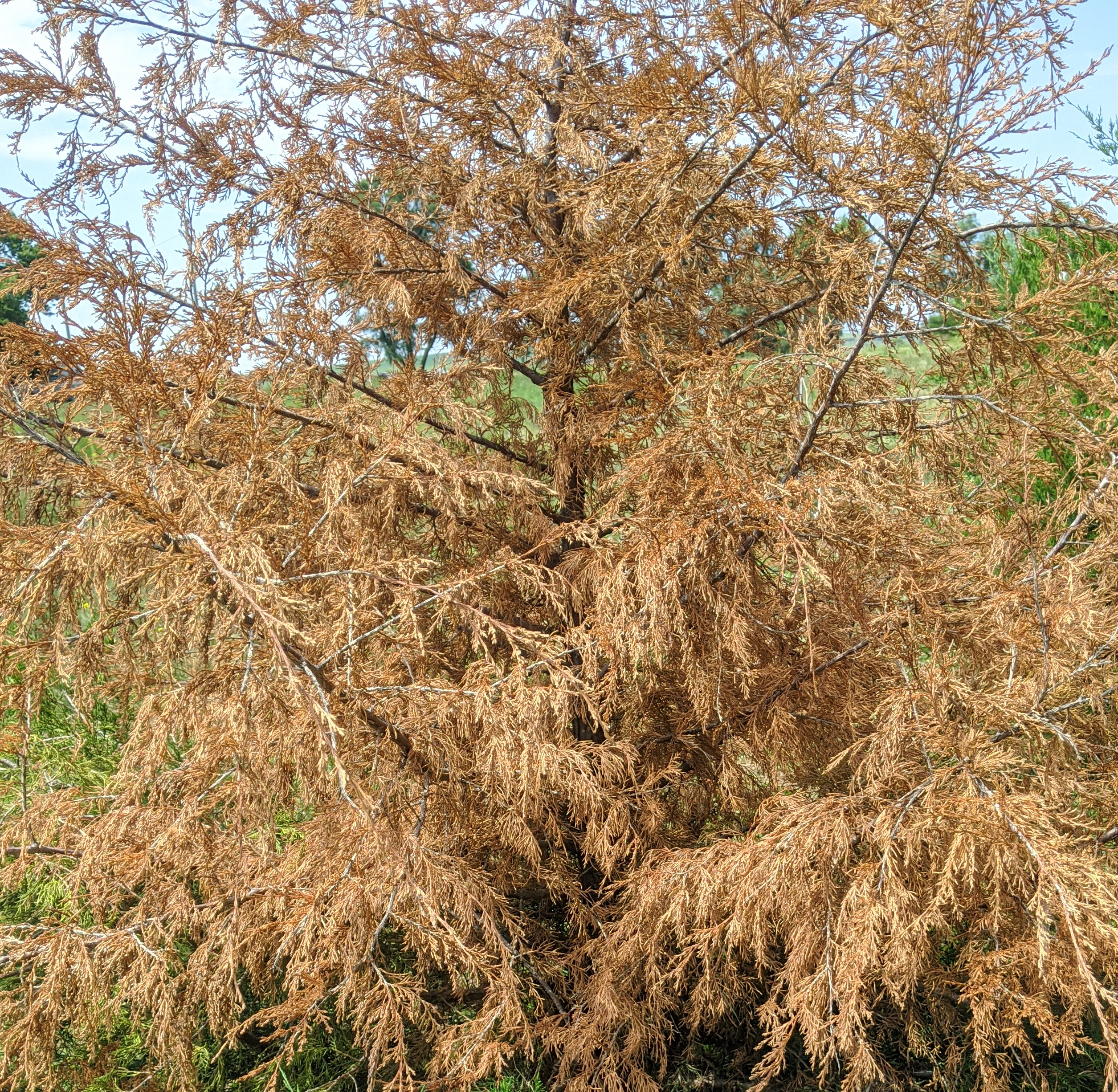
Sudden Tree Death in Windbreaks: Received a number of calls about evergreen trees that were suddenly dying, particularly in windbreaks. Anytime this happens, it’s due to some environmental and/or cultural problem. We most likely are going to see lots of tree and shrub issues this year due to the dry fall, winter, spring and the fact that we didn’t have snow cover. Trees rapidly dying right now are most likely due to the dry conditions and/or a combination of those conditions with my next comments.
A cultural example that I see aiding in the cause of tree death is landscape fabric/weed barrier. For example, (from my experience) the #1 cause of death I see of cedar tree windbreaks that are usually in the 10-20 year range, is when landscape fabric was used as weed barrier between the tree plantings.
So why does the fabric cause an issue? Often the original hole size doesn’t necessarily expand with the tree trunk as it expands. Getting under the tree (which is a pain with the pokey fallen needles!), one can often see how the tree is choked right where the fabric is and then the trunk flares right above that point, indicating the choking point. For trees that haven’t died, taking some type of long-handled tool that has a hook or something to pull the fabric away from the trees in several places around each tree can help. And honestly, if anyone reading this has a windbreak with landscape fabric, it would be wise to do this regardless if any trees are dying to potentially avoid future distress. I realize weed barrier is typically used with windbreak plantings. Research has shown that just planting grass between the trees (or leaving grass between the trees), while resulting in a natural weed barrier, causes trees to grow more slowly. It is an option though for weed control. Another option is using some type of mulch around the trees (but not against the trunk). I realize in the country, it can blow away more easily, but is another option that provides weed control.
Sickly looking evergreen trees could be due to a combination of things such as the dry conditions plus a disease/insect issue from previous years. I’ve seen several of these as well where they look sick, but aren’t rapidly dying. In those cases, it’s important to reduce the stress to the tree and be aware of the specific insect/disease problem for treatment.
Cutworms: As corn emerges, be scouting for cutworms. More info: https://go.unl.edu/a6fy.
BQA Training: Face to face BQA and BQA Transportation training for livestock producers is on May 18, 4:00 p.m.-6:00 p.m., Casey’s Building, Albion, NE. RSVP to Brad Schick at: 308-632-1230.
JenREES 12/26/21
Upcoming Farm Bill Webinar: As you consider 2022 farm bill decisions, there is an upcoming webinar from UNL on Jan. 20th at Noon. You will need to register to obtain the Zoom link and can do so at: https://cap.unl.edu/webinars.
End of Year Reporting for Extension is here. If you would please consider sharing ways that information I shared helped you this past year, I’d appreciate it. Thanks!
https://app.sli.do/event/bWKk1cPhRG5MsLmu3Y7vkR/live/polls
Evergreen Trees and Perennial Plants: The weather has been incredible overall for December which has allowed for additional things to get done. However, the fact that we’re experiencing temperature extremes and warmer weather is difficult for plants which prefer steady and colder temperatures than we’ve experienced prior to this coming week. Kelly Feehan, Extension horticultural educator, shares some thoughts below on helping alleviate winter stress to evergreens.
“Warm, sunny winter days increase the risk of winter drying and sunscald injury. A lack of soil moisture and snow cover greatly increases the risk of winter dessication. Winter dessication results in evergreens turning brown during spring. Just because an evergreen looks fine now does not mean it is not stressed. It can take an evergreen months to turn brown after a fatal injury. Just think of Christmas trees. They remain green a long time after being cut down.
Evergreens most at risk are newly planted evergreens but even established Arborvitae, Japanese Yew and some Junipers are quite susceptible. Evergreens planted in the last year or two and those planted near south facing walls of light colored homes or pavement are even more at risk.
While we may not see a lot of dessication on established spruce and pines, this does not mean they are not stressed. Especially with spruce, we continue to see an increase in diseases that are tied to moisture stress.
Winter watering is becoming increasingly important to help reduce winter drying. While adequate summer and fall watering is most beneficial, winter watering would be wise this year.
Winter watering needs to be done when temperatures are above 45 degrees Fahrenheit and early in the day for water to soak into the soil before nightfall. Water should not pool against a tree trunk and plant stems to freeze over night as this can cause damage.
When soils are dry and not frozen, apply water slowly with a slow running hose or by punching holes near the bottom of a five gallon bucket. Place the bucket over tree roots and fill it with water, allowing the water to slowly trickle out of the small holes.
About once a month, if needed, moisten the soil to about an eight inch depth from the trunk to just beyond branch tips. Placing a four inch layer of wood chip mulch over the roots of evergreens will help conserve soil moisture during the growing season and throughout winter. Mulch layers should not be too deep or piled against tree trunks.
And if you have a real Christmas tree, consider cutting off the branches and using them to protect tender perennials and young shrubs. By placing the branches over the tops of perennial plants or inserting them into young shrubs, the branches will act like a winter mulch, protecting plants from drying winds, bright sun and temperature extremes.”


 JenResources