JenREES 4-29-18
Crop Update: It’s nice to see some signs of spring with planters going this  week/weekend, crabapples and flowering pear trees in bloom, and tulips budded! The York County Corn Grower plot got planted on Saturday and grateful for Ron and Brad Makovicka’s efforts with that and for all our participating companies!
Rain did help the top foot of sensors in some locations I’ve been monitoring for pre-plant soil moisture. The graphs will be up at http://jenreesources.com by noon on Monday. The cooperators have all been interested in continuing to monitor moisture in these fields post-planting, so will plan to do that and add a York and Seward location too. I’m noticing in York as lawns are greening up, that portions are looking gray-green in color where trees are located in them.
As of April 26th, I hadn’t found any wheat jointing yet. The growing point was just approaching ground level in several fields I checked. We also need to keep an eye out for stripe rust as incidence is increasing in Kansas fields. There’s articles focusing on winter wheat in this week’s UNL CropWatch at http://cropwatch.unl.edu including nitrogen management and Nebraska wheat progress.
Wheat Stem Maggots (WSM) in Rye/Wheat Cover Crops: I meant to provide an update in last week’s column. Dr. Justin McMechan has been scouting wheat and rye cover crop fields for wheat stem maggots. So far, he captured one adult wheat stem maggot on April 16 in 100 sweeps from a wheat cover crop planted in late September at the Eastern Nebraska Research and Extension Center near Ithaca. He shared that “adults have been consistently collected at this location since first emergence with one to two found per 100 sweeps. This first occurrence of adults matches closely with data collected in 1933 by Merle Allen from Kansas State University. Our latitude north of Kansas and cold spring suggests this emergence might be earlier than Allen’s data. On April 23 two adults were collected at Clay Center and a single adult was collected near Marquette. Cover crops in these fields were less than 6 inches in height, with the field near Marquette grazed to approximately 3 inches in height. Sweeping these fields is challenging due to the height of the vegetation so adult captures are not likely to represent true numbers in the field. If you are skilled with a sweep net, we encourage you to sweep your wheat, rye, or triticale cover crops for wheat stem maggot adults.” At this point we’re not recommending any insecticide treatments. An interesting observation that a couple of Clay and Adams county farmers mentioned to me last year was they noticed the presence of a lot of flies as they planted corn into green rye and terminated at or after planting corn. The adult WSM is a small fly and you can see photos in Justin’s report in this week’s UNL CropWatch at http://cropwatch.unl.edu.
Which dicamba product before Xtend soybean: This has been a fairly common question this spring which Dr. Amit Jhala addressed in this week’s UNL CropWatch. I’ve also provided his answer here. “I recently received several phone calls from growers with questions on terminating broadleaf cover crop species and broadleaf weeds using dicamba products. They were particularly interested in whether dicamba products such as Banvel, Clarity, DiFlexx, etc. can be applied to terminate broadleaf cover crop species such as hairy vetch, field peas, or mixtures and broadleaf weeds such as henbit, field pennycress, or marestail immediately before planting Xtend soybean. The answer for the dicamba-based herbicides listed above is NO. Their labels have soybean planting intervals of 14 to 60 days, depending on the product and its use rates.
For example, for Clarity to be applied at 16.0 fl oz/acre, there would be a 28-day soybean planting interval after an inch of rain. If Clarity were to be applied at 8.0 fl oz/acre, the soybean planting interval would be 14 days after an inch of rain. The Clarity label also specifies: “Do NOT make Clarity burndown applications to soybeans in geographic areas with average annual rainfall less than 25 inches.”
If DiFlexx is applied burndown at 24 fl oz/acre or less, the planting interval for soybean is 60 days. This longer planting interval must be applied because Xtend soybean is not listed on Banvel, Clarity, DiFlexx, or other dicamba products.
Dicamba-resistant soybean, also known as Xtend soybean, became available commercially for the 2017 growing season. Three dicamba products (FeXapan, Engenia, XtendiMax) are labeled to be applied pre-plant, pre-emergence, or post-emergence (up to R1 soybean growth stage) for broadleaf weed control in Xtend soybean. You can use FeXapan, Engenia, or XtendiMax as per label requirements in burndown application and plant Xtend soybean without a planting interval.
If you apply 2,4-D prior to planting soybean, be sure to adhere to the planting interval specified on the label. Several 2,4-D products have different planting intervals for soybean, ranging from 7 to 30 days depending on product and application rate. (See this Crop Watch article.)”
JenREES 4-22-18
Planting Considerations: This email newsletter reaches a wide area of the State, so soil temps vary quite a bit and some of you may be in better planting conditions than others. We still recommend planting into soil temps as close to 50°F as possible, check weather conditions for next 48 hours to hopefully maintain temps 50°F or higher, and avoid saturated soil conditions. If planting a few degrees less than 50°F, make sure to check with seed dealers on more cold-tolerant seed. This is most likely common sense, but I still feel worth mentioning. Everything we do at planting sets the stage for the rest of the year. We’re blessed to have equipment that can allow for many acres to be planted in a short amount of time. And…we also have the ability to mess up a lot of acres in a short amount of time.
Planting depth is also key. Aim to get corn and soybean in the ground 1.5-2” deep. This is critical for correct root establishment in corn to avoid rootless corn syndrome. Rootless corn syndrome is when the nodal (crown) roots don’t get well established and successive brace roots can’t establish either. This allows the seedling to whip around in the wind, potentially being dislodged, become weak or die. With center-fill planters, when adjusting down-pressure on the go, sometimes the planter ends may not always be seeding as deep as the center. Too often I’ve seen that resulting in seed 1” or less and the field pattern can be observed the entire growing season with potential yield impacts. So don’t just rely on the monitor. Take the time to dig up seed behind the planter and at spots along the whole planter length to ensure the proper seeding depth. And do this with every field, particularly with different tillage/residue situations. I realize this takes time, but you’ll be glad you did to catch any issues before too many acres are planted incorrectly.
With cold temps or higher soil moisture conditions, it’s still important to get that seed at least 1.5-2” in the ground. Planting 1.5-2” deep helps both corn and soybean to have that seed in even soil temperature and moisture conditions. You may be surprised on that recommendation for soybean, but I think it’s even more critical with planting early. In fact, UNL research near Mead compared planting depths of 1.0, 1.25, 1.5, 1.75, 2.0, 2.25, and 2.5 inches in 2011 and an additional planting depth of 2.75 inches was added in 2012 and 2013. The study found lowest yields when soybean was planted 1.25” or less or 2.25” or greater with the highest yield at 1.75” deep. One of that study’s hypotheses was that planting deeper would buffer soil temperature and moisture and protect newly emerged seedlings from frost and freeze damage, particularly when planting early in the season.
Hopefully planting soybean early is still something you’re considering for this year! We wrote a CropWatch article this week at http://cropwatch.unl.edu to provide some updated research on amplifying the effects of planting early. There’s so much research regarding how early soybean planting increases yield that we wanted to share new research regarding maturity groups, etc. Essentially, what it appears from the research thus far, is that it’s more important to choose a consistent, high-yielding soybean for your area, regardless of specific maturity group. We’d like to get more specific data and have on-farm research protocols available to compare MG2.4-2.5 vs. MG3.0-3.5 and Dr. Jim Specht would also like to collaborate with us on documenting various factors. Please let me know if you’re interested in this! There’s also a protocol for comparing early vs. late planting of soybean.
Soil moisture conditions didn’t improve this week at the six sites I’m monitoring in Webster, Nuckolls, Thayer, and Clay counties. You can find the chart comparisons on my blog at http://jenreesources.com. Last weekend’s bizzard didn’t provide significant moisture in this area. With pastures slow with growth and drought increasing in Kansas, discussions with farmers have included cover crop termination, grazing rye that’s had anhydrous ammonia applied to it (with the original intention of termination and planting to corn), and grazing wheat. Most of these topics are included in this week’s UNL CropWatch at http://cropwatch.unl.edu. The articles are too long with too many considerations for me to add them in this news column, so please do check them out if you’re interested in these topics. Another topic I’ve had several questions about is regarding how temperature and rain affect burndown herbicide applications. Dr. Amit Jhala, Extension Weed Specialist, addresses that in this week’s CropWatch as well, so please check that out. Here’s wishing everyone a safe planting season with conditions to get #plant18 and #grow18 started off well!
Beginning Soil Moisture 4-19-18
Here is an update on beginning soil moisture status. The left charts are as of 4/19/18 with the right charts being the previous week. You can click on the images to enlarge them. The ‘weekend moisture’ event I refer to was the blizzard 4/14/18.

Bladen: The top foot is now slowly losing moisture one week later in spite of some weekend moisture. The second-fourth feet are all above 50% depletion.


Byron: Some weekend moisture may have allowed the top foot to remain steady. The second and third feet are both over 50% depletion bringing the total soil moisture in the 1-4′ depths closer to 50% depletion. There must have been a soil crack along my PVC pipe to allow for the moisture spike you see in 3 and 4 feet and not 1 and 2 foot depths.


Clay Center: This is still the wettest location in spite of the top foot slowly drying out this week. The second foot is still below field capacity with third and fourth feet and total soil moisture relatively unchanged. Must have had a soil crack along PVC pipe for third foot for the quick dip observed.


Lawrence Corn Stubble: Minimal change was observed at this location this past week. Essentially all feet remained the same in regards to soil moisture. A small crack along PVC pipe must have been present at 3 foot for short dip observed there.


Lawrence Soybean Stubble: This location (across road from corn stubble) showing dryer than last week. Top two feet now dryer than field capacity which increased the total (1-3′) soil moisture depletion.


Superior: Weekend moisture may have allowed the top foot to stay steady (as was also seen in Byron). However, the second, third, and fourth feet all lost moisture leaving the total soil moisture (1-4′) above 35% depleted at this location.


JenREES 4-15-18
Well, winter seems to be sticking around. My thoughts and prayers have been with those of you calving with the difficult conditions this year.
I provided an update regarding soil moisture status in non-irrigated fields both in this week’s UNL CropWatch at cropwatch.unl.edu and my blog at jenreesources.com. We’ll see what happens with moisture in the next few weeks and I’ll post updates to my blog.
Very few have tried planting in this part of the State that I know of. Grateful for all of you who keep me updated on what’s going on through your questions and comments! In this week’s UNL CropWatch, Dr. Roger Elmore took the lead on an article addressing corn planting. The message is to ideally wait till soil temperatures reach 50F with weather conditions allowing soil temperatures to remain at 50F or higher for the next 48 hours. We’ve observed when seed was planted and a cold snap with cold rains was received within 48 hours, some problems with seed germination and emergence. Hybrids vary in cold tolerance and seed companies are a great resource for that information as to which hybrids could be planted first in colder soils. Soil temperature information can be found at the UNL CropWatch site at: https://cropwatch.unl.edu/cropwatchsoiltemperature. We’d also recommend you take the soil temperature in the field before you plant and can do so by using a meat thermometer.
Last year I remember receiving questions from April 21-24 regarding planting corn and soybeans with an anticipated cold snap later that week. At that time, I was recommending growers switch to soybeans. The reason? Soybeans imbibe (uptake) water more quickly than corn seeds and while we hear 48 hours to be on the safe side, the critical period is more like 24 hours. Also, several years of both small plot and on-farm research in Nebraska has shown the primary way to increase soybean yields is to plant early. Dr. Jim Specht’s research showed soybeans produced a new node every 3.75 days once V1 occurs. The nodes are where pods and seed occur. Our on-farm research planting date studies also showed regardless if the spring was cold/wet or warm/dry, the early planted soybean always out-yielded the later planted with a total average across trials of 3 bu/ac. The data ranged from 1-10 bu/ac. We never planted early without using an insecticide/fungicide seed treatment to protect that seed, so we recommend you add that if you do plant early.
Our recommendation would be to plant the last week of April or as close to May 1 as conditions allow. We’ve also seen good results after April 20 in years if the soil temperatures were around 50F with good weather conditions at least 24-48 hours after planting to maintain that soil temp. It’s important to know your level of risk, though. Crop Insurance planting date for replant considerations is April 25 and there may also be replant options from your seed suppliers. We never replanted any of our studies and I have only observed frost on soybean cotyledons one year where growers planted early with soybeans coming out of it. We had the largest number of acres I’ve seen planted by April 24 last year with thankfully no issues and they were able to take advantage of a high-yielding bean year. Perhaps this is something you wish to try for yourself this year? Consider planting some passes of soybeans early and come back with some passes three weeks later. You can use this Soybean Planting Date Protocol if you’re interested in trying this for yourself. Please let me know if you’re interested in this!
Depending on the number of acres you have, some growers are now planting soybeans first. Others are planting corn and soybeans at the same time by either running two of their own planters/drills or custom hiring someone to plant soybeans for them. This also spreads risk and can help with harvest. Regarding maturities, a study conducted at UNL East Campus compared a 2.1 vs. 3.0 maturity group variety at 10 day intervals beginning April 23 through June 19. Yield was highest for early planted soybean and a yield penalty of 1/8 to 1/4 bu/ac per day of delay in planting for MG2.1 and MG3.0 varieties, respectively was found. The study also indicated that yield of the MG3.0 variety was higher relative to the MG2.1 variety in early plantings (late April and early-mid May), but the opposite (greater yield in MG2.1 versus MG3.0 variety) was found for late plantings (late-May and June). In our part of the State, we’ve observed really high yields from strong genetics in the MG2.4-2.5 varieties when planted early; so I have a hard time automatically recommending later MG varieties without more data. Thus, I would love to work with anyone interested in planting early comparing a high yielding MG2.4-2.5 vs. a high yielding MG3.0-3.5 to obtain more data. Here’s a Soybean Maturity Group Comparison with Early Planting protocol to consider and please let me know if you’re interested in this!
Wheat: My colleague, Dr. Nathan Mueller in Dodge County, has taken the lead on

Nebraska crop reporting districts for wheat. The yellow area is considered ‘Eastern Nebraska’.
sharing wheat information for Eastern Nebraska. He’s put together an excellent resource on his blog at http://croptechcafe.org/winterwheat/. Every Friday he’s sharing an update called “What’s up this Wheat“. He also started an Eastern NE wheat listserv and his website explains how to subscribe to it. Grateful for his effort in this as we both have goals of increasing crop diversity in the areas we serve and there are many benefits to wheat in rotation!
Crabgrass prevention in Lawns: Just a quick note that while our Extension lawn calendars promote applying crabgrass preventer in mid-April, our horticulture experts say to wait till soil temperatures are 55F on a seven day average and we are currently far from that! Check out https://cropwatch.unl.edu/cropwatchsoiltemperature for soil temp info.
Beginning Soil Moisture 4-11-18
The current Drought Monitor shows 19% of Nebraska in the “abnormally dry” or “moderate drought” categories and in the shadow of large-scale drought in Kansas (97%) and Colorado (88%). Being curious about beginning soil moisture in non-irrigated situations, I installed Watermark soil moisture sensors in six non-irrigated, no-till locations in Webster, Nuckolls, Thayer, and Clay counties.
Nebraska map showing moderate drought (tan) and abnormally dry (yellow) areas of the state with locations of soil water sensors indicated by red stars.
Purpose
This quantitative information can be helpful as growers make planning and planting decisions. Granted, most planting decisions have already been made with inputs already purchased. Spring rains are also typically expected. However, information like this can help a grower be flexible in that planning should anticipated rains not be timely.
- The grower may choose to plant a more drought-tolerant crop like sorghum or a more drought-tolerant corn hybrid.
- A grower with livestock may choose to plant a feed/forage crop.
- A grower may choose to not terminate a growing cover crop such as rye, instead growing it for feed.
Process
Soil moisture sensors were installed at 1-, 2-, 3-, and 4-foot depths in non-irrigated, no-till corn and soybean residue fields near Byron, Superior, Lawrence, Bladen, and Clay Center. The sensors were connected to Watermark dataloggers from the Irrometer company. Because the default soil temperature on the dataloggers is 70°F, a temperature sensor is also installed to ensure correct calibration of the soil moisture. This is because soil temperature during this time is dfferent (much lower) than 70°F.
Any farmer or crop consultant could do the same for his/her fields to determine the same information and wouldn’t need the datalogger. Taking weekly readings at the same time each week, or even daily at the same time, would also give one an idea of beginning soil moisture. It’s best to allow at least 48-72 hours for the sensors to equilibrate to the current soil moisture conditions. This process is essentially the same as when sensors are installed for irrigation scheduling. The difference is these are non-irrigated fields with no current crop growing. For additional information and videos on using watermark sensors, please see the Nebraska Agricultural Water Management Network website.
Other Observations
Nuckolls County is shown as in “moderate drought” on the Drought Monitor. At the Superior location, we were hoping to also install into actively growing rye and winter-killed forage to determine beginning soil moisture in those conditions. The rye is currently 6 inches tall in the tillering stage and the soil probe wouldn’t go in the ground beyond 6 inches, so no moisture sensors were installed. The soil probe would only go in 12 inches in the winter-killed forage consisting of sorghum-sudan and radishes; thus, soil moisture sensors weren’t installed in that field either.
Results so Far
During installation, the 3- and 4-foot depths at all locations (only 4-foot at Clay Center) seemed very dry. The soybean residue appeared drier than corn residue. Two sites are located near Lawrence, one in corn residue and one in soybean residue across the road from each other. That data shows differences in moisture between different residue types the most clearly. I was unable to install to the 4-foot depth at the Lawrence soybean residue location. At most other sites, a hammer was used to help install to 4 feet. However, given the difficulty in installing the 4-foot sensor, these graphs do not show them as dry or drier than the 3-foot at any location other than Bladen.
This could be due to several reasons:
- The soil textural properties at 4-foot depth could have more clay and higher soil bulk density in which the drier conditions would not be obvious or easily determined just by installation difficulty.
- There could be a compacted layer.
- The dryness or wetness of any given soil layer at any given time is a function of various factors including the farming history of the field, previous several years of root development in different layers, previous year’s precipitation amount and distribution during the season as well as during off-season, evaporation rate, and water uptake pattern of the crop from different soil layers as water update from different soil layers varies and also varies with time during the season.
- The 4-foot layer may not actually be drier than the 3-foot layer.
Because only a few days of data are shown thus far, it is difficult to make a determination at this time. Data will continue to be collected until each field is planted and the results will be posted weekly on my blog. Additional information regarding each location is in each figure caption.
A special thank you to each farmer cooperating with me on this effort and to Dr. Suat Irmak for providing additional equipment and advice on this effort.

Soil moisture for top four feet in non-irrigated, no-till corn stubble near Bladen. Total soil moisture is currently depleted above 50% at this location. Notice even the second foot is above 50% depletion. The third and fourth foot follow the same line.

Soil moisture for top four feet in non-irrigated, no-till soybean stubble near Byron. Total soil moisture is currently depleted around 42% at this location. The second foot is also approaching 50% depletion at this site.
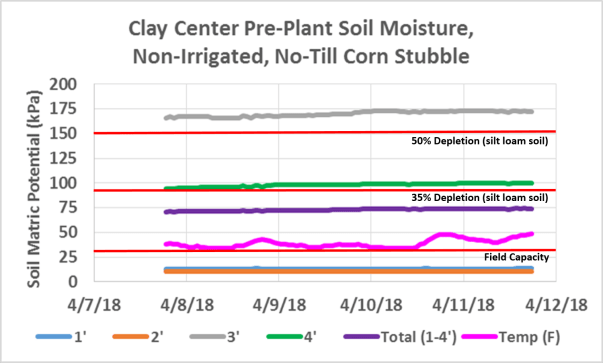
Soil moisture for top four feet in non-irrigated, no-till corn stubble near Clay Center. Total soil moisture is currently depleted around 30% for this location.

Soil moisture for top four feet in non-irrigated, no-till corn stubble near Superior. Total soil moisture is currently depleted around 30% for this location.

Soil moisture for top four feet in non-irrigated, no-till corn stubble near Lawrence. Total soil moisture is currently depleted around 37% for this location.
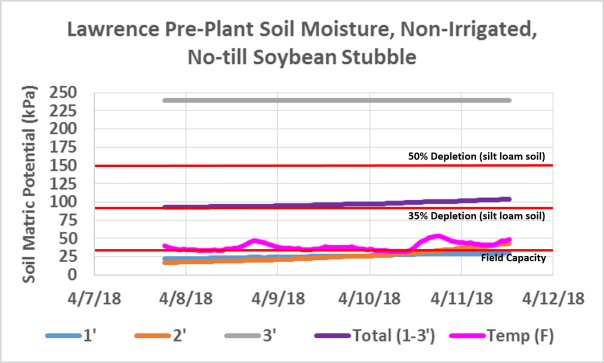
Soil moisture for top three feet in non-irrigated, no-till soybean stubble near Lawrence. Total moisture in these three feet is currently depleted around 37% for this location. Only three feet were installed as I didn’t have a drill to install the fourth foot.
JenREES 4-8-18
Reducing Soybean Seeding Rates: Can I reduce soybean seeding rates and still maintain yield? It’s a common question from soybean growers, especially those seeking to reduce input costs. Every year during winter meetings I share what our growers have found. We now have 11 years of On-Farm Research proven data.
The findings? Reducing soybean seeding rates from 180,000 or 150,000 seeds/acre to 120,000 seeds/acre doesn’t statistically reduce yields in 30- or 15-inch rows in silty clay loam and silt loam soils in south-central and eastern Nebraska. Results of 18 studies showed for seeding rates of 180K, 150K, and 120K seeds per acre, average yields were 69.0, 68.7, and 68.4 bu/ac, respectively (Figure 1). The early studies within this dataset all had seed germination of at least 90% listed on the seed bag. In all but two situations (seeded at 180,000 and achieving 88% germination), the growers were able to achieve 90% or greater of their planted stand.
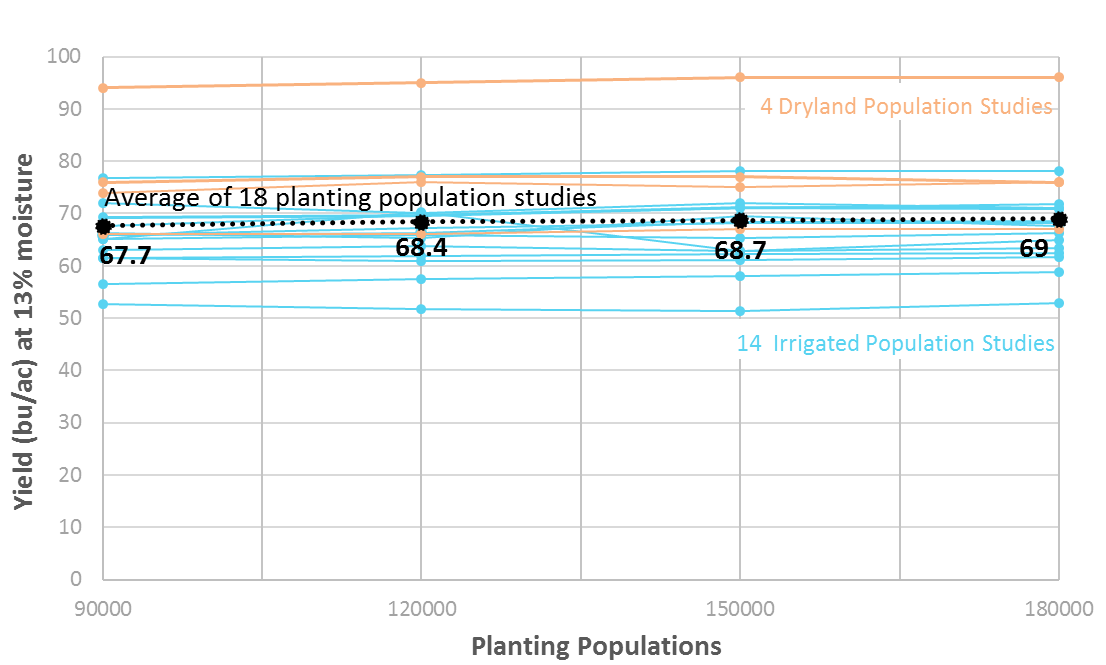
Figure 1. Yield results of on-farm seeding rate studies from 2006 to 2017 (15″ and 30″ rows). Average final stands: 90,000 = 83,067 plants per acre (ppa); 120,000 = 106,863 ppa; 150,000 = 132,700 ppa; and 180,000 = 157,924 ppa
As I share this data, I’ve often heard “but I seed higher rates because of X, Y, or Z…”; however, this dataset includes a lot of those reasons without negative yield consequences! I’ve worked closely with these studies in walking the fields; taking notes and pics; counting plants, pods, and seeds; so I’m really confident of the research and the fact that soybeans truly compensate for reduced populations! Outside of this research, I’ve also observed this in many soybean hail, crusting, and PPO inhibitor seedling damage situations. This dataset includes:
- The latest soybean varieties as the research was conducted from 2006-2017.
- Erect and bushy type varieties in growth architecture.
- Higher and lower yielding situations.
- Fourteen irrigated fields and four non-irrigated.
- Hail events occurring from cotyledon stage to R2 in some of these fields.
- Crusting in some non-irrigated fields.
- Seed treated in some fields and others without (determined by grower’s planting date).
- In some years, pod and seed count data were also collected; the data showed similar numbers of seeds/acre and ultimately yield per acre.
- Observations of increased plant branching at lower seeding rates and difficulty in telling the seeding rate treatments apart as the season progressed.
Our research data for 11 years shows no statistical yield differences in seeding rates from 120,000-180,000 seeds/acre in 15- or 30-inch rows in silty clay loam or clay loam soils. Thus, reducing seeding rates is a way to consider reducing input costs for 2018 without impacting your yield. If you dropped your seeding rate from 150,000 seeds/acre to 120,000 seeds/acre, you could save $10.08/acre, assuming a yield loss of 1 bu/ac, a seed cost of $60 per 140,000 seeds, and a savings of $25.71/ac on seed.
- Thus, if you plant between 140,000-160,000 seeds/acre, consider dropping your seeding rate to 120,000 and aiming for a final plant stand of 100,000 plants/ac based on our research findings.
- If you plant at 180,000 or more seeds/acre, consider dropping your seeding rate to 140,000 seeds/acre as a step-wise increment.
Still hesitant? Consider trying this yourself for your location! Consider using either this Two Population Treatment Design or Four Population Treatment Design. You also can download the Nebraska On-farm Research app, available in Apple and Android, to help you set up your plot design to obtain scientific results. If you have questions or need help setting up your research project, please contact me or anyone involved with our Nebraska On-Farm Research Network. To view all the graphs and additional data regarding 15″ row spacing with reduced seeding rates, please check out this week’s UNL CropWatch at http://cropwatch.unl.edu.
Beginning Soil Moisture: On Good Friday, I installed soil moisture sensors down to 4′ in  non-irrigated no-till fields at Bladen and Lawrence. Last week I added three more sites at Clay Center, Superior and Byron. Thus far, the 3′ and 4′ are dry in all those locations other than Clay Center (only dry at 4′). At Superior, I could only get the soil probe in the ground 6″ into actively growing rye and 1′ in cover that winter-killed. I was just curious what kind of moisture existed currently in the southern tier of counties. I realize planting plans are in place and that we often receive rains in April/May. Hopefully it provides information that can be helpful in how to use that soil moisture. If we don’t get necessary rains, you may consider switching to a different crop, growing feed if you have cattle, or not terminating actively growing rye as originally planned but perhaps using it for feed. Will share graphs next week and I appreciate the growers allowing me to install these in their fields!
JenREES 4-1-18
Hope you had a blessed Easter! The Wheat Stem Maggot in Cover Crop Webinar can now be viewed at: https://www.youtube.com/watch?v=XGjuzMlrjhQ&feature=youtu.be. The link for the survey mentioned in the webinar is no longer available but you are welcome to contact Dr. Justin McMechan for additional comments/questions. He goes through a number of insects to watch for and his ultimate message is to scout to determine termination timing.
Cover Crop Interseeding: A few weeks ago I attended the interseeding cover crops field day which had a really good attendance for March! For those of you considering this, I learned it’s best to start earlier than V6…consider V3 and if it’s wet, you have a better chance of actually getting interseeding accomplished by V6. This is year 3 of their study. The first year they used a spreader to seed the mixes. The second year they found utilizing insecticide boxes for the seeding when they cultivated worked the best. The third year they used a Hiniker inter-row seeder which they purchased.
Regarding mixes, most of them included annual ryegrass or cereal rye. There’s a Penn State mix (27# total of annual ryegrass, red clover, and hairy vetch) that has been successful in northern U.S. states. Very little cover was observable this spring, but from a photo provided, it appeared growth came on during corn senescence and after harvest last year. Fall biomass wasn’t measured last year which will hopefully be measured in the future to obtain more data on the success of the mixes. My take, if your goal is early spring grazing or early spring cover, I’m unsure that much can beat cereal rye, even if it was dormant seeded. If you’re looking for a way to get some cover established prior to corn harvest for either fall grazing or just fall soil cover, interseeding with a mix containing the annual ryegrass looked good from the pictures they showed. If you’re interested in any cover crop or other on-farm research studies this year, please let me know!
Tree Care Workshop: Trees are very valuable in our landscapes. They provide us with beauty, shade, oxygen, and better resale on our homes. These trees need our help to ensure they have healthy growth. When they have a disease or insect problem, it is up to us to manage those pests to help them live many years. On Wednesday, April 18th from 5:30-7 p.m. at the Fairgrounds in Clay Center, Nicole Stoner will teach us what to do with our trees. Nicole is a Horticulture Educator from Gage County. This tree program is $5.00 and will cover light refreshments and your educational materials. Nicole will cover watering, insect and disease problems, general care, and planting of trees. Please pre-register by April 13th with Nebraska Extension in Clay County by calling 402-762-3644 or emailing dpeshek2@unl.edu.
Spring Affair Plant Sale: Spring Affair, the Midwest’s largest plant sale and gardening event, will be Saturday, April 28 at the Lancaster Event Center in Lincoln from 9 a.m. to 2 p.m. More than 700 different varieties of perennials, herbs, grasses, trees, shrubs and other plants will be available. They are selected for regional suitability, uniqueness, popular demand and provided by Bluebird Nursery, Inc., of Clarkson, Neb. It is sponsored by the Nebraska Statewide Arboretum as an educational tool, fundraising event and to promote regional plants. For information and inspiration, half hour plant talks will be offered at:
- 10:00 – “Nebraska Native Plants for Birds” by Jason St. Sauver, Spring Creek Prairie Audubon Center
- 11:00 – “Gardening 101: I’ve got my plants, now what?” by Justin Evertson, Green Infrastructure Coordinator for the Nebraska Statewide Arboretum
- 12:00 – “The Guilt-free Garden” by Mark Canney, Park Planner & Designer for Lincoln Parks & Recreation
Admission to the sale is free. The plant sale, presentations, educational booths and vendors of garden-related items are all in Pavilion I of the Lancaster Event Center with plenty of free parking. For more information, visit https://plantnebraska.org/spring-affair.
DriftWatch/BeeCheck: Nebraska Department of Ag (NDA) encourages pesticide applicators to check out DriftWatch/BeeCheck at http://driftwatch.org to minimize pesticide drift. It’s important for those with sensitive sites such as organic, bees, vegetables, grapes, etc. to add them to this website and important for all applicators to check this website for sensitive locations around our fields. Several states have been added to DriftWatch/BeeCheck in the last year and a few more are in the works, making it more beneficial to applicators working near the state line or those working in multiple states. FieldWatch, the company that manages DriftWatch/BeeCheck, now offers data subscriptions for obtaining data files for GIS maps or live stream data through several mapping software providers. It will be rolling out a new mobile app very soon, FieldCheck, for applicators who have registered as an applicator (which is free to do). You can also view the most recent edition of NDA’s Plant Health Protection Update at: https://us14.campaign-archive.com/home/?u=eb13611bfcca17410ce5c5f52&id=10756f8d33.
JenREES 3-18-18
On-Farm Research: It’s been fun discussing on-farm research projects and putting together protocols with growers the past few weeks! Some have asked if there’s already projects for which we need cooperators. We do have those and we also custom develop protocols depending on the question(s) you wish to look at. For those curious about protocols developed, you can view some at: https://cropwatch.unl.edu/farmresearch/extensionprotocols.
One question I’ve received quite a bit the past few years is about establishing cover crops into V5-6 corn. We don’t have on-farm research data yet for this study topic, but perhaps this year a few of you will consider it! The thought is to get the cover established, even though it won’t grow much during growing season, and hopefully provide for faster growth after harvest. I have developed an on-farm research protocol if growers are interested in trying this (it can be found at the same website listed above). In our brainstorming session, growers talked about interseeding via retrofitting equipment to put seed on similar to Y-drops, using a coulter, or seeding during cultivation. There is also a field day on March 21 to discuss what one farmer has tried the past three years regarding different seeding mixes and ways of establishing the cover at V6. If you’re interested in attending, it will be held at 4th Ave and 1/4 mile north on Arthur Road near St. Libory, NE from 1:30-3:30 p.m. The following website has more information regarding this field day: http://cpnrd.org/wp-content/uploads/2018/03/Cover-Crop-Field-Day-Flyer-March21.pdf. If you’re interested in attending, please RSVP Dean Krull: dkrull1@unl.edu. Please let me know if you’re interested in the V6 cover crop protocol as well! Also just a note, this protocol can also be adapted for any of you looking at applying nutrients during that V5-V6 time-frame. The plot pattern would be the same; the objective and perhaps some of the data collection would change.
Soil Moisture Status in Non-Irrigated Fields: This week I plan to install soil moisture sensors into some non-irrigated fields in the southern area of counties I serve. I’m just curious where we’re truly at for soil moisture deeper in the soil profile knowing Kansas is in drought and moisture this winter has been spotty. I did this in 2013 as well to see where we were at after the drought of 2012; it showed we didn’t have a full soil profile going into the growing season. If you have moisture sensors, you may wish to consider doing this as well for your fields or pastures to know where you’re at. It may influence cropping decisions for 2018. If you connect sensors to dataloggers, you will want to also install a temperature sensor to allow the datalogger to base the moisture readings on the current soil temperature.
Check out this week’s UNL CropWatch at http://cropwatch.unl.edu for information on averaged land values dropped by 3% from 2017, negotiating fair leases, assessing alfalfa winterkill, interseeding into thin alfalfa stands, and more.
Innovative Youth Corn Challenge: Nebraska Extension and the Nebraska Corn Board are offering the seventh Innovative Youth Corn Challenge contest. This contest, open to 4-H members (age 10 & older as of Jan. 1st) or FFA members (in-school members), guides participants through all aspects of corn production, as well as agricultural careers related to corn production. As a team (2 or more participants), youth will be challenged to implement a production practice different than normal to determine if they increased their yield. Economics and sustainability of the practice will also be considered. Yields, cropping history, and production information will be collected in the Corn Yield Challenge management summary. Cash prizes and plaques are given. First place receives $1,000, second place receives $500, and third place receives $250. Sustainability, crop scouting and “extra mile” awards are also given as cash awards. To participate in 2018, youth must complete and return an entry form by APRIL 1st to the Fillmore County Extension Office in Geneva, NE. Forms can be downloaded at https://cropwatch.unl.edu/youth/cornchallenge. For more information, contact Brandy VanDeWalle at brandy.vandewalle@unl.edu.
Horticulture Information from Kelly Feehan, Platte County: “Interested in getting an early start on vegetable gardening? You don’t need a greenhouse; just check out row covers that can be placed over plants to provide some protection from cold temperatures. Row covers are spun-bonded or woven polyester or polypropylene material that can be placed over plants to extend the growing season by retaining heat. Row covers are permeable and allow in light, water and air for plant growth. Depending on the weight of material used, between 2 and 8 degrees of frost protection can be gained, allowing earlier planting in spring or later planting in fall to move the harvest season up by a week or two or extend it a week or two later in the fall. Row covers can be draped over plants and secured with bricks; or they can supported by hoops, in which case they’re called low tunnels. Low tunnels are an easy and good season extender for home gardeners to use.
Rhubarb is a perennial that can live for years; however, plants should be dug and divided every 5 to 10 years. This is best done from late March into early April. Dig rhubarb plants, then use a sharp knife or axe to cut crowns into sections, each containing two pinkish buds. Incorporate organic matter into soil; then replant divisions 2 to 3 feet apart. Plant shallow so buds are only one-half to one inch below soil. Do not harvest newly divided or planted rhubarb the first year to allow plants to establish roots and recover from division or transplanting. During the second season, harvest only a few stalks to allow plants to continue to build up energy reserves. For three year or older plants, the harvest season can last up to 8 weeks. Harvest the largest rhubarb stalks by pulling them slightly to the side so they break away from the plant. Avoid harvesting more than one-third of rhubarb stalks at one time so plants are not weakened.”
JenREES 3-11-18
Crop Insurance and Tax Information: This week’s UNL CropWatch at http://cropwatch.unl.edu has several timely articles regarding crop insurance and tax information. Please be sure to check them out!
Wheat Stem Maggot Webinar: For those of you with small grain cover crops with plans to plant corn into them, a reminder of the wheat stem maggot webinar we’re having this Wednesday, March 14 from Noon-1 p.m. CST. The webinar link to join is: https://unl.zoom.us/j/976118766. There’s also an article from Dr. Justin McMechan, who will also be presenting the webinar, in this week’s CropWatch regarding reasons to not use an insecticide application during time of termination. Basically he and Dr. Bob Wright share that in doing so, there’s no guarantee the wheat stem maggot is present and one may just kill off beneficial insects. Instead, it’s encouraged to scout fields for the wheat stem maggot adults or larvae. There’s also not good data regarding when the maggots leave the cover crop and move into the wheat; thus, it’s hard to ensure an insecticide will have enough residual for that time period. Instead, they’re recommending if finding wheat stem maggots via scouting, to terminate the cover crop at least 14 days prior to planting. If weather or other circumstances don’t allow for that, they’re recommending to apply the insecticide around 11 days after the glyphosate application. This recommendation has been shown effective for common stalk borer and they’re hoping it may work for wheat stem maggot as well, but it’s not guaranteed. Justin and Bob will be sampling for the next several weeks and will continue to post updates to the CropWatch website, their Twitter and the CropWatch Twitter accounts.
Economics of Annual Forages Recording is now available for all who’ve been asking! You can find it at: https://beef.unl.edu/economics-producing-forage-cropland along with excel spreadsheets and resources mentioned in the webinar. While this didn’t appear incredibly favorable with the scenarios presented, it’s encouraged to look at the numbers for your own operations. I still feel this can be economical/comparable when you look at scenarios of a few forage crops/year on a piece of ground and look at ways to spread out the cost of equipment (such as custom farming, etc.). When I was working on budgets with individual farmers, I didn’t account for fewer acres covered on the equipment dedicated to corn, so that’s where my numbers differed the most in addition to including the value of the cattle. As individuals, you can be more specific for your operations than they could do in the scenarios that were being generalized for the purposes of the webinar. I still think this is something for consideration, especially if you have cattle and own ground. With Nebraska being surrounded by drought in states around us, it may be helpful to have some additional feed grown this year.
Frogeye Leaf Spot Fungicide Resistance in Iowa: For those of you who’ve attended my pesticide trainings, I spend time on resistance management because it’s so important. I had mentioned that Cercospora sojina that causes Frogeye leaf spot in soybean was found to be resistant to the strobilurin (quinone outside inhibitor Qol, Group 11) chemistry of fungicides in several Southern U.S. states. This winter, Iowa State and the University of Kentucky confirmed this resistance in Iowa as well. You can read the full article here: https://crops.extension.iastate.edu/cropnews/2018/02/frogeye-leaf-spot-fungicide-resistance-confirmed-iowa-soybean. This is a difficult situation because the strobilurin chemistry can be found in a number of fungicide products we use in corn, soybean, and wheat and has a high ability for fungal resistance to occur. Frogeye tends to occur more regularly in eastern Nebraska where there’s higher humidity.
I’ve been watching updates on this situation because Cercospora is the genus to which the fungus Cercospora zeae-maydis causing gray leaf spot in corn also belongs. We definitely don’t wish to see Cercospora zeae-maydis develop resistance to the strobilurin chemistries! Thus, besides the reason that Nebraska research doesn’t show an automatic yield response to fungicide application at tassel in corn, it’s also a resistance management strategy to not apply a fungicide unless you need it. The same goes for soybean and wheat; only use fungicides when we really need them in order to prolong their effectiveness against fungal pathogens.
Worker Protection Standard: Also in pesticide training we shared updates to the Worker Protection Standard. This applies to those who hire workers or handlers in your operations (outside of immediate family members) when the Worker Protection Standard is mentioned on pesticide labels (often in the Agricultural Use Requirements section). The Pesticide Resources Educational Collaborative (PERC) has developed a library of information on their front page to make it easier to train workers/handlers. You can find these resources at: http://www.pesticideresources.org/. There’s also a course by Certified Training Institute (CTI). You may have received a postcard from them in the mail regarding online private applicator training. Technically, they are not the only approved online training option for private applicator training in Nebraska as UNL also has an online training option for $60. But CTI also has an online training option for the Worker Protection Standard and cost varies depending on number of employees; UNL doesn’t have an online option for that. So you may wish to look them up if you don’t wish to do the training yourself or use the PERC website.
Pruning Principles
Great information from Elizabeth on pruning tips!

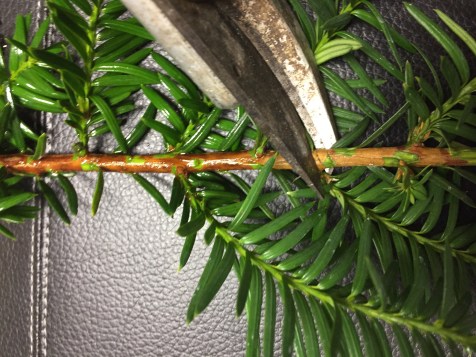 Pick the right equipment and make proper pruning cuts.
Pruning is a science, but it doesn’t have to be intimidating. There are some pruning guidelines that act as a starting point that make pruning a bit easier. Choosing the correct tools for the job will ensure success and a healthy plant. Lastly, a little knowledge of the plant you are pruning will help in the process and give you wonderful looking plants.
View original post 684 more words


 JenResources