Corn Disease July 2015
Radio advertisements, email blasts, and other media are warning of corn diseases and the need for fungicides. Two months of humid, wet weather has allowed for disease development. It’s important to know what diseases truly are in your field before spraying a fungicide, particularly with today’s economics. Here’s what we’re seeing in fields right now in the Clay, Nuckolls, Thayer, Adams county area. Based on the diseases we’re seeing, we would recommend you scout your fields to know whether you have mostly bacterial or fungal diseases present. Consider disease pressure, where on the plant the disease is occurring, growth stage, and economics. We have had southern rust show up in 10 of the last 11 years I’ve been serving in this area. If you spray a fungicide at tassel, you may not have enough residual to ward off southern rust when it appears later, potentially resulting in the need for a second application. In our area thus far, I’m not seeing enough disease pressure in many fields to warrant a fungicide at tassel; consider delaying an application till later for economic and resistance-management reasons. Ultimately this decision needs to be done on a field by field basis. Please also see this UNL CropWatch article regarding fungicide application and corn growth stage. Although I don’t have a photo of it, I’ve also seen common rust in the mid and lower portions of corn canopies thus far.
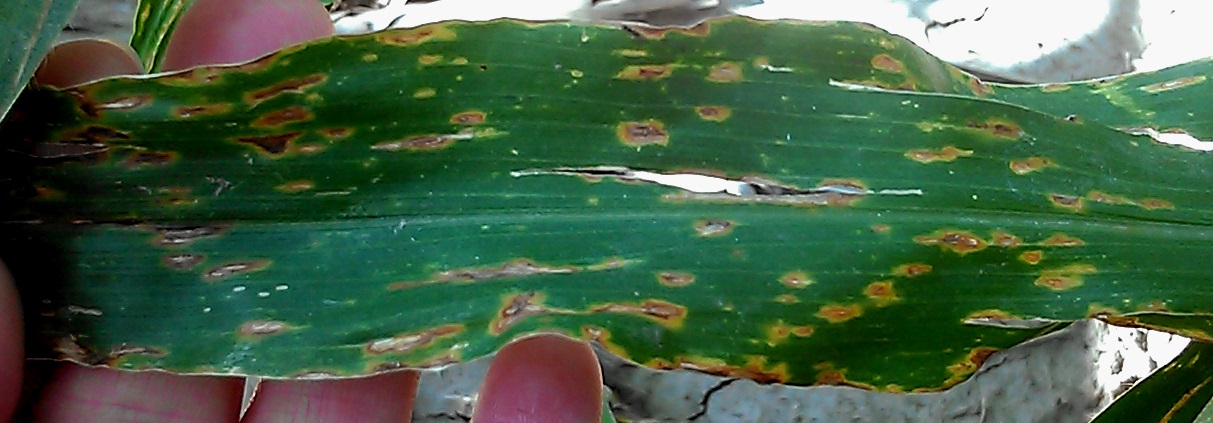
Anthracnose has been observed in fields for a good month now. It is mostly seen on lower leaves of plants, particularly in fields where we’ve had high amounts of rainfall, standing water, and/or hail. Lesions are tan in the center and have a wavy yellow colored margin. I haven’t seen it moving up the plant very far yet. There are fungicides labeled for this, but we don’t often recommend fungicide treatment for anthracnose.

We saw this disease in the Saronville/Sutton area last year. This year, we are seeing it throughout Nuckolls, Thayer, Clay, and Adams counties…and most likely others too. Some hybrids (and have seen this across companies) are highly affected by this bacterial disease. Neither last year, nor this year, has the pathogen causing this disease been confirmed. Plants will have vein-limited lesions in streaks on the leaves. It is often confused with gray leaf spot early on. Take a hand-lens and looking closely, you will see wavy margins on the lesions which doesn’t usually occur with gray leaf spot. Over time, these lesions become elongated and can coalesce with other lesions. Also looking closely with a handlens or microscope, one finds the leaf tissue eventually becomes transparent. While other diseases can look similar to it, under the microscope, no fungal spores are found other than secondary ones. Putting an infected leaf in water reveals cytoplasmic streaming in which the bacteria is escaping the leaf tissue. (The pathogen causing Goss’ wilt also does this, but this disease is not the same as Goss’ wilt). Fungicides will not cure bacterial diseases and the products advertised for targeting bacterial diseases haven’t been researched for this disease. This is the primary disease we are seeing in our area right now-and it looks nasty in some fields! Unfortunately there’s nothing we can do about it. If you are considering testing one of the products for bacterial diseases, please let me know as I’d appreciate testing it with you via on-farm research.

Goss’ wilt (bacterial disease) has been observed in fields as well. I typically notice it along field edges, pivot tracks, pivot/well roads or hail-damaged fields as plant wounds in general allow an entry for bacterial pathogens. However, research has shown that the bacterial pathogen causing Goss’ wilt can enter through the leaf stomates as well. Leaf miner damage can be observed at the top of this photo, and often, but not always, I notice this occurring together in fields. There is nothing we can do for Goss’s wilt if you have this disease in your fields right now. There are products targeting bacterial diseases on the market. If you’re interested in trying these, please consider an on-farm research experiment to prove the efficacy to yourself and help us obtain data.

Physoderma brown spot typically doesn’t occur in our area until tasseling (which is where we are at now in some fields). However, I was seeing this as early as two weeks ago on some hybrids. The pathogen causing this disease is a fungal-like pathogen that moves with water. You will notice a purple/brown color on midribs of leaves, leaf sheaths, stalks, and tiny yellow/brown/purple spots on leaves. This disease isn’t considered yield-limiting or of significance to us in Nebraska. Some confuse this disease with southern rust, but there are no pustules produced with Physoderma brown spot.
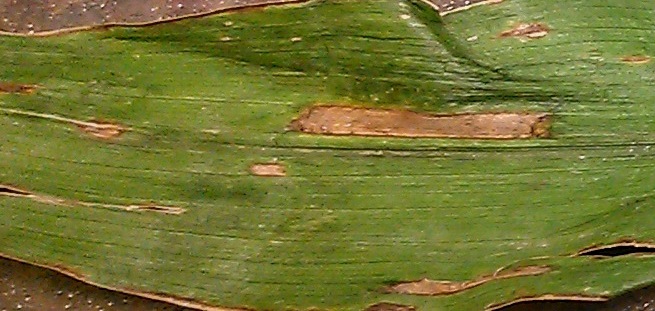
The larger, rectangular lesion is typical of gray leaf spot found in some lower leaf canopies right now. It is easy to confuse with anthracnose as both diseases appear a little different on various hybrids. Gray leaf spot will be vein-limited while anthracnose is more blotchy in appearance. Comparing gray leaf spot with the unknown bacterial disease, the lesion edge will be straight for gray leaf spot and wavy for the bacterial disease.
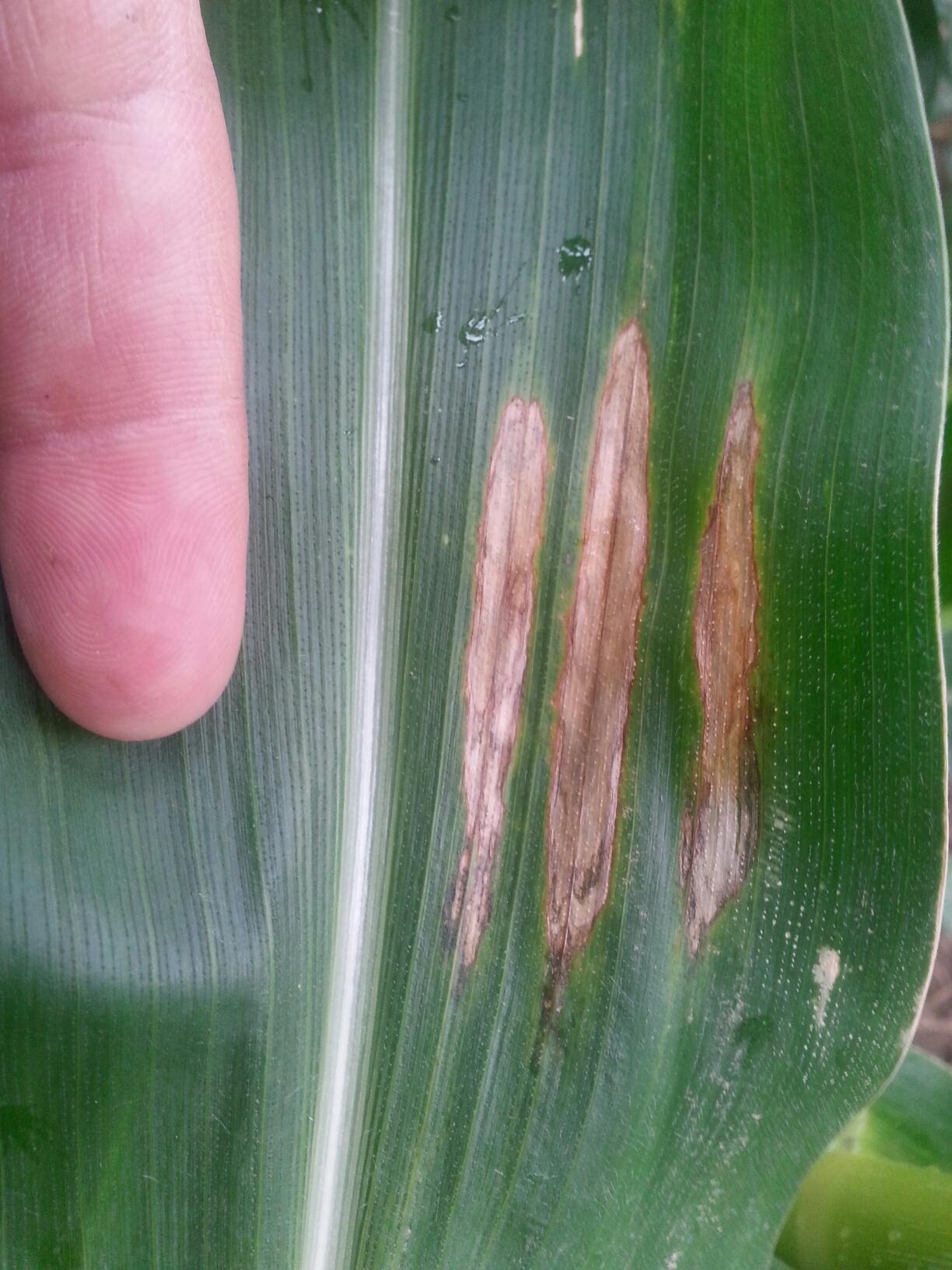
Northern corn leaf blight is a disease we’re hearing a lot about but I have yet to see it in our area. Most have been mistakingly calling the unknown bacterial disease shown above and even Goss’ wilt, northern corn leaf blight, but there’s truly a difference as you see these photos. Compared to gray leaf spot, northern corn leaf blight will be more cigar-shaped instead of forming a rectangle. As this photo taken from the Mead, NE area shows, lesions are often forming in close proximity to each other on the leaves in Nebraska right now. This disease is one to watch as it has been expanding on certain hybrids in some fields, particularly in eastern, Nebraska. However, I still haven’t seen it in our area and haven’t received any confirmations of it being found in our area at this time. (Photo courtesy of Aaron Nelson, Nelson Precision Agronomics).
It’s Fair Time!

This week is the Clay County Fair! We hope you will come out to view the 4-H and Open Class exhibits, 4-H/FFA youth showing their animals, family fun night, 4-H Council Bar-B-Q, cattle sorting, mutton busting, Amanda Winter concert, mud drags, and much more! I absolutely love our fair for the focus on youth and families! I also enjoy watching the fairgrounds come alive with excitement from youth and families as they bring their projects and show them. It’s such a blessing to work with wonderful people who desire what’s best for the youth! A full schedule of events can be found at http://clay.unl.edu. See you at the fair! (photo is of those wearing “orange out” t-shirts the last day of the fair in 2014-Photo courtesy of Tory Duncan, Clay County News).
Determining Your Needs
In the Clay County Fair Open Class flyer printed in the Clay County News, you will find the middle page pulls out and is a survey. Nebraska Extension in Clay County and our Clay County Extension Board have launched a survey to determine programming/information needs you deem critical to you and your families. We know that we provide crop, 4-H, and some horticulture programming and information, but there is much more that Nebraska Extension as a whole provides that we haven’t necessarily offered as much as we could in Clay County.
The survey is meant for those of you in Clay County, if you’d be willing to take less than 5 minutes to fill it out, we’d greatly appreciate it! You can also fill it out online at: https://www.surveymonkey.com/r/clayext. The survey will remain open till the conclusion of the Clay County Fair on July 12 this year. Please pass this information along to Clay County constituents as we’re trying to reach as many people as possible. It really is important that we receive as much feedback as possible. It’s important as the goal is to better serve you-and we can’t do that without your input! Please do take a few minutes and complete this for us as we’ve only had a handful complete it thus far. Thank you and please encourage others to complete it as well!
Bagworms in Evergreens

I’ve been receiving questions regarding when to spray for bagworms. Bagworms overwinter as eggs in these up to 2″ bags which are formed throughout the summer with silk and evergreen needles by larvae. Larvae feed until late August or early September. Males then emerge and mate with females through the bag opening in September. 500-1000 eggs are deposited by female moths within their own bags. After depositing eggs, the females drop to the soil and die. Bagworms overwinter as eggs within bags fastened to twigs such as these shown in this photo.
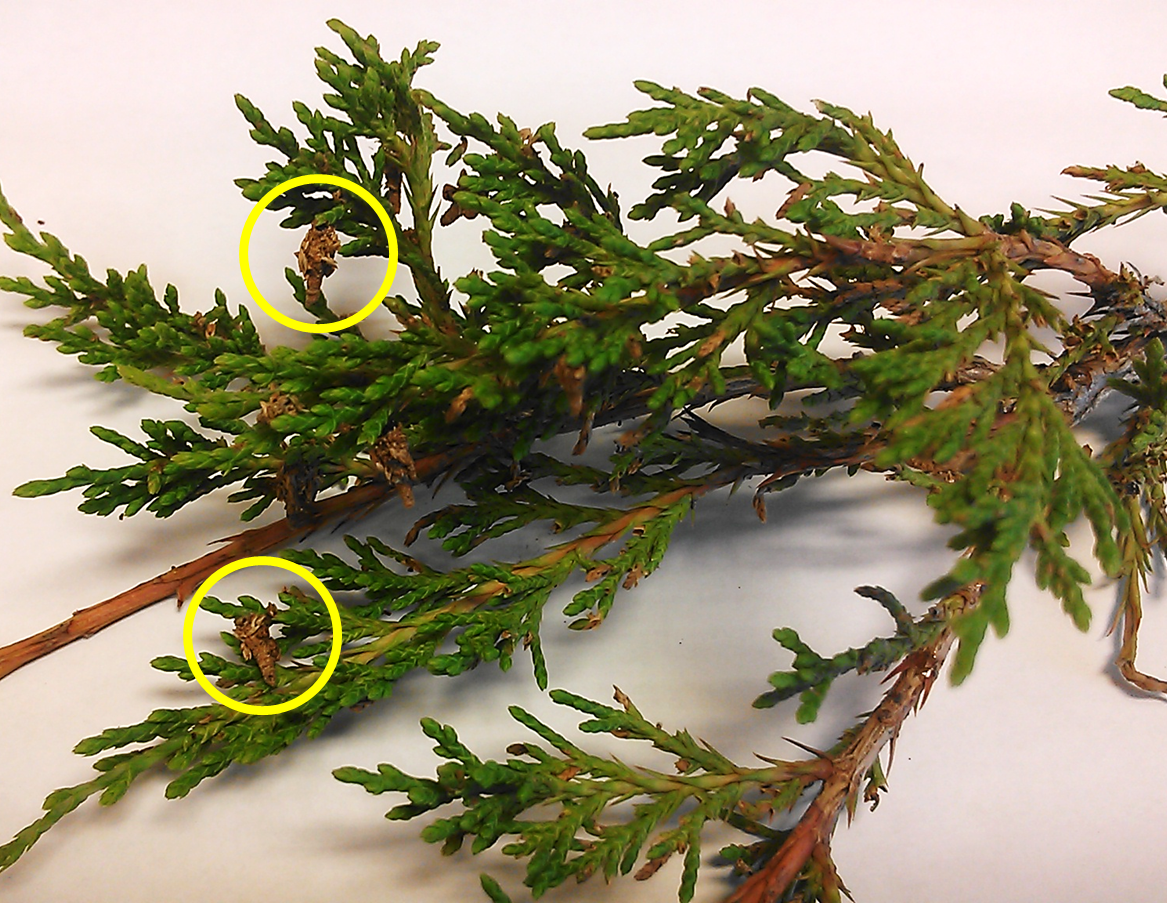
Eggs hatch in mid-May to early June. Some caterpillar larvae remain on the same trees containing the bags from which they hatched. Others are blown by the wind to area trees allowing for new infestations to occur. This photo shows new bags (1/8-1/4″) being formed on trees as they create these bags around themselves. Look closely for these tiny bags on trees right now. The video below shows how to look for bagworms on evergreen trees right now. Study your trees and look for small movements on small bags being formed. If you are seeing this, consider treating your trees for bagworms. Products containing bifenthrin or permethrin irritate caterpillar larvae causing them to come out of the bags and be exposed to the pesticide. There are a number of other management options available. Please see the following publication for more information.
Nebraska Extension Publication: Bagworms
Treating Iron Chlorosis in Trees

Throughout the County, iron chlorosis is appearing in trees and landscapes. It can especially be seen in the silver maples (shown in this photo) and pin oaks. Iron chlorosis symptoms appear as yellowing of leaves while the leaf veins remain a dark green color. Eventually the leaves become so chlorotic that leaf tissue begins to turn brown/black and die. Severely affected leaves often drop from the tree and new leaves emerge in 7-14 days. Alkaline soils (pH above 7) reduce the availability of iron and manganese; two important nutrients found in tree leaves. It’s not necessarily that these nutrients are deficient in the soil. The high pH just makes these nutrients less soluble and unavailable to the trees. Adding iron to the trees or the landscape around the trees won’t correct the problem as the pH ultimately needs to be corrected.
Early in my Extension career, I inherited the job of injecting trees with a solution of iron sulfate. There would often be a waiting list of people to help, particularly in Sutton, when they’d see the jugs hanging from trees. As a plant pathologist, I was concerned about how much damage we were doing to the trees with repeated injections every five years or so…if secondary pathogens would affect these areas we were drilling in the trees. I was also concerned about providing a free service that took a great deal of time and if we were competing with industry by doing so. Eventually we stopped providing the service but we do rent out the equipment and can provide the recommendations on how much iron sulfate to add based on tree diameter if you are interested. But you may be interested in another less invasive method instead.

I learned of another potential method to consider from John Fech, Extension Educator in Douglass/Sarpy Counties, and we tried it at the Sutton Cemetery for two years and at the Clay County Courthouse last year with decent results. The first step is to double aerate the area from the trunk to the dripline of the trees showing iron chlorosis symptoms. The dripline is the outer leaves of tree. Do so several days after irrigation/rainfall to avoid tearing up the grass in your lawn. Often people aerate their lawn in the spring and/or fall, so if you have a problem with iron chlorosis, you could include the following treatment into your routine.

The second step is to broadcast spread granular sulfur on the soil surface. Then broadcast spread iron sulfate on the soil surface. What was recommended to us by Omaha Master Gardeners was using 3 lbs of sulfur + 3 lbs of iron sulfate for “small” or newly established trees; 4 lbs of sulfur + 4 lbs of iron sulfate for “medium” sized trees; and 5 lbs of sulfur + 5 lbs of iron sulfate for “large” established trees. I realize that’s not very scientific based on sizes so do the best estimation of tree size that you have. We used 5 lbs for everything at the cemetery and courthouse. Here Mike, Clay County Courthouse Custodian, is spreading the product close to the trunk first.
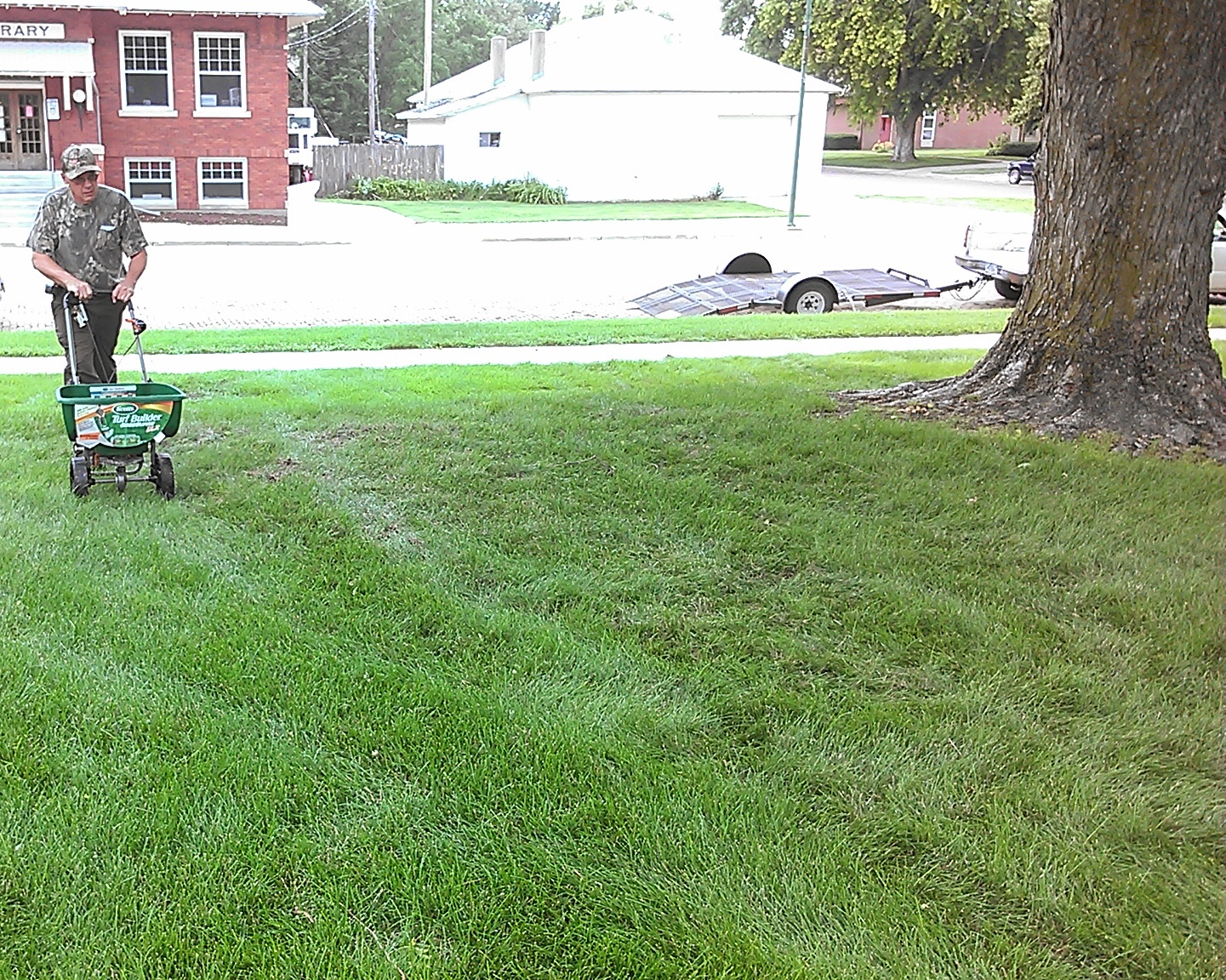
He continued applying around the tree in a circle gradually moving out towards the drip line. The final step is to then water the lawn.

We have numerous silver maples at the courthouse. This is a photo of one of the trees and a close up of these leaves was shown in the first photo. You can see the yellow cast to this tree in this photo and how severely affected many of the leaves were from the first photo.

This is the same tree a year later from the opposite side. The photo doesn’t do it justice as it truly is greener than last year and the leaves are hailed damaged. It didn’t really change during the season last year but all the courthouse trees are greener this year. They could use another application though as they still show symptoms of iron chlorosis. This method may take several years before the soil pH changes enough for symptoms to disappear.
You most likely will not see any changes the first year, although the grass under the tree may appear greener. The goal is to change the soil pH to make the iron more available to the tree in the future. This may be a process that needs repeated for several years in a row and while it doesn’t show instantaneous results, it will most likely aid in the longevity of your trees by reducing the symptoms without additional harm to the tree through injections.
Sugar Application in Crops
Corn is approaching or at V7-V8 growth stage. A few weeks ago, we published research results in our UNL CropWatch website. That information can be found in the links below the video. If you are interested in trying this in your field this year, please see the Nebraska On-Farm Research protocals also shown below.
Weed Science Field Day
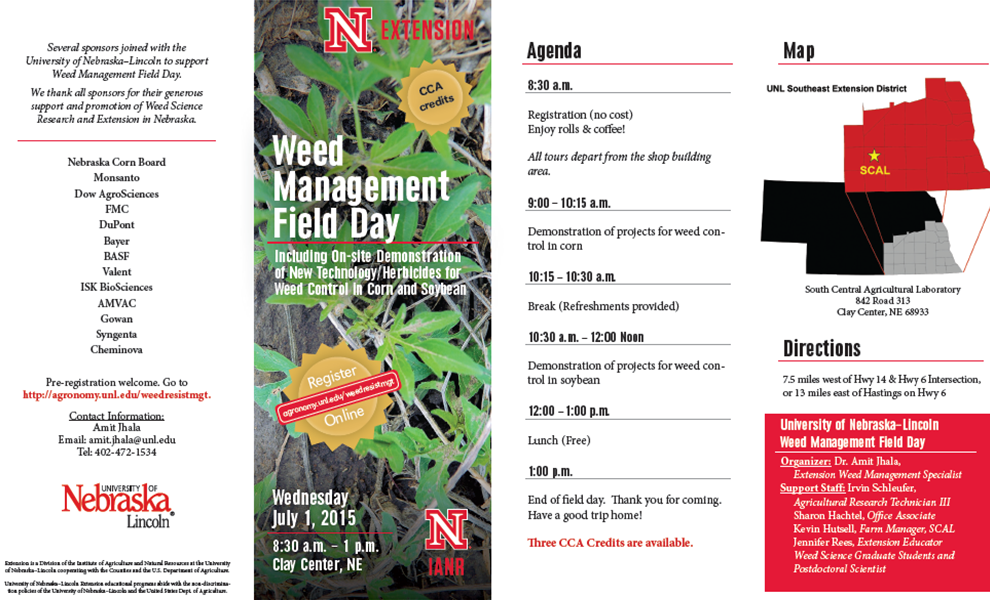
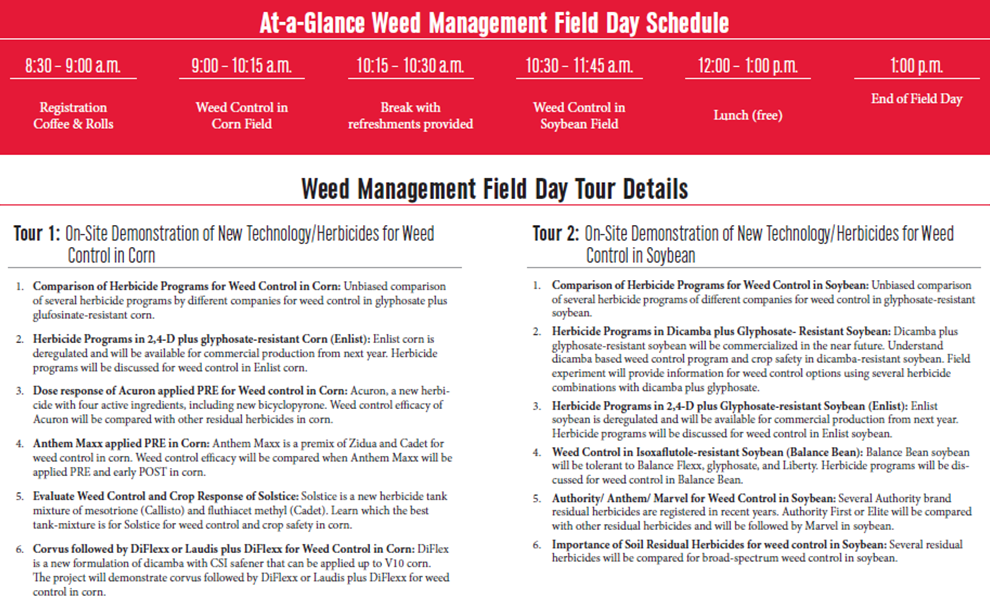
July 1 is the upcoming Weed Science Field Day at UNL’s South Central Agricultural Laboratory near Clay Center. The brochure with more information is shown below as photos; please click on the photos to enlarge if they are difficult to read. You may RSVP to Dr. Amit Jhala at (402) 472-1534. Hope to see you there!
Crop Update June 9
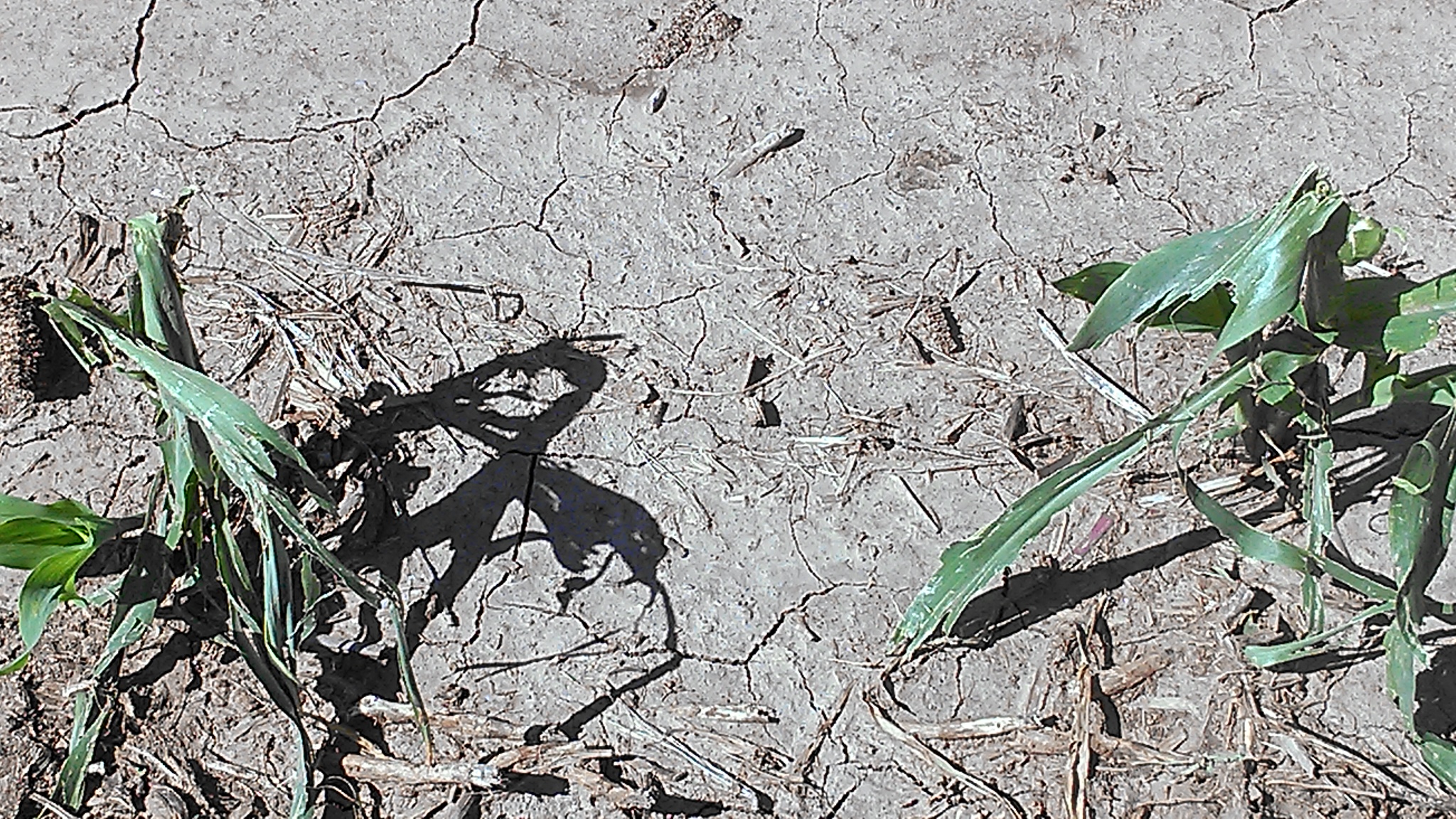
Corn that was hail-damaged on June 3rd is starting to regrow. Leaves wrapped up in the whorl are beginning to slough off as wind and warm temperatures cause the damaged tissue to die and break off. For more information on how stand loss impacts yield, please check http://cropwatch.unl.edu.

Some corn plants more severely affected were reduced to stems. Sometimes no new growth is appearing while in other plants new growth can be seen. I split open the stem on this plant since no new growth was apparent and the center looked discolored.
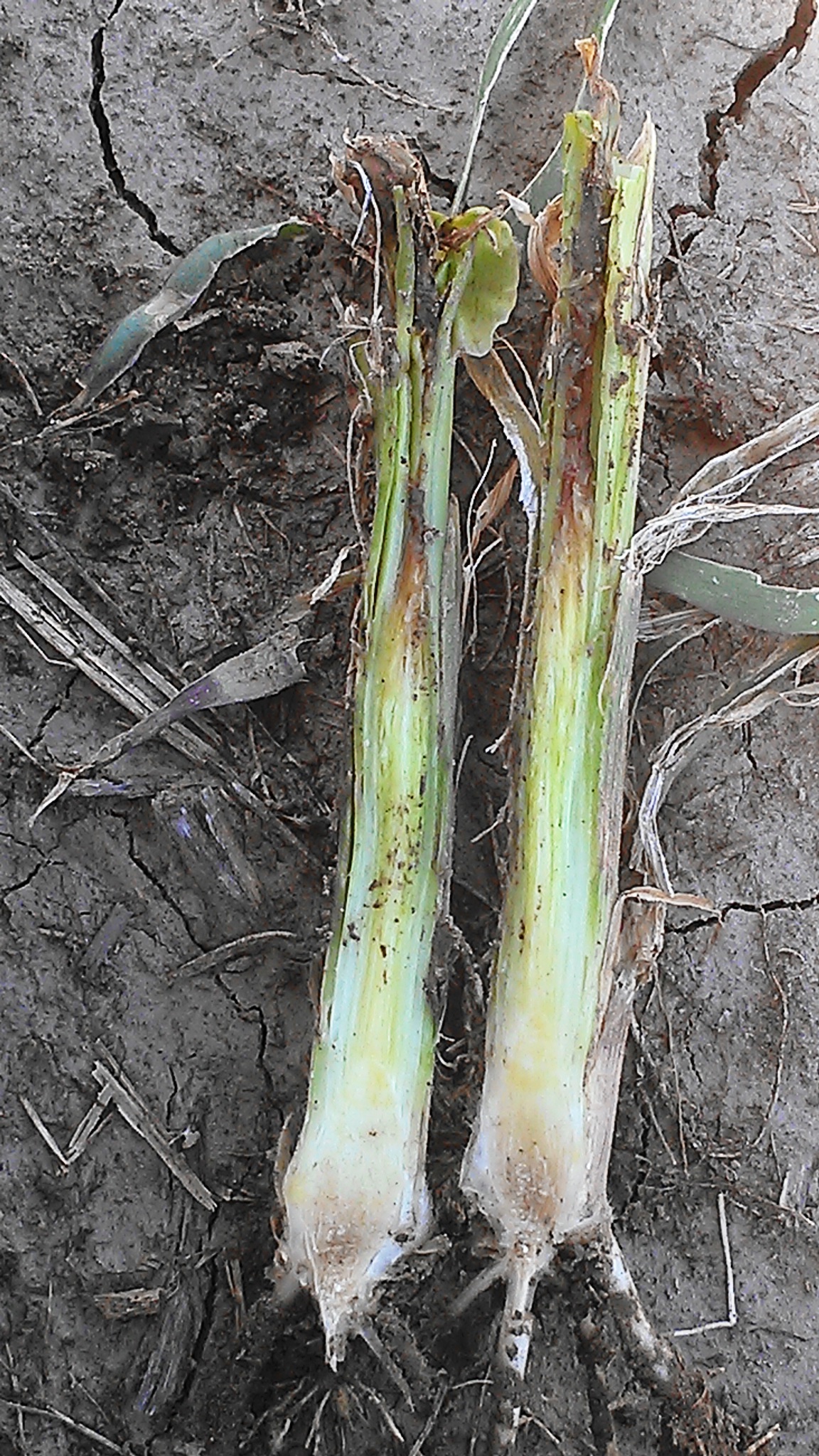
In this corn plant, a bacterial rot has set in as can be seen from the discoloration at the upper portion of this plant and the discoloration at crown area. This plant may not survive. This is typical of what we were seeing in Nuckolls/Thayer counties with the 8-10″ of rain they received there. My concerns for corn at this point are bacterial diseases such as this or Goss’ wilt that may continue to reduce stands through the season. Some growers are considering a fungicide application but fungicides don’t target bacterial diseases. We’d recommend anyone considering this to consider an on-farm research experiment and I’d be happy to help set this up for you.

These soybeans were reduced to stems yet are showing new growth 5 days later. UNL research has shown that soybean stands can be greatly reduced without a significant yield effect. Several growers are considering replanting; we’d recommend taking into account the research or conduct an on-farm research experiment to see any differences for yourself like this farmer did. The other thing we have looked for is bruising on stems and some flooded areas truly did not have plants survive. For more information, please check out http://cropwatch.unl.edu.
Crop Update June 5
This year I was counting my blessings as we made it through May with no tornadoes in Clay County and no Memorial Day storms! Yet history seems to repeat itself on days. Last year, hail went through the counties north of us on June 3. This year, hail hit us on June 3rd….an estimated 30% of Clay County. Please also see the resources listed at the end of this post for more specific information regarding decision-making.
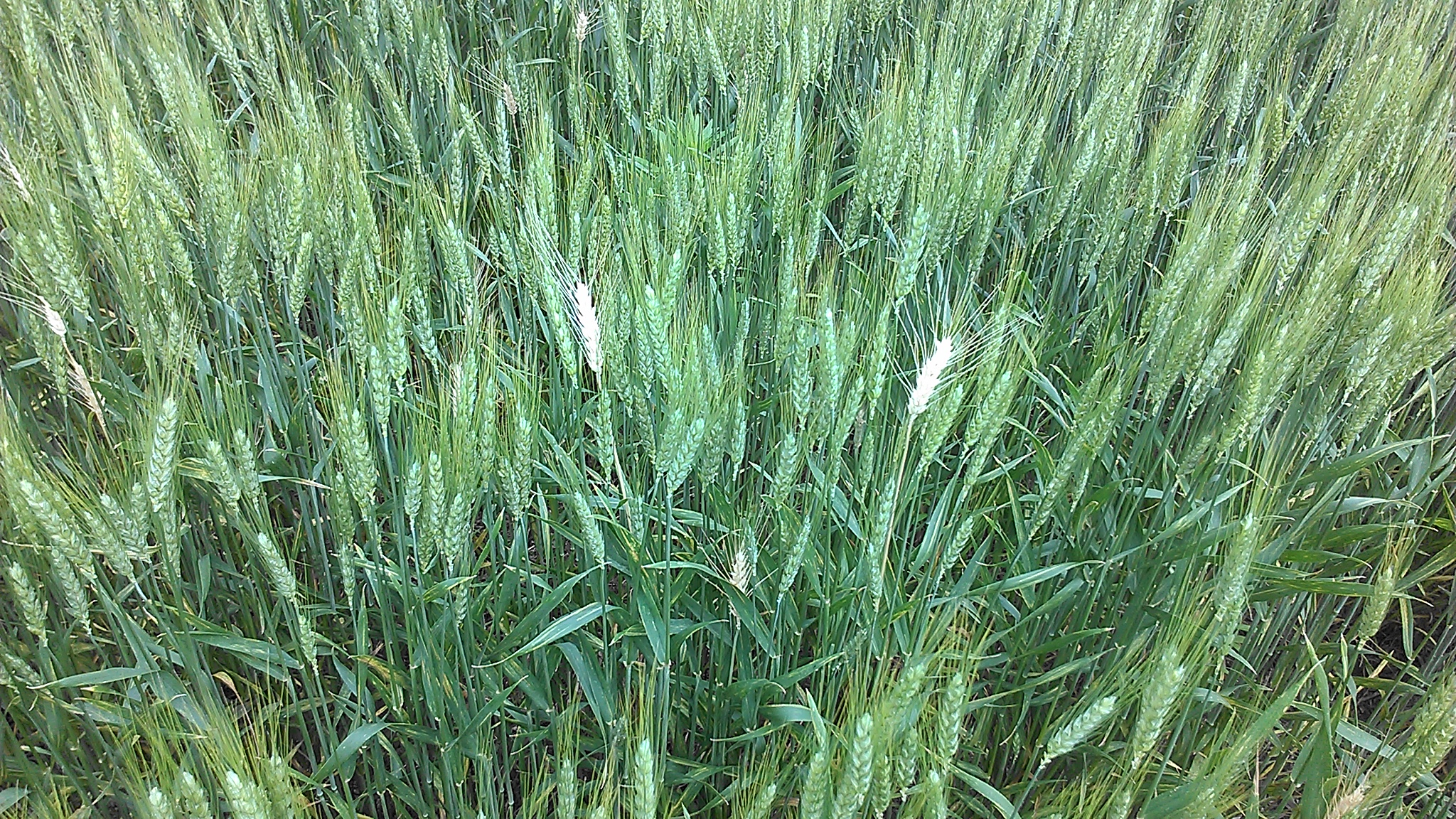
Earlier that day, I had looked at wheat in a number of counties where white heads were appearing in wheat. Most often they easily pulled from the head and weren’t more than 2% of fields. Those were attributed to wheat stem maggot. The white heads that were hard to pull from the stem were most likely due to some late frosts that we had in the area.

The evening of June 3rd resulted in various rainfall totals throughout the county and hail damage to an estimated 30% of the County. This photo is of the west fork of the Upper Big Blue River that was flooding many fields along Hwy 6 between Hwy 14 and Sutton.

This was June 4: Water along both sides of Hwy 6 from Hwy 14 to Sutton and over the road in a few areas. The road was closed on June 5th after another 3-4 inches fell in the area Thursday night. Portions of fields were flooded throughout the County and we’ll have to see how long it takes for water to recede and what temperatures do to determine any replant situations.
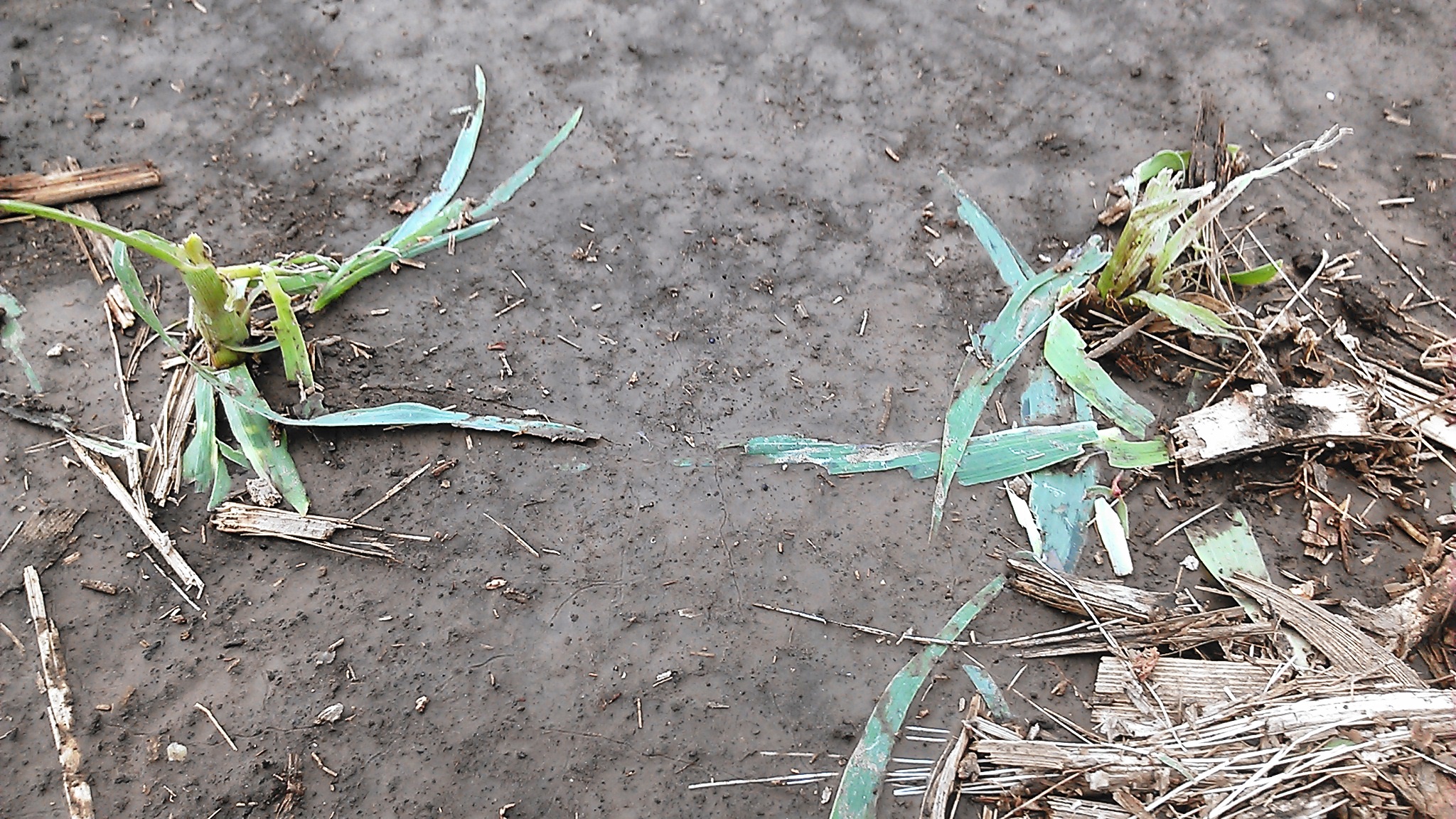
Corn in the V5-V6 stage ranges in hail damage. The worst damage of plants were reduced to sticks. Time will tell how well the plants recover. I’m concerned about bacterial diseases in corn-particularly Goss’ wilt showing up later…but also a bacterial rot that we were seeing in Nuckolls and Thayer Co. after the heavy rains they received last month.
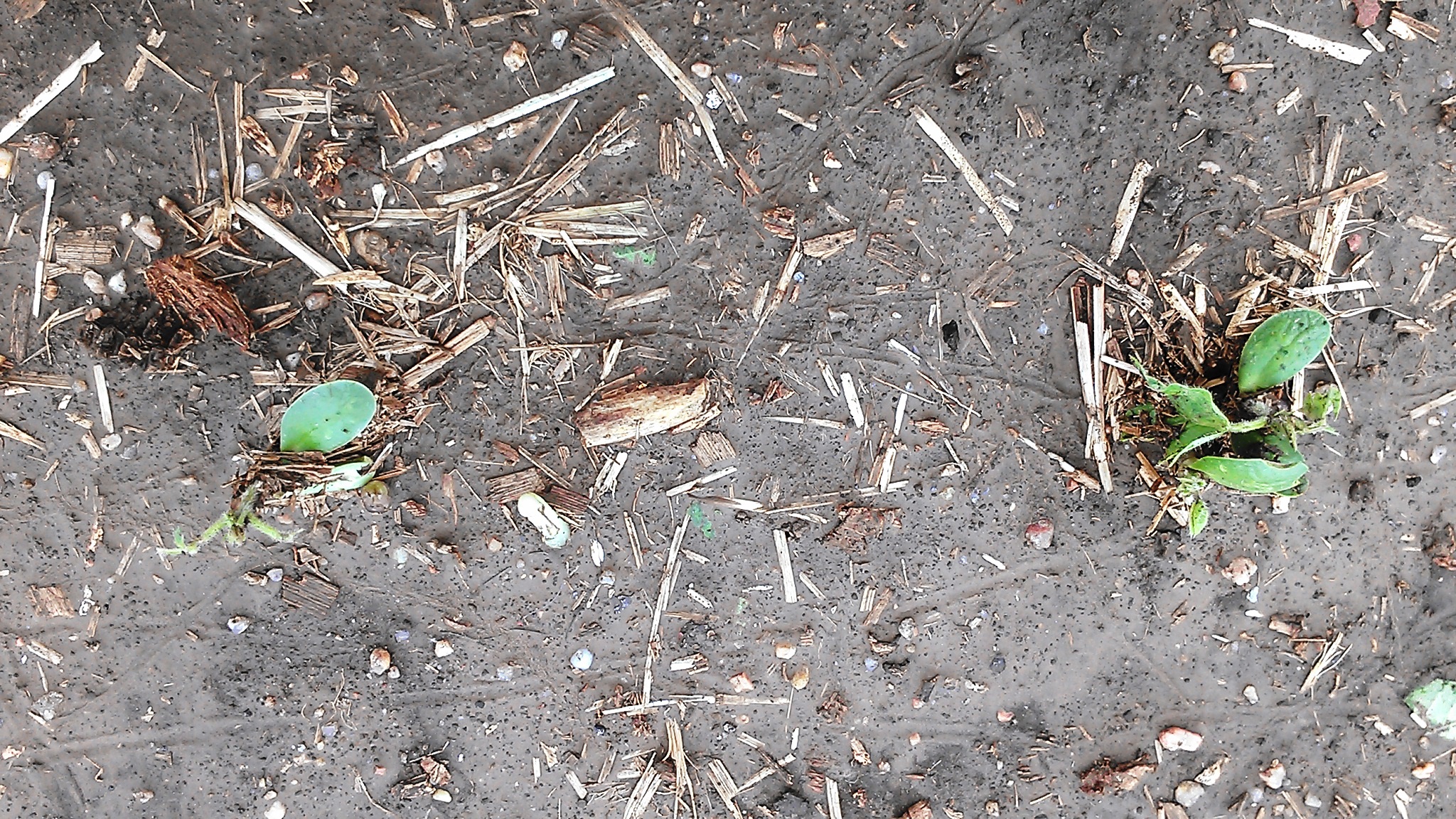
Soybeans ranged from planted to V3 in the County. Many of the hail-damaged beans still had a cotyledon attached. In the past, I’ve seen new plumules shoot from the top of the stem when the growing point wasn’t too damaged. We again will need to wait and see what happens.

First cutting alfalfa is down in much of the County waiting to be baled.

Severely hailed wheat field. You can also see the amount of stripe rust present in this field. We estimated 75-80% of wheat heads in this field were broken over and wouldn’t fill the heads.
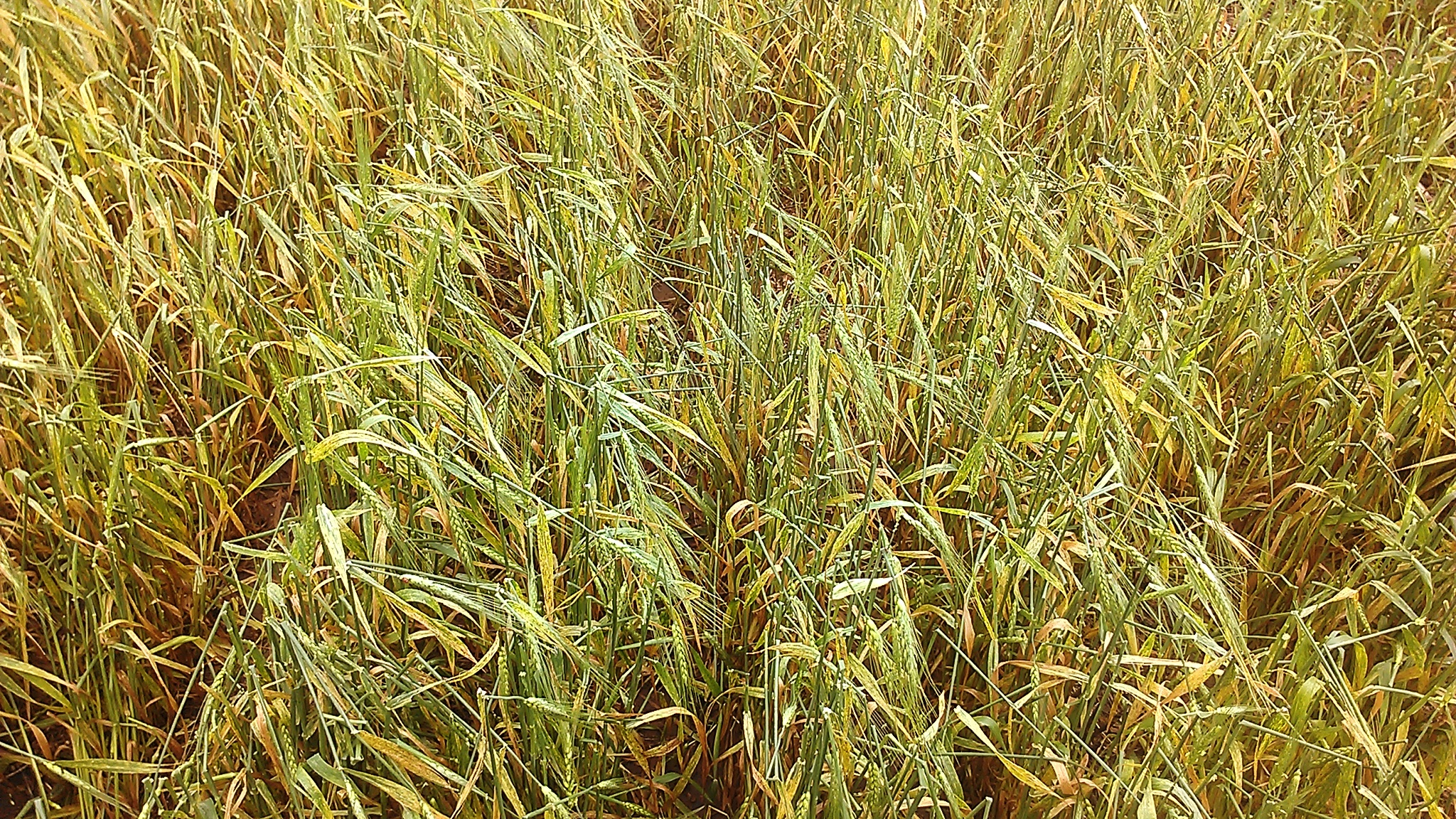
Another hail-damaged wheat photo. We have a great deal of stripe rust of wheat in the County and some farmers with livestock have chosen to hay wheat that is severely affected by stripe rust. Some did spray fungicide which has held the rust back. Others are going to just see what happens yield-wise.
For more information on hail and replant decisions, please see:
Options for Stripe Rust in Wheat
Stripe rust has exploded in wheat in the past 3-7 days in South-Central Nebraska due to the rain and cooler weather. Nebraska Extension is receiving numerous questions regarding options to consider. Rain has also increased our risk for Fusarium Head Blight (head scab).
Wheat is at such a variety of stages in the area; many fields are just heading and/or flowering right now while others are in soft-dough.
Stripe rust on the flag leaf, as shown in this photo, will continue to progress with cool, wet conditions, reducing yield. If your fields are currently yellow with stripe rust, here are a few options:
1-Do nothing and see what happens regarding what yield is obtained. If your wheat is past flowering, fungicide application is not an option as all fungicides would be off-label.

Susceptible wheat varieties to stripe rust that have not been treated with a fungicide to date have a yellow cast to them in South-Central Nebraska.
2-If your wheat is headed and beginning to flower, you could still consider a fungicide application of Caramba or Prosaro. Both are labeled for headed and flowering wheat. There’s a 30 day pre-harvest restriction for both. Rainfast varies from ¼ hour to 2 hours or when dry depending on environmental conditions. Both fungicides can help prevent scab and control rust on the plant. However, research has shown that best scab prevention occurs when wheat is headed and 30% of the plants are in the beginning flower stage. Application within 5 days of these criteria still showed positive results. Research showed that application before or after this time period greatly reduced effectiveness of preventing scab. Understandably, the economics of a fungicide application are tight with current wheat prices. The following article includes economic considerations.
3-Consider haying it. Dr. Bruce Anderson, Nebraska Extension Forage Specialist shared the following:
“Baling hay or chopping silage are two potential options. Rust pustules are not toxic to cattle although sometimes the spores can irritate respiration. It can be difficult to make good silage, though. Rusty leaves dry out rapidly so it can be hard to get the best moisture content for silage packing and fermentation.
Usually it is best to harvest rusty wheat hay just before heading to retain reasonable forage quality. As plants mature further, quality can decline rapidly. Digestibility of rust affected cells is much lower than that of normal cells. Fortunately, protein doesn’t seem to be affected greatly. Properly made hay should not deteriorate in the bale due to the rust any more than normal.
Be sure to have the forage tested before feeding. It is likely that nutrient concentration will differ from typical wheat hay so testing will help in developing rations. Also consider the impact of removing the wheat residue. Adequate residue helps retain soil moisture, boosting yield of your next crop.
There never are good choices when problems like this develop. All you can do is weigh your options and choose what is best for you.”
Also, please continue to check out UNL CropWatch for wheat disease and all our crop updates.
Research Before You Retweet: Gardening in the Age of Social Media
Elizabeth does a great job explaining why it’s important to know the source before sharing information online. Great explanations for why we should/should not use some of the household remedies we see online!

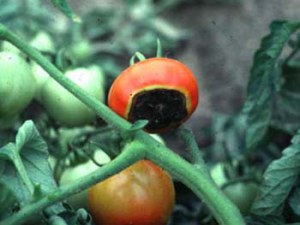 Blossom end rot on tomato. Maintain consistent moisture. Try mulching tomatoes instead of reaching for the Epsom salts.
Without a doubt the interest in gardening and landscaping has been on the rise for many years. In order to find information on how to garden in the past, you had to know who to ask or what book to look in. Today the places to find information are endless. Pinterest, Facebook, Twitter and the internet all have gardening information that is easily shared among friends and followers alike. Sometimes these ideas are tried and true while others are more “too good to be true.” I might not be the first to say it, but you can’t believe everything you read on the internet.
Through my job with Nebraska Extension, I educate people using science-based information that comes from research. This ensures the information that I give out has been researched by…
View original post 502 more words


 JenResources