Soybean Stem Borer

Are you noticing holes in your soybean stems? Holes where the petiole meets the main stem are the entry point where soybean stem borer (also known as Dectes stem borer) larvae tunnel into the main soybean stem. Originally eggs are laid in soybean leaf petioles in the upper canopy. The eggs hatch into larvae which burrow down the petiole then into the main soybean stem. Notice the soybean stem borer infected stem in the middle while the soybean stem to the right has a a non-infested area where the petiole dropped (it is naturally sealed over by the plant). Count how many plants out of 20 have this symptom to get an idea of percent infestation and repeat in several areas of the field. Fields with 50% or more infestation need to be harvested first and perhaps earlier to avoid lodging and yield loss associated with lodging.

Lodged soybeans can be another key for checking for stem borer around harvest time. Notice the stem in the middle of the photo that is lodged (fallen over instead of standing in the row).

Following the stem to the base, the stem easily breaks away from the plant. The stem itself will appear solid. The base of the plant where it breaks is also often sealed off. The stem borer will seal itself inside the base of the stem. In this case, there’s a small portion that hasn’t been sealed off yet.

Gently pulling apart the base of the stem reveals the soybean stem borer larva. The larva will spend the winter and eventually pupate here. Adult beetles will emerge in late June and there’s only one generation per year. For more information specific to life cycle and management, please see the following NebGuide.
We Will Never Forget 9/11/01

In September 2013, I had the opportunity to visit the US Flight 93 Memorial in Pennsylvania. The Memorial is mostly a grassy field but also has a series of signs to explain the events on 9/11/2001.

This sign shares the heroic efforts of those who fought back against the terrorists on the flight that day.

May we never forget the lives lost in these terrorist attacks.

A quiet place to reflect. US 93 would have flown toward us as we view this photo on the left side of the photo.
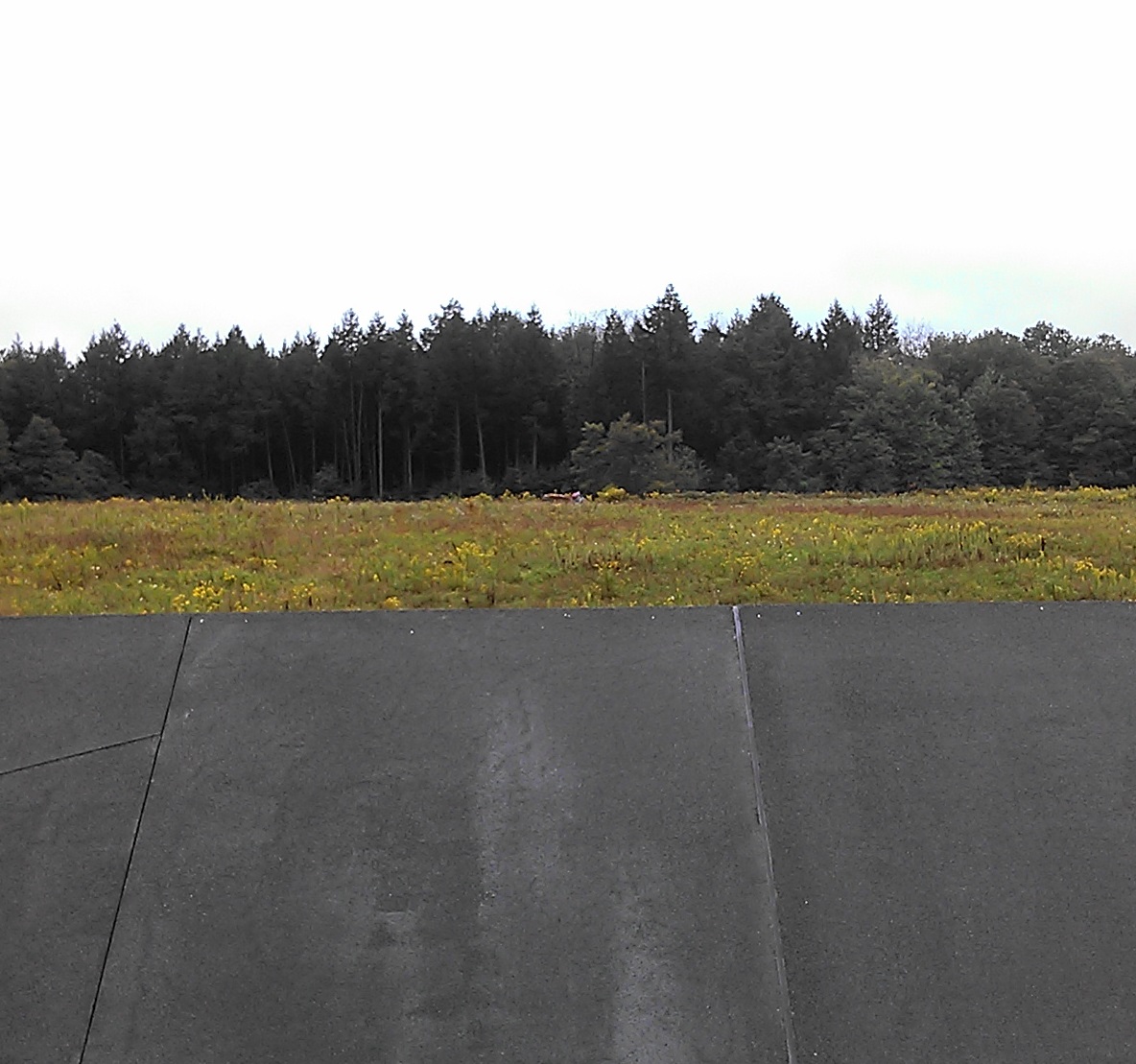
The grassy field where US Flight 93 went down. In the distance (center of photo), there is a memorial rock which marks the spot of the crash. Thirteen years later, we will never forget the innocent people, rescue workers, and all our men and women in uniform who lost their lives.
Crop Update 8/1/14

Southern rust of corn confirmed in Clay County July 31. Very small, tan-brown lesions on upper surface of the leaf, usually in clusters. Spores inside the pustules are typically orange. This was found on one leaf in a field near Trumbull. Just because southern rust has been found in the area, we don’t recommend automatically spraying. Scout your fields and consider disease pressure, growth stage, and economics. Long season corn and late-planted fields have the potential for most damage. Secondary common rust sporulation has also been confused as southern rust as the secondary pustules tend to look like this. It’s important to obtain microscopic confirmation to know for sure if you have southern rust in your fields.
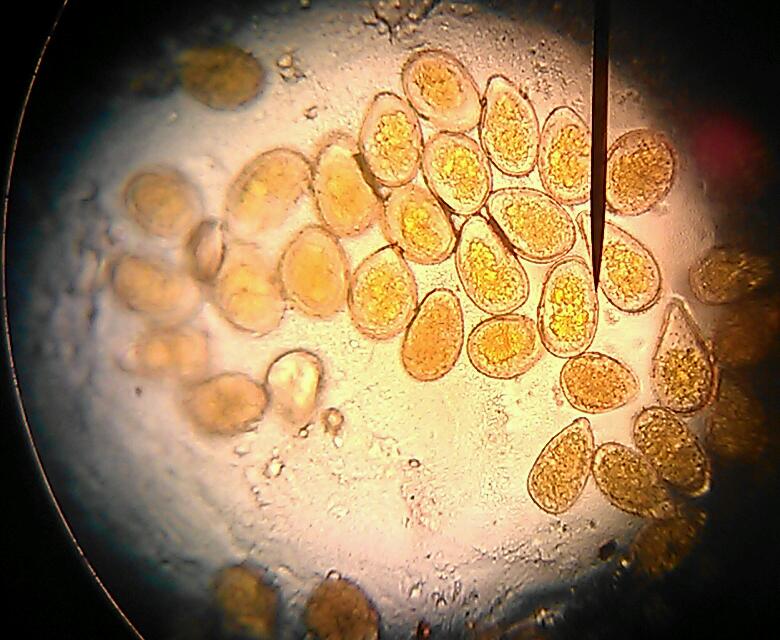
Microscopic Observation: Spores of southern rust appear elongated vs. common rust appear as near perfect circles.

Another common problem is old common rust lesions being confused as gray leaf spot. The color of this lesion is a tan-gray, typical of gray leaf spot. Using backlighting or a handlens, you can see the pustules within this lesion confirming it is common rust and not gray leaf spot. I’ve had many calls that gray leaf spot was up the entire plant in their fields and after looking at fields, have found it to be common rust in most situations. It’s important to know what disease you truly have to make the best decision on fungicide application.
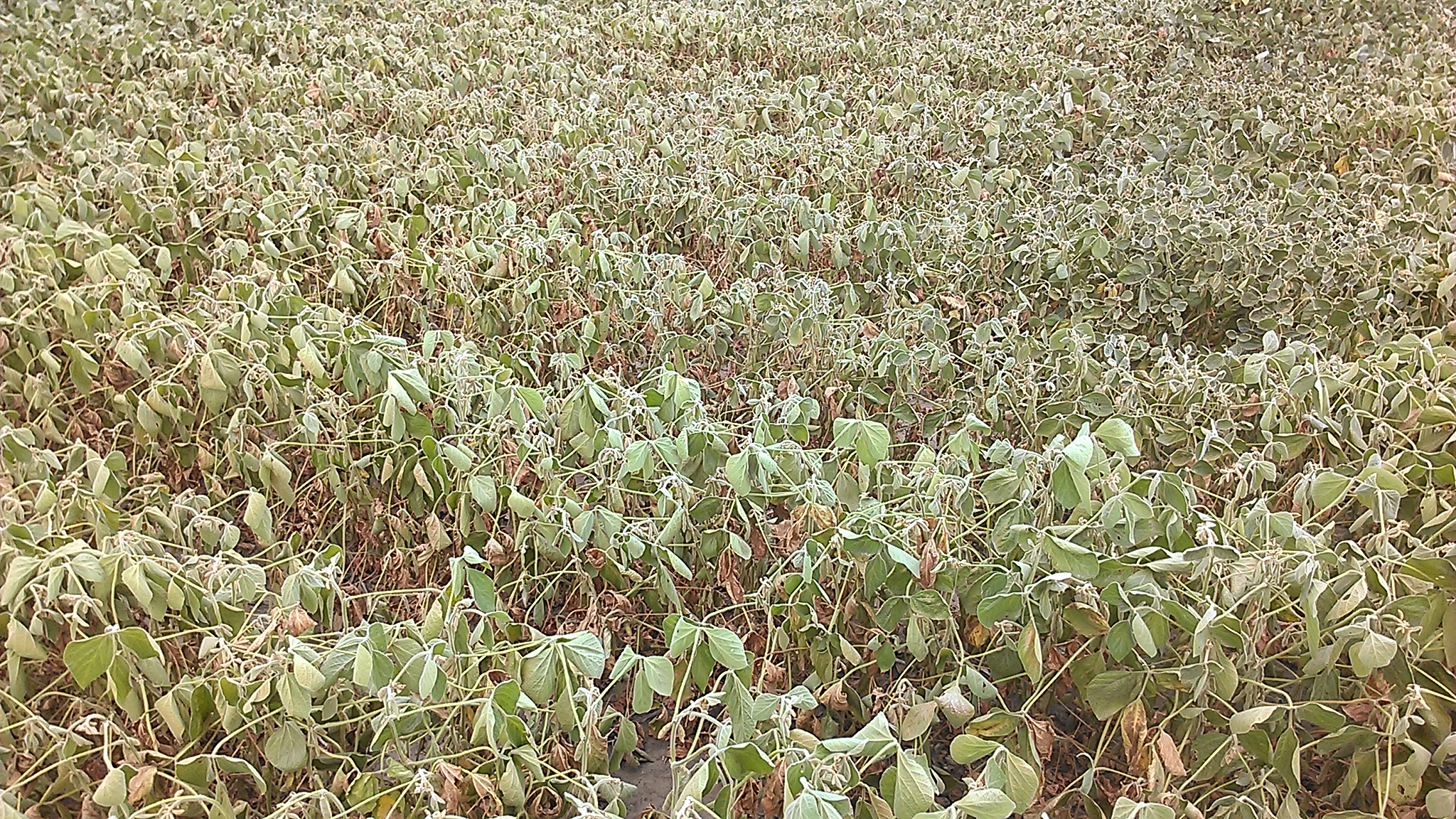
Have also received questions on soybeans, particularly in dryland. This photo is showing drought stressed soybeans-often occurring in pockets within dryland fields right now. Closer observation shows plants aborting pods and losing lowest leaves. Spidermites can also be viewed on leaves in some of these patches.

Dryland corn showing stress as well. June rains were making for dryland crops with potential, but also led to shallow rooting. Crops could use a drink right now….but would prefer no more hail and tornadoes. The storm that hit Clay County so hard occurred one year ago today.

Oysters… Fun Fact Friday
Some great information from Dr. Lindsay Chichester on oyster farming in Alabama.

This past week 1,300 agricultural focused extension folks from around the nation gathered in Mobile, Alabama for our annual conference. There are always great presentations, posters, vendors, and conversations that provide educational opportunities. But we also have a chance to go on a day tour to learn more about something in the area. This year I selected an oyster and crawfish tour. Certainly not something we have much of in Nebraska, but it was very interesting. Today I want to share with you some of the fun facts I learned about oysters.
— Oysters are animals and can be grown in off-bottom gardens. Off-bottom means the oysters are grown in baskets, bags, cages, etc. that are suspended in the water, versus on the bottom of the water source. Off-bottom gardens protect the oysters from predators and helps keep them safe from getting buried in bottom of the water sediment.

Oyster…
View original post 285 more words
Alabama Agriculture-What I learned

At our first stop, this farming operation had fields where peanuts were strip cropped between rows of pecan trees (shown in background). The farming operation went from around 1500 to 900 pecan trees after the hurricanes in the 1980s. The pecan trees were around 80 years old.
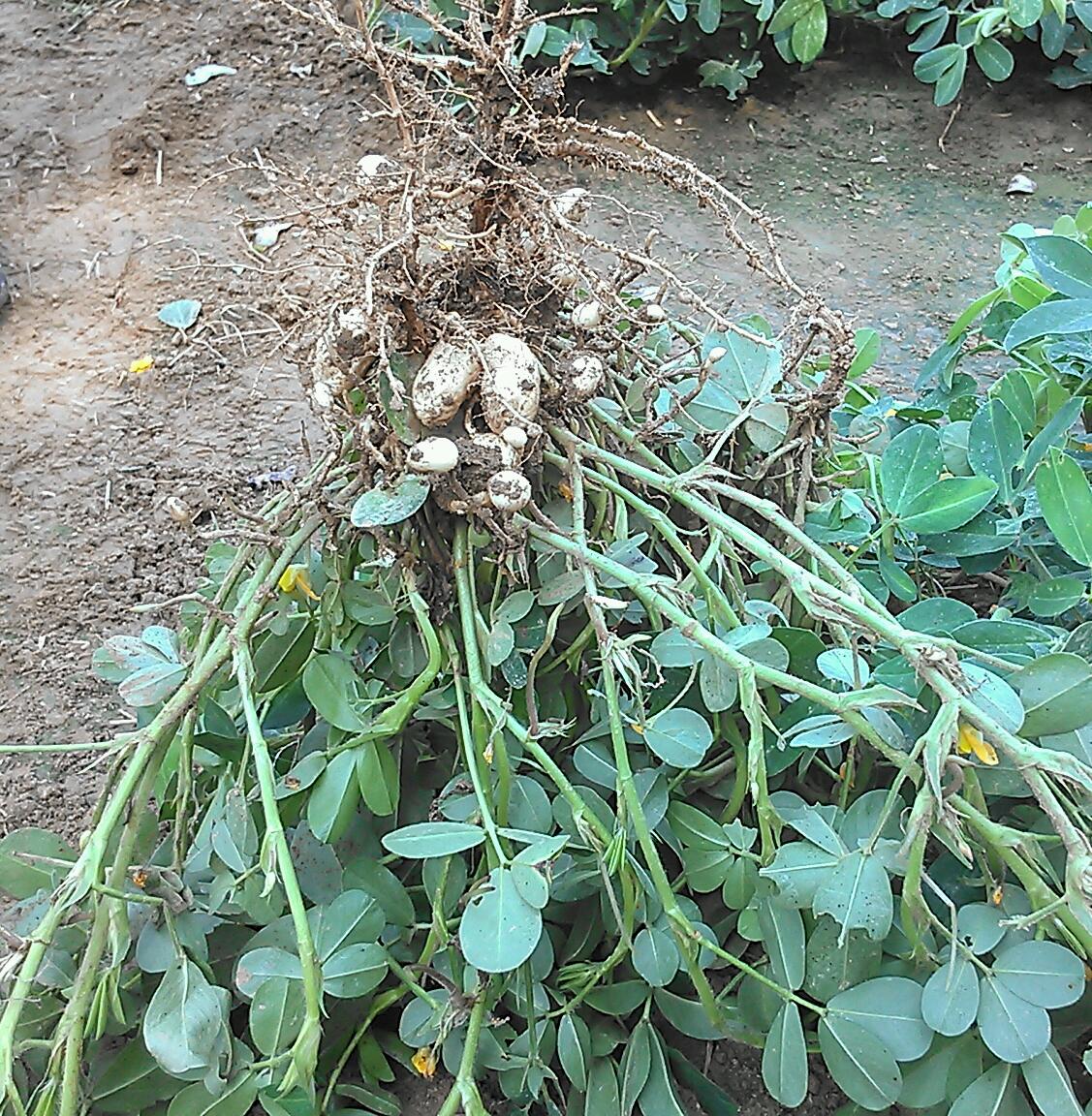
Peanut plant up close. The soils in this part of Alabama are highly acidic and peanuts like a pH between 5.8-6.8 and well-drained soil, so the producers add quite a bit of lime. Different maturities of peanuts are grown so they’re harvested anywhere from September to October.
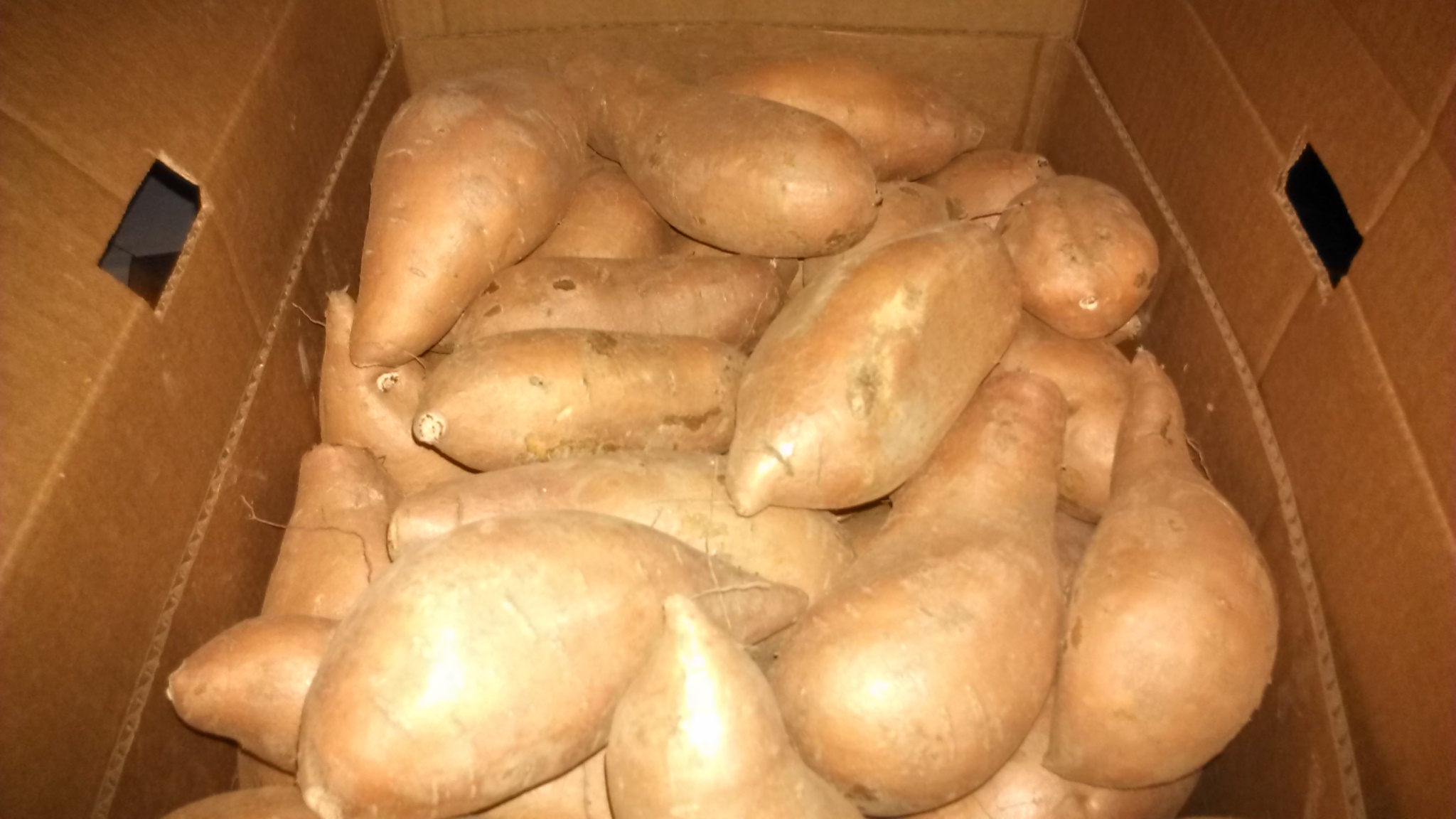
Sweet potatoes! I absolutely love to eat them 🙂 This farm had tried a variety of crops in the past and continues to grow cotton and peanuts as well for a rotation with the sweet potatoes. With low commodity prices for the other crops, sweet potatoes provided another source of income. They are planted mid-April and will be harvested early August this year. The smaller sweet potatoes will go to a canning facility. Potatoes have to be at least 2″ in diameter to be processed for sweet potato fries.

The nephew of the sweet potato farmer was interested in value-added herbs and greens. He put up this greenhouse 11 months ago and has been growing hydroponic greens and herbs for high end restaurants and supermarkets.

A cotton plant. Cotton is actually in the hibiscus family and can get 5-7 feet tall. Growth regulators are used to keep the cotton short so more energy goes into producing cotton instead of vegetative material like leaves and branches. While not easily seen on this picture, the “squares” are where each cotton blossom and seed will be produced.

Auburn Extension Specialist explaining how a cotton plant puts on a new node (where flowers and seed are produced) about every 3 days. He was also showing the shortened internode length due to adding growth regulators to the cotton. Cotton was often no-tilled into wheat. They have similar findings as we do here regarding the improved yields of crops following wheat in dryland. Although, interestingly, they receive on average 66″ of rain a year and Mobile, AL has surpassed Seattle as the rainiest city in the U.S.
Soybean Management Field Day
Plan to attend the soybean management field day near Shickley this year! Great information for your operation!

Each year Soybean Management Field Days is held at 4 different locations across Nebraska. This year, Fillmore County is fortunate to host one of these programs. On August 13, 2014 at the Stengel farm near Shickley, with registration at 9:00 a.m. and the program running from 9:30 – 2:30 p.m. this educational event will occur. One hour presentations will occur aimed at providing important research based data to soybean producers.
Specifically, topics will include:
- Herbicide applications, water quality and resistance management (demonstrations of herbicide drift with discussion on how to mitigate drift with new herbicide-resistant traits, how weed growth affects herbicide performance, etc.)
- Growth development and growth enhancement products (soybean growth and development, how yield is made and soybean responses to plant density and planting date)
- Multiple soybean input study that includes row spacing, fungicides, insecticides and nutrient management (soil fertility management for soybeans, seed treatment products, risks associated…
View original post 180 more words
Corn Progression After August 2013 Storm
On August 1, 2013, a severe wind and hail storm damaged 170,000 acres of corn and 86,000 acres of soybeans in Clay County, Nebraska. Corn at the time of the storm was from brown silk-blister. While the storms in the Gibbon/Blue Hill areas occurred a little earlier in the growing season, the following photos show the progression of damage in the event it can be of help to those affected by 2014 storms.

Field on August 2nd that was totaled out and planted to cover crops. Where crop insurance allowed, producers considered various forage options.

Some producers chose to spray fungicides on fields with more foliar leaf tissue such as this one.

Hail damage to stalks shown 4 days after the storm.

Splitting the stalks open 4 days after the storm resulted in seeing stalk rot already beginning to set in.
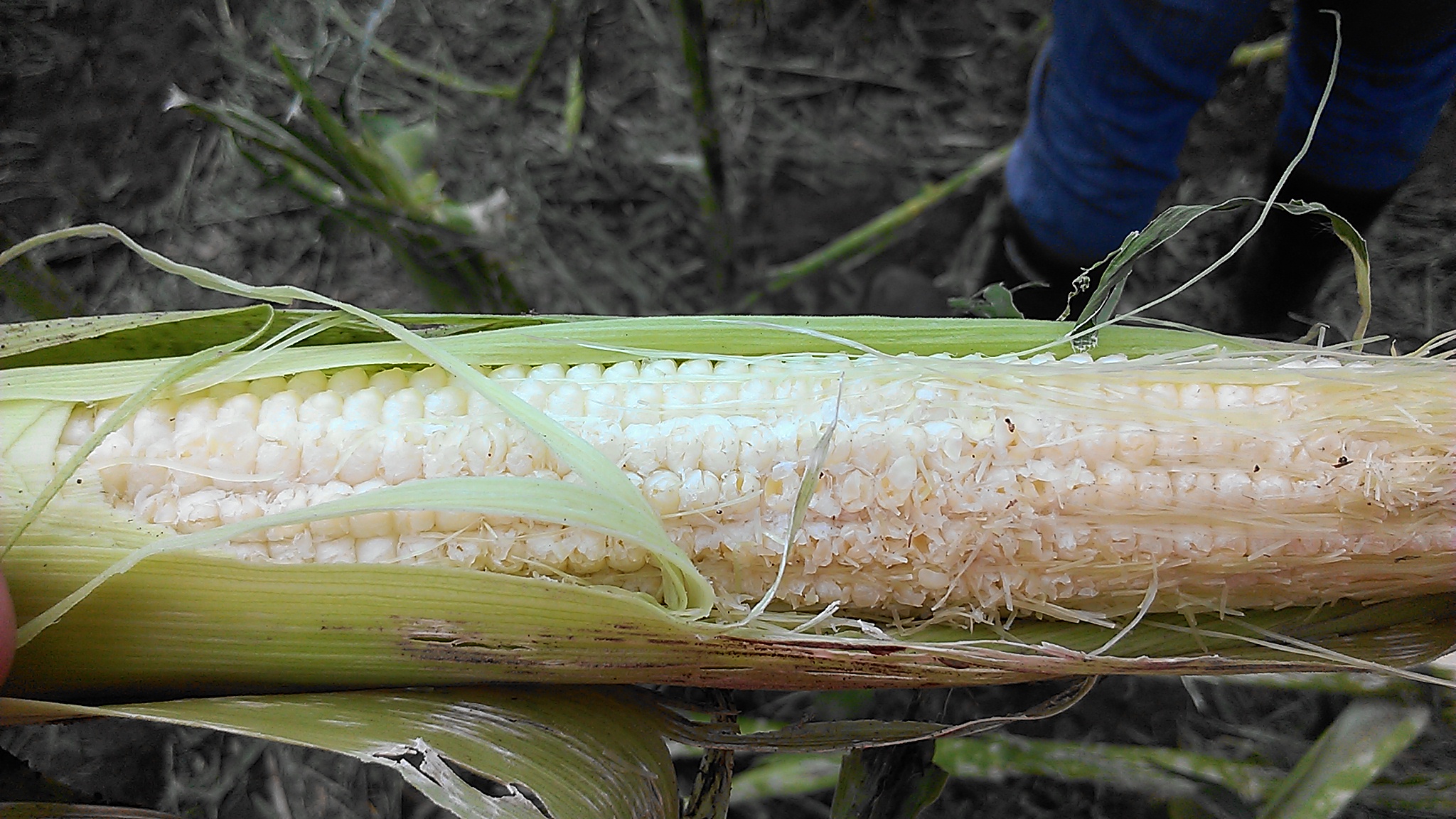
Corn on August 2nd in blister stage in which hail stones made kernels all mushy on one side of the ears.

Corn ear on August 6th. Notice moldy kernels appearing on side where hail damaged ear.
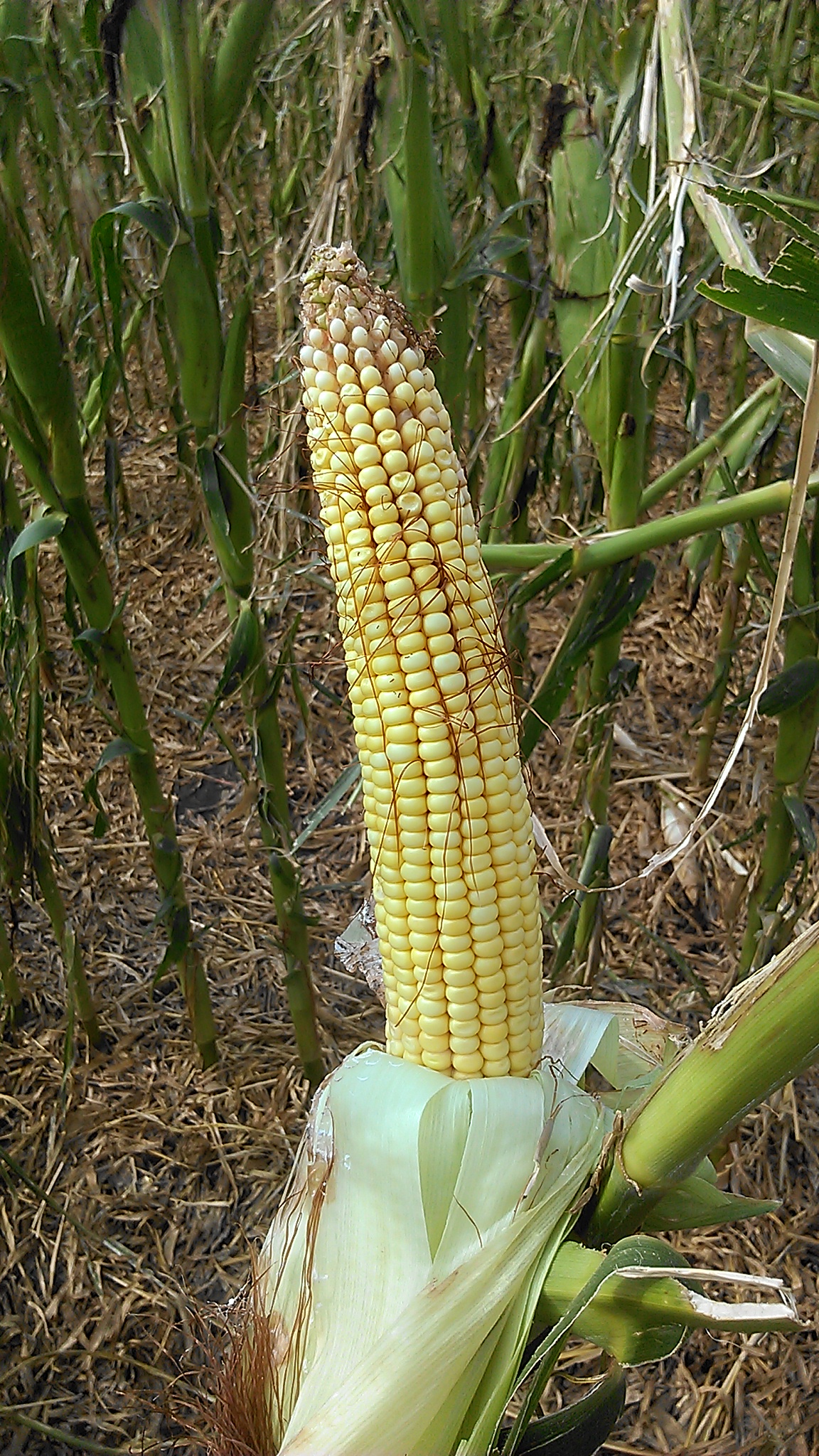
Six days after the storm, the good side of the ear that didn’t receive hail damage.

Six days after the storm, the side of the ear that received hail damage.
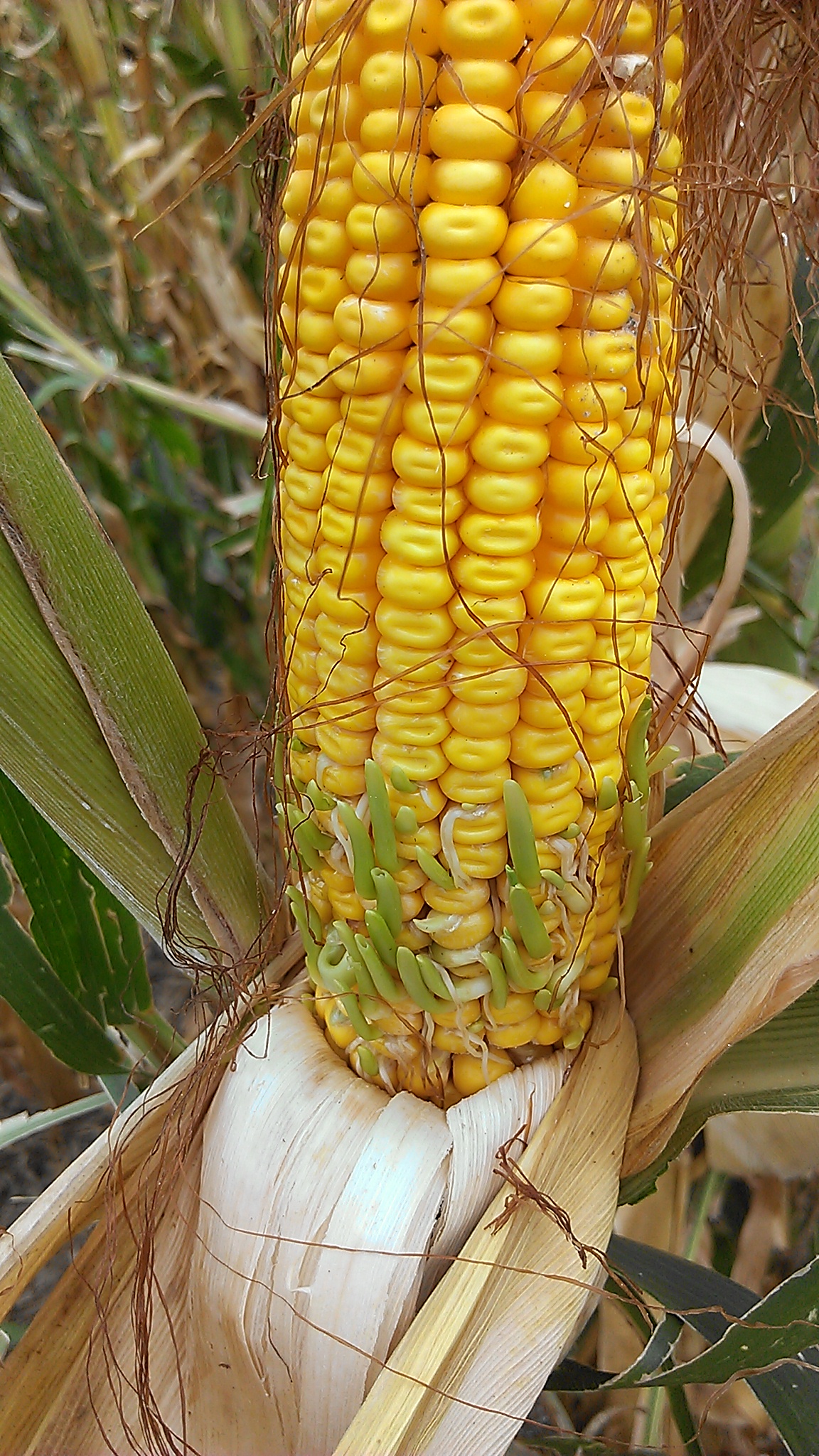
33 days after the storm, kernels on the “good” side of ears were beginning to sprout.
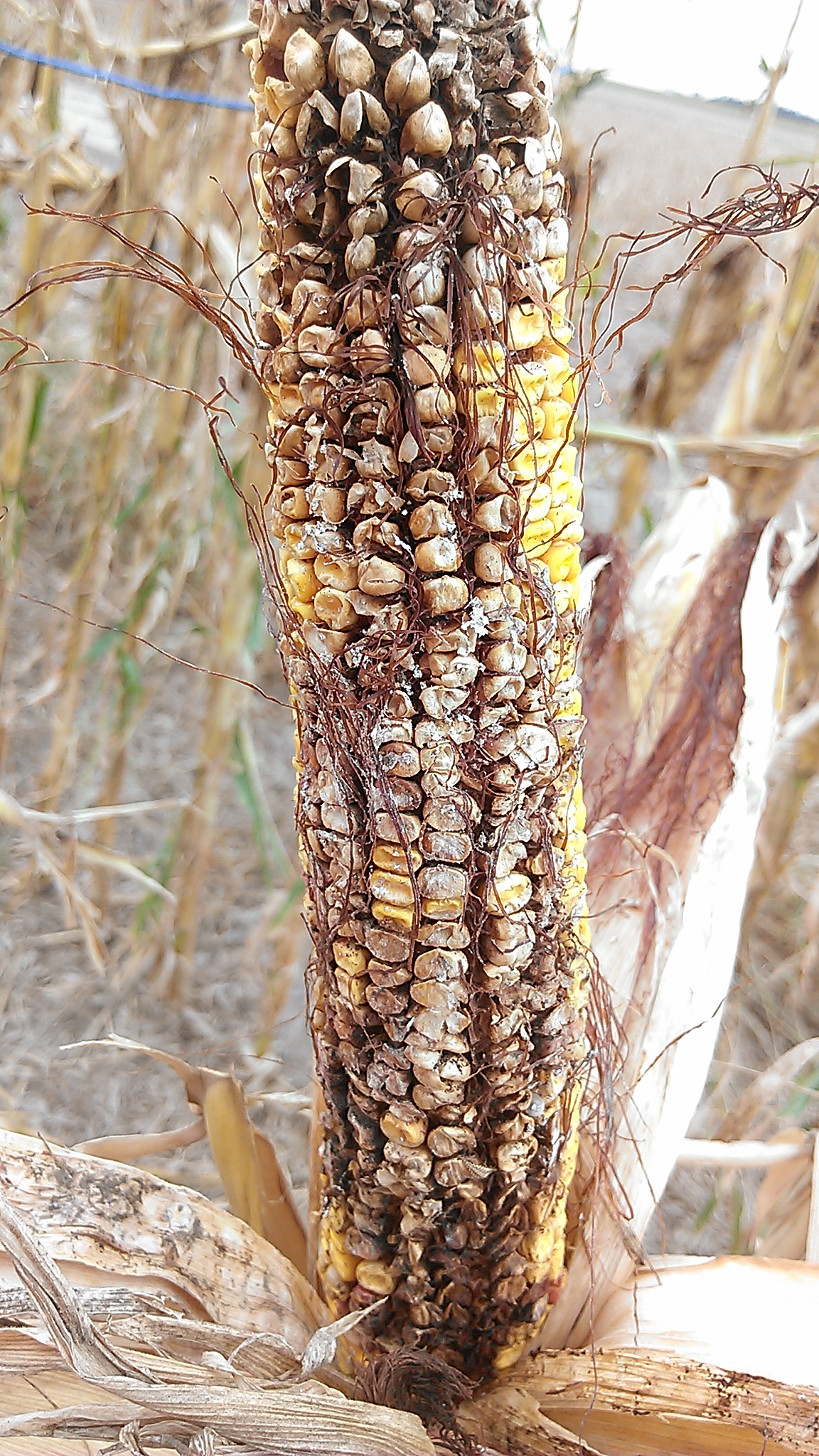
33 days after the storm: Diplodia set in creating light-weight ears and brittle kernels. Sprouting occurring on damaged kernels on sides of ears. The presence of mold does not automatically mean a mycotoxin is present. Producers also wondered about the safety of feeding moldy grain to livestock.
Corn Disease Look-Alikes
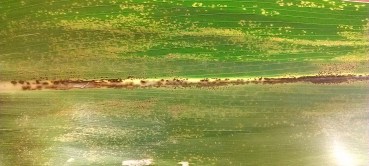
Physoderma brown spot on corn. While the small, speckled lesions may look like southern rust, under hand lens or microscopic observation, there are no raised pustules as would be the case with southern rust. Also notice the brown/purple discoloration on the midrib which is also noticed on the stalk as well where the leaf color meets the stalk.
Fair week tends to be time for tasseling in corn and considerations for watering and fungicide application are being made. Regarding diseases in corn, there has been confusion about a few diseases, particularly about a disease called physoderma brown spot which some have confused for southern rust. The fungus causing physoderma brown spot feeds on pollen and debris on leaves and does not cause harm to the corn plants themselves. Because the spores of this fungus move via water (it’s closely related to oomycetes), numerous lesions can appear on leaves in bands or areas where water collects. While the lesions may look like early southern rust, there will be no pustules present and often purple colored lesions will also be observed in the midrib, leaf sheath, stalk, and outer husks.
Differentiating Rusts:
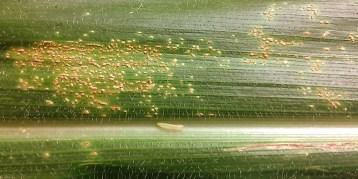
Southern rust in corn. We currently have not seen southern rust in Nebraska in 2014. Notice how you can see raised pustules in this picture compared to the photo of physoderma brown spot above.
When differentiating between southern rust vs. common rust, there are several criteria to consider and this NebGuide is a great resource. Typically common rust will have brick-red pustules randomly scattered on the upper and lower leaf surfaces that are larger in size. It is common rust that we are currently seeing in our fields.
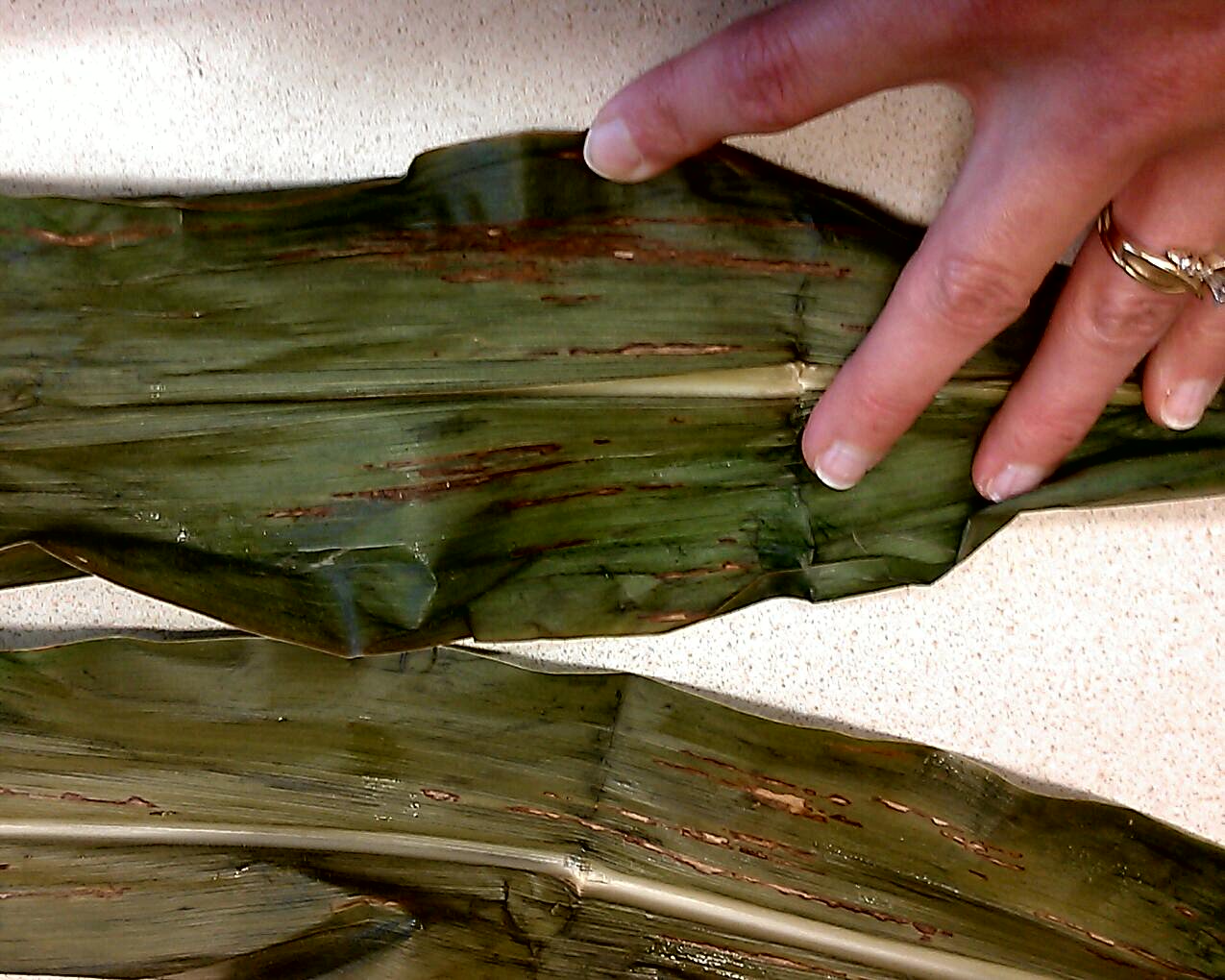
Bacterial leaf blight showing up heavily in some hybrids. The lesions are red-brown in color, long and skinny and mostly vein-limited. Older lesions spread outside the veins and are buff in color-sometimes they are being confused as gray leaf spot. The UNL Plant and Pest Diagnostic Lab is determining species and we will share more information in the future. There is no control for this disease at this time of the season.
Southern rust in our area tends to have very small, raised, tan-orange pustules on the upper leaf surface of leaves in localized areas on mid-upper leaves. These pustules are tightly clustered on the leaves. However, color and size are relative as sometimes the two diseases can look alike. Microscopic observation is the best way to differentiate the two diseases. Fungal spores from Puccinia sorghi causing common rust will be near perfect round circles whereas fungal spores fromPuccinia polysora will be oblong in shape.
We do have some gray leaf spot in the lower canopies and I haven’t seen much northern corn leaf blight in the fields. But we do
have a bacterial leaf blight that is affecting quite a bit of leaf tissue on some hybrids. These lesions are long and skinny appearing at first to be limited to the veins. There’s been concern about these lesions being severe gray leaf spot but it’s not and there’s nothing you can do about the bacterial disease. Please don’t mistake this bacterial disease as a fungal one and trigger a fungicide application too early.
Fungicide Application Timing
We tend to see southern rust in our part of the State each year; it’s a matter of time. Triggering a fungicide application too early may result in no residual for when you need it if/when southern rust occurs. Every year some producers make more than one fungicide application due to blanket applications at tassel or shortly after followed by another fungicide application when southern rust occurs later in the year. Consider good fungal resistance management and apply fungicides when disease pressure warrants them in your fields and also consider economics for your situation for proper fungicide application timing.
Is that a Webworm or a Bagworm?

Webworms, bagworms, are they the same thing? If not, why does it make a difference whether you have a bagworm or webworms? It can make a big difference which insect you have to control and the damage that they cause. Correct identification is key to know how to control these pests.
Fall webworms or tent caterpillars are an occasional pest. They are sometimes called ‘bagworms,’ but using the correct common name will help clear up confusion. They appear as white webbed nests on the ends of branches in cottonwood, crabapple, walnut, and other trees. The caterpillars hide in the webbed nest during the day and feed on the trees at night. The caterpillars cause little harm to otherwise healthy trees. Tree health is not usually affected until more than 50 percent of the foliage is eaten. If there are enough nests, about one on every branch, the tree could be…
View original post 573 more words
Hail Damage Meetings
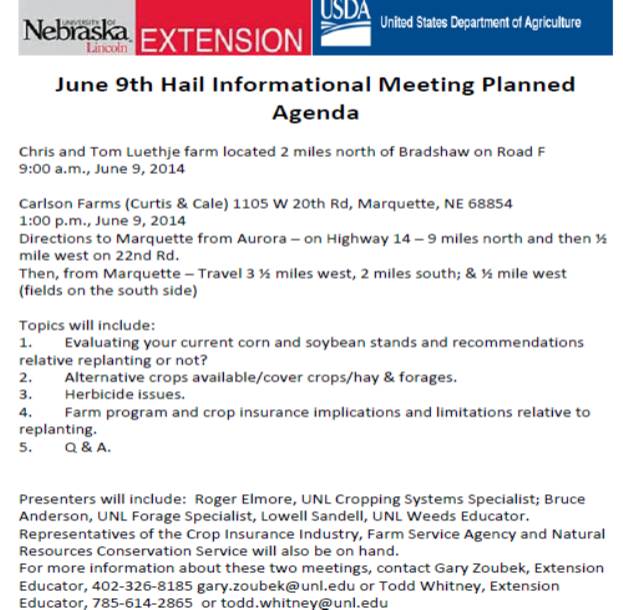
Hail Damage Meetings in York and Hamilton Counties. Please click on image to enlarge.


 JenResources