Storm Damage Resources

Field flooding occurred in newly planted and newly emerged fields throughout the area after recent rains.
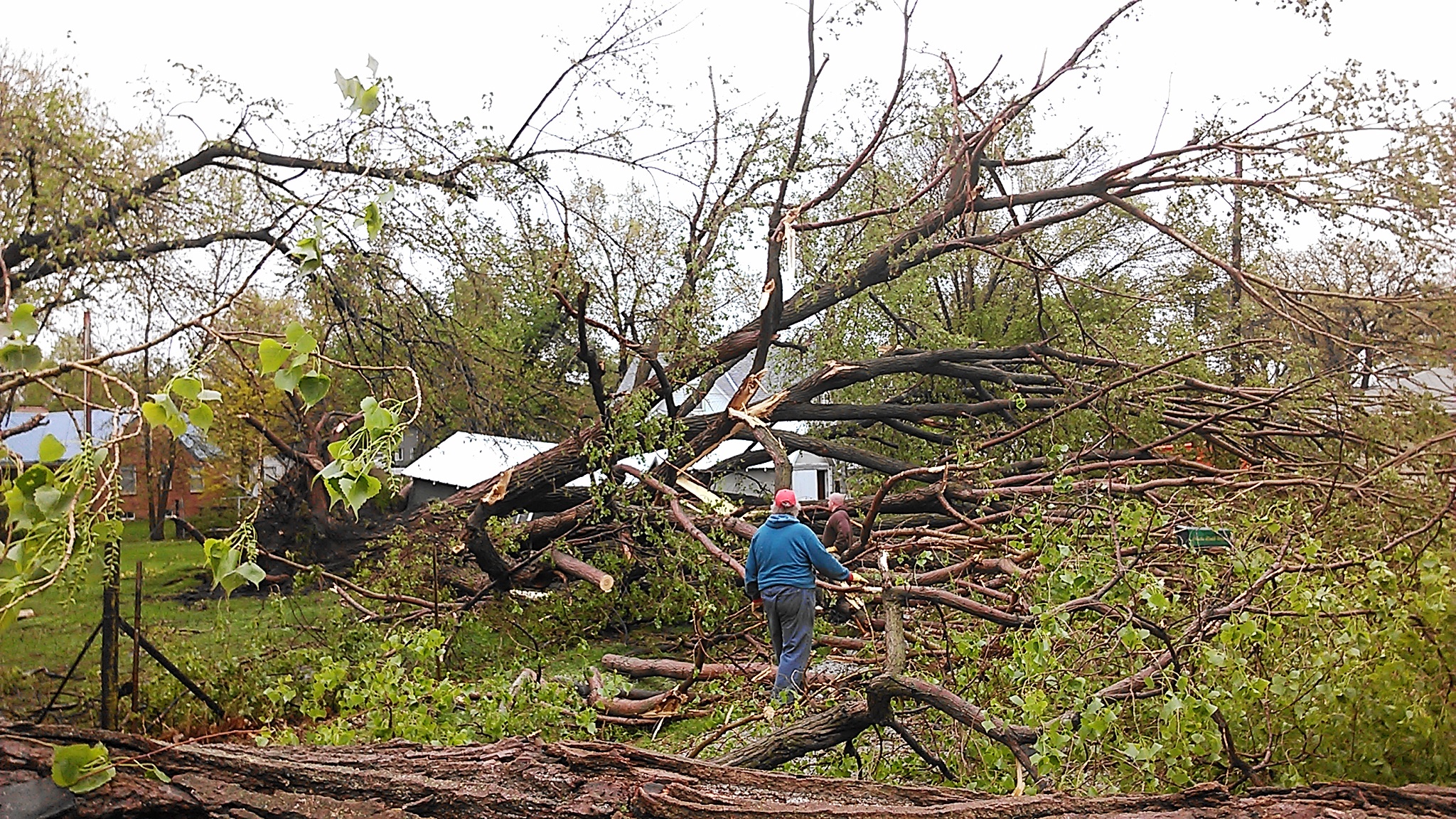
Large trees were uprooted falling on buildings, homes, and cars in Sutton after the May 11, 2014 tornadoes.
The Mother’s Day 2014 storms caused significant damage in Clay County and other areas of the State. It never ceases to amaze me how people throughout the area respond to storm damage! Clay County has had its share, and yet the attitude of those affected has been one of thankfulness-thankfulness that no one was injured and that so many still have their homes in spite of damage. It’s also wonderful to see people from all over the County and area pull together with each storm-helping each other out bringing themselves and equipment to pick up debris or help however possible. It’s a blessing to work with and serve the people of this County!
Resources
As clean-up continues, the following are a list of resources that may be helpful to those affected by the storms. Thoughts and prayers go out to all who were affected!
- Numerous Tornado Damage, Recovery, Cleaning, Decision Making resources (scroll to Recovery portion in middle of page)
- Tips for Early Tornado Damage Recovery
- When to Save and Throw out Frozen Food after Power Outages
- When to Save and Throw out Refrigerated Foods after Power Outages
- Flooding and Corn Survival
- Flooding and Soybean Survival
- Evaluating the Need to Replant

Happy 100th Birthday Extension!
Happy 100th Birthday Cooperative Extension! Learn more about Cooperative Extension and its history from this blog post by Dr. Lindsay Chichester!

On May 8, Land-Grant Universities will be celebrating the 100th Birthday of Extension — 2014 marks the 100th anniversary of the Smith-Lever Act!

Before I tell you about the Smith-Lever Act, let me backtrack a minute and tell you about the Morrill Act. The Morrill Act (named after Vermont Congressman Justin Morrill) was signed into place on July 2, 1862 by President Abraham Lincoln. It was officially titled “An Act Donating Public Lands to the Several States and Territories which may provide Colleges for the Benefit of Agriculture and the Mechanic Arts.” The Morrill Act provided each state with 30,000 acres of federal land for each member in their Congressional delegation. The land was then sold by the states and the proceeds were used to fund public colleges that focused on agriculture and mechanical arts. Sixty-nine colleges were funded by these land grants (aka Land-Grant Universities (great map at this…
View original post 562 more words
Farm Bill Webinar
Farm Bill Webinar information available from UNL Extension on May 21.

The 2014 Farm Bill provides agricultural producers with a variety of different programs and opportunities to participate; however, the decisions facing them have never been more complex. This bill is designed to offer more of a risk management approach to the federal farm safety net as opposed to the more traditional price and yield support. It is important participants understand how the 2014 Farm Bill works and how these programs may affect their operations. Nebraska offers some unique challenges relative to variability in the type of commodities and the practices in which they grown. In the Spring and Summer of 2014, agricultural producers will be offered an opportunity to update their base acres and program yields. It is important that they understand how these decisions work, to make a well-informed decision.
UNL Extension will be hosting a public webinar open to any interested party, to assist the producer with these…
View original post 81 more words
Edible Landscaping

There’s been increased interest in growing vegetables, flowers, and herbs together. Learn more about this in our Edible Landscaping workshop on May 8th at the Clay County Fairgrounds in Clay Center! Please RSVP by May 5th and hope to see you there!!!
Still Time for On-Farm Research!
With the recent rains and cooler weather in the State, producers still have an opportunity to consider conducting an on-farm research experiment that may be of interest to you! So far this year we have producers conducting nutrient management, irrigation timing, cover crop, seeding rates and dates, fungicide timing, and studies of various products on the market including sugar products. You can learn more about conducting on-farm research at our Nebraska On-Farm Research Network Website, our On-Farm Research Grower’s Guide, by Contacting a UNL Extension Educator or Specialist, the Nebraska Corn Board at 402-471-2676 or Nebraska Corn Growers Association at 402-438-6459. You can also learn more from our producers themselves in the video below. We hope you will consider conducting on-farm research this year to answer the questions you may have in your operation!
Proper Tree Pruning
Special thanks to Dr. Scott Dewald for the wonderful evening of information he provided at our tree care workshop last week!

Scott Dewald explaining what to look for when considering pruning a tree. Scott shared that one should never prune more than 1/3 the height of a tree in one season. Pruning should also be done to obtain a main leader and overall structure. It’s also best not to prune limbs more than 2″ in diameter. If the limb needs to be pruned but it encompasses more than 1/3 of the limit of what should be removed in a season, one could “head” the limb by removing a portion of it one year and then complete the cut the following year. This will slow the growth of that limb.
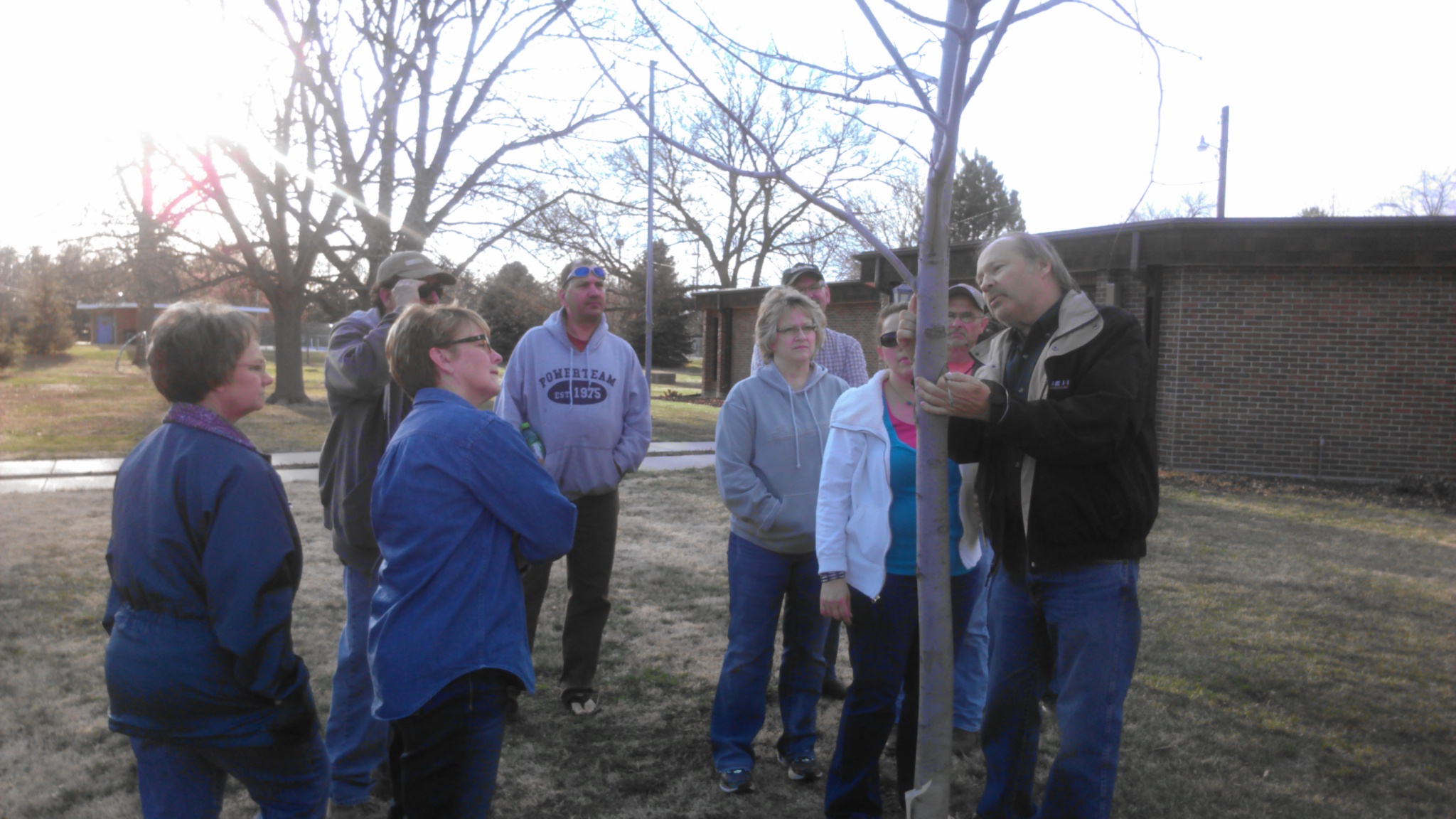
Pruning cuts should always be made at the “bark collar ridge” which produces a round cut and allows the tree to naturally heal. Scott shows attendees where the bark collar ridge is on this branch.
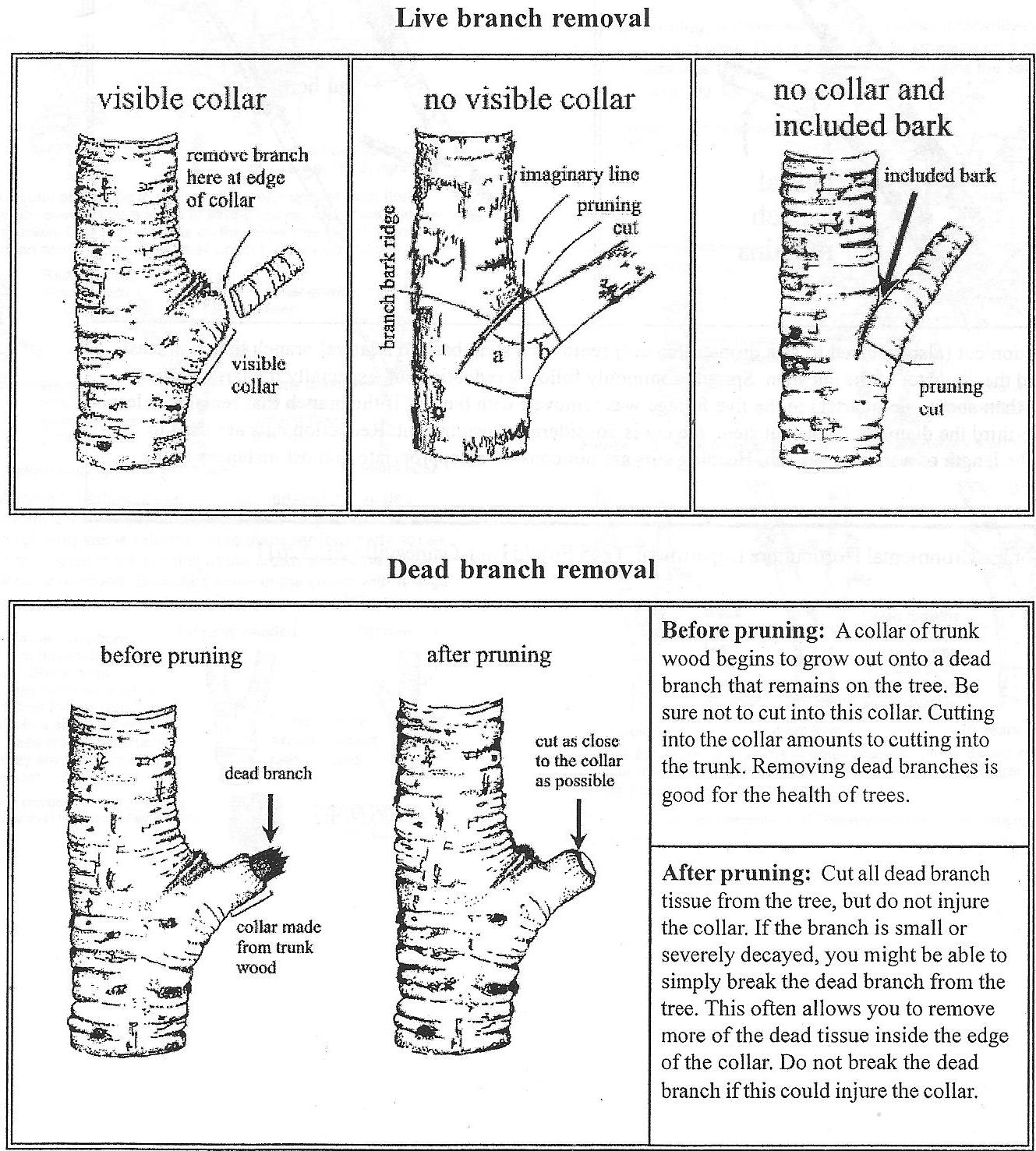
Pruning Fact Sheet ENH847 from University of Florida Extension written by Edward Gilman with good visuals of where proper pruning cuts should occur.
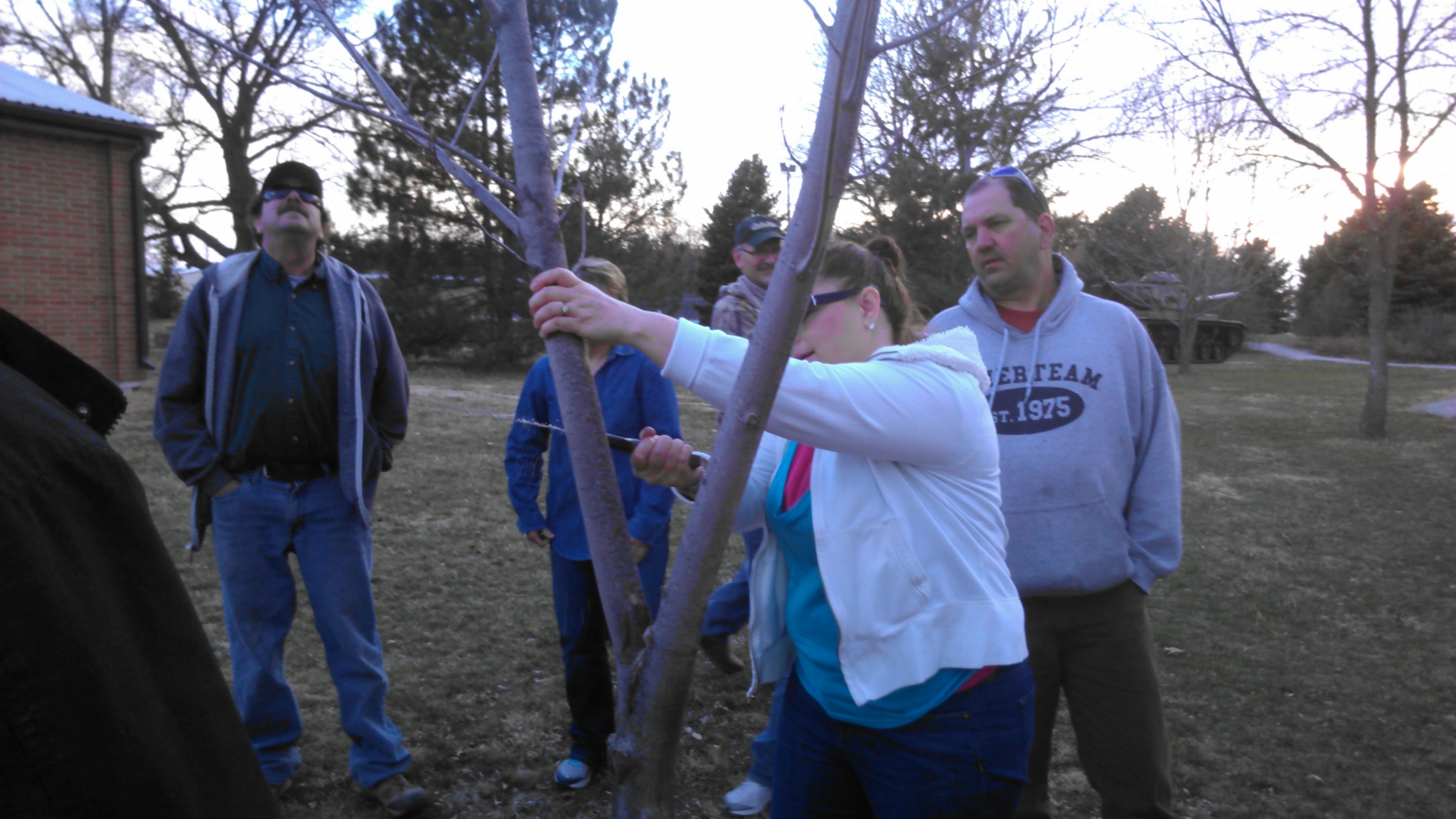
We learned that on large branches, it’s good to make a cut farther out to remove the weight first, and then go back and make the proper cut at the bark collar ridge. Improper pruning can result in further damage to the tree. Here we were trying to correct this tree for not having a main leader. Typically one would leave the southern-most branch according to Scott, but in this case, the northern-most branch was stronger. Scott said there was no need to stake the tree or try to get the northern-most branch to straighten out as it would naturally do this in time on its own.

After a large part of the branch weight has been removed, this attendee is now making the proper cut at the bark collar ridge.
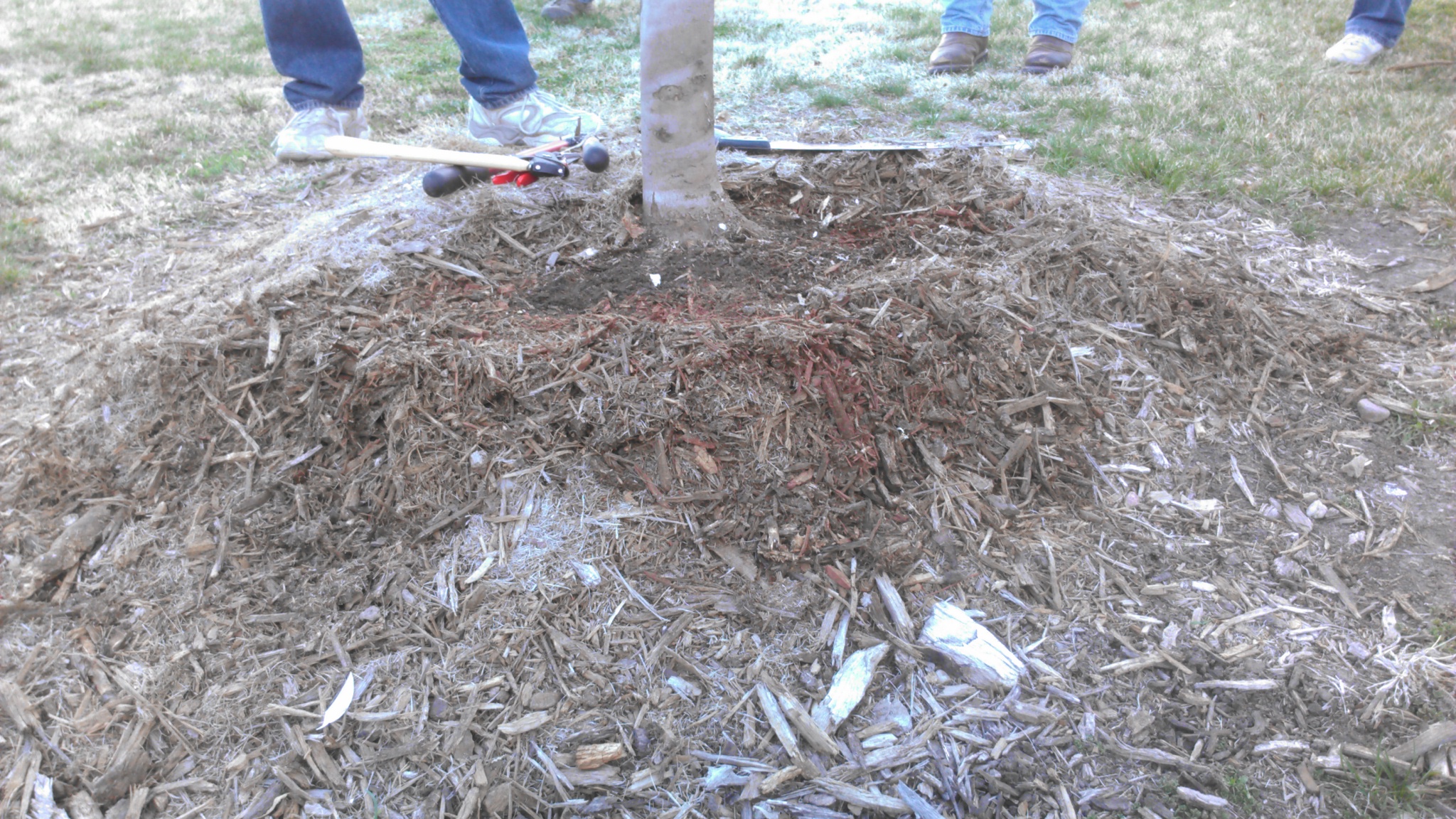
We also walked from tree to tree in the park looking at additional problems. I noticed how high the mulch was piled on some of the trees. Mulch should never be placed against the base of the tree as it can cause rot. But in this case, it was observed that the person who planted the tree did not dig a deep enough hole. What appeared to be a pile of mulch was the actual root ball and soil mounded up above ground.

This situation also most likely was a result of improper planting. In this case, the tree roots began wrapping around the base of the tree girdling it (like choking it).

This is the most common problem I see with tree calls. A huge enemy to trees are weed whackers! In this case, you can see extensive damage to the bark and the base of this tree. Depending on the damage and how well the tree can seal the wound will depend on if the tree will survive or not. Often, as in the case of this tree, the tree will be weakened with few leaves appearing on branches. It’s best to place mulch around trees in order to avoid having to use weed whackers on them-but again, don’t place the mulch up against the base of the tree!
This was a fun workshop for me with the right size of group and great hands-on demonstration where we also learned from pruning mistakes and how best to correct them. Thanks again Scott!
Tree Care Workshop

The Memorial Day and August 1st storms of 2013 did significant damage to our trees in Clay County. This workshop is designed to provide demonstrations on pruning techniques, what to look for, and learning how care for your storm damaged trees in future years. There is no charge and all are invited to attend. Please spread the word as many trees were damaged last year!
On-Farm Research Update
Hope to see you next week at our Nebraska On-Farm Research Updates to be held March 10 at ARDC near Mead and March 11 in York!!!

Center Pivot Irrigation Short-Course
Hope to see you in Clay Center on February 11 for this upcoming meeting!
(Please click on the picture to enlarge the text.)

Natural Resource District Updates
Rod DeBuhr with the Upper Big Blue NRD spoke at a few meetings recently. He shared there’s a lot of rumors floating around, but if you have questions, please just ask the NRD. There will be no well drilling moratorium and no restriction on adding new acres in the District. The only exception to this is if the allocation trigger is reached, there will be no new transfers. The UBBNRD encompasses 1.2 million irrigated acres and 57% of the water is used on only 29% of the acres; thus there’s still some inefficiencies within some producers’ operations. These are producers using, on average, more than 8” since 2007. The average water use since 2007 is just under 8” for the District.
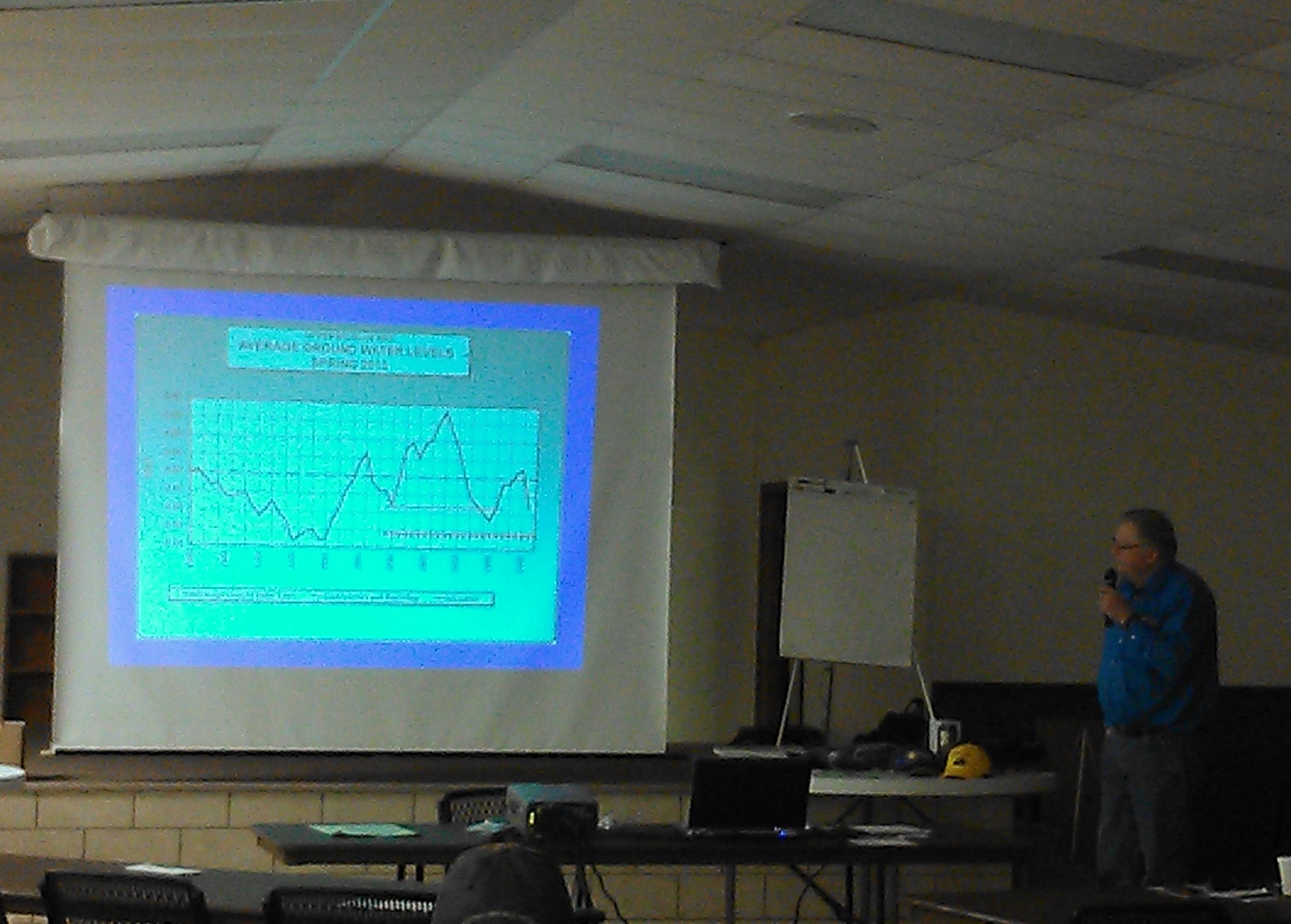
Rod DeBuhr from Upper Big Blue NRD speaks at the Hamilton Co. Ag Day in Aurora.
Flow meters are required on all wells by January 1, 2016 or by when an allocation is triggered-whichever comes first. The first allocation period is 30” of water for 3 years. They will then evaluate where the water levels are. If recovery doesn’t happen after the three years, then there will be a second allocation of 45” for 5 years.
For flow meter specifications: all new meters must record in acre-inches. They must also have an anti-reverse feature on them. They must be installed based on the manufacturer recommendations-no exceptions. Existing meters are grandfathered if they are determined to be accurate. There is no cost share on new meters, but there is some cost share for repairing old meters. Please contact the UBBNRD at (402) 362-6601 for questions or more information.
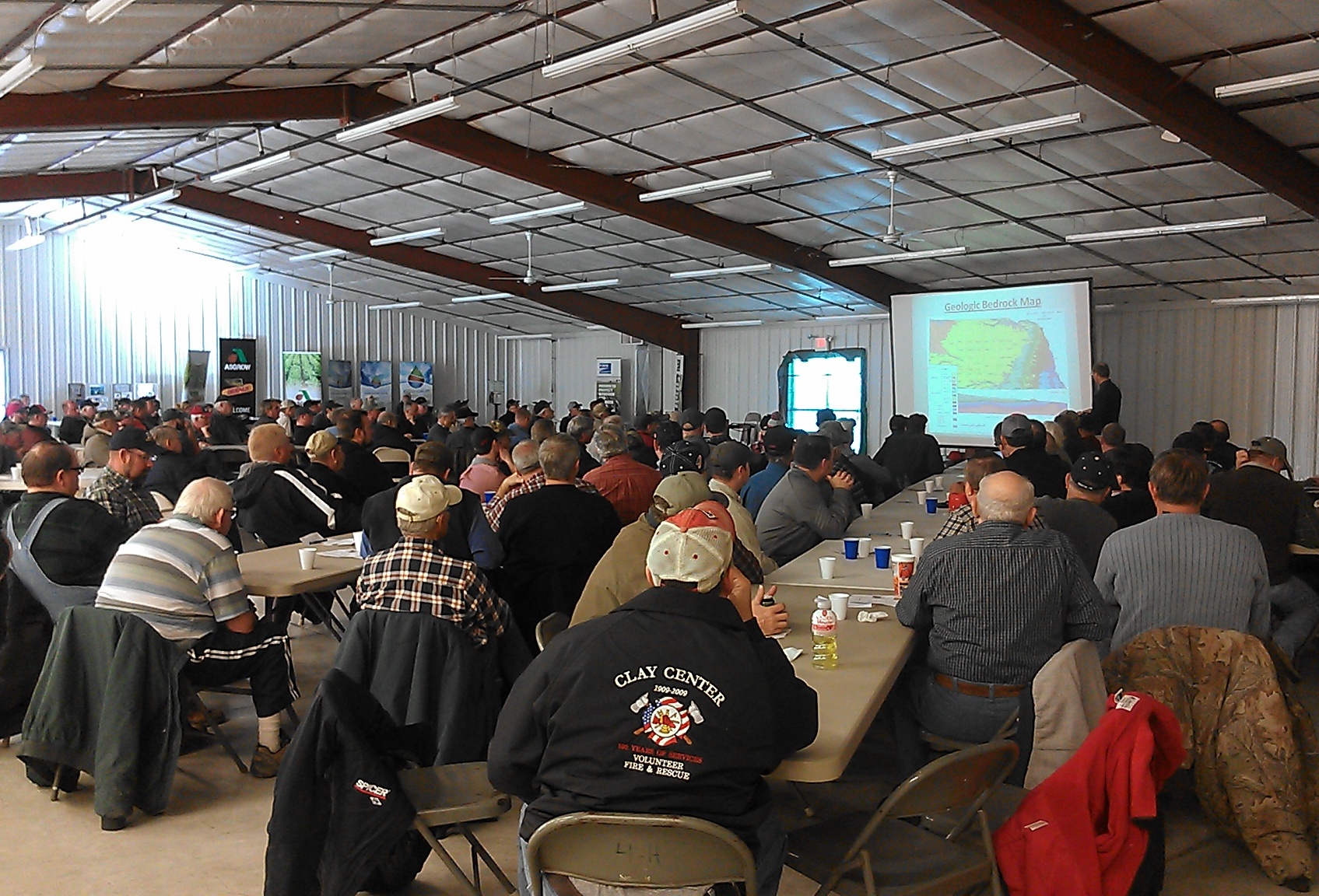
Little Blue NRD updates during the Soil and Water Conference in Clay Center.
Daryl Andersen with the Little Blue NRD also shared some information with me. These rules are effective as of January 17, 2014, which were put in place in 2006 or sooner. For well constructions and flow meter requirements as of Mar. 2006, new or replacement water wells to be used for domestic, stock, or other such purposes shall be constructed to such a depth that they are less likely to be affected by seasonal water level declines caused by other water wells in the same area.
Any new irrigation well or water wells for all other uses except municipal, domestic, public water supply, or livestock are required to have a minimum of 10 times the pipe diameter of clear space in the discharge pipe to allow for potential installation of a flow meter at a future date. There are some exceptions if a new meter is installed during the time of well completion; please contact the LBNRD at (402) 364-2145 for further info. Spacing between all new irrigation wells should be set at 1000 feet.
Nitrogen fertilizer restrictions include: Pre-plant anhydrous ammonia may not be applied prior to November 1. Pre-plant nitrogen fertilizers in liquid or dry forms may not be applied prior to March 1 except under the following conditions: a “Fertilizer Permit” will be required by the LBNRD prior to fertilizer applications, a nitrogen inhibitor will be required if applying over 20 lbs of active nitrogen/acre and an annual report will be required by March 15 of each year if receiving the “Fertilizer Permit.”
For the Clay/Nuckolls Water Quality Sub-Area: Two new rules were enacted March 1st, 2013 along with all of the prior rules. First, water samples need to be collected from all high capacity wells by the producer, delivered to LBNRD and NRD will analyze it for nitrates for 2013 and 2014 growing season. Second, water pumpage report is required from all wells for all producers in 2013 and 2014. Report can be hour meters, flow meters or other devices. Please contact the LBNRD for additional questions.


 JenResources