Blog Archives
JenREES 8/27/23
Quite the Year: What a blessing to have a cooler weekend! Some in the area I serve also received decent rains to help pastures or to end irrigation. The labor, time, financial, and mental/physical/emotional aspects of irrigating have taken a toll. Likewise, not having access to irrigation has taken a toll on farmers with non-irrigated ground. I think the extra irrigating (having to start after planting) also unfortunately aided more soil-borne diseases in soybeans this year such as Fusarium and Phytopthora root rots, sudden death syndrome, and white mold. I’ve never seen soybeans baled for forage till this year. Each field varied in how far gone it was, but wondering (for beans not taken for forage) how recent rains in the southern counties will potentially cause beans to try to regreen?
Several shared they feel this year is even harder than last year. It feels harder to me too, but I almost wonder if it’s more compounded by several rough years in a row? We’re still blessed in numerous ways and it’s good to think of gratitude each day! Continue to hang in there! Even if you can get away from the area for a day or night-such as going to the state fair-it’s amazing how just a quick break from the norm can help with reset and perspective. At least it’s been helpful for me.
Corn Ears Drooping: The high heat coupled with moisture stress in various fields played a role in corn ears drooping down last week. Typically, ears remain upright till they reach black layer. A loss of turgidity in the ear shank which feeds the ear can create the ear shank to droop creating a pinchpoint restricting water and nutrients to the ear. If the flow is completely shut off, grain fill to the ear ceases and the kernels will prematurely reach black layer.
What can you do now? Note places in fields where this occurs, particularly in irrigated fields (look for soil compaction, root restrictions, crown rot, etc.). Also note hybrids as genetics can also play a role. Looking at hybrid plots may also be of interest. Scout fields with drooping ears to determine percent milk line. At the beginning of dent, kernel moisture is at 60% and kernel dry matter is only 45% of the final.
In estimating potential yield loss, if the ear droops during early dent when the milk line is hard to differentiate, yield loss could be up to 40% if the flow of carbohydrates is completely shut off. If the ear droops at the end of the dent stage, when the milk line is close to the tip of the kernel, then yield losses could be up to 12%. Identify the development stage in which the ear drooped then you can multiply the percentage of ears affected (in a known area like 1/100th or 1/1000th of an acre) by the estimated yield loss per ear (depending on the growth stage utilizing the 40% to 12% loss estimations). Also watch the integrity of the ear shank and plan harvest accordingly to reduce the potential of ears on the ground pre-harvest.
Lawn Renovation: John Fech, Extension Educator shares the following, “There are 3 categories of lawn reseeding: 1-Total renovation – if less than 50% of the lawn is comprised of desirable species, 2-Lawn Overseeding – if 60 to 70 % is desirable, and 3-Lawn Thickening – if the current lawn is mostly desirable, but just a little thin.
With total renovation, step 1 is to spray the entire lawn with a non-selective herbicide such as glyphosate. Once the herbicide has taken effect, you can move on to Step 2. Step 2 is powerraking to create a seedbed. It’s wise to think of this step as the platform on which the new grass will grow.
Step 3 is to rake off the debris. As hard as it may be, it’s well worth it in terms of creating a seedbed that facilitates seed to soil contact. Step 4 is to apply grass seed with a drop spreader; seed is light and can easily be carried off site with a light wind. Divide the amount of seed in half and apply it in a north/south direction and then an east/west path. For Kentucky bluegrass turfs, apply a total of 2 -3 lbs of seed per 1,000 sq. ft. and 9-10 lbs of seed for turf type tall fescues lawns.
To create a suitable environment for germination and initial growth, it’s best to irrigate several times per day and keep the upper inch moist, but not soggy or dry. For Kentucky bluegrass lawns, this will take about 3 weeks; for turf type tall fescue, about 2 weeks. It’s very important to keep watering lightly and frequently until all the seed has germinated, or else the resulting lawn will be thin and clumpy. After the new turfgrass plants are a half inch to an inch tall, apply a starter fertilizer at label rates to encourage thickening and provide for the next few weeks of establishment.
If lawn overseeding is called for, the procedure is much the same as it is for renovation, except that the spraying of the lawn is skipped. In the case of caring for a mostly desirable, but slightly thin lawn, apply 0.5 to 0.75 lbs of a slow release nitrogen fertilizer product and spot spray broadleaf weeds that may have invaded due to the voids in the lawn. Products such as Weed-Free-Zone, Weed B Gone Maxx or Trimec are suitable for this purpose. Please read and follow all label directions.”

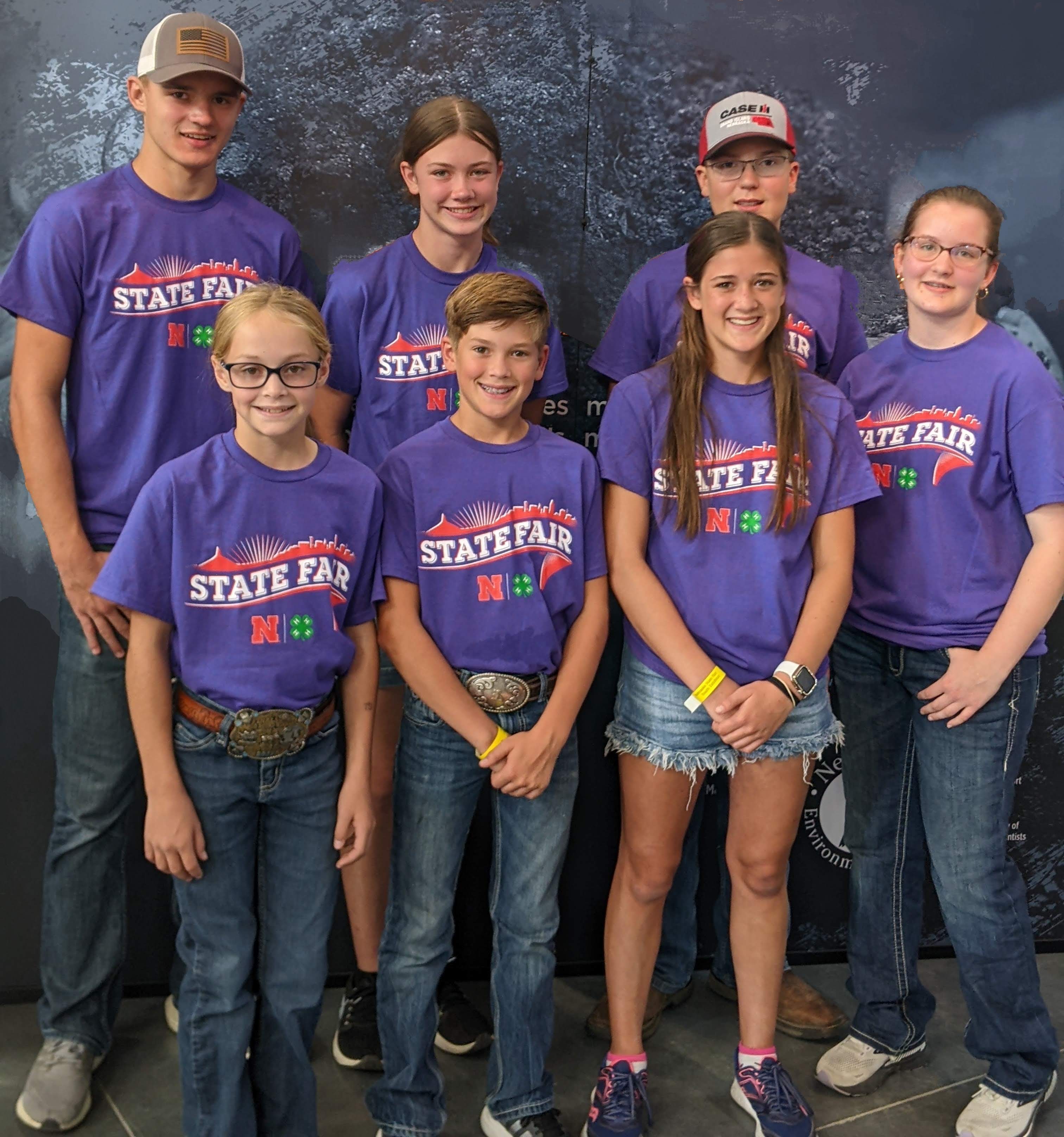
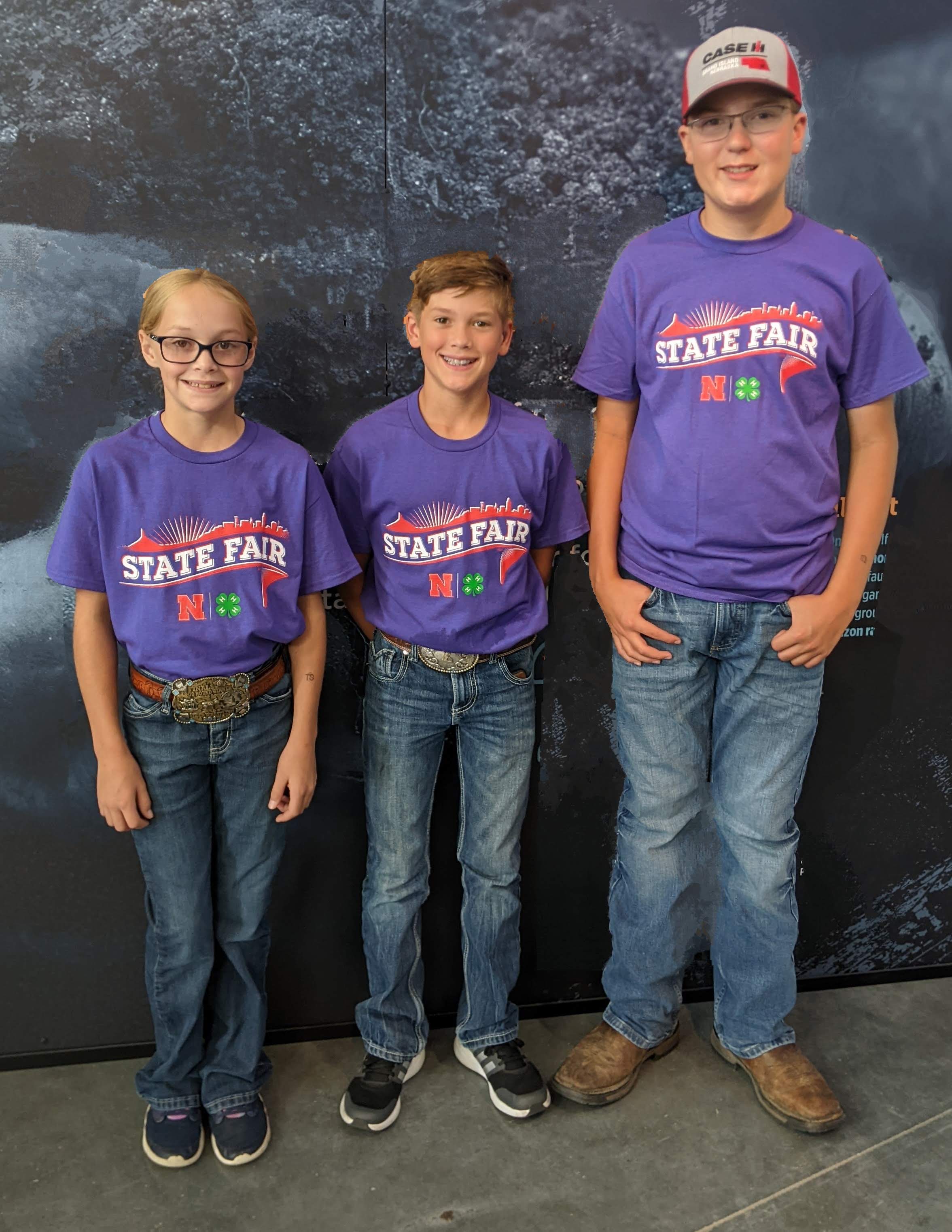
Something that brings me joy is to see youth continue to learn and develop life skills such as identifying plants! I’m blessed to work with an incredible group of youth in Crop Science Investigation (CSI) who enjoy learning. They also practice and compete in plant ID at county and state fairs. So proud of them!






 JenResources