Blog Archives
Rethinking Crop Rotations
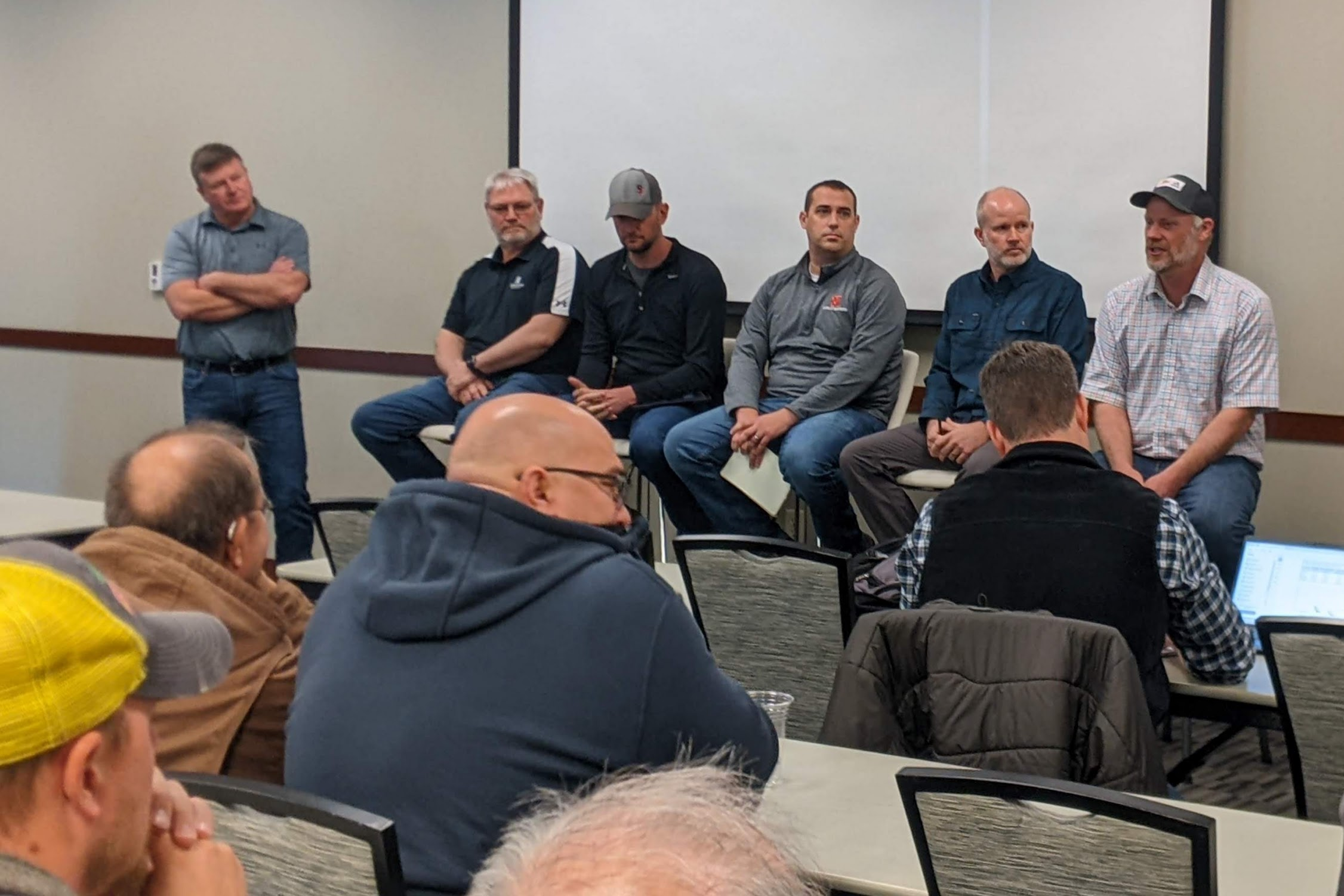
Thank you to all who attended the nitrogen challenge meeting last Monday, to all the presenters and farmers who shared their experiences, and to those who are choosing to join me in the challenge! A lot of great information was presented that day. The following is a snapshot of the combined on-farm research data using sensor-based fertigation via Sentinel Fertigation across 13 locations:
- Grower: 255 bu/ac yield with 195 lb N/ac applied, NUE of 0.77 lb N/bu, $1152.54 profit
- Sentinel: 253 bu/ac yield with 138 lb N/ac applied, NUE of 0.56 lb N/bu, $1177.89 profit
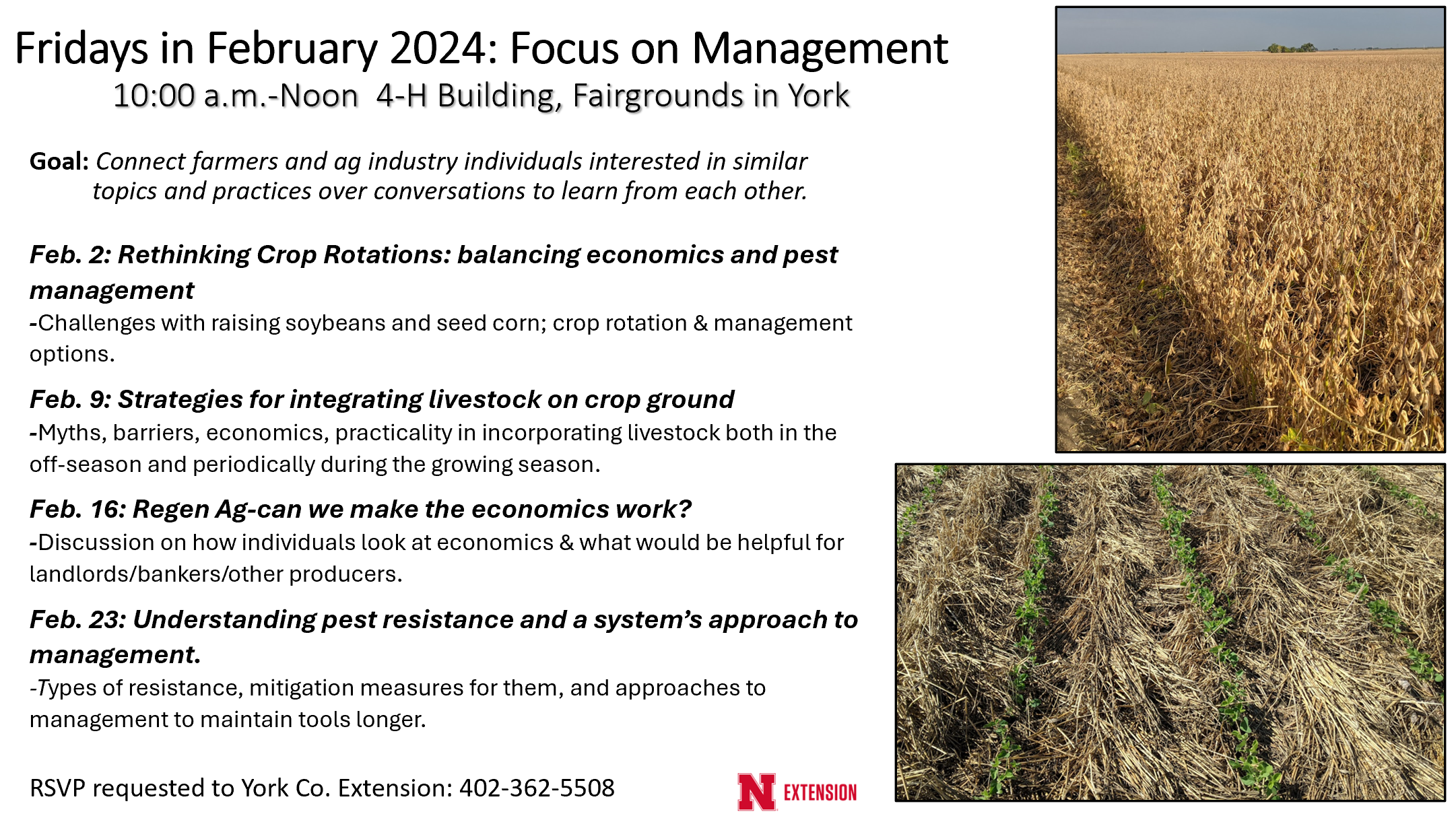
Crop Rotations: Appreciate those who attend the Fridays in February Conversations! We had a rich discussion on the topic of crop rotations and I appreciate the ideas brought forward by growers. We unfortunately didn’t have industry representation. I’ve heard frustration from some farmers raising seed corn with palmer, tracking up fields, low soybean yields and soybean disease issues. A handful of farmers have told me they recently gave up seed corn because of these challenges. Both seed corn and soybeans are important crops to our area of the state, so my hope was to discuss potential solutions. Small grains are also mentioned often below to help with pests, which can take looking at economics over years.
- Requiring extra communication and planning for isolation is to consider a 3-year rotation of seed corn/corn/soybean to allow for more carbon in the system and a longer rotation from soybean.
- I suggest a small grain before and/or after soy to help with erosion control, palmer control, and reduction in soil-borne pathogens impacting soybeans. Research from K-State showed significant reduction in palmer biomass when using either oats or wheat without the use of a residual herbicide (and with residual too). Rye wasn’t in that study; it helps significantly too.
- Red light on bare soil stimulates palmer/waterhemp germination. Keeping the soil covered with residue, cover crops and/or residual herbicide helps. Planting soybean green to allow for more cover crop biomass before termination is helpful (have to consider soil moisture).
- Oats is the best way to reduce soybean cyst nematode and sudden death syndrome in soybean. All small grains help but oats is proven to be the best for reducing those soil-borne pathogens. Planting either spring or fall helps and is an option for those who don’t want an overwintering small grain.
- Cover crop hosts for Sclerotinia sclerotiorum that causes white mold in soybeans include brassicas (turnips/radishes/collards). So, if the field has a history of white mold, consider adding a small grain (oats/rye/wheat) in combination with brassicas or only using small grains. This adds cost/more loads to spread, but a small grain in seed corn fields are critical to help with pests/erosion in my opinion.
- It was suggested to allow cover crops including small grains to be broadcast seeded at detasseling instead of at male destruct to allow more time for establishment and growth once canopy is opened at male destruct. The thought is the small grains can help hold the soil better when it’s wet with equipment. Small grains also help hold the soil from erosion after grazing as not much is left after grazing turnips/radishes. Some are choosing to drill a small grain after harvest.
- Some growers are allowed to plant seed corn green while others aren’t. Growers doing this are plugging drill units where seed is going to be planted. Whether growers terminated early or not, they all shared the small grain roots before seed corn held the soil during winds and held equipment better in wet fields.
- Group of growers in Archer/Central City area are relay cropping wheat/beans in year after seed corn. Something to consider for making small grains work better economically. Several growers doing this allowed for market to develop for taking small grains in that area.
- Much discussion on relay cropping beans using hybrid rye, grain sorghum, rye, wheat for economics. Also discussed the need for bankers to allow a 2-3 year balance sheet to show economics of small grain outside of one year. Will share thoughts mentioned on economics in another column.
If interested, our next topic on February 9th (10-noon at the 4-H Bldg in York) is Strategies for integrating livestock on crop ground both in the off-season and during the growing season.




 JenResources