Blog Archives
JenResources 5/4/25
Crop Updates: I was reminding myself to count my blessings that we have received any rain falling from the sky! The rainfall has been spotty and I can appreciate it’s been frustrating and tiring with the winds and lack of rainfall. We’ve also been blessed with incredible planting conditions this season. It’s interesting to hear a number of farmers share they were completely done with planting in April this year. It’s also nice to see the green crops emerging in fields.
Have heard reports of alfalfa weevils being higher incidence in Kansas and the southern border counties of Nebraska. Please be scouting alfalfa. More info. here: https://crops.extension.iastate.edu/encyclopedia/alfalfa-weevil.
For wheat, there’s been very little rust (stripe or leaf rust) found in Kansas through Texas. With recent rains and dew, it’s good to be scouting for these diseases. While I’m not aware that we have any wheat flowering yet, wheat development does vary throughout the area receiving this information. To check on the Fusarium Head Blight (scab) risk, check out this tool: https://www.wheatscab.psu.edu/.
I’ve had some questions on what to expect for insects this year. No one can know for sure, but our Extension entomologists shared on this topic a few weeks ago in a CropWatch article found here: https://go.unl.edu/2zmn. The following are some excerpts from the article:
“Soil Temperatures: Despite frigid temperatures in February 2025, Nebraska soil temperatures at insect overwintering depths (around 4 inches) remained relatively stable due to insulating snow cover and crop residue. The cold event likely had minimal impact on most overwintering insect pests, as the soil didn’t freeze deep enough or stay cold long enough to kill them.
Unfortunately, temperatures at most locations where western corn rootworm, western bean cutworm, and wheat stem sawfly typically overwinter have not reached sustained periods of low enough temperatures to cause considerable mortality. The exception would be the chance for higher mortality of WCR and WBC in January in the Scottsbluff region.
We recommend that scouting and management practices are continued as planned in 2025, and as informed by pest pressures observed in 2024, rather than relying upon this winter’s weather to provide adequate control of pests. However, weather between now and summer could still impact insect survival; for example, very wet soil conditions in spring can reduce WCR survival as larvae hatch out and potentially drown.”
Crabgrass preventer in lawns: With the warm soil temperatures, it’s time to get crabgrass preventer on lawns if you’re interested in doing this and haven’t already done so.
Field bindweed has been another pest people have asked about. It produces deep roots and it spreads by seeds, rhizomes and stolons. For homeowners, Kelly Feehan shared that “If hand-pulling or hoeing is the chosen control, studies show if bindweed is pulled before it grows five leaves, you may have better success. It may take up to three or four growing seasons to kill a plant, but it’s possible if one stays on top of removing plants before they have five leaves. If herbicides are used, spot treat weeds before they bloom and avoid getting herbicide on desirable plants. Tryclopyr and glyphosate can be used carefully in landscapes on bindweed.” Another tip has been to apply glyphosate to a nitrile glove and run the gloved hand on the vine so the herbicide is applied to the vine and not the desirable plant. That also takes diligence but can help over time.
JenREES 8/19/24
Crop Update: One thing I’ve observed since the hot week the first week of August was corn plants going from milk to beginning dent and seemingly skipping the dough stage. Dr. Tom Hoegemeyer and I shared observations of this last week. Not only were the days hot, but the nights were warm (70’s-80’s) too leading to plant respiration at night. This means they were burning sugars instead of storing them leading to the plants pushing development, which can lead to smaller kernels and potentially lower yields. We’ll have to see how this plays out in the end with yield. This past week of cloudy/foggy, cool mornings with heavy dews and high humidity can lead to increased fungal disease going forward in our crops as well. Overall, crops in the area are looking good though.
Last irrigation: (days listed are based on GDUs, so consider this for your crop growth stage and field soil moisture levels so you can start tapering off). This tool helps you calculate potential black layer date based on your planting date and relative maturity: https://mygeohub.org/groups/u2u/purdue_gdd. What I’m currently seeing is that 2024 growing degree days are tracking slightly lower for York than the 30 year average.
- Corn at Dough needs 7.5” (approximately 34 days to maturity)
- Corn at Beginning Dent needs 5” of water (approximately 24 days to maturity)
- Corn at ¼ milk needs 3.75” (approximately 19 days to maturity)
- Corn at ½ milk (Full Dent) needs 2.25” (approximately 13 days to maturity)
- Soybean at beginning seed (R5) needs around 6.5” (approx. 29 days to maturity)
- Soybean at full seed (R6) needs 3.5” (approx. 18 days to maturity)
- Soybean with leaves beginning to yellow (R6.5) needs 1.9” (approx. 10 days to maturity)

Pasture and Acreage Expo: I often receive questions about pasture management from landowners, tenants, and acreage owners. New this year is a Pasture and Acreage Expo to be held this Friday, Aug. 23 at the Lancaster Extension Center in Lincoln (444 Cherrycreek Rd Suite A) from 1-6 p.m. The program goal is for landowners to maximize the value of their properties and livestock operations. The registration and trade show begin at 1 p.m. with educational programs beginning at 1:30 p.m. Topics include: equine nutrition, virtual fencing, pasture establishment/grazing management, winter cow care, pasture weed management, plant and weed identification, and windbreak management. There is no charge for this event but pre-registration is requested at: https://croptechcafe.org/pastureacreageexpo/. The full agenda can also be viewed at that website. For more information or if you’re interested in being a vendor for this event, please contact John Nelson at: (402) 441-7180.
Renovating Lawns: August 15-September 15 are the best times to seed cool season grasses. Improving Turf in the Fall at https://go.unl.edu/2bn5 is a great resource to walk you through renovation depending on your situation. Some lawns can be easily improved by adding fall fertilizer. Sarah Browning, Extension Horticultural Educator shares, “Lawns that are 10-15 or more years old typically need only two fertilizer applications a year. Make the fall application in late August or early September. On younger lawns, two fertilizer applications during fall are recommended. Make the first one in late August/early September, and the second in mid-late October.”
If overseeding is needed to fill in thinned areas but more than 50% of good turf remains, mow the existing grass 2.5” tall to make the soil prep easier. For lawns needing total renovation, start with a glyphosate (Roundup application) followed by waiting at least 7-10 days to kill the lawn. Mow dead vegetation as short as mower goes to then aerate the lawn three times. Full seeding rate for tall fescue is 6-8 lbs./1,000 sq.ft., and 2-3 lbs. for Kentucky bluegrass. When overseeding into an existing lawn, the seeding rate can be cut in half. Drilling the seed is perhaps best, otherwise, use a drop seeder. Seed half the seed north/south and the other half east/west for even distribution. Then lightly rake to ensure seed to soil contact.
Aug. 28-29 Soil Health and Corn/Soy Clinics will be held at ENREEC near Mead. More details at: https://go.unl.edu/o80f.



Odd Crop Things
I’m grateful for the good start to the growing season that many in the area I serve have experienced thus far. Soybeans have started flowering or will soon. Earliest planted corn isn’t far from tassel! Some areas continue to miss rain and other areas get far too much. For those dealing with flooding, the following are some rules of thumb:
- Corn Prior to V6: Plants can survive under water for 2-4 days if temperatures do not exceed 77°F.
- V7—V10: Plants can survive 7-10 days if temperatures do not exceed 86°F.
- VT—R1: Reduced nutrient uptake and successful pollination if standing water is present longer than 2-4 days. Yield losses may occur.
- Soybeans: Yield losses minimal if flooding lasts less than 48 hours. Flooded for 4-5 days, fewer nodes develop and plants will be shorter; possible stand and yield loss beyond that.
- Soybeans at flowering: Potential yield loss, especially on poorly drained soils.
We’ve seen several oddities this year in crops, which I haven’t talked much about, but a crop consultant suggested I should write a column on them. The following have been found from Saunders County through the Gothenburg area this year.
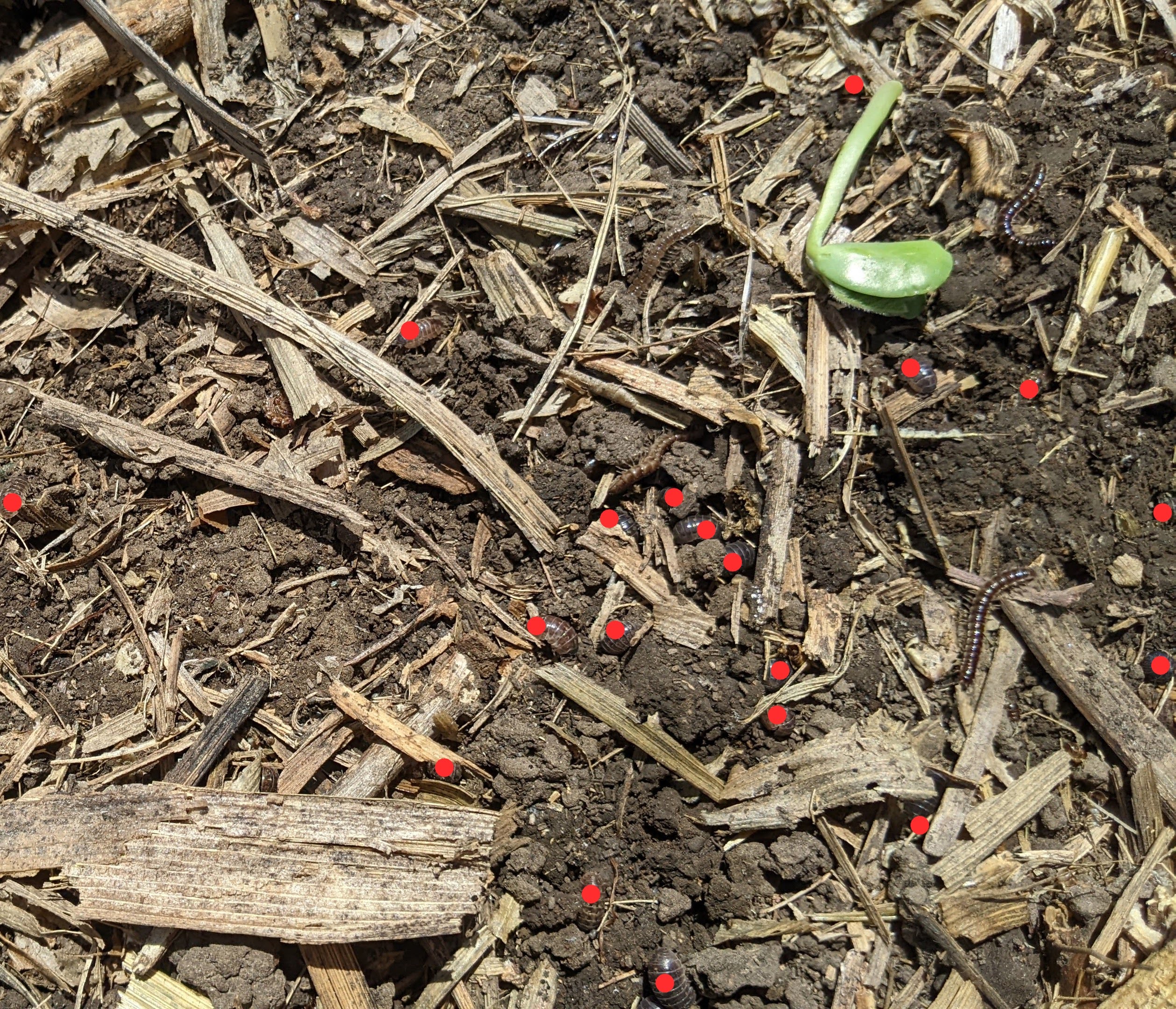
The warm February, reminiscent of 2017, provided the potential for greater insects. Thankfully haven’t seen more than 10% damage from wheat stem maggots to corn planted green into small grains (compared to 2017). Pill bugs (roly polys) and centipedes which typically feed on decaying material and other small insects/spiders, respectfully, have caused damage to soybeans in some fields. I’ve never seen these numbers nor damage before! However, this year, in heavy residue fields, we’ve observed them eating soybeans to the point of fields needing replanting. Slugs and snails have plagued some double crop small grain/soybean fields with one consultant sending me a picture of a planter bar loaded with snails.
Been some issues with seed germination in some hybrids/seed lots. Heard situations of non-liberty tolerant refuge in liberty link corn hybrids. There’s also the failing to remember which trait is in which field before spraying herbicides, so a reminder to double check that before herbicide applications occur. There’s been a lot of uneven corn within rows this year. Each field has various circumstances, but common culprits have been: solar storm throwing off GPS which got seeds too close to fertilizer bands; residue blowing back over portions of rows; planting depth and/or sidewall compaction issues; seed issues; and “weaker” corn plants having a hard time outgrowing HPPD (bleacher chemistry) herbicides in portions of fields. With corn rapidly growing and canopying, unevenness in fields doesn’t look as bad anymore. Overall, these oddities are few and I’m grateful for a good start to this growing season!
Japanese beetles are unfortunately starting to appear. Reminder: don’t use traps as they attract more beetles to your yard! Beetles can be knocked off plants into soapy water in the evening hours and disposed of. The following contains conventional and organic insecticide information: https://go.unl.edu/xgd6.
Reflection: Some know that I’ve been out off/on helping family and I’m grateful for that opportunity. We had celebrated making it through each surgery with Cheesecake Factory Cheesecake and are praising the Lord for healing😊As I drove home this weekend from celebrating family birthdays, I was reminded again how blessed we are to live this life and how short it truly is. How often we miss the little things or don’t take time to celebrate! Some recent conversations included how often the china stays in the cupboard, taking time to smell a blooming flower instead of just walking by or just stopping to admire a sunrise/sunset. Simple things. But I think the result is gratitude. This week, perhaps we can seek to live life more intentionally with the people around us.
Reminder of Weed Management Field Day at South Central Ag Lab near Clay Center June 26!


JenRees 9/3/23
Water use till maturity for Corn: Beginning Dent 5”, ¼ milk 3.75”; ½ milk 2.25”; ¾ milk 1”.
Water use till maturity for Beans: Beg. Seed 6.5”; Full Seed 3.5”; Leaves beg yellow 1.9”.
Crop Update: Harvest is coming early and will probably start rolling this week for some non-irrigated crops. Please be safe with the heat and dry conditions and keep fire safety in mind! Quality in non-irrigated corn ranges but some is very poor; please assess your fields before choosing to store it. Soybeans took a yield hit with the last few heat waves. If you have non-irrigated soybeans that are turning brown, it may be good to check pod fill. Regarding irrigation, corn should be wrapping up soon and it will be tempting to quit on beans too. However, beans still need nearly two inches of water when the leaves begin to turn yellow. Technically, when the white membrane has separated from the seed inside the top several pods, they are no longer using moisture. Evaluating the soil moisture status in each field will help you determine if/how much more irrigation you need. Here’s wishing a safe finish to the growing season and harvest to all!

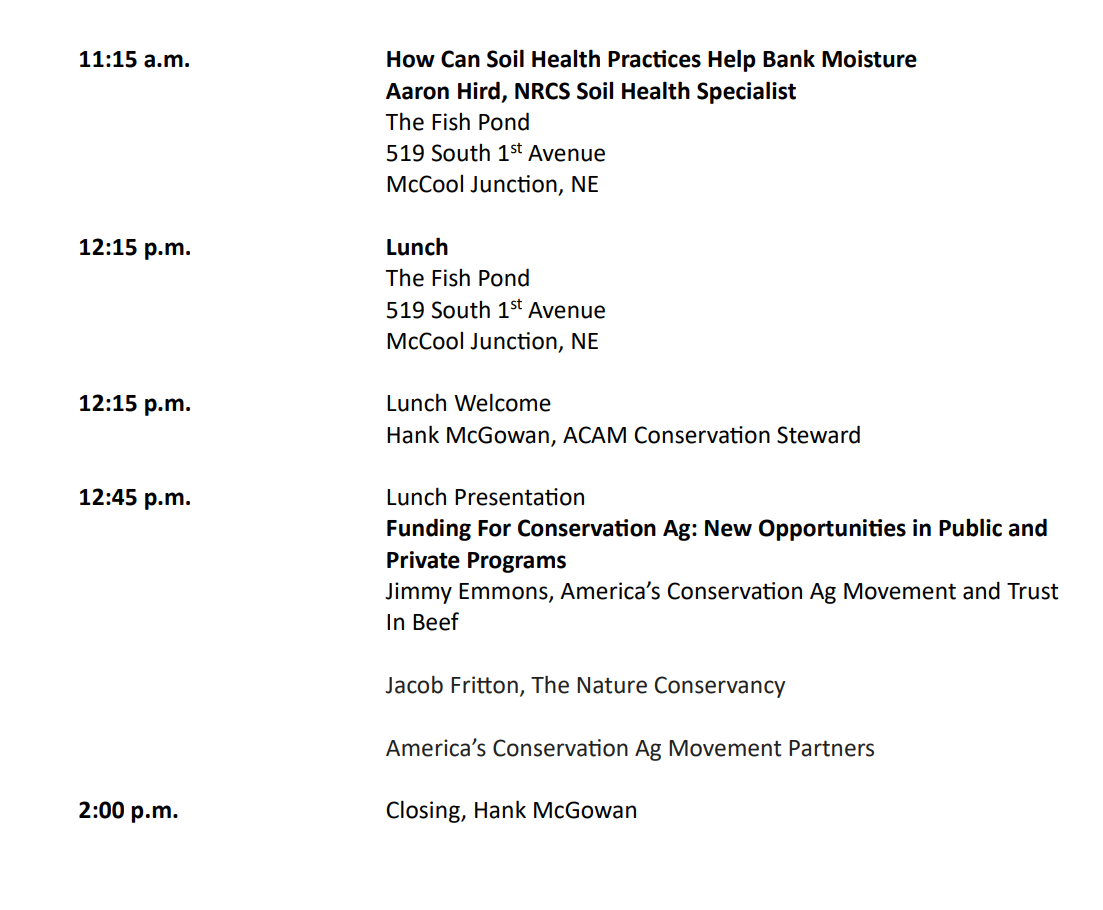
A Soil Health Field Day will be held Sept. 8 from 8 a.m.-2 p.m. (Reg. at 7:30 a.m.) at McGowan Farms, 1213 Rd. 4 McCool Junction. Several farmers will share their experiences with intercropping/relay cropping, integrating perennial cover crops and livestock with cash crops. Additional topics include: animal health strategies, soil health and moisture, and soil health funding opportunities. No charge, info and RSVP at: https://events.farmjournal.com/acam-sept8?i=NKF6zLCT4K-TcK44GTpfFL3hKF56pMmH.
Soybean Gall Midge: Most of the area I serve thankfully does not have this pest yet; however, it has increased in Seward county this year. Travis (TJ) Prochaska, recently joined us as an Extension Educator in Colfax county from serving as an Extension Crop Protection Specialist at NDSU. He has his doctorate in entomology and his family farms in Seward county. We’re glad to have him join Nebraska Extension!

Travis wrote the following along with Justin McMechan, “Soybean gall midge was first detected in Seward County during the 2019 growing season. However, the 2023 growing season has presented several growers in the area with their first experience with the emerging pest, especially in areas near the city of Seward and west. Other counties in eastern Nebraska have been dealing with the pest for several years. Typically, adults emerge in early- to mid-June. To receive alert notifications of soybean gall midge adult emergence, go to soybeangallmidge.org and register for the alert network. Overwintering adult soybean gall midge emerge from the previous year’s soybean fields and fly to an adjacent soybean field to lay eggs on young soybean plants. As the eggs hatch, the immature larvae feed on stem tissues underneath the epidermis, disrupting water and nutrient uptake within the plant. As the larvae grow, they will transition from a white to a bright orange color specimen.
Infested soybean plants can wilt or lodge at the feeding site and, in some cases, result in the death of the plant. Plants become susceptible to infestation around the vegetative V2 leaf stage as fissures (small cracks) develop near the base of the stem, providing an entry point for females to lay eggs. Management has been hit-and-miss. Research studies completed by Dr. Justin McMechan’s lab have shown some results, but foliar-based treatments have been inconsistent between locations and years. Chemical control should only be considered if the history of gall midge has been recorded or an adjacent field has shown a history of gall midge. Gall midge is a field edge pest, so any treatments be should be confined to the first 60-120 feet of the field. Research has shown that hilling, a process where soil is used to cover the base of the stem can be an effective strategy to control, however, it is difficult to implement at the V2 stage and not cover up the small soybean plants. Granular at-plant applications with Thimet 20G have shown consistent control, but its use is limited due to the need for additional specialized equipment. A multi-year field study funded by the Nebraska Soybean Board has shown that delaying soybean plantings until late-May can reduce infestation and injury. Studies led by Dr. Bob Koch, University of Minnesota, are showing some success with biological control and predators (i.e., ground beetles, parasitic wasps, etc.); however, further studies are needed to fully understand their impact.
As with any insect-related program, scouting will be key. Scout field edges of soybean that are adjacent to fields that were planted to soybean last year. To assess a soybean plant for larval infestation, look for any dark brown or black discoloration near the base of the stem below the cotyledonary nodes. If found, peel back the outside layer of the stem to reveal any possible white or orange larvae. As we approach September, there are no practical management tactics this late in the season. However, scouting to build a profile and a history will be helpful for possible treatments for the 2024 crop.”

Quick note for those who replanted soybeans and mentioned they’re flowering, Dr. Jim Specht ran the SoySim model for me and gives approximations of when to expect maturity is reached for the weather conditions thus far. First column is 1.5, middle is 2.0 and last column is 2.5. Based on this, should be seeing beginning pods this week. The harder part will be looking at the physiological maturity line, depending on when we receive a frost. I realize this isn’t encouraging to see either.

JenREES 7/31/22
Fair Time! It’s fair time for both York and Seward counties. While unfortunate that the fairs are the same time (August 4-7th), there’s great opportunities at each one! Come on out to view the 4-H and FFA exhibits, eat great food including BBQ/steak fry served by various local commodity groups, enjoy the entertainment, and catch up with friends and neighbors from across the counties. Please view the schedule of events for Seward Co. at: https://sewardcountyfairgrounds.com/countyfairinfo/ and York Co. at: http://www.yorkcountyfair.com/.
Also, we know the weather greatly impacted gardens. I’m asking for York Co. fair that 4-H/FFA/Open Class participants still bring your produce even if it isn’t ‘market ready’. So, bring your green tomatoes, small peppers, etc. as we’d still appreciate your entries!
Crop Update: Tar spot was found on a leaf in a Saunders county field this past week. Very low incidence in the field and we’re not recommending fungicide for it at this time. Southern rust was found in northeast Kansas this past week, but hasn’t been detected in Nebraska yet.
Have had a number of comments this year about herbicides not seeming to kill palmer as in the past. Some common threads so far have been specific nozzle types used, weeds that had received hail at some point and potentially ‘hardened off’, and also some questions about water quality (pH, hardness) and any impacts there. If you’re noticing/hearing anything specific that worked or really didn’t work this year, I’d be interested in knowing it so I can keep compiling a list of considerations for weed scientists and ag industry to talk through this winter.
Also have received some questions/comments regarding irrigating shallower or deeper. We’ve been saying to get around as fast as one can if you are applying fungicide and/or insecticide through the pivot (0.15” and no more than 0.25”). For fertigation, we’d say 30 lb/ac can be applied in 0.25” and 50-60 lb/ac in 0.5”. Otherwise, we would recommend putting on closer to an inch at a time (depending on what the ground can take in without running off). This is also true for managing disease, particularly white mold in soybean and if tar spot in corn gets established years down the road (it’s better to reduce the frequency for leaf wetness when we irrigate).
Spider mites: Hot, dry weather has increased spider mite activity in crops (also FYI in gardens). Our Extension entomologists updated a CropWatch article that has more info. and a table with products listed for crops: https://go.unl.edu/9v6u. They write, “For effective control, spider mites must come into contact with the miticide. Since mites are found primarily on the underside of the leaves, they are difficult to reach with low volume applications. Using three or more gallons of water per acre by air to carry miticides may increase effectiveness. Aerial applications are generally more effective if applied very early in the morning or in the late evening. Applications made at these times avoid the upward movement of sprays, away from the plants, on hot rising air.
Eggs are difficult to kill with pyrethroid or organophosphate miticides, so reinfestation is likely to occur 7- 10 days after treatment as a result of egg hatching. The reinfestation is frequently heavy because natural enemies have been reduced or eliminated. A second application may be necessary to kill newly hatched mites before they mature and deposit more eggs.
Miticides with activity against eggs and immature stages include Zeal, Oberon and Onager. In many cases, especially with the twospotted spider mite, slowing the rate of population increase is all that can be accomplished with a miticide application.”
Also, I’ll speak more on this next week, but Soybean Management Field Days are quickly approaching Aug. 9-12. More info: https://go.unl.edu/xukf.



JenREES 7/24/22
Even though few, the raindrops Saturday night were so refreshing after a hot week! I don’t know that it’s even really that hot compared to past years, but the sun seems extra intense to me this year. Cooler temps are welcome this week!
Crop Update: There is very little disease pressure thus far in both corn and soybeans. For corn, the most common thing I’ve seen this year is physoderma brown spot/purple leaf sheath, which is something we don’t worry about in Nebraska. Bacterial leaf streak is common on certain hybrids as always and is one we don’t worry about. A fungicide will not help against it and won’t protect against it. Gray leaf spot is very minimal to date in lower canopy, if it can be found. Same for common rust. The closest southern rust has been found is in southern Arkansas. So short story, fungicide isn’t necessary yet unless one is saving a trip for corn insects. For corn insects, there are still hot areas of Japanese beetles feeding on silks in addition to corn rootworm beetles. Spidermites are also flaring in some fields. Also be aware that spraying a fungicide can flare corn leaf aphids as it kills the fungus that attacks them.
For soybean insects, there’s still some Japanese beetles feeding and some spidermites flaring. For disease, have seen very minimal phyllosticta leaf spot and frogeye leaf spot and not anything close to levels for spraying. Seeing lots of phytophthora root rot this year in fields that is continuing to kill plants and there’s nothing we can do about that this year. Fields with a history of white mold may have been sprayed to help reduce disease pressure.
Tar spot has not been found in Nebraska yet this year. A great resource to track diseases such as southern rust and tar spot is: https://corn.ipmpipe.org/diseases/. Click on the disease of interest to see a U.S. map of where the disease has been found. Suspect samples can be submitted to the Plant and Pest Diagnostic lab in Lincoln for free. You can also get your samples to me locally if you’d like. There’s been a lot of confusion so far with insect “poop” and tar spot. A quick field test is to either get your finger wet or spit on the leaf and rub the spot to see if it comes off. Physoderma and tar spot won’t rub off but insect excrement will.
Fungicides and insecticides are helpful when we need them. Everyone’s trying to make the best decisions possible. Concerned we let fear of ‘protecting the crop’ drive decisions. Crop prices continue to be volatile and economics should be considered. Sometimes fields are sprayed a second time when disease comes in later once the residual wears off (regardless of product and because the product only makes it so far into the canopy unless chemigated). In terms of resistance management, we have fewer modes of action with fungicides than herbicides available to us, and we use those same modes of action in all our crops. We already have resistance to the quinone outside inhibitor (group 11 formerly strobilurin) class of fungicides to frogeye leaf spot in soybean. Concerned it’s only a matter of time before this impacts us on the corn side too.
I realize I’m continually an outlier in saying to wait and not automatically apply at tassel. Based on the Nebraska research (shared last year here) and observation I feel we can wait till disease pressure warrants applications and allow them to help with stalk strength. I also realize this column would’ve been more timely last week with the spraying that’s occurred.
South Central Ag Lab Field Day Aug. 4 will begin with registration at 8:30 a.m. with program from 8:45 a.m.-3p.m. at the South Central Ag Lab near Harvard/Clay Center. There are several tracks to choose from throughout the day including the latest in weed, disease, insect, nutrient, irrigation management, and soil health. Free lunch and CCA credits available. More info. and RSVP at: https://go.unl.edu/scalfieldday.
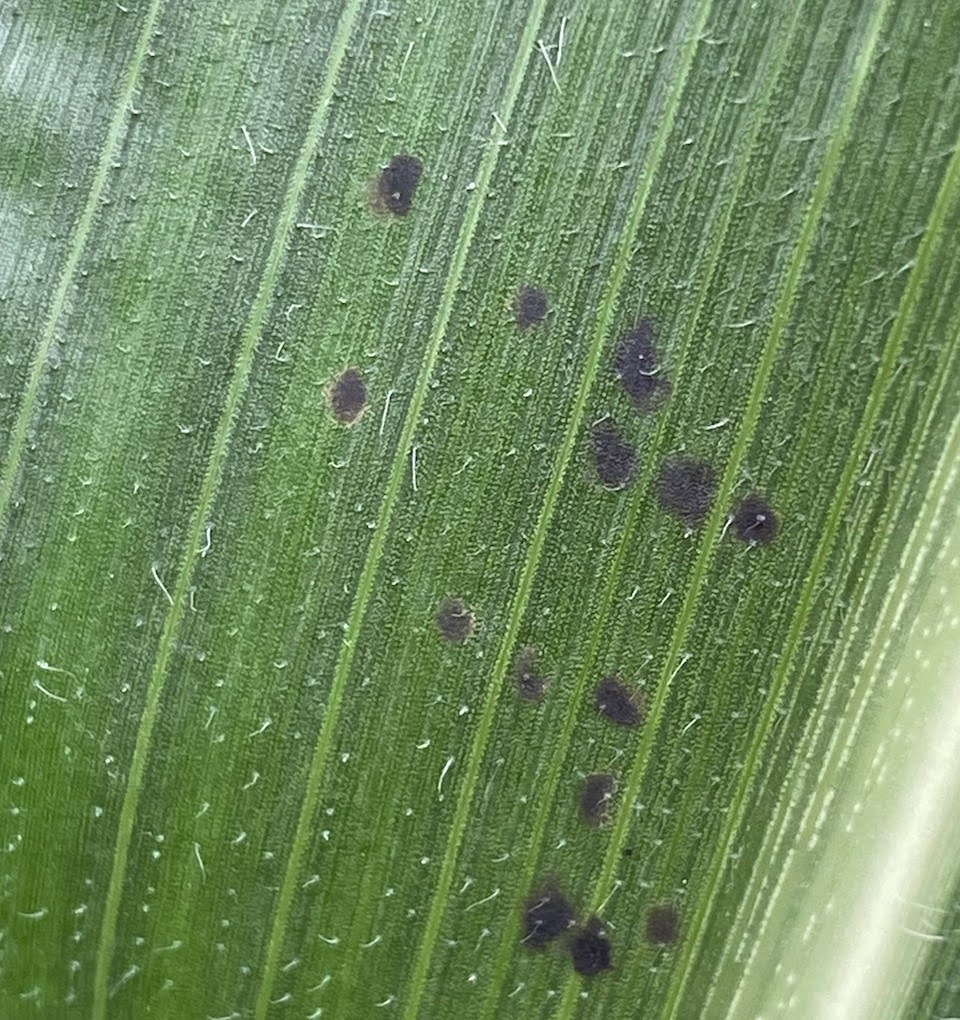


The first picture on the left has been common of both physoderma brown spot and insect poop. With physoderma brown spot, most often these purplish spots are more prevalent on the midribs, leaf axils, and leaf sheaths (as seen in the middle photo). Often the spots outside of the midrib are more yellow/tan in color and are often confused with southern rust. Photo 3 on the right-hand side was tar spot that was found in Oct. 2021 in York Co. Would recommend getting your finger wet or spitting on the leaf and rubbing the spot to make sure it’s not insect poop as several samples looking like the first photo have been that instead. Physoderma won’t rub off and neither will tar spot. Feel free to submit any suspect samples to the diagnostic lab for free.
JenREES 8-2-20
York and Seward County Fairs: Here’s wishing the best to all the youth competing in the York and Seward County Fairs this week!
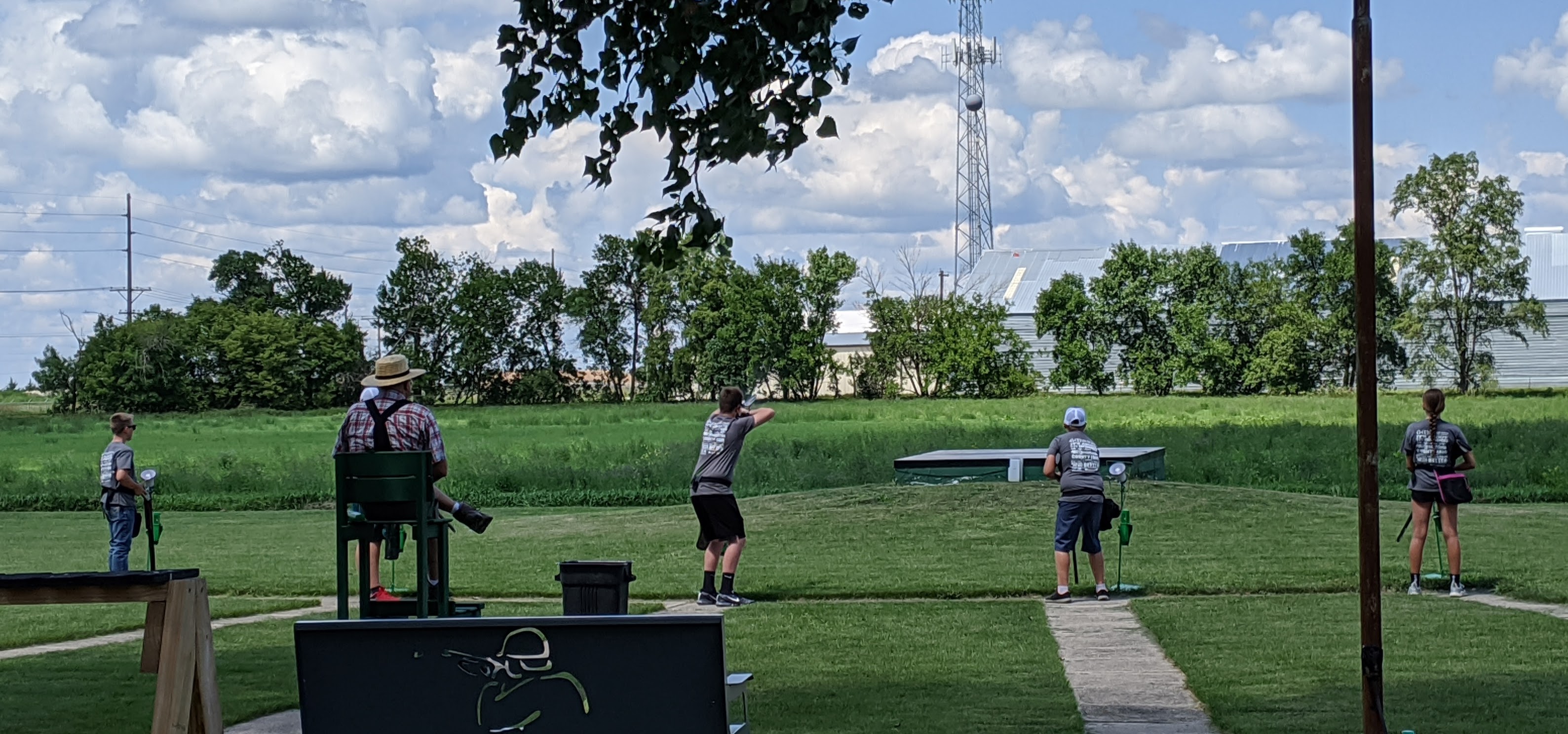
One group of youth competing at the York Co. 4-H Trap Shooting competition today.
Crop Update: It’s unfortunately not hard to find southern rust in fields anymore as I’m finding it in every field I walk into. Incidence is mostly confined to lower canopies with the highest I’ve seen so far on the ear leaf. What’s concerning to me is the amount of rust I’m seeing (ear leaf and below) in canopies of fields that have already been sprayed. Some fields sprayed in mid-July will be out of residual soon, which is also concerning to me. Physoderma brown spot, which moves with water and isn’t a significant pest, can be confused with southern rust. While it can look bad, a major difference with Physoderma is that there’s no raised pustules (bumps) on the leaves. I haven’t seen gray leaf spot at ear leaves or above yet. I’ve added pictures of what I’m seeing on my blog at jenreesources.com. There’s been some questions about ‘late season’ Nitrogen applications. I’ve had to ask how late is ‘late season’; brown silk has always been the latest I recommended. Most University research considered ‘late season’ as by tassel time. I haven’t found any University research that has said applications should be made later than brown silk or would be beneficial past this time.
In soybeans, there’s a disease called Phyllostichta leaf spot that I had never before seen.

Phyllostichta leaf spot. Photo courtesy John Mick, Pioneer.
It’s one caused by a fungus that begins often as brown lesions on leaf margins and can move between leaf veins. In learning more about it, it can be residue born or seed transmitted. It doesn’t sound like anything to be too concerned about, just something different that’s been seen in some fields this year.
Painted lady butterflies are the orange and brown butterflies that are flying now that are often confused for monarchs. A painted lady female can lay up to 500 pale green eggs on plants individually instead of in egg masses. The larvae (called thistle caterpillars) hatch in around a week and can feed from 2-6 weeks depending on weather conditions. They feed on around 100 different host species including thistles, soybeans, asters, zinnias, etc. These butterflies are often used in schools to teach students about complete metamorphosis using the life cycle of a butterfly.

Painted lady butterfly (underside) on soybean leaf.
Soybean Defoliators: In addition to thistle caterpillars, other defoliators including various worms, grasshoppers, Japanese beetles are also present. Thresholds for damage for all soybean defoliators is 20% defoliation of plants during the reproductive stages. If you’re unsure what 20% defoliation in soybean looks like, check out the graphic in CropWatch at: https://go.unl.edu/7qjg. It’s actually a good graphic to keep on one’s phone as it’s very easy to over-estimate 20% defoliation.
Unsolicited Seeds from China: I haven’t heard of anyone in this area officially receiving a packet yet. USDA is aware that people across the country have received suspicious, unsolicited packages of seed that appear to be coming from China. USDA’s Animal and Plant Health Inspection Service (APHIS) is working closely with the Department of Homeland Security’s Customs and Border Protection, other federal agencies, and State departments of agriculture to investigate the situation. Anyone in Nebraska who receives an unsolicited package of seeds should immediately contact Julie C. Van Meter at 402-471-6847) or Shayne Galford at 402-434-2346. Please hold onto the seeds and packaging, including the mailing label, until someone from your State department of agriculture or APHIS contacts you with further instructions. Do not plant seeds from unknown origins. At this time, there’s no evidence indicating this is something other than a “brushing scam” where people receive unsolicited items from a seller who then posts false customer reviews to boost sales.
Squash Vine Borers tend to be a problem at some point every year. If you’re seeing zuchinni, squash, or pumpkin plants looking wilted and suddenly dying, check the stems at the base of the plant. If you see insect frass (like sawdust), squash vine borers are most likely the culprit. You can remove the plants and discard if you’re done with them. Otherwise, you can also slit the stems and kill the larvae. Then cover the stem base with soil to encourage new root growth. There’s only one generation a year and it’s too late to apply insecticides (should be applied to plant base beginning in late June-mid-July). Some master gardeners also say wrapping the base of stems with aluminum foil discourages moths from laying eggs.
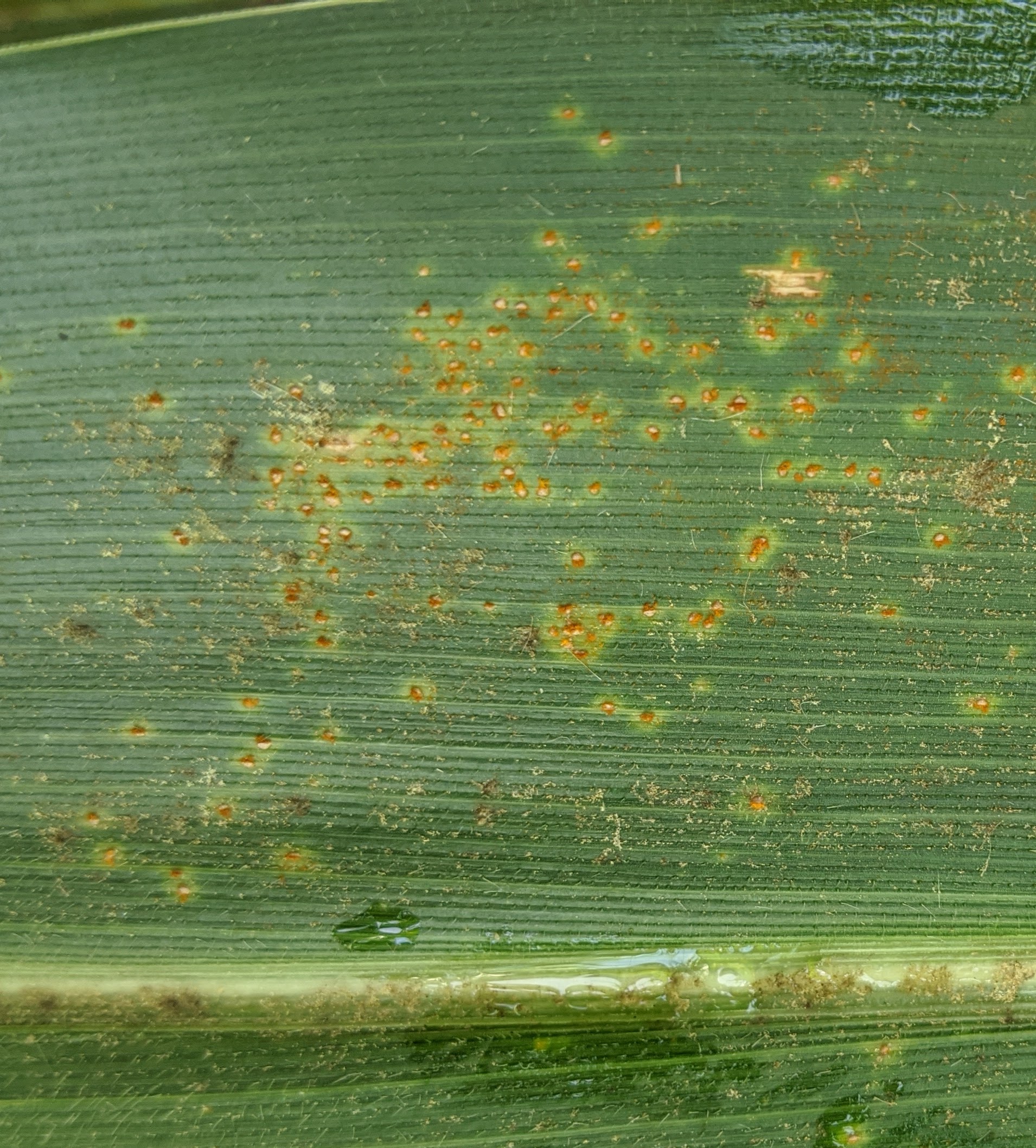
Southern rust: Small, orange to tan clustered pustules primarily on the upper sides of leaves.

Physoderma brown spot: the tiny clustered tan spots (below mid-rib) and purple blotches on mid-rib that also occur around leaf axils and on outer stalk tissue. Upper left-hand corner of this picture is bacterial leaf streak.


Physoderma brown spot on outer stalk tissue. It looks bad but not penetrating beyond the outer stalk tissue.
JenREES 7-28-18
Crop Update: By the time you read this I truly hope and pray we’ve received some rain for the entire area who receive this! Al Dutcher and I have been somewhat frustrated regarding the drought monitor reacting to short-term precipitation events over long-term trends. We both spoke at a meeting this week where he shared parts of this area have 6-8″ deficits dating back to the beginning of our water year (October 1). The soil moisture sensor ground-truthing I’ve been doing with area farmers shows that the larger rains only helped the top two feet of the profile and rains have been spotty since. I think the driest portion of the area seems to be from Lawrence to Bladen south. Drought monitor did put a portion of our area back into ‘abnormally dry’ again and you can see the updated soil moisture readings for the region at http://jenreesources.com.
We were blessed with cooler temperatures which helped slow the crop progression. The heat was pushing crops along quickly which can negatively impact yields as we discussed in a recent CropWatch article. The cooler temps with humidity and leaf wetness also favored gray leaf spot, though, and I’ve seen it move up to a leaf below the ear in several fields in several counties this past week. Every field situation may differ so it’s important to check your specific fields.
Soybean Management Field Days: It’s hard to believe but this is the 20th year of Soybean Management Field Days! They will be held August 7-10 at four locations across the State beginning with 9 a.m. registration and concluding at 2:30 p.m.:
Kenesaw — Tuesday, Aug. 7, Dean Jacobitz Farm
Albion — Wednesday, Aug. 8, John and Mike Frey Farm
Hartington — Thursday, Aug. 9, Ed Lammers Farm
Cedar Bluffs — Friday, Aug. 10, Ray Jr. and Kevin Kucera
- Marketing, Risk Management and Farm Policy
- Weed Management: Cover Crops and Weed Control, Conventional vs. Traited, Soybean Variety Production
- Cover Crops: Managing Soybean Insects and Pathogens
- Cover Crops and Soybean Production Irrigation Management, Soil Fertility, and Cover Crop Research
Horticulture Update: It’s been a tough year for garden produce! The heat has affected flower set, pollination, and fruit production on many types of plants. I’ve also received many questions about tomato leaves curling. Leaf curling can be due to many things such as water stress, virus, and herbicides. Much of what I’m seeing now is water stress-related where uneven watering is occurring or because of the amount of leaves present (especially on heirloom plants) and the plant’s inability to keep up with transpiration. Have also received questions on bumpy tomato stems. The ‘bumps’ are actually adventitious roots (also known as tomato stem primordia) where if they touch the soil they’d form roots. Above ground, they are just these bumps and are present when we have high humidity or overwatering. These conditions are also being favored by the heavier one-time rain events that have been received during the growing season this year.
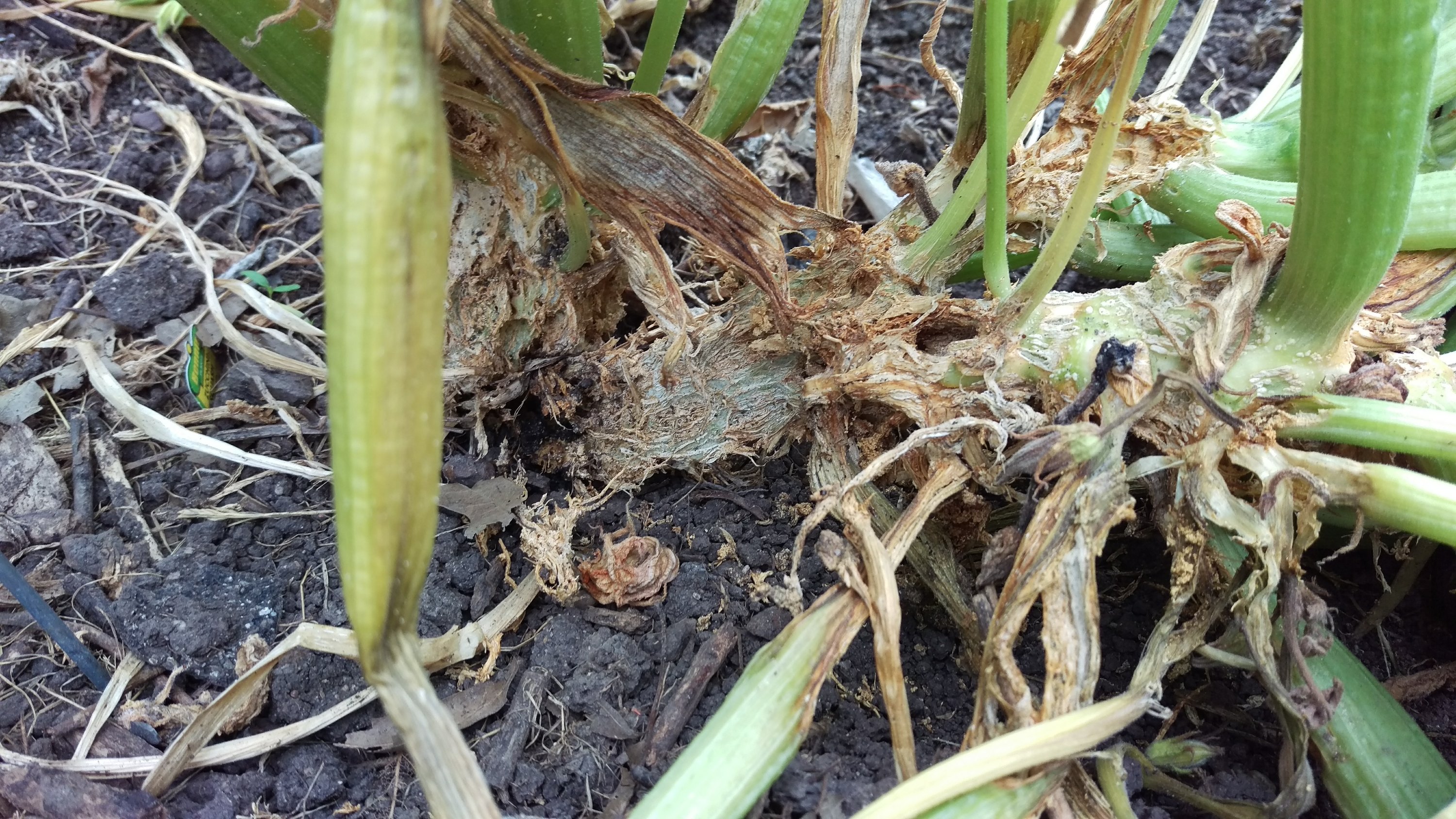
Squash vine borers causing tunneling in crown and vines of zucchini plants.
Also lots of questions this week regarding cucumber, squash, and melon vines dying! There’s a number of potential culprits. Most affected zucchini (including mine) and pumpkins contain squash vine borers. The female moth lays eggs at the base of plants where the eggs will hatch and the caterpillars will bore into the stem. The borer is white or cream colored with a brown head and can get to be 1″ long. They tend to prefer squash over melons and cucumbers. So what can you do now? Kathleen Cue, Extension Educator in Dodge County shares “If plants look good but holes in the stem indicate infestation, a knife can be used to cut with the grain of the stalk to find the borers. Use the point of the knife to pierce them and don’t be surprised if more than one borer is found in a stem. Once the borers are removed, cover the cut area with soil to encourage new roots higher up on the stem. Champion pumpkin growers will place soil over many nodes (the place where leaves emerge from the stem) along the length of vines to encourage lots of rooting. This gives plants greater resiliency if the squash vine borer has destroyed the crown of the plant.” So, if you’re still desiring more squash and pumpkins, that’s one option for you. If your plants are completely destroyed, you can just remove all the dead material to remove any actively feeding caterpillars as well. For next year, make sure to rotate the area where you plant your vine crops. Area master gardeners have shared they put aluminum foil around the stem base of vine crops to keep the borer larvae from penetrating the vines. Another option is to apply insecticides like carbaryl or permethrin around the base of stems. Trapping the adults in June by using yellow-colored containers filled with water can provide an indication when the moths are flying. You can then use floating row covers over the plants to prevent egg laying and remove them once flowering begins to allow pollination to occur. I will discuss other vine crop problems next week.
Reminder of York County Fair this week!
JenREES 7-1-18
Last night brought much-needed rain and grateful for that! From driving today, also saw some crop damage due to flooding, hail, and greensnap. So sorry for those of you most affected by greensnap and hail!
Last month I focused on counting my blessings-which are many! One has been the wonderful rains we’ve received at critical times of being so dry. The crops overall are beautiful right now regarding overall color and especially soybean weed control! Another blessing has been the opportunity to serve people in several counties the past 2+ years. I’m grateful for the extra time to serve my former area while also getting to know people in my new one! Grateful that relationships can be maintained and built regardless of where a person works or lives! I’m also grateful that we’ve been able to hire an individual who I believe to be a good fit for the Clay County Crops/Water Educator position with accountability region of Nuckolls, Thayer, and Fillmore counties. Michael Sindelar begins this new role on July 2. Michael conducted graduate research at South Central Ag Lab (SCAL) near Clay Center, so he is familiar with the area and with SCAL. His major advisor was Dr. Humberto Blanco, UNL Soil Scientist, and one of their projects was looking at soil impacts on corn residue removal and any impacts of adding cover crops into that system. I asked Michael to provide a brief background so I could introduce him to you.
“Hi, I am Michael Sindelar, the new cropping and water systems educator based out of Clay Center, Nebraska. I was born and raised in Lincoln, Nebraska. However, I was exposed to agriculture at a young age as my father would take me to the family farm located near Richland, Nebraska in Colfax county to “help” with the farm work. I joined the Navy in 2005 and served until 2010. I was a cryptologist collective (CTR) and worked in military intelligence. I was stationed out of Hawaii for my enlistment. I had the opportunity to see parts of the pacific and spent one year deployed in Afghanistan where I collected intelligence and conducted combat operations. After having fun for a couple of years I got my act together and earned a bachelor’s degree in Agronomy from the University of Nebraska. This spring I completed my master’s degree in Agronomy with a specialization in soil and water science from the University of Nebraska. I spent most of my master’s degree studying how changes in soil management affect soil water storage, recharge, and heat as storage and transfer through the soil. I look forward to starting my new position on Monday. I sign most of my emails using V/R which is a carryover from the military meaning very respectfully.”
There will still be a transition time of various projects currently underway with July 4 this week and Clay County Fair the next. Please be sure to introduce yourself to Michael when you see him!
When I transitioned to York/Seward a few years ago, I wrote a column entitled “Blessed”. I’ve been blessed to serve the people of Clay/Nuckolls/Thayer/Fillmore Counties a few extra years. And, I will always be grateful for relationships built and the opportunity you gave me entrusting me to help you with diagnosis and farming decisions! I hope you will also give Michael that same opportunity as he begins in this new role!
Tree Branches: Many of us had tree branches down again after the winds. After the last event, a few farmers mentioned to me that it’s frustrating when town people dump their branches in their farm ditches leaving the farmers to pick them up. So, while it’s only common sense and respectful to not do this, I said I’d mention to please not do this (although I’m uncertain if they would be reading my column)!
Glyphosate Resistant Palmer Amaranth Field Day: View field demonstrations and hear from experts at the Glyphosate-Resistant Palmer Amaranth Management Field Day Wednesday, July 11 at Carleton. The event is free and will be held from 8:30 a.m. (Registration) with program from 9 a.m. to 1 p.m. Keynote speaker will be Aaron Hager, associate professor and Extension weed scientist at the University of Illinois at Urbana-Champaign. He will speak on the biology of Palmer amaranth and current research on its control in corn and soybean, including in new technologies such as Xtend and Enlist soybeans. Populations of Palmer amaranth in Nebraska have been found resistant to glyphosate, atrazine, HPPD, and/or ALS herbicides, said Amit Jhala, field day coordinator and Nebraska Extension weed specialist. Demonstrations include:
- How row spacing and herbicide programs can affect glyphosate-resistant Palmer amaranth control in Roundup Ready 2 Xtend Soybean;
- Management of Palmer amaranth in: Balance GT/Liberty Link Soybean (resistant to isoxaflutole and glufosinate) and Enlist E3 Soybean (resistant to 2,4-D choline, glyphosate, and glufosinate;
- Critical period of Palmer amaranth removal affected by residual herbicides in Roundup Ready 2 Xtend Soybean.
These in-field demonstrations and research projects were funded by a grant from the Nebraska Soybean Board. Register online at http://agronomy.unl.edu/palmer to ensure appropriate meals and tour rides. Three Certified Crop Advisor (CCA) credits will be available for attending. If there are questions about registering, please call 402-472-5656. Directions: From Geneva go south on Hwy 81 for 14.6 miles. Turn west onto Hwy 4 and go 5.3 miles. The field day will be on the south side of Hwy 4 between C Street and Renwick Street in Carleton. (GPS: 40°18’24.7”N 97°40’29.0”W). Partial funding for this field day was provided by the Nebraska Soybean Checkoff and Nebraska Extension.
Crop Update June 5
This year I was counting my blessings as we made it through May with no tornadoes in Clay County and no Memorial Day storms! Yet history seems to repeat itself on days. Last year, hail went through the counties north of us on June 3. This year, hail hit us on June 3rd….an estimated 30% of Clay County. Please also see the resources listed at the end of this post for more specific information regarding decision-making.
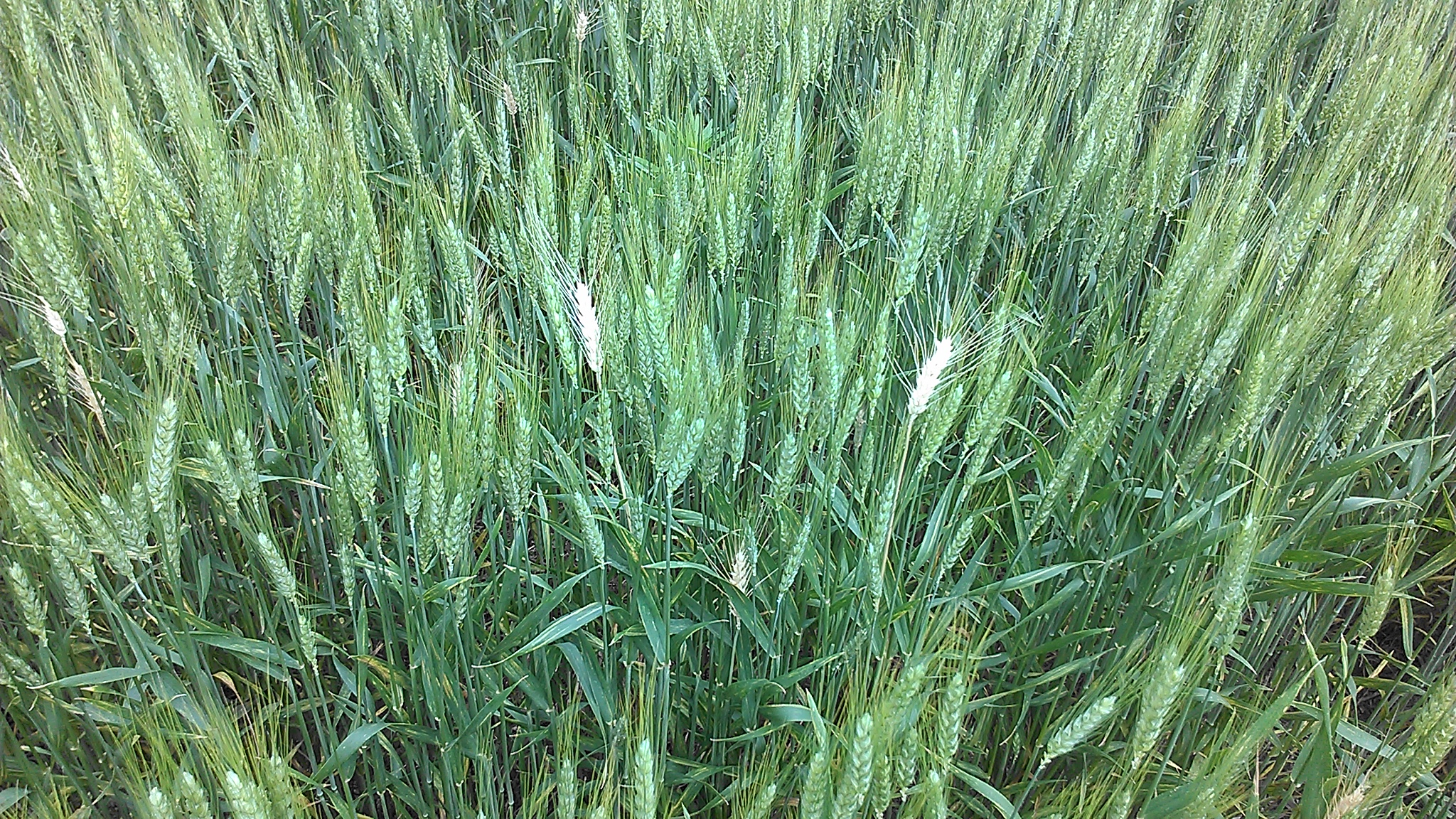
Earlier that day, I had looked at wheat in a number of counties where white heads were appearing in wheat. Most often they easily pulled from the head and weren’t more than 2% of fields. Those were attributed to wheat stem maggot. The white heads that were hard to pull from the stem were most likely due to some late frosts that we had in the area.

The evening of June 3rd resulted in various rainfall totals throughout the county and hail damage to an estimated 30% of the County. This photo is of the west fork of the Upper Big Blue River that was flooding many fields along Hwy 6 between Hwy 14 and Sutton.

This was June 4: Water along both sides of Hwy 6 from Hwy 14 to Sutton and over the road in a few areas. The road was closed on June 5th after another 3-4 inches fell in the area Thursday night. Portions of fields were flooded throughout the County and we’ll have to see how long it takes for water to recede and what temperatures do to determine any replant situations.
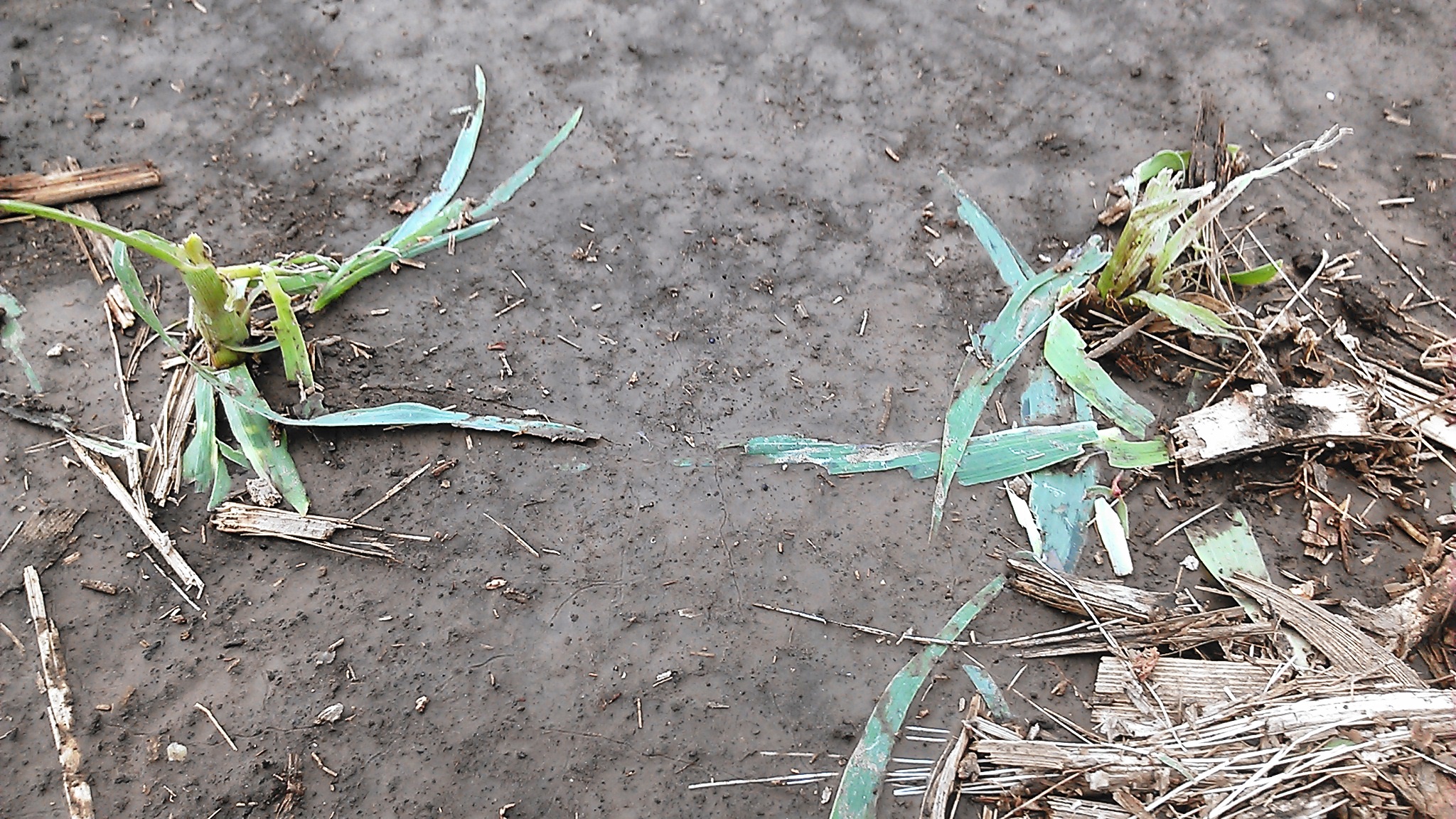
Corn in the V5-V6 stage ranges in hail damage. The worst damage of plants were reduced to sticks. Time will tell how well the plants recover. I’m concerned about bacterial diseases in corn-particularly Goss’ wilt showing up later…but also a bacterial rot that we were seeing in Nuckolls and Thayer Co. after the heavy rains they received last month.
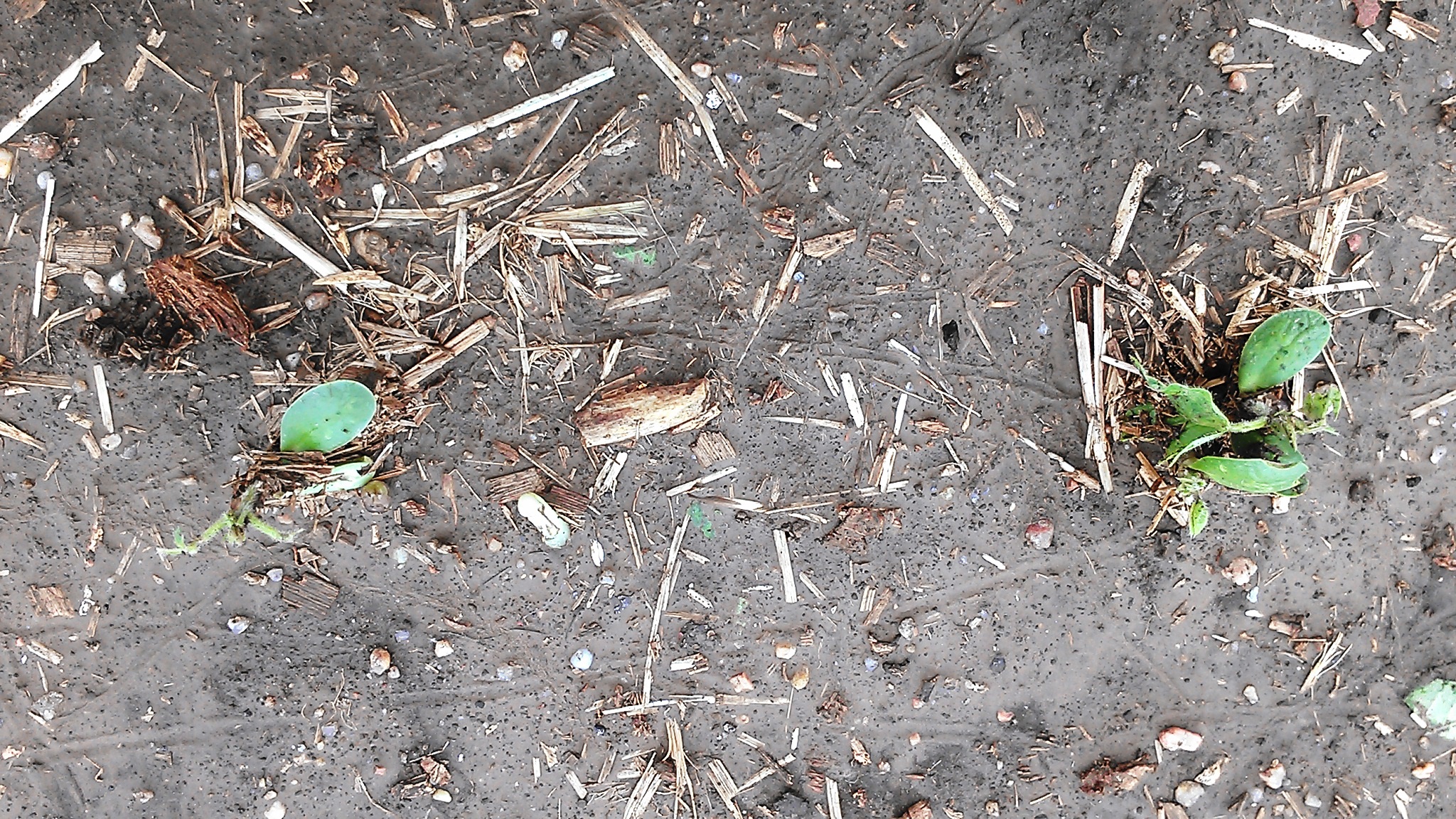
Soybeans ranged from planted to V3 in the County. Many of the hail-damaged beans still had a cotyledon attached. In the past, I’ve seen new plumules shoot from the top of the stem when the growing point wasn’t too damaged. We again will need to wait and see what happens.

First cutting alfalfa is down in much of the County waiting to be baled.

Severely hailed wheat field. You can also see the amount of stripe rust present in this field. We estimated 75-80% of wheat heads in this field were broken over and wouldn’t fill the heads.
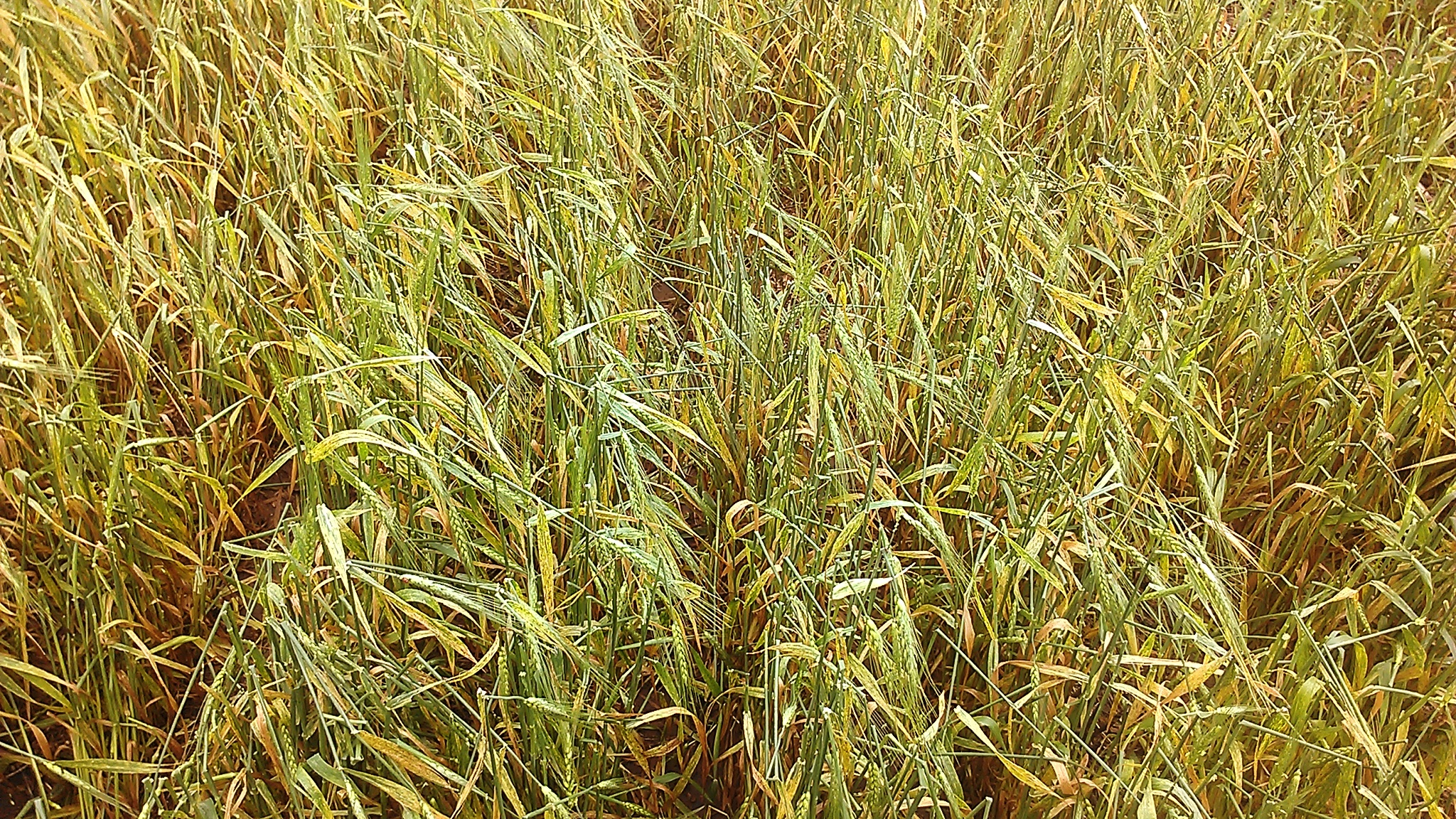
Another hail-damaged wheat photo. We have a great deal of stripe rust of wheat in the County and some farmers with livestock have chosen to hay wheat that is severely affected by stripe rust. Some did spray fungicide which has held the rust back. Others are going to just see what happens yield-wise.
For more information on hail and replant decisions, please see:


 JenResources