Blog Archives
Differentiating Soybean Problems
Crop Update: It was great catching up briefly with so many people at Husker Harvest Days last week! We didn’t get the traditional rain anytime during husker harvest days and soybeans and non-irrigated crops turned quickly. Please slow down and watch out for slow moving vehicles as harvest has started in the area. Here’s wishing everyone a safe harvest season!
For about 10 days I was getting called to fields and answering calls about sudden death syndrome in soybeans. The majority of the situations I was called out to actually wasn’t sudden death syndrome. So, I’d like to share what to look for in order to differentiate soybean diseases. Even though soybeans are turning now, it’s helpful to know what you’re truly dealing with as you think about soybean varieties in the future.
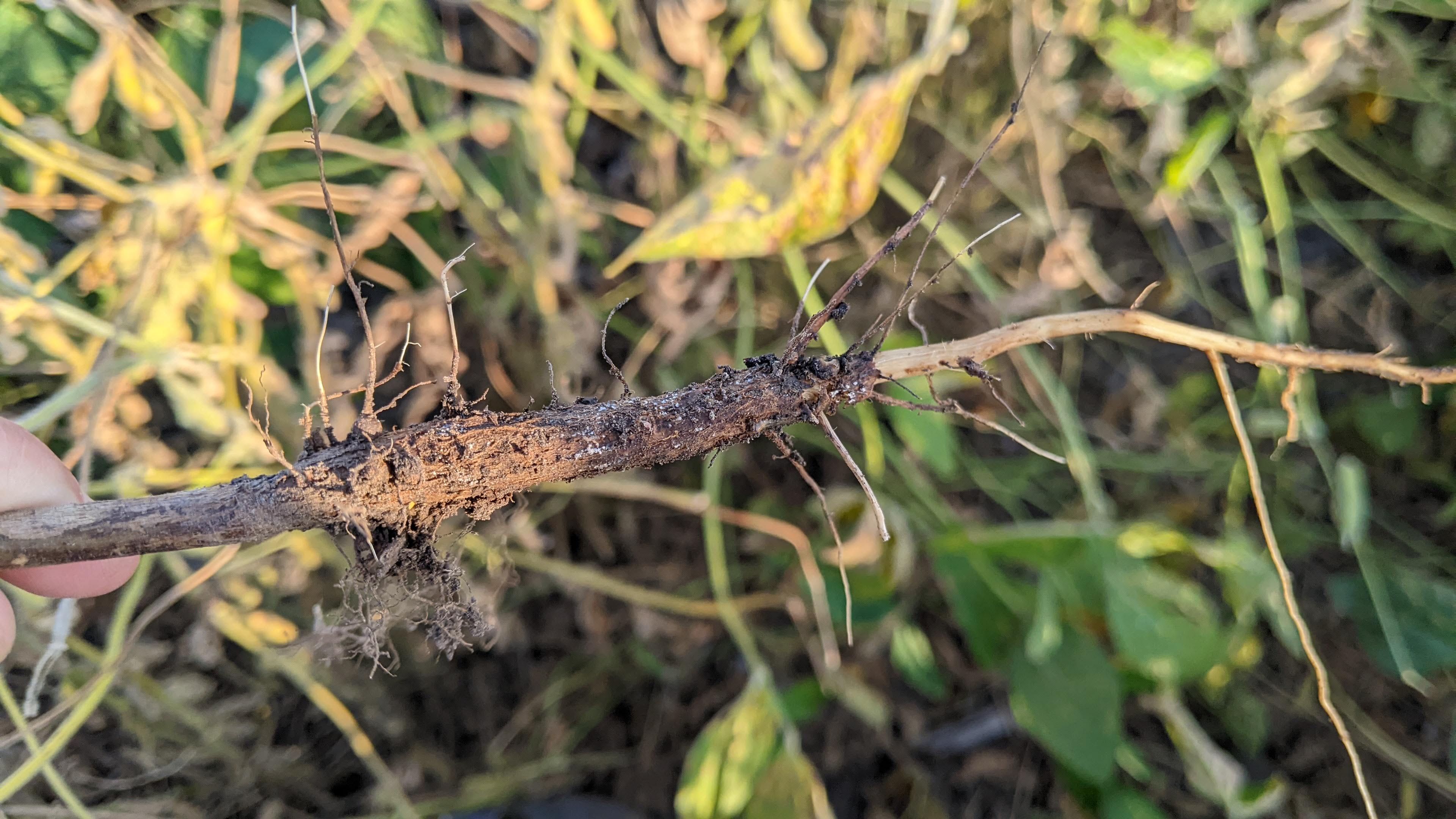
Sudden Death Syndrome (SDS) and Brown Stem Rot (BSR) are both soil-borne fungal diseases in which the fungus is in the root and/or stem but toxins from the fungus create yellowing/brown between leaf veins on the plants. For SDS, I can usually pull those plants very easily from the soil as there’s a clear rotted taproot associated with that disease. Sometimes, you will see gray/blue fungal growth on the rotted taproot as well.
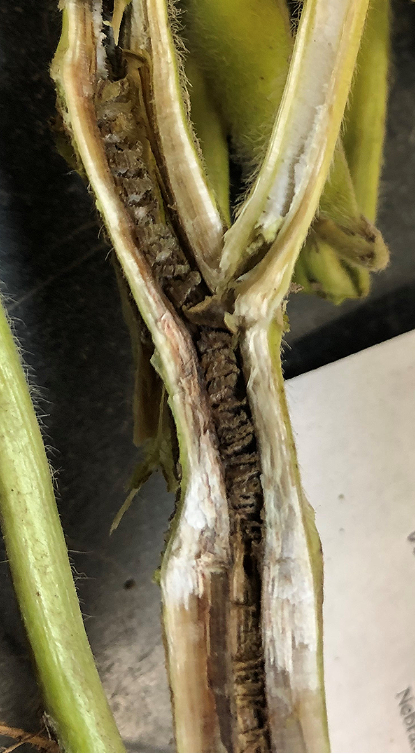
I also split the stem open, especially if the plant didn’t pull easily yet had the leaf symptoms. If the pith is brown in discoloration and is “stacked” like there’s layers of plates of tissue in it, the culprit is most likely brown stem rot. There are instances where you will have both a rotted taproot and a brown stem. In those cases, both SDS and BSR are present.
Brown pith tissue that is hollowed out and has sawdust in it is from dectes (soybean) stem borer. Dectes will not cause the leaf symptoms that SDS and BSR will. It will create a petiole with a trifoliate leaf that “flags”, meaning, it looks wilted and dying.
To be honest, the most common thing I’ve seen is the lack of a disease present. Most of the time, the taproot is in tact with a good root system, and often, there’s either whole fields or “lines” to where the symptoms are present. In those cases, I’ve suggested that this isn’t a disease issue but instead, Triazole fungicide phytotoxicity. These symptoms typically occur 2-3 weeks after a fungicide has been sprayed and either follow a spray pattern (including drift in some cases) or have field-wide distribution. Triazoles are in the Group 3 fungicide class and they move in the xylem (water-carrying vessels of the plant). Thus, their movement is dependent upon moisture. Plants that are drought-stressed lead to the fungicide product being in the tissue longer, allowing for greater injury. Other characteristics that impact the level of triazole phytotoxicity include the fungicide rate, adjuvants used, soybean genetics, and environmental conditions at the time of application. Usually leaves in the upper canopy are impacted as they were undergoing cell division (expanding) during the time of the fungicide application. For more info. please see: https://go.unl.edu/t4cg and https://cropprotectionnetwork.org/news/fungicide-phytotoxicity-on-soybean-triazole-injury-sparks-concern.
Why is this important to know? Because the next time you grow soybeans, it’d be helpful to know if you need to look for specific disease resistance in the variety selected or if one needs to consider a seed treatment for SDS. If the culprit ends up being triazole fungicide phytotoxicity, take note on the fungicide and adjuvants used and also the specific soybean variety as all those factors make a difference.
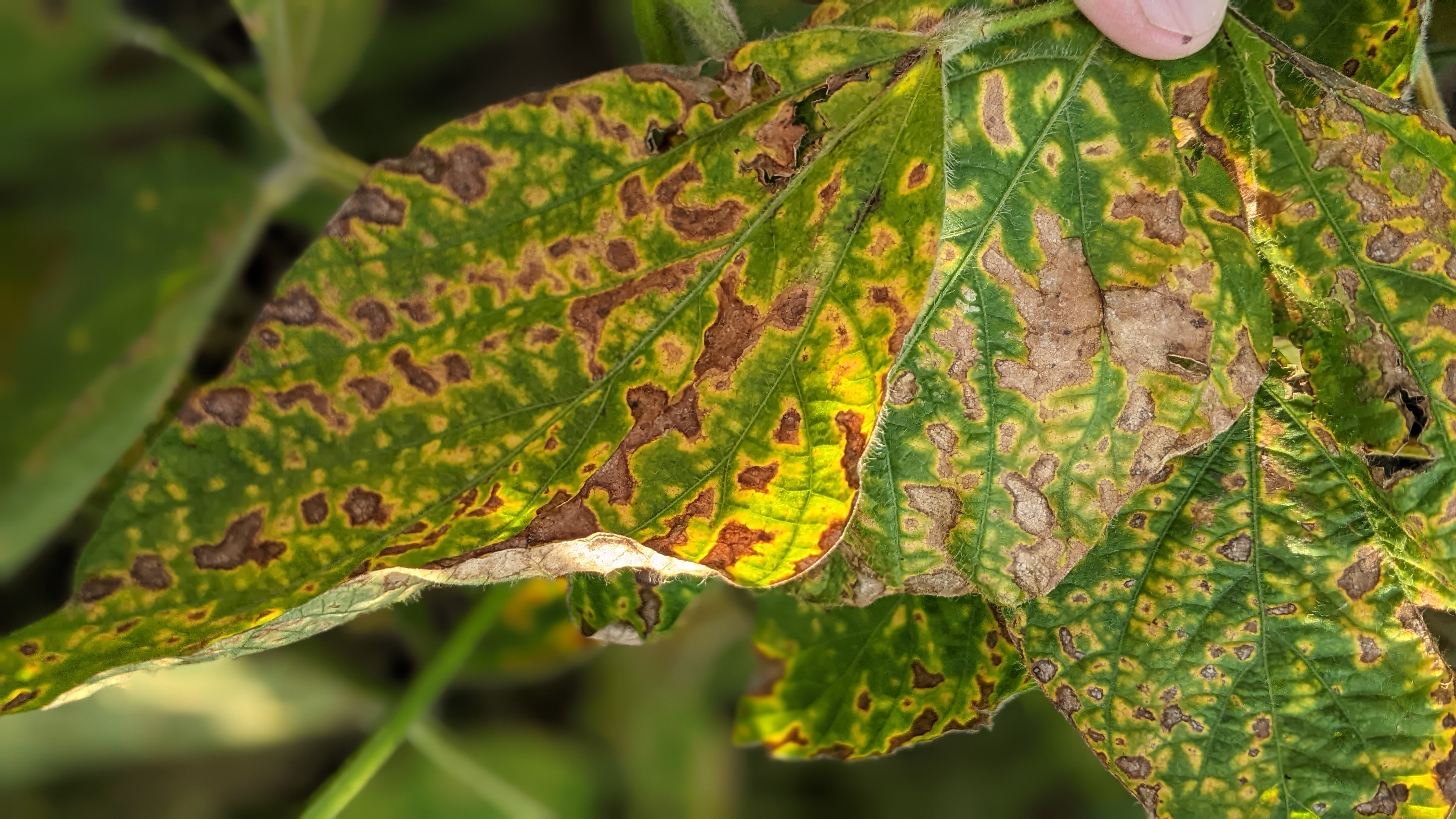
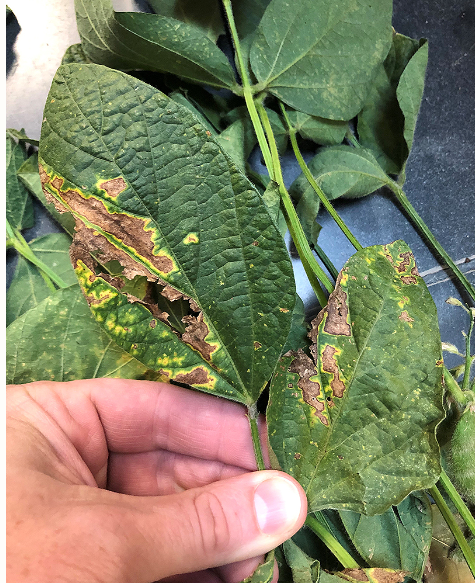
(Above photo captions): Yellow/brown chlorosis between the leaf veins in the left photo due to SDS (but very similar with BSR) (photo by Jenny Rees). Right photo shows yellow/brown chlorosis between the leaf veins due to triazole fungicide phytotoxicity which looks very similar to the leaf symptoms on SDS and BSR. (Photo via Kyle Broderick).


Photos Above: Dectes stem borer hollowed out the pith of this stem. Notice the hollowed out look and absence of “stacking” in the pith. One will also observe sawdust if dectes is present. Splitting the stem further the dectes stem borer can be found (right picture-I accidentally cut it). I don’t worry about dectes for causing yield loss; we’ve been dealing with it in Nuckolls/Thayer counties since before I started in Extension. It eats out the pith but the vascular bundles in soybean are on the outside (think of tree rings)…so they’re not causing xylem and phloem disruption (or very minimal if so). The main issue with dectes is creating lodging if a windstorm occurs prior to harvest.
Soybean Stem Borer

Are you noticing holes in your soybean stems? Holes where the petiole meets the main stem are the entry point where soybean stem borer (also known as Dectes stem borer) larvae tunnel into the main soybean stem. Originally eggs are laid in soybean leaf petioles in the upper canopy. The eggs hatch into larvae which burrow down the petiole then into the main soybean stem. Notice the soybean stem borer infected stem in the middle while the soybean stem to the right has a a non-infested area where the petiole dropped (it is naturally sealed over by the plant). Count how many plants out of 20 have this symptom to get an idea of percent infestation and repeat in several areas of the field. Fields with 50% or more infestation need to be harvested first and perhaps earlier to avoid lodging and yield loss associated with lodging.

Lodged soybeans can be another key for checking for stem borer around harvest time. Notice the stem in the middle of the photo that is lodged (fallen over instead of standing in the row).

Following the stem to the base, the stem easily breaks away from the plant. The stem itself will appear solid. The base of the plant where it breaks is also often sealed off. The stem borer will seal itself inside the base of the stem. In this case, there’s a small portion that hasn’t been sealed off yet.

Gently pulling apart the base of the stem reveals the soybean stem borer larva. The larva will spend the winter and eventually pupate here. Adult beetles will emerge in late June and there’s only one generation per year. For more information specific to life cycle and management, please see the following NebGuide.


 JenResources