Blog Archives
2025 Yields Part 2
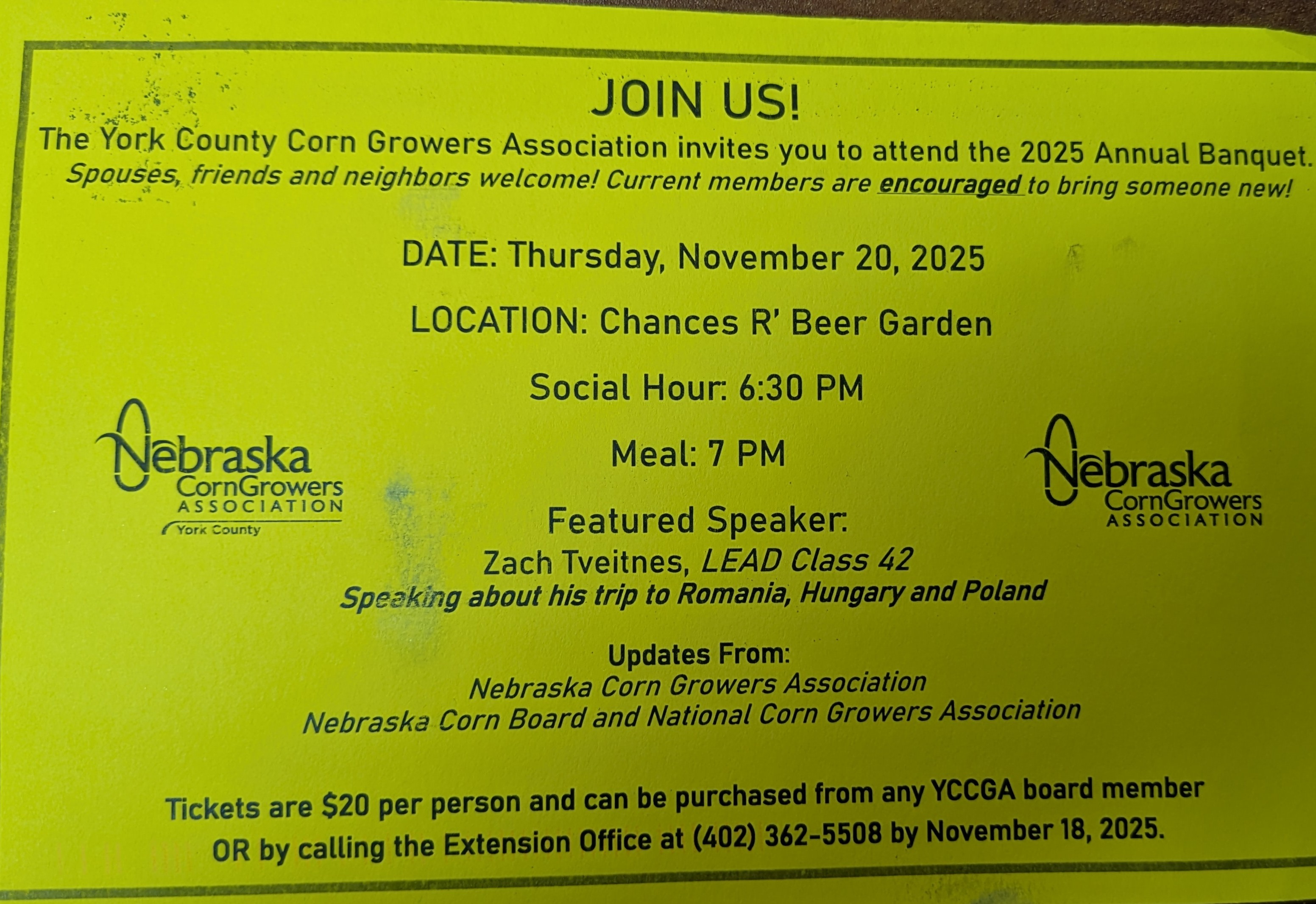
York County Corn Grower Banquet will be held Thursday, November 20th at Chances ‘R in York. Social at 6:30 p.m. with meal at 7 p.m. Tickets are $20 and can be reserved at the Extension Office at (402) 362-5508 or contacting a York Co. Corn Grower Director.
In last week’s column, we walked through the growing season providing perspectives of what may have caused yield loss. I mentioned that while people are looking for solutions, increased nitrogen rates, more fungicide applications, and tillage are not the answers for higher yields. In conversations, those were the “solutions” people were trying to provide. Several asked me for any patterns from observations and conversations I’ve had. That’s what I will attempt to share in this column. There’s a number of field situations where only 150 lb N and one fungicide application resulted in above-average yields. In those situations, correlations included balanced overall nutrition where nitrogen was reduced, TIMELY fungicide application, and not over-irrigating.
I realize quite a bit of tillage has occurred. Gently, please remember the wind events we receive each spring. I encourage you if you have tilled, to consider covering the ground with cereal rye. March 2025 was the windiest March on record in Nebraska and I remember several accidents due to poor visibility. I realize this is a hard topic. Tillage will not control southern rust as that fungus doesn’t overwinter in residue. It will help with the tar spot fungus, but there are other management considerations including hybrid and not over-applying nitrogen and irrigation.
Reduced nitrogen: It was interesting walking our on-farm research studies where we had nitrogen ramps this past year and observe the correlation between less southern rust in the lower nitrogen rates and more southern rust in the higher nitrogen rates. Dr. Bob Gunzenhauser observed the same thing this past year and posted a photo on X showing two hybrids and the variation of southern rust compared to nitrogen rates.


Timely fungicide application: There were people with better yields (250+) who applied only one fungicide while others applied two. I didn’t hear too much from those who applied three to five applications. Some applied two fungicide timings of two different generic products and did just as well as the higher priced products with one application. The key was not applying the fungicide too early so there was some later season residual. Some applied a second fungicide around late dough to early dent stage this year and that seemed to work for hybrids that were more prone to southern rust. The keys were knowing the hybrid, not having excess nitrogen, and proper irrigation management.
Irrigation Management was perhaps the thing that was most frustrating for growers. We started the season off so dry after several years of being dry. So, it’s easy to be in the mindset of irrigating. Anytime non-irrigated fields yield the same or more than irrigated fields, it’s often due to over-irrigation. Irrigation events often occurred before rain events this year. This year’s relative humidity was also very high, thus, the crop didn’t use as much water. Because of that, we were keeping some soils too wet by irrigating which, both Dr. Tom Hoegemeyer and I believe, added to the crown rot and stalk rot issues we experienced. Dr. Hoegemeyer also wrote a recent article reflecting on “60 Harvests – Changes I Have Seen — Nebraska Soil Health Coalition“.
Final thoughts, there’s not one answer but a combination of factors that impacted fields this year. There’s also a lot of farmers hurting with the combination of low yields, low commodity prices and high input costs. Hundreds of thousands of dollars were lost per field in several situations. For those involved and/or interacting with the farming community, please reach out to each other and check in with each other. Please know you’re not alone and there’s always help and hope if you’re struggling. 988 is Nebraska’s suicide and crisis lifeline. There’s also a number of people who have announced retirements or will be announcing them. It’s important to be supportive. Conversations I’ve had with growers this year include: retiring to avoid taking on additional debt, wanting to scale back to reduce debt and stress, and retiring due to health reasons-both physically and anxiety/stress. It’s important for those retiring to retire “to something” by staying active in some way.



 JenResources