Blog Archives
JenREES 7/2/23
This week thinking about gratitude. In spite of difficulties, we’re truly so blessed! Grateful for freedom as we celebrate this 4th! Grateful for all the smiles I saw towards the end of last week from farmers/families who had received some rain…whether it was 0.20” or over 1” over the few days. I think many of us just needed to feel/see/smell how fresh everything is after it again! Grateful for whatever corn unrolled! It’s so hard for those who still keep missing rain with how spotty it is. The mental toll is real with the stress and exhaustion so many producers are experiencing. I also feel for those who live in parts of the State/other states who got such bad hail and wind…I know many of you can empathize with them too.
Last week there were those desperate for forage for livestock who decided to graze non-irrigated acres. I sent out an email mid-week about crop insurance and grazing info. Won’t share all that here; it’s in this article: https://go.unl.edu/dhi9. First talk with crop insurance before making any decisions on drought or other disaster-impacted acres. If those acres are used before talking with insurance, a ‘0’ could be assessed for your 2023 APH which stays with you for 10 years. Loss will be assessed via stand reductions (minimal loss) or the permanent wilt method. The permanent wilt method assesses plants firing, lower leaves crumble easily in one’s hands, leaves don’t unroll at night, and plants don’t respond to moisture. Farmers also may have the option to leave strips that will be assessed at harvest (like you did with last year’s hail) if you prefer that.
Grazing makes the most sense to me on these acres desired for forage. Check for any herbicide restrictions then check with crop insurance. If the corn is released for grazing, there will be nitrates. We aren’t as concerned about grazing corn higher in nitrates prior to ear development compared to if the grazing would occur after an ear was put on. Protein is higher when grazing corn in these vegetative stages. Don’t turn livestock out empty. Providing plenty of fresh water will help reduce nitrate risk. Cattle should self-adapt by eating the tops of plants first and then will be more adapted to eating the higher nitrate areas lower in the plant. Don’t strip graze; allow open access to the field to allow more time for cattle to self-adapt to the nitrates. You can consider supplementing hay, grain, or both. There’s thoughts a little grain may be beneficial to provide energy to offset nitrates. We’re all learning so please share your observations. Additional forage info. here: https://go.unl.edu/dhi9.
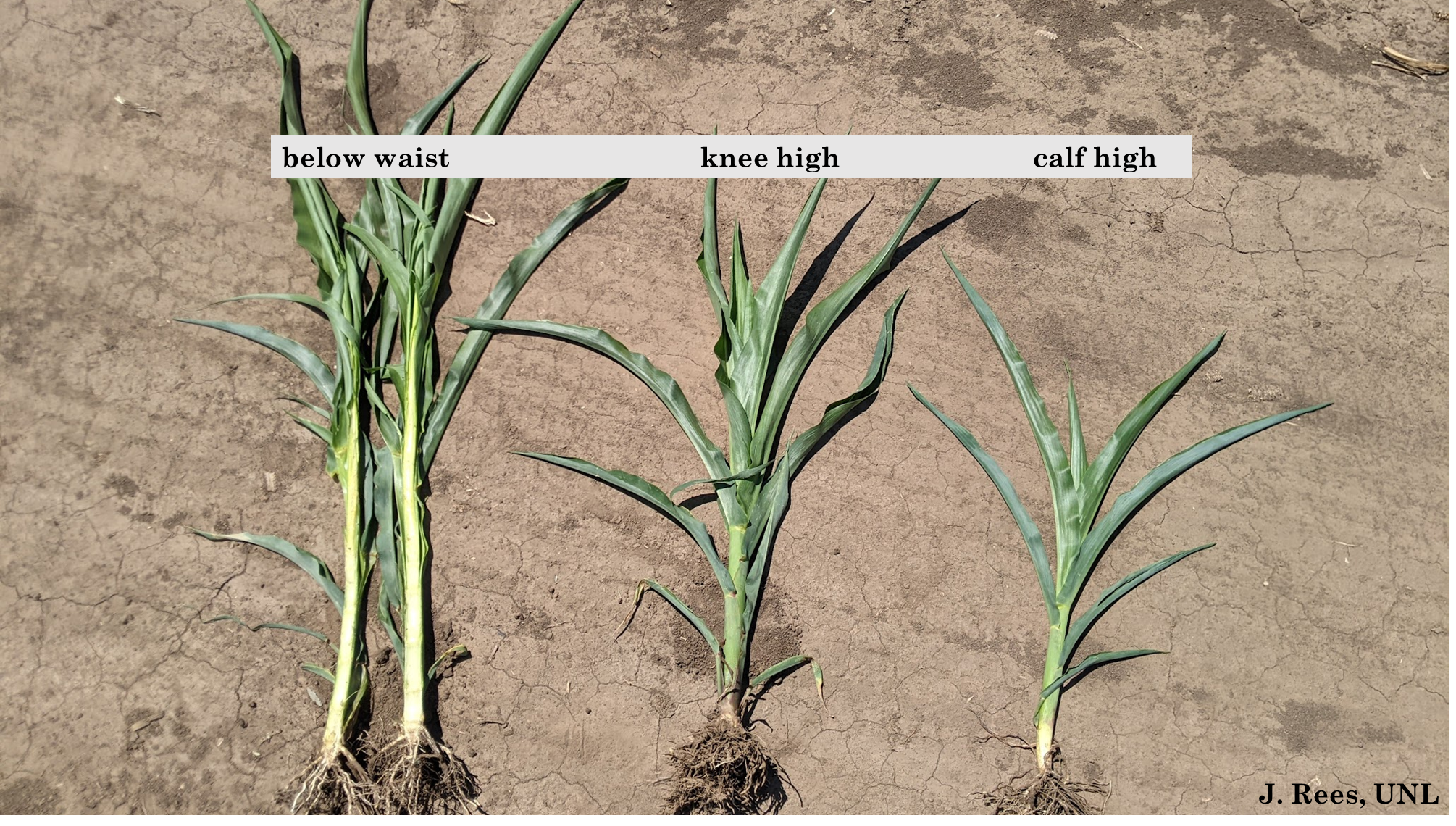
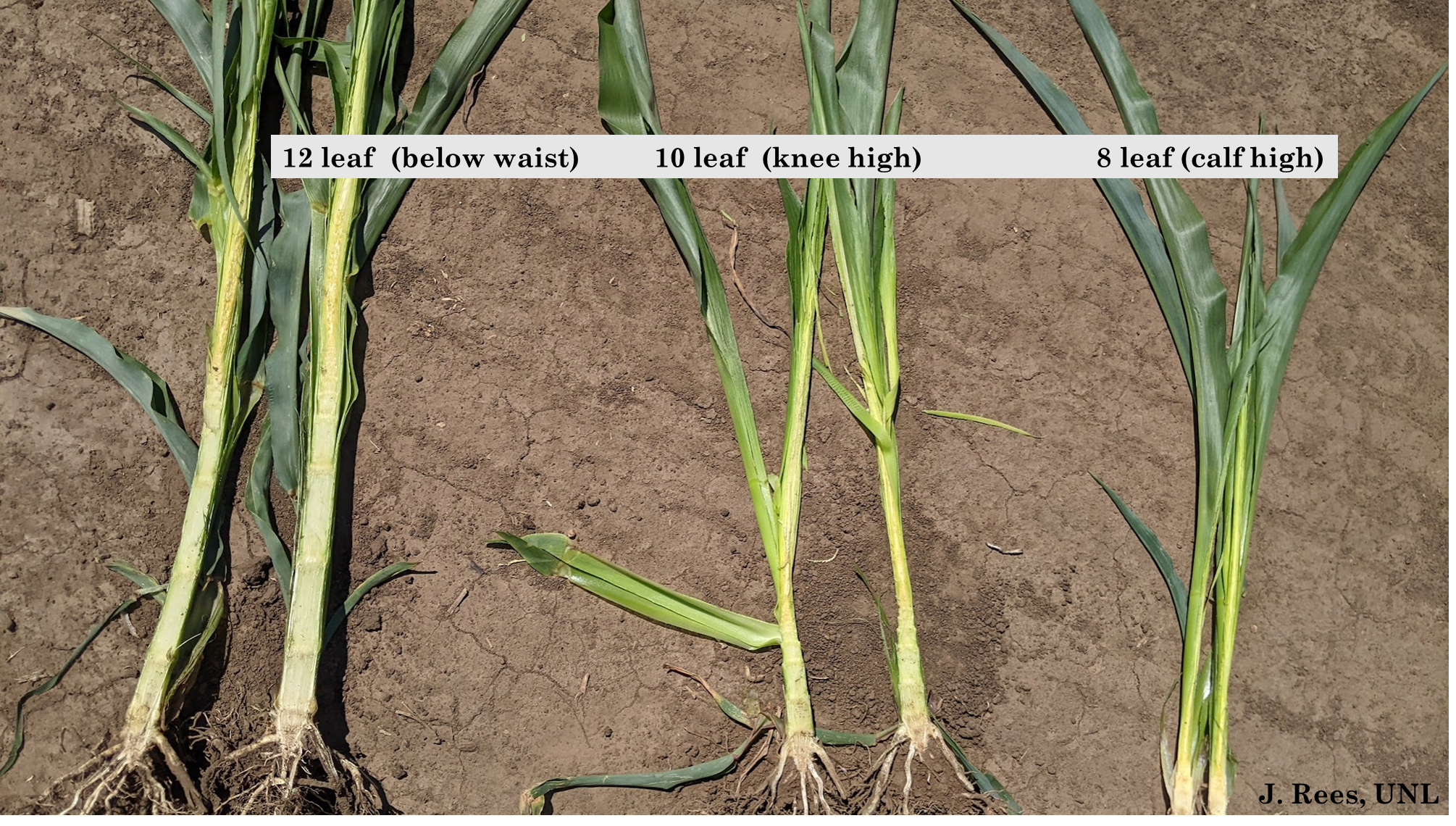
Last week I investigated any potential in non-irrigated corn to better determine when it was done. Photos at jenreesources.com. Corn that is silver/gray and never unrolled with the rain is obviously done. But I was also grateful to see how much corn did unroll when it looked so toasted last Wed.! While very short, some put on several stacked leaves. There’s also a lot of corn rolled again after minimal rain. As I dissected plants in fields throughout the York/Seward county area that were at least 10 leaf (whether these plants were around knee high or above waist high), I found the primary ears and saved them. Carefully dissecting them, I then put them under the microscope. In all fields I was finding 10-16 rows around! So, I was wrong! A few weeks ago I shared I didn’t think we’d have more than 4-8 rows around on these very stressed plants during that 5-8 leaf development time-frame. I’ve wrestled this week in sharing this as I didn’t know if it would provide encouragement or discouragement. We’ve got a long way to go with receiving adequate moisture to get to pollination, timing of pollen-shed/silking coinciding, etc. Yet, I also felt sharing could provide some hope and much-needed encouragement of some potential for those who got some rain and saw leaves unroll. Hopefully this info. does a little of the latter for you. For me, no matter what happens, with my faith, it gave me such an awe of the Creator in seeing these tiny kernels.
As tasseling approaches in irrigated fields, think through your decisions regarding costs. You’ve put a lot of money already into irrigation with a long season ahead. I’m always the outlier on this, but consider if/when you really need fungicide/insecticide apps instead of automatically applying. Delaying till needed buys you time with the residual. Also, please take at least 10 minutes a day to stop and take a break with positive activity to refresh one’s mind. Maybe even jot a few things down you’re grateful for each day? Sometimes stress can lead to unwise decisions-please take care of yourselves!
In case Japanese beetles explode this week, here’s a printable resource for homeowners in advance: https://go.unl.edu/bke4.
A tale of three corn plants from the same non-irrigated drought-stressed field that were rolled for well over 20 days. These are heights on me so much shorter for all you taller individuals!


 JenResources