Blog Archives
Fall Nitrogen Challenge
It’s such a blessing to receive some moisture! With November here, sharing this week on nitrogen applications.
While the November 1 date that allows for fall fertilizer application to fields has arrived, we also recommend waiting to apply fall nitrogen till soil temperatures are below 50F. At that temperature, soil microbes are less active and less likely to convert ammonium to nitrate. Soil temperatures can be viewed at: https://cropwatch.unl.edu/soiltemperature. As I write this, the daily average 4” soil temperature is currently 55F with the weekly average at 53F.
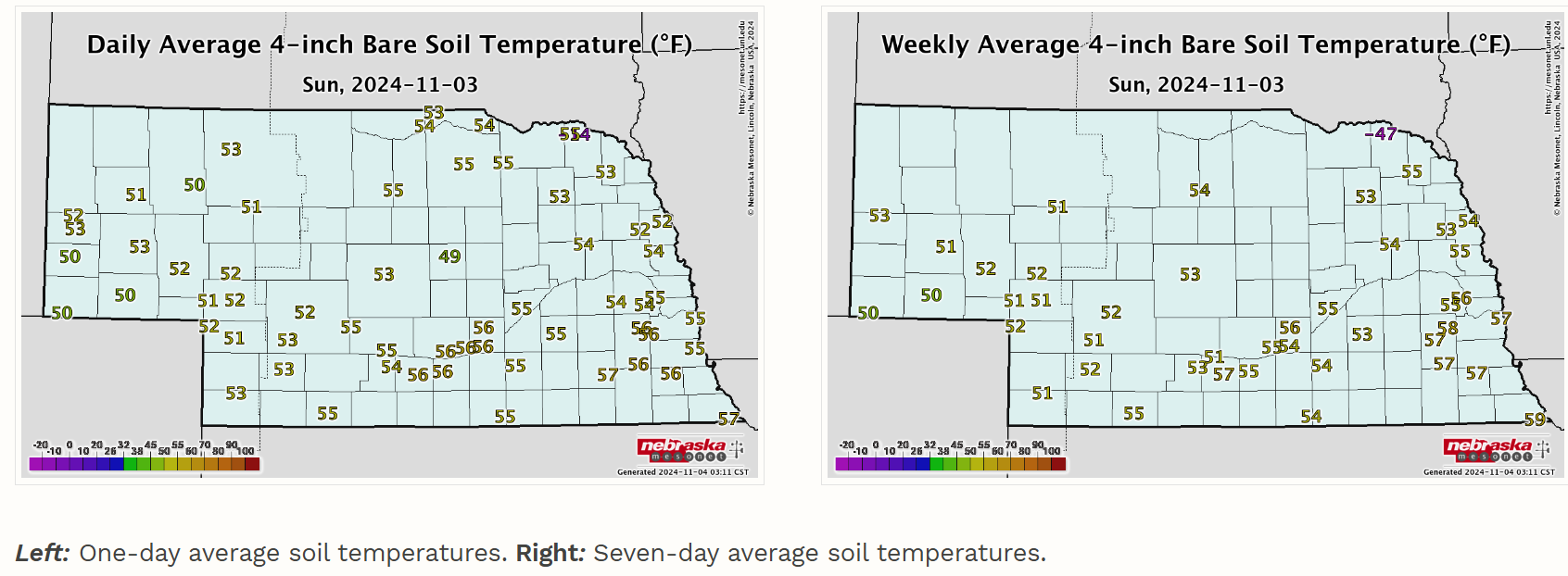
Nearly a year ago, I shared my Nitrogen Challenge with you. I’m grateful for all the producers who gave that a try! Some who wanted to try it had applied too large a base rate before I had released the article, so sharing a reminder now.
My Challenge: The challenge is to everyone with irrigated ground who applies fall anhydrous or spring pre-plant fertilizer:
- Leave 1 piece of ground with a base rate of 70-100 lb N/ac.
- Apply the rest of the N in season as needed using a tool like Sentinel Fertigation that senses plant needs.
- Asking each grower to consider this for 1 field. Are you willing to join me in this?
I genuinely believe this is the primary way to change the nitrogen story both now and for future generations. Why? We can’t impact the legacy nitrate from previous generations that is impacting groundwater nitrate levels now, but we can impact the nitrate that remains in the soil after current nitrogen practices now.
Nitrogen rate is the most consistent thing I keep seeing in nutrient recommendations and on-farm research studies that we can adjust. I’ve shared On-Farm Research results from farmers’ fields in this part of the State on heavier textured soils showing there’s no one solution with nitrification inhibitors, nitrogen application timing, biological products. The most consistent thing I see is an opportunity around reducing nitrogen rates. I’m not saying there’s one solution. My challenge is around what I feel holds the most promise right now for irrigated ag in this area.
We can’t precisely know an amount of nitrogen to recommend for application to land using pre-plant soil tests and/or any nitrogen equation. They’re good tools. But, we don’t know how much irrigation will be applied in season nor how much mineralization will occur due to weather conditions. 2022-2023 were high mineralization years and 2024 was a low one. Soil agronomy needs biology in addition to chemistry and physics. That’s why I’ve been so supportive of the in-season sensing technologies where the plant tells us what it needs based on what is occurring in the soil. Project Sense was a UNL/NRD/Corn Board/USDA research effort using ground rig applications. I think it never took off because I’m unsure any Co-op or company took the idea on as a business. Would still be applicable.
The UNL pivot-based sensing research resulted in the graduate student forming the company Sentinel Fertigation. If there’s other companies doing this, please consider them too. There’s so much in ag we have to react to. Applying N in-season is also reactive. However, we can also be proactive in showing that farmers and agronomists locally want to keep looking for solutions to the nitrate problem by trying newer tools/technologies to see any impacts. Please contact me if you are willing to join me in this challenge.



JenRees 11-1-20 Fall Applications
It’s November 1st as I write this. With much of harvest done, the next task for some may be fall herbicide applications and/or fall anhydrous application.
Fall Anhydrous: With nutrient management, we’re hearing more about the 4R’s. 1-Right Time is after Nov. 1st in our area NRDs. Extra important, consider soil temperature. Soil microbial activity and the conversion rate of ammonium to nitrate is very low when the soil temperature is less than 50oF. Thus, apply fertilizer-N (and manure) when the soil temperature at the 4” soil depth is below 50°F and trending cooler. You can view soil temps at: https://cropwatch.unl.edu/soiltemperature. 2-Right Source in the fall is anhydrous ammonia as it will bind to soil particles. Leaching risk is reduced in a dry fall and when applied at soil temperatures below 50°F. 3-Right Rate for each field is based on soil samples and various nitrogen credits. Can also consider splitting the application with part this fall and the remainder next season. 4-Right Place is making sure the anhydrous is deep enough. It’s also ensuring there’s a good seal, which will be something to watch in this dry fall.
Fall Herbicide is one management tool to control winter annual weeds and marestail (horseweed); it may not be necessary for every field. It’s important to scout fields for current weed pressure. Also consider targeting fields that have a history of winter annual weeds or marestail. Nebraska research shows up to 95% of marestail germinates in the fall, so fall application can aid management. Some winter annual weeds also serve as hosts for pathogens like soybean cyst nematode (SCN): purple deadnettle (strong host), henbit (strong host), field pennycress (moderate host), shepherd’s-purse (weak host), small-flowered bittercress (weak host), and common chickweed (weak host). SCN can reproduce in the field on henbit and purple deadnettle.
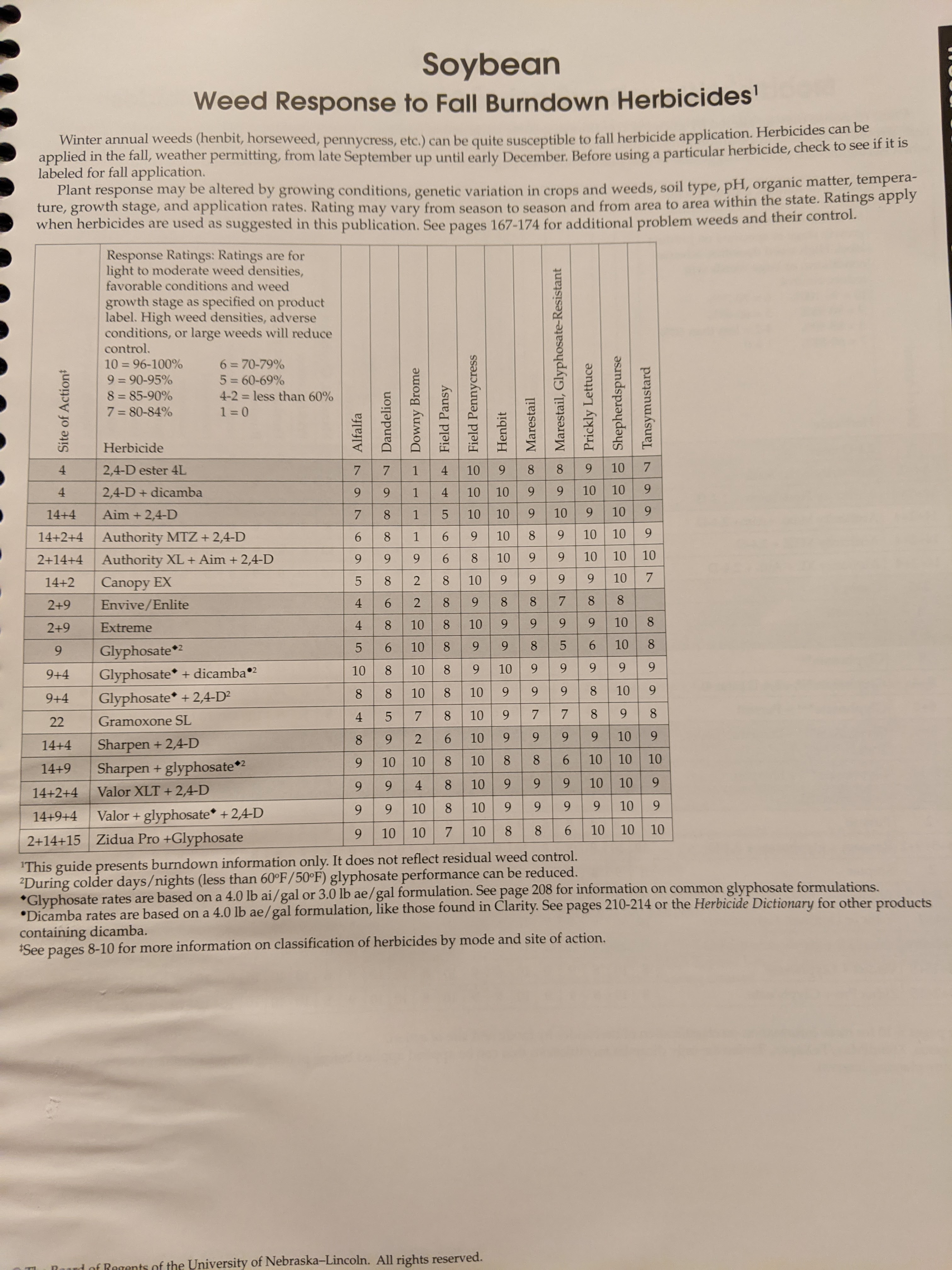
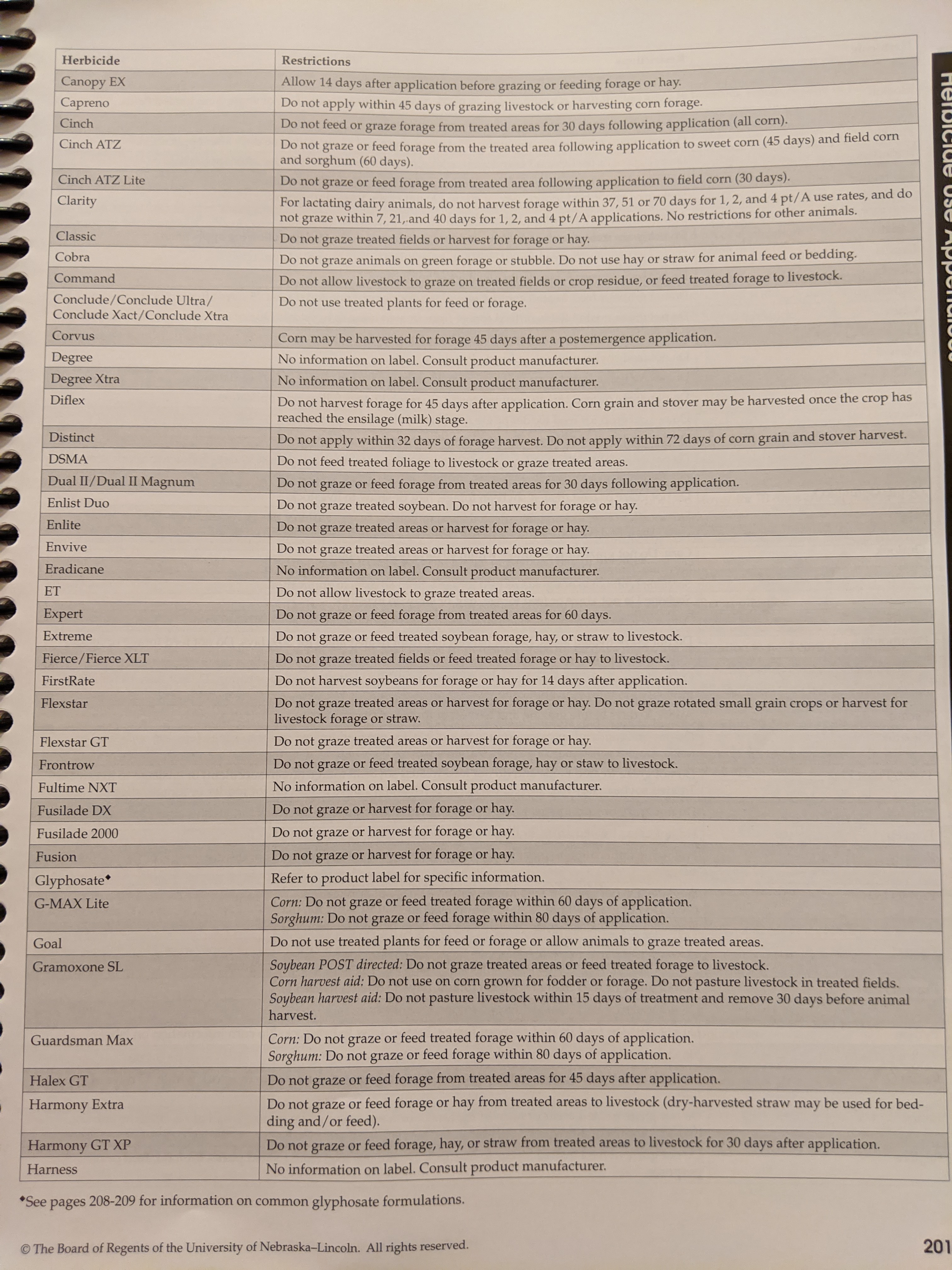
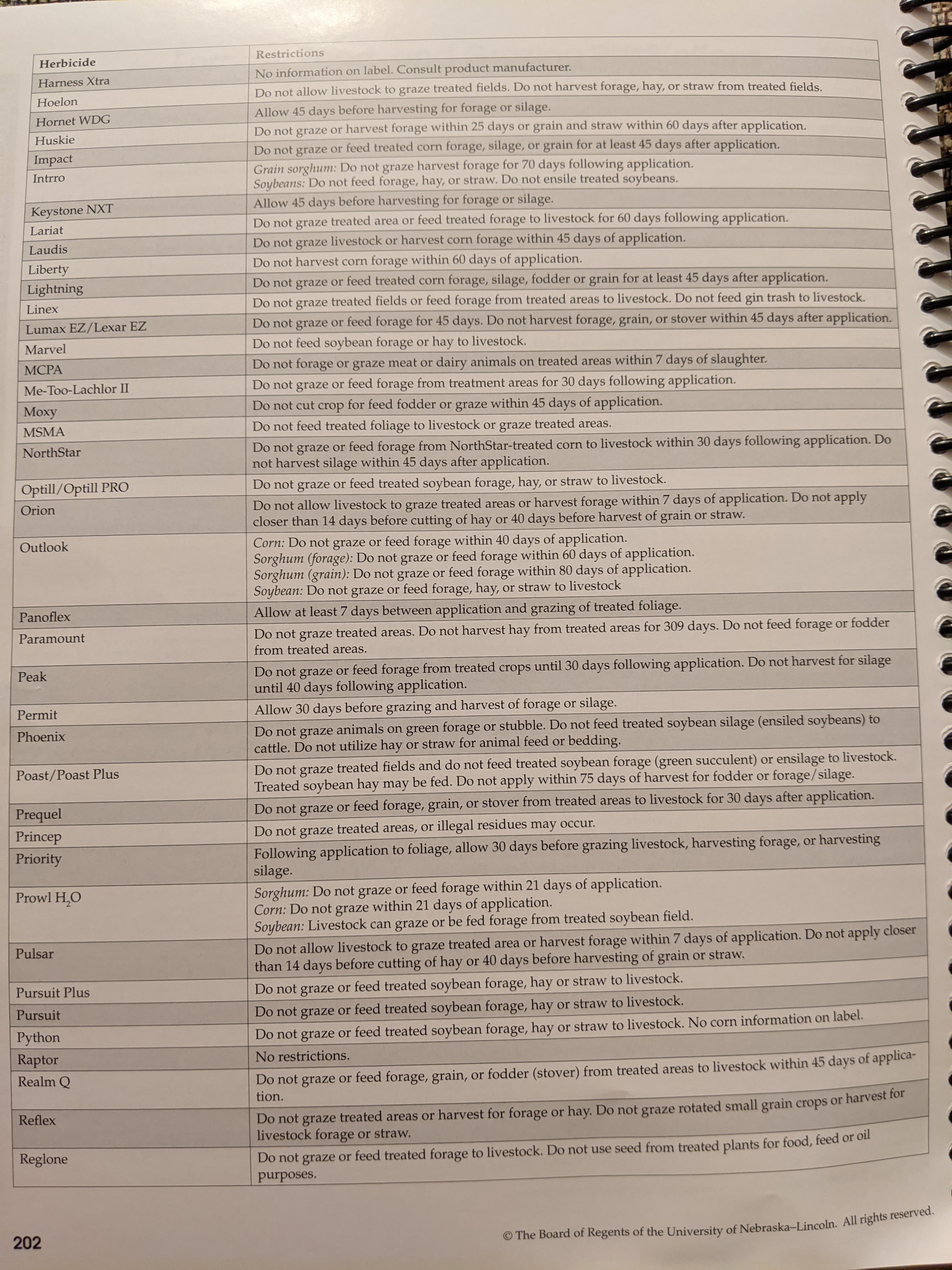
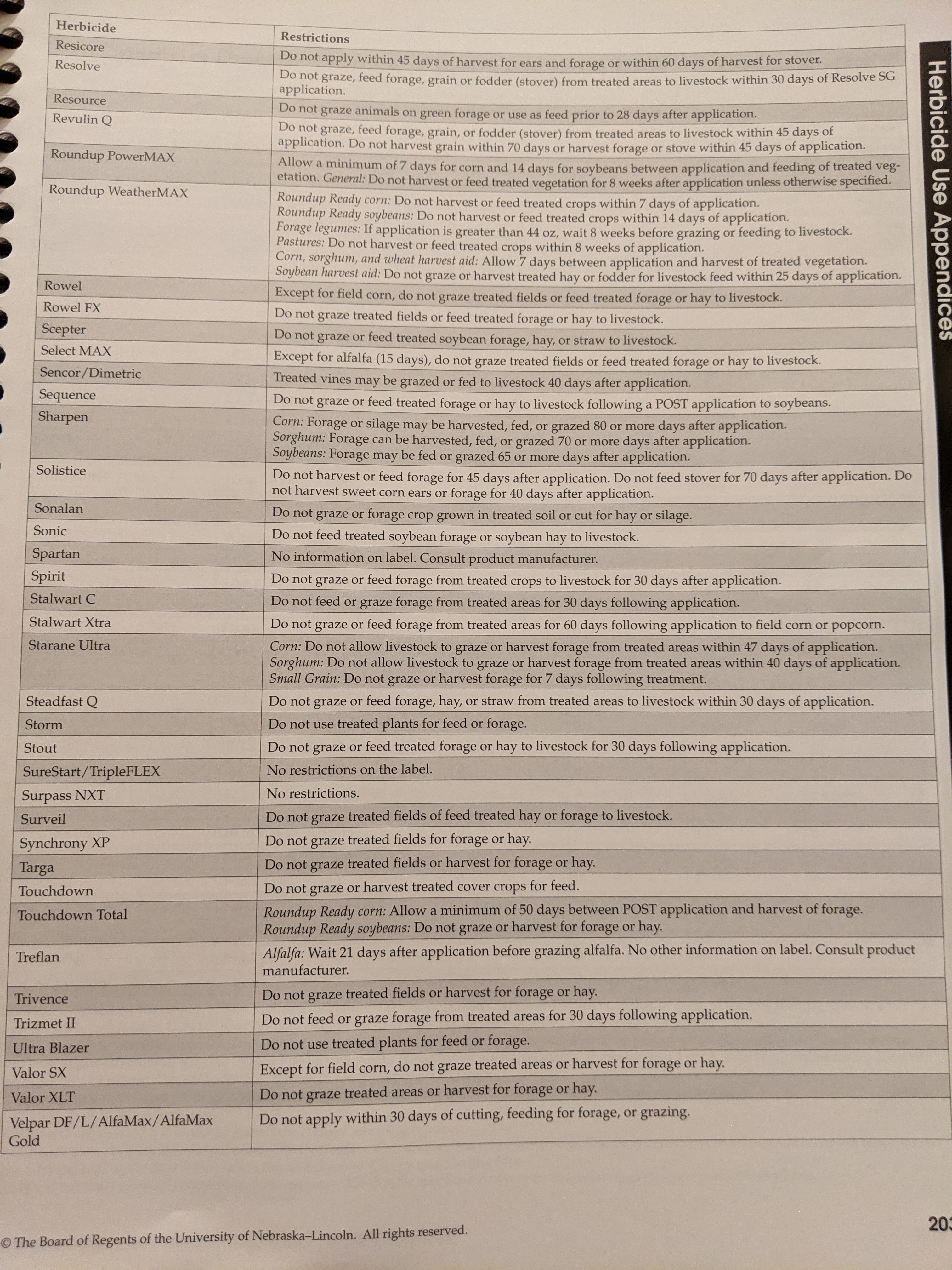
If you have a 2020 Guide for Weed, Disease and Insect Management, page 81 provides fall burndown corn herbicide options and page 127 provides soybean ones (I also show these at https://jenreesources.com/). Most products contain 2,4-D and/or dicamba. Tank-mixing a residual herbicide with a burndown product will improve marestail control because the residual activity will control marestail emerging after herbicide application. Be sure to check labels for any grazing restrictions if livestock will graze cornstalks after a fall herbicide application (You can find these on pages 200-204 of the 2020 Guide). If the label doesn’t specify and you want to be on the safe side, a rule of thumb is to use the pre-harvest interval for the amount of time to wait before grazing stalks.
Regarding temperatures, in a CropWatch article Dr. Amit Jhala and I shared the ideal temperature for applying most post-emergence herbicides is between 65°F and 85°F. Herbicides can be applied at 40°F to 60°F, but weeds may be killed slowly. When the temperature is below 40°F for an extended time after burndown, weed control will most likely be reduced, specifically for a systemic burndown herbicide such as glyphosate. Additionally, weed control may be reduced under cloudy conditions following an initial temperature drop below 40°F. With late-fall herbicide applications be sure to add labeled adjuvants to improve herbicide efficacy.
Actively growing weeds are key to achieving good control, regardless of herbicide used. Frosts of less than 25°F usually cause leaf damage to annual plants, making them poor targets for herbicide applications; however, winter annual weeds may tolerate a frost up to 20°F and continue growing when conditions improve, with little tissue damage. After weeds experience frost, active growth may not begin again for a few days. Growers should wait until new leaf tissue is produced, scout the field, and then consider applying herbicide. Generally, this would be when nighttime temperatures are 35°F or greater and daytime temperatures are at least 50°F for two consecutive days. Additionally, sunshine is needed for plants to recover.




 JenResources