Blog Archives
JenREES 7/23/23
Grateful for the rains we had earlier in July for green-up of plants and allowing some to take a little break from irrigating and for beautiful cooler weather during pollination!
Crop Update: There’s no southern rust yet. Minimal common rust, minimal GLS lowest leaves, minor northern corn leaf blight in some canopies. Mostly bacterial leaf streak from wind/hail and also physoderma brown spot which is common once pollination occurs.
Hail Damage Follow-Up: I would describe this week as a roller coaster for all dealing with hail damage again. Each passing day makes decisions more difficult because we’re running out of growing season. First, the fact that you’re going back and forth on decisions is normal-none of us knows the best decisions right now or how this season will end. I’m also grateful to hear how many are seeking input from others! The fact that all our farmers are weary from the stress of drought, irrigating since planting, and now some having to replant is real. The fact that some of you are at the point of being ‘done with trying to do something with damaged fields’ is also a common theme. Conversations I’ve had if it helps:
Beans: I can’t guarantee the beans you planted or are planting this week will make it, but a Group 2.0 or less will be close at this point. They are an easier option for some to get something covering the ground. You may feel better seeing something growing in a week.
Annual Forages: Lot’s of back/forth here. You should get enough growth for haying something like pearl millet or sorghum-sudangrass yet, but in the event you don’t, there’s always the option of grazing. I’ve mostly recommended this option for people who have livestock, have someone who wants to graze, or are more familiar with annual forage from an equipment, etc. perspective. I don’t foresee a problem with ‘getting rid’ of forage. If this seems too risky as we approach August or you’re too exhausted to consider this, go with the next options instead.
Ready to be Done but Want Ground Cover: I’m more concerned about palmer control than yields on these fields. We know how sickening harvest was last year. The ‘easier button’ at this point is to have someone fly or spread on something for you. There may be opportunities to use ground rigs from seed corn fields. You wouldn’t have to do anything with stalks right now.
- No livestock: If you want something to winterkill, options are a small grain like oats, brassicas like turnips/radishes, or if you don’t want the ‘divots’ from the bulbs, consider forage collards (more expensive). Rape is also an option. If you want something to survive winter, use rye or wheat.
- Livestock: The above are also options for those with livestock or those who may have someone to graze stalks. The stalks, regardless of height, can still be grazed at some point.
Hail Damage Recovery: Seeing new leaves on soybean plants. The problem is how many of these plants were close to R5 (beginning seed) at the time of hail. Fields that were R3 have more flowers coming, but fields that were in R4 or later are mostly just showing leaves with very few flowers. So, the pods that are currently out there are mostly it for what can be produced. For corn, in these fields with 25% or less tassels, pollination is spotty and poor. Some fields, there’s quite a bit of hailstone damage with mold already developing…I’m not trying to be a downer, just honest on what can be observed. Please take care of yourselves! Rural Response Hotline: 1-800-464-0258.
Field Days: July 31st at 7 p.m. is the Precision Fertigation Sunset Seminar at Jason Richter’s field on Road 8 between the York/Seward County line road and Road W in York County. This is an on-farm research study using the Sentinel Fertigation technology I’ve shared about…to apply fertilizer based on when the plant says it needs it using satellite imagery. Thank you to Jason for hosting! More info. and RSVP here: https://www.sentinelfertigation.com/sunset-seminars.
August 1 is the South Central Ag Lab Field Day near Clay Center from 8:45 a.m.-3:05 p.m. (Reg. at 8:30 a.m.). You choose the tours you attend from topics such as nutrient, disease, weed, irrigation, insect management. Noon speaker is Jackson Stansell with Sentinel Fertigation on “Reducing Nitrogen Use With Sentinel Fertigation.” RSVP at: go.unl.edu/scalfieldday.
August 3 is the Drones in Ag field day at the ENREC near Mead from 8 a.m.-2:30 p.m. (Reg. at 7 a.m.). This conference serves as a platform to exchange knowledge and experiences among participants. Topics include how to fly drones legally in the national airspace, including requirements to fly sprayer drones, practical uses of drones in agriculture, and tips and tricks to successfully use drones in a business. CCA credits pending. Details and RSVP at https://neata.org/.


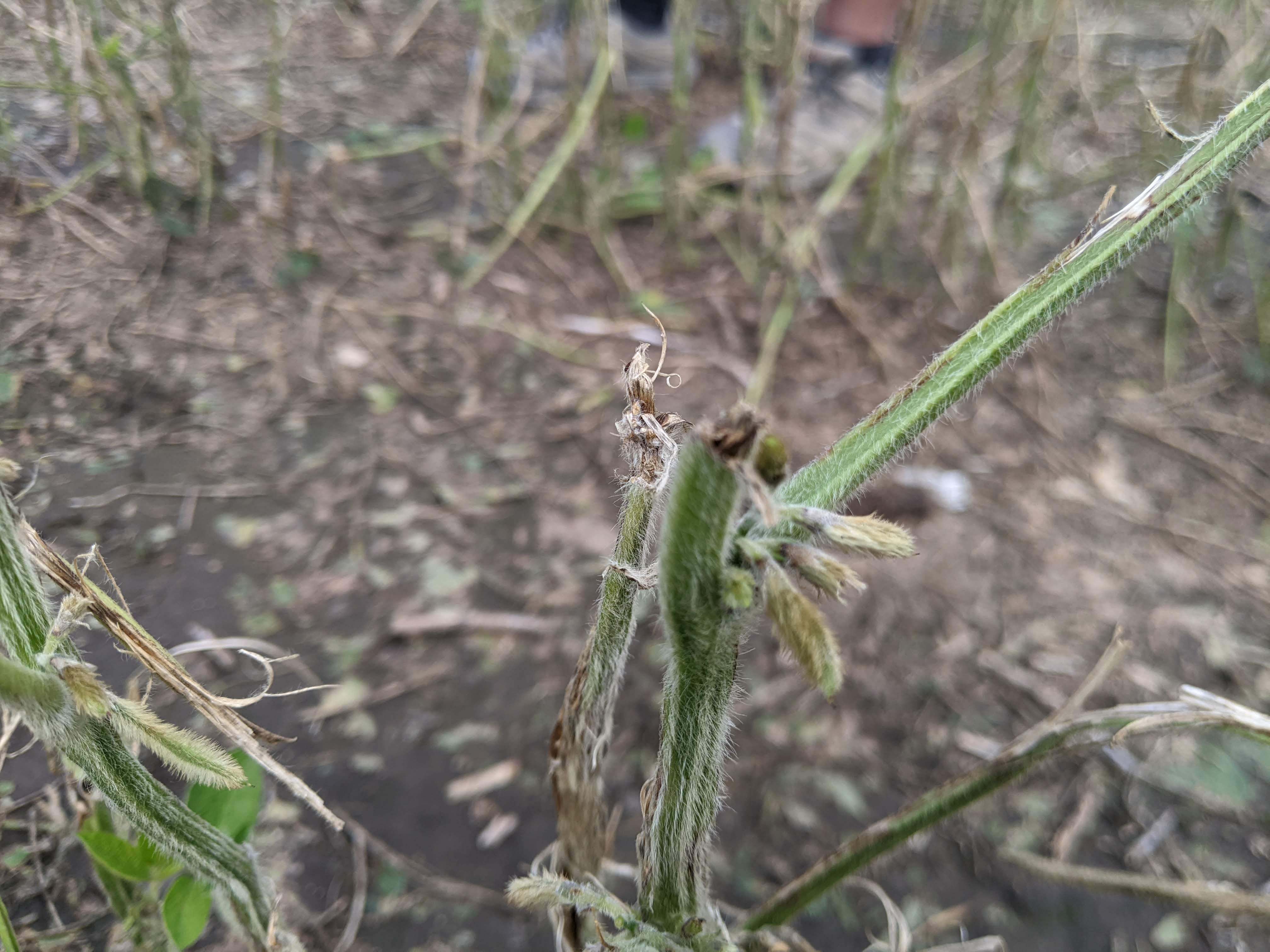
Anyone else seeing this? Hard to tell in the pic but tried to draw lines. I’m seeing the old check strips left from last year showing up as greener than the rest of the fields in these fields hailed again this year. Unsure why…more N perhaps there? Also showing soybeans with pods that survived the hail in different fields where I’m not seeing new flowers.
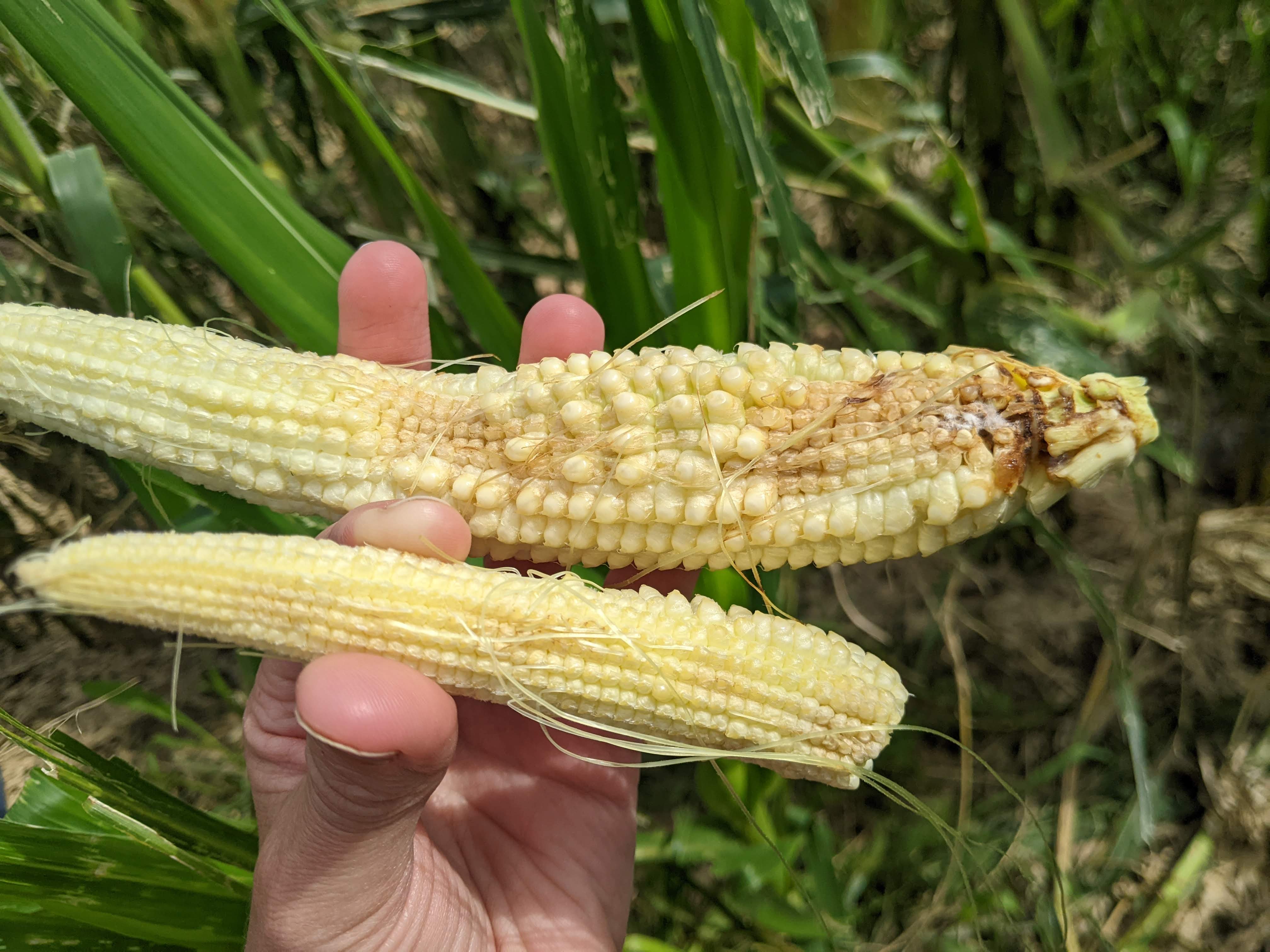
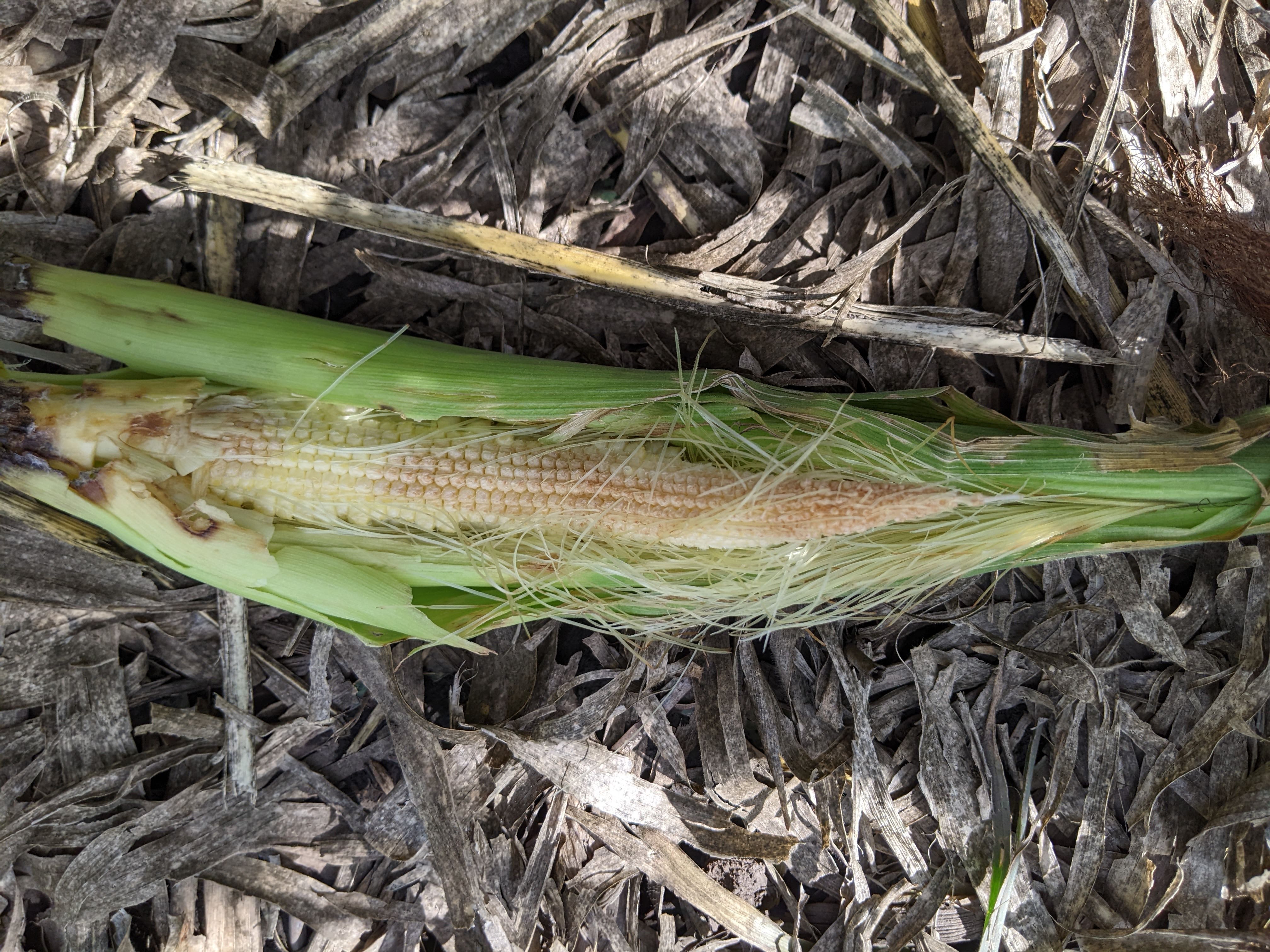
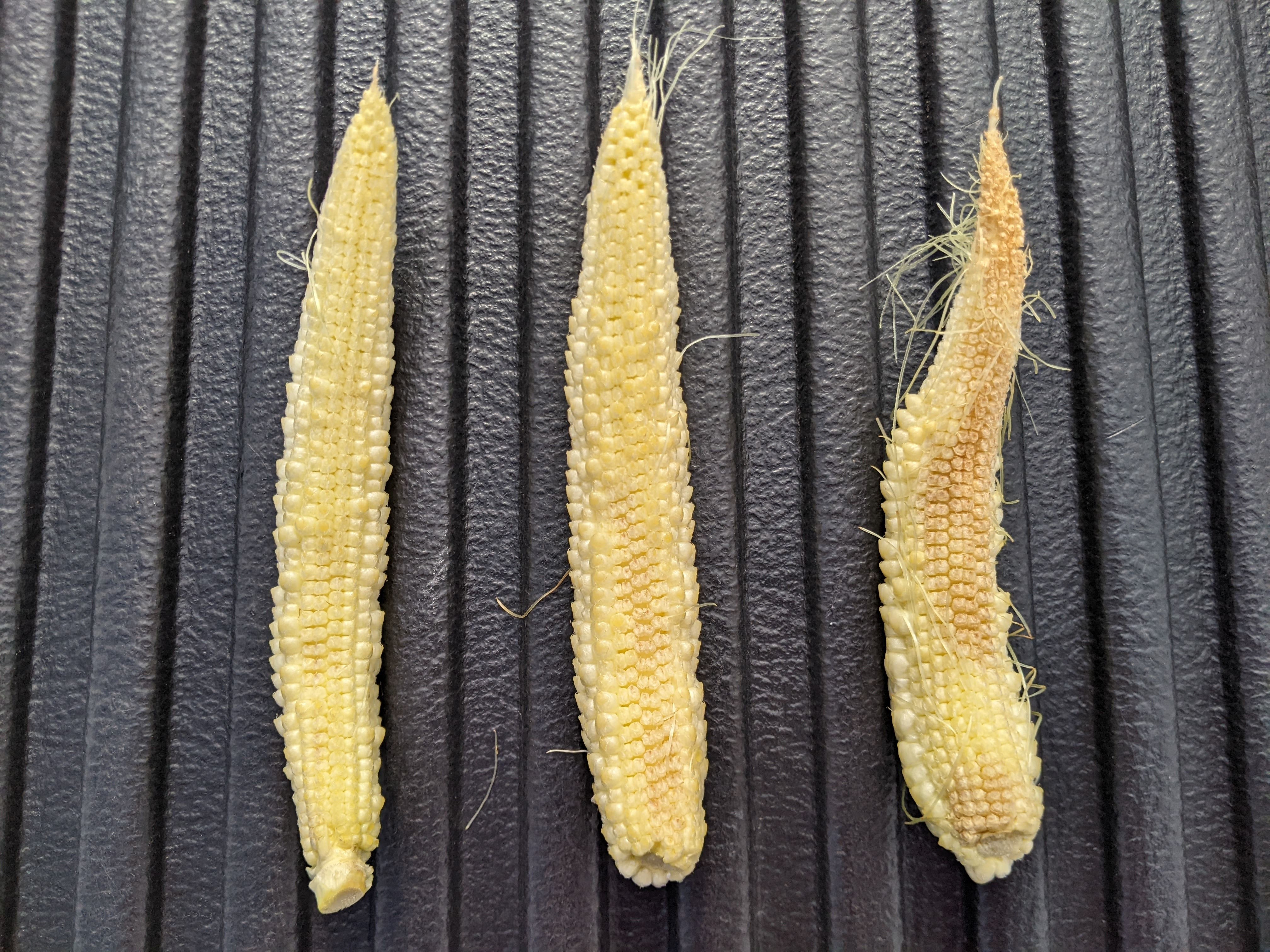
Can see pollination had occurred on some kernels showing blister development and a lot of ugly looking ears between lack of pollination and from hailstone bruising. The top ear already shows mold growth from Fusarium towards the ear base.

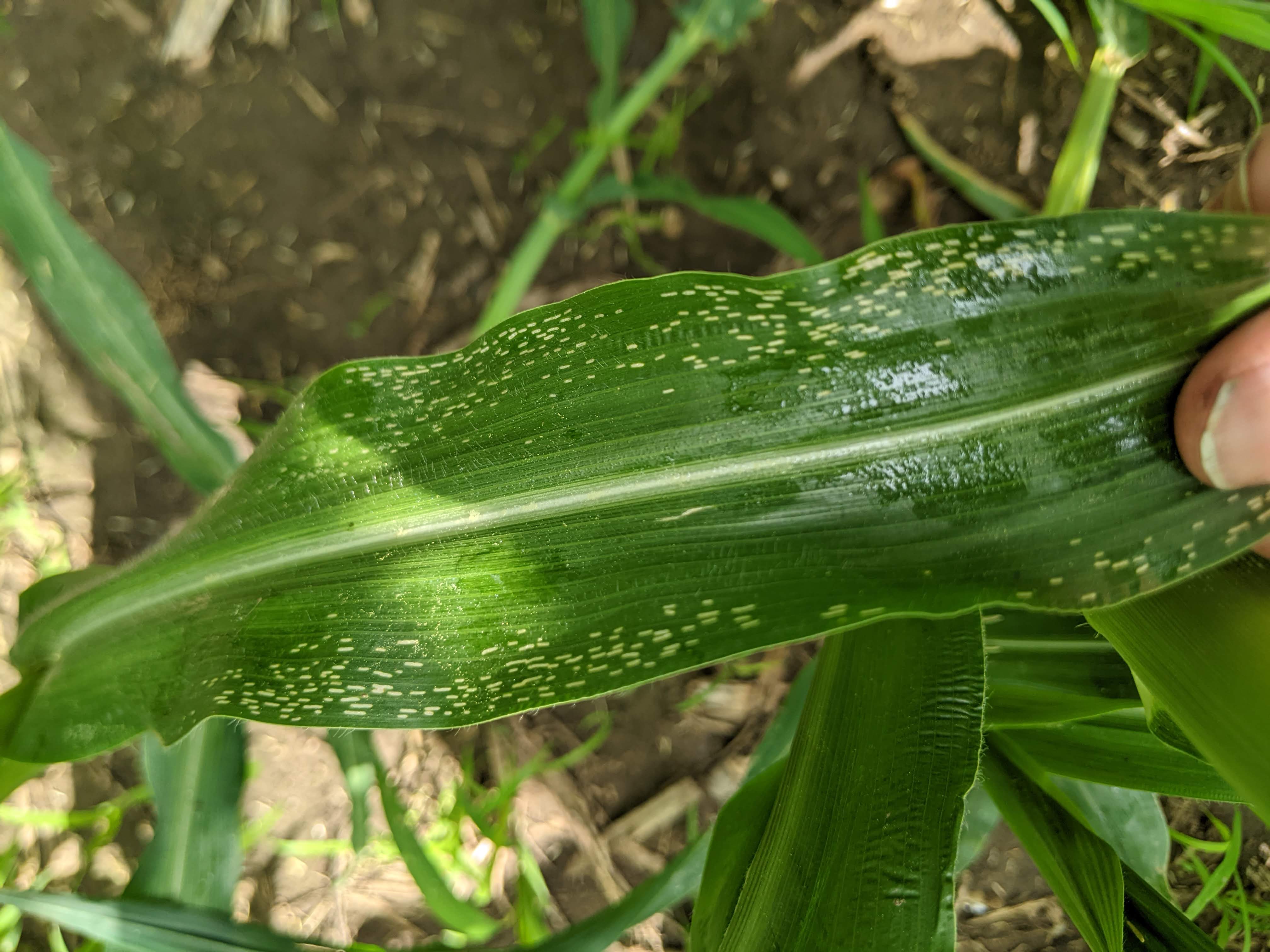
So far nothing to be concerned about regarding corn diseases in fields I’ve looked at. Bacterial leaf streak (above) fairly common in fields right now from wind/hail damage. When backlit, you will see yellow halos around lesions and it looks worse from the back-side of leaves-nothing to do or worry about. Below: Upper left is northern corn leaf blight (cigar-shaped lesions in mid-canopy of some fields); Gray leaf spot (typical rectangular lesion that I found 3 leaves above the soil and not above that); Below that is damage from corn blotch leaf miner adults when the female is making ovipositioning sites; larger lower picture is physoderma brown spot lesions (dark purple/brown spots along midribs, leaf axils and leaf sheaths and also orangish colored ‘bands’ of circular lesions on leaves since this pathogen moves with water. Notice on the top part of this leaf is a white streak that appears transparent; that is from corn blotch leaf miner larvae feeding.




 JenResources