Blog Archives
JenRees 7-17-23
(July 4th Left photo and July 10th Right photo of hail damage in Nebraska via Interactive Hail maps).
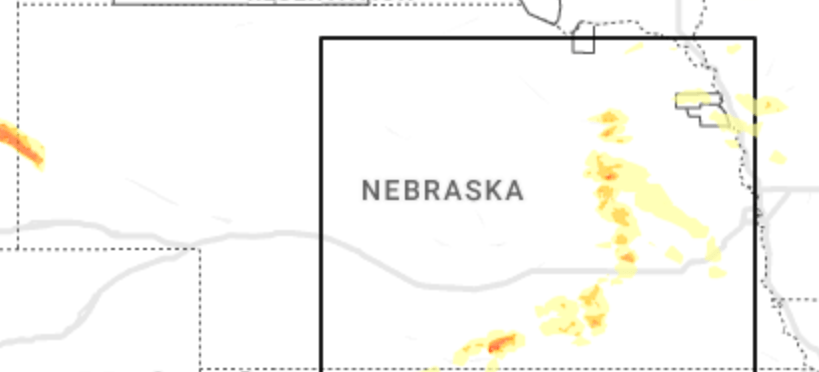

This week sharing on hail damage discussions I had with people depending on their individual field situations, previous herbicide, need for forage, all dependent upon crop insurance decisions. The July 4 and 10th hailstorms impacted an area from north of Thayer into Polk county down through Waco to east of McCool Junction and east through pockets of Utica area and Beaver Crossing/Goehner areas. As I’ve talked with people, there’s another level of mental difficulty in having to see it each day at one’s place vs. driving to fields to see it. Feel for everyone impacted, particularly those of you who were hit the past two years. Perhaps one opportunity now is growing much-needed forage as pastures are gone and many need feed for livestock.
Soybean assessments for yield are difficult when they were at R3-R4 (podding stages) prior to hail. There were new leaves/flowers the day after the storms which will continue to R5 (beginning seed). Tops were very broken on these stems so pods will most likely be low towards the ground from branching.
Soybean replant for federal crop was July 5th. Leaving fields alone is one option. For soybeans that lost most of leaves and upper stems, depending on crop insurance decisions and producer goals, have talked about splitting the rows to plant or else drilling beans (due to concerns of open canopy for weeds). Considerations include costs such as seed and seeding, fungicide seed treatment, herbicides. Increase seeding rate to at least 150,000 seeds/ac, use a fungicide seed treatment, and aim for a Group 2.0 maturity or less to reduce frost risk. A table at jenreesources.com shows yield ranges and when physiological maturity could occur via running historical York weather station data in a model with a July 20th planting date. The clock is ticking for replant soybeans to make seed prior to frost. Beans that freeze prior to maturity are often ‘lima-shaped’ beans at harvest or have an off-green color. That color will lesson some over time.
Others felt bean fields provided an opportunity for seeding forage. In that case, the field needs to be released by crop insurance. Check soybean herbicides used for any replant restrictions; you assume the risk of the cover crop seed germinating if you seed before a restriction ends.
Corn decisions are fairly clear to me. Hail also finished off some of the drought-damaged corn. Seed corn is each company’s decision by field-greensnap and bacterial top rot in fields I’ve seen. For corn that’s mostly stripped but was nearing tasseling or had ear development, watch for bruising. Past observations showed bruising from hailstones to ears during silking stage results in ear mold development. There’s nothing you can do about it but be aware of it for harvest and storage. Bruising to stalks allows for stalk rot to set in. Fungicides at some point can help with stalk strength. For fields with some tassels amidst mostly mowed off plants above the ears, watch pollination if they’re not released. Fields with tall stalks mowed just above or below the ears can be forage opportunities. Some considered grazing first and then planting a forage crop. Have also talked about flying brassicas like turnips/radishes into these taller stalk fields to allow for grazing of the stalks with the brassicas at some point. Check for any corn herbicide grazing restrictions. Also know it’s your risk to seed cover crops prior to any replant restrictions from corn herbicides used. Don’t turn cattle in empty, provide fresh water, no strip grazing, avoid grazing lowest 8″ of stalk, and consider supplementing hay/energy for any nitrate concerns.
Some planned to shred the stalks and replant with beans instead. Some planned to shred the stalks and drill in something like sorghum sudan, pearl millet, or sudangrass now. Some planned to plant a small grain like rye/oats/wheat or a combination of them in August/September time-frame depending on if they wanted the cover to winterkill (oats), wanted less growth next spring (wheat), or more growth next spring (rye). I know rye especially got a bad rap this year in the midst of drought, but again, we’re in a drought. For any of these options, you’ll need to check replant restrictions and know the risk is on you if you plant prior to it.
The following contains more info. for planting annual forages in July or August: https://go.unl.edu/ypgc. Additional considerations are cost/availability of seed, seeding, equipment, will forage be hayed/grazed/both, will you use it or do you have someone to use it, or can you grow something to sell. Some with hay have considered using these forages for their livestock and selling their hay at some point for the higher price. Haven’t heard anyone from the July 10 hailstorm talking about short season corn for silage but did talk to others from earlier hailstorms in the State regarding that. There was also greensnap to varying degrees and bent but not broken plants (where ear abnormalities can occur). Willing to listen if you want to bounce off ideas. Ultimately, please take care of yourselves! Rural Response Hotline: 1-800-464-0258.
Silage: This really depends on plant height and ability to harvest for silage. Dr. Bruce Anderson shared in a 2012 CropWatch article Using Weather Damaged Corn as Forage that, “Fermentation usually (but not always) reduces nitrate levels and risk. Yield is about one ton per acre of silage for each harvested foot of earless corn plant (not counting the tassel). Feeding value is about 70% to 80% of well-eared corn silage. Corn with some grain (less than 50 bushels) tends to produce about one ton of silage for every five bushels of grain with a feed value about 80 to 90% of regular corn silage. Harvest timing is critical with silage to ensure the correct moisture for proper fermentation. Desired moisture level for silage is about 65%. Plants with any green leaves usually are too wet to chop for silage. For proper moisture, most leaves may need to be dead before chopping. The stalk and ear hold amazingly high water concentrations. For corn with no grain, even if all leaves are dead, the whole plant (and silage) moisture can be 70% if the stalk is still green and alive.
Once plants actually die they can rapidly dry down. There are several ways to reduce moisture content. If corn has pollinated, delay silage harvest until all chances of increased biomass tonnage have passed or plants naturally dry down to appropriate moisture levels. Corn can be windrowed and allowed to partially dry before chopping. Excessively wet material can be blended with drier feeds such as ground hay, cracked grain, or dried distillers grains. However, this can take a lot of material — about 500 lb of grain or hay to reduce each ton of chopped corn with 85% moisture down to 70% moisture. Silage inoculants may improve fermentation and preservation of drought-damaged silage.”
150th York County Fair: We’re asking for copies (no originals) of fair photos through the years for a display in Ag Hall. Feel free to share a brief memory/who is in the photo on the back. Please bring your copies to the York Extension Office by July 21st if possible. Thanks!
Table 1. Yield Potential of Maturity Groups Planted on July 15 or 20, 2023 in the York, NE area via the SoySim model (thanks to Dr. Jim Specht for running this for me). One week makes a big difference between July 15 and July 20th for yields and reaching physiological maturity. Note average 30 year frost date for York at 31F is October 14th and at 28F is October 21st. I bolded the July 20th planting dates as that’s what’s realistic now.
| Maturity Group | Planting Date | Low Yield (bu/ac) | High Yield (bu/ac) | Average Yield (bu/ac) | Physiological Maturity Date |
| 1.0 | July 15 | 21 | 33 | 26 | September 24 |
| 1.5 | July 15 | 27 | 39 | 34 | October 4 |
| 2.0 | July 15 | 33 | 44 | 39 | October 13 |
| 2.5 | July 15 | 35 | 46 | 43 | October 20 |
| 3.0 | July 15 | 28 | 47 | 43 | October 27 |
| 3.5 | July 15 | 23 | 38 | 35 | October 28 |
| 1.0 | July 20 | 18 | 29 | 24 | October 2 |
| 1.5 | July 20 | 25 | 34 | 30 | October 13 |
| 2.0 | July 20 | 25 | 37 | 32 | October 21 |
| 2.5 | July 20 | 20 | 40 | 32 | October 28 |
| 3.0 | July 20 | 15 | 42 | 31 | October 29 |
| 3.5 | July 20 | 10 | 36 | 24 | November 2 |
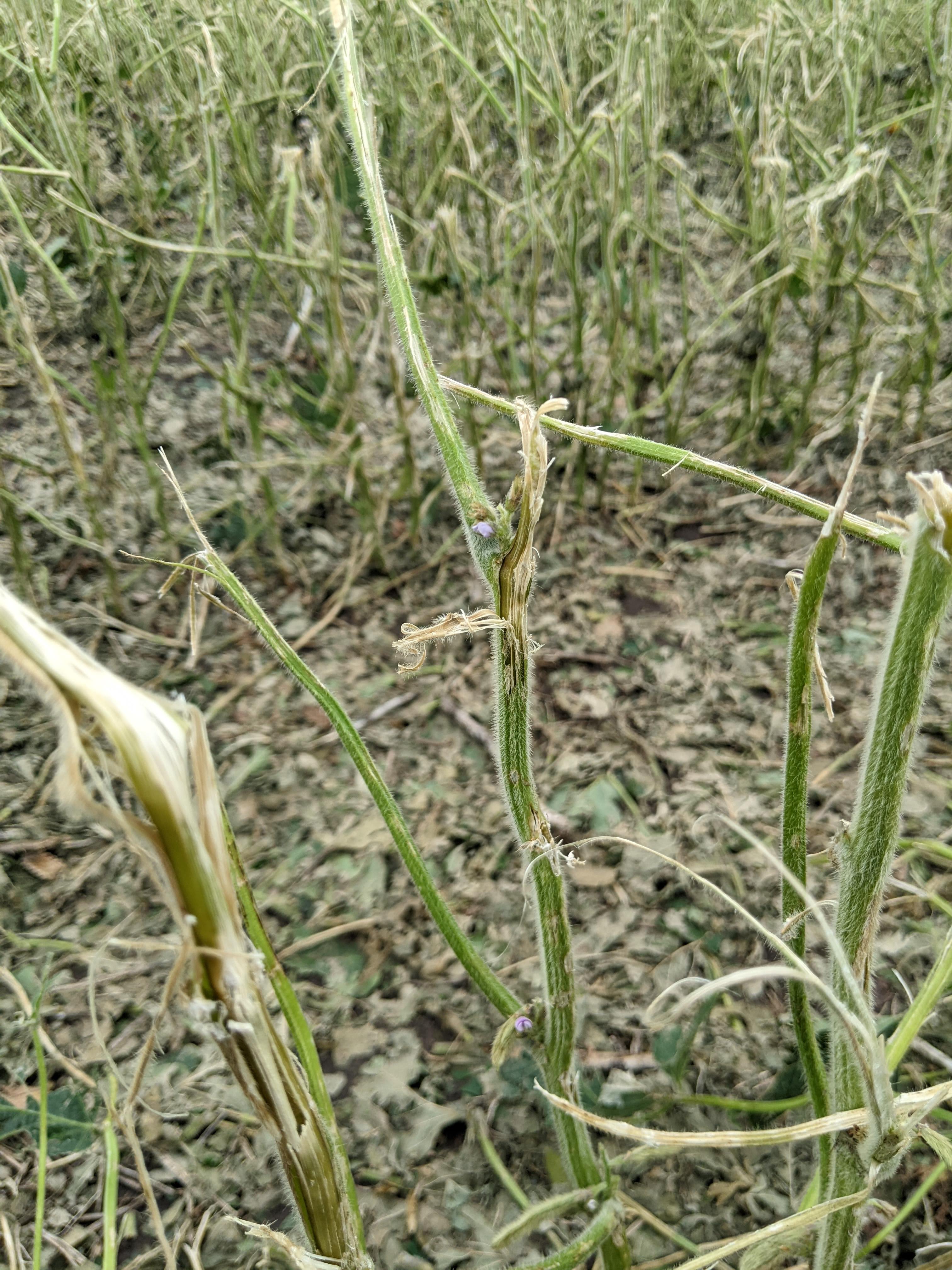
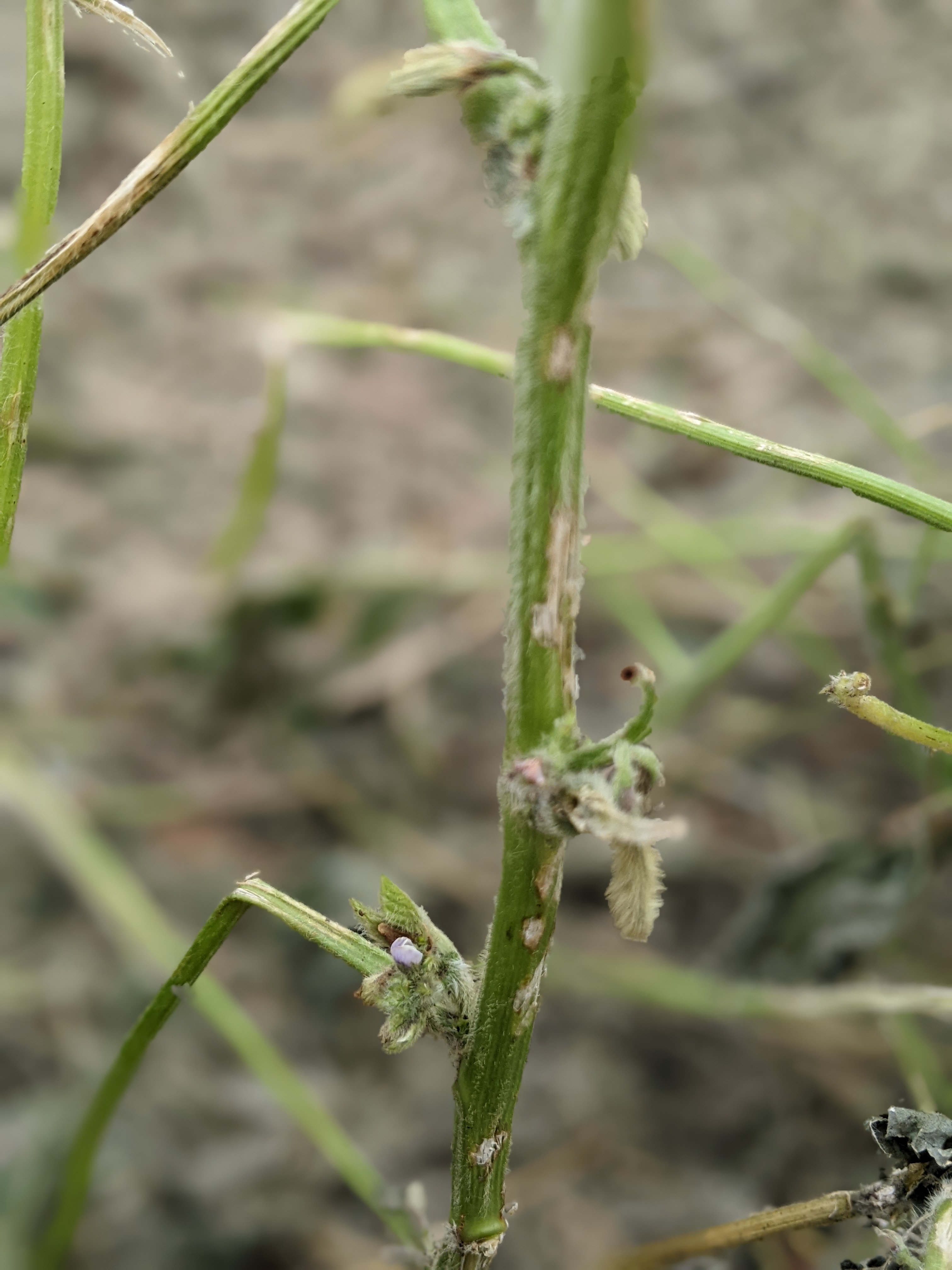
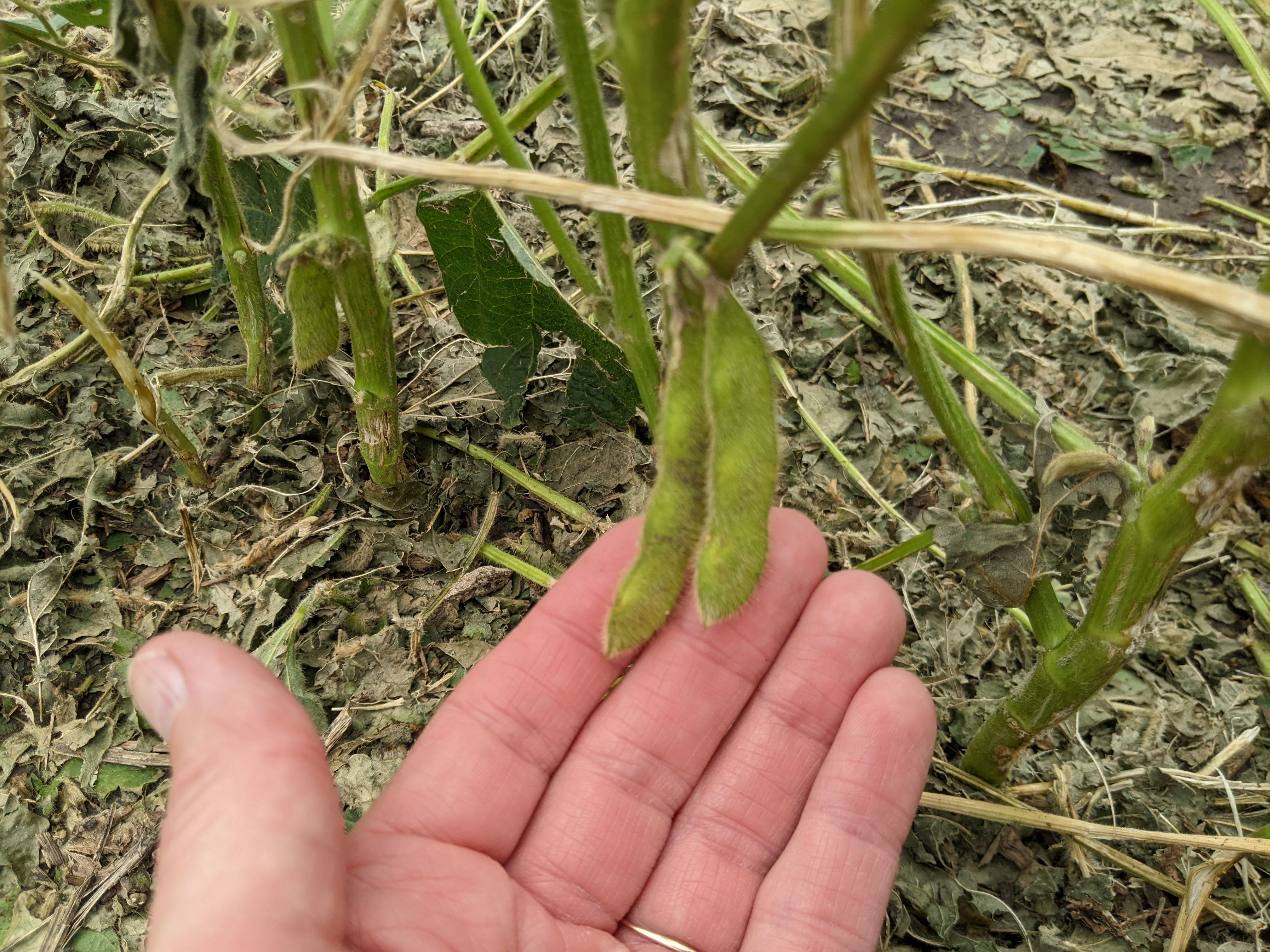
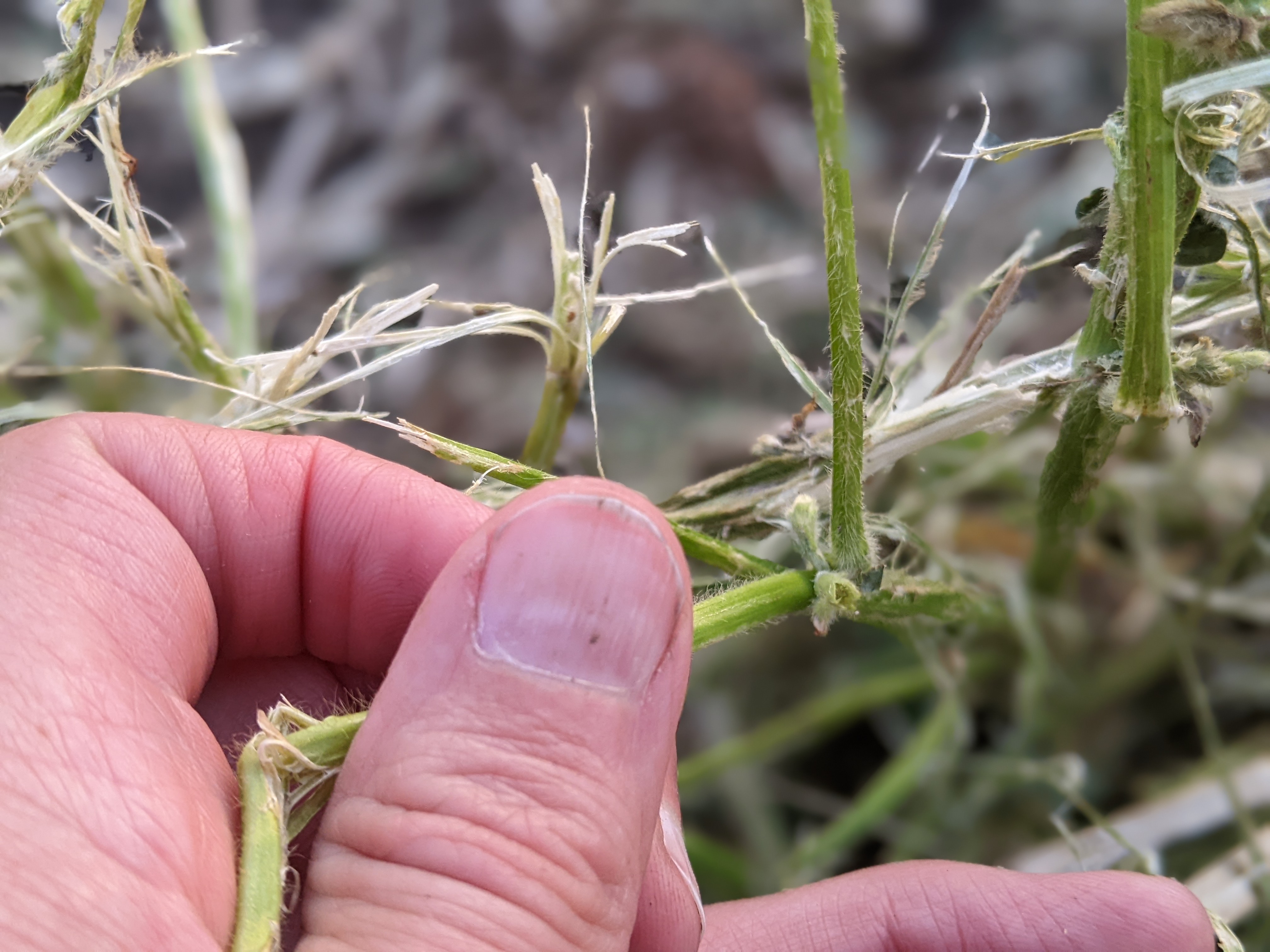
Pictures from various soybean fields showing soybean damage to tops of plants, tiny pods that survived in some axillary buds, and new regrowth. Lowest pods were at beginning seed (R5) in lowest nodes of some fields I checked which means upper parts of the plant were most likely between R3-R4 (podding stages). New growth (new leaves and flowers) was seen in axillary buds the day after hail damage. Will be tough to get much top growth with shredded stems and as many nodes have been cut off. Most new growth will most likely branch and be lower on plants that were more severely affected.



Corn plants mowed off around the ear or below in various fields. These provide opportunities for forage should one be interested in that. There are some who have talked about shredding stalks and planting beans as well as an option.


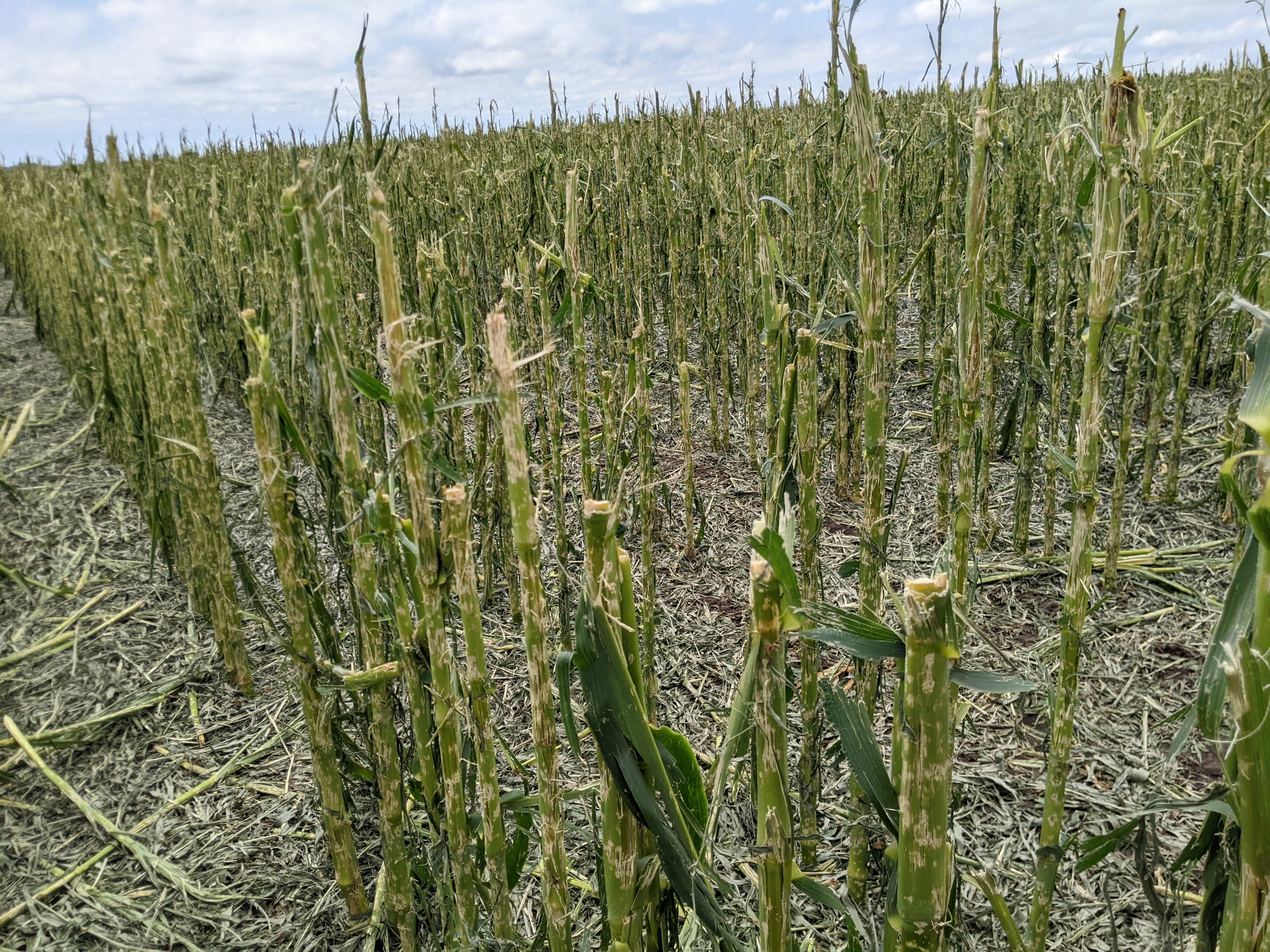
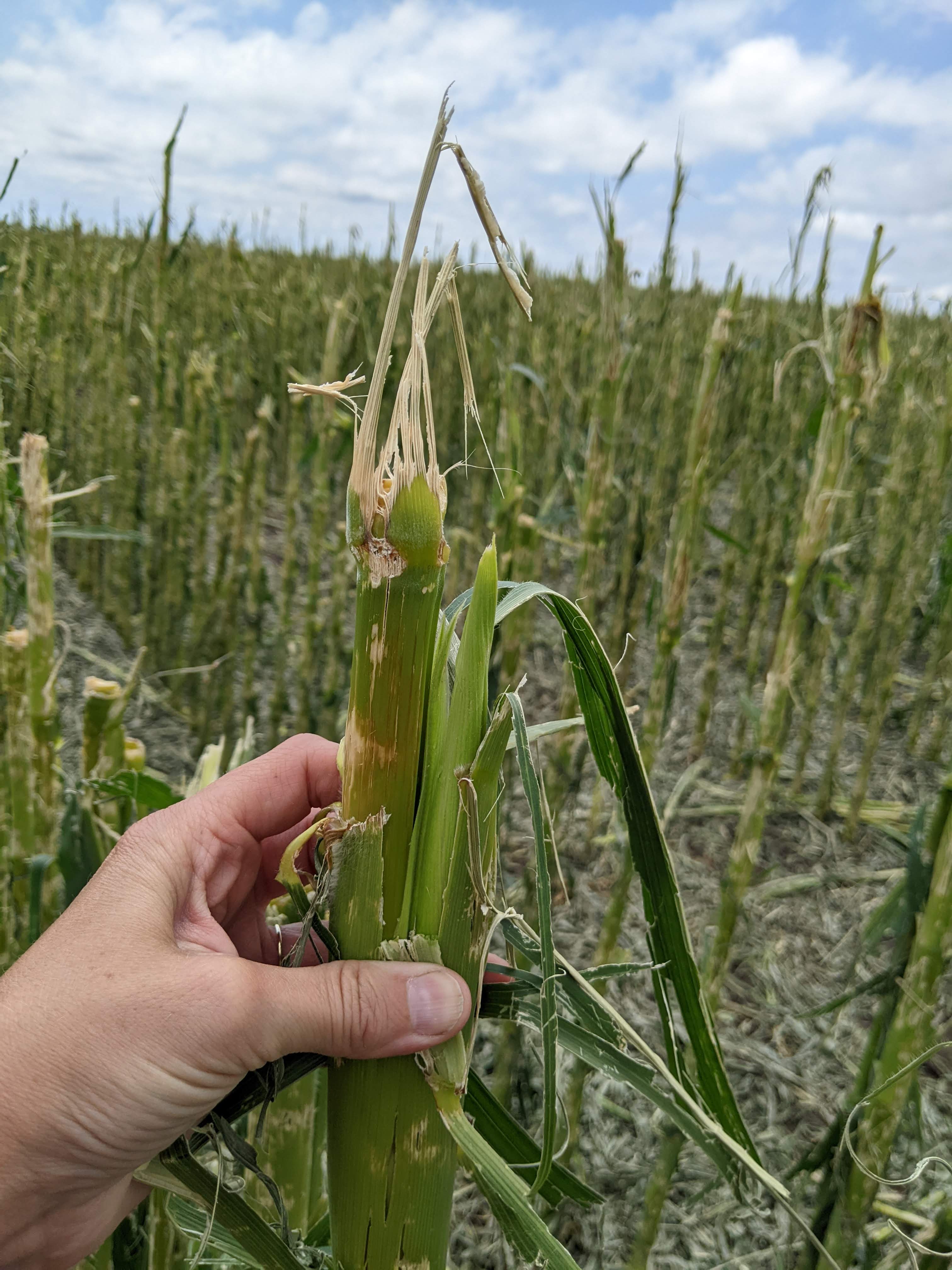
Photos from later-planted seed corn with greensnap and bacterial top rot setting in. Fields like this are hard to tell the extent of damage from the road.
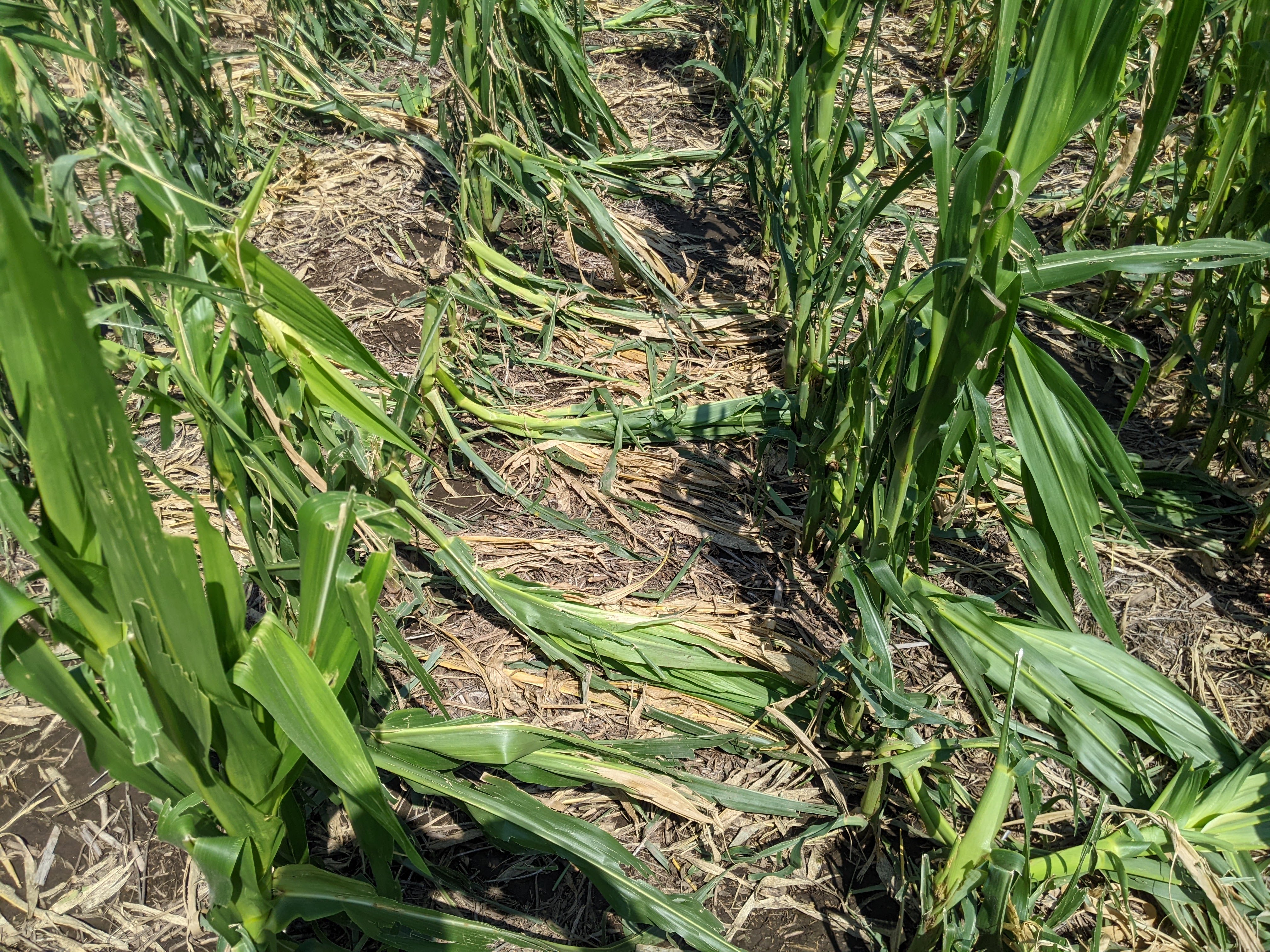

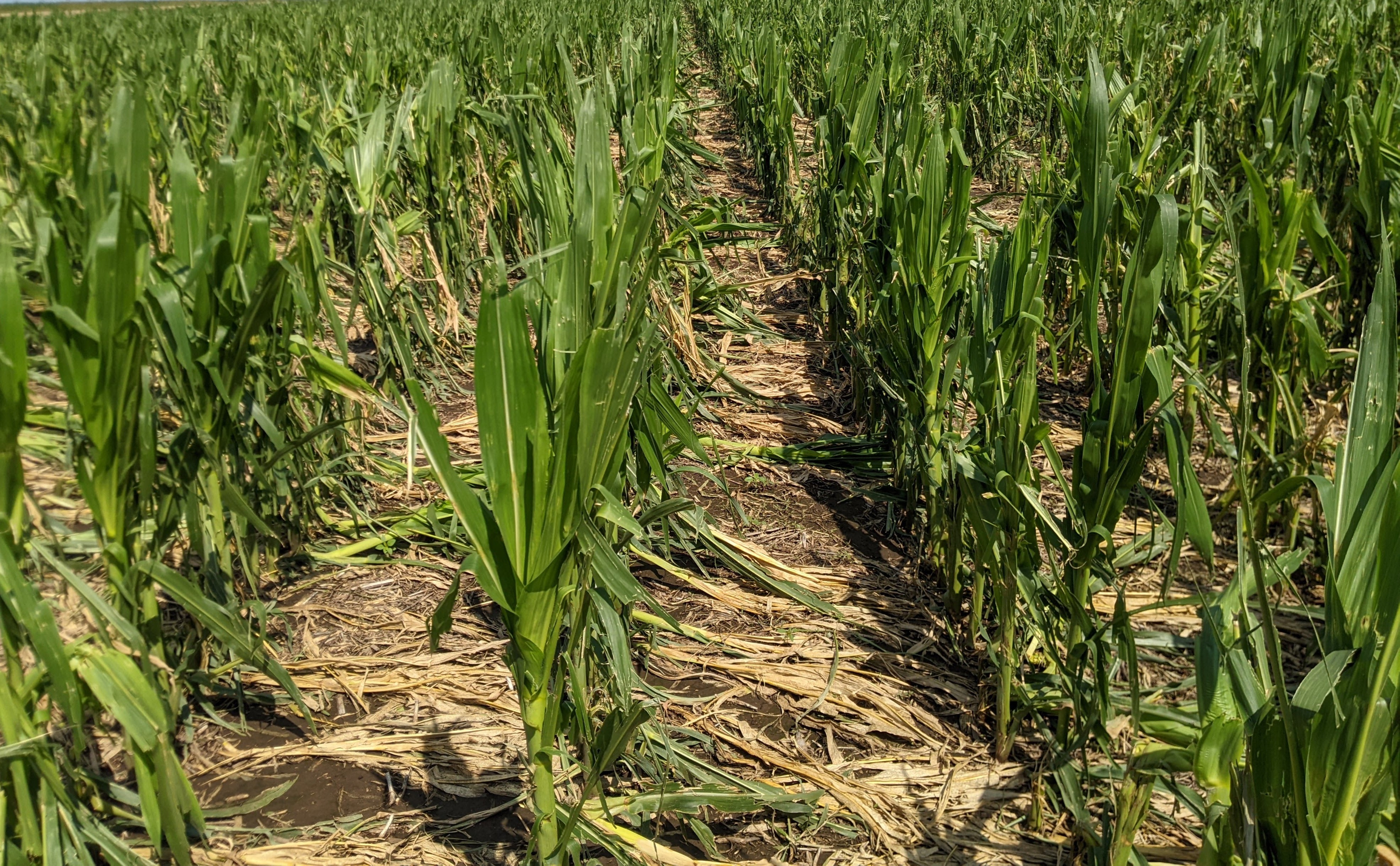
These are all fields with some amount of tassels remaining. The first picture represents all those fields with less than 25% tassels and the rest of the stalks cut off around ear height. Will need to watch pollination in those fields. Fields with damage to ears that were silking may have hailstone bruising. Ear mold is something to watch in those situations but nothing one can do about it.

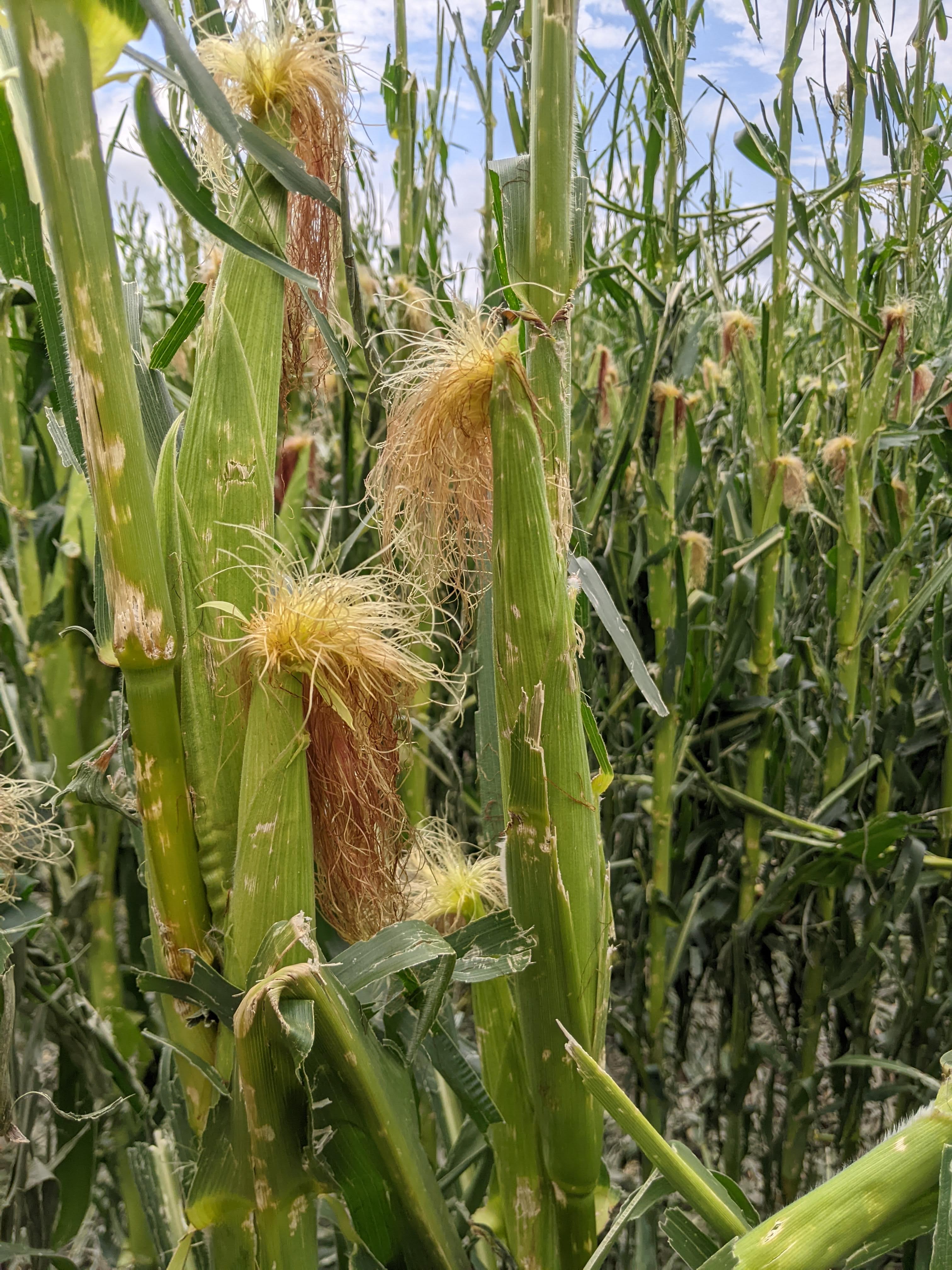
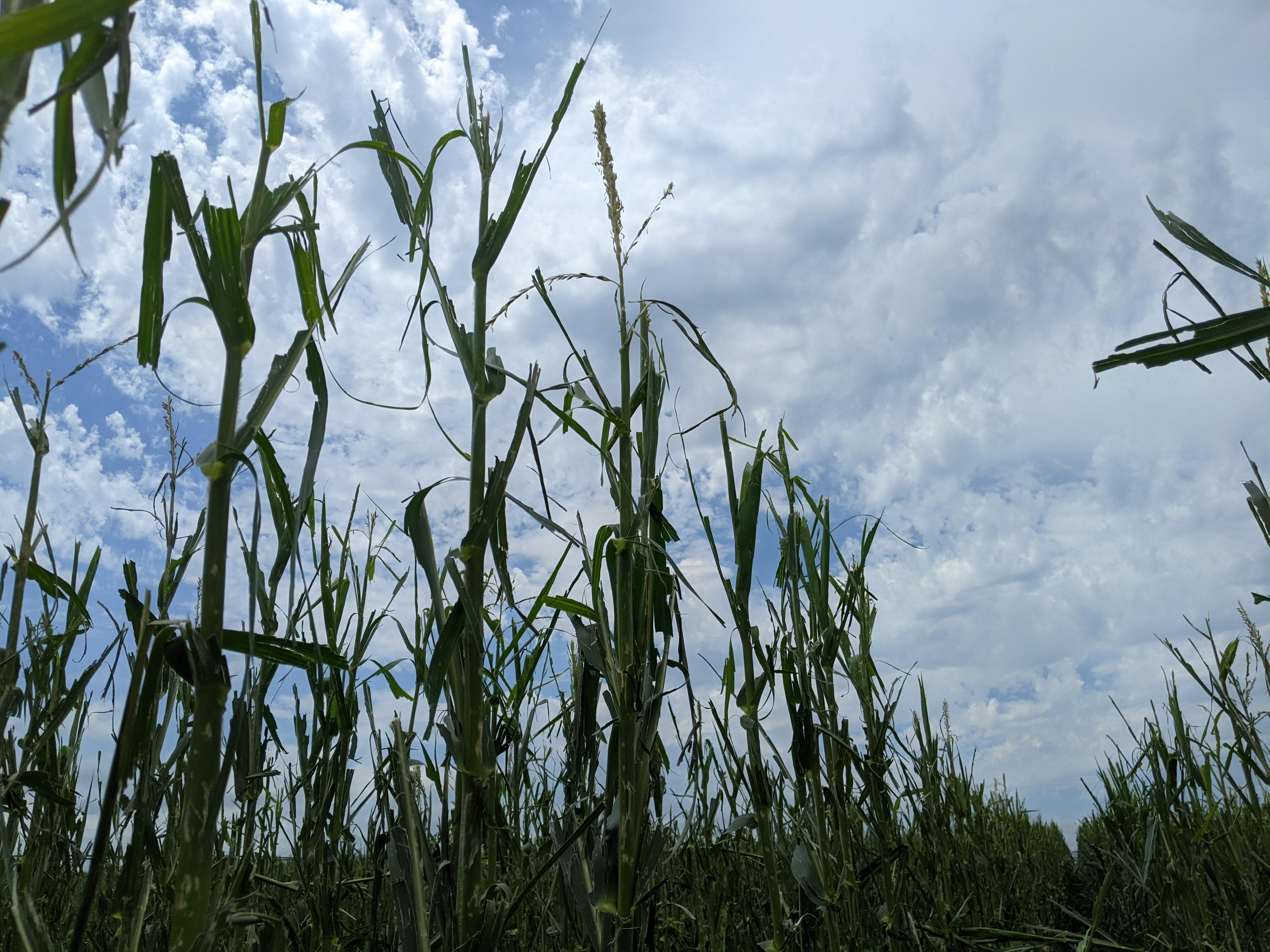

Hail Damage Update

Well, the June 14th hailstorm was something we hope to never again experience. The National Weather Service in Hastings shared a video of satellite imagery showing lack of vegetation that is incredibly insightful: https://twitter.com/NWSHastings/status/1538243511396360192. Feel for all who had damage to homes, animals, crops, buildings, bins, pivots, trees, gardens. For landscape info, check out the following from Backyard Farmer: https://www.youtube.com/watch?v=vIeA731LQg8&t=1s. Last week’s crop hailstorm webinar recording is at: https://go.unl.edu/pe9q.
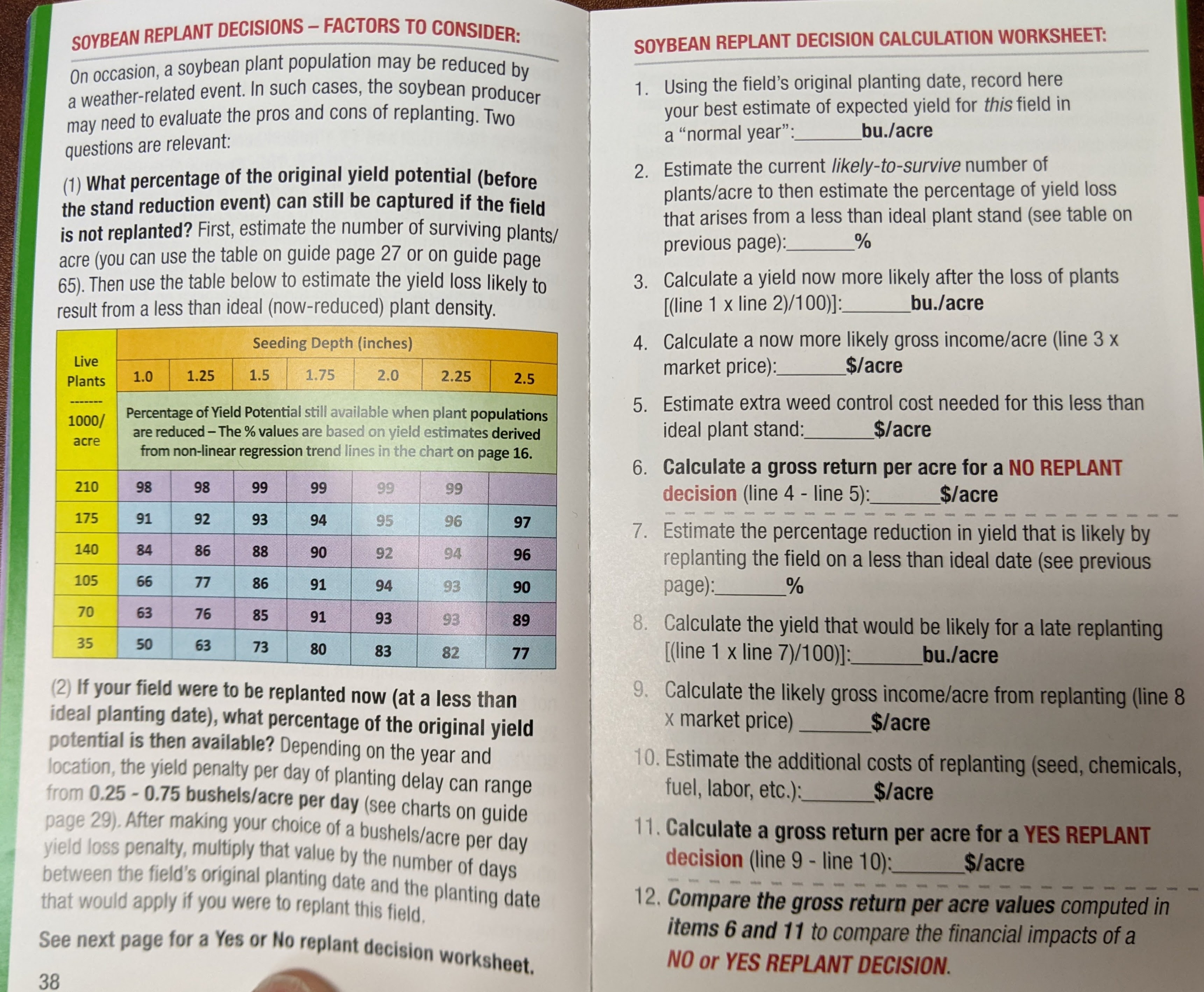
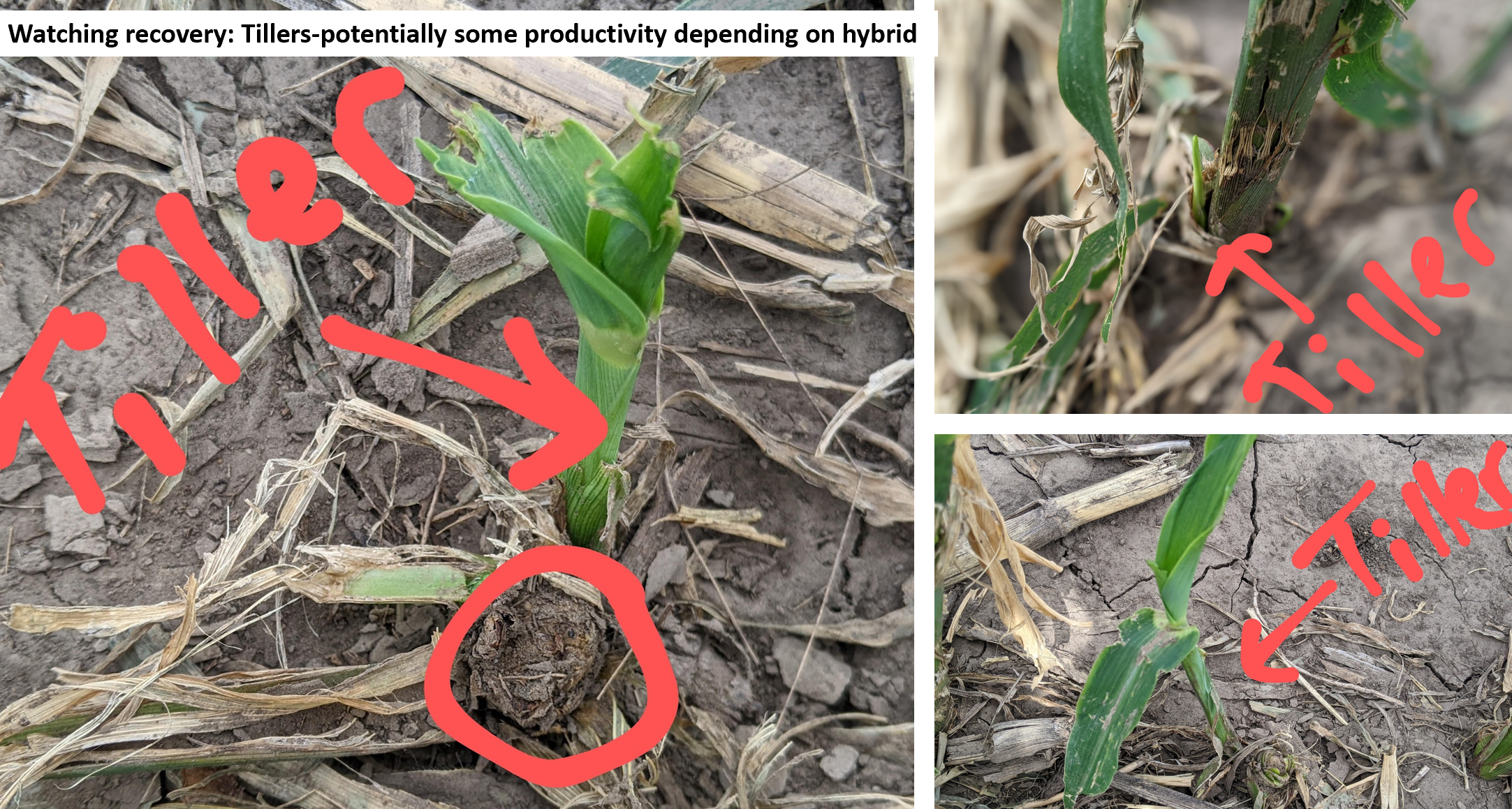
I had hoped to get a blog post out much sooner. Thank you to all who called and I truly hope something from these field visits and calls has helped. I realize a lot of replant is currently occurring and grateful for the weather for that. While replanting stinks, perhaps it’s providing a small bit of healing for the eternal optimists that so many of us in ag are? Several asked how people are destroying the old corn crop. Depending on tillage system, they have used shredding, root slicers, tillage all followed by residue removers during planting (because I’m seeing tillers growing from old stumps). Others plan to plant between the rows and then cultivate the old row out. Can chemically terminate with gramoxone. Some are using clethodim if going to soybean.
Time right now is critical with replant decision making. Some thoughts for those who need to wait for crop insurance adjusters and fields to dry:
- Start upright pivots, check control boxes, sprinklers, plastic lines to endguns, etc. Availability of parts may influence corn seeding rates. Document all damages for insurance.
- For potential replant situations where you don’t wish to plant corn due to loss of bins or inability to dry corn, depending on what you’re interested in, consider hand planting some soybean, milo, or cover crop seed into your corn fields at different depths. This will provide an idea of survival depending on corn herbicide used. Ultimately, make a plan A and B for your situation.
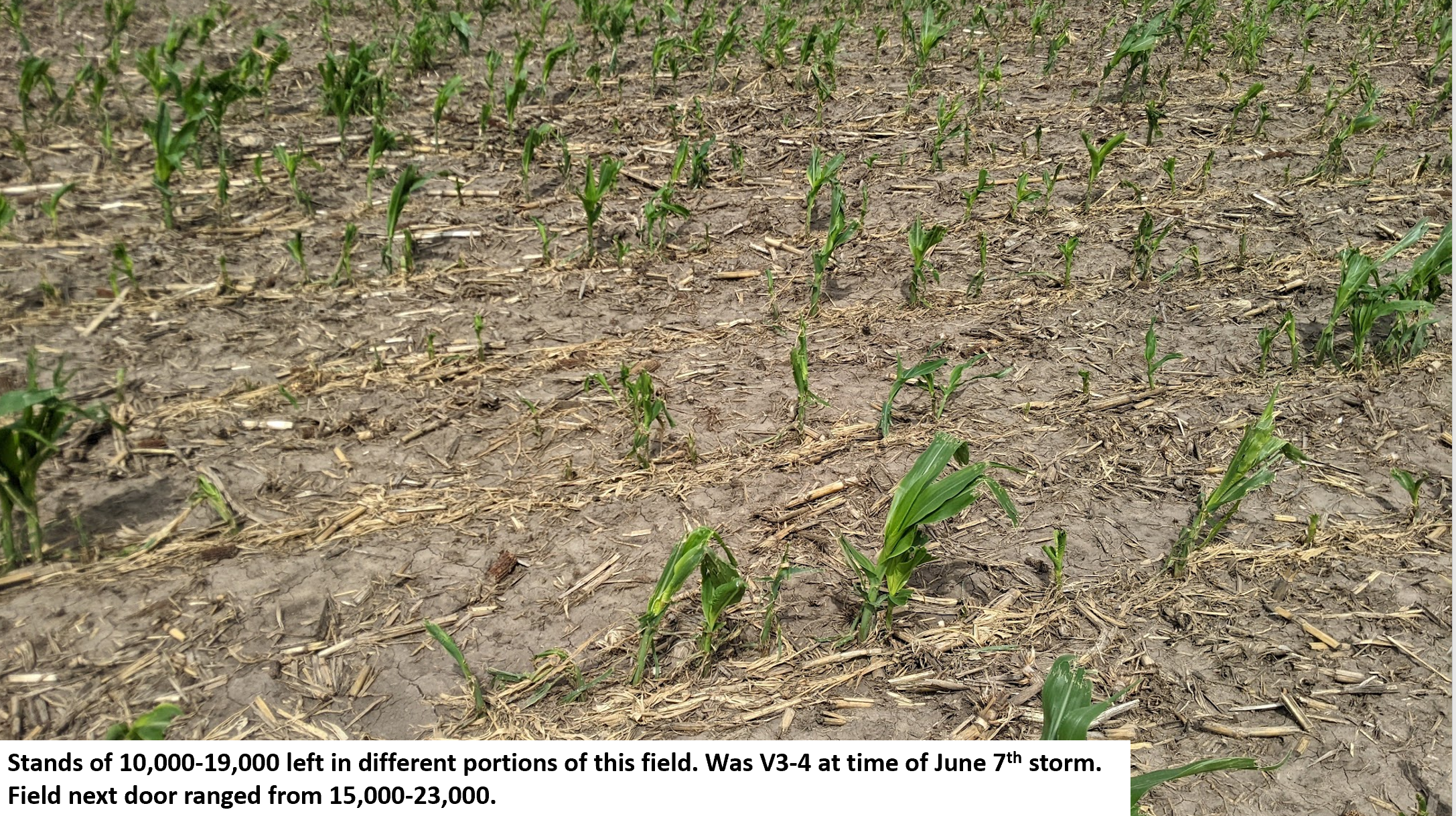
Corn: Hail damage recovery has varied. From June 7th storm, there was unevenness in plants that recovered. Saw bacterial top rot setting into plants even in several V3-V4 damaged fields. Plants may look better from the road but inside the field tells the story. June 14th storms: plants are severely bruised. Seeing hail stones causing deep bruising and rot both above and below the growing point. Often plants snap when barely touched. Fields less impacted are gaining new growth and will look better next week. Keep watching the fields with small plants that were pummeled into the ground and seed fields. My blog at jenreesources.com has recovery photos and a chart to help with replant decisions and potential yield due to reduced stands. Area Pioneer agronomists also made a video suggesting for every 1000 ‘healthier’ plants, can consider 10 bu/ac …so 15,000 plants could result in around 150 bu/ac: https://www.youtube.com/watch?v=viOwFqi3FDU.
Soybean: Normally, soybean is so resilient with all the growing points. The xylem and phloem in beans are on the outside of the stem, so the hail pummeling the stems and tops impacted that transport and many plants just turned white/gray and died. For replanting beans, would recommend using a fungicide seed treatment; have seen phytophthora root rot in replant beans in the past. You don’t need other seed treatments. Seeding rates: If have surviving plants, can slot some in at a reduced rate between rows or angle depending on row spacing. If you don’t, go with original rate or increase 10%. Regarding maturity, we at several universities say to use Group 2’s at this date. Indeterminate beans continue to produce nodes, leaves, flowers till R5 regardless of maturity group and beans are daylength sensitive.
I truly wish everyone the best with decisions. This amount of loss takes a huge toll whether or not we are honest in admitting that to ourselves. I hear and sense the stress with each conversation. Each situation is unique in damages received, crop insurance taken, amount of grain forward contracted, and other life things occurring. Some are walking outside to devastation each day. Some had multiple events occur this year. You may be in crisis mode right now just trying to patch things up and get new crops planted. I don’t know what is helpful for you. What I know for me is that my faith in God, my belief that He is in control, and His continued faithfulness to me is what has sustained me. Tears can be healing. Just would encourage you to also find a healthy way to take care of yourself such as talking to a trusted friend, prayer, journaling, exercise, or participating in a hobby. This is a great resource on taking time to listen and talk: https://go.unl.edu/3daw.
*End of column for newspapers.


This chart shows the relative corn yield potential compared to the original stand if the stand is reduced based on planting date. It provides an idea anyway assuming no additional storms or other issues.




Different soybean fields. I keep failing to take pictures of soybeans. Mostly the fields look like the first pic and are clear-cut that they had too much stem damage and are dead. Or, they are obtaining new growth and look much better. Some are just super slow to get much growth, though, and for those fields, some growers are slotting some in from the standpoint of weed control. Those with lighter damage are seeing rapid new growth where petioles meet the stems (taller pic).

Showing these charts below again if helpful. We’d recommend 100 day or less maturities at this point.
| York Ne Data Avg. 28F frost Oct. 21 | Relative Maturity | 80 | 85 | 90 | 95 | 100 | 105 | 110 |
| Planting Date | GDD to R6 | 1917 | 2038 | 2159 | 2280 | 2401 | 2521 | 2642 |
| June 15 | Sept. 5 | Sept. 11 | Sept. 19 | Sept. 28 | Oct. 8 | Oct. 23*** | *** | |
| June 20 | Sept. 11 | Sept. 18 | Sept. 27 | Oct. 7 | Oct. 22*** | *** | *** | |
| June 25 | Sept. 18 | Sept. 27 | Oct. 7 | Oct. 21 | *** | *** | *** | |
| June 30 | Sept. 27 | Oct. 7 | Oct. 21 | *** | *** | *** | *** | |
| ***Date is beyond average 28F frost event of Oct. 21 |
***indicates the date is beyond the average 28F average first frost of October 21.
| Clay Center, Ne Data Avg. 28F frost Oct. 18 | Relative Maturity | 80 | 85 | 90 | 95 | 100 | 105 | 110 |
| Planting Date | GDD to R6 | 1917 | 2038 | 2159 | 2280 | 2401 | 2521 | 2642 |
| June 15 | Sept. 9 | Sept. 16 | Sept. 25 | Oct. 5 | Oct. 20*** | *** | *** | |
| June 20 | Sept. 15 | Sept. 24 | Oct. 4 | Oct. 17 | *** | *** | *** | |
| June 25 | Sept. 23 | Oct. 3 | Oct. 16 | *** | *** | *** | *** | |
| June 30 | Oct. 2 | Oct. 15 | *** | *** | *** | *** | *** | |
| ***Date is beyond average 28F frost event of Oct. 18 |
***indicates the date is beyond the average 28F average first frost of October 18.


 JenResources