Blog Archives
JenREES 6/25/23
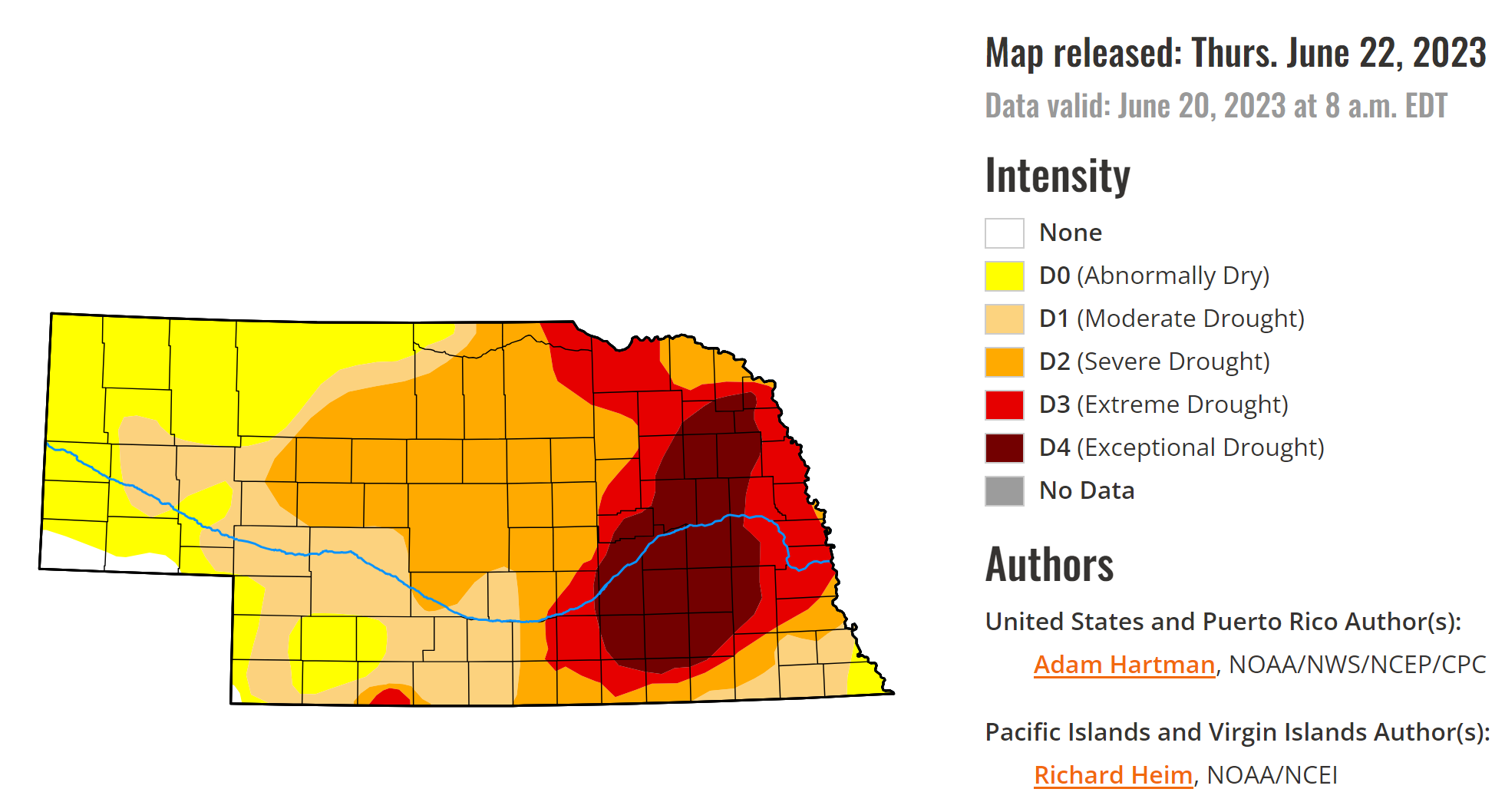
Crop Updates: Irrigated crops are moving along with corn approaching the late vegetative stages and many beans in beginning to full flowering. Spidermites in stressed fields; no point doing anything. Small grasshoppers and Japanese beetle adults starting to emerge…sorry everyone, I groaned too!
Soy Problems: Past 10 days received calls and texts from a large area regarding soybean often having yellowing to some extent, growing slowly, some with stacked internodes and some dying. Chem may not have broken down with the dry conditions from last year’s corn herbicides. Most situations had some type of Group 27 chemistry and yellowing of newer trifoliates and buds could be seen. In irrigated fields, the soybeans are growing out of it with water and time. In non-irrigated fields, the drought isn’t helping with plant metabolism and breakdown of herbicide.
Also, a number of reports of soybean plants dying. Work through each situation to determine if herbicide carryover, drought, seedling disease, other issues, or a combination of factors are the issue. Many times I’m seeing a combination of factors. Seeing some plants in non-irrigated situations have a red lesion on the stem with rotted roots, which can be an indication of Rhizoctonia root rot (disease that occurs with stress, particularly herbicide injury and drought). Some soybeans dying in irrigated situations were replanted beans that didn’t have a seed treatment fungicide on them and they have characteristic phytophthora root rot (dark lesion from soil line up and rotted roots), sometimes also in combination with herbicide carryover symptoms. Many have mentioned beans are short and not growing quickly. Dry conditions and often also Group 15 products can result in slowed growth as the beans are trying to metabolize those products. Most are aware of the heart-shape/club shape as normal to leaves of beans from metabolizing Group 15 products.
Crop Insurance Question: Several asked about gravity irrigated soybeans that are too small to ridge in gravity irrigated fields and pivot corners if they could just change the designation to non-irrigated beans. Another consideration, some wells are sucking air and they’re concerned about keeping pivots going. In talking with someone from crop insurance, he said that designations are based on whatever the intent at planting was and that can’t be changed. However, they are receiving the same questions and being unable to ridge beans can be an insurable cause of loss, so please talk with your crop insurance agent about your specific situation.
Irrigating Beans: Glad to see moisture has been pushed into the third foot in more corn fields. Typically we’d avoid irrigating soybean at flowering to avoid disease onset such as sudden death syndrome and white mold, but this year depends on your current soil moisture status, if it’s canopied or not (less favorable for disease if it isn’t yet), and the disease history of the particular field. If there’s no subsoil in bean fields with minimal canopy cover, I’ve been saying to irrigate deeply and less frequently during soybean flowering.
ET (Evaporation from the soil surface and Transpiration of water through the leaves) has been higher in our area this year. Factors that contribute to ET include humidity, temperature, wind, cloud cover. We’ve had low humidity (unusual for us-thus lack of rainfall), intense sun with minimal cloud cover, and a few days with some wind. Knowing ET helps one understand how the crop uses water to better schedule irrigations. UBBNRD sends out ET info. from the York 2W mesonet station; please let Terry Julesgard know if you’d like to receive it. Otherwise ET info. at: https://cropwatch.unl.edu/gdd-etdata.
Forage insurance webinar on June 29th at Noon. Info. at: https://go.unl.edu/k6s7.
Weed Science Field Day June 28th at South Central Ag Lab near Clay Center where a number of corn and soybean herbicide programs are showcased. Herbicide programs with planting green, interseeding cover crops also shown. 9 a.m.-1 p.m. (Reg. at 8:30 a.m.). RSVP: https://agronomy.unl.edu/fieldday
Graze Master Event June 28-29th in Seward County featuring tours of area producers’ operations and many speakers. Info. and RSVP: https://www.grazemastergroup.com/events.
Tomato leaves curling: Lots of reasons. Lower leaves curling often due to heat/water stress. Upper leaves curling could be virus, insects, or herbicide damage. Look at all plants in the garden. If only tomato plants impacted, and only certain ones with upper leaves, most likely a virus-remove those plants. If upper leaves curling due to growth regulator (2,4-D/dicamba) injury, I say remove any current fruit on the plants and just keep watering to dilute it in the plant. If new growth in several weeks looks normal, you can eat new fruit. More info. from Backyard Farmer video: https://youtu.be/gsaWvzghaYQ.
Please take care of yourselves! Recent webinar recording about stress: https://go.unl.edu/5oje Nebraska Rural Response Hotline: 1-800-464-0258.


JenREES 7/4/21

Crops really look tremendous overall and got a report of some first tassels by July 4th as well! It’s been great to see people attending field days again the past few weeks and really appreciated the learning, sharing, discussion, and just watching people catch up with each other at them. I had mentioned before how the lack of freeze/thaw was impeding roots of crops, particularly soybeans in no-till fields. Irrigating and rain has helped them get some growth. What I hadn’t mentioned in my articles was being called to soybean fields with HPPD (Group 27) carryover from corn herbicides in 2020. We had a dry fall but had rain in March and May, so I wasn’t sure how to explain the carryover. One thing I learned last week from a discussion at the palmer amaranth field day was that the lack of freeze/thaw also impacts the ability of herbicides to breakdown. So, I appreciated learning that and am sharing if that helps anyone else as well.
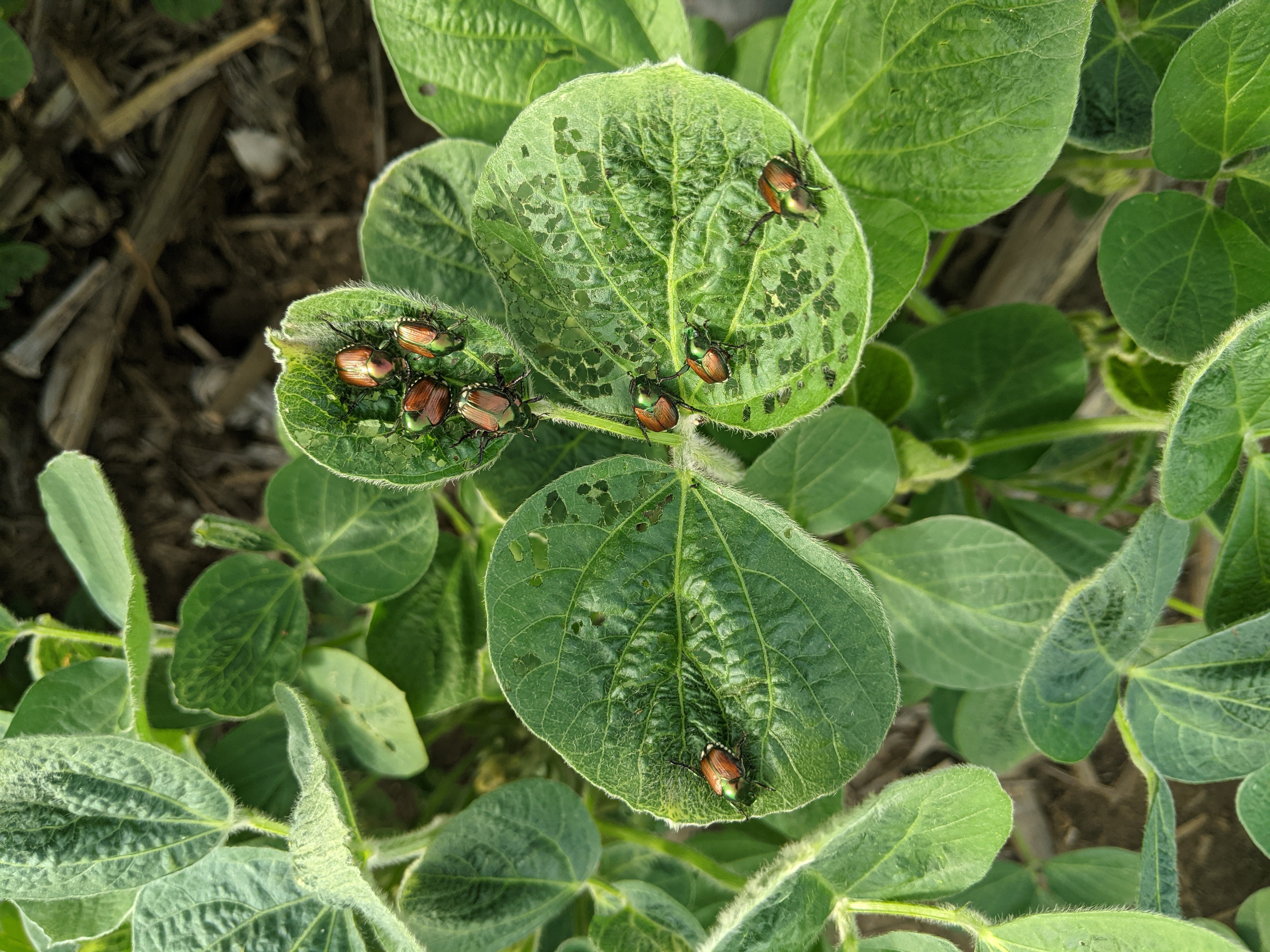
Japanese beetles are also heavy in pockets of the area. I will share more specifics next week. For those who are asking, the threshold for soybean defoliation in reproductive stages is 20%. Tom Hunt, UNL entomologist shared that pyrethroids in general are effective. However, if there’s potential for flaring spidermites due to dry conditions, bifenthrin is a consideration as it has activity for spidermites (particularly when considering soybeans). For homeowners, beetles can be dislodged off of plants right now in evening hours by knocking them into buckets of dishsoap water. Do not use pheromone traps as they will actually attract beetles to your yard!
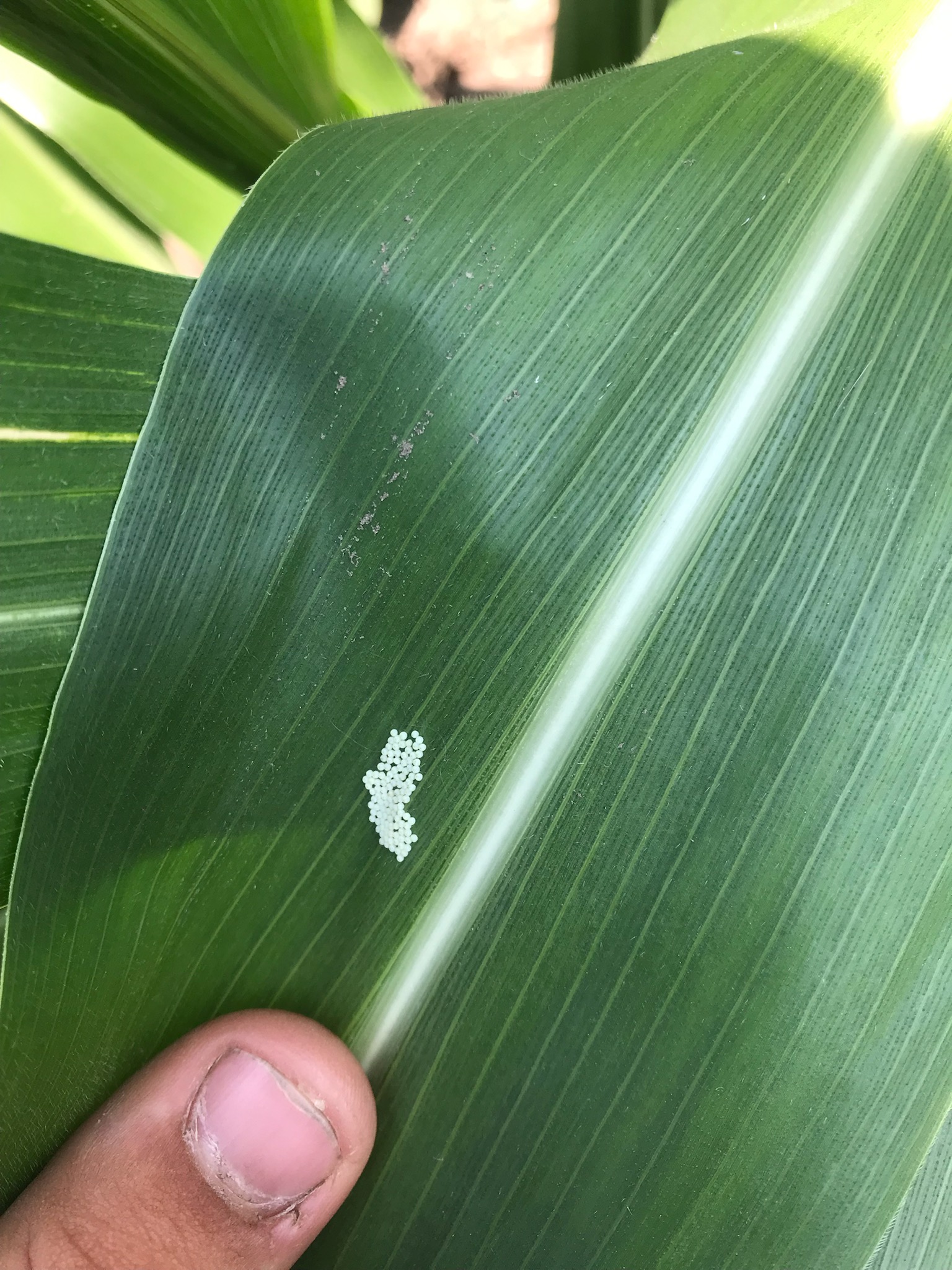
Western Bean Cutworm: With crops nearing tassel, it’s time to be scouting for western bean cutworm moths and egg masses. There was a CropWatch article posted this week at: https://go.unl.edu/9v4a. It was predicting 5% moth flight for York on June 30th, Harvard July 2nd, and Central City July 3. I received a text from a crop consultant saying he found the first eggmass in the Central City area July 2, so that was pretty well on target! Twenty-five percent of WBC flight occurs when 2,577 degree-days Fahrenheit are reached. Entomologists recommend field scouting should occur at this point. For 25% moth flight, it’s predicting York on July 6th, Harvard area July 8th, and Central City July 9th, so we should start watching fields for sure this week. Look for egg masses laid on the upper surfaces of corn leaves, typically on the top 1/3 of the plant.
Chiggers: I should’ve written about this last week as chigger bites tend to peak around the 4th of July with more families outdoors. Chiggers (also known as redbugs or jiggers) are the immature stages of red harvest mites. They tend to hang out in moist, tall grassy/weedy areas such as along streams, road-side ditches, forested areas, lawns. But they can also hang out in moist and dry lawns with a lot of trees too. They bite humans and other animals including pets. Eggs are laid on clusters on plants and the larvae hatch and wait for their host to come along. They latch onto clothing, shoes, and fur and can hang on while working their way to the skin (often to an area where clothing is tighter like around socks, undergarments, back of knees and under armpits). They actually don’t burrow into human flesh. They only survive on a warm-blooded host for around 3 days before falling off to molt for the next stage in life cycle which doesn’t feed on humans.
They have needle-like mouthparts that allow them to pierce the skin then inject saliva that dissolves body cells in the area to aid them in feeding. Thus, they don’t feed on blood but liquefied cells. The feeding creates an allergic reaction in which many see swelling, intense itching, and small, clustered, red bumps (which can become larger welts in some). To prevent chigger bites, avoid sitting or lying on the ground when picnicking or working outdoors. Wear loose-fitting clothing and apply a repellent like DEET to shoes, socks, and pants before going into areas more favorable for chiggers. It’s also wise to take a hot shower with plenty of soap as soon as possible after being outdoors and launder clothing with hot water before re-wearing. Also launder any blankets/sheets being used outdoors. If you receive bites, rubbing alcohol can be used then apply an anti-itch cream to help reduce itching. Thankfully chiggers can’t live in the home but they can become dislodged in bedding and on floors, so laundering bedding and vacuuming is also wise. Keep lawns and shrubs well-manicured, particularly where adjacent to dwellings. If you tend to have problems with chiggers in your lawn, they can be reduced from 75-95% for several weeks with a liquid treatment of bifenthrin. Be sure to read and follow all label instructions.


 JenResources