Blog Archives
Nitrogen Management in 2026
With the increasing nitrogen prices, there’s a great opportunity to take the Nitrogen Challenge by trying sensing-based technology on your farm this growing season to help with nitrogen management. How does it work?
- Apply a pre-plant base rate to your field between 50-100 lb N/ac.
- Apply any additional nitrogen the plant needs in season using a sensing based technology like Sentinel Ag.
For the pre-plant base rate, I know only 50-100 lb N/ac is a hard adjustment for many, but in order to use the sensing technology, you really need to have a base rate no more than 120 lb N/ac.
Then somewhere on half of your field, apply a strip of 30 lb N/ac less than your base rate and a strip right next to it of 60 lb N/ac greater than your base rate. Repeat these two strips on the other half of the field. For example, if your base rate is 100 lb N/ac, the low base rate would be 70 lb N/ac and right next to it would be a high strip of 160 lb N/ac. Make sure there’s a high/low paired strip on each side of your field.
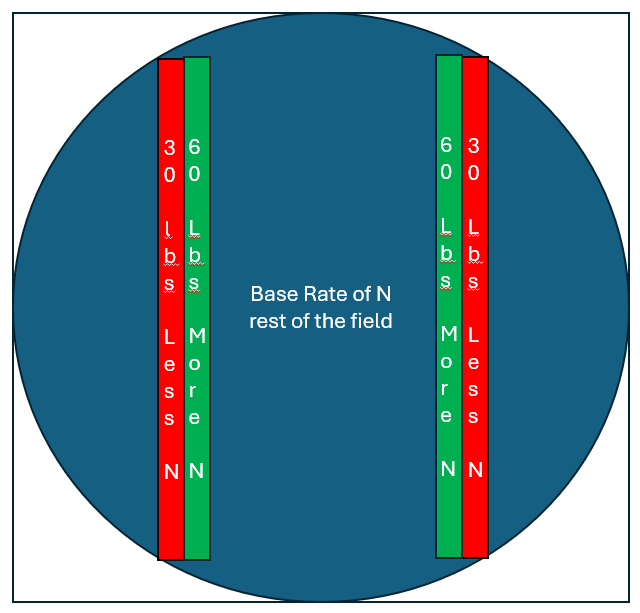
The next step is using a sensing technology like Sentinel Ag to monitor when your plants need any additional nitrogen in season. How do you get started? You can go to: https://www.sentinelag.tech/contact to contact Sentinel Ag and connect with a customer service provider.
From there it’s a matter of getting your field(s) into the system and imagery will be received each day during the growing season when cloud cover isn’t a hindrance. Our on-farm research growers since 2022 have saved on average 52 lb N/ac. We’ve had growers locally use Sentinel Ag who never applied additional nitrogen in the growing season. That usually only happens when there’s already high residual nitrate in the soil. However, it’s a great way to utilize that already existing nitrate and to avoid it leaching to the groundwater.
I also stress this as a nitrogen management tool beyond just reducing the amount of nitrogen applied. The satellite imagery has shown when terminated cover crops released their nutrients to the growing crop. We’ve also seen situations where growers added a 60 lb N/ac in-season rate at the correct timing during rapid growth phase and increase yields by 20 bu/ac. Those are things that we as agronomists can’t predict as we can’t predict mineralization for each field nor can we see the light spectrums that the sensors on the satellites can see that detect stress. It’s a beautiful thing how technology is allowing decades of research to become very practical and usable for growers!
So, for those frustrated by nitrogen prices, this is a great year to try in-season nitrogen management for yourself! And, for anyone using Sentinel Ag this year, we’re beginning peer mentoring groups. What does this mean? It can be scary and hard to try new technologies. Growers who have been using Sentinel Ag have volunteered to serve as peer mentors to other interested growers. We plan to help with understanding the imagery, fertigation, and just walk alongside each other to help with confidence in decisions and what we’re seeing. There’s much power in peer learning! If you’re interested in being a part of the Sentinel Ag Peer Mentoring Groups, please contact me at jrees2@unl.edu. We hope to get started by the end of March/beginning of April.
Richard Ferguson has retired after 40 years of service as a UNL Extension Soils Specialist and he will be greatly missed! His retirement celebration will be this Friday, March 20th from 2-4 p.m. at the Goodding Learning Center at UNL’s East campus. There’s also an online book for well-wishes at: https://go.unl.edu/ferguson-retire.
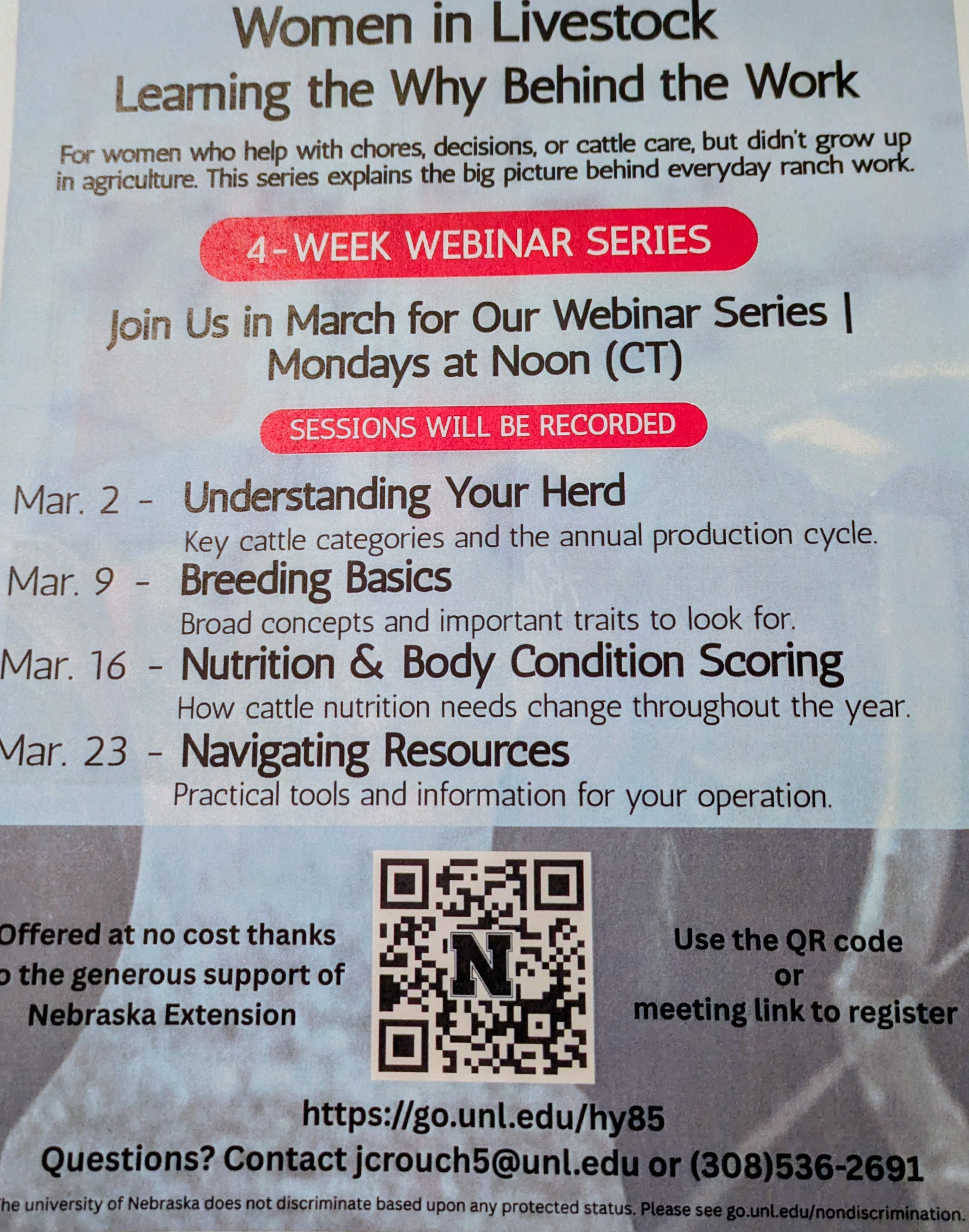
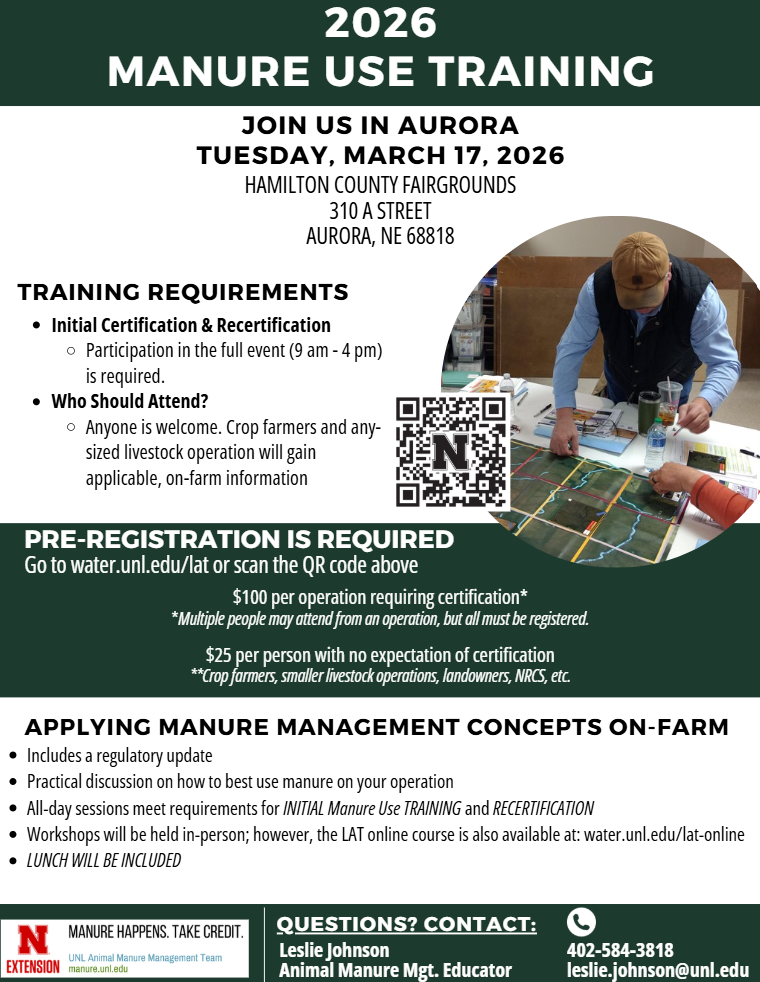
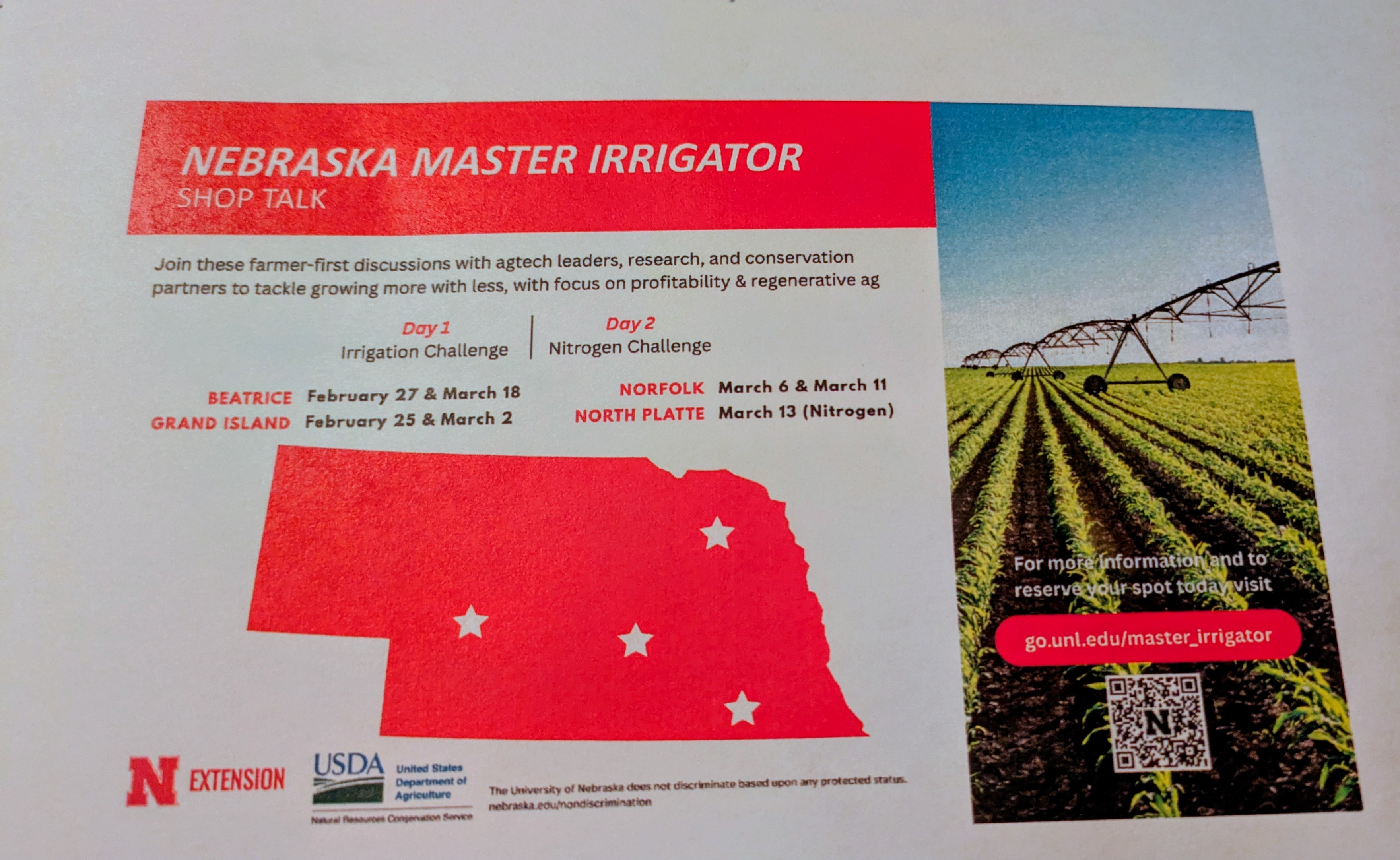
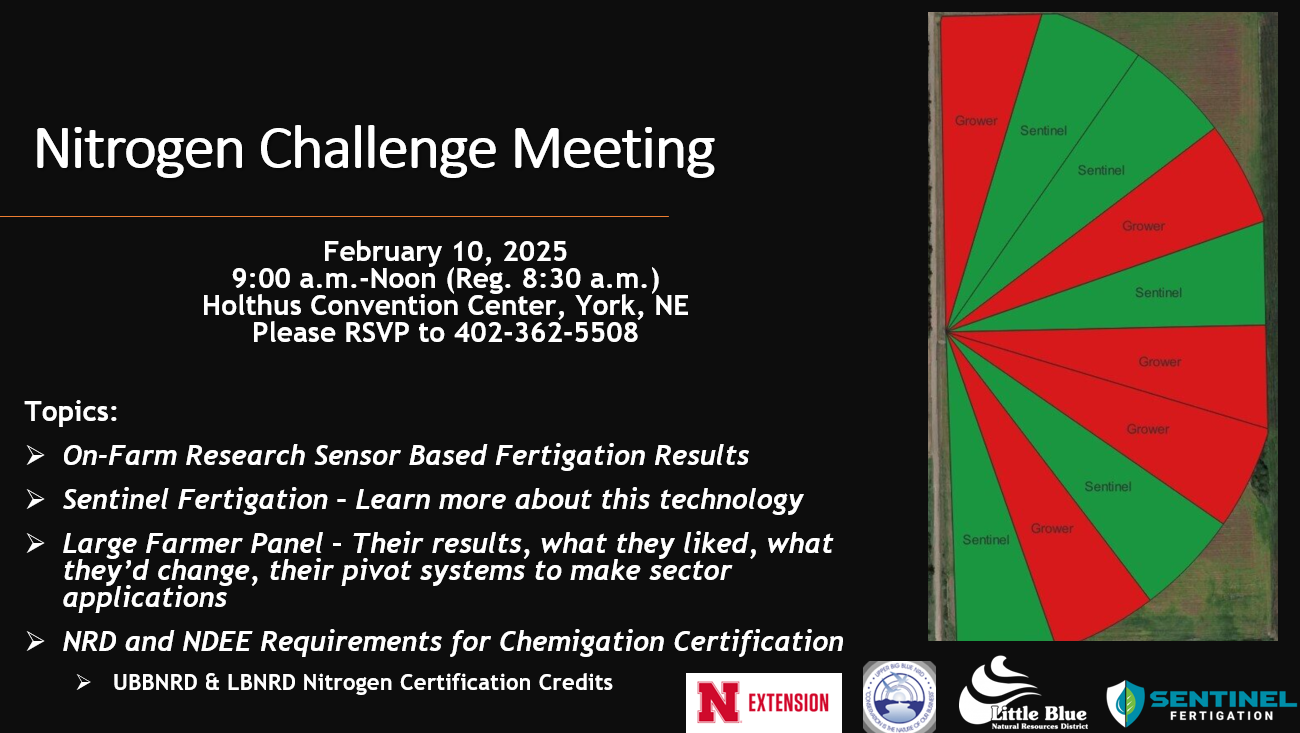
Nitrogen Challenge Meeting 2025
Nitrogen Challenge Meeting Feb. 10: In November of 2023, I issued a nitrogen challenge. As a reminder, my challenge was to everyone with irrigated ground who applies fall anhydrous or spring pre-plant fertilizer:
- Leave 1 piece of ground with a base rate of 70-100 lb N/ac
- Goal is to apply the rest of N in season using a tool like Sentinel Fertigation that senses what the plant needs.
- Only asking to consider for 1 field. Are you willing to join me in this?
Sixteen area producers took the challenge on 4718 acres in 2024. I haven’t heard the combined nitrogen savings yet, but if each reduced nitrogen by 40 lb/ac, that’s a savings of 188,720 pounds of nitrogen. And the greatest impact is that nitrogen use efficiency continues to be improved to on average around 0.6 lb N/bu produced with minimal residual soil nitrate remaining post-season in soil samples. The comments I’ve heard from the growers so far are that they’re so surprised how the technology can see when the crop needs nitrogen before they can and how much nitrogen they saved using the technology while obtaining similar yields.
I don’t have the 2024 on-farm research results yet. The 2023 on-farm research data showed that on average, 57 lb/ac less nitrogen was applied in the Sentinel Fertigation sectors than the grower sectors with similar average yields of 253 bu/ac for the Sentinel sectors and 255 bu/ac for the grower sectors. Average nitrogen use efficiency was 0.57 for Sentinel and 0.77 for the growers (which was actually really good for these growers to begin with!)
My goal for nitrogen management is to see an increasing number of producers use sensing technologies such as this that have been research-proven to help with nitrogen management. The updated Extension Circular published by UNL Nutrient Management Specialists also recommends using sensing technologies and in-season nitrogen applications vs. recommending a rate or even recommending using nitrogen equations. There’s just too much uncertainty with weather conditions to know what a crop will need in any given year.
So, I’m hosting another Nitrogen Challenge Meeting this year. It will be February 10, 2025 from 9 a.m.-Noon at the Holthus Convention Center in York. It will be a similar format to last year where on-farm research results will be presented in addition to an explanation of how the sensing technology works from Sentinel Fertigation. We will hear from NRD staff regarding chemigation requirements and this training qualifies for nitrogen recertification credits for both the UBBNRD and LBNRD. I think the most impactful part of last year’s program was the larger farmer panel, which I will have again. There’s so much we can learn from the growers using the technology and from the differences each of them have in their pivot and chemigation systems. You’ll hear from them about the successes and challenges they had.
For non-irrigated acres, there’s increasing interest to use the satellite imagery to also make applications in season. You’ll learn more about this as well. There is no charge for this meeting but please RSVP to me or to 402-362-5508 so we can plan for refreshments and materials. I hope to see more growers trying the Nitrogen Challenge in 2025!
Farm Succession Meetings: As a reminder, our farm succession meetings begin on Tuesday nights for four weeks beginning Jan. 21. It’s a great opportunity and men are welcome in addition to women. More info: https://wia.unl.edu/succession25/



 JenResources