Blog Archives
July 2024 Crop Update
The past 10 days, my top questions have been around fungicide recommendations, control of Japanese beetles, and hail damage. I feel there’s an increasing segment of agronomy that is focused on preventing pests based on fear. I’m grateful for those agronomists who only recommend products when warranted by scouting.
Some thoughts, although not popular, for consideration. Fungicide for white mold in soybean is pricey. If the field didn’t have a history of white mold, I wouldn’t recommend applying a fungicide for white mold. For seed corn fields without a history of white mold, I’d wait to see if white mold develops. If too fearful, would only apply one application at R2. Only fields with a history of white mold would I be considering preventive fungicide applications. And in those fields, if the beans had been planted green into a small grain and/or if a biological product with activity against white mold was used, would suggest scouting and applying only if white mold was present. Fungicide efficacy ratings: https://cropprotectionnetwork.s3.amazonaws.com/soybean-foliar-efficacy-2024.pdf.
Hail: Looked at quite a bit of hail damage in Clay/Fillmore counties last week. Always so hard to see beautiful crops impacted or destroyed. Some hail resources for you: late vegetative/tasseling in corn: https://go.unl.edu/y3of, Soybean decisions: https://go.unl.edu/z7ad; and hail damage info. on my blog at https://jenreesources.com.
Corn Diseases: There’s very little I’ve seen in fields. Bacterial leaf spot (BLS) is common on hybrids and can be confused with gray leaf spot. BLS has longer, thinner lesions with wavy lines when looking at the lesions closely. I’ve seen quite a bit of Goss’ wilt, as early as V8. There’s nothing we can do for either BLS or Goss’s as bacterial diseases, but it’s good to be aware they’re occurring.
Tar spot has been found in Richardson, Nemaha, Saunders, Dodge, Colfax counties but not in our area. Southern rust has been found in northeast Kansas. I still recommend waiting on fungicide applications until we need them. Research found that products applied between tasseling and milk when tar spot was present in low amounts (5%) was effective in controlling tar spot most years. So, waiting could be wise with tight economics, particularly if tar spot, gray leaf spot, and southern rust come in later.
Japanese Beetles in crop fields: Usually the beetles congregate in areas in the field and not whole fields. So even at a 20% defoliation in soybeans during reproductive stages, it’s been hard to pull triggers for spraying because it’s not field-wide defoliation (and we’ve seen soybeans recover in the past). For corn, the threshold is 3 beetles per ear with silks clipped less than ½” and 50% or less of the field is pollinated. A challenge with Japanese beetles is that we have another potentially 4-6 weeks of emergence from grassy areas. So, one can spray an insecticide, but it’s not uncommon to see the beetles damaging fields again once the residual wears off. Spidermites can also be flared upon insecticide applications. Some consider a border app since they begin feeding in the borders. So, those are all things to consider.
Sevin and Japanese Beetles: For homeowners, PLEASE read the pesticide labels before applying products (even if you’ve used that same product in the past). I do mention Sevin as a product that can be applied in different situations in this guide: https://go.unl.edu/xgd6, but not all Sevin formulations are the same; thus, not all the same plants are labeled! We’ve unfortunately seen some plants injured to the point of death in the past. So please, double check that the plant is labeled before applying an insecticide product to control the beetles.

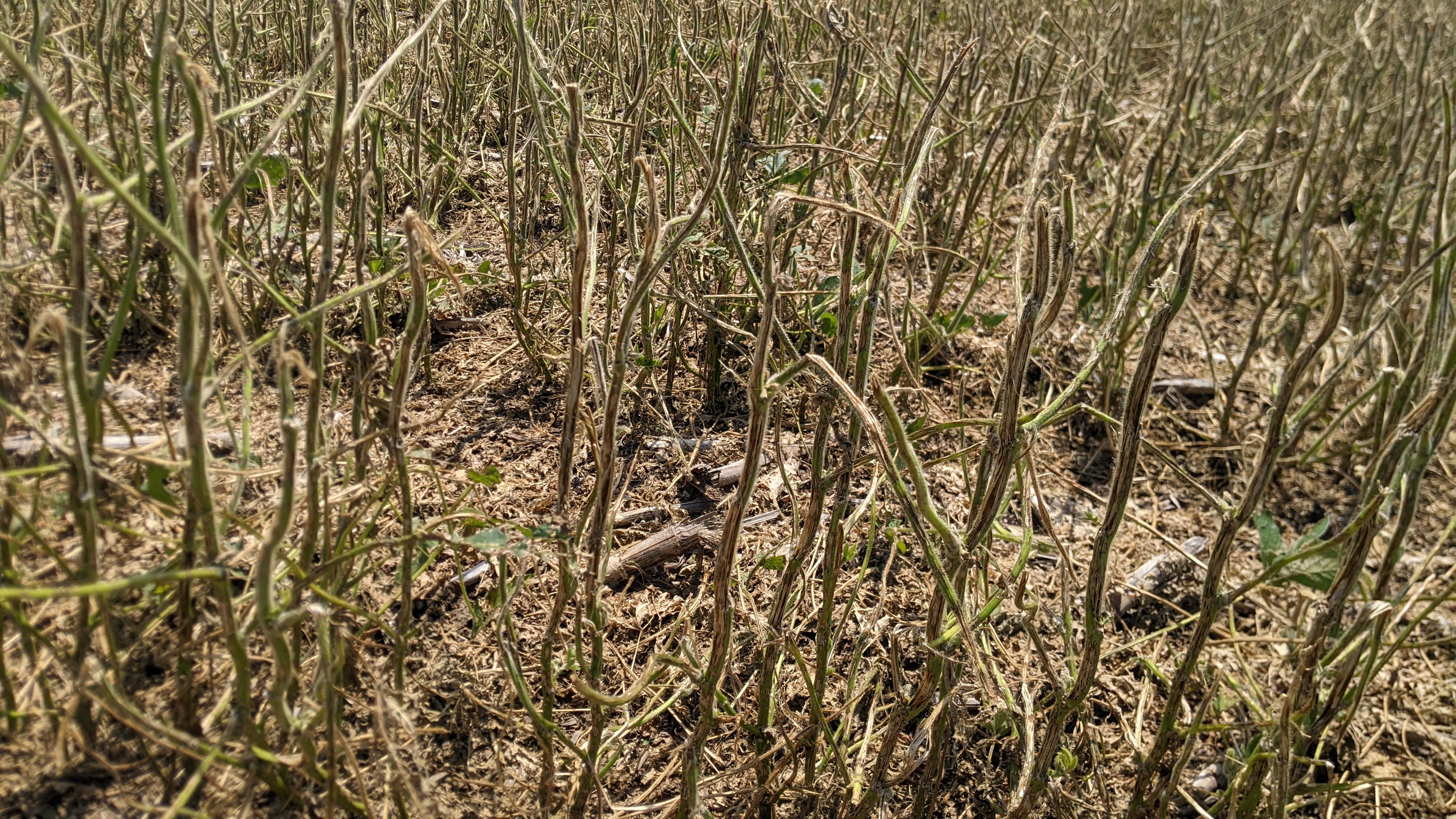


For soybean damage, the situations with pictures shown here (other than the top right) will recover. These fields are already showing new growth in axillary buds including new leaves and flowers. While some canopy was lost, they will look a lot better in 7-10 days. Look for areas of the field (lower right picture) that were protected such as by trees and/or pivot tires, to determine the original development stage when the soybeans were damaged. In the case of the upper right photo, those beans were planted the week of April 10th and were already at a strong R4 to beginning R5. By R5, soybeans will not recover because all new node, leaf, and pod development ceases. If considering to replant any beans, there’s risk of using later than a 2.5 maturity variety with a July 15th planting date in reaching maturity before a frost. By July 20th, aiming for closer to a 2.0 maturity is wise. Also, if you’re replanting into soybeans, we’ve found a fungicide seed treatment is wise as phytophthora root rot tends to be a problem in replant.
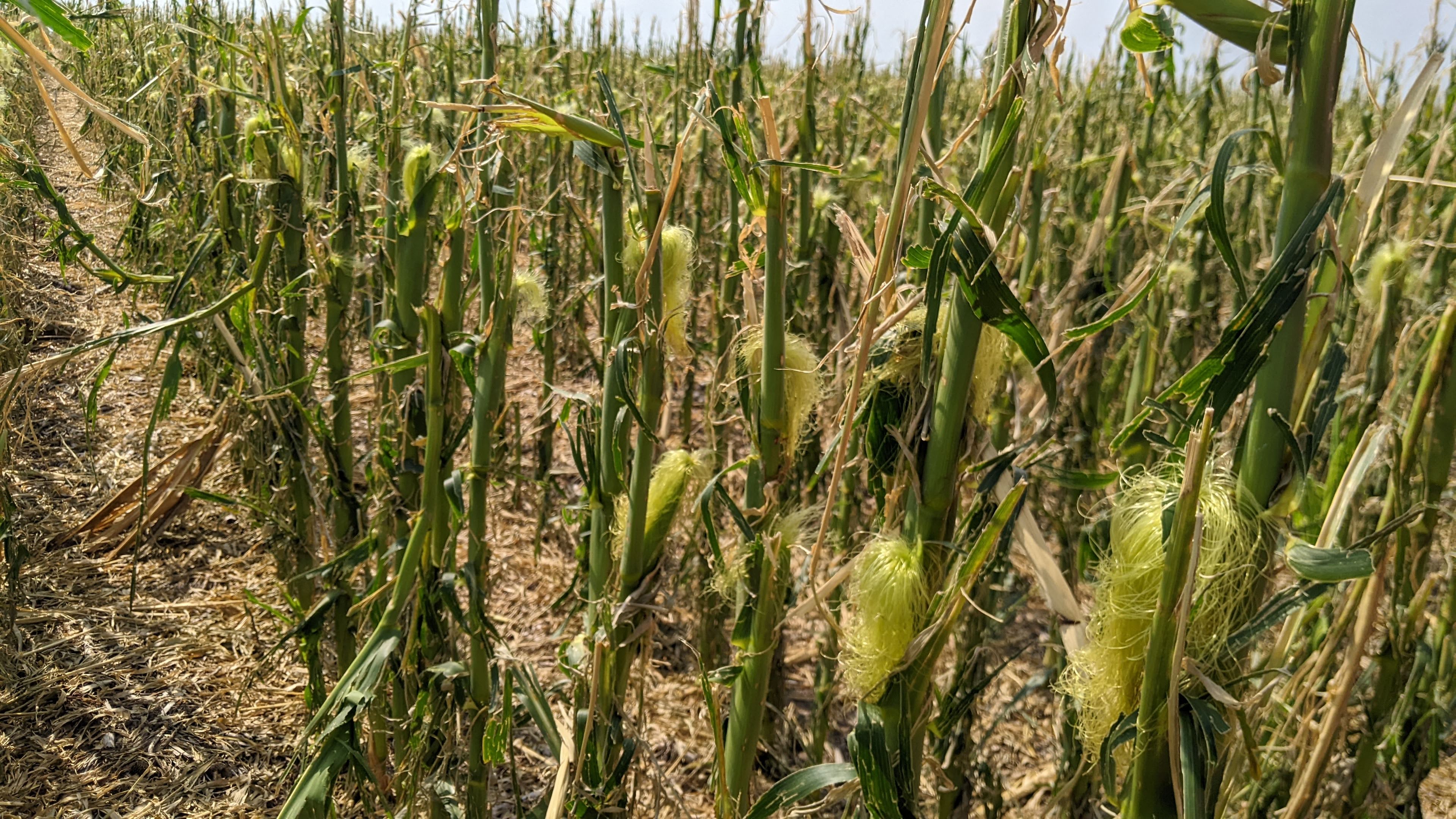




For corn, much of the corn I looked at has mostly leaf stripping and will be ok. There’s also bent/broken plants. Fields vary in the amount of stem bruising. When taking stand counts, I push a little hard on plants to see if they break off when I’m taking counts. A rule of thumb we’ve used in the past: every plant in 1/1000th of an acre we give 10 bu/ac to. So, a count of 12 plants has a potential of 120 bu/ac. That may seem crazy; it depends on how things pollinate, how damaged the ears are, final stand, etc. but it has been in the ballpark in enough cases for me to still use it as a guideline for making hail damage decisions.
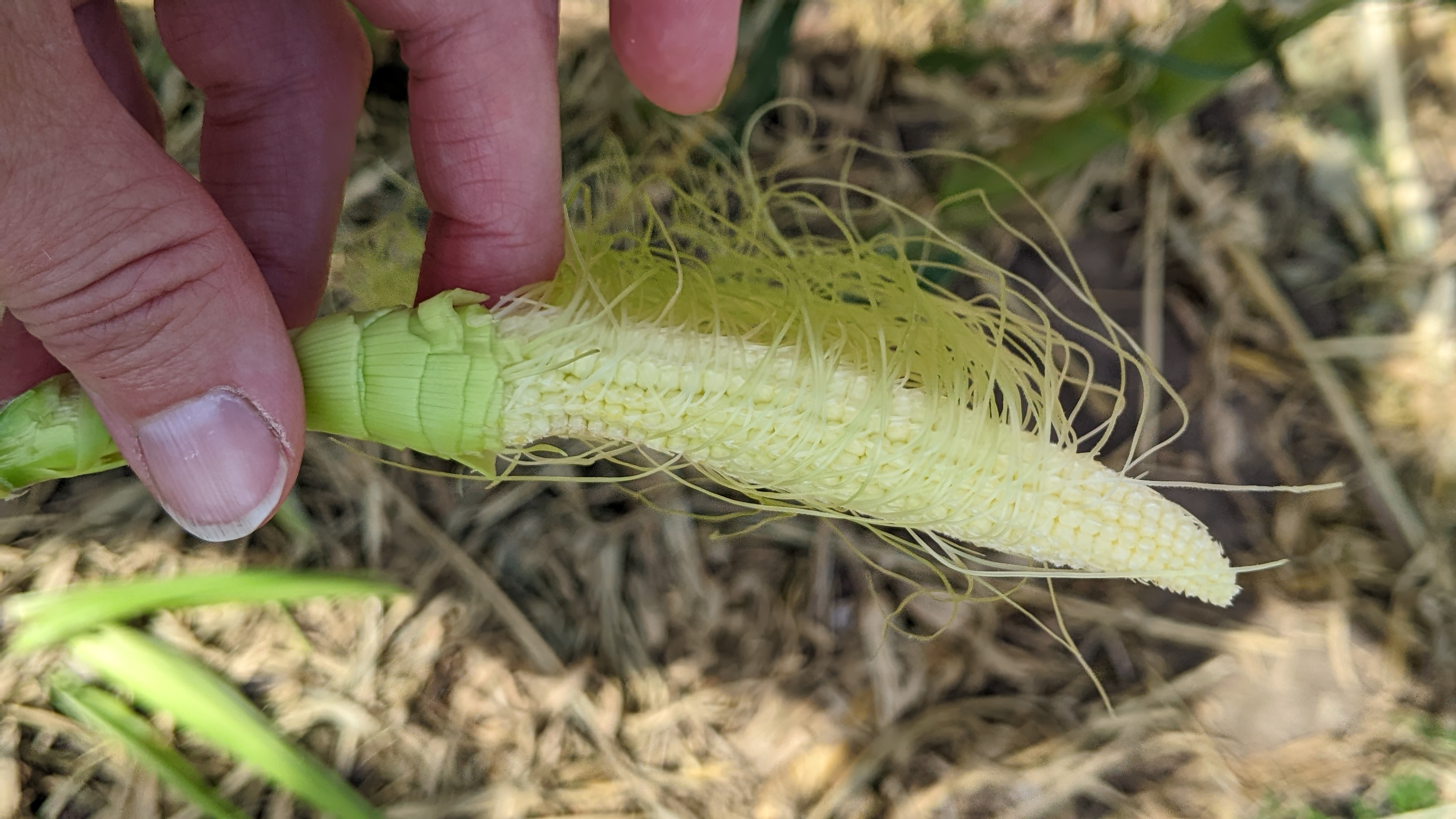
In these photos, the fields were far more severely damaged. There’s fields like we saw in 2023 where 1/3 of the field or less still has tassels (top left and middle photos). We saw crop insurance delay that decision in the past to see how the ears would pollinate. I’m not sure what they will decide this year. I was seeing a few brown silks in some of these field situations, but it’s super early too. There’s also a large number of dead tassels in these fields (bottom right photo) that won’t provide any pollen. Tassels remaining tend to be wrapped in the newer leaves but as you see in bottom, middle photo, the tassel is trying to shed pollen inside the trapped leaves. Ears may be misshapen and damaged due to hailstones and/or being damaged and unable to emerge from sheaths (bottom left photo).
What we learned in the past is that palmer comes in quickly once the canopy opens. One can consider warrant with drops as a layby depending on how much Group 15 had been used in the field. Most chose not to go that option. Some seeded covers like brassicas/small grain into fields not totaled (flew on or haggie). Most let the palmer grow.
In the top right photo when fields were totaled, some allowed the weeds to grow and grazed with cattle or sheep. Some seeded a summer annual cover like sorghum sudan/sudangrass/pearl millet. In 2023, several crop producers chose pearl millet so they didn’t have to worry about prussic acid poisoning for those bringing in livestock or wanting to hay. Others just waited till later in the year, shredded down the stalks and planted in a small grain like oats or rye. The “blessing” with a decision in July is it can allow for more time to make a decision compared to if we were in June and the primary option was to replant. That perhaps was the biggest lesson I learned last year in working with producers. If you have specific questions or want to talk through decisions, please give me a call.
Also, it’s important to recognize that these disaster events create loss…in this case, loss of crops, pivots, bins, not only in irrigated acres but in a lot of non-irrigated acres that had more potential than most have seen in years, much less their lifetime. It’s ok to have a range of emotions surrounding this. And, it’s common to feel stressed, numb, and not want to make a quick decision. If I’ve learned one thing in my career, it’s the fact that as people, we all just need to talk about the stress and emotions we all face at times with someone we trust. My biggest piece of advice is to talk to someone just to get outside of one’s own head. There’s so much stress in life, not to mention in ag. The most common comment I’ve heard from people the past several years was they just appreciated being able to share with someone about the stress and what they were feeling. There’s also a number of mental wellness resources on the front page of CropWatch at https://cropwatch.unl.edu.
Resources:
- Summer annual forage grasses: https://extensionpubs.unl.edu/publication/g2183/2013/pdf/view/g2183-2013.pdf
- Making soybean replant decisions-what we learned: https://go.unl.edu/z7ad
- Corn damage to late vegetative/tasseling corn: https://go.unl.edu/y3of

More information and registration at: https://www.grazemastergroup.com/events.

JenREES 7/9/23
It was sad to see several get hit with devastating hail for a second year in a row from the July 4th storm. It was also such a blessing to get the unexpected gift of a fairly widespread 1”+ rain last Friday morning!
For those dealing with hail, I don’t have any great new ideas for planting into totaled crops beyond soybeans or some type of forage crop at this point. For replanting with soybeans, we suggest 0.5-1.0 maturity less than you normally plant, make sure you have a fungicide seed treatment (wouldn’t have to have anything for SDS, just for seedling diseases), increase your seeding rate, and consider narrower rows to close canopy quicker. Phytophthora root rot is something I tend to see fairly often with replant soybeans, thus the rec for the fungicide seed treatment. For acres damaged on fringes, I recommend leaving existing soybean stands of 50K, which is trickier now that we’re at R2-R3 in many fields. In corn fields with less damage, we will have to watch what happens on timing of silks/tassels.
For those interested in planting annual forages in July or August after hail/drought/wheat harvest, the following contains more info. on seeding rates, tonnage, species, etc.: https://go.unl.edu/ypgc.
Annual Forage Insurance is an opportunity for obtaining crop insurance (in Nebraska, Kansas, South Dakota) to protect against the primary production risk of low precipitation. This is for annual forage crops used for grazing, haying, grazing/haying, green chop, grain/grazing, grazing/green chop, or silage. The current sign up period ends July 15 for coverage on annual forage planted from July 16, 2023-July 15, 2024. This insurance uses the two-month rainfall index intervals with coverage up to 90% of normal precipitation (similar to perennial forage insurance). Recorded webinar with info: https://go.unl.edu/3d57.

Japanese beetles: Adults emerge from grassy areas (lawns, pastures, road-side ditches for at least 4-6 weeks (last year was around 10). So, even if you treat, they can come back. Threshold is 30% defoliation on vegetative corn. Upon silking, the threshold is 3 or more beetles/ear with silks clipped to less than ½ inch and pollination is less than 50% complete. For soybeans the threshold upon reaching flowering is 20% defoliation (watch for pod clipping too). More info. on chemical options for crops at: https://go.unl.edu/osyi. The following are chemical options for landscapes/fruits/gardens: https://go.unl.edu/bke4. The hardest thing has been to tell people they can’t eat produce or fruit from using products that weren’t labeled for the plants they applied to. Crazy how many livestock and crop products were used in landscapes last year….please follow pesticide labels.
We know how uneven these corn fields are-even irrigated ones. Many labels specify no NIS between V8/V10 till Tassel. Even if applying ‘at tassel’, realize that not all plants in the field will be at tassel, so you run the risk of abnormal ear development with the wrong adjuvants/surfactants present. If disease/insect pressure doesn’t warrant an app, I prefer delaying till at least brown silk to apply products to help alleviate any potential risk. I tend to be called out to many field problems. Since I started talking about this, the number of calls with messed up ears due to wrong timing of application the past three years has dwindled significantly. So, just a consideration as we begin to see more tassels shooting.
Western Bean Cutworm: It’s recommended to start scouting when 25% of moth flight occurs based on a GDD model. Lincoln hit 25% on July 2nd, Grand Island July 6, Columbus July 7, York July 8th, Clay Center July 10th. Threshold is 5-8% egg masses/live larvae. You can learn more about the GDD prediction tool and predictions for your area at: https://go.unl.edu/438o.
JenREES 7/18/22
Japanese beetles: Hopefully this is the last week I talk about these! Hoping they’re coming to an end for this year as I’m not hitting as many while driving! Seems like each week brings new questions that I hope will be helpful to share. For tree and garden products, please check the handout which can be downloaded from the front page of york.unl.edu.
In replant corn and soybean fields, the beetles are attracted to the older plants (check strips/original bean plants); they shouldn’t be going after the replant ones. I’ve heard areas (not hail damaged) have sprayed beans at least twice. People wondered if this is to be expected with products that should have 14 days residual. In talking with Bob Wright, he says there’s little research on Japanese beetles on chemical efficacy. The soybeans continue to produce new leaves and the herbicides, although there’s residual in the pyrethroid products, doesn’t translocate to new leaves. Sunlight also breaks down the herbicide in leaves. Increasing water helps with coverage (helpful if increase to at least three gallons in aerial applications-same for fungicide applications). Chemigation is an option too.
I’ve also been asked about adding other nutrient and biological products, etc. to tanks to increase the plant health. While I’m not opposed to the concept of healthy plants fending off insects/pathogens, I don’t know of research to comment on that for Japanese beetles. Sidenote (not necessarily Japanese beetle related), when I’ve been called out to problem situations in fields this year, numerous times there’s been a large number of products placed in the tank. I just wonder how all these things are truly interacting together and if we’re potentially creating problems (increasing selection pressure and resistance) on weeds, insects, pathogens by potentially reducing efficacy of the original pesticide product that was meant to be sprayed before everything else (plant growth regulators, micros, etc.) was added. Again, no research, just a consistent observation in field calls with problems this year.
White Grub Prevention/Control in Lawns: Been getting questions about grub prevention as well since the Japanese beetles lay eggs in lawns. Control depends on proper timing of the application and moving the insecticide into the root zone where grubs feed. Preventive control applications are made from mid to late June. They can work in early July (it’s potentially too late now). Curative or rescue treatments are made in August or September and I will talk about those products next month.
Preventive – Most of the preventively-applied insecticides are systemic in nature and will be taken up by the plant and translocated to roots. The following products are effective against young grubs and are labeled for homeowner use: Chlorantraniliprole –Scotts GrubEx; Imidacloprid –Bonide Grub Beater, BioAdvanced Season Long Grub Control + fertilizer.
Check Grain Bins: With all the work of starting crops over the month of June, checking grain bins wasn’t as high on the list for many in this area. Two farmers suggested I mention checking grain bins this week as they had found some hot spots and were thankfully able to get things under control.
Take Care of Yourself! I know how worn down I’m feeling each week, and I’m not in the shoes of you as the farmers and landowners who have went through so much loss. These storms keep giving as people find additional damages to buildings, equipment, trees, crops, etc. I realize with the heat it’s not realistic for many to get away for long. There will always be a list and few of us ever ‘catch up’. But there’s only one of each of us. My challenge for us this week is to take some intentional time to reset…whether a half hour or a few hours. Spend the time doing a hobby, resting, strengthening your faith, catching up with someone. We need these breaks and I’m doing that as well. Be sure to stay hydrated with the heat too!
Cover Crop and Soil Health Field Day: This snuck up on me and I failed to talk about it sooner; it will be held this Tuesday July 19th from 10 a.m.-2 p.m. (Registration at 9:30 a.m.) at the 4-H Building at York Co. Fairgrounds. Topics include: understanding soil health, the Nebraska soil carbon product cover crop study; On-Farm research cover crop study update; and Cover crops for upland game birds. Following lunch there will be a cover crop field site visit with a demonstration of how to conduct a soil health inventory. There is no charge but please RSVP for meal count to Nate Pflueger at 402-646-5426.

Japanese Beetle Organic and Conventional Products Found Locally
With the Japanese beetle invasion in the area and their territory spreading further each year, I checked with local retailers (nurseries, lawn/garden centers, farm stores, Wal-Mart, Ace) to see what they have on hand to hopefully be of help.
First, Please Read the Label on any product before you purchase it to make sure:
1: the product says it controls Japanese beetle adults
2: the product is labeled for where you wish to apply it (vegetables, trees, ornamentals, fruit trees, berries, etc.)
3: follow all pre-harvest intervals (PHI) for when you can safely harvest vegetables, fruits, and berries after a product is applied.
Last year I had to unfortunately tell three people they couldn’t eat the produce from their gardens due to the product they sprayed.
Second, there are a number of insecticide options available. Know that most anything applied to flowering plants will also impact pollinators. For flowering plants like roses, cannas, etc., knocking the beetles off around 7 p.m. in the evening into soapy water will protect pollinators visiting them.
There are also ready to use and concentrate versions of chemicals available. The easiest are ones where you simply attach the garden hose and spray. Others need to be mixed with water into a sprayer.
Organic Insecticide Options include Neem, Pyola, Spinosad Soap, Pyrethrin products (ex. Beetle and Boxelder bug killer), and Bt. Neem may repel more than kill Japanese beetle adults. These products will all last around 3-7 days and will need to be reapplied. Products containing these active ingredients should be safe on fruits, vegetables, in addition to using on flowers, shrubs, and trees. Be sure to read and follow directions as there may be a temperature restriction on applying some of them that contain oils to avoid burning leaf tissue.
Conventional insecticide Options can provide up to two weeks of control. I’m going to separate these into products I found locally based on the location they can be applied. Ultimately, this is NOT a complete list and many other products can also be found online. There are also products containing insecticide + fungicide that I don’t list here. Please be sure to read the label for yourself as to the insects controlled and where it can be applied before purchasing.
1. Ornamental shrubs, plants, trees (like linden, elm, birch): DO NOT use these products on vegetables, fruits, or berries. Hi Yield 38+ and Tempo. There’s home defense products labeled for Japanese beetle adults but they don’t mention they can be applied to trees or shrubs.
2. Vegetables, fruits, ornamentals, shrubs, trees: BioAdvanced Rose and Flower Insect Killer, BioAdvanced Tomato and Vegetable Insect Killer, BioAdvanced Vegetable and Garden Insect Spray, Eight, Spectracide Acre Plus Triazicide Insect Killer, Hi-Yield Lawn/Garden/Pet/Livestock Insect Control, Sevin, Ortho BugClear, and Ortho Bug B Gone.
Many of the conventional insecticide products contain pyrethroids such as bifenthrin or permethrin. Thus, there are also products that just say ‘bifenthrin’ or ‘permethrin’ that can also be purchased. Be sure to read the label as some have restrictions such as “can’t be applied to apples” while others can.
JenREES 7/3/22
Hope everyone has a safe and wonderful 4th! Some food safety tips from our Food and Nutrition educators: hot days above 90F means we need to keep warm foods 140F or warmer. Perishable food should stay in the fridge or on ice before and after eating. Leave perishable food out an hour or less in hot weather. For more picnic and bbq tips, check out https://bit.ly/3xjYWwz.
ET and GDD: Also praying for rain; pics of drought monitor map at my blog. Our CropWatch GDD and ET resources if you don’t have your own ET gage are at: https://cropwatch.unl.edu/gdd-etdata.
From CropWatch: The forages team shared more detail on summer annual forage options at: https://go.unl.edu/7z5p. A team of Extension and Industry professionals led by Dr. Amit Jhala shared info. regarding herbicide options for soybean after the June 30 RUP dicamba restriction: https://go.unl.edu/2i5a.
Hail Damaged Trees: Evergreen trees have rapidly turned brown on the hail-damaged sides of trees the past 7-10 days. We don’t recommend applying anything to them; just water them to help them with healing. Next spring, they may be more sensitive to fungal disease and insects. Sarah Browning, Extension horticulture educator shares, “Hailstone damage to a tree’s vascular system limits its ability to move water up from the roots and into the secondary branches and leaves. Movement of nutrients throughout the tree is also reduced. Over the next few years, previously healthy vigorous trees will produce callus tissue to seal off bark wounds and re-establish vascular function. Until then, they have a reduced ability to move water and cope with dry conditions….In most cases, homeowners should take a “wait and see” attitude. Trees and shrubs should be kept well-watered throughout summer and fall to avoid drought stress. Keep plants well mulched to prevent secondary injury from mowers and string trimmers.”
Japanese Beetles: The adult beetles are ½” in length with metallic green heads and white ‘tufts’ of hair that look like spots on the abdomen. Don’t use Japanese beetle traps! Research shows they attract beetles to the landscape.
Organic control options: Wait till 7-9 p.m. then knock beetles off plants into a bucket of soapy water to drown them. This method takes diligence but is effective. You can also spray trees with water to knock them down to the ground and then drown in soapy water. Neem and Pyola are organic options that will protect for 3-7 days. Applying these products once per week can be effective as a repellent. Bt provides 7 days protection and is safe for bees.
Conventional control options: Japanese beetles impact flowering plants that other pollinators visit. Avoid spraying insecticides on windy days or when pollinators are present (best to spray late in day near dusk) and follow label instructions and harvest intervals (for cherries, plums, vegetables, etc.). Chlorantraniliprole (Acelepryn®) provides two to four weeks protection and is low risk to bees. Pyrethroids, including bifenthrin, cyfluthrin, lambda cyhalothrin, and permethrin, last about two to three weeks. Carbaryl (Sevin) or acephate will provide one to two weeks’ protection. Pyrethroids, carbaryl, and acephate are toxic to bees and other pollinators.
Corn and Soybean Thresholds: Soybean thresholds are 20% defoliation in the reproductive stages. In talking with Dr. Bob Wright, Extension Entomologist, we’re going with a 30% defoliation threshold for corn prior to tassel (same as soybean prior to flowering). Tasseled corn threshold: three or more Japanese beetles per ear, silks have been clipped to less than ½ inch, AND pollination is less than 50% complete. Pyrethroids are very effective against beetles. If one is concerned about flaring spidermites, a product like bifenthrin can be used.

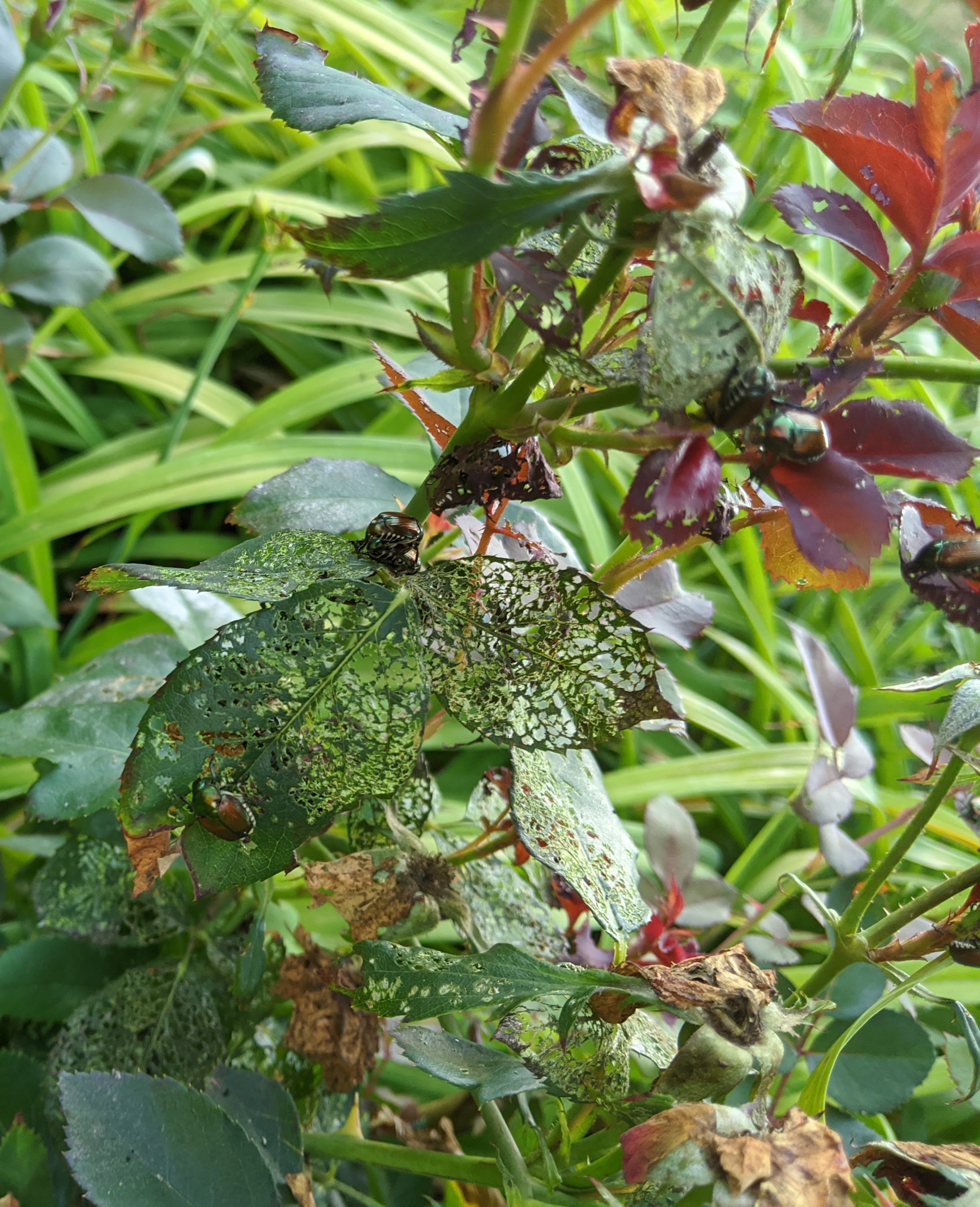
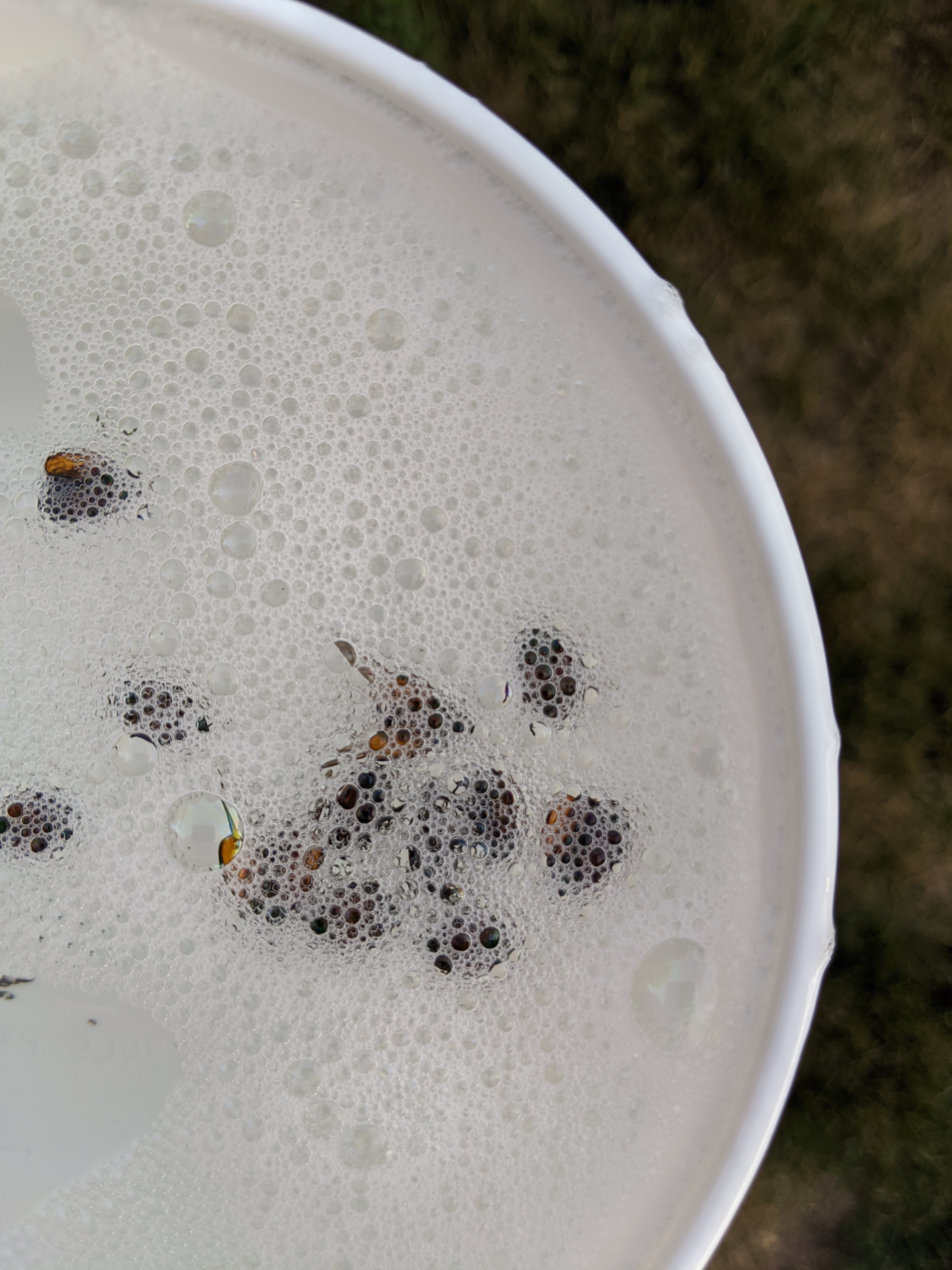
Japanese beetle feeds on 300 different plant species preferring ones like roses, lindens, birch, and fruit trees. Early on, they can be managed by knocking them off plants in the evening and drowning in soapy water.
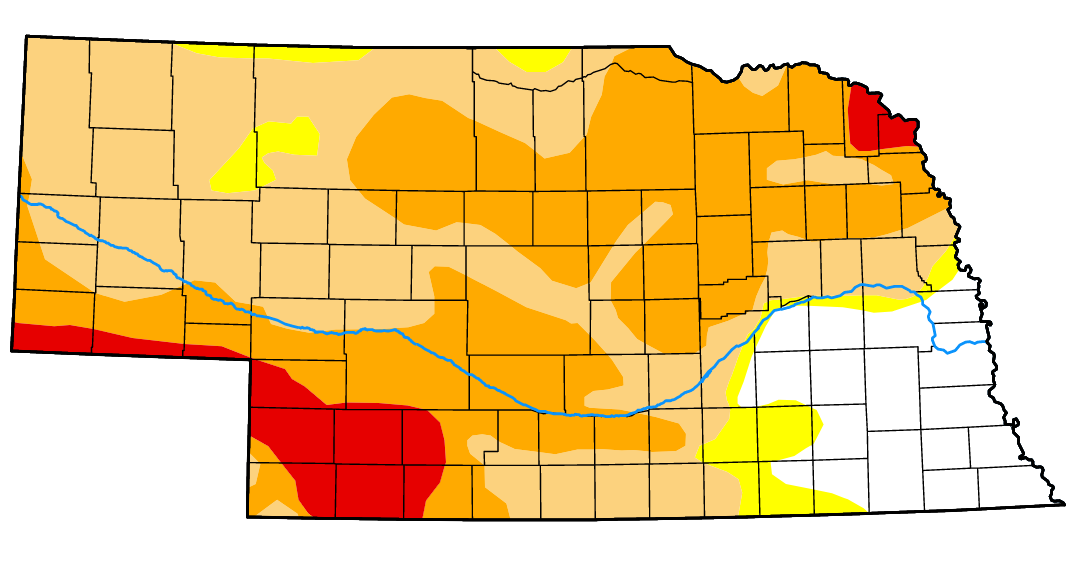
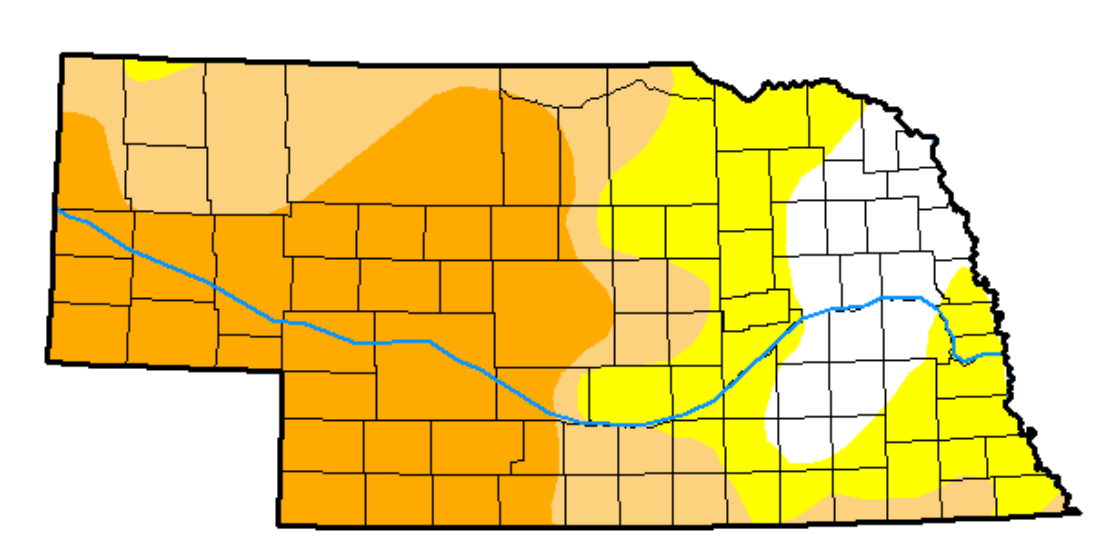
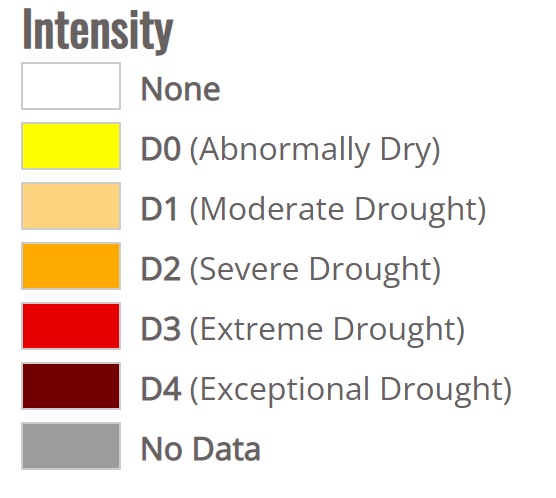
Concerning. Drought monitor maps: June 30, 2022 on the left compared to June 26, 2012 on the right.
JenREES 7/11/21
Resiliency and Rest: Resiliency is the ability to withstand hardship. As I was thinking this past weekend about the July 9th storms and various levels of damage, I was thinking how resilient people can be with the right tools. Tools such as purpose, perspective, positive relationships (talking/checking in with others), self-awareness, and faith can be of help. Another thing I’ll throw in here is rest. The sun, heat, and humidity have been intense and exhausting. Most people I’ve interacted with have been going hard trying to keep pivots going, scout fields, and/or deal with breakdowns of various sorts. We all need rest and I hope in some way, we all intentionally take some time for that, even if just a few hours. I did that too a couple afternoons to get out of the heat, which helped me.
I was also thinking how resilient living things in general can be…such as the corn plants that bent or leaned instead of broke. I don’t have much update right now on the extent of damage as each field will vary depending on growth stage, hybrid, wind and we will learn more as we spend more time in fields this coming week. For those tracking GDD for western bean cutworm moth, you can do so at: https://mesonet.unl.edu/page/data (Select “Western Bean cutworm GDD” from the drop-down menu). Right now it’s showing GDD accumulation to not be as advanced as the CropWatch article was predicting for moth flights (was predicting 75% moth flight for York on July 13th.
Tree Damage: For those with tree damage, be sure to use the ‘3 cut method’ when trimming branches from trees. Also, look for power lines before approaching the tree. You can see a picture of this method at jenreesources.com.

Japanese Beetles or ‘something is eating my plants’ was the primary question I received last week. I’m seeing less in my landscape after the windstorm, so perhaps that helped somewhat?
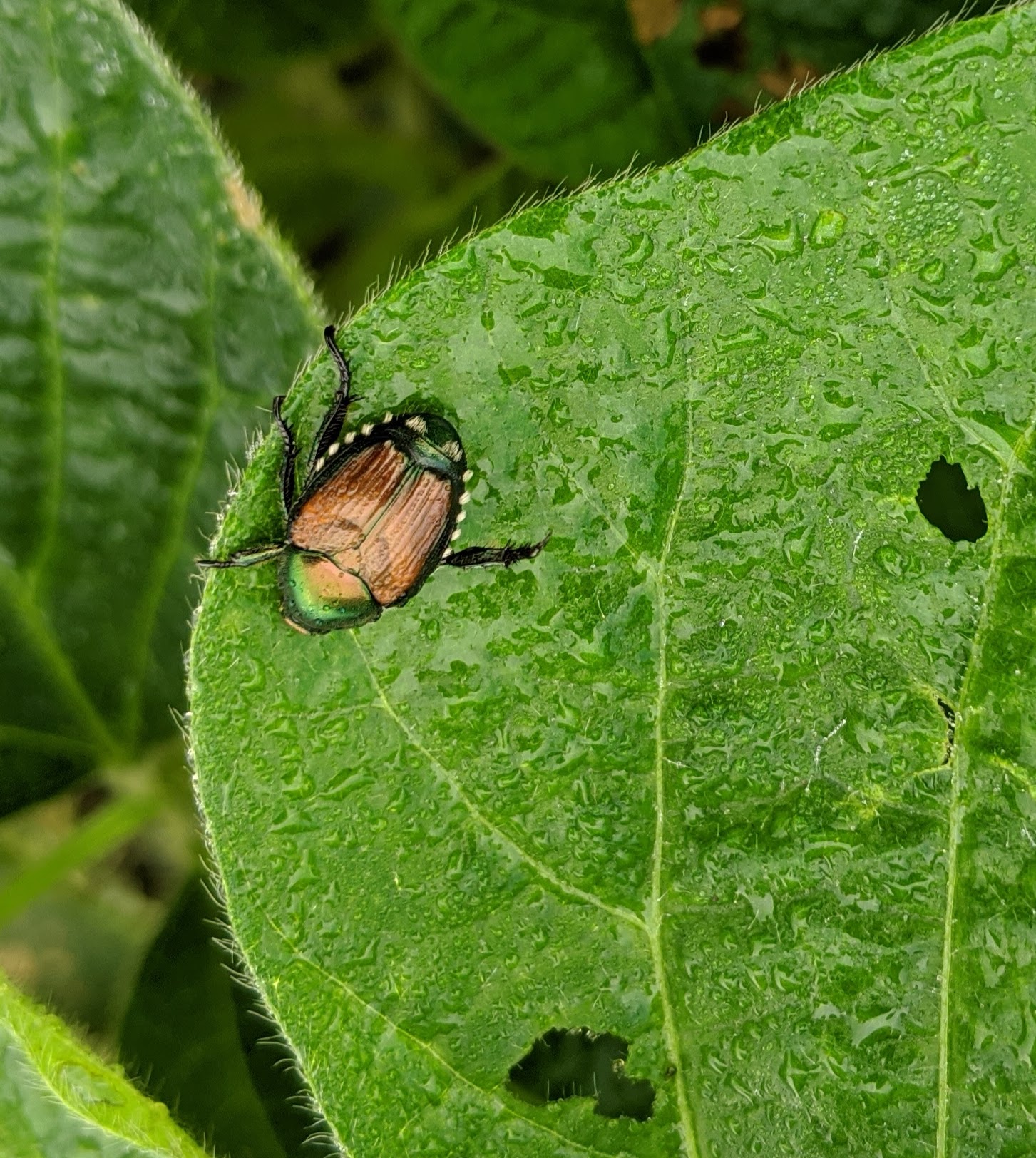
The adult beetle is ½” in length with a metallic green head and white ‘tufts’ that look like spots on its abdomen. Adults feed on 300 plant species, but their favorites are ones that are in many of our landscapes (roses, cannas, marigolds, grapes, Virginia creeper, and trees such as lindens, birch, Japanese and Norway maples, cherry, plum, peach, American elm). They also feed on soybean and corn crops. They love hot weather and full sun and feed on leaf tissue during the day (leaf tissue will look skeletonized or lacy and turn brown). Trees may be severely impacted with browning occurring from the top to bottom. Thankfully healthy trees will re-leaf next year since the underlying twigs and branches aren’t damaged-even if the entire canopy is impacted this year. It’s not recommended to remove branches or trees.
DO NOT use Japanese beetle traps!!! Research shows they attract beetles to the landscape and many homeowners I’ve talked with will attest to this!
Beetle Control: Organic control options: Wait till 7-9 p.m. then knock beetles off plants into a bucket of soapy water to drown them. This method of control takes diligence over several nights. You can also spray trees with water to knock them down to the ground and then drown in soapy water. With heavy beetle infestations, it’s not uncommon to literally have scoop shovels full of the beetles when removing from trees. Neem and Pyola are two organic sprays that will protect for 3-7 days. Applying these products regularly (once per week) can also be effective as a repellent.
For conventional control options, keep in mind that Japanese beetles often impact the same flowering plants that other pollinators visit. Use insecticide products correctly to avoid damage to pollinators. Avoid spraying insecticides on windy days or when pollinators are present (best to spray late in day near dusk) and be sure to read and follow all label instructions and harvest intervals (for cherries, plums, vegetables, etc.). Conventional insecticides can provide 2 weeks of control: pyrethroid products like Tempo (Tempo can’t be used on vegetables and fruits) and Bayer Advanced Lawn & Garden Multi-Insect Killer (cyfluthrin) or Ortho Bug B Gone (bifenthrin). Sevin (carbaryl) is another option although more dangerous for bees. You can buy these products in most any farm, garden, box store…it may not be the exact products listed here, but if the active ingredient is a pyrethroid or any of those listed in parentheses above AND the product is labeled for the plant you wish to apply it to, you can apply it. Just be sure to read and follow label instructions.
Corn and Soybean Thresholds: Soybean thresholds are 20% defoliation in the reproductive stages. Thresholds for corn are: three or more Japanese beetles per ear, silks have been clipped to less than ½ inch, AND pollination is less than 50% complete. Pyrethroids are very effective against beetles. If one is concerned about flaring spidermites, a product like bifenthrin can be used.
Wellbeing Tips:
(Adapted from: Gilbert Parra, PhD; Holly Hatton-Bowers, PhD, and Carrie Gottschalk, LMHP, MS)
How Much Time do You Have?
2 Minutes:
- Breathe
- Stretch
- Laugh
- Doodle
- Acknowledge one of your accomplishments
- Say no to a new responsibility
- Look out the window
- (adapted) Faith based prayer
5 Minutes:
- Listen to music
- Have a cleansing cry
- Chat with a co-worker, friend, or family member
- Sing out loud
- Jot down dreams
- Step outside for fresh air
- Go for a brief walk
- Enjoy a snack or make a cup of coffee/tea
- (adapted) Read faith-based devotional
10 Minutes:
- Evaluate your day, Write in a journal
- Call a friend
- (adapted) Meditate, Prayer, Devotional
- Tidy your work area
- Assess your self-care
- Draw a picture
- Listen to soothing sounds/music
- Read a magazine
Japanese Beetles
Japanese Beetles: Areas of the State have seen Japanese beetles for a few weeks. They’ve shown up strong in the York/Seward county area this past week with the number of calls I’ve received.
Unfortunately they cause two problems. The larvae are grubs that can impact our lawns.  The adult beetle is ½” in length with a metallic green head and white ‘tufts’ that look like spots on its abdomen. Adults emerge from grassy areas like lawns, ditches, and even fields; however, they don’t emerge at the same time. They emerge over a 4-6 week period beginning in late June and last for around 4-6 weeks. There’s one generation per year. Adult beetles feed, mate, and lay eggs in lawns and grassy areas. The eggs hatch 10-14 days later into grub larvae and feed on turf and grassy areas in the August time-frame. They also over-winter in turf and grassy areas.
Adults feed on 300 plant species, but their favorites are ones that are in many of our
Japanese beetles making quick work of my knockout roses. In this garden area, they are also impacting my cannas but not my lillies, beesbalm, salvia, milkweed, or sunflowers.
landscapes (roses, cannas, marigolds, grapes, Virginia creeper, and trees such as lindens, birch, Japanese and Norway maples, cherry, plum, peach, American elm). They also feed on soybean and corn crops. They love hot weather and full sun and feed on leaf tissue during the day (leaf tissue will look skeletonized or lacy and turn brown). Trees may be severely impacted with browning occurring from the top to bottom. Thankfully healthy trees will re-leaf next year since the underlying twigs and branches aren’t damaged-even if the entire canopy is impacted this year. It’s not recommended to remove branches or trees.
DO NOT use Japanese beetle traps!!! Research shows they attract beetles to the landscape and many homeowners I’ve talked with will attest to this!
Beetle Control: Wait till dusk (7-9 p.m.) before trying to control beetles as they are less
One control option: Wait till 7-9 p.m. then drown Japanese beetles in soapy water after removing them from plants. This method of control takes diligence over several nights.
active then and to reduce impact to pollinators. Organic means include hand-removing beetles by knocking them into soapy water. You can also spray trees with water to knock them down to the ground and then drown in soapy water. This takes diligence over many days. With heavy beetle infestations, it’s not uncommon to literally have scoop shovels full of the beetles when removing from trees. Neem and Pyola are two organic sprays that will protect for 3-7 days. Applying these products regularly (once per week) can also be effective as a repellent.
Japanese beetles often impact the same flowering plants that other pollinators visit. Use insecticide products correctly to avoid damage to pollinators. Avoid spraying insecticides on windy days or when pollinators are present (best to spray late in day near dusk) and be sure to read and follow all label instructions and harvest intervals (for cherries, plums, etc.). Conventional insecticides can provide 2 weeks of control: pyrethroid products like Tempo and Bayer Advanced Lawn & Garden Multi-Insect Killer (cyfluthrin) or Ortho Bug B Gone (bifenthrin). Sevin (carbaryl) is another option although more dangerous for bees.
Grub Control: Turf damage can be evident in Aug./Sept. Products that control common white grub can also provide control of Japanese beetle grubs and should be applied mid-to-late June. Dylox can be used as a rescue treatment if grub control is needed later on and no grub products were applied in the spring.
Next Year: Systemic products like imidacloprid can be used as a soil drench around plants (apply around Mother’s Day). These products can’t be used on Linden trees. You may also wish to swap out more susceptible plants for those less susceptible as you observe which plants they tend to impact most in your backyard.
Also seeing green June beetles and this shows the difference between them and Japanese beetles. Green June beetles don’t have the same impact on leaf damage. They do lay eggs in turf which become grubs as well.

Green June Beetle (left) and Japanese beetle (right). Photo via Purdue Entomology.
JenREES 7-14-19
Interesting, memorable don’t seem to capture this year. While portions of Nebraska are flooding again, many growers in this part of the state and east would like some rain. Dr. Suat Irmak shares on understanding matric potential and water content thresholds on sensors for irrigation scheduling in this CropWatch article: https://go.unl.edu/miym.


Soybean: The large number of painted lady butterflies we experienced in late May/June was due to a wet season in Mexico that allowed for greater vegetative growth and survival for northern migration, according to Bob Wright, Extension Entomologist. The cooler conditions may have caused more to stay here instead of move north. Saw newly hatched to early instars of thistle caterpillar (the larvae of painted lady butterflies) this week. Yet, a tremendous number of butterflies are still laying eggs. A painted lady female can lay up to 500 pale green eggs on plants individually instead of in egg masses. The larvae hatch in around a week and can feed from 2-6 weeks depending on weather conditions. Other defoliators including various worms, grasshoppers, Japanese beetles are also present. Thresholds for damage for all soybean defoliators is 20% defoliation of plants during the reproductive stages. If you’re unsure what 20% defoliation in soybean looks like, check out the graphic in CropWatch at: https://go.unl.edu/v0ts. If your primary defoliator is thistle caterpillars, it’s important to use insecticides that can be effective on them once their ‘tents’ are built. The 2019 Guide for Weed, Disease, Insect Management gives information regarding products that may work better on pages 308-314.
Gall Midge in Seward County: My colleague Aaron Nygren found soybean gall midge in

Gall midge (orange colored worm)
Seward County north of Bee this past week. I was a few miles away so met him at the field. Being a new insect pest, little is known about it. Infected plants show signs of wilting from larvae feeding within the base of the stem. These plants will eventually die. To scout for soybean gall midge, focus on plants that are close to the field edge and adjacent to fields that were planted to soybean in 2018. If you’re seeing wilted/dying plants, particularly in early planted beans this year, please contact your local Extension educator. More information at: https://cropwatch.unl.edu/gallmidge.
Bob Wright is asking for help to understand distribution of the green June beetle, Japanese beetle, and brown marmorated stink bug. If you see these insects, please take a picture and upload it to: inaturalist.org, including information on where the photo was taken. You need to make an account with inaturalist.org before you can upload photos. And, if you’re unsure what these insects look like, you can view them at: https://go.unl.edu/uzd0.
Corn: Looked at numerous corn leaves but so far, only common rust in Nebraska. Southern rust was confirmed in southern Kansas and Missouri this past week. You can view U.S. counties where southern rust has been confirmed at: https://corn.ipmpipe.org/southerncornrust/.
As we approach tasseling: 1-Areas of fields that had water ponded this
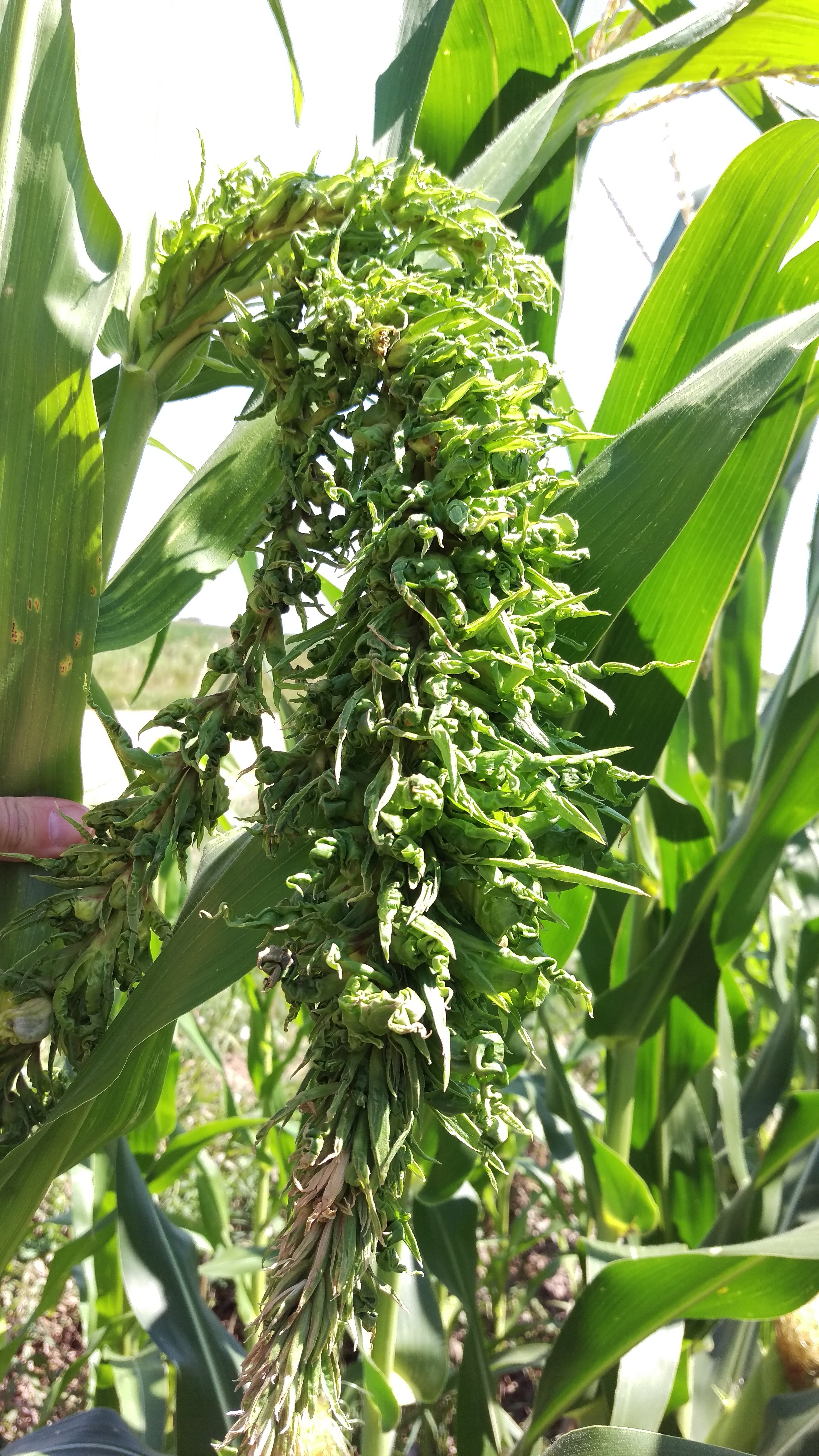
Tassels appear leafy in crazy top of corn. Took this pic from flooded waterway area in 2017.
growing season may show crazy top of corn. Crazy top symptoms include when the tassel appears strange and leafy. Plants can be barren, have barren kernels on ears, or have multiple ears at shank. 2-Automatic fungicide applications at tassel: I prefer waiting till disease warrants application & Nebraska research shows fungicide applications later in the season are effective. Be careful if you automatically spray at tassel! Canopy closure covered problems in fields, including uneven growth stages. Plants in the field may have tassels with others several growth stages behind. Arrested ear development primarily occurs on plants from 12-14 leaves when surfactants (particularly non-ionic) are applied with fungicides. So, it’s important to know your growth stages and consider what you’re applying. 3-Japanese beetles in corn threshold: Three or more Japanese beetles per ear with silks clipped to less than ½ inch and pollination is less than 50% complete. 4-It’s OK to fertigate pollinating corn. Avoid running pivot from 6 a.m.-Noon during pollination. Can apply 30 lbs N in 0.25″ water or up to 60 lbs N in 0.50″.
Linden trees and Japanese beetles: Last week I didn’t stress the importance of insecticides and impact to bees when spraying linden trees. ‘Sevin’ is effective but highly toxic to bees. It’s better to use heavy streams of water in late afternoon to knock Japanese beetles down (then drown in soapy water), pyrethroids, or permethrin like ‘Eight’ as those products are not taken back to the hives.
JenREES 7-7-19
Crop Updates: I really appreciate all those in ag industry who share what you’re seeing in the fields; it’s a blessing to have a great network of people looking at fields in different areas of the state and sharing what we’re all seeing!
Western bean cutworm (WBC) moths were seen in corn whorls the past week. They’re

Western Bean Cutworm Moth courtesy UNL CropWatch
also showing up in UNL light traps in addition to industry ones. To view the UNL light trap reports near Clay Center, please go to: https://scal.unl.edu/ltr2019.pdf. The light trap near Mead is currently having black light issues, but the report can be viewed at: https://go.unl.edu/2usz and the light trap report from North Platte is at: https://go.unl.edu/a56b. WBC moths prefer laying eggs on upper leaf surfaces in corn that is in the late whorl to early tassel stage. UNL entomologists recommend scouting at 25% of moth flight. It’s unknown how larval survival will be impacted by corn growth stage at this time. Larvae survival is highest when they have fresh tassel tissue and pollen to feed on before moving down to developing ears and silks. Larval survival is lowest when only vegetative tissue is available to feed on. So, the delayed planting and growth in some fields may allow for less western bean cutworm damage in 2019. However, our entomologists say that air and soil temperature can also impact insect development leading to slower development of the insects. UNL Entomologists Tom Hunt and Bob Wright, along with University of Minnesota researchers, developed a degree-day model to predict when WBC moths will emerge to begin mating and laying eggs. In a recent CropWatch article, they were predicting 25% moth flight to occur for the following dates/locations: July 7th in Lincoln; July 11 in Hastings and Ithaca; July 12 in Grand Island and York; July 13 in Clay Center; July 15 in Holdrege, and July 23 in North Platte. Corn expressing VIP3A proteins are highly effective for WBC control. Corn expressing Cry1F (Herculex) proteins may provide some WBC feeding suppression but shouldn’t be relied upon for control. The current UNL economic threshold for treatment is 5-8% of corn plants with eggs or larvae.
Common Rust in Corn: The rainfall, humidity, and wet canopies have allowed for


increased common rust to be seen in corn this past week. I was seeing larger numbers of pustules on lower leaves of plants, but this week could also see pustules occurring in upper canopies. Pustules of common rust are typically brick red in color, larger, more separate, and can appear on both the upper and lower leaf surfaces. Southern rust typically has smaller, orange to tan colored pustules occurring in tight clusters on upper surfaces of leaves. However, the past few years, we’ve seen common rust looking more orange in color, including this year. The best way to confirm for sure if it’s common or southern rust is to check the spores under the microscope, and I’m happy to do that. The spores of common rust will be circular in shape whereas southern rust spores are more oval to football shaped. Samples can also be submitted to the UNL Plant and Pest Diagnostic lab. So far, every sample I’ve looked at has been common rust. Southern rust hasn’t been found further than Georgia and Louisiana to my knowledge right now. We don’t typically recommend fungicides for common rust. It will be important to continue scouting for diseases with the humidity and leaf wetness we’re experiencing this year.
Lawn and Garden Questions: The wet weather has allowed slime mold (gray-black fungal growth on leaves) in patches in lawns in addition to mushrooms in lawns and landscapes. They are harmless and fungicides aren’t effective. They will go away upon drying out and with warmer weather.
Bagworms are out and it’s time to control them if you have them. The following gives more detailed info on their life cycle: https://go.unl.edu/rgju and this YouTube video shows what you’re looking for this time of year on your trees: https://jenreesources.com/2015/06/27/bagworms-in-evergreens/.
Japanese Beetles may be causing holes in Linden trees or rose leaves. They are
Green June Beetle (left) and Japanese beetle (right). Photo via Purdue Entomology.
green/brown beetles with white hairs that look like rows of white spots near each wing. Kelly Feehan in Platte County shares that “applying insecticides to lawns to control grubs will not prevent beetles from feeding on landscape plants. The product ‘Milky Spore’ sold to kill them, does not work. On landscape plants, hand picking or knocking beetles into a bucket of soapy water around 7 PM is the best time of day to do this as it prevents plants producing a distress pheromone that attracts more beetles. Japanese beetle traps work very well – IF you want to attract them to your yard – so traps are best NOT used. If a Linden tree has Japanese beetles, know these trees CANNOT be treated with Imidacloprid or other Neonicotinoid insecticides.” Carbaryl (Sevin) is effective to use for Lindens and landscape plants where it’s not feasible to remove beetles by hand.


 JenResources