Blog Archives
JenREES 5/26/24
Memorial Day: All the flags in cemeteries are extra striking this time of year. Thank you to all who take the time to put them up and take them down for the Memorial Day weekend! This weekend can provide a number of emotions and memories of people gone before us and is a special time to remember family members and friends. Many in the military community know of someone who didn’t come back home to their spouses/parents/kids left behind. Sometimes it’s hard to respond when people say, “Happy Memorial Day”. I was reading a post on Twitter from a military member. It shared what he’s doing by saying something to the effect of, “It’s a good day to remember (insert a person’s name and share about their service to keep their memory alive)”. I liked that idea. May we never forget those who paid the ultimate sacrifice for our Country and for their families left behind!
Storms: Last Tuesday was one of the craziest days for an Extension program that I can remember. We were dealing with the flooding closing roads around the Eastern NE Research and Education Center near Mead in addition to three tornado warnings and a fire alarm. The attendees at the crop scouting clinic were great as were all my colleagues at adapting and we were all grateful to get out of there before the last road out closed too.
I’m grateful that we haven’t had the massive flooding of fields like what has occurred there. The winds have created damage to pivots, buildings, and bins. They’ve also created some damage to crops, and I’m getting more calls about that. I’ve seen where tornadoes will literally suck plants out of the ground leaving small holes in rows. Straight-line winds are shearing plants off at ground level or a little above, particularly in fields with bare soil.
For corn, the growing point is still below ground till V5-6, so we will need to watch for any new recovery from the whorls. Sometimes corn that gets silted in when cut off doesn’t recover well if bacterial diseases set in, so watch for recovery. For soybeans, plants cut off below the cotyledons won’t survive. If the beans are just sticks with no leaves, there are two growing points at the cotyledons, 2 at the unifoliates, and a number in the buds once the beans hit the first trifoliate. Individual plants vary a lot, but we will need to watch recovery of these plants and then take stand counts to determine any need to replant or patch in areas of fields.
Stands and Replant Decisions: The chart in this article (https://go.unl.edu/doi2) shows the considerations between stands and yield losses. Note that the yield reductions listed in this table may be greater than what actually occurs in 2024. I’d love to see updated research as we know planting windows have changed with corn through the years and we saw how well late June replanted corn yielded in 2022.
For soybeans, I realize people struggle with low populations, and I get it from the weed control aspect. We ultimately recommend to aim for a final plant stand of 100,000 plants/acre. After disaster events, I’ve often recommended leaving stands at 50,000 plants/acre. Based on research and observations of soybeans compensating for reduced stands due to increased branching, we recommend leaving an early planted soybean stand of at least 50,000 plants per acre that has fairly uniform spacing throughout the field. We realize that can be hard! University of Wisconsin found only a 2 bu/ac yield increase when replanting early soybeans between 50,000 and their optimum stand of 100,000-135,000 plants/acre. For stands less than 50,000 plants per acre, plant a similar maturity into the existing stand; don’t tear out or kill an existing stand as early planted soybeans have a higher yield potential. If you’d like to test this for yourself, consider an on-farm research study! Simply leave a planter pass of your existing stand, plant into your existing stand for a planter pass, and alternate this across your field. Please see this protocol for more information.
Memorial Day Prayer: This was shared by my church this weekend. May we never forget the sacrifice of those who paid the ultimate price for our freedom and their families left behind.
JenREES 5/28/23

This time of year, when flags start lining the streets in towns, it’s always such a beautiful site to me. I also like visiting different cemeteries to see the veteran’s memorials and the flag displays. On Sunday, the way the large number of flags were unfurled in the wind at the cemetery in Utica was breathtaking…to the point on HWY 34, the two cars in front of me and I all hit our brakes and drove by slowly to take it in. Scenes like that or a beautiful rendition of the ‘Star Spangled Banner’ will always get me. I’m so grateful God allowed me to be an American; I don’t know why He allowed the life I’ve had vs. others in the world, but I’m grateful. I’m grateful for the service members throughout history and to those who made the ultimate sacrifice so our Country could remain free. I’m grateful to their families for the sacrifices made, especially those left behind. In spite of everything going on in our Country and the world, and in spite of how differently people view freedom, we still are so blessed to live in this Country! So this Memorial Day, as we spend time with family and friends, as we remember and honor loved ones who have gone before us, may we also remember and be grateful for those who paid the ultimate sacrifice for our freedom, those families left behind, and may we keep praying for our Country and leaders, military members and their families.
Drought: One thing I was grateful for this week was, in general, the lack of high winds and high heat with as dry as it’s been. Heat and wind would make this situation even more difficult. I was also grateful the Drought Monitor acknowledged we needed to be moved into D4 and expanded the D3 area. These designations are important, particularly on the forage and livestock disaster assistance and insurance side. There’s many conversations that occur behind the scenes each week. Whenever I feel we can get a designation that better reflects our situation, I’m grateful. Special thank you to those who share info. on what you’re receiving for yields on alfalfa cuttings, pond, and pasture situations. Your input greatly helps me put together a better picture for those making decisions to consider. I share what I’m seeing but having specific info. from producers to share always helps. Others are welcome to share with me as well if you’d like!
USDA FSA with Nebraska Extension held a drought assistance programs webinar earlier this month. If you missed it and wanted to learn more, you can watch the recording here: https://go.unl.edu/r24y.
Regarding releasing of wheat for forage, several were also concerned about the potential for high nitrates. What Dr. Mary Drewnoski has observed through her research, demonstrations, and what we’ve seen with producer situations, is that yes, forages often test high in nitrates, but these immature small grains are also high in quality. She has found high quality and high energy help to off-set high nitrate danger. The following NebGuide walks through nitrate situations and considerations: https://go.unl.edu/bjdf.
Several also had conversations with me about pasture turnout. Some are turning out now/shortly with the goal of getting cattle off by mid to late-June. Others are hoping to graze/feed wheat or alfalfa first and then turn cattle out to pasture in June. Regardless, with short pastures, we need to think about pasture management too, even if we do get some rain. And, with pasture management comes thinking about potentially altering pasture leases.
Insects in Crops: Link to article on scouting emerging corn for insects: https://go.unl.edu/pg2c and light trap data for stations throughout the State: https://entomology.unl.edu/fldcrops/lightrap
Birch and other established trees: Trees that prefer moist soils, like some river birches, have branches that died down from the top. Sometimes only half the tree is leafed out. Young birch trees may be forgiving and recover if the dead is pruned out. As we think about established trees (birch or other species), lawn irrigation can be enough for established trees in our area in ‘average’ rainfall years. But with the drought stress, consider using soaker hoses and bark or wood chip mulches to help keep the root zones of trees cool and moist. When watering, moisten the soil 8 to 10 inches deep for trees (push a screwdriver in the ground to determine depth of moisture). Don’t overwater! Only apply 2-4” deep of bark mulch around trees and avoid placing mulch next to the tree trunk as that can create rotting of the trunk. Also don’t fertilize stressed trees.

JenREES 5/30/21
Driving to look at some on-farm research fields in Seward county last week, I came over the hill to see the flags lining Highway 34 at the cemetery. This time of year, when flags are set out lining streets in towns and at cemeteries, never ceases to get me. In that moment, with chills and tears, I said a prayer of gratitude for our Country, for our beautiful flag, for our freedoms and those who gave all for my freedom, and for living in this great Country. In spite of everything going on in the world, and in spite of how differently people view freedom and what’s happening, we still are so blessed to live in this Country! Many service members recall their battle buddies who never came home with them. Many military families throughout history have walked alongside the families left behind. Freedom truly is not free! So this Memorial Day, may we remember and be grateful for those who paid the ultimate sacrifice for our freedom, may we remember and be grateful to those families left behind, and may we keep praying for our Country and leaders, military members and their families.
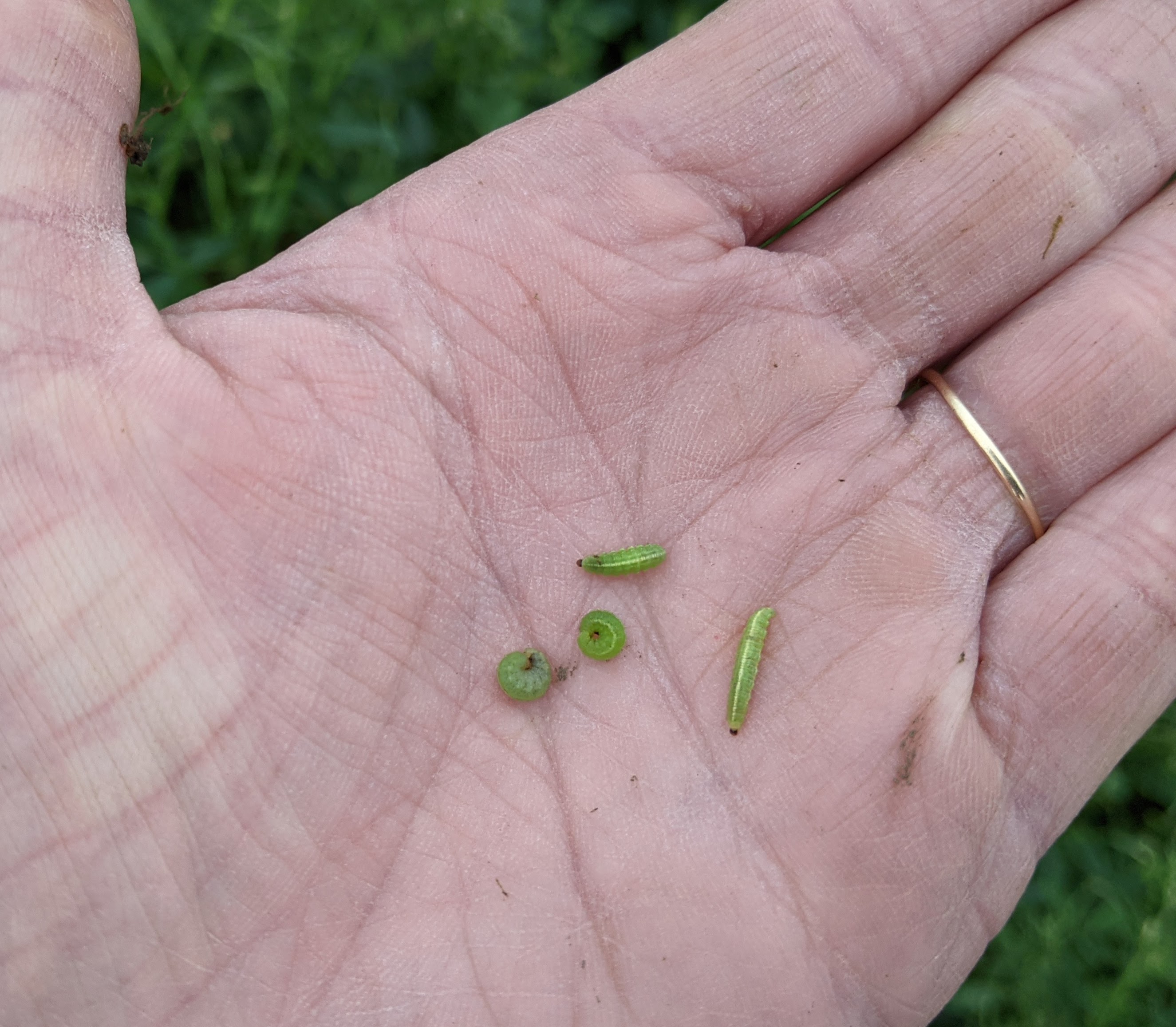
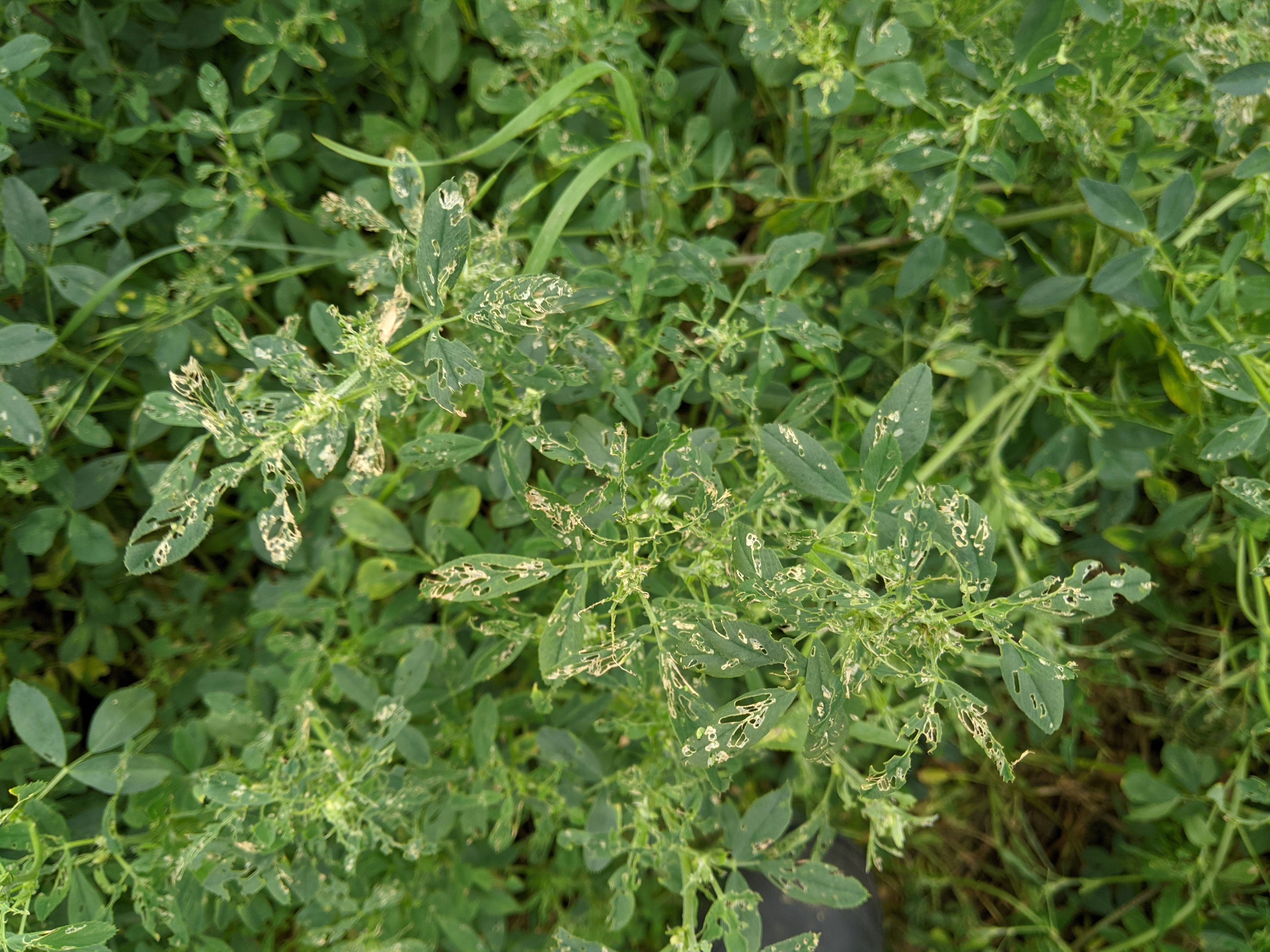
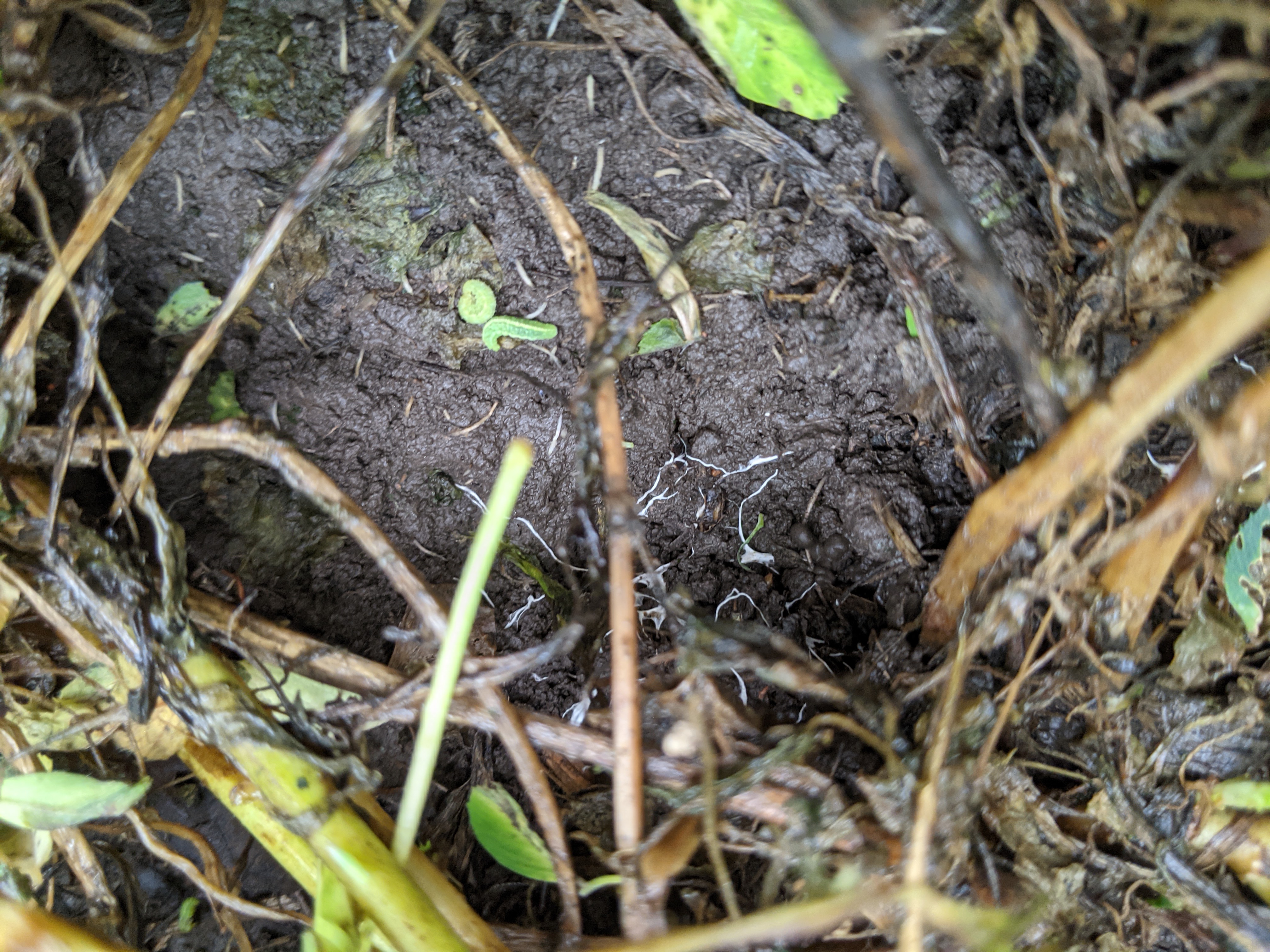
Alfalfa weevils have been heavy this year. For those with alfalfa, you may have noticed the tops of your plants turning a grayish/brown color. The culprit is most likely alfalfa weevil larvae. They are green caterpillars with a white stripe down the back and dark head. They are often hard to find as they will go down to the crowns of plants in heat of day. By the time you read this, the alfalfa will most likely be put down. What you may observe: once the alfalfa is put down, the weevil larvae will continue to feed. The area under the windrows will turn brown as they feed on the regrowth. As soon as the alfalfa is baled, we’d recommend using an insecticide to kill the larvae and allow the alfalfa to regrow. I’m still seeing all stages of larvae in the field. Highly effective insecticides for alfalfa weevil control include those that are pyrethroids (active ingredient ends in “thrin”, such as Permethrin) and products containing indoxacarb (e.g., Steward). Each field situation may be different, though, so watch the regrowth. If it’s greening up and you’re not finding weevil larvae, they may have pupated and treatment may not be necessary.
Nebraska Land Link provides opportunities to connect land seekers with retiring landowners. Land access is one of the biggest challenges facing aspiring and beginning farmers. For some landowners, they simply do not have the next generation available to take over their operation. Nebraska Land Link is a project of Nebraska Extension’s Farm and Ranch Succession and Transition program and Nebraska Women in Agriculture. When you apply to Nebraska Land Link, either as a land seeker or a landowner, Nebraska Extension personnel will work to match your application with the most compatible counterpart. Using the answers you submit and offer in a potential interview, Nebraska Land Link matches are based on the shared values, interests and skills of both parties, so that a mutually beneficial and satisfying partnership can be forged over the course of the transition plan. You can learn more about the program at: https://farm.unl.edu/landlink and watch a short 3 minute introductory video at: https://go.unl.edu/8sv6.
Ash Trees Losing Leaves: The past few weeks I’ve received questions about ash trees losing leaves. Because of the weather conditions, anthracnose on shade trees, including ash, is fairly prevalent. It’s crazy how I didn’t take any pictures when looking at any of these trees…but what you will see are small dark spots on the leaves. The leaves may curl and turn yellow-green in color before dropping. There’s nothing you should do and a new flush of leaves will appear in time.
York Co. Progressive Ag Safety Day has been postponed to June 14, 2022.
Dealing with Conflict Dynamics for Farm and Ranch Families Course: Conflict and tension often arise in family farms and ranches. This new course strives to provide Nebraskans with tools to build a better culture. Participants will gain the skills and resources necessary to overcome the conflict that may be hampering their family and business relationships. The course will be taught by renowned farm family coach Elaine Froese and hosted by Nebraska Extension’s Women in Agriculture Program. The Conflict Dynamics Training is a three-part course that will be held virtually from 3:30 to 5 p.m. Central time on June 15, 22 and 29, via Zoom. An internet connection is required, and participants should plan on attending all three sessions. Participants in this course will take a Conflict Dynamics Profile assessment to measure their personal conflict behaviors. The profile will help participants understand how they respond to conflict, what triggers can escalate conflict and how to manage conflict more effectively. Froese will then guide participants through a discussion on how to deal with conflict and tension on the family farm or ranch. The course fee is $35 per participant and the class size is limited to 20 people. Registration closes June 11. Because of the sensitive nature of the course, it will not be recorded. Registration is open at https://wia.unl.edu/conflict-dynamics.



JenREES 5-26-19
Driving through Nebraska towns around Memorial Day, I find the streets lined with flags such a beautiful site. Grateful to live in our Country with our freedoms. I’m also grateful for those who paid the ultimate price for our freedom and for their families left behind.
Flooding/Ponding and Crop Effects: With the rain, some may be experiencing ponding/flooding of crops. Emerged corn prior to 6 leaves can survive from two to four days depending on temperatures and if entire plants are submerged or not. Cooler air temperatures (60’s and cooler) allows for longer survival than temperatures in the mid-70’s and warmer. Little data exists for germinated seeds and seedlings prior to emergence, but they most likely would experience soil oxygen depletion within 48 hours. Once emerged, soybean may handle a fair amount of flooding due to the growing point being above ground (depending on if they’re submerged or not). Four or more days of flooding may result in shorter plants due to shorter internodes and/or perhaps fewer nodes. Stand reductions may be observed after seven days of flooding (depending on size and if completely submerged or not).
Prevent plant may be another topic on some growers’ minds in addition to considerations after the May 25 corn planting date for crop insurance. These are addressed in this week’s CropWatch at http://cropwatch.unl.edu.
Interseeding Cover Crops: In a previous news column, I touched on the topic of interseeding cover crops into corn or soybean. For this week’s CropWatch at http://cropwatch.unl.edu, we provide more information based on the research available. For those considering this as an on-farm research study, please contact me or your local Extension Educator soon to work out details.
Wheat: Michael Sindelar and I looked at wheat in Clay and Nuckolls counties last week. For diseases we’re mostly seeing powdery mildew and septoria leaf blotch. Backlighting revealing yellow specks on upper leaves in some fields will most likely develop into leaf rust. Wheat ranges from nearing flag leaf to beginning flowering. My concern for wheat in the heading to flowering stage is risk of fusarium head blight (scab) with the rain we’ve been receiving at heading/flowering. The scab risk tool (http://www.wheatscab.psu.edu/) is showing a low to medium risk for our part of the State right now. If you do consider a fungicide, your best options include Prosaro, Caramba, or Miravis Ace as these products will help protect against scab in addition to kill any fungal diseases on your wheat leaves. Other products are off-label once flowering begins or are not as effective preventing scab based on research. Best application timing to prevent scab is when 30% of the plants in the field are at 15% flowering (early flowering stages).
Lawn Care: I know some are getting tired of mowing already! Just a reminder to keep mowing heights at 3″. Spring is an important time for deeper root establishment before the summer heat sets in and maintaining a higher lawn height allows the grass to develop that root system. I’m seeing several lawns being scalped in an effort to reduce amount of mowing. Mowing too short stresses the grass impacting its ability to set deeper roots for later. It will also allow for more weeds to germinate in the lawn.
Memorial Day
Greater love has no one than this than to lay down his life for his friends- John 15:13
Grateful for those who paid the ultimate sacrifice for our freedom and for their families left behind.


 JenResources