Blog Archives
JenREES 10-1-23
Harvest Update: It’s been a fairly full month of harvest! I’ve heard much disappointment in yields thus far. Perspective for me comes from helping serve eight counties this past year and seeing such a range of conditions. Have struggled to find ways to encourage as I talk with growers. I’m just so grateful harvest is here as, to me, every field finished is one field closer to being done with 2023! I also realize that’s not a great way to look at a year, but it’s honestly where I’m at. Thus far, non-irrigated soybeans have averaged 20-25 bu/ac in much of the northern counties I serve and 4-10 bu/ac in the southern tier of counties. Pockets receiving a little more rain got above 30 bu/ac. Irrigated soybeans are mostly going 65-75 bu/ac, which I realize is a huge disappointment. Last week I shared the high heat the third week of August coupled with disease and soybean gall midge were all factors. Hearing 45-50 bu/ac for those with higher levels of disease (SDS and white mold). Early season beans were extra impacted by the high heat with small beans like “bbs’s”. Later maturing beans being harvested now were at an earlier development stage during the high heat and seem to be coming out better in size and yields.
Non-irrigated corn is all over the board depending on rainfall, hail damage, and practices involved. Have seen everything from no/few ears present and not even combined to nearly 120 bu/ac where there were more rains on no-till ground. Heard an exceptional non-irrigated yield for this year of 145 bu/ac on no-till corn on milo ground with more rain in July. With higher ET, I think there’s potential for some powerful irrigated corn in spots, but it also depends on ability to maintain enough water, impact of the smoke on solar radiation, development stage during that 3rd week of August and how quick the fill period went from dent to black layer. GDDs from 2012, 2022, and 2023 were fairly similar in pattern (based on data from York). June 2023 varied from nearly the same to 50 GDD more than June 2012. July 4 is when things changed with 2012 accumulating more GDD until the 3rd week of August of 2023. From then on, 2023 and 2012 have showed essentially the same GDD accumulation until this past weekend (Sept. 30) when 2023 is around 37 GDD higher than 2012. GDDs in 2023 follow a highly similar pattern to 2022 other than the June time-frame and Aug. 22-Sept. 17 being higher in 2023. This CropWatch article (https://go.unl.edu/kefo) was suggesting near average to below average yields for irrigated corn in our area of the State due to the high heat period from Aug. 22-Sept. 12, 2023. During that time, the weather data at Clay Center showed higher solar radiation, ET, min and max temp compared to the 30 year average. We’ll see what happens and wishing you safety during harvest!
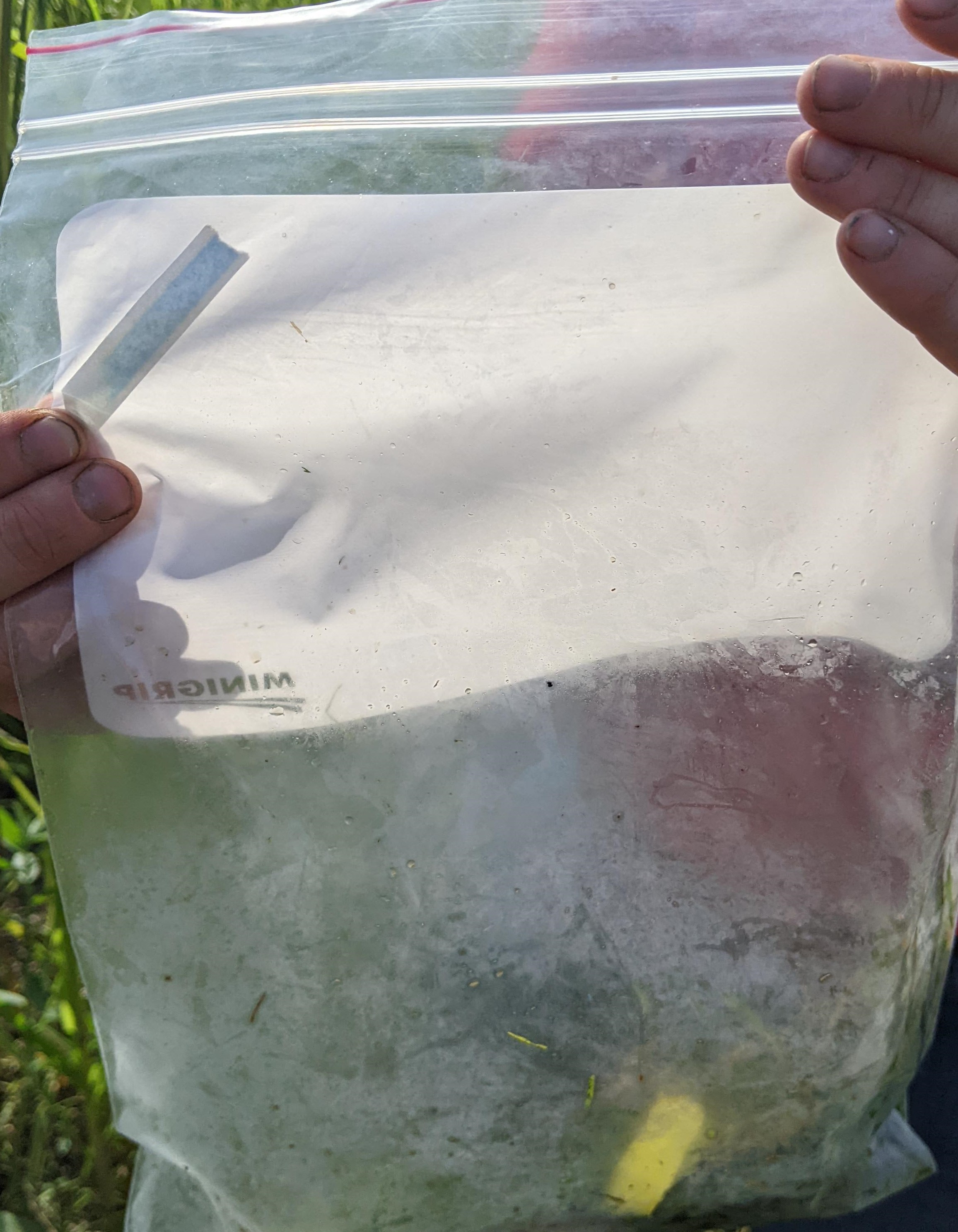
Frost and Prussic Acid: It’s not predicted for frost yet but in case temps drop to freezing this coming Friday, be aware of the potential for prussic acid poisoning for cattle out on sorghum species (sudangrass, sorghum sudan, sorghum/milo). UNL beef researchers were experimenting with prussic acid test strips (cyantesmo test paper) this past year when grazing annual forages; they can be a quick indicator of the presence of prussic acid or not. University of Kentucky shares a protocol for use: https://forages.ca.uky.edu/files/cyanide_quick_field_test_using_cyantesmo_paper_updated_2019.pdf. Essentially, collect the plant material the animal would graze (small tillers have most potential for prussic acid). Cut the material into smaller pieces and place into a gallon sized ziplock bag with a 1” piece of the test strip paper. Seal and leave the bag in the sun/warm place for 10 min. The paper will turn blue at the presence of cyanide or remain white if it’s not present. It doesn’t provide a level but is a quick way to know if there’s risk of prussic acid poisoning or not. One roll of test paper goes a long way and is a little pricey, but could be used amongst several producers in an area for a quick test. Just something to consider as there’s a lot of forages planted in the area this year. For those who planted pearl millet, prussic acid is not a concern.

Minute Pirate Bugs: One thing I appreciated in the midst of drought was the reduced number of mosquitoes, chiggars, and ticks (at least that bothered me anyway). Fall is such a beautiful time of year to be outside until the tiny biting black/white minute pirate bugs (insidious flower bugs) appear as they have now! They’re actually a beneficial predator of thrips, mites, aphids, tiny caterpillars, and insect eggs in crop, garden, landscapes, and wooded areas in the summer. This time of year on warm, sunny days, they bite humans they land on. One doesn’t need to worry about them injecting a venom, feeding on blood or transmitting disease. People’s reactions to the bites range from no reaction to swelling like a mosquito bite. Unfortunately, there’s also no method of controlling them. Insect repellents don’t work as they aren’t attracted to carbon dioxide like mosquitoes are. They are attracted to light colored clothing, so wearing darker colors and long sleeves can help when being outdoors during warm, sunny days. Otherwise, work outdoors on cool, cloudy days.
JenREES 9-29-19
Warm weather with sunshine this time of year prompts a tiny insect looking for final

Minute Pirate Bug (photo courtesy Jim Kalisch)
food before winter to cause a painful bite on humans. I’ve received several questions about “what is that tiny black bug with white marks on back that bites?” The insect, known as the minute pirate bug (and insidious flower bug), is actually a beneficial predator of thrips, mites, aphids, tiny caterpillars, and insect eggs. People will even purchase these insects for biological control, particularly in greenhouse settings. They’re found throughout crop, garden, landscapes, and wooded areas in the summer preying on other insects. However, this time of year they start biting humans they land on. One doesn’t need to worry about them injecting a venom, feeding on blood or transmitting disease. People’s reactions to the bites range from no reaction to swelling like a mosquito bite. Unfortunately there’s also no method of controlling them. Insect repellents don’t work as they aren’t attracted to carbon dioxide like mosquitoes are. They are attracted to light colored clothing, so wearing darker colors and long sleeves can help when being outdoors during warm, sunny days. Otherwise, work outdoors on cool, cloudy days.
Bagworms: This year was a heavy year for bagworms and I’m still receiving calls about treating for them as people find damage. We would recommend it’s too late to treat now as eggs have been laid in most bags at this point and insecticides, including systemic ones, won’t move inside the bags to kill any adults or eggs within the bags. Wherever feasible, you can reduce next season’s load by picking off bags and either squishing them or drowning them in soapy water. Simply throwing them on the ground doesn’t help. I was even finding bags that had dislodged from windbreaks in adjacent crop fields this year with larvae traveling back towards the windbreak! Between 500-1000 eggs can be found in one bag. Aim for insecticide applications next year when larvae hatch and feed, usually at some point in June.
Harvest Thoughts: Several times the topic of palmer amaranth came up this week while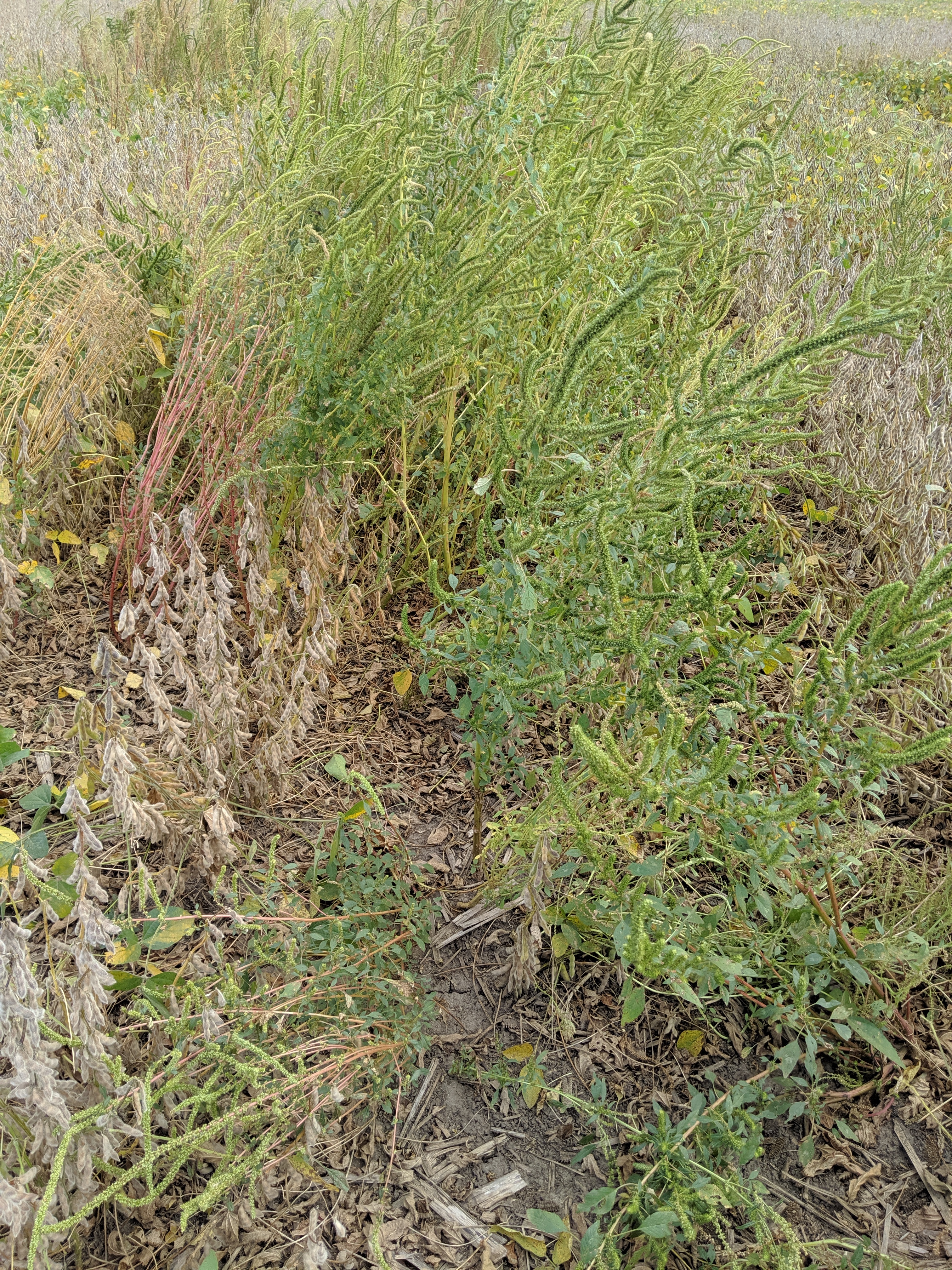 in the fields with palmer in patches or especially on field edges. I believe the first step of palmer management begins at harvest by choosing to not run the combine through those patches. Research from the southern U.S. showed 99% of palmer seed survives the combine and we also know the combine is very effective at seed dispersal. Several farmers have shared they could see the worst palmer spreading in their fields the following year where the first combine pass occurred. Research supports this. The highest number of new palmer plants counted in a field were found the successive year where the first combine pass occurred after combining a patch of palmer. So some suggestions to consider: 1-Consider disking or shredding patches of palmer. 2-Plant a small grain like rye or bin-run wheat into endrows and/or patches where palmer was present. Research has shown that burying palmer seed 3-4” and leaving it buried for 3 years can reduce germination 80-100%. I realize disking doesn’t necessarily go that deep and that it’s difficult for no-till guys to want to do any tillage. Shredding won’t kill seed, but it will keep the seed from going through the combine. The small grain will help reduce light interception to the soil surface next spring. That’s the #1 trigger for palmer germination-light penetration on bare soil.
Also, I realize it’s difficult to achieve, yet a reminder to check your beans and harvest as 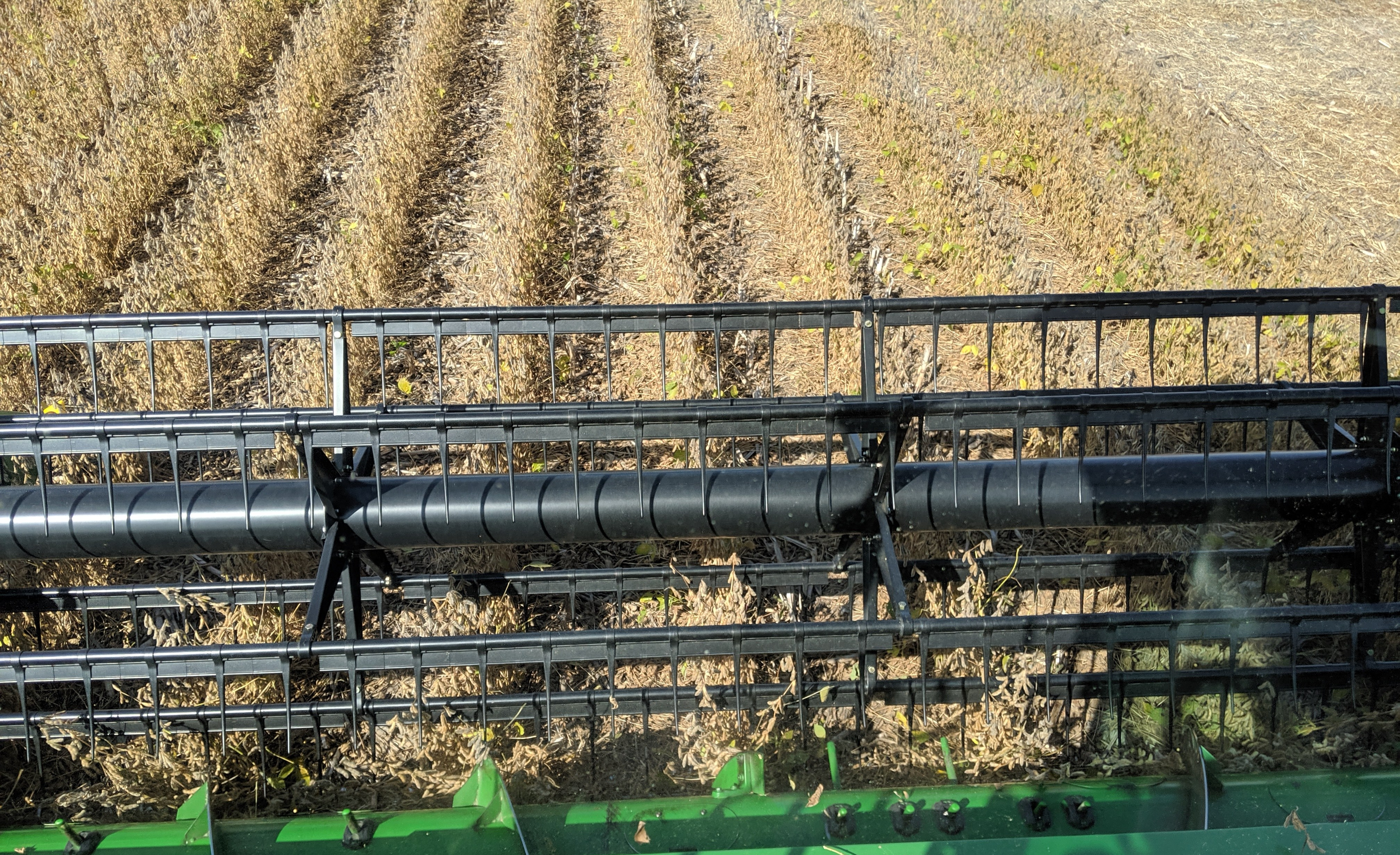 close to 13% as possible. A number of fields last week even with green stems and some leaves remaining on lower plants were actually at 13% when harvested. Delivering soybeans below 13% reduces profits while there’s a dock for delivering wet beans. While not a dock, less than 13% moisture results in fewer bushels to sell (load weight divided by 60 lbs/bu assuming 13% moisture). Selling soybeans at 8% moisture, you’re losing about 5.43% yield; at 9% moisture, it’s 4.4%; at 10% moisture, 3.3%; at 11% moisture, 2.25%; and at 12% moisture, it’s 1.14% yield loss. That doesn’t take into account additional risk for shatter losses during harvest. So another consideration as we consider economics and profitability this year.


 JenResources