Blog Archives
JenREES 5/6/24
I’m so grateful for the rain and the green is so beautiful!!! The rain has led to some questions.
Corn Yields: it’s still early! I’ve mentioned this often to people the past week. We now set at May 5. In 2023, Dr. Jim Specht led a CropWatch article looking at NASS yields and 50% planting progress over 43 years (https://go.unl.edu/dge7). A summary of the data showed, delays in the Nebraska corn 50% progress date that occur within the May 2-12 planting period do not seem to have an appreciable impact on resultant corn yield. You have heard me and others talk about planting windows for several years based on data that Dr. Roger Elmore had previously shared and that information has been consistent with data from Iowa, Indiana and the U.S that corn yield doesn’t appear impacted till after mid-May. For perspective, think about the 2022 replant corn yields.
Regarding soybeans, Dr. Specht shared (in 2023), “one other notable feature is that Nebraska producers have advanced the 50% soybean progress date from a 43-year mean of May 22 by eight days to a projected date of May 14 for the year 2023. That eight-day shift to earlier soybean planting in Nebraska would have generated 0.99 x 8 = ~ 8 bu/ac greater yield for irrigated soybean producers and 0.54 x 8 = ~ 4 bu/ac greater yield for rainfed soybean producers.” The soybean planting date is more critical than corn. A number of producers have either finished soybeans before corn or have been planting at the same time to take advantage of increased soybean yields.
Pre-Plant Nitrogen movement with rains: In short, “it depends” is the best answer based on soil type, nitrogen source, soil moisture, amount of nitrate in the soil, and soil temp. Additional sampling such as soil, tissue, or using tools like Sentinel Fertigation can help in season to better understand plant nitrogen needs. University of Minnesota shares, “As a rule of thumb, with each inch of water moving down through the soil, nitrates will move down with that water five to six inches in silt loam and clayey soils, and up to 12 inches in sandy soils.” Ammonia binds to soil particles and is more stable in the soil. Urea will move with water if applied shortly before a heavy rain and can leach; however, it also quickly converts to ammonium in the soil, which is a stable source of nitrogen not easily leachable. A CropWatch article written in 2013 helps in a year like this without a full soil moisture profile, “If nitrogen was applied as a surface broadcast application immediately before rainfall (to a silt loam soil), it would move down with the rainfall. Its distribution in the soil would not be uniform, but 3 inches of infiltrated rain would distribute the nitrogen in the top 18 inches of soil. There would still be some nitrogen in the top 6 inches, but the “bulge” of the nitrate concentration would be at about 12 inches. Corn roots will grow into that nitrogen and there should not be an N deficiency as early plant needs would be met.” (https://go.unl.edu/76yw)
University of Minnesota shares that microbes will convert various nitrogen sources to nitrate twice as fast with each 10F temperature rise. Their example was, “urea that takes 24 days to fully convert to nitrate at 50°F will fully convert to nitrate in six days at 70°F.” For perspective, we’ve been holding around 58F for the past week. So the short answer is for most situations, we most likely haven’t lost much if any pre-plant nitrogen beyond the root zone due to the soil conditions thus far. Use in season tools and sampling to understand specific field situations.
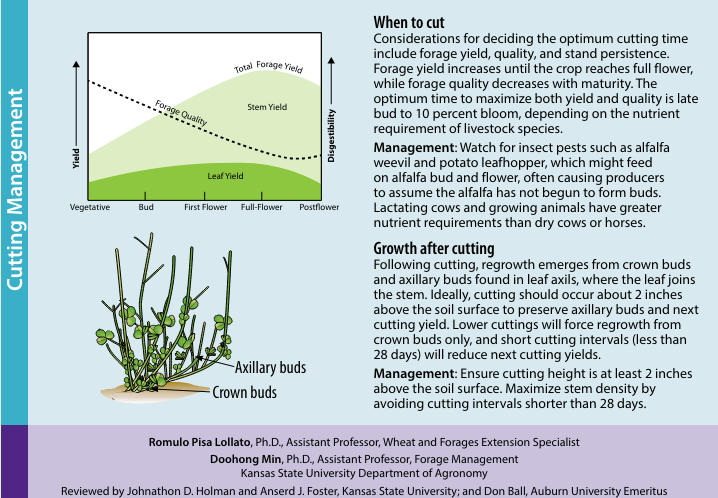
Alfalfa Weevil Control Tradeoffs: With current hay prices and alfalfa in the late vegetative to early bud stage, we’re looking at alfalfa weevil thresholds of 1.5-2 weevil larvae per stem (threshold charts here: https://go.unl.edu/p6ym). The challenging decision right now is if you wish to cut alfalfa early or treat with a shorter pre-harvest interval product. Reports in the Holdrege area have shared weevil resistance to products with lambda-cyhalothrin (Warrior, etc.). Steward is a product that contains a different active ingredient (indoxacarb) and is safer for beneficial insects, but costs more. It could be an option for those of you further out from first cutting. For those of you getting towards early bud, perhaps the option is to take an early first cutting and watch regrowth of second cutting if you’re at the economic threshold?


 JenResources