Blog Archives
JenREES 10/2/22
Crop Update: What beautiful weather! Grateful for the crops that are being harvested! Also, grateful to hear some are blowing out combines after harvest in these heavily infested palmer fields before moving to the next field. That’s the first step in managing palmer for the future. Regarding combine cleanout, Market Journal had a video at: https://youtu.be/UtSAaWtMTS4 and CropWatch had an article at: https://go.unl.edu/skfh if you’d like more information.
Managing heavy palmer fields after harvest: Palmer and waterhemp seed survive for 5-7 years. With each plant producing an average of 500,000 seeds, it only takes a few plants to create a mess.
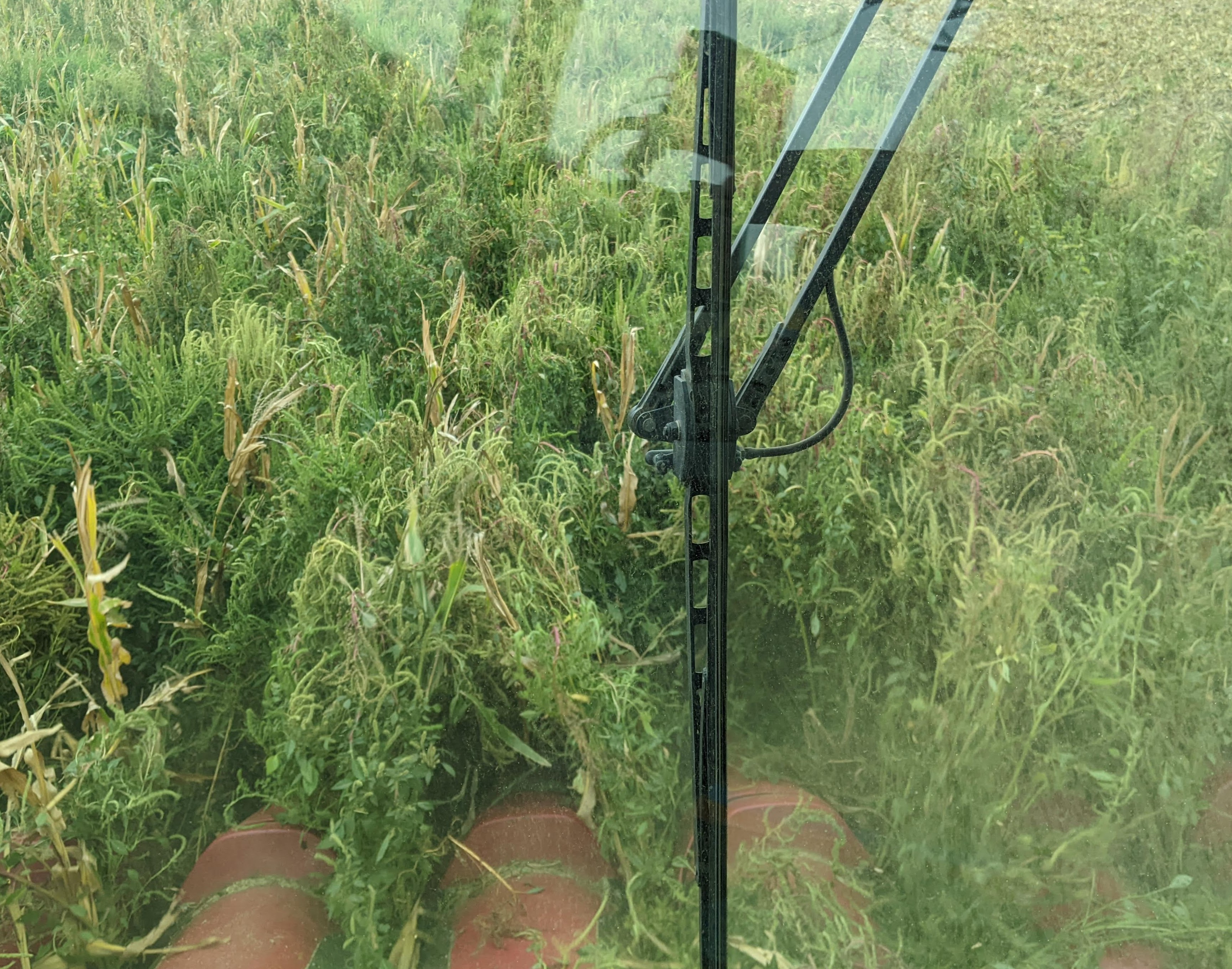
It’s been encouraging to see the rye and other small grains being drilled in fields; I realize it’s also been hard to irrigate them up after such a long irrigation season. Small grains such as rye, wheat, and oats have been proven to significantly reduce palmer, even in the absence of residual herbicide use compared to a no cover crop control. With the addition of a residual herbicide, there was no difference between using a cover crop and the check treatment. However, the way I look at it, the cover crop was another tool to take some of the pressure off the herbicide from having to do all the work. The main reason for that is because these small grains keep the soil surface covered. Palmer germinates when it senses red light on a bare soil surface, so keeping the soil covered can help reduce early season palmer germination. The small grains are also beneficial at reducing diseases such as white mold and sudden death syndrome.
If one isn’t interested in cover crops but is already using reduced tillage, another plan going forward will be to use a PRE- herbicide with residual followed by POST- with residual and get to canopy closure. Essentially, the strategy there is to keep the seeds from germinating.
For those who plan on disking, the research showed that disking once and not disking again for 3 years resulted in palmer reduction of 80-100% by year 3. However, disking each year allowed the seed to keep coming to the surface where it could germinate (depending on the herbicides and timing used). So, planting a cover crop after disking to cover the soil is one option to help reduce palmer germination in the spring. For those not interested in cover crops, having a strong herbicide program of a PRE- with residual followed by a POST- with residual sooner than you think you may need it, may be a strategy. One can also include cultivation followed by a residual herbicide, depending on canopy closure. The use of tillage, flaming, and electrocution are also being used in organic and some conventional systems.
Finishing Replant Crops: Grateful to be at this point in the season where much of the replant corn is 1/4 milk or further! Hybrids will vary regarding growing degree units (GDUs) to finish. A GDD tracking tool to help is https://mygeohub.org/groups/u2u/purdue_gdd. Regarding irrigation, below is the amount of water needed to finish corn. Most of the beans should be close to done for irrigating.
- Beginning dent needs 5.0” water, around 24 days to maturity, 25-55% yield loss potential.
- ¼ milk needs 3.75” water, about 19 days to maturity, 15-35% yield loss potential.
- ½ milk needs 2.25” water, about 13 days to maturity, 5-10% yield loss potential.
- ¾ milk needs 1.0” water, about 7 days to maturity, around 3% yield loss potential.
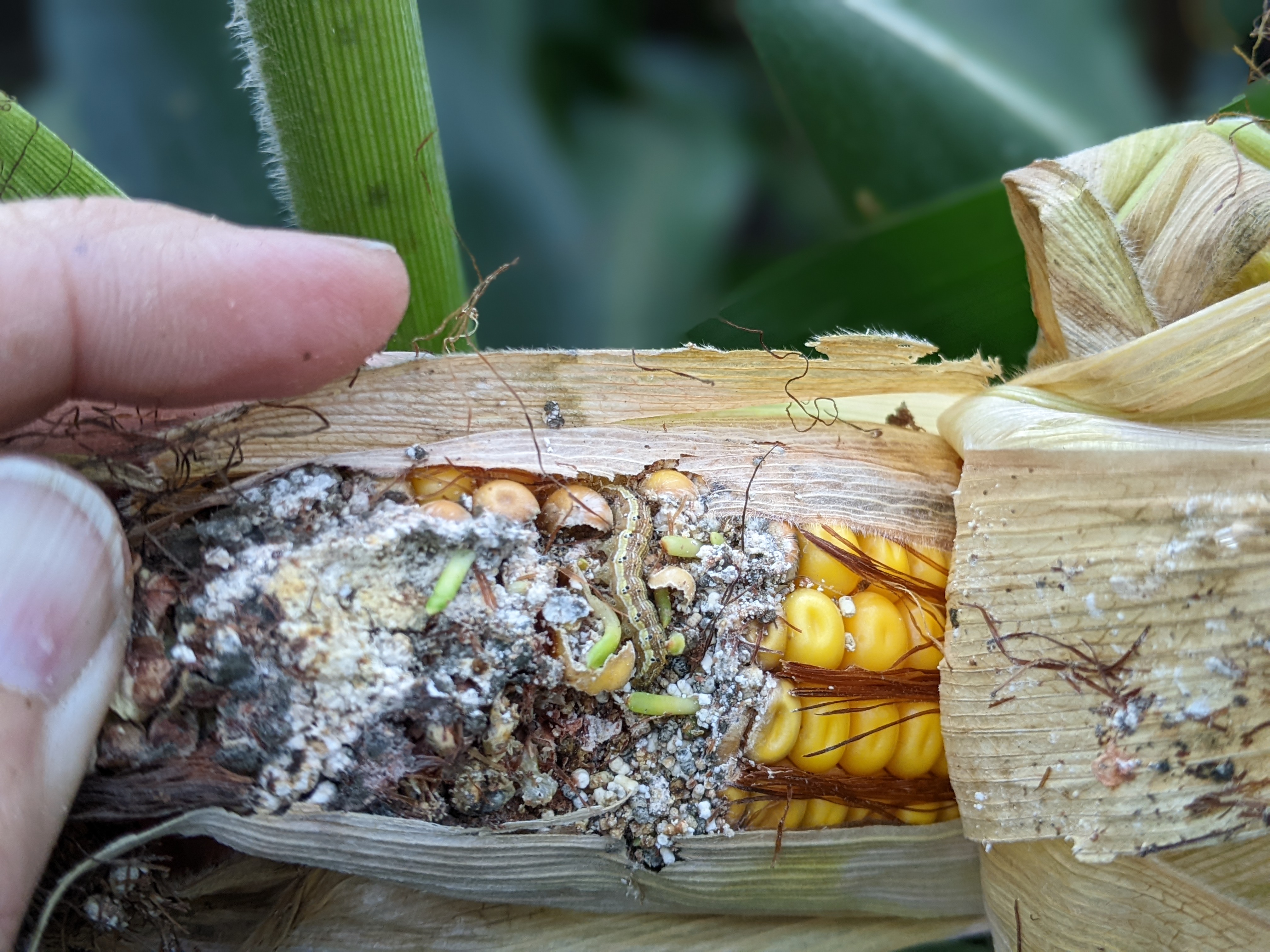
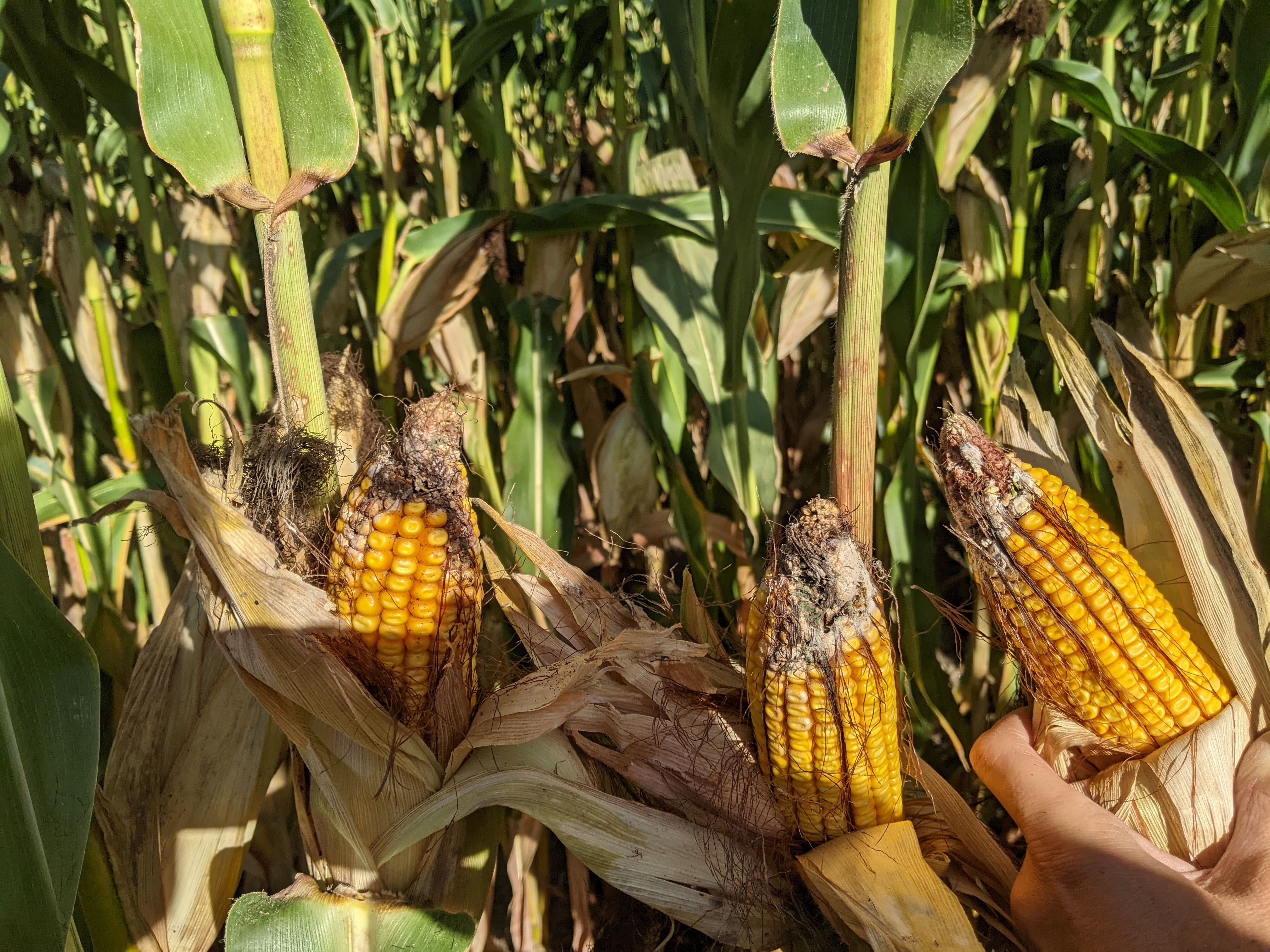
We knew replant crops would be a target for insect and disease pressure. It’s hard to see the corn earworm impact crops for such a large area as what they have this replant corn. Even fields that were sprayed once still have ear damage on a good 50% of the plants. The earworm feeding has allowed entry of fungi such as those causing white/pink Fusarium ear mold to varying degrees on the ears. Also seeing some blue-gray Penicillium ear mold and some sprouted kernels. Unfortunately, there wasn’t much we could practically do about it and there’s nothing we can do now till harvest. The presence of mold does not automatically mean the presence of mycotoxins. For harvest, it’ll be important to set combines to blow out any lighter, damaged kernels. Will share more on grain management in storage later.
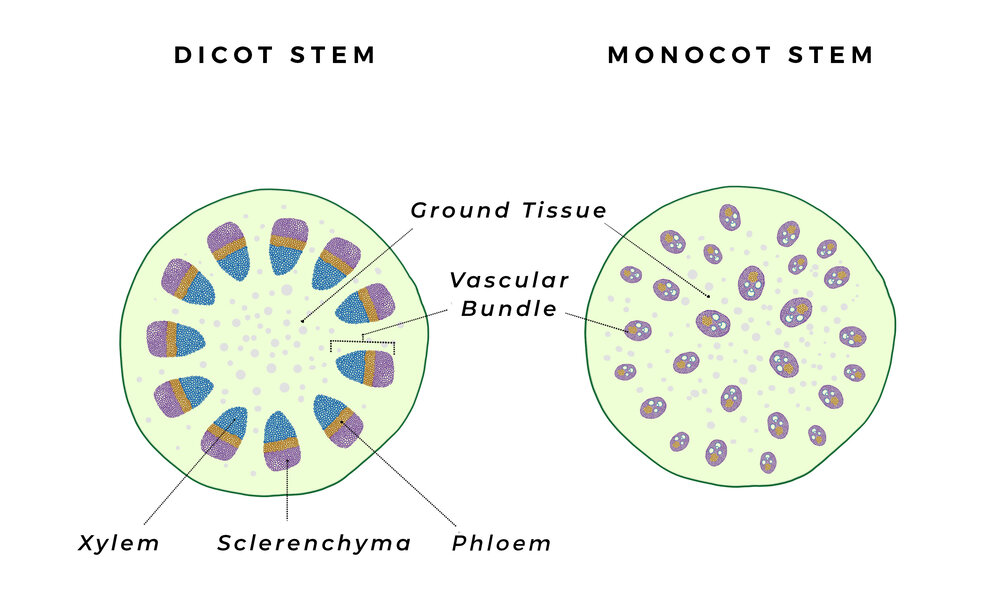
Stem Borer: Have heard some disappointment about soybean yields which I feel is mostly due to beans being pushed too fast with the weather. Soybean stem borer is also being blamed, but it hasn’t been proven via research to reduce yield unless beans become lodged/break off. To understand why, it’s important to understand corn and soybean physiology. Soybeans are dicots like trees and the xylem and phloem are found in rings towards the outside of the stem instead of the center. So the stem borer hollowing out the soybean center doesn’t affect the soybean vascular bundles, but insects like gall midge working on the outside of the stem can. This differs from monocots like corn where the xylem and phloem are arranged throughout the stem. Thus, I don’t think stem borer is the reason for lower soybean yields that weren’t due to lodging/breaking off this year.

JenREES 9-29-19
Warm weather with sunshine this time of year prompts a tiny insect looking for final

Minute Pirate Bug (photo courtesy Jim Kalisch)
food before winter to cause a painful bite on humans. I’ve received several questions about “what is that tiny black bug with white marks on back that bites?” The insect, known as the minute pirate bug (and insidious flower bug), is actually a beneficial predator of thrips, mites, aphids, tiny caterpillars, and insect eggs. People will even purchase these insects for biological control, particularly in greenhouse settings. They’re found throughout crop, garden, landscapes, and wooded areas in the summer preying on other insects. However, this time of year they start biting humans they land on. One doesn’t need to worry about them injecting a venom, feeding on blood or transmitting disease. People’s reactions to the bites range from no reaction to swelling like a mosquito bite. Unfortunately there’s also no method of controlling them. Insect repellents don’t work as they aren’t attracted to carbon dioxide like mosquitoes are. They are attracted to light colored clothing, so wearing darker colors and long sleeves can help when being outdoors during warm, sunny days. Otherwise, work outdoors on cool, cloudy days.
Bagworms: This year was a heavy year for bagworms and I’m still receiving calls about treating for them as people find damage. We would recommend it’s too late to treat now as eggs have been laid in most bags at this point and insecticides, including systemic ones, won’t move inside the bags to kill any adults or eggs within the bags. Wherever feasible, you can reduce next season’s load by picking off bags and either squishing them or drowning them in soapy water. Simply throwing them on the ground doesn’t help. I was even finding bags that had dislodged from windbreaks in adjacent crop fields this year with larvae traveling back towards the windbreak! Between 500-1000 eggs can be found in one bag. Aim for insecticide applications next year when larvae hatch and feed, usually at some point in June.
Harvest Thoughts: Several times the topic of palmer amaranth came up this week while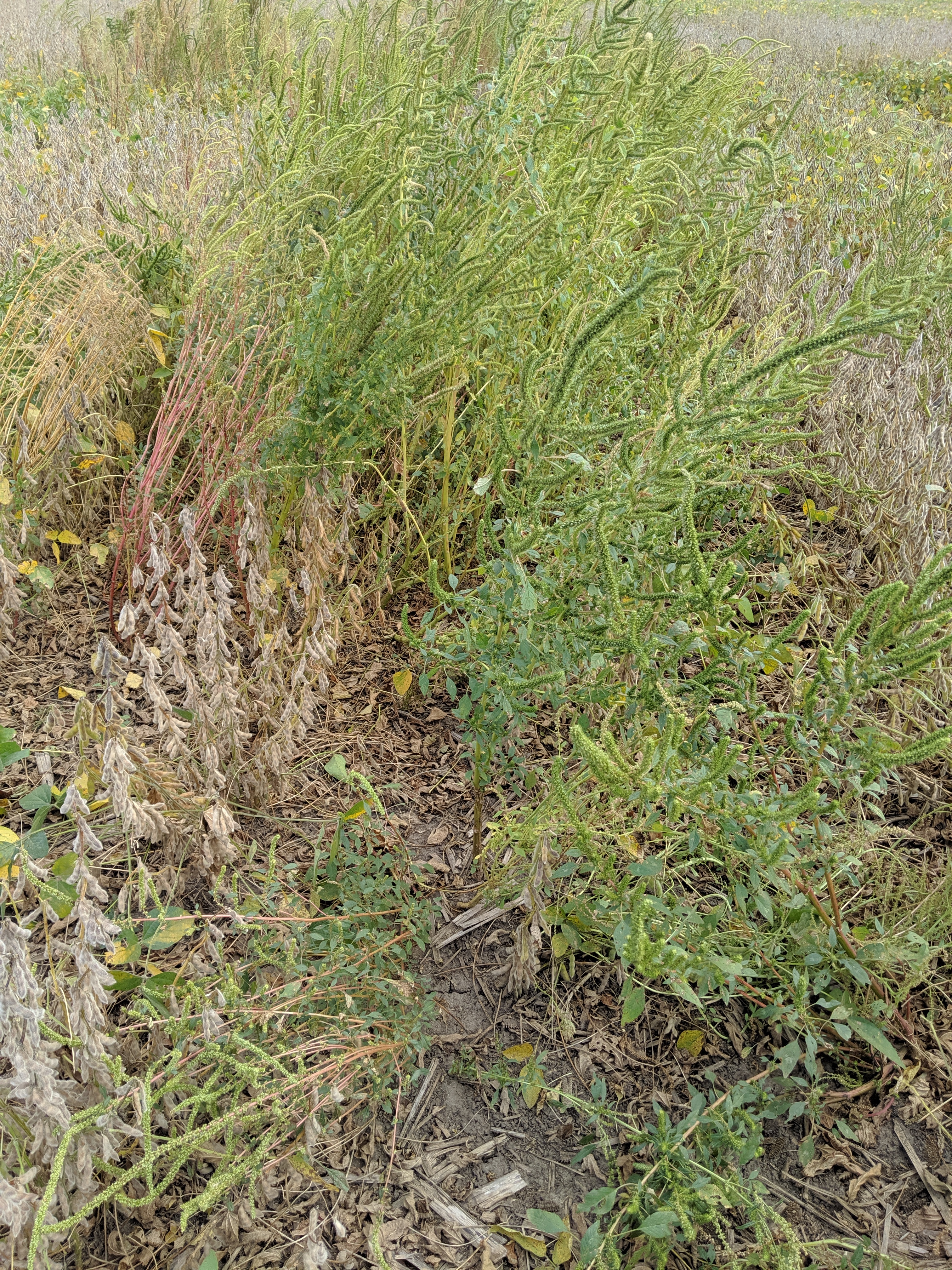 in the fields with palmer in patches or especially on field edges. I believe the first step of palmer management begins at harvest by choosing to not run the combine through those patches. Research from the southern U.S. showed 99% of palmer seed survives the combine and we also know the combine is very effective at seed dispersal. Several farmers have shared they could see the worst palmer spreading in their fields the following year where the first combine pass occurred. Research supports this. The highest number of new palmer plants counted in a field were found the successive year where the first combine pass occurred after combining a patch of palmer. So some suggestions to consider: 1-Consider disking or shredding patches of palmer. 2-Plant a small grain like rye or bin-run wheat into endrows and/or patches where palmer was present. Research has shown that burying palmer seed 3-4” and leaving it buried for 3 years can reduce germination 80-100%. I realize disking doesn’t necessarily go that deep and that it’s difficult for no-till guys to want to do any tillage. Shredding won’t kill seed, but it will keep the seed from going through the combine. The small grain will help reduce light interception to the soil surface next spring. That’s the #1 trigger for palmer germination-light penetration on bare soil.
Also, I realize it’s difficult to achieve, yet a reminder to check your beans and harvest as 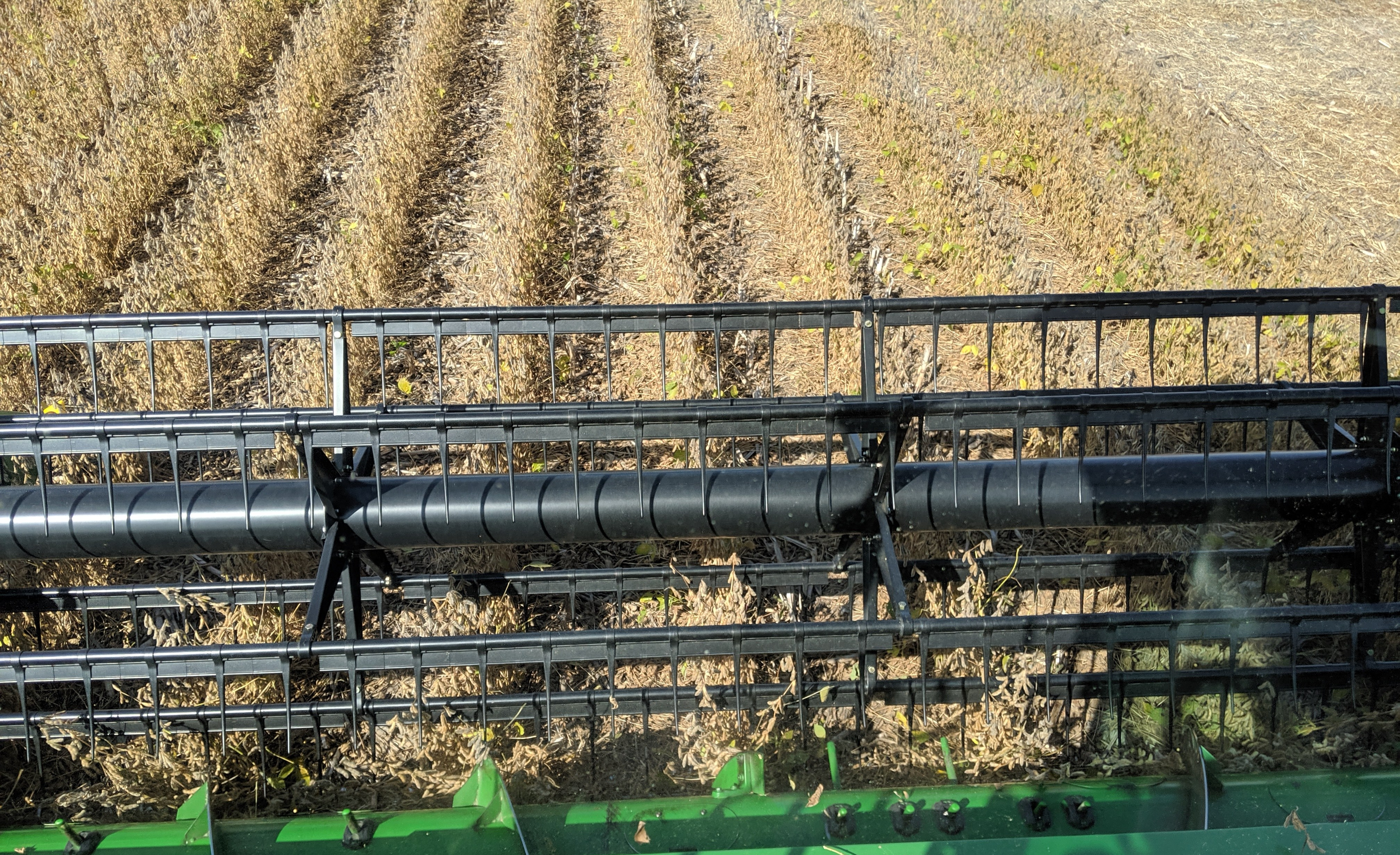 close to 13% as possible. A number of fields last week even with green stems and some leaves remaining on lower plants were actually at 13% when harvested. Delivering soybeans below 13% reduces profits while there’s a dock for delivering wet beans. While not a dock, less than 13% moisture results in fewer bushels to sell (load weight divided by 60 lbs/bu assuming 13% moisture). Selling soybeans at 8% moisture, you’re losing about 5.43% yield; at 9% moisture, it’s 4.4%; at 10% moisture, 3.3%; at 11% moisture, 2.25%; and at 12% moisture, it’s 1.14% yield loss. That doesn’t take into account additional risk for shatter losses during harvest. So another consideration as we consider economics and profitability this year.


 JenResources