Blog Archives
Crop Updates 6/16/25
Wheat stem maggot in corn and herbicide injury issues have been my top questions the past few weeks. A team of us wrote a more detailed article of what we’re seeing and recommending regarding wheat stem maggot in CropWatch: https://go.unl.edu/atx9. Regarding herbicide injury, it perhaps is amazing this doesn’t happen more with all the traits we have. As spraying season continues, please double check fields for which traits are present to ensure the wrong herbicide isn’t applied to create potential crop injury. The one that has happened the most this season is glufosinate (Liberty) applied to non-Liberty link corn. The growth stage timing and rates of those applications make a huge difference on what we’ll see on corn survival.
Also, please always be checking growth stage of plants inside the field prior to herbicide applications. Crops have shorter internodes early on making them somewhat shorter than what we might expect. With June 21 coming this weekend as the longest day of the year, I’m anticipating we’re also going to see some blooms by this weekend/early next week with as many soybeans went in early this year.
As side-dress applications of nitrogen have been made in fields, it made me think of more on-farm research studies we’re conducting this year that might be of interest. They all involve using plant-based sensing from Sentinel Nutrient Management (also known as Sentinel Fertigation). Since not everyone who has irrigation systems wants to apply nitrogen through their system and because we have plenty of non-irrigated acres in the state, On-Farm Research is working with Sentinel to sense what the crop needed for side-dress applications this past year. There’s also opportunity for those with hi-boy machines to use this technology to apply nitrogen later in the season.
You’ve heard me share the on-farm research results about nitrogen savings using this sensing technology. In our area of the state, growers have used this technology in corn, soybean, and seed corn. This year, I know of growers also trying it in wheat and sorghum.
For on-farm research, I’m super excited to learn more from three studies that have had a history of cover crops and grazing! Each year, growers ask when to expect the nitrogen and other nutrients to be released from cover crops. Journal articles fairly consistently mention a 6-week time-frame. It ultimately depends on the Carbon:Nitrogen (C:N) ratio of the covers and rainfall to activate the biology. I’m excited to see if we can capture this time-frame better through satellite imagery using Sentinel Nutrient Management. The goal would be to see if we could better time nitrogen applications in addition to rates better using sensing technology.
Another question growers have asked is “how do we know how much nitrogen to credit after grazing cover crops?”. We hope to better answer this on two fields this year using sensing technology. Two of the on-farm research studies are following “Regen Years” where the land was planted to multi-species cover crop mixes and grazed all year instead of taking crops for grain. One is irrigated while the other is non-irrigated and both have nitrogen rate ramps associated with them. We plan to have a field day on the irrigated site in late July and will share more details later. Looking forward to what we will learn and sharing the results!
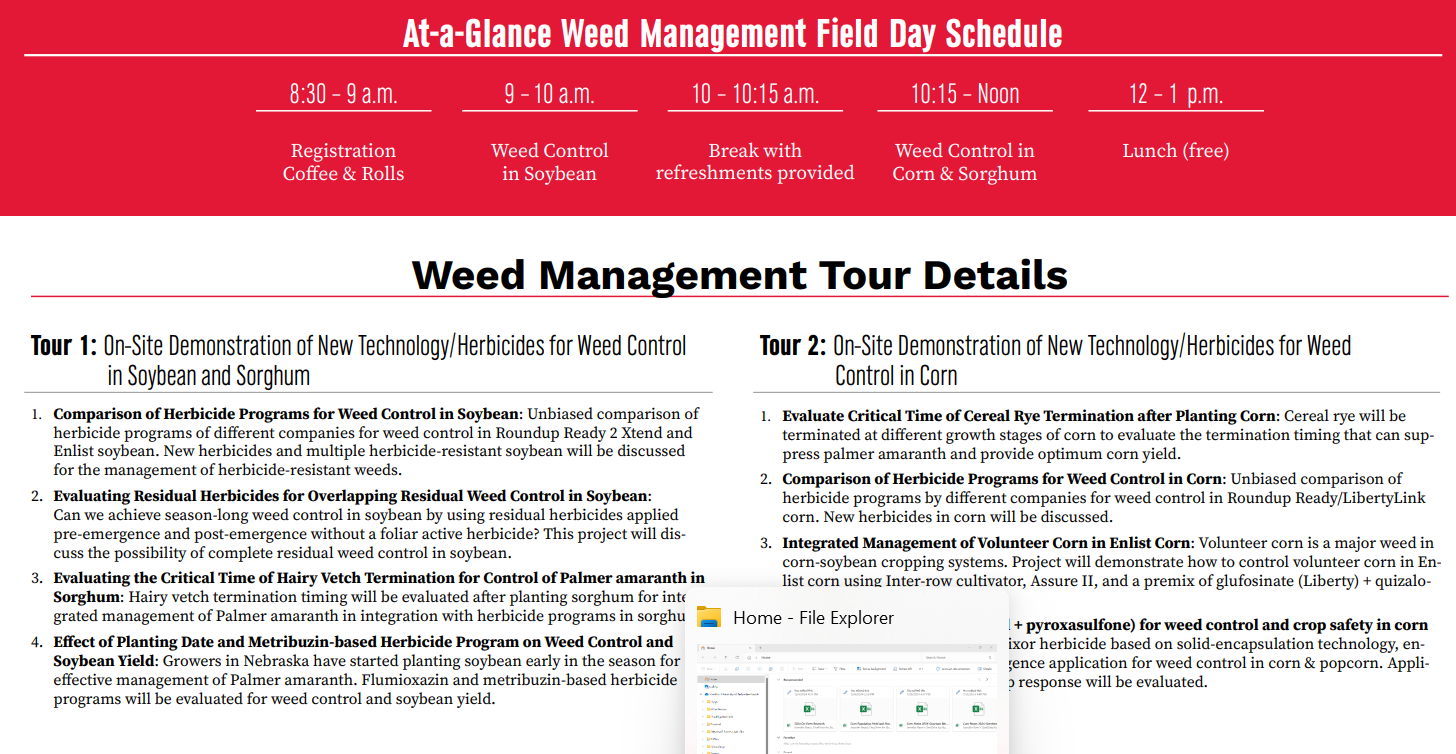
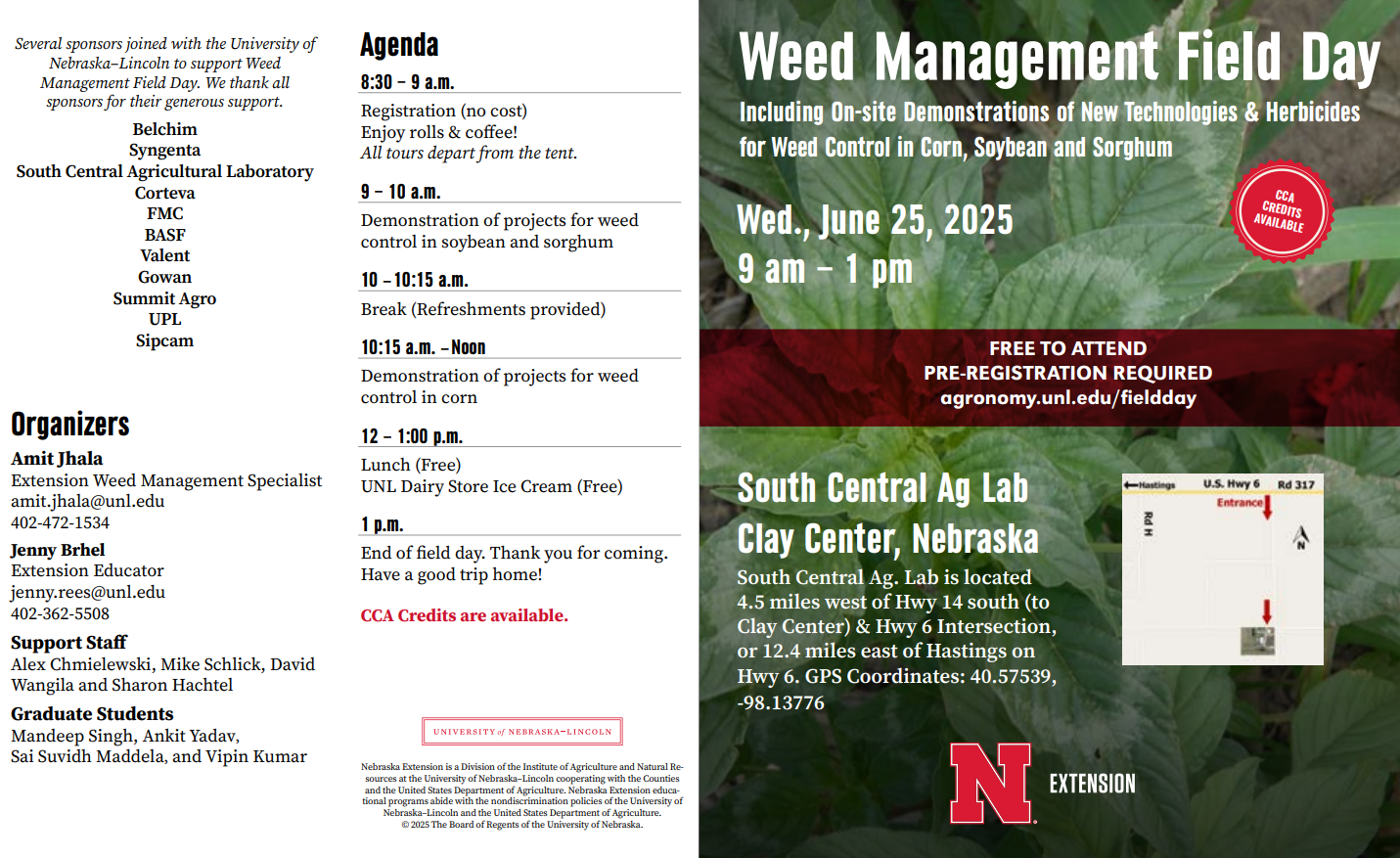
Reminder: June 25 Weed Management Field Day at UNL’s South Central Ag Lab near Clay Center, NE. Details at: https://go.unl.edu/qemk.
Fall Nitrogen Challenge
It’s such a blessing to receive some moisture! With November here, sharing this week on nitrogen applications.
While the November 1 date that allows for fall fertilizer application to fields has arrived, we also recommend waiting to apply fall nitrogen till soil temperatures are below 50F. At that temperature, soil microbes are less active and less likely to convert ammonium to nitrate. Soil temperatures can be viewed at: https://cropwatch.unl.edu/soiltemperature. As I write this, the daily average 4” soil temperature is currently 55F with the weekly average at 53F.
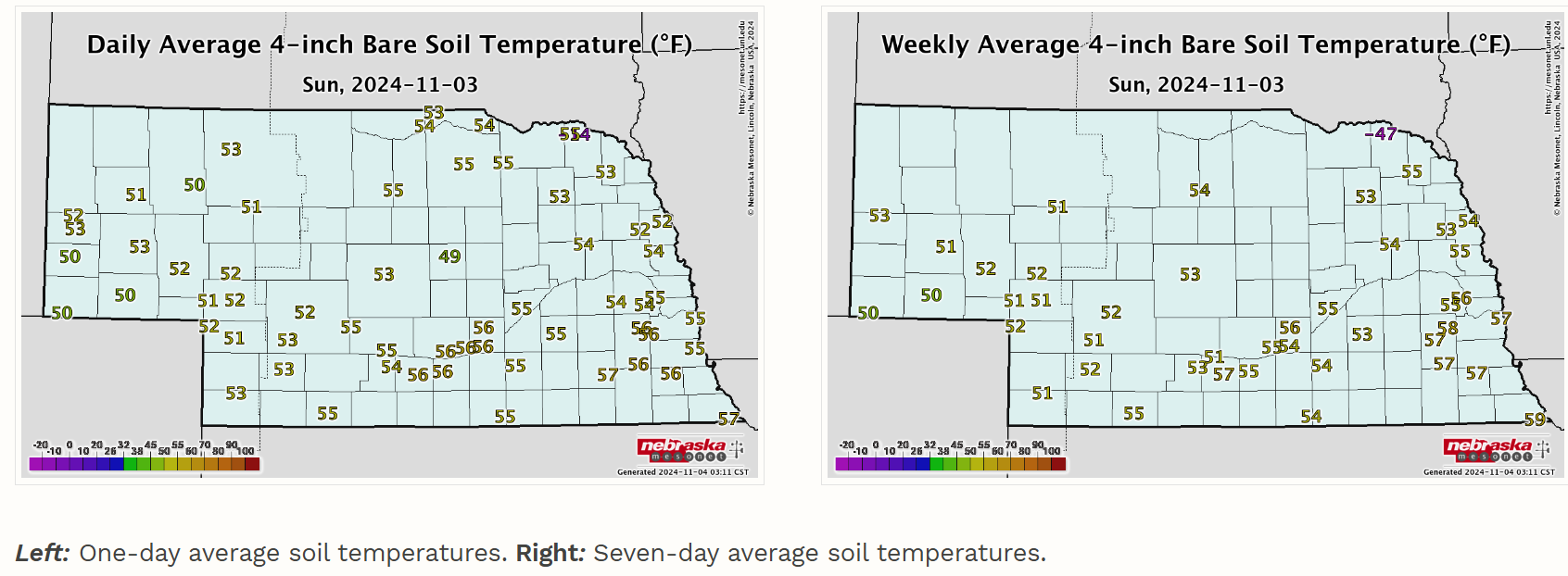
Nearly a year ago, I shared my Nitrogen Challenge with you. I’m grateful for all the producers who gave that a try! Some who wanted to try it had applied too large a base rate before I had released the article, so sharing a reminder now.
My Challenge: The challenge is to everyone with irrigated ground who applies fall anhydrous or spring pre-plant fertilizer:
- Leave 1 piece of ground with a base rate of 70-100 lb N/ac.
- Apply the rest of the N in season as needed using a tool like Sentinel Fertigation that senses plant needs.
- Asking each grower to consider this for 1 field. Are you willing to join me in this?
I genuinely believe this is the primary way to change the nitrogen story both now and for future generations. Why? We can’t impact the legacy nitrate from previous generations that is impacting groundwater nitrate levels now, but we can impact the nitrate that remains in the soil after current nitrogen practices now.
Nitrogen rate is the most consistent thing I keep seeing in nutrient recommendations and on-farm research studies that we can adjust. I’ve shared On-Farm Research results from farmers’ fields in this part of the State on heavier textured soils showing there’s no one solution with nitrification inhibitors, nitrogen application timing, biological products. The most consistent thing I see is an opportunity around reducing nitrogen rates. I’m not saying there’s one solution. My challenge is around what I feel holds the most promise right now for irrigated ag in this area.
We can’t precisely know an amount of nitrogen to recommend for application to land using pre-plant soil tests and/or any nitrogen equation. They’re good tools. But, we don’t know how much irrigation will be applied in season nor how much mineralization will occur due to weather conditions. 2022-2023 were high mineralization years and 2024 was a low one. Soil agronomy needs biology in addition to chemistry and physics. That’s why I’ve been so supportive of the in-season sensing technologies where the plant tells us what it needs based on what is occurring in the soil. Project Sense was a UNL/NRD/Corn Board/USDA research effort using ground rig applications. I think it never took off because I’m unsure any Co-op or company took the idea on as a business. Would still be applicable.
The UNL pivot-based sensing research resulted in the graduate student forming the company Sentinel Fertigation. If there’s other companies doing this, please consider them too. There’s so much in ag we have to react to. Applying N in-season is also reactive. However, we can also be proactive in showing that farmers and agronomists locally want to keep looking for solutions to the nitrate problem by trying newer tools/technologies to see any impacts. Please contact me if you are willing to join me in this challenge.


Nitrogen Challenge Meeting
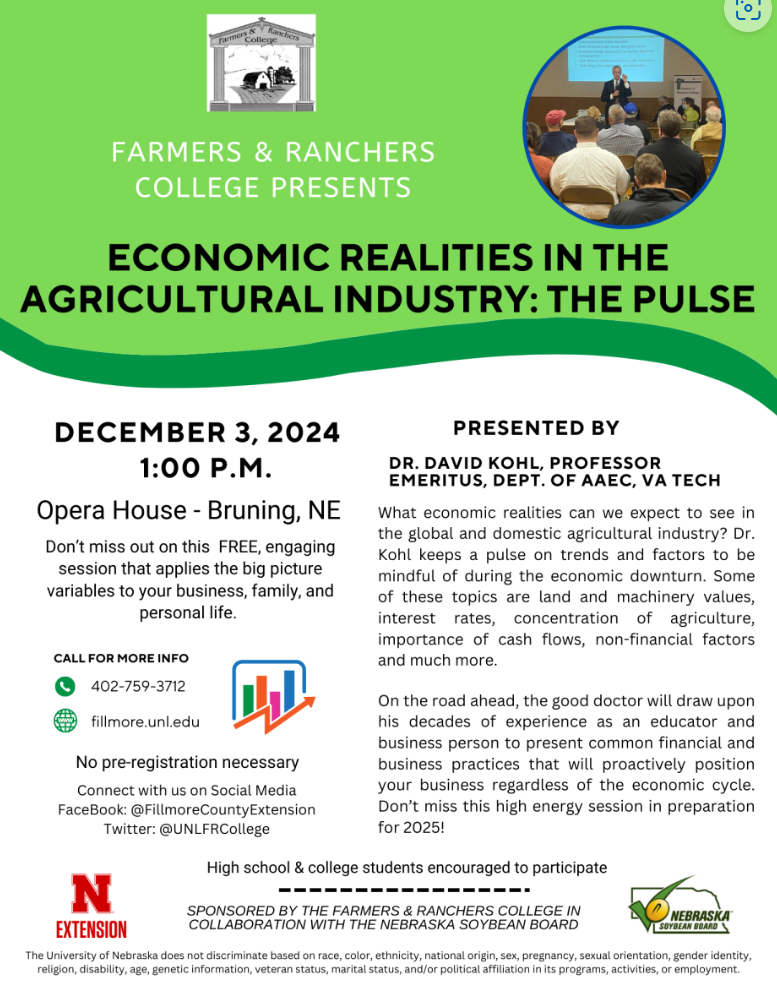
Nitrogen Challenge Meeting Jan. 29: In November I issued a nitrogen challenge. The full article can be found here: https://jenreesources.com/2023/11/12/my-nitrogen-challenge/. My goal is to have an increasing number of producers use sensing technologies such as this that have been research-proven to help with nitrogen management.
Ultimately my challenge was to everyone with irrigated ground who applies fall anhydrous or spring pre-plant fertilizer:
- Leave 1 piece of ground with a base rate of 70-100 lb N/ac
- Goal is to apply the rest of N in season using a tool like Sentinel Fertigation that senses what the plant needs. I will share 2023 research results from area producers this winter. If you decide you don’t wish to try a tool like Sentinel Fertigation, you can apply the rest of N the way you’d like.
- Only asking to consider for 1 field. Are you willing to join me in this?
On January 29th, I’ll be having a Nitrogen Challenge Meeting. It will be from 9 a.m.-Noon at the Holthus Convention Center in York. As promised, on-farm research results from sensor-based fertigation will be shared in addition to learning more about Sentinel Fertigation as a tool for nitrogen management. I also wanted you to hear directly from the area farmers who have used this tool the past few years. Some of the farmers have used this technology in on-farm research fields and some just tried it on fields. In fact, a few of the top 6 National Corn Yield Contest winners who applied 180 lb N/ac or less used Sentinel Fertigation in 2023. A larger farmer panel will share what they liked, what they’d change, and their pivot setup for managing sectors (as there’s different ways of managing this for individual pivots). Information will also be shared about chemigation requirements.
There is no charge for this meeting and the UBBNRD and LBNRD are providing nitrogen certification credits for those who attend this meeting. Please RSVP to 402-362-5508 so we know how to plan if you’re interested in attending. I’m truly hoping to see many producers interested in learning more and joining me in this challenge!
Three State Beef Conference: Re-evaluating today’s management practices for future success: On Jan. 18th in Syracuse, NE from 6-9 p.m. (Registration at 5:30 p.m.), learn more about re-evaluating management of corn residue grazing, development of heifers and management of young cows to help ensure success. Location: Fair Center building, Otoe County fairgrounds, 135 Plum St, Syracuse, Nebraska
Topics include: Corn residue grazing: current recommendations and adjustments based on new data, Dr. Mary Drewnoski, beef systems specialist, University of Nebraska; Developing heifers for the future, Dr. Kiernan Brandt, professional services technician, Trans Ova Genetics; and Managing young cows for longevity and profitability, Dr. Thiago Martins, asst. professor, beef reproduction extension & research, University of Missouri.
Pre-registrations are appreciated for planning purposes. The registration fee is $30 per person which includes a meal and a copy of the conference proceedings. RSVP to: Connor Biehler, Extension Educator, 402-624-8007, cbiehler2@unl.edu.
Also: Reminders of meetings that begin this week including Cow-Calf College, some Crop Production Clinics, and pesticide trainings.

My Nitrogen Challenge
My Challenge: This article was born from numerous conversations. I know reactions will differ; please hear me out. Last week I issued a challenge at the end of my blog post and in my weekly email. The challenge is to everyone with irrigated ground who applies fall anhydrous or spring pre-plant fertilizer:
- Leave 1 piece of ground with a base rate of 70-100 lb N/ac
- Goal is to apply the rest of N in season using a tool like Sentinel Fertigation that senses what the plant needs. I will share 2023 research results from area producers this winter. If you decide you don’t wish to try a tool like Sentinel Fertigation, you can apply the rest of N the way you’d like.
- Only asking to consider for 1 field. Are you willing to join me in this?
My Why: Pre-plant fertilizer is being applied now in fields, so wanted to share for consideration now. Every time negative news is published about the problem of nitrates in our State, I hear about it. Farmers are frustrated and seek to know how to respond. I can also appreciate the frustration. There’s agreement that not everyone in all occupations always do the right thing. There’s concern about increasing nitrates in various wells throughout the State. The other side – of all the farmers trying to do the right thing – isn’t also shared. Many of these farmers genuinely want to leave the land and water better for future generations. The legacy issue is often not mentioned in news articles. More data around soil nitrates in the upper 20 feet of soil profiles is needed to know the impact of current practices. Negative press builds cases for increased regulation. Conversations are occurring. I continue to hear most would prefer figuring out something locally than for regs to come from the state or nationally.
Since last winter, I’ve brainstormed on the nitrate topic with various commodity groups, farmer groups, during field/office/phone visits and while riding in combines during harvest. My questions to everyone included, “What is Ag’s Solution?” “What is ag going to propose?” “Instead of the current headlines, what do you want the headlines to say?” …. How would you answer these questions?
Several suggestions have been made. The discussions have been difficult. Part of this is because there’s so many soil types, Agri-eco zones, farming practices in Nebraska for any one solution. And, honestly, another part is that ag is so divided (till/no-till, cover crops or not, etc.), which also frustrates me, because blaming and divisiveness doesn’t allow for uniting around a cause. Often the end conversation response was, “I/we really don’t know what will work or what else to do”.
I’ve shared On-Farm Research results from farmers’ fields in this part of the State on heavier textured soils showing there’s no one solution with nitrification inhibitors, nitrogen application timing, biological products. The most consistent thing I see is an opportunity around reducing nitrogen rates. I’m not saying there’s one solution. My challenge is around what I feel holds the most promise right now for irrigated ag in this area.
We can’t precisely know an amount of nitrogen to recommend for application to land using pre-plant soil tests and/or any nitrogen equation. They’re good tools. But, we don’t know how much irrigation will be applied in season nor how much mineralization will occur due to weather conditions. Soil agronomy needs biology in addition to chemistry and physics. That’s why I’ve been so supportive of the in-season sensing technologies where the plant tells us what it needs based on what is occurring in the soil. Project Sense was a UNL/NRD/Corn Board/USDA research effort using ground rig applications. I think it never took off because I’m unsure any Co-op or company took the idea on as a business. Would still be applicable.
The UNL pivot-based sensing research resulted in the graduate student forming the company I mentioned in my challenge called Sentinel Fertigation. If there’s other companies doing this, please consider them too. We had 5 on-farm research studies with Sentinel Fertigation in 2023 in York, Clay, Polk, and Butler counties where producers tested pie sectors of their nitrogen rate vs. what satellites were saying the plants needed. What I’ve heard is one field never triggered an additional fertilizer app in some sectors. Another field only had 90 lb N/ac total applied in some sectors. I don’t know the yield results yet, so this is a risk I’m taking in issuing this challenge. No technology is perfect; I heard them adjust as challenges occurred. The sheer research base and idea around this technology is what propels me to propose this challenge. This winter we will share the data and allow the producers to share what they liked/didn’t like. You can then decide if you’d like to try it in 2024. This also gives you time to get set up for fertigation. If you decide it’s not for you, apply the remainder of the N in that field however you’d like.
My goal is not to promote a company but an idea that makes the most sense to me of anything we’re trying. It’s the idea of a base rate and then allowing the plant to tell us what it actually needs based on the growing season it encounters. This could potentially lead to reduced nitrogen rates applied. There’s so much in ag we have to react to. Applying N in-season is also reactive. However, we can also be proactive in showing that farmers and agronomists locally want to keep looking for solutions by trying newer tools/technologies to see any impacts. Please contact me if you are willing to join me in this challenge.
For more info. I shared the Sentinel Fertigation research info. last winter here: https://jenreesources.com/2023/02/26/sensor-based-n-fertigation/
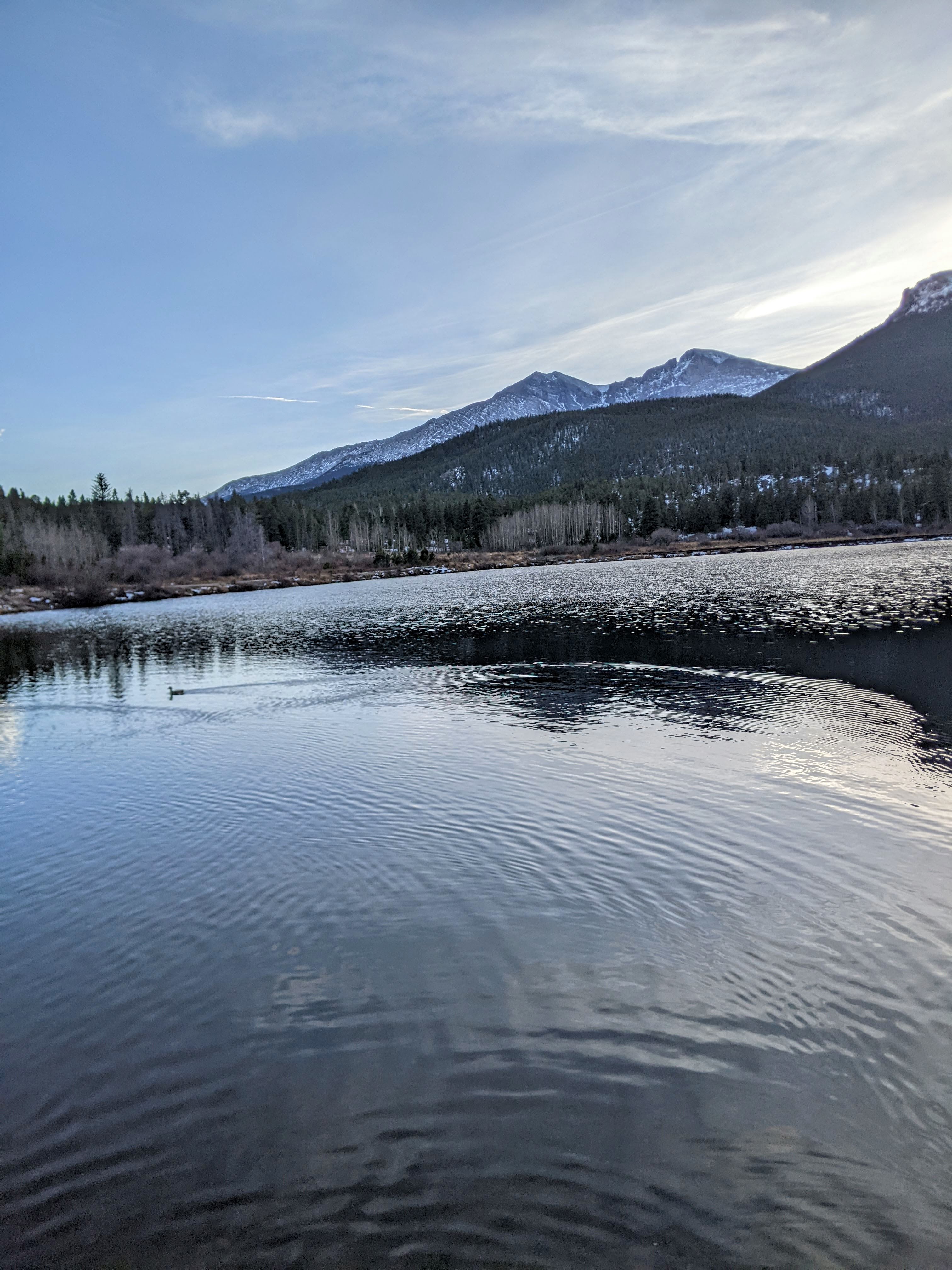
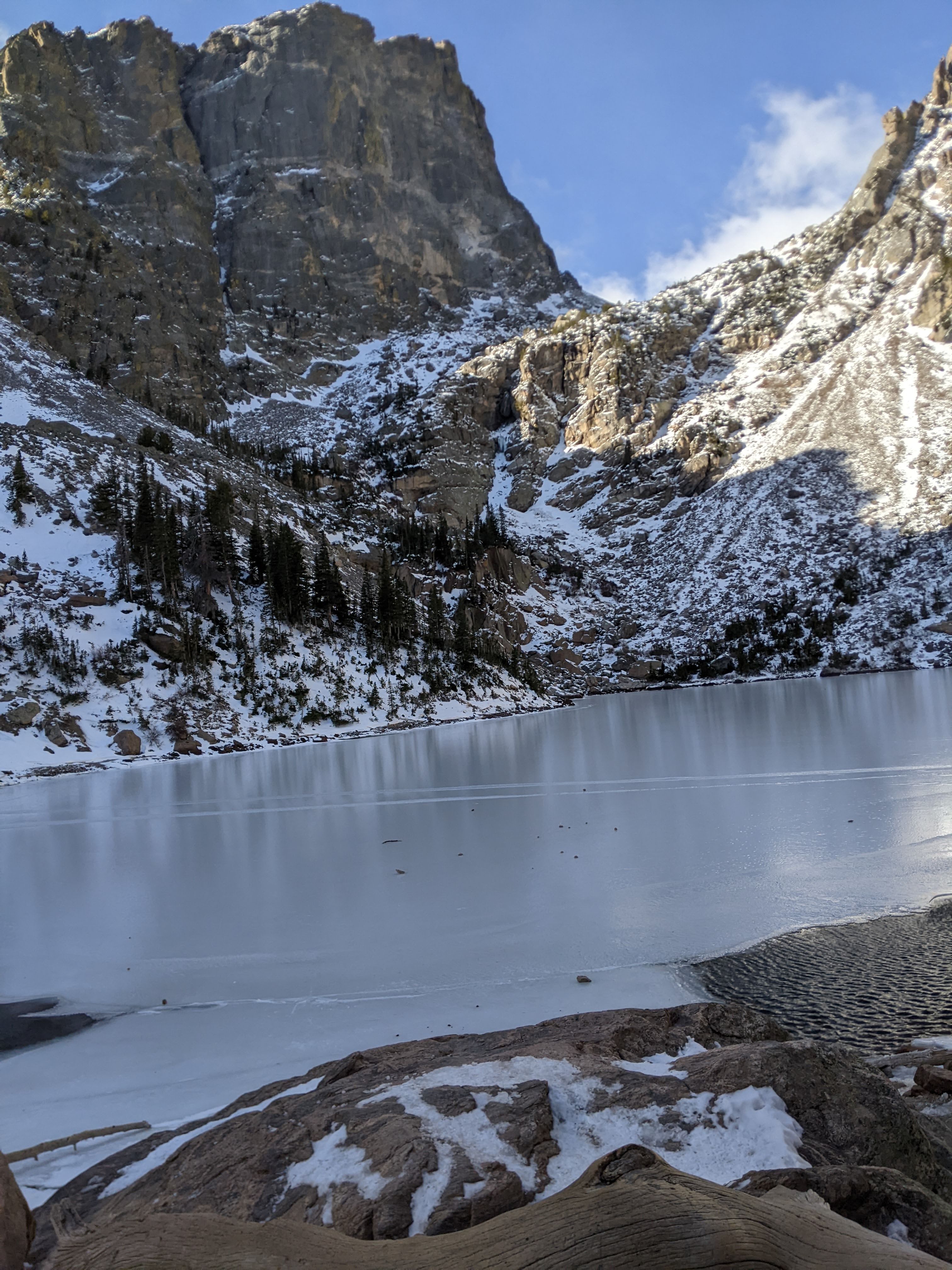
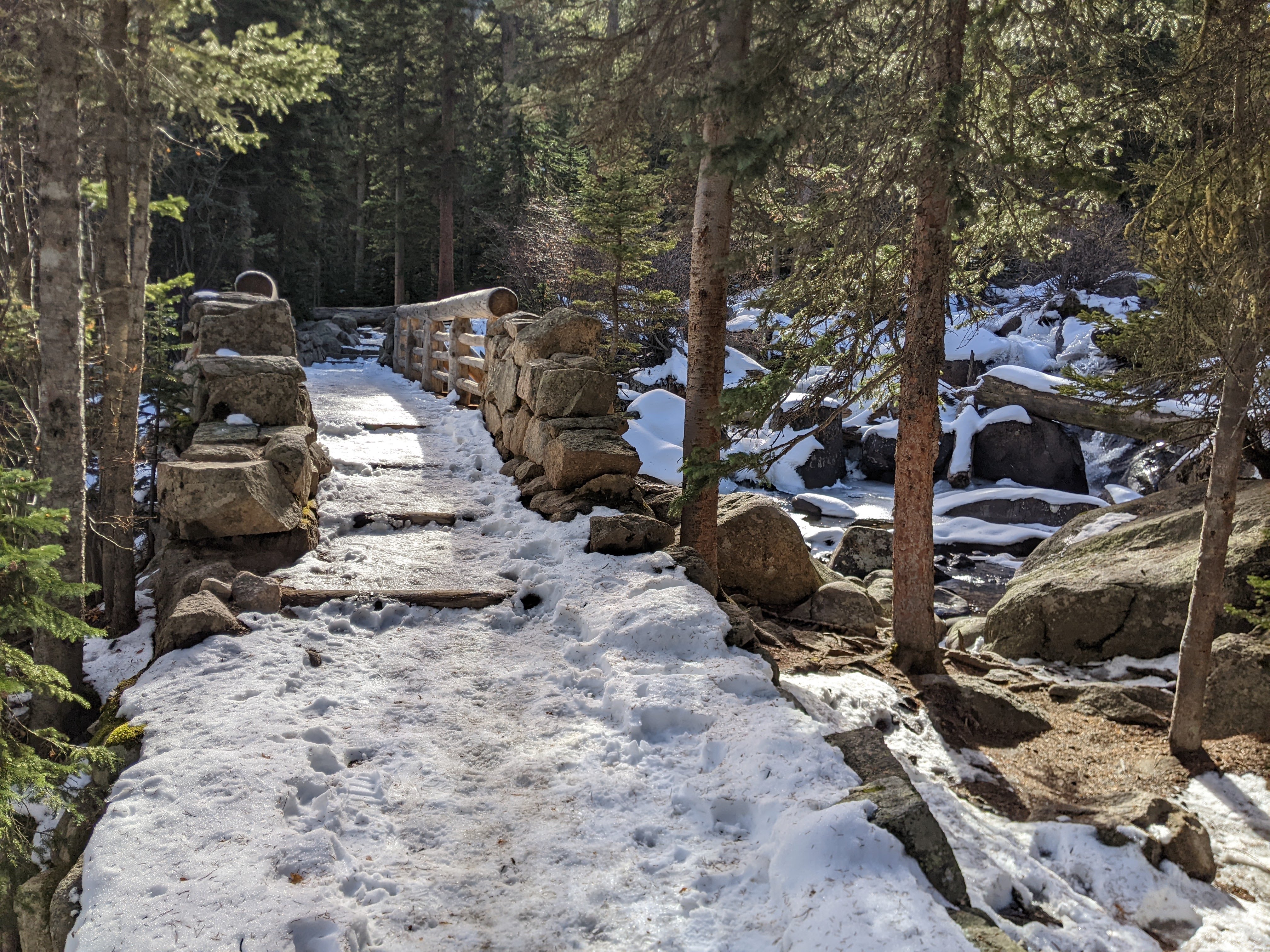

Was wonderful to get away for a couple days to hike in the mountains. Beautiful this time of year too!


 JenResources