Blog Archives
Windbreak Care
Windbreak Care: With new windbreak establishment, I’ve been seeing some transplant shock where the needles, twigs, and entire seedlings were turning brown. In talking with a district forester, he shared that environmental stresses of tree planting are likely when considering the trees are going from a 36F cooler and planted when air temperatures were in the 70’s and 80’s. He also mentioned two other environmental culprits to browning of needles: air pockets in the soil around the tree roots and/or planting depth issues. To get a feel if trees will survive or not, gently bend twigs to see if they are flexible or brittle. If flexible, they should still survive. If brittle, check on several tree twigs to see if there are a few twigs that won’t survive on the majority of the tree. In the case of the new transplants I looked at, the twigs were still pliable and not brittle. Also look closely at the axillary buds (where twigs meet the main stem) to determine if any new green bud growth is present. I saw new buds on most of the newly planted trees I’ve looked at, which is good and shows they will hopefully look greener in 3-4 weeks. Photos of what I’m describing are at: https://jenreesources.com.
In established windbreaks, I continue to find the problem of landscape fabric harming and killing trees that are 7-20 years established. For anyone with windbreaks where landscape fabric was placed, I’d encourage you to wear gloves and long sleeves and check under the trees for the following things. (Also watch for critters as you get under the trees and examine them!)
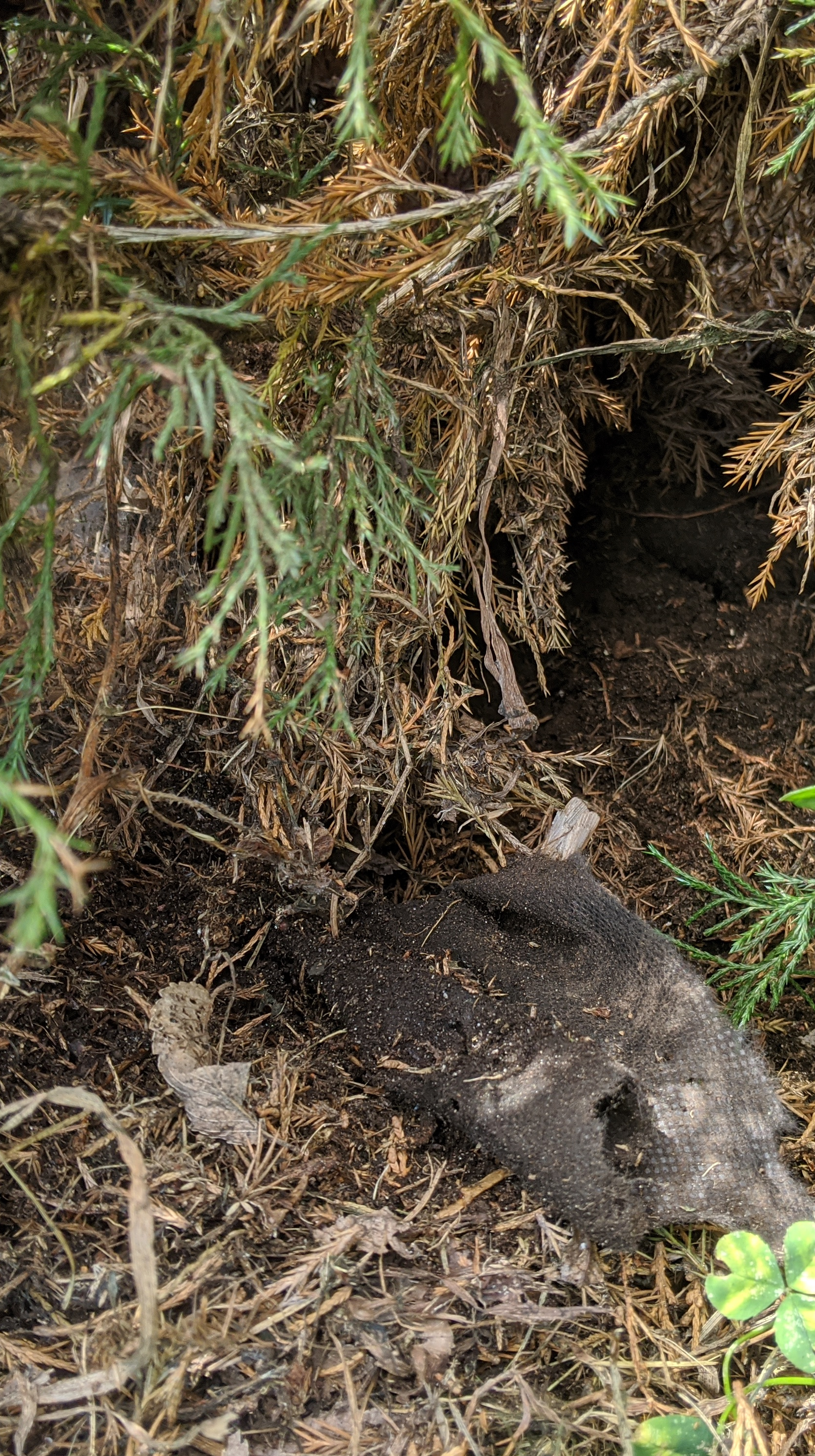
1-The “brome mat”…or essentially a mat of needles, grass, weeds that create a mat on top of the fabric beneath the tree. This mat makes it hard to find the fabric and keeps one from realizing the problem that’s occurring. The mat prevents any decomposition of the fabric and prevents moisture from getting to the tree. Many are surprised how dry the soil is under the fabric where the mat was.
2-Check to see where the fabric is in comparison to the tree trunk. Normally I find the fabric growing into the trunk of the tree as the fabric doesn’t expand as the trunk enlarges. This creates a “girdling” effect where the tree essentially chokes itself. Often when I’m called out to established windbreaks that are suddenly dying or where the needles are browning, the landscape fabric and girdling of the trunks is partly the culprit.
So what can you do? Windbreak maintenance. For anyone who has windbreaks where fabric for weed barrier was placed, it should be removed no longer than 5 years after the trees are planted. For those who had windbreaks planted in the past 1-3 years, you really should go and cut the holes larger around each tree if you’re not removing the fabric yet. What I kept finding this year is that the trees were placed against one side of the fabric compared to the center of the holes, which can also create problems down the road with girdling. For those with more established windbreaks, do your best to remove the weed barrier fabric now. It will take harder work and effort to get under the trees and cut the fabric. Some were using anything with hooks to try to grab and pull it loose-but sometimes it’s hard to find the fabric with the mat layer. Some were then using loaders to pull the fabric between trees in the row. Again, it’s hard work and not fun with how poky the needles are, but it will help you in saving your trees.
For those who chose to not use the weed barrier fabric, wood chips can be used instead as long as they are kept 3-5” from the tree trunk. It takes a lot of wood chips for a windbreak, so they often are not used in those situations even though they’d be recommended. It’s not recommended to use grass clippings or straw as those mulches can attract rodents that can cause damage to new seedlings. Planting directly into the grass is also an option, or killing the grass directly where the trees will be planted is an option for weed control as well. The brome will compete with the seedlings for moisture and the trees may establish more slowly as a result. For more specific information on windbreak care, including information on insects and diseases, please see the following publication: https://nfs.unl.edu/publications/windbreak-management.

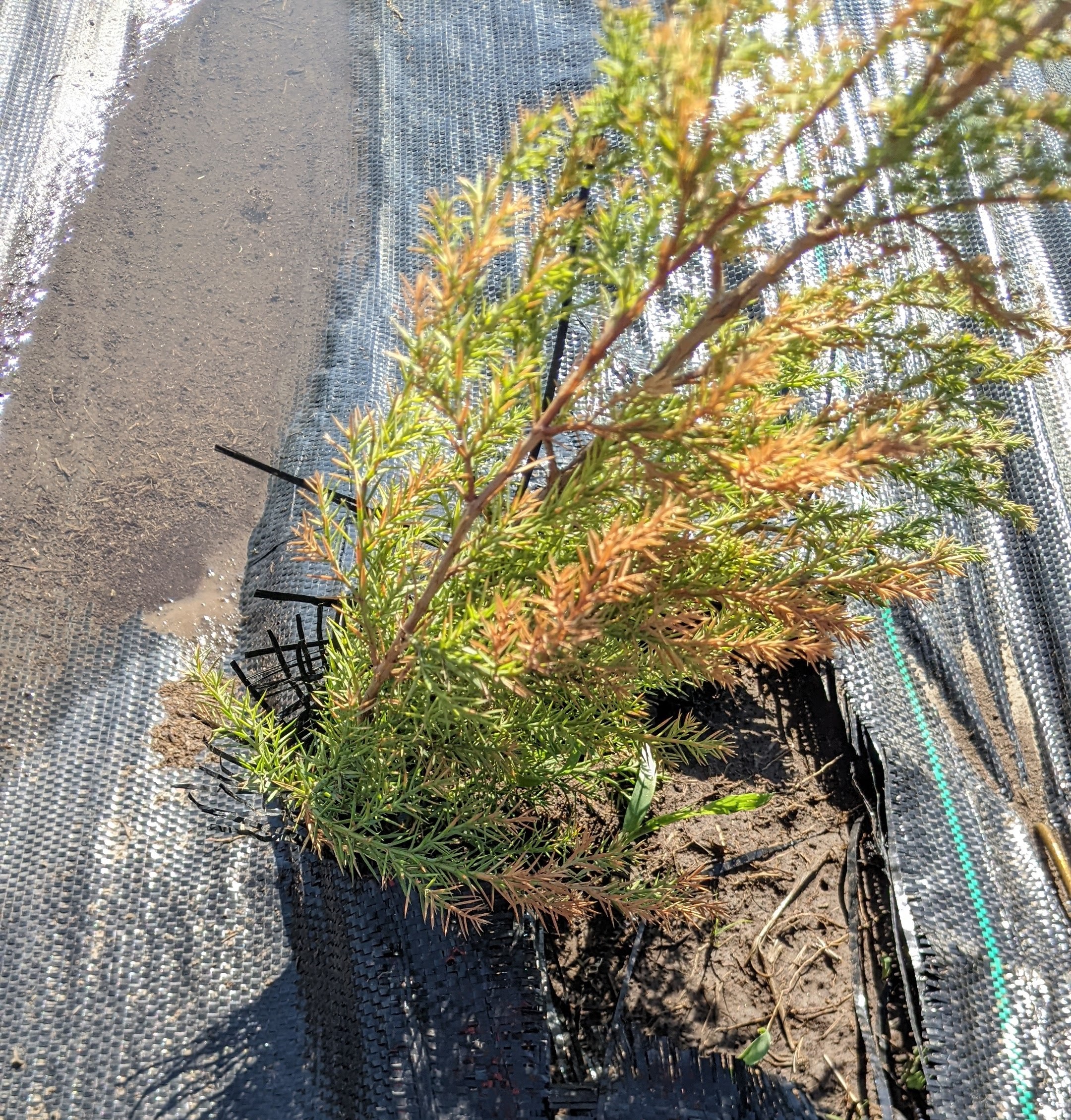
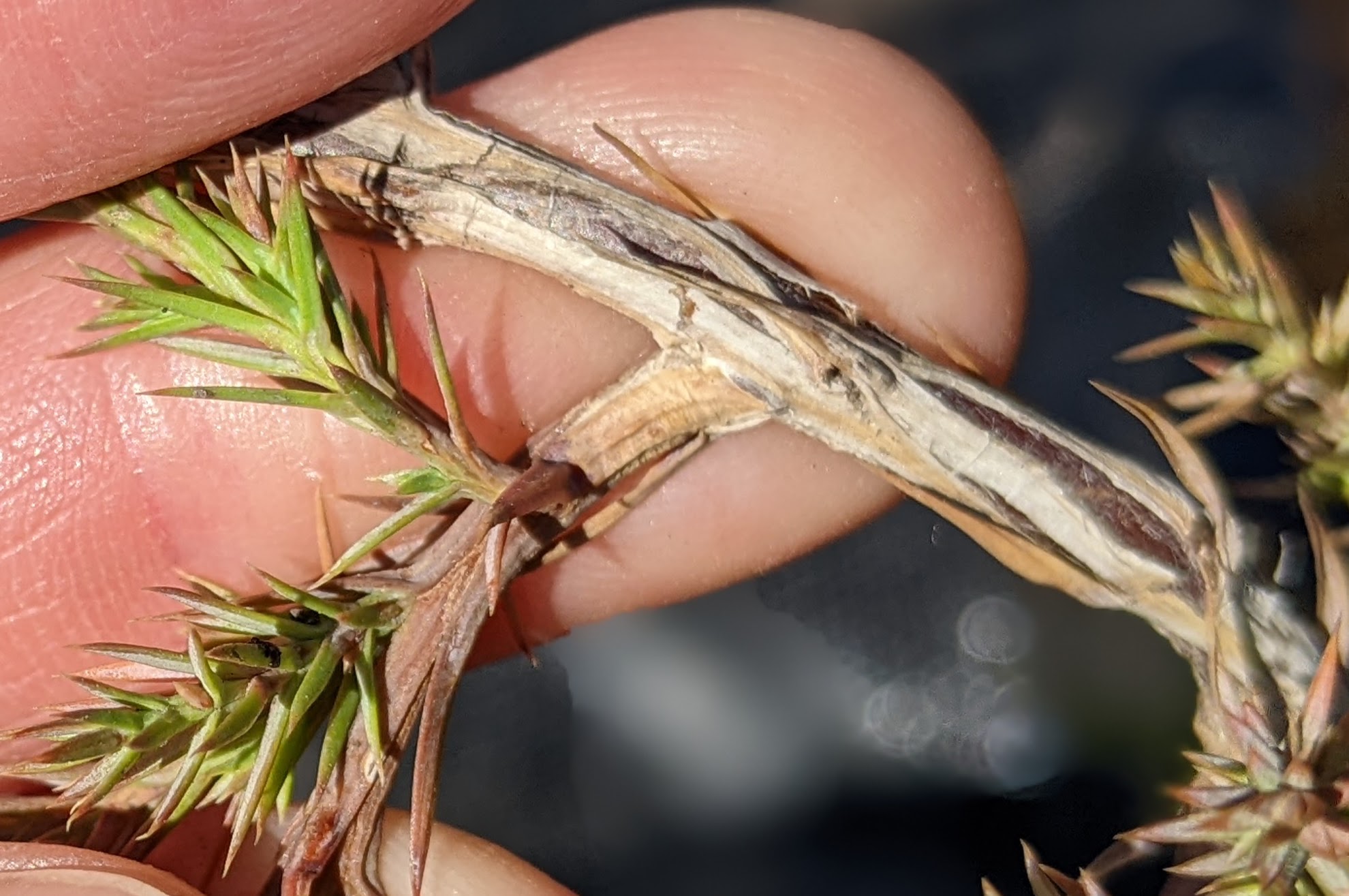
New growth observed in axillary buds on this tree seedling. It should look greener in 3-4 weeks.
JenREES 5/15/22
I heard many say they’d never before seen that kind of wall of dirt that came through with the storm last week; I hadn’t either. Also can’t remember a spring where we’ve had this much wind and significant storms to have so many pivots needing replaced. In spite of the property damage, grateful to hear most share they were ok in spite of the scary situations they were in when the storm hit!

Tree Wind Damage: Heard a number of people had tree damage in addition to all the visible damage in York and other areas. For those with large branches down, it will be helpful for the life of the tree to get branches trimmed back to the next larger branch or the trunk. Corrective pruning can help with trees that lost less than 50% of their branches (and don’t have additional issues such as significant decay). The pruning should be done to balance the limbs on all sides of the tree canopy (crown). Cut at the collar area instead of flush to the trunk to aid the tree in healing. Cut large limbs in stages. With one cut, a branch often breaks before it’s completely cut, causing damage to the tree bark. Instead, as explained by K-State, “take a cut around 15” from the trunk. Start from the bottom and cut one-third of the way up through the limb. Make the second cut from the top down but start 2 inches further away from the trunk than the first. The branch will break away as you make the second cut. The third cut, made at the collar area, removes the stub that is left.”
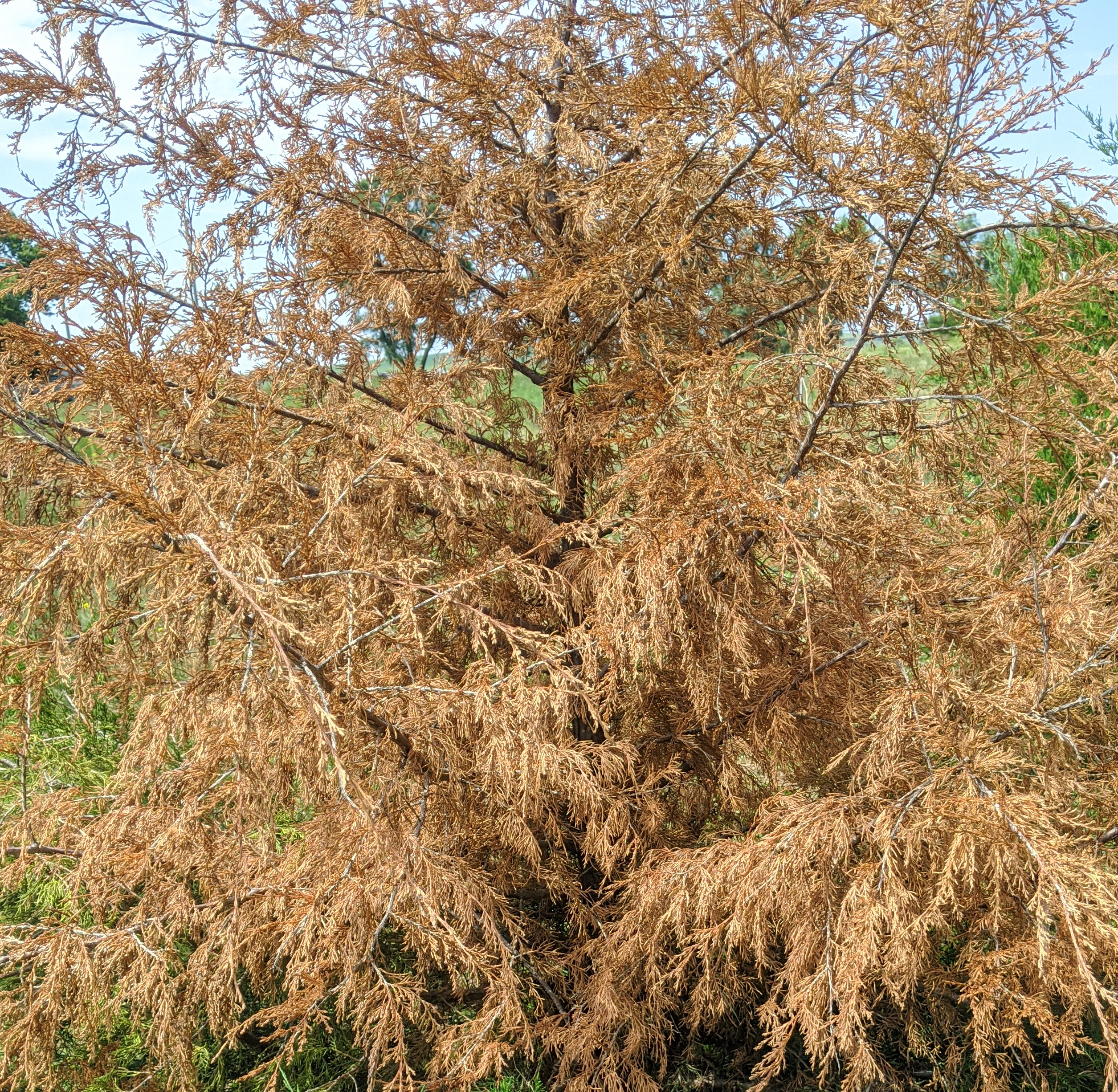
Sudden Tree Death in Windbreaks: Received a number of calls about evergreen trees that were suddenly dying, particularly in windbreaks. Anytime this happens, it’s due to some environmental and/or cultural problem. We most likely are going to see lots of tree and shrub issues this year due to the dry fall, winter, spring and the fact that we didn’t have snow cover. Trees rapidly dying right now are most likely due to the dry conditions and/or a combination of those conditions with my next comments.
A cultural example that I see aiding in the cause of tree death is landscape fabric/weed barrier. For example, (from my experience) the #1 cause of death I see of cedar tree windbreaks that are usually in the 10-20 year range, is when landscape fabric was used as weed barrier between the tree plantings.
So why does the fabric cause an issue? Often the original hole size doesn’t necessarily expand with the tree trunk as it expands. Getting under the tree (which is a pain with the pokey fallen needles!), one can often see how the tree is choked right where the fabric is and then the trunk flares right above that point, indicating the choking point. For trees that haven’t died, taking some type of long-handled tool that has a hook or something to pull the fabric away from the trees in several places around each tree can help. And honestly, if anyone reading this has a windbreak with landscape fabric, it would be wise to do this regardless if any trees are dying to potentially avoid future distress. I realize weed barrier is typically used with windbreak plantings. Research has shown that just planting grass between the trees (or leaving grass between the trees), while resulting in a natural weed barrier, causes trees to grow more slowly. It is an option though for weed control. Another option is using some type of mulch around the trees (but not against the trunk). I realize in the country, it can blow away more easily, but is another option that provides weed control.
Sickly looking evergreen trees could be due to a combination of things such as the dry conditions plus a disease/insect issue from previous years. I’ve seen several of these as well where they look sick, but aren’t rapidly dying. In those cases, it’s important to reduce the stress to the tree and be aware of the specific insect/disease problem for treatment.
Cutworms: As corn emerges, be scouting for cutworms. More info: https://go.unl.edu/a6fy.
BQA Training: Face to face BQA and BQA Transportation training for livestock producers is on May 18, 4:00 p.m.-6:00 p.m., Casey’s Building, Albion, NE. RSVP to Brad Schick at: 308-632-1230.


 JenResources