Blog Archives
Crop Updates 6/16/25
Wheat stem maggot in corn and herbicide injury issues have been my top questions the past few weeks. A team of us wrote a more detailed article of what we’re seeing and recommending regarding wheat stem maggot in CropWatch: https://go.unl.edu/atx9. Regarding herbicide injury, it perhaps is amazing this doesn’t happen more with all the traits we have. As spraying season continues, please double check fields for which traits are present to ensure the wrong herbicide isn’t applied to create potential crop injury. The one that has happened the most this season is glufosinate (Liberty) applied to non-Liberty link corn. The growth stage timing and rates of those applications make a huge difference on what we’ll see on corn survival.
Also, please always be checking growth stage of plants inside the field prior to herbicide applications. Crops have shorter internodes early on making them somewhat shorter than what we might expect. With June 21 coming this weekend as the longest day of the year, I’m anticipating we’re also going to see some blooms by this weekend/early next week with as many soybeans went in early this year.
As side-dress applications of nitrogen have been made in fields, it made me think of more on-farm research studies we’re conducting this year that might be of interest. They all involve using plant-based sensing from Sentinel Nutrient Management (also known as Sentinel Fertigation). Since not everyone who has irrigation systems wants to apply nitrogen through their system and because we have plenty of non-irrigated acres in the state, On-Farm Research is working with Sentinel to sense what the crop needed for side-dress applications this past year. There’s also opportunity for those with hi-boy machines to use this technology to apply nitrogen later in the season.
You’ve heard me share the on-farm research results about nitrogen savings using this sensing technology. In our area of the state, growers have used this technology in corn, soybean, and seed corn. This year, I know of growers also trying it in wheat and sorghum.
For on-farm research, I’m super excited to learn more from three studies that have had a history of cover crops and grazing! Each year, growers ask when to expect the nitrogen and other nutrients to be released from cover crops. Journal articles fairly consistently mention a 6-week time-frame. It ultimately depends on the Carbon:Nitrogen (C:N) ratio of the covers and rainfall to activate the biology. I’m excited to see if we can capture this time-frame better through satellite imagery using Sentinel Nutrient Management. The goal would be to see if we could better time nitrogen applications in addition to rates better using sensing technology.
Another question growers have asked is “how do we know how much nitrogen to credit after grazing cover crops?”. We hope to better answer this on two fields this year using sensing technology. Two of the on-farm research studies are following “Regen Years” where the land was planted to multi-species cover crop mixes and grazed all year instead of taking crops for grain. One is irrigated while the other is non-irrigated and both have nitrogen rate ramps associated with them. We plan to have a field day on the irrigated site in late July and will share more details later. Looking forward to what we will learn and sharing the results!
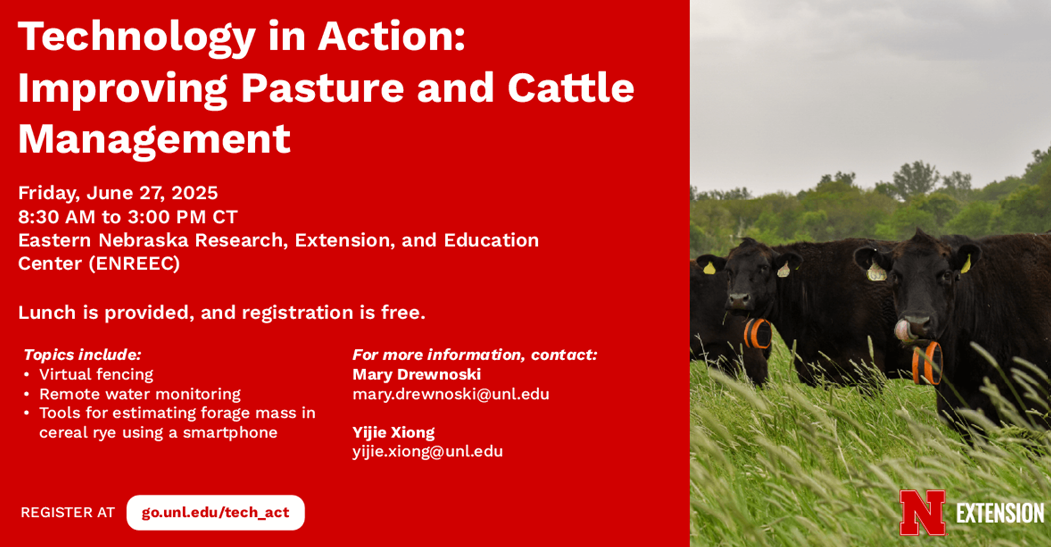
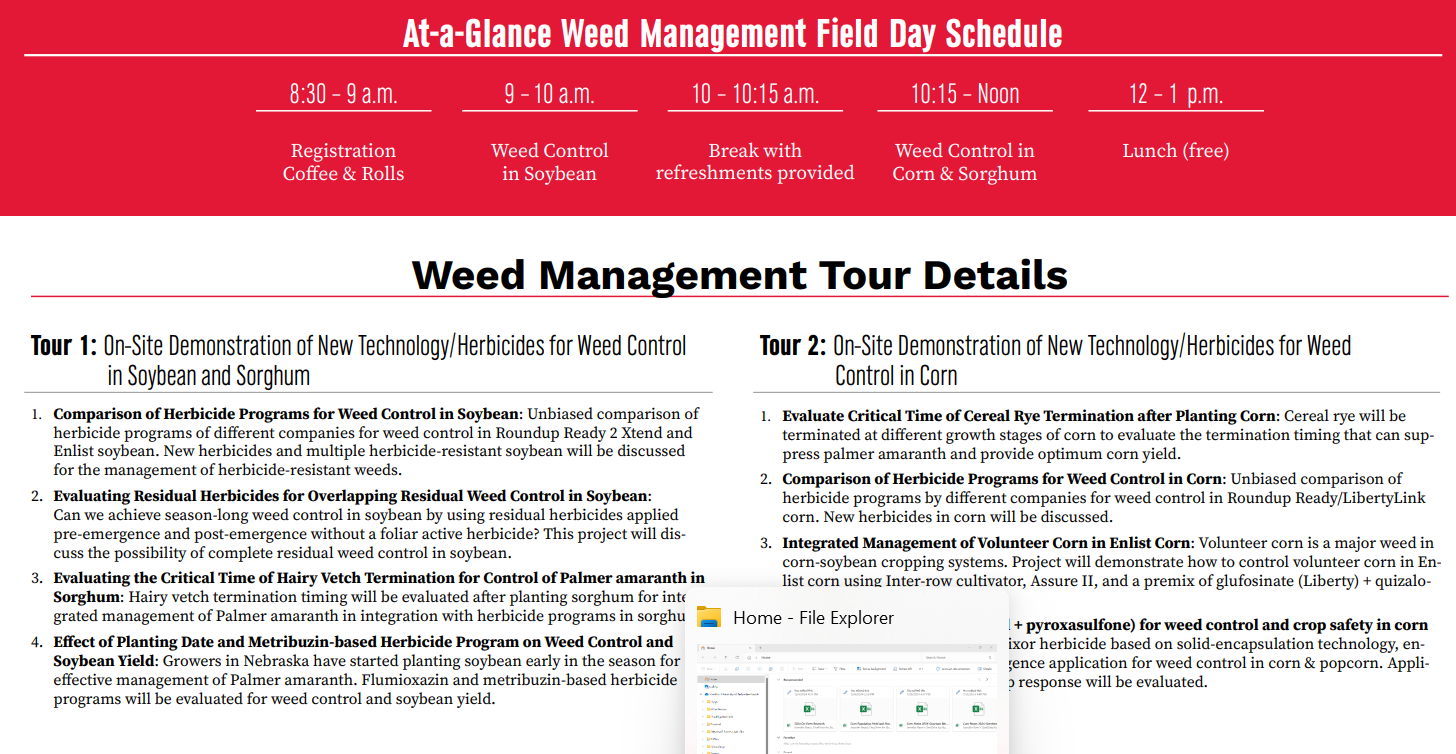
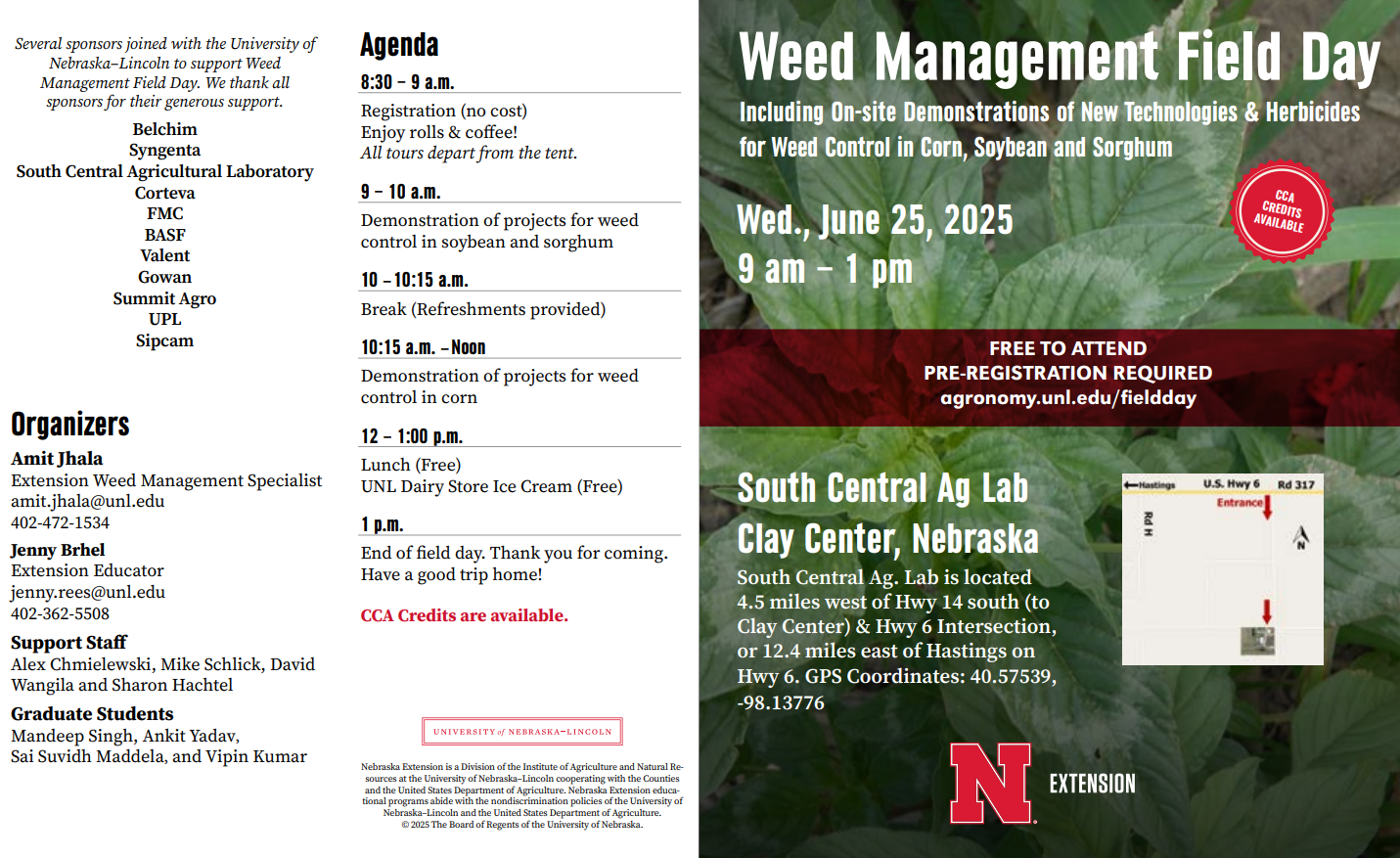
Reminder: June 25 Weed Management Field Day at UNL’s South Central Ag Lab near Clay Center, NE. Details at: https://go.unl.edu/qemk.

JenResources 6/8/25
Wheat Stem Maggot in Corn: Been seeing and hearing of some wheat stem maggot in corn for some fields where corn was planted green into rye. While I see this to a small extent each year, the last time we heard widespread reports was in 2017 (photos and info. at: https://jenreesources.com/2017/06/05/corn-concern-in-wheatrye-cover/). Symptoms include the corn whorls of plants looking wilted. Pulling out the whorl and carefully unfurling it may reveal the light-green maggot. Some key points: the maggot will move from dying rye or wheat into healthy corn. It will not move from plant to plant in corn unless the entire corn plant dies. What we have normally seen is the maggot kills the main stem of the corn plant; however, the plant produces tillers which then produce ears (not typical tiller ears). Because of that, replanting is not recommended. Our Extension Entomologists also don’t recommend spraying an insecticide once the maggots are in the whorls because they won’t have activity against the maggots inside the corn. There are no published thresholds for the maggot once it gets into the corn plant. Here’s an article UNL researchers published on timing and use of insecticides in cover crop/corn systems: https://www.mdpi.com/2075-4450/13/4/348.
Regen Ag Field Tours: A series of Regen Ag tours are available June-August. For now, I’ll share on two of them. On June 11, Doug and Traci Steffen are hosting a compost and covers tour on their farm near Crofton, NE from 1-3 p.m. RSVP at https://practicalfarmers.org/field-days.
On July 8 from 10 a.m.-Noon, Junior Pfanstiel is hosting a covers and corn tour on his farm near McLean, NE. Lunch is also included. Junior alternated 4 rows of corn with 4 rows of multi-species cover crops throughout his field with the goal of obtaining the same yield on fewer acres while also having grazing acres. Please RSVP to: (402) 254-6758.
Roundup: Homeowners, Please read the active ingredients on jugs before purchasing and using Roundup products. I’ve had several situations where homeowners have bought “Roundup” thinking it was the traditional “glyphosate”, but instead the active ingredient was “triclopyr”. The problem? They work differently. Glyphosate is a non-selective herbicide that doesn’t move in the soil or from plant to plant. It only works on the plant it comes in contact with. Triclopyr is a growth regulator herbicide (same family as 2,4-D and dicamba) that mostly affects shrubs, stump treatment, and broadleaf weeds. It has minimal activity on grasses. It has soil residual activity, on average for 30 days, but can be as much as nearly a year depending on how the microbial life break it down. It can volatilize (move off-target to other broadleaf plants after application) and it can be excreted through the roots of plants that were sprayed to nearby, non-sprayed plants impacting them.
Because of this, some people who have used Roundup containing triclopyr have reported issues with growing vegetables, flowers, their grape vines, raspberries, and around fruit trees. Triclopyr symptoms on plants looks like a “strapping” of leaves where they become bubbly and elongated, but it’s a different look than 2,4-D damage. Plants grown in soil treated with triclopyr may have kinked stems and appear stunted. More info. on triclopyr: https://purduelandscapereport.org/article/the-summer-of-triclopyr-mounting-evidence-for-off-target-damage/. A great resource explaining all the different “Roundup” products on the market: https://www.purdue.edu/fnr/extension/when-roundup-isnt-roundup-purdue-landscape-report/.


JenREES 4-29-18
Crop Update: It’s nice to see some signs of spring with planters going this 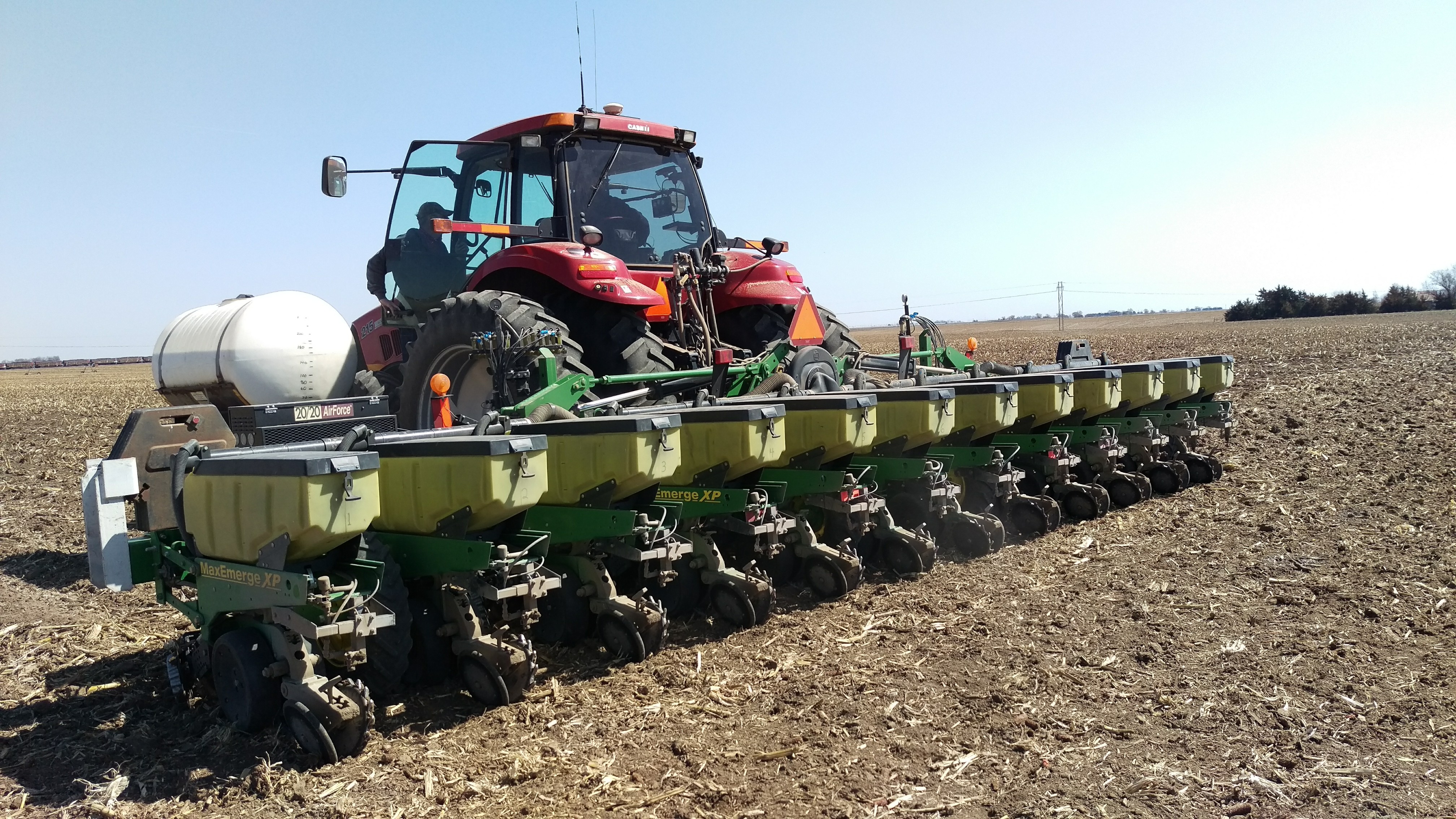 week/weekend, crabapples and flowering pear trees in bloom, and tulips budded! The York County Corn Grower plot got planted on Saturday and grateful for Ron and Brad Makovicka’s efforts with that and for all our participating companies!
Rain did help the top foot of sensors in some locations I’ve been monitoring for pre-plant soil moisture. The graphs will be up at http://jenreesources.com by noon on Monday. The cooperators have all been interested in continuing to monitor moisture in these fields post-planting, so will plan to do that and add a York and Seward location too. I’m noticing in York as lawns are greening up, that portions are looking gray-green in color where trees are located in them.
As of April 26th, I hadn’t found any wheat jointing yet. The growing point was just approaching ground level in several fields I checked. We also need to keep an eye out for stripe rust as incidence is increasing in Kansas fields. There’s articles focusing on winter wheat in this week’s UNL CropWatch at http://cropwatch.unl.edu including nitrogen management and Nebraska wheat progress.
Wheat Stem Maggots (WSM) in Rye/Wheat Cover Crops: I meant to provide an update in last week’s column. Dr. Justin McMechan has been scouting wheat and rye cover crop fields for wheat stem maggots. So far, he captured one adult wheat stem maggot on April 16 in 100 sweeps from a wheat cover crop planted in late September at the Eastern Nebraska Research and Extension Center near Ithaca. He shared that “adults have been consistently collected at this location since first emergence with one to two found per 100 sweeps. This first occurrence of adults matches closely with data collected in 1933 by Merle Allen from Kansas State University. Our latitude north of Kansas and cold spring suggests this emergence might be earlier than Allen’s data. On April 23 two adults were collected at Clay Center and a single adult was collected near Marquette. Cover crops in these fields were less than 6 inches in height, with the field near Marquette grazed to approximately 3 inches in height. Sweeping these fields is challenging due to the height of the vegetation so adult captures are not likely to represent true numbers in the field. If you are skilled with a sweep net, we encourage you to sweep your wheat, rye, or triticale cover crops for wheat stem maggot adults.” At this point we’re not recommending any insecticide treatments. An interesting observation that a couple of Clay and Adams county farmers mentioned to me last year was they noticed the presence of a lot of flies as they planted corn into green rye and terminated at or after planting corn. The adult WSM is a small fly and you can see photos in Justin’s report in this week’s UNL CropWatch at http://cropwatch.unl.edu.
Which dicamba product before Xtend soybean: This has been a fairly common question this spring which Dr. Amit Jhala addressed in this week’s UNL CropWatch. I’ve also provided his answer here. “I recently received several phone calls from growers with questions on terminating broadleaf cover crop species and broadleaf weeds using dicamba products. They were particularly interested in whether dicamba products such as Banvel, Clarity, DiFlexx, etc. can be applied to terminate broadleaf cover crop species such as hairy vetch, field peas, or mixtures and broadleaf weeds such as henbit, field pennycress, or marestail immediately before planting Xtend soybean. The answer for the dicamba-based herbicides listed above is NO. Their labels have soybean planting intervals of 14 to 60 days, depending on the product and its use rates.
For example, for Clarity to be applied at 16.0 fl oz/acre, there would be a 28-day soybean planting interval after an inch of rain. If Clarity were to be applied at 8.0 fl oz/acre, the soybean planting interval would be 14 days after an inch of rain. The Clarity label also specifies: “Do NOT make Clarity burndown applications to soybeans in geographic areas with average annual rainfall less than 25 inches.”
If DiFlexx is applied burndown at 24 fl oz/acre or less, the planting interval for soybean is 60 days. This longer planting interval must be applied because Xtend soybean is not listed on Banvel, Clarity, DiFlexx, or other dicamba products.
Dicamba-resistant soybean, also known as Xtend soybean, became available commercially for the 2017 growing season. Three dicamba products (FeXapan, Engenia, XtendiMax) are labeled to be applied pre-plant, pre-emergence, or post-emergence (up to R1 soybean growth stage) for broadleaf weed control in Xtend soybean. You can use FeXapan, Engenia, or XtendiMax as per label requirements in burndown application and plant Xtend soybean without a planting interval.
If you apply 2,4-D prior to planting soybean, be sure to adhere to the planting interval specified on the label. Several 2,4-D products have different planting intervals for soybean, ranging from 7 to 30 days depending on product and application rate. (See this Crop Watch article.)”
JenREES 4-1-18
Hope you had a blessed Easter! The Wheat Stem Maggot in Cover Crop Webinar can now be viewed at: https://www.youtube.com/watch?v=XGjuzMlrjhQ&feature=youtu.be. The link for the survey mentioned in the webinar is no longer available but you are welcome to contact Dr. Justin McMechan for additional comments/questions. He goes through a number of insects to watch for and his ultimate message is to scout to determine termination timing.
Cover Crop Interseeding: A few weeks ago I attended the interseeding cover crops field day which had a really good attendance for March! For those of you considering this, I learned it’s best to start earlier than V6…consider V3 and if it’s wet, you have a better chance of actually getting interseeding accomplished by V6. This is year 3 of their study. The first year they used a spreader to seed the mixes. The second year they found utilizing insecticide boxes for the seeding when they cultivated worked the best. The third year they used a Hiniker inter-row seeder which they purchased.
Regarding mixes, most of them included annual ryegrass or cereal rye. There’s a Penn State mix (27# total of annual ryegrass, red clover, and hairy vetch) that has been successful in northern U.S. states. Very little cover was observable this spring, but from a photo provided, it appeared growth came on during corn senescence and after harvest last year. Fall biomass wasn’t measured last year which will hopefully be measured in the future to obtain more data on the success of the mixes. My take, if your goal is early spring grazing or early spring cover, I’m unsure that much can beat cereal rye, even if it was dormant seeded. If you’re looking for a way to get some cover established prior to corn harvest for either fall grazing or just fall soil cover, interseeding with a mix containing the annual ryegrass looked good from the pictures they showed. If you’re interested in any cover crop or other on-farm research studies this year, please let me know!
Tree Care Workshop: Trees are very valuable in our landscapes. They provide us with beauty, shade, oxygen, and better resale on our homes. These trees need our help to ensure they have healthy growth. When they have a disease or insect problem, it is up to us to manage those pests to help them live many years. On Wednesday, April 18th from 5:30-7 p.m. at the Fairgrounds in Clay Center, Nicole Stoner will teach us what to do with our trees. Nicole is a Horticulture Educator from Gage County. This tree program is $5.00 and will cover light refreshments and your educational materials. Nicole will cover watering, insect and disease problems, general care, and planting of trees. Please pre-register by April 13th with Nebraska Extension in Clay County by calling 402-762-3644 or emailing dpeshek2@unl.edu.
Spring Affair Plant Sale: Spring Affair, the Midwest’s largest plant sale and gardening event, will be Saturday, April 28 at the Lancaster Event Center in Lincoln from 9 a.m. to 2 p.m. More than 700 different varieties of perennials, herbs, grasses, trees, shrubs and other plants will be available. They are selected for regional suitability, uniqueness, popular demand and provided by Bluebird Nursery, Inc., of Clarkson, Neb. It is sponsored by the Nebraska Statewide Arboretum as an educational tool, fundraising event and to promote regional plants. For information and inspiration, half hour plant talks will be offered at:
- 10:00 – “Nebraska Native Plants for Birds” by Jason St. Sauver, Spring Creek Prairie Audubon Center
- 11:00 – “Gardening 101: I’ve got my plants, now what?” by Justin Evertson, Green Infrastructure Coordinator for the Nebraska Statewide Arboretum
- 12:00 – “The Guilt-free Garden” by Mark Canney, Park Planner & Designer for Lincoln Parks & Recreation
Admission to the sale is free. The plant sale, presentations, educational booths and vendors of garden-related items are all in Pavilion I of the Lancaster Event Center with plenty of free parking. For more information, visit https://plantnebraska.org/spring-affair.
DriftWatch/BeeCheck: Nebraska Department of Ag (NDA) encourages pesticide applicators to check out DriftWatch/BeeCheck at http://driftwatch.org to minimize pesticide drift. It’s important for those with sensitive sites such as organic, bees, vegetables, grapes, etc. to add them to this website and important for all applicators to check this website for sensitive locations around our fields. Several states have been added to DriftWatch/BeeCheck in the last year and a few more are in the works, making it more beneficial to applicators working near the state line or those working in multiple states. FieldWatch, the company that manages DriftWatch/BeeCheck, now offers data subscriptions for obtaining data files for GIS maps or live stream data through several mapping software providers. It will be rolling out a new mobile app very soon, FieldCheck, for applicators who have registered as an applicator (which is free to do). You can also view the most recent edition of NDA’s Plant Health Protection Update at: https://us14.campaign-archive.com/home/?u=eb13611bfcca17410ce5c5f52&id=10756f8d33.

Corn Concern in Wheat/Rye Cover

What we see is larger plants next to stunted or shorter plants. The smaller plants often show some type of ‘flagging’ of the leaves where one or several leaves or sometimes the whorl is brown and wilted. Upon digging these plants, the roots were healthy and there were no symptoms of damping off or other obvious disease issues. While there have been reports of some wireworms, this also hasn’t been the main issue with these plants I’ve been seeing.

John Mick with Pioneer alerted me to what he was seeing and several of us have since found the same. Carefully unrolling leaves from the stems of these plants revealed feeding on the stems and crown area. You can see from this photo the small larva of what we believe to be wheat stem maggots (top leaf). I’m finding from 1-3 per plant (on this plant there were more in the disfigured area of the stem). I’m also noticing some plants that are tillering such as is shown in this photo after they’ve been damaged.
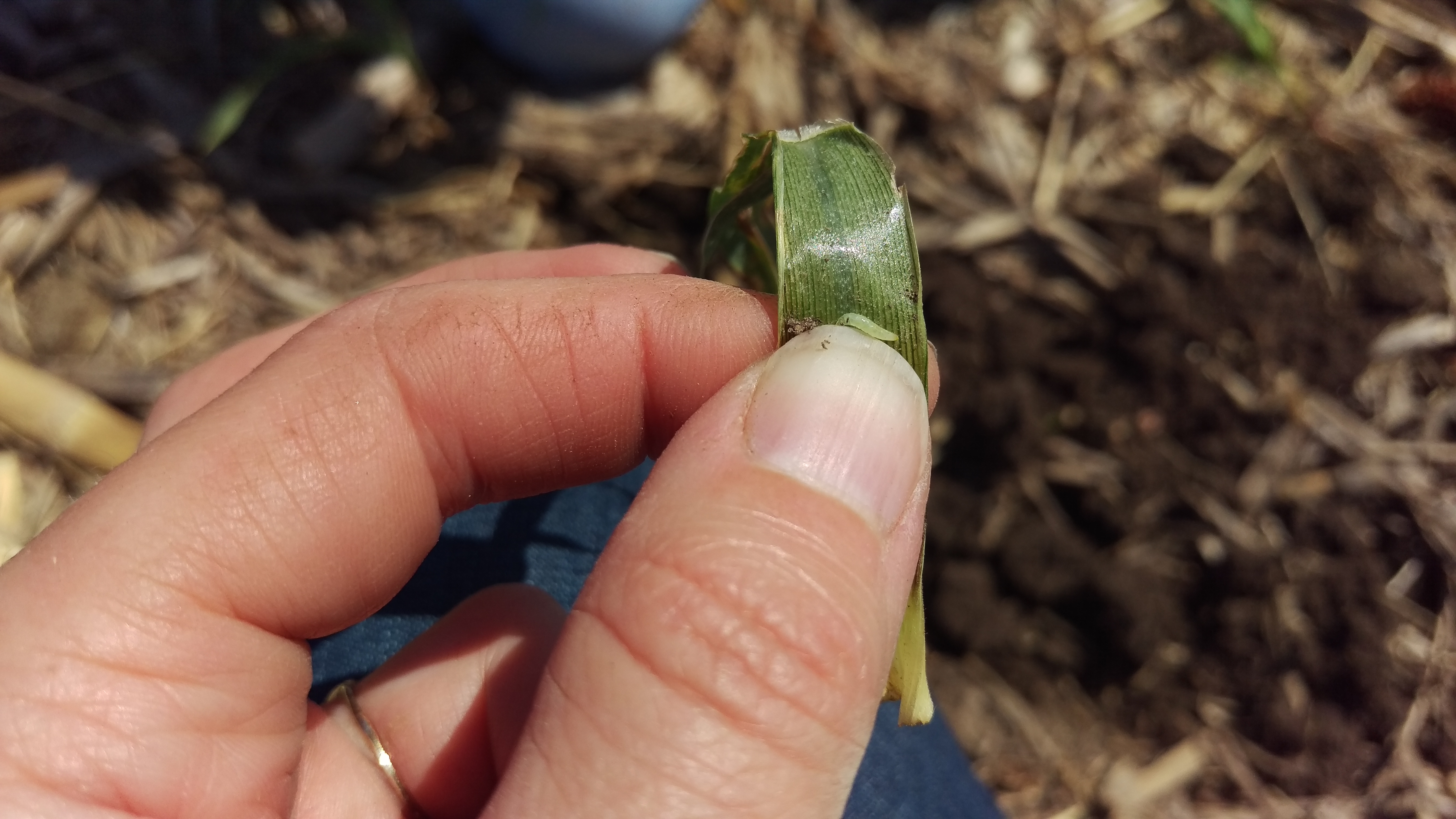
The larva in another plant.
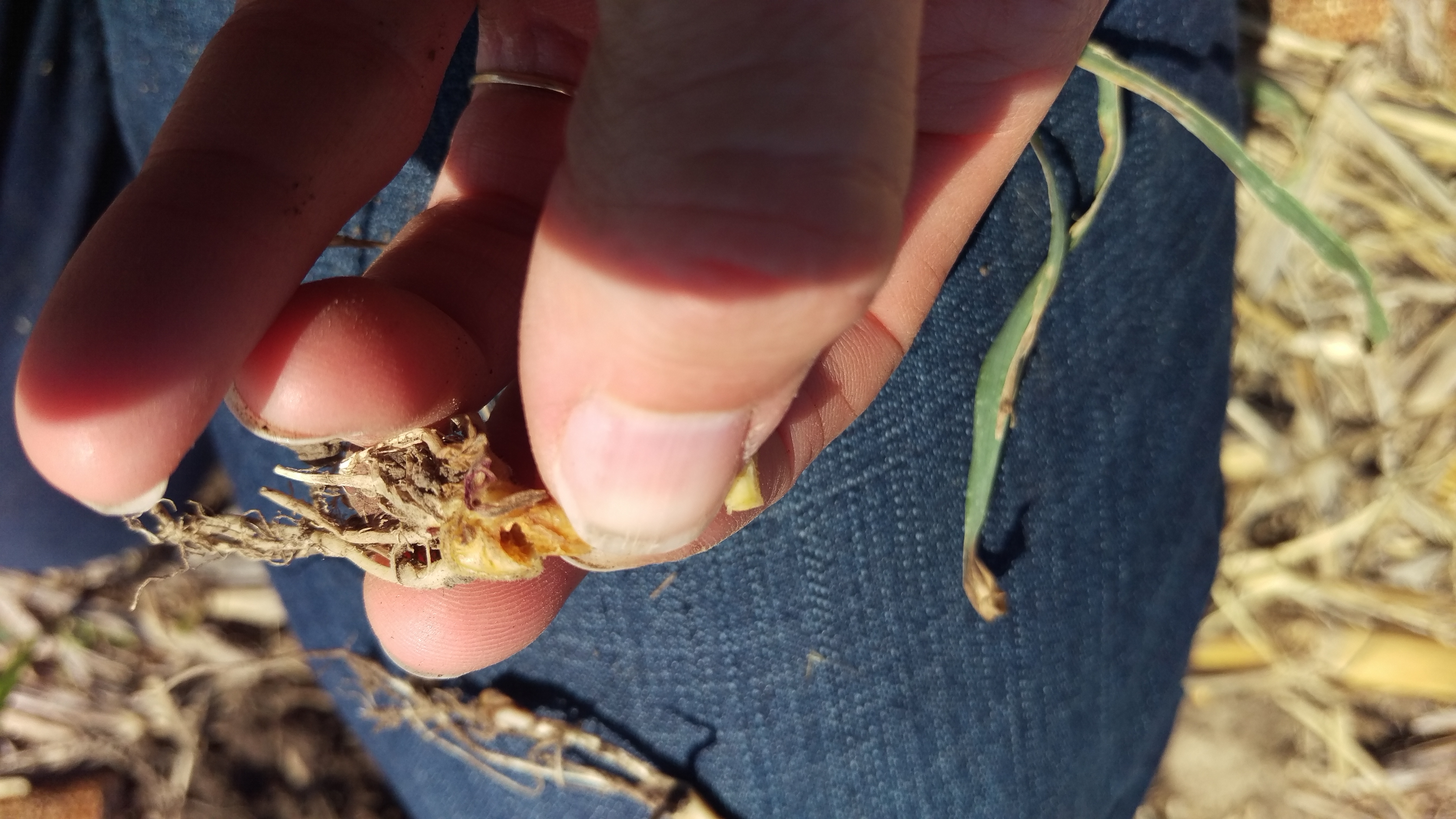
The growing point area of the same plant.
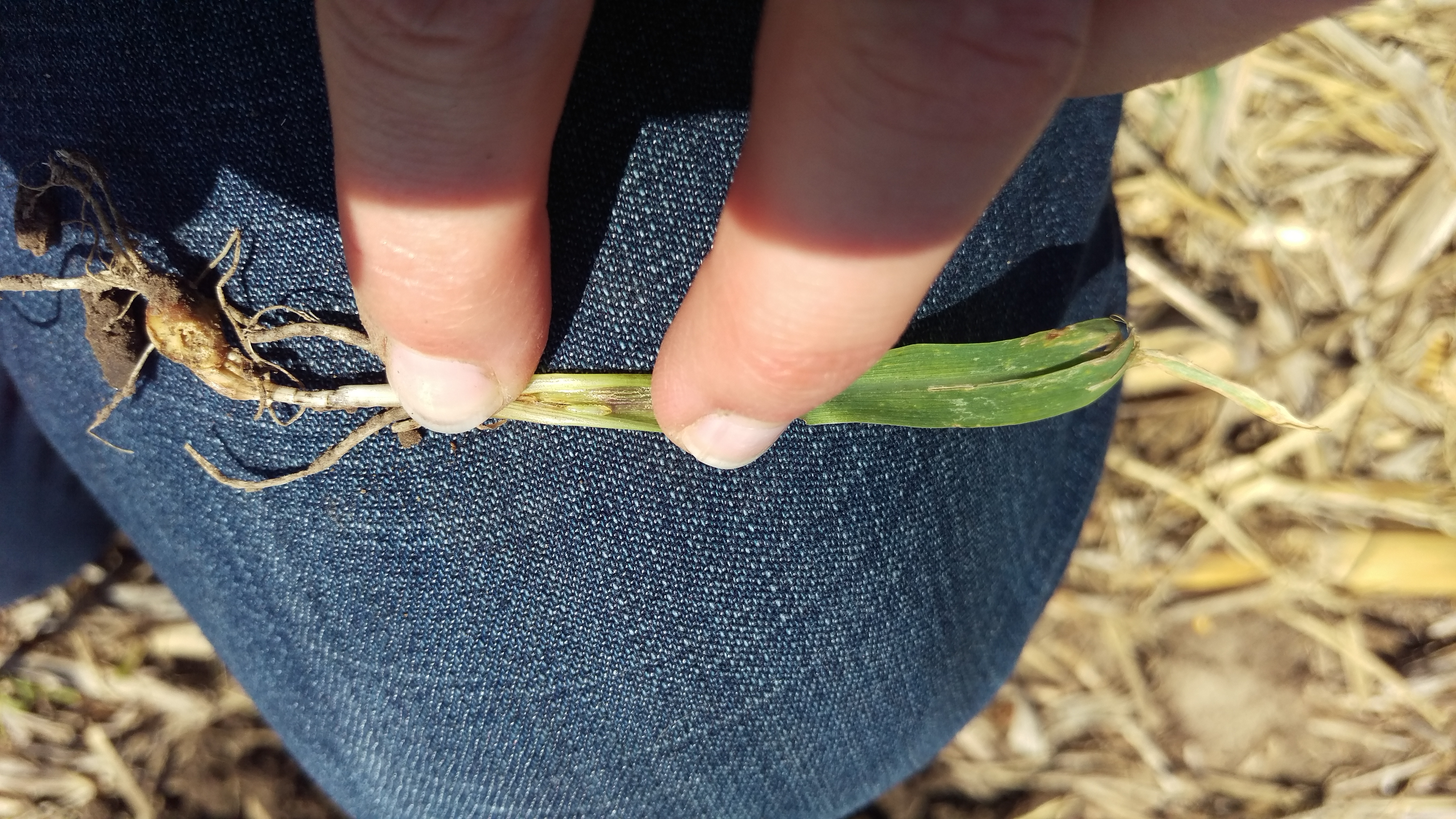
Carefully unroll the leaves to reveal any potential larvae.
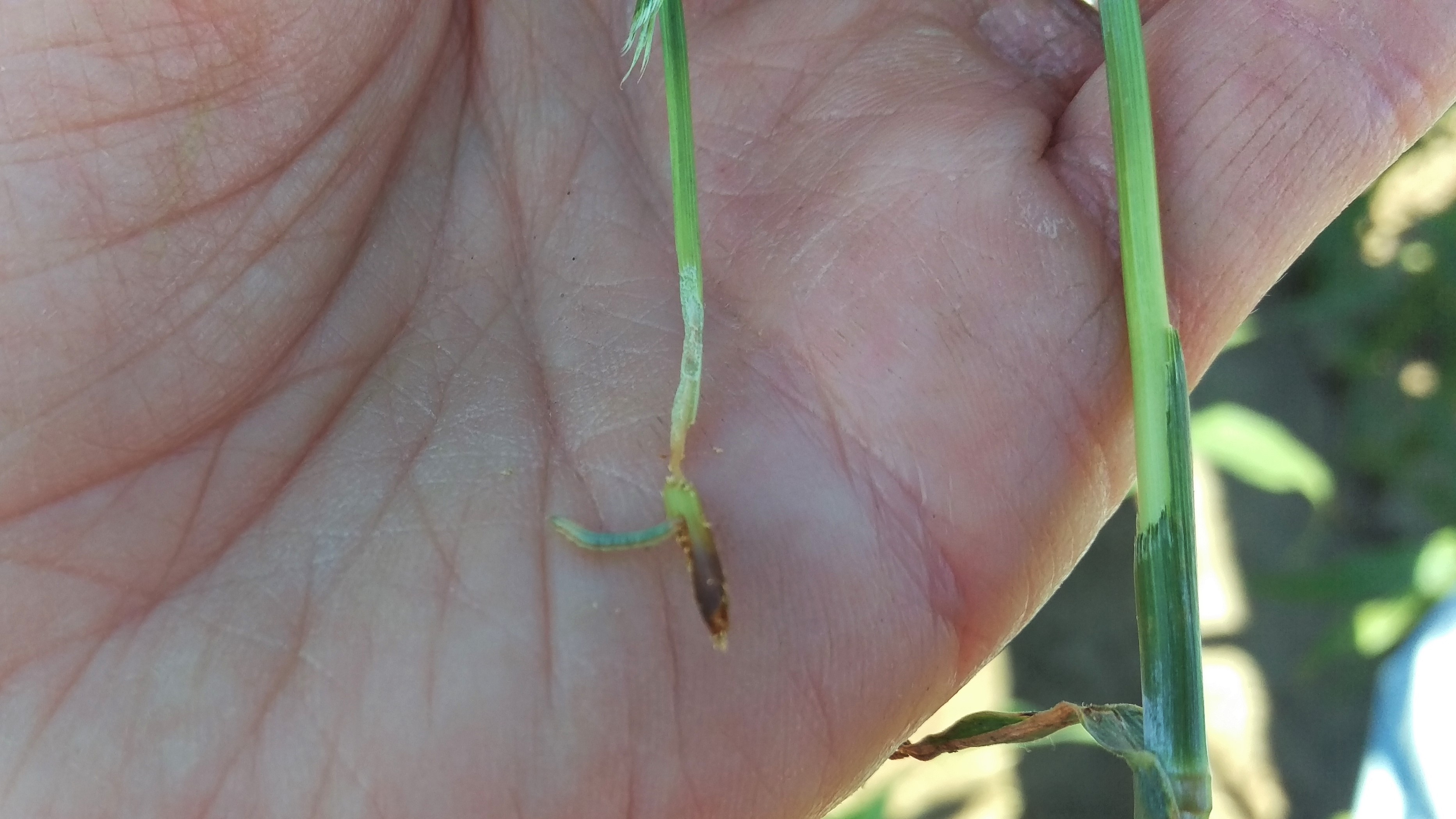
Also found wheat stem maggot in some rye stems from rye that didn’t completely die. White heads in wheat and rye can be an indication of their feeding. You can then pull on the head and easy removal reveals where the maggot was feeding.
So two questions:
- Why are we seeing this this year?
- Is there anything we need to do?
The short answer to both is that we really don’t know. Perhaps one hypothesis is our warm winter allowed for an earlier generation of wheat stem maggots to pupate and emerge as flies during corn planting when they would typically do so later in May. Perhaps in fields where wheat or rye wasn’t yet terminated, the flies could lay eggs and the larvae that hatched moved from the wheat or rye to the corn upon emergence and once the cover was terminated.
The larvae we’re finding now are in different stages and some are getting close to pupating. After pupating, they will emerge into flies that will lay eggs in grass crops. We don’t know for certain if the flies will lay eggs in these corn fields again or if they will move to other grassy species. We’re not recommending insecticide applications.
South Dakota State and Kansas State have previously reported rare incidences of this occurring in corn. This is my first time observing this in Nebraska. To date, I’ve seen stand loss range in fields from 5-50%.
This doesn’t mean that all potential stunted plants or stand concerns are due to this particular insect as a number of other factors could be involved. This post is intended to increase awareness of another option to look for with the number of questions I’m receiving right now regarding corn concerns in terminated rye or wheat cover.
Dr.s Justin McMechan and Bob Wright are surveying fields and conducting studies to better understand any potential concerns in future years. We will keep you informed as we continue to learn more.


 JenResources