Blog Archives
JenResources 7/27/25
White Mold in Soybeans Questions: There’s no need to worry about spraying if you don’t have a history of this disease in your fields. If you did have white mold in 2023, there’s potential for it in 2025. There’s also a lot of confusion about what white mold looks like. If one is in a corn/soy rotation, corn residue in a soybean field often has a “white fungal” growth on it this time of year. That’s due to saprophytic fungi doing their job in decaying that organic material; nothing to worry about! There’s also many types of mushrooms that are involved with decaying organic material that one might find in a field. Seeing mushrooms does not mean they’re going to create white mold. The fungus that causes white mold of soybeans creates mushrooms from black sclerotia that look like mouse droppings. When you scout within a soybean canopy, the mushrooms will be attached to the sclerotia on the soil surface. They also have a specific look to them. You can learn more from Dr. Dylan Mangel, Extension Soybean Pathologist, in this CropWatch article: https://go.unl.edu/opv3.

County Fairs: Thanks to all who made the Seward and Fillmore County Fairs a success! This week is the York County Fair; the website that contains the schedule of events and ability to purchase tickets is at: http://www.yorkcountyfair.com/. For those interested in exhibiting items in Open Class, you can find the Fair Book in the Extension Office or online at: https://go.unl.edu/c2qn. Entry times are Tuesday, July 29 from 6-8 p.m. and Wednesday, July 30 from 8-11 a.m.
Testing Moisture in Forages: Dr. Mary Drewnoski sent out the following info. after a summer grazing field day, “accurate moisture testing is key to preventing spoilage and heating in hay and to ensuring proper fermentation in silage. Below are a few options, along with pros and cons:
Koster Moisture Tester
How it works: Uses a small scale and heating unit to determine moisture by weight loss.
Pros: High accuracy (considered the “gold standard”). Works for hay, silage, and other forages.
Cons: Slower process (20–60 minutes per sample). Requires a power source.
More info & instructions: UTIA Publication (PDF)
Where to buy: Koster Tester Website or search online for deals. Price is now around $500 (double a few years ago when I bought mine).
Hay Windrow Moisture Testers
How it works: Dish-style handheld electronic probes for quick readings in windrows or chopped samples.
Pros: Fast and easy to use in the field. Measures a wider range of moisture (13–70%) compared to standard bale probes, making them suitable for silage.
Cons: Less precise than Koster. Can require good sample prep for consistency.
Where to buy: There are mean options on Amazon or a simple google search with this term will give you option. Price range: $200–$400
DIY Option: If you already have a hand held bale probe, here’s a way to adapt it: Progressive Forage Article
Microwave Oven Method
How it works: Drying a forage sample in the microwave to measure weight loss.
Pros: Very low cost (just need a microwave and scale). Works for both hay and silage.
Cons: Time-consuming and requires caution (fire hazard if overheated and results in potential for increased error). Not as convenient for field testing.
Directions: UNL CropWatch Article


Fair and Drone Conferences
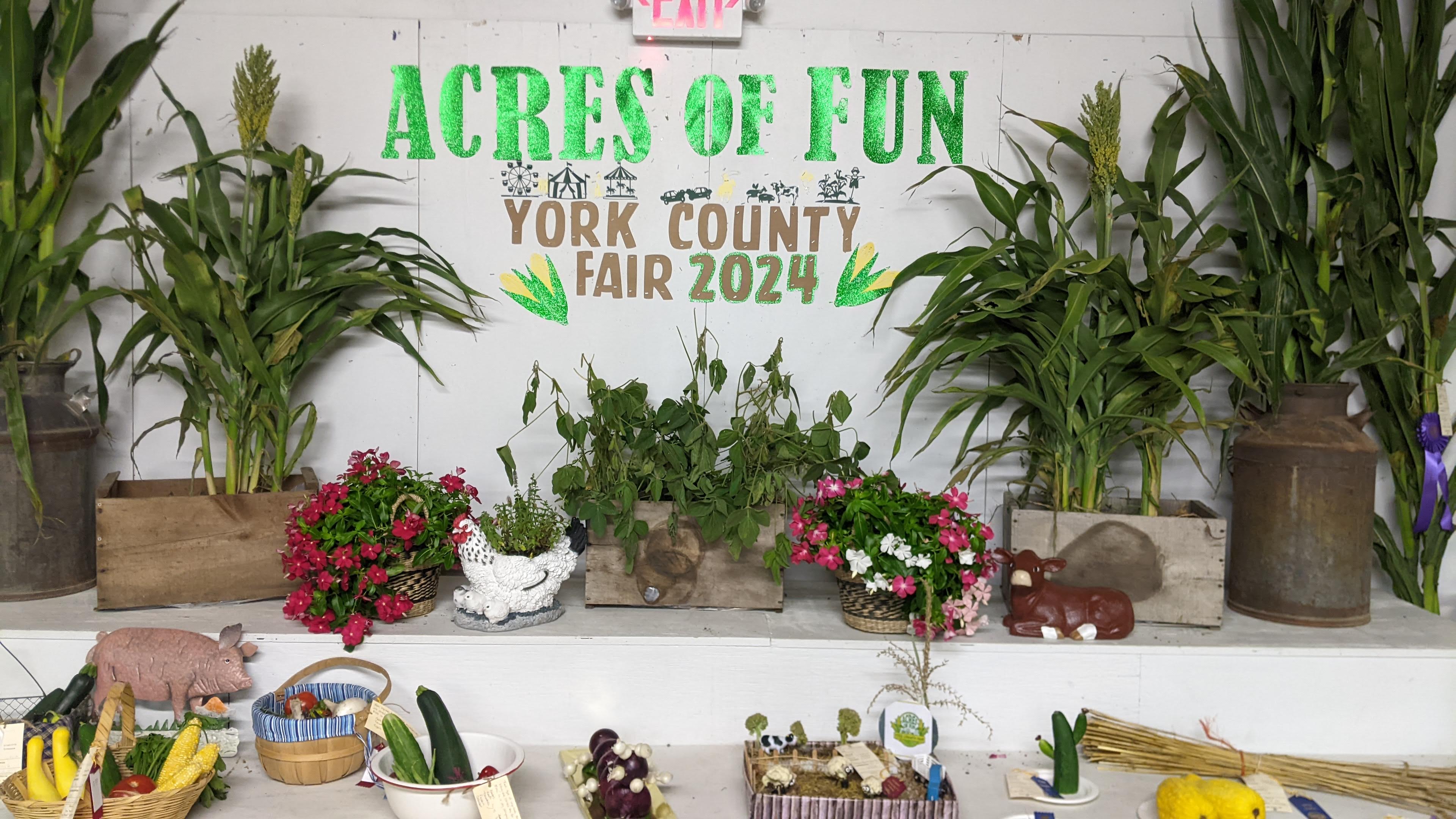
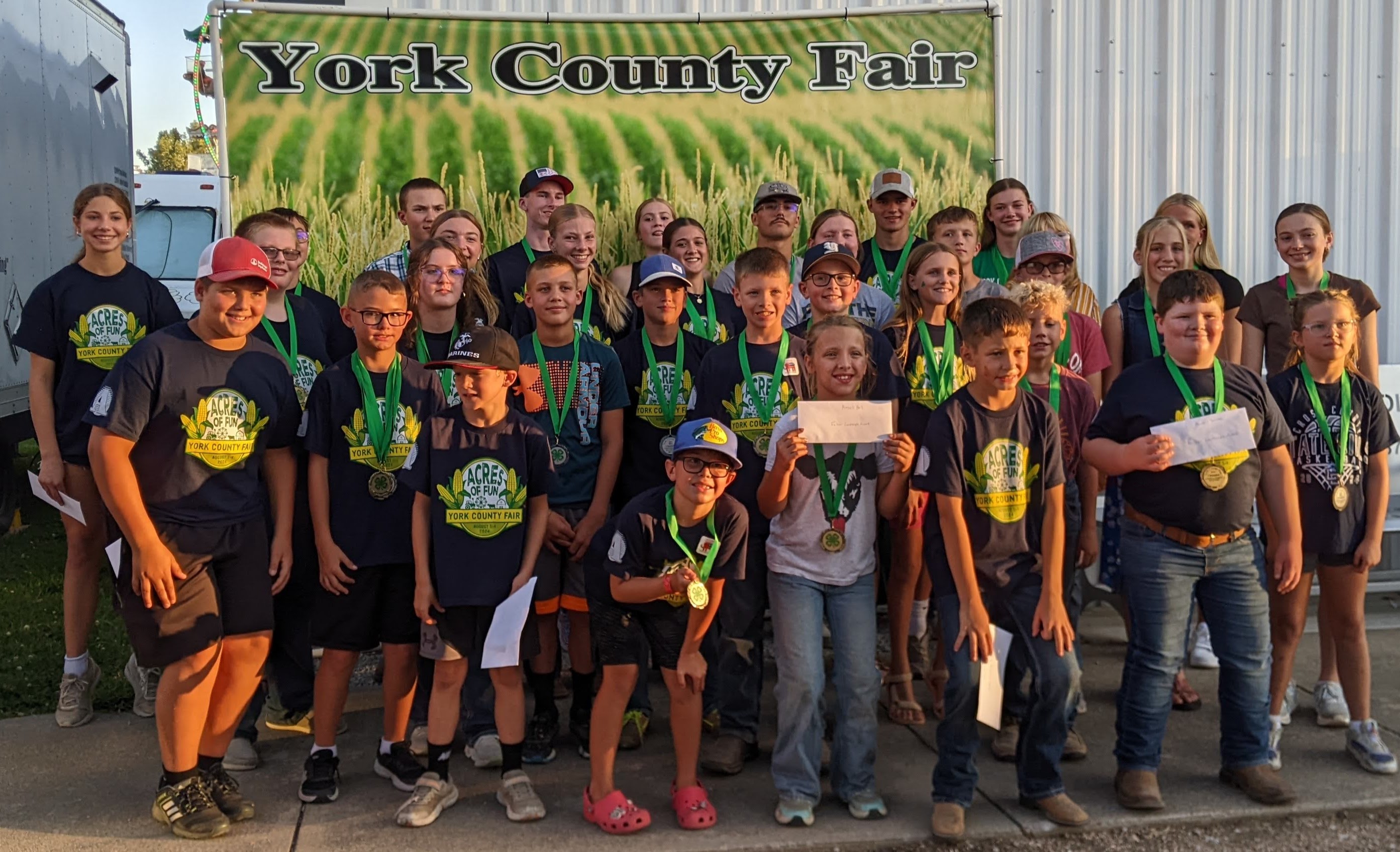
A special Thank You to everyone who helped make the 2024 York County Fair a success! I get to serve with nearly 60 volunteers who serve in Ag Hall each year. Most have served nearly 20 years or more! It’s fun for me to see the buildings and grounds come alive with projects. It’s also fun to observe people catching up with each other and to catch up with people myself. Perhaps my favorite part of fair is seeing the youth awarded for their projects and proudly wearing their medals around the fairgrounds. I’ve been blessed my entire career to work with wonderful people at county fairs and in counties where all the entities work together for the good of the youth, families, and community. Thank You to all the Ag Society, 4-H Council, Extension Board and staff, volunteers, families, sponsors, vendors, police/security who make the York County Fair a success each year! Wishing everyone exhibiting at Seward County Aug. 8-11 all the best as well!
Drone Conference: Nebraska Extension is hosting two drone conferences on Wednesday, Aug. 14 and Thursday, Aug. 15 at West Central Research, Extension and Education Center in North Platte, Nebraska. On Aug. 14th, the Drones in Agriculture Conference will feature Jonathan Rupprecht, Esq. of Rupprecht Law, P.A. Rupprecht is a lawyer, commercial pilot and flight instructor who combines these experiences to help businesses and individuals navigate the complex system of laws for unmanned aircraft systems.
On Aug. 15th, The Nebraska Spray Drone Conference will feature Dr. Steve Li, associate professor and extension specialist of weed science at Auburn University. His research team works on evaluating the application efficiency of spray drones and understanding how to optimize flight and spray parameters to mitigate spray drift.
In addition to these speakers, the conferences will feature presenters from Federal Aviation Administration, Nebraska Department of Agriculture, Nebraska Extension, Pix4D Agriculture, Lifted Vision, Aurora Cooperative, Agri Spray Drones, and Volitant Technologies. Spray drone demonstrations will be provided by Agri Spray Drones and Volitant Technologies. Please refer to the registration page for more information on speakers and conference agendas.
The conference registration fee is $150 per conference, or $250 when registering for both. An educational discount is available to students and educators through an application process available on the registration page. For more information and to RSVP, please go to: https://go.unl.edu/ihd5.
Extension Educator, Dirk Charlson, is also hosting a Part 107 Remote Pilot Exam Prep Course on August 16th from 9 a.m.-5 p.m. for more information and to register for that, please register at: https://cvent.me/x1AQD2. Please contact Dr. Dirk Charlson for more information on this course and/or the drone conference at Email: dirk.charlson@unl.edu or Cell: 402-460-0742 (Text or Call).
Forage Field Day Webinar will begin at 12:30 p.m. on Tues. Aug. 6th. Topics include: Alfalfa revenue insurance program; Sustainable ag and forage management; Summer annual for forage and soil health; Digestible forages in dairy rotations; Optimizing forage availability with cover crop grazing; Making a “safe” harvest plan; and Alfalfa diseases and pests. More information and online registration is required at: https://go.unl.edu/ad2y.
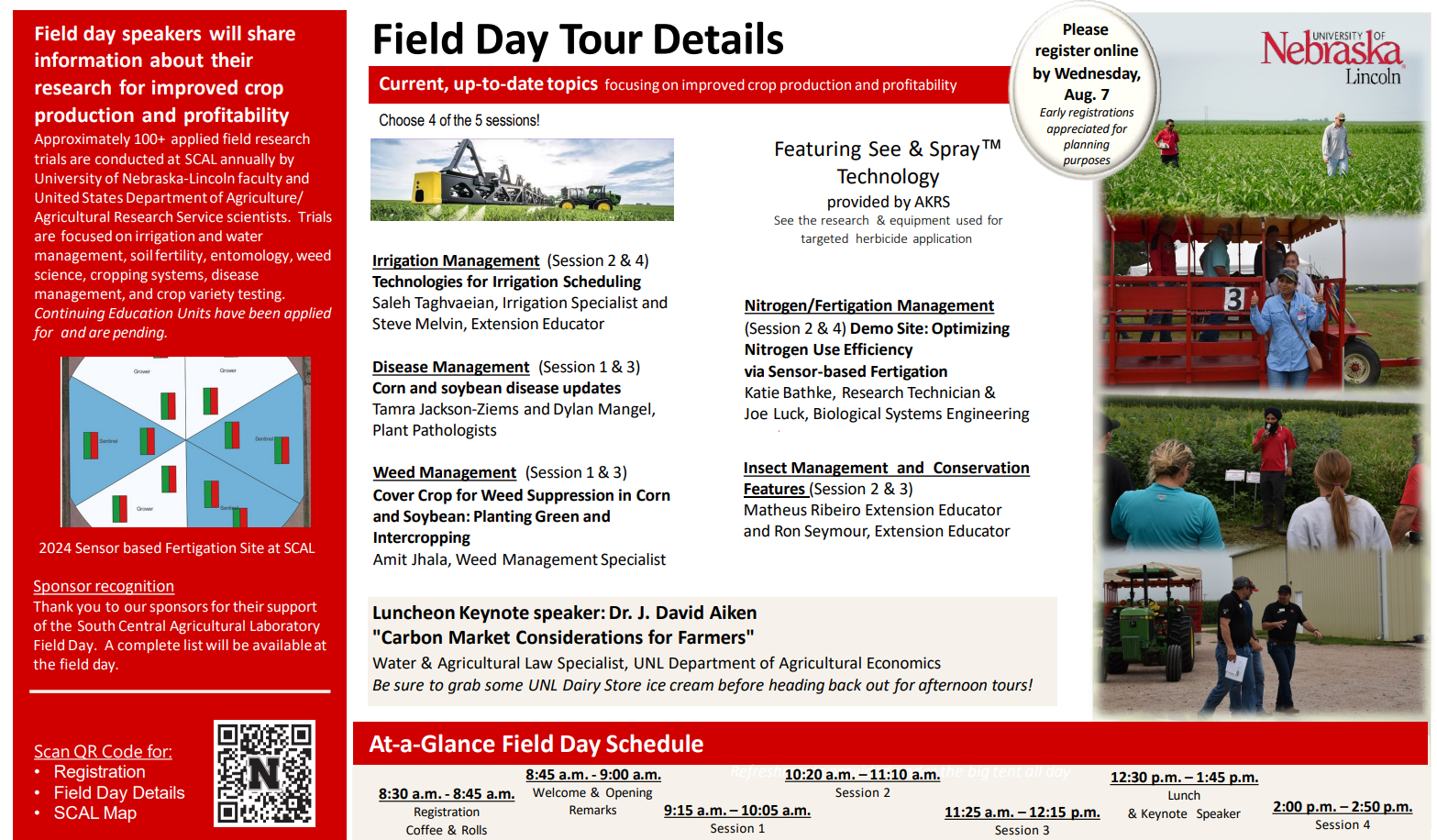
Reminder on Aug. 8 of UNL’s South Central Ag Lab Field Day near Harvard and also the Soil Health Event at the 4-H Building in York.


 JenResources