Author Archives: JenBrhel
Last Irrigation Scheduling
With corn in various stages of dent and starch fill, you may be wondering how to schedule for last irrigation. For those of you in our Nebraska Ag Water Management Network using watermark sensors, the goal is to use them to determine when the soil profile reaches 60% depletion (for silty-clay soils in our area aim for an average of 160 kpa of all your sensors). You may be thinking, “An average of 90kpa was hard enough!” but as Daryl Andersen from the Little Blue Natural Resources District points out, you’re only taking an additional 0.30 inches out of each foot. So if you’re averaging 90kpa on your three sensors, you have depleted 2.34 inches in the top three feet so you still have 0.96 inches left (see the Soil Moisture Depletion Chart). If you add the fourth foot (using a similar number from the third foot), it would bring the water available to the plant up to 1.28”.
At beginning dent corn you need 24 days or 5 inches of water to finish the crop to maturity. If you subtract 1.28 from 5 you will need 3.72” to finish out the crop. Corn at ½ milk line needs 13 days or 2.25” to finish the crop to maturity-so subtracting it from 1.28 would be only 0.97”. Taking into account the good potential for rainfall and what moisture is in the profile, you should be done irrigating corn. Soybeans at the beginning of seed enlargement (R5) need 6.5”. Most soybean fields that I’ve looked at are in R6 or full seed which needs 3.5 inches yet for maturity. Subtracting off the 1.28” in the four foot profile would lead to 2.22”. If we don’t get a few more rains then beans may need one more round. The UNL NebGuide Predicting the Last Irrigation of the Season provides good information on how determine your last irrigation in addition to showing charts on how much water the crop still needs at various growth stages.
Daryl Andersen explains how to use this information in a simplified way. One way to look at this is by the numbers of days left. At 1/4 starch, there are about 19 days before maturity so you can let your sensors average 130kpa on the first week and 150kpa on the next week. If these targets are met during the week, you would put on about 1 inch of water. By going to these numbers, it might give you a higher probability for rain in the next couple of weeks. ET rates this summer have been running less than 0.25” per day for the most part, so with the humidity we’ve had, the crops have not been using much water, which has really helped our dryland corn again in areas where we aren’t receiving rain events.
Soybean Management Field Days
Every year I look forward to attending the Soybean Management Field Days! I enjoy hearing the latest research-based information and seeing so many of our clientele who attend. We have an excellent opportunity for the Soybean Management Field Days to be held at South Central Ag Lab near Clay Center on August 16th! I would encourage you to register and to go! If you’ve been to the field days before, changes have been made so that all the demo plots are now research plots-so all the trials will be harvested, data collected, and shared in future meetings and field days. The theme this year is “Growing Nebraska’s Future” and the event will focus on staying competitive in a global marketplace, increasing profits and meeting the world’s growing food and energy needs starting in Nebraska.
Topics include: nutrient management and high yield alternatives; pest management and yield enhancement products; weed management; and marketing and risk management. In addition, UNL Extension’s BIT Mobile will be on hand for participants to visit and learn how to optimize irrigation efficiency and energy use with the SoyWater program. If you have unknown crop problems, please bring along your samples for agronomists and plant disease and insect specialists to look at for no charge.
The field days are sponsored by the Nebraska Soybean Board in partnership with UNL Extension in the University’s Institute of Agriculture and Natural Resources and are funded through checkoff dollars. The efforts of the checkoff are directed by the United Soybean Board promoting effective, efficient, farmer-driven programs. The field days begin with 9 a.m. registration and conclude at 2:30 p.m. Free registration is available the day of the event; it would be helpful to RSVP for meal count to 800-529-8030 or you can let me know by replying to this blog or emailing me at jrees2@unl.edu. More information can be found at http://ardc.unl.edu/soydays. I hope to post the pod cast of this event shortly, but am still working on how to do this!
Predicted 2011 Corn Yields
Well, it was great to take a week off and the weather sure was nice in Colorado! It seems like it was a poor week to miss in regards to crop happenings, though. Several of you have been asking for a month now for me to run the Hybrid-Maize model for 2011 corn yield predictions and I just haven’t taken the time to relearn how to input the current weather file and run the simulations-but I did tonight.
In my May 1 post, I was showing impact of planting date on yield- essentially we weren’t seeing much based on the models. At the time I showed potential yield results of: 113 day hybrid planted April 15 vs. May 1 vs. May 10, the frost risk increased from 10%, 17%, and 21% respectively with average yields in a “perfect year-no limiting conditions” of 248, 254, and 244 bu/acre respectively. For a 110 day hybrid planted the same days, yields ranged from 233, 242, and 243
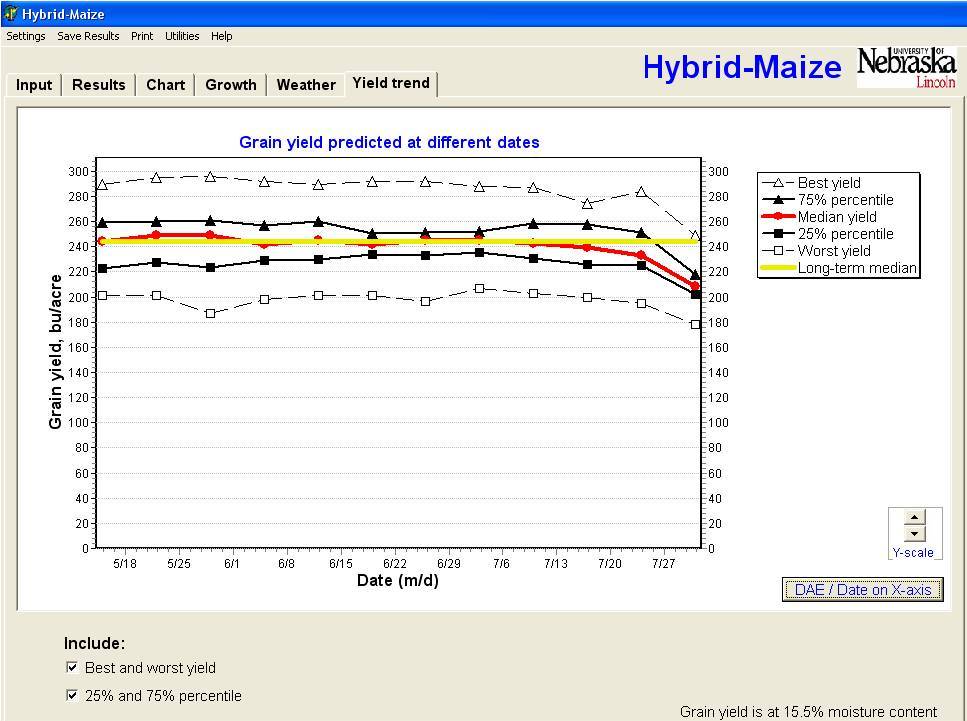 bu/acre respectively with frost risks of 3%, 10%, and 17% respectively. Granted this is just a model and can’t predict perfectly what will happen.
Again, I’ll repeat it’s just a model and is looking at “a perfect year with no limiting conditions”. I already knew we wouldn’t be looking at record yields. The corn had looked even and good for the most part once it got taller, but it hid the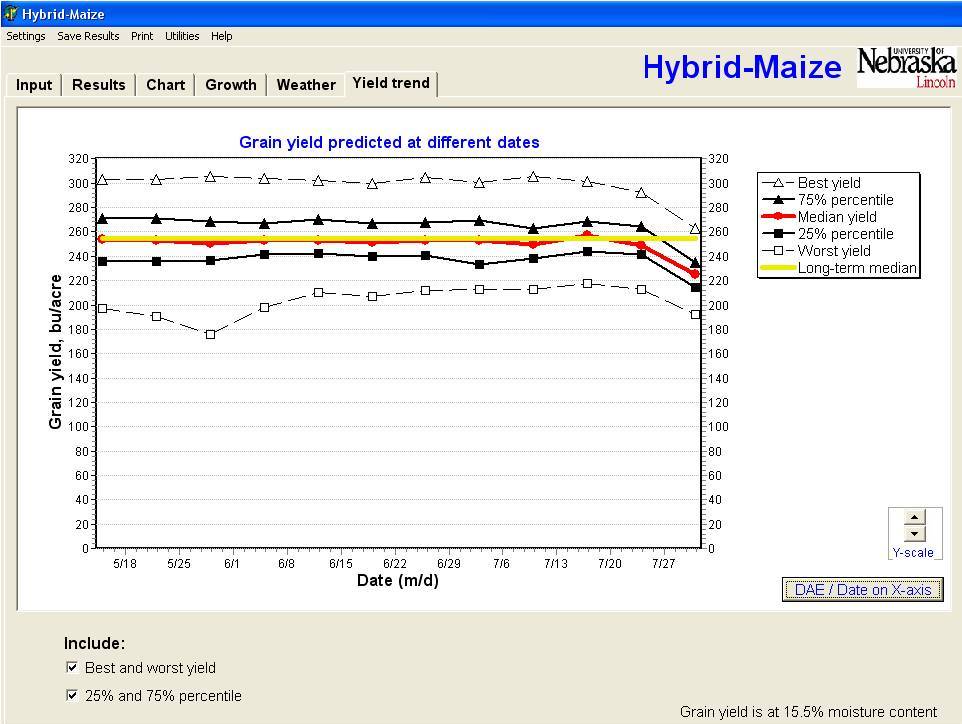 many problems including stand problems from rain washing, residue, Pythium, greensnap, etc. Looking at the actual weather data (from Clay Center, NE station), night time temperatures were really high and may have led to the sharp predicted drop off in yields. I remember well the one hot, dry, non-humid week in August 2010. The model showed a sharp yield reduction then and the corn essentially shut down after that. I hope it doesn’t shut down after last week. The other caveat is that I used “generic” hybrids, did not input specific GDD’s or silking dates, and a planting population of 32,000 plants/acre. Changing any or all of these factors can influence what the model predicts for yield.
Prior to last week, the average yield for 2011 based on Clay Center weather data was tracking at or slightly above the long term 30 year average yields which were similar to the predicted yields I listed above when I ran the simulations for planting dates. For the 2011 season, a 113 day hybrid planted April 15 vs. May 1 vs. May 10 based on in-season weather conditions at this point may yield 221, 225, and 236 bu/acre respectively. A 110 day hybrid planted the same days based on in-season weather conditions at this point may yield 214, 208, and 225 bu/acre. I don’t mean to get anyone
 bummed about this year’s crop-again, this is just a model! I’m just sharing as several have asked me to and it did such a good job of predicting in-season yields last year. It’s also predicting maturity really early-within the first two weeks of September this year which can affect grain fill and ultimately yield as well.
CropUpdate 7-18-11
While it may be strange, I love the smell of corn pollinating and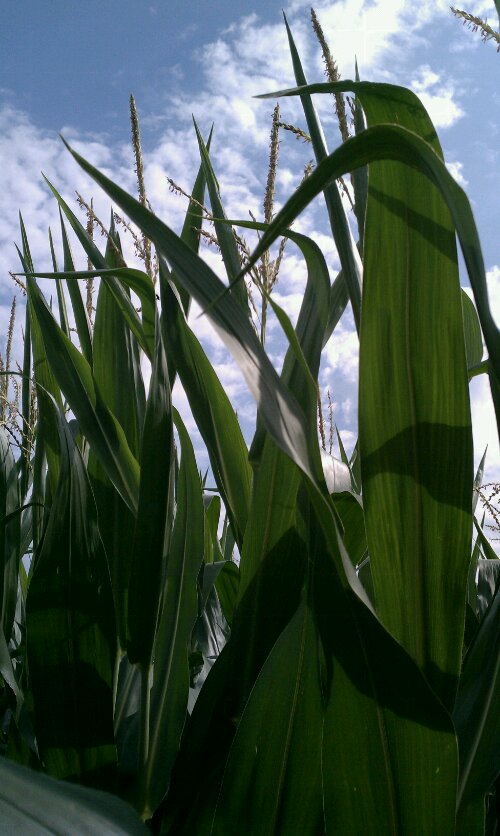 don’t mind walking fields this time of year! Summer is flying by but it seems like it’s taken a long time to get to tasseling in our fields this year. Now that corn is tasseling, we can take into account the third foot root zone for irrigation scheduling. There still is moisture to consider in the third foot so continue to check your readings on your irrigation scheduling tools and now take averages for all three feet. You may be surprised as some of you won’t need to water till end of July/beginning of August! If you have any questions about your irrigation scheduling tools, please continue to call any of us Extension educators or the NRD personnel as we want to help you and work with you now to answer them.
Disease just isn’t an issue so far in fields, so for those of you who purchased fungicide, wait till disease is present when you may need it. UNL research by Dr. Tamra Jackson has proven yields are just as good with delayed fungicide applications as they are at tassel. The longer you wait to use it for gray leaf spot, the more chances you will have residual for southern rust when it comes in. While corn prices are high, you want to keep as much of that money as you can! I don’t recommend fungicides on soybeans as we don’t have the disease to warrant it. If you did pre-pay fungicide for soybeans as well, the timing of that application should be R3 (beginning pod).
Soybeans are approaching beginning pod for many of you. For soybeans, this is a critical time for moisture in addition to seed fill at R5. Many irrigation systems were running on beans last week and I just cringed because the time we don’t want to water soybeans is full flower or (R2). The reason for that is because it can create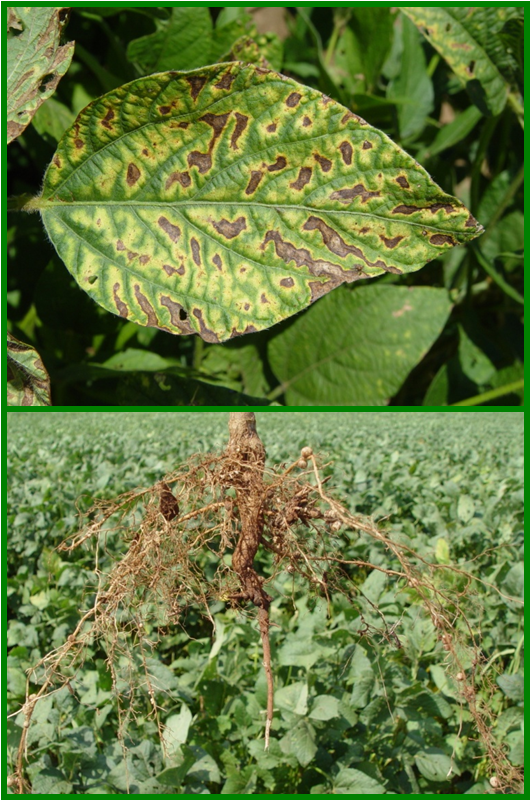 disease issues. We’ve seen a large increase of sudden death syndrome (SDS) the past few years in our county. Part of that is due to early planting in cold soils, but irrigation during flowering can also play a role. The major disease that occurs when irrigating during flowering is sclerotinia stem rot (also known as white mold). While we have very few cases of this in the area, this disease is one that you don’t want to get started in your fields. Like the fungal pathogen causing SDS, the fungal pathogen causing white mold is soil borne. Thus, once you have it, you can never get rid of it. White mold gets started during R2 when flower petals begin to die and the fungus develops on those dead petals. Wet, humid conditions during flowering are key to fungal development, so in the future, avoid irrigating beans during the flowering stages to avoid problems with these two diseases.
County Fair Reflections
A HUGE thank you to all the Fair Board members, 4-H Council, leaders, youth, parents, volunteers, Clay County News Staff, and Extension staff that made the 2011 Clay County Fair a success! 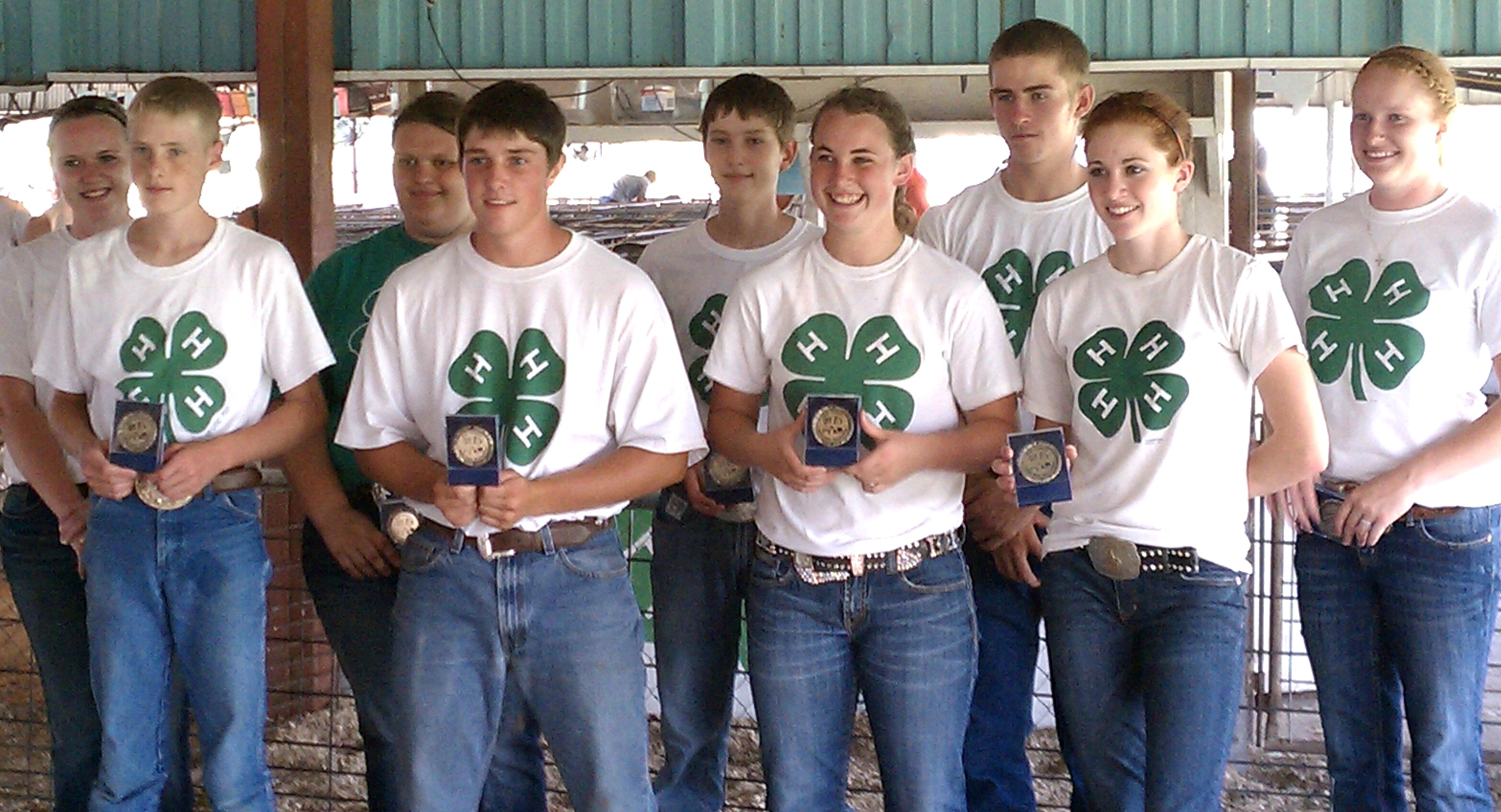 Words can’t really express my appreciation. Driving home every night, I had time to reflect on each day so I decided (for all you farmers) I’d give you a break from irrigation scheduling : ) and provide some reflections from the county fair.
I love watching the fairgrounds come alive…to see the barns and buildings filling up and the excitement of the youth and parents.  While it’s a lot of work, I really love fair week and I’ve always appreciated our county fair in Clay County. I appreciate that the focus is on the youth and families-exactly where it should be; we truly have something special here! There was several times in conversation a person this week would say “I haven’t been to the fair in X years” to which I’d respond “Welcome back!”. For those of you reading this and can identify with that statement, I’d really encourage you to come out next year-because you truly are missing out on something special.
Every year different things stand out as I’m sure they do for the youth and parents as well. This year, these are some of my reflections looking back:
*Deanna and Holli working so hard to prepare before fair while Cindy and I continued programming right up to fair. Everything was ready to go and we felt prepared for everything this year!
*The Fair Board Members working so hard before fair, deciding not to run me over before fair : ), and cheerfully picking up trash each morning and doing various tasks throughout fair.
*All the Superintendents, 4-H Council members, and Leaders pitching in wherever needed-how you all organized your volunteers to make the shows, exhibit judging, and the food stand run so smoothly.
*Kurt and Amy-the FFA Advisors from Sutton and Sandy Creek becoming so involved this year-it was great having them as a part of our team!
*The adults and youth who pitched in to clean out horse stalls Wednesday night before the fair.
*The beautiful day for the poultry/rabbit show outside and the youth excited to show their bucket calves and do their interviews on Thursday.
*The family fun night on Thursday night-I love seeing all the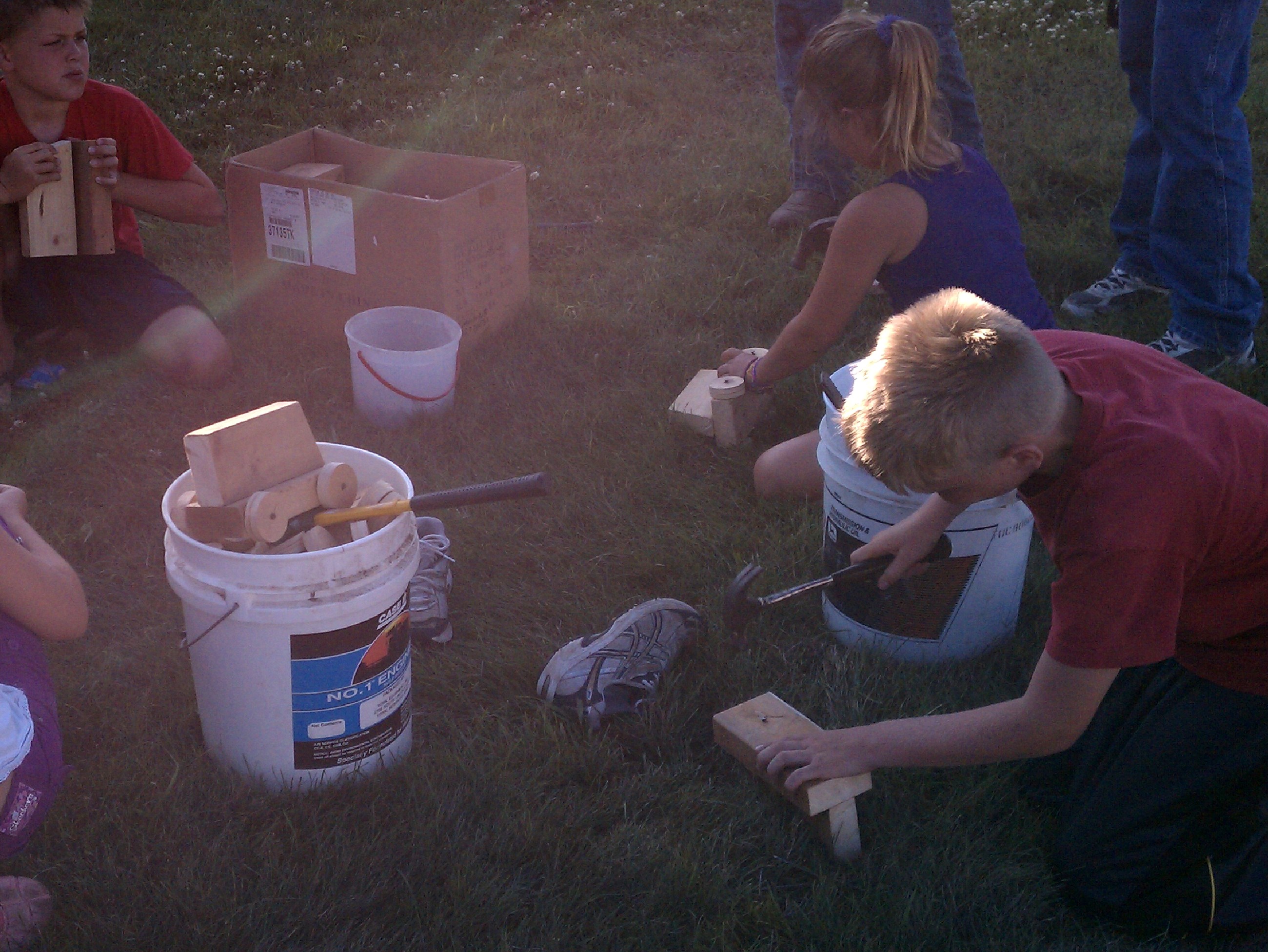 families come out and see what the 4-H clubs come up with each year! Games, face painting, campfire, and all the work that went into pre-cutting the wheels and blocks to make small vehicles out of wood-a really cool and fun night!
*Beautiful morning for the hog show and the horse shows running so smoothly.
*The sheep and meat goat judge working so well with the youth – frankly all our judges did a great job with this-it’s where the focus should be-but the sheep/meat goat judge was exceptional!
*The beef judge commenting the quality of our breeding beef can compete with any show anywhere; just watching our youth building their herds for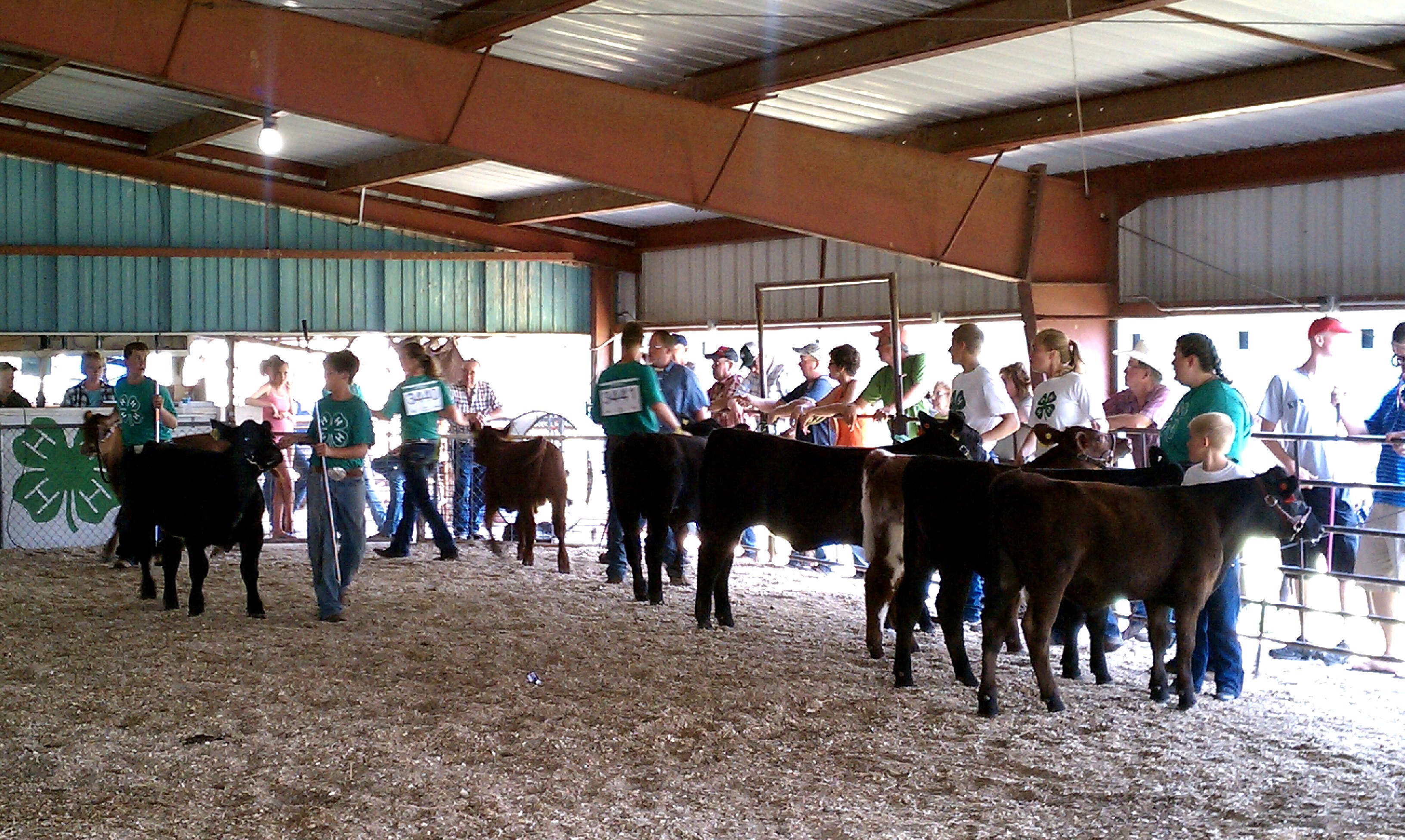 the future with hopes of coming back-that is exciting!
*The awesome buyers at the livestock auction, the excellent job that Bruce McDowell did as always and that Lonnie Stripe did as well, and a smooth-running auction!
*The dedication of the Clay County News staff-especially Tory who endured all the shows in order to capture those special moments and feature stories!
*The way so many swine families stuck around at the end to clean up the swine/sheep barn and help me put things away this year so I didn’t have to do that myself. I really appreciated that!
*There are many moments but for the sake of space, THANK YOU ALL for making the Clay Co. Fair a success!
Wheat Ergot Update
Numerous calls have come in on the wheat ergot situation. It must have been the perfect environmental conditions for this to happen this year in such a wide area and I need to take some time to figure out why this year during conditions that also favored scab and not a few years ago with similar environmental conditions.
Two main questions have been raised: “Can I save back seed” and “can I bale and graze straw?”. I don’t recommend that you save back seed, yet many seed fields in the area most likely were affected as well. Seed can be sifted on a gravity table to help clean it so that is an option-but most farmers don’t have means for doing this so ultimately I wouldn’t recommend our farmers to save back seed.
In regards to baling straw and grazing, while walking harvested fields, I was noticing some ergot in heads that were too short to go through the combine heads. Ultimately, the few kernels in a large amount of straw would be so dilute, I wouldn’t expect there to be problems with grazing the straw. If you’re concerned about using wheat straw for feeding or bedding, you can always dilute it with alfalfa or another feed to reduce chances of ergotism in livestock even further. I should point out that I’m talking about wheat straw in which the wheat grain has been harvested. I would not recommend feeding wheat straw that was just cut with the ergot contaminated and wheat grain in tact. If you plan to feed straw in that situation, I’d recommend sending samples to a Vet Diagnostic Center for alkaloid testing.
A third question I’ll throw in here is should you plant 2nd year wheat if that is your rotation. While it is not assumed that ergot will happen every year and while the chances of ergot happening a second year are not great, it’s best management practices to go ahead and rotate to be on the safe side as any sclerotia (black fungal ergot fruiting bodies) would be lying on the soil surface and can produce spores that could affect the next wheat crop. Again, this isn’t guaranteed to be a problem again next year (unlike things such as tan spot or septoria that are likely to show up in wheat on wheat fields), but to be on the safe side, I would recommend rotating. Dr. Stephen Wegulo also wrote an article on ergot in wheat at the following site.

CropUpdate: 7-5-11
Last week was a blur of phone calls but it’s great to receive them and know so many of you are doing your best to wait for your soil to be depleted before scheduling your first irrigation! There are some of you in the Little Blue NRD who haven’t received the rains the past few weeks and have hit the 90-100 trigger on your watermark sensors to schedule your first irrigation. Most of you reading this won’t have to irrigate till after tassel (and then you can take into account the 3rd foot in your average)! The 90-100 trigger relates to 35-40% soil moisture depletion and is proven by research via Dr. Suat Irmak at South Central Ag Lab for our silty clay soils. Waiting for the trigger, regardless if you’re on load control or not, will still allow you at least a week to 10 days before you have to worry about getting behind. Please continue to call with questions. There’s also a discussion topic on my blog for your comments/questions.
Corn and beans are looking good overall, are closing canopies, and corn is rapidly growing. Wheat is being combined in the southern tier of counties and there has been quite a range of yields due to the dry weather producing small heads and disease issues such as scab, smut, and ergot. Scab (Fusarium Head Blight) is a concern when we receive rain and high humidity during and around flowering. We were recommending fungicides at that time. Some people escaped it, some put the fungicide on, and others didn’t-so there’s a range of yields out there from that. Common bunt (stinking smut) is the smut that creates clouds of black spores when you’re combining and the grain smells like fish. Loose smut is loose in the head and doesn’t form a kernel shape like common bunt does. Both can be prevented by not saving contaminated seed and using fungicide seed treatments at planting.
Ergot is one I hadn’t seen in wheat since I’ve been here but have in roadside grasses. Ergot is caused by a fungus that infects the wheat head during cool, wet conditions during flowering. Like the fungus that causes scab, it simply replaces the normal pollination process and instead, a black/purple hard fruiting body (sclerotia) is eventually formed. Before this is formed, a sugary drop called honeydew is formed which then turns into the sclerotia. It’s a problem for our producers because I don’t know that you can set your fans to blow it out like you can for light, scabby kernels since ergot sclerotia are denser. The problem with ergot is that it contains toxic alkaloids (one is like LSD)…in fact, it’s blamed that ergot-contaminated grain is what caused the Salem Witch Trials. These alkaloids are also toxic to livestock so contaminated grain should not be fed or even blended off for livestock. Federal grain standards classify wheat as ergot infested when it contains more than 0.3% sclerotia. If you are finding ergot-contaminated grain in your fields, do not save seed back next year; start over with disease free certified seed. The sclerotia will live on top of the soil for a year (they will produce spores next growing season so don’t plant contaminated wheat fields back into wheat, barley, oats, or triticale). Mowing roadside ditches and keeping wheat fields free of other grasses can help prevent ergot infested grasses from spreading the ergot fungus to wheat via blowing spores and rain splash. More information can be found by checking out the UNL Extension publications Head, Grain, and Seed quality on the http://cropwatch.unl.edu/web/wheat/disease Web site.
Tree Problems
I’ve received several questions on trees. If you have silver maples or pin oaks that are looking a little yellow, most likely the yellowing
is due to iron chlorosis. Symptoms of iron chlorosis include leaves with green leaf veins while the leaf tissue is yellow-green. Iron chlorosis is common in several of the towns in Clay County due to higher pH soils (more basic soils) which makes the iron unavailable to the plants. Trees can be injected with iron sulfate in the base of the trunk with the amount injected dependent on the diameter of the tree. There’s also another method of soil injection with micronutrients that can also be used. I also have a list of tree care providers for the area for trunk injections; please contact the Extension Office if you’re interested in obtaining this list.
On evergreen trees, spruces losing their new growth or inside needles may be doing so due to two different fungal diseases or spidermites. If you are noticing this problem on your spruces, the time to prevent fungal diseases will be May next year with products such as Bravo, Daconil, or copper-sulfate based products. Spidermites can be managed with insecticidal soap. Ponderosa, Austrian, and Scotch pine trees with brown fungal bands on needles causing the needles to turn brown can be sprayed with a copper-sulfate based product now to help prevent further browning. If large branches of your trees have needles dying, the culprit may actually be the pine wood nematode which causes pine wilt disease in Scotch pines. There is no cure for that disease. To determine if pine wilt is the problem, cut a piece of dead/dying branch that is at least 1 inch in diameter and 4 inches long and send it to the UNL Plant and Pest Diagnostic Lab for diagnosis. Cedar trees are also showing Cercospora blight right now with needles turning brown. We used to think nothing would kill a cedar tree, yet many cedar windbreaks have needles turning brown and this fungal disease is killing needles due to restricted air flow and high humidity within our windbreaks. Restricted air flow is something you’d like with windbreaks but many of the trees in windbreaks were planted too close together many years ago and we’re starting to see more of a problem with various fungal diseases. Another option to spraying fungicides is to consider removing every other tree from the windbreaks to allow for more air circulation to cut back on fungal diseases.
If you’re unsure how to tell what kind of evergreen tree you have, cedar trees have needles like ropes. Spruce needles are single and when you roll them in your fingers, they have edges to them. Fir needles are also single and when you roll them in your fingers, they don’t roll easily like spruce needles because they are flat (flat fir). Pine needles are always in groups-of 2, 3, or 5. Austrian and Ponderosa pines have the very long needles; Austrians will always have long needles in groups of 2 but Ponderosa’s will have long needles in groups of 2 or 3 (If you ever see 3 needles, it’s a Ponderosa pine!). Scotch pines always have short needles in groups of 2. White pines have needles in groups of 5.
White Heads in Wheat
The last week I have received questions about white heads in wheat. An excellent resource from UNL to determine various wheat head disorders can be found here. If the heads are completely bright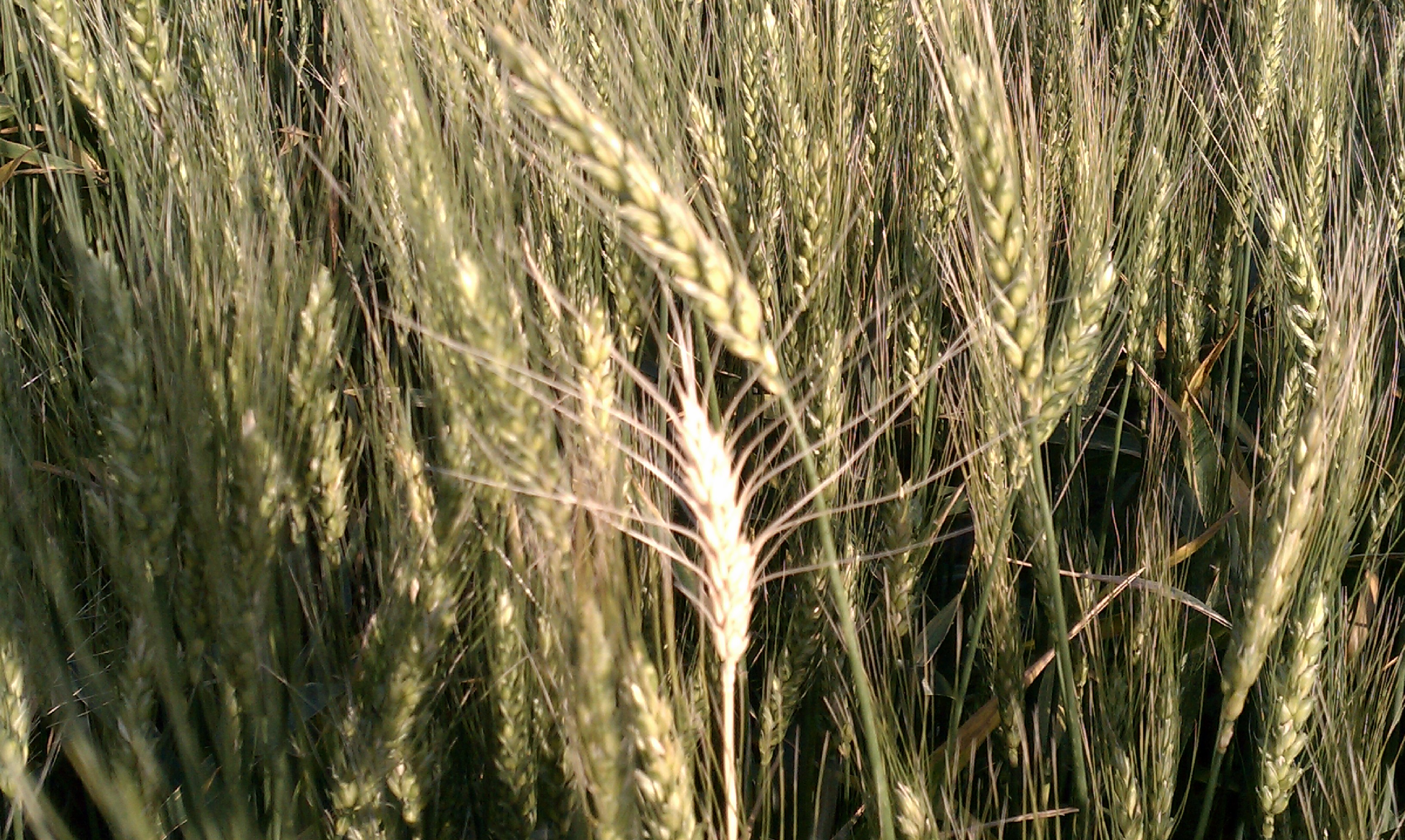 white and you can easily pull those heads out of the stem, the culprit is the wheat stem maggot. This insect will sever the stem above the top node so that the stem upward to the head are white while the rest of the plant remains green. I usually only see a few of these types of heads scattered around in fields and there’s no recommendations for managing it
 because damage isn’t considered economical.
If your heads have white or pink colored kernels in them in addition to regular looking kernels, chances are the discolored kernels have Fusarium Head Blight also known as head scab. The kernels eventually may have a brown discoloration to them and the stem just below the head may also turn a brown-purple color. The Fusarium fungus that causes head scab is the same that causes stalk rot in corn. Wheat on corn rotations in no-till systems have a greater potential of scab in wheat, but these situations don’t mean that scab will always occur. Ultimately, rainy, humid conditions for a 2 week period around flowering is the primary factor for allowing scab to occur.
If you are finding scab in your fields, there’s nothing to spray or do now. Set your combine to blow out the lighter, shrunken, scabby kernels to help avoid dockage at the elevator. I would also recommend to avoid saving back scab-infested seed. Plan to purchase certified seed instead for next year and be sure to have a fungicide seed treatment applied to it to avoid problems with smut.
Rootless Corn Syndrome
Heavy rains in previous weeks have washed soil away from developing roots in some fields. Plants now up to 4-5 leaf stages in affected areas are hanging on by the main radical root. Some plants haven’t been able to survive while others have. Looking closely, brace roots are developing at the crowns of affected plants and eventually, they will begin to kink themselves to pull the plants upright again. There’s not much to do in this situation, but if you have the ability to get soil built up around the root base by cultivating, that can help. If not, an irrigation or rainfall may also help.
Often I see rootless corn syndrome as a problem with smaller plants-3 leaves or less-in which the seed was planted shallow to allow for planting in wet soils. Windy conditions and lack of soil moisture near the surface can allow for poor root development leading to rootless corn syndrome. Thus, I recommend planting corn 2″ deep and not planting shallow to avoid this problem later on.


 JenResources