Category Archives: Discussion Topics
Thanksgiving Reflections
Thanksgiving is upon us and every day I’m reminded I have so much for which to be thankful! It seems like there’s such a rush to go from Halloween to Christmas and it’s sad to me that Thanksgiving seems to be lost in the shuffle. Today as I gather with my family, I’m thankful for so many things God has blessed me with: salvation, my wonderful family, all our men and women serving overseas, my home/career/dogs, wonderful food and our farmers who grow it, so many things! May you have a blessed 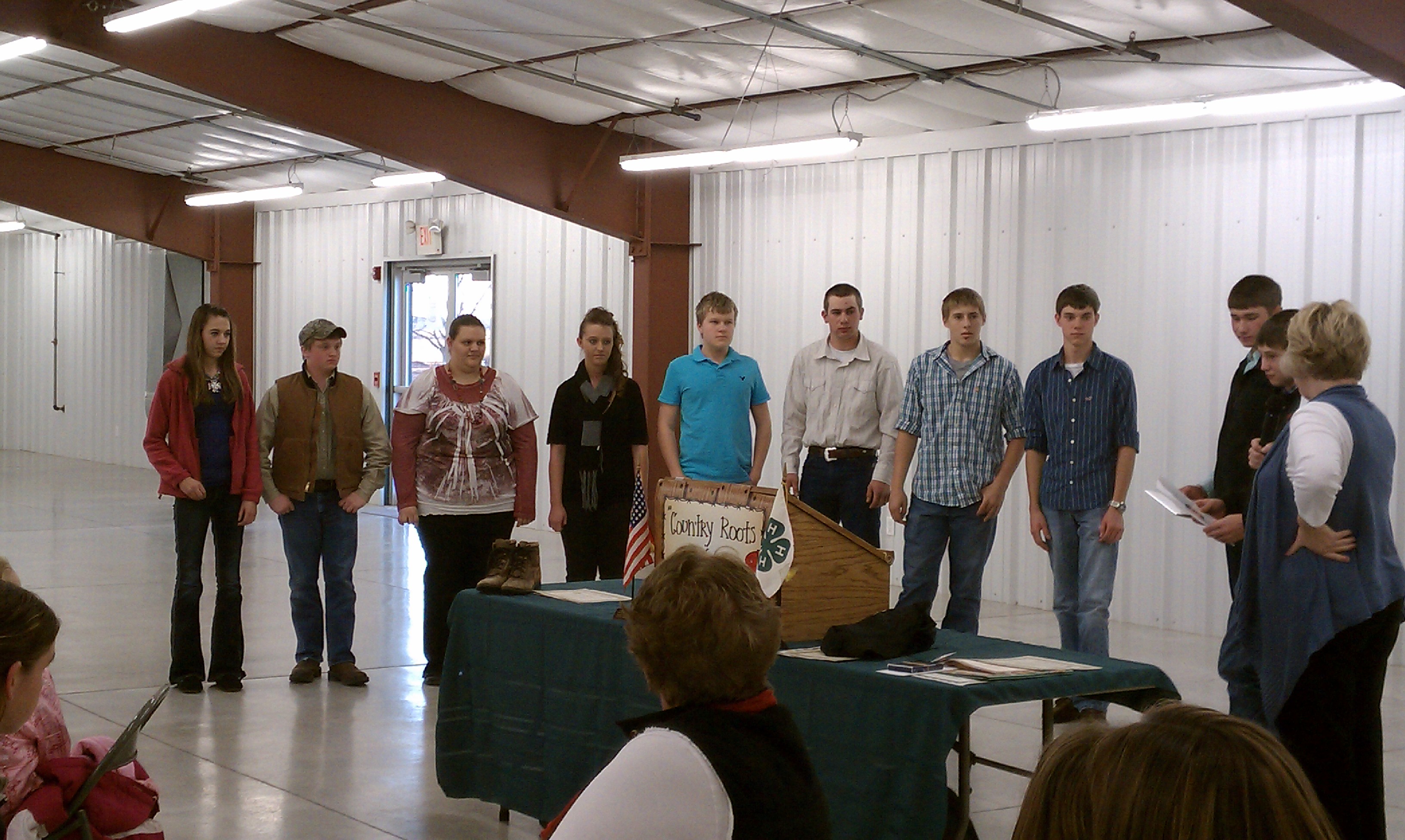 Thanksgiving reflecting on the blessings in your life as well!
Sunday night was our 4-H Achievement program. Watching the youth receive their awards, I was thankful for the parents, grandparents, leaders, and volunteers who helped those youth achieve success in their projects. I’m thankful to work in a county with such wonderful people! Every organization or board our office works with understands that the 4-H program and fair are about the youth-developing life skills and successful young people for the future. I’m so thankful for these relationships and the fun we all have at 4-H activities and the fair! I’m also thankful for all the sponsors of our 4-H program and the youth and parents appreciate you as well! It was a great night with a great turnout and a nice conclusion to the 2011 4-H year.
Speaking of being thankful, IANR released a special feature entitled “Feeding the Future”. It shares a Thanksgiving message from Dr. Ronnie Green and how IANR’s research, teaching, and extension efforts are helping to ensure success in feeding the future throughout Nebraska and around the globe. Check it out here: http://www.unl.edu/ucomm/ucomm/special/20111115/
2011 Corn Yield Predictions
Harvest is nearly complete! In early August, I shared a post regarding in-season yield predictions from the Hybrid Maize model. At that time, I showed how 2011 predicted yields had been tracking with the 30 year long term average yields up until early August. At that point, the 2011 predicted yields took a steep drop due to high night time temperatures. High night time temperatures don’t allow for the corn plant to shut down at night. The plant engages in respiration, essentially burning sugars that should be converted into yield.
Some interesting things happened with the weather this year to make yields more favorable than what once was predicted. While silking to beginning dent occurred in 20 days or less in several Nebraska fields this year, the weather cooled off during the filling process. Some fields stayed at ¼ starch for nearly three weeks. Looking at fields, kernels continued to get deeper, heavier, and expand to help cover some of the pollination problems observed earlier in the year. During this time, yield predictions from the Hybrid Maize model showed that yields had the potential of returning close to the long-term median yields and it was interesting watching the trendlines move back up toward normal. This seemed to be truer for 113 day hybrids vs. 110 day hybrids.
For example, a 110 day hybrid planted April 15 at 32,000 seeds/acre showed a predicted yield of 227 bu/acre compared to 240 bu/acre long-term median. But a 113 day hybrid planted the same day showed a predicted yield of 244 bu/acre compared to a 248 bu/acre long term median yield.
So what happened in your fields? While yields have been decent, on average, I’m not seeing the trend towards the long-term median yields in our area in general. Dryland yields I think have been better than expected but irrigated yields potentially not as good as anticipated by many.  Hybrid Maize predicts yields based on perfect conditions-nothing limiting and no pest/disease issues. In many fields, corn was planted then sat in cool, wet soils. We had stand losses due to Pythium in some fields or due to loose residue that was piled in areas of fields after heavy rains. We also had varying degrees of pollination problems and the high night temperature stresses which reduced yields. Regardless, yields are still very good in spite of another interesting growing season! Please share what you’ve been seeing for yields in your fields!
Table 1: Hybrid Maize 2011 Predictions from Simulations (through Oct. 30, 2011)
Date RM Population Long-Term Median Yield 2011 Predicted Yield
Apr. 15 110dy 32,000 240 bu/acre 227 bu/acre
Apr. 15 113 dy 32,000 248 bu/acre 244 bu/acre
May 1 110dy 32,000 241 bu/acre 234 bu/acre
May 1 113dy 32,000 260 bu/acre 245 bu/acre
May 10 110dy 32,000 244 bu/acre 235 bu/acre
May 10 113dy 32,000 258 bu/acre 258 bu/acre
Predicted 2011 Corn Yields
Well, it was great to take a week off and the weather sure was nice in Colorado! It seems like it was a poor week to miss in regards to crop happenings, though. Several of you have been asking for a month now for me to run the Hybrid-Maize model for 2011 corn yield predictions and I just haven’t taken the time to relearn how to input the current weather file and run the simulations-but I did tonight.
In my May 1 post, I was showing impact of planting date on yield- essentially we weren’t seeing much based on the models. At the time I showed potential yield results of: 113 day hybrid planted April 15 vs. May 1 vs. May 10, the frost risk increased from 10%, 17%, and 21% respectively with average yields in a “perfect year-no limiting conditions” of 248, 254, and 244 bu/acre respectively. For a 110 day hybrid planted the same days, yields ranged from 233, 242, and 243
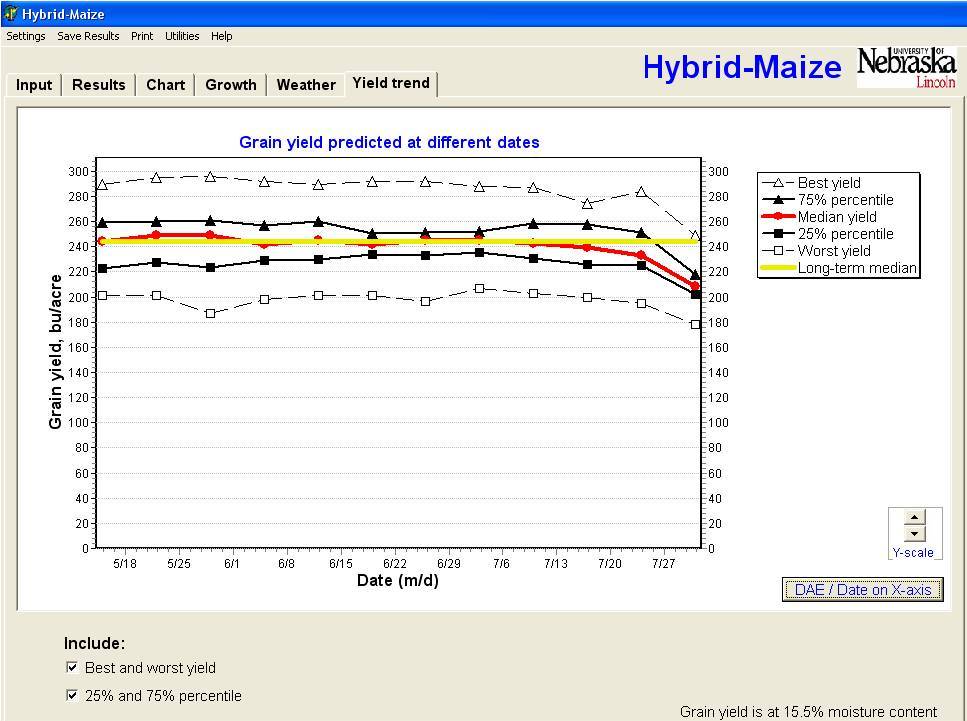 bu/acre respectively with frost risks of 3%, 10%, and 17% respectively. Granted this is just a model and can’t predict perfectly what will happen.
Again, I’ll repeat it’s just a model and is looking at “a perfect year with no limiting conditions”. I already knew we wouldn’t be looking at record yields. The corn had looked even and good for the most part once it got taller, but it hid the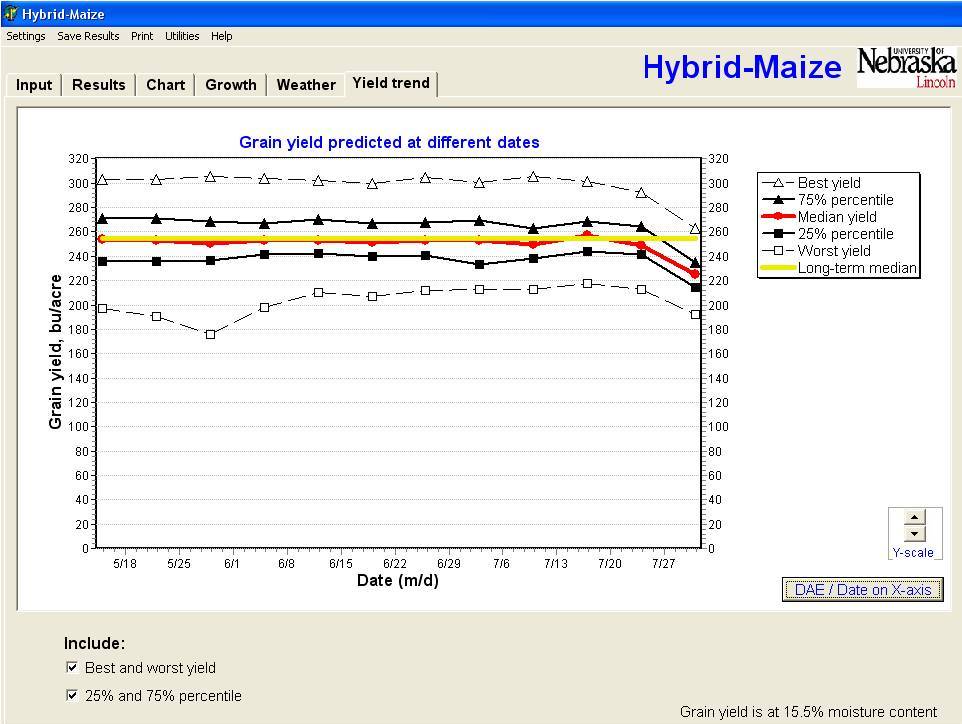 many problems including stand problems from rain washing, residue, Pythium, greensnap, etc. Looking at the actual weather data (from Clay Center, NE station), night time temperatures were really high and may have led to the sharp predicted drop off in yields. I remember well the one hot, dry, non-humid week in August 2010. The model showed a sharp yield reduction then and the corn essentially shut down after that. I hope it doesn’t shut down after last week. The other caveat is that I used “generic” hybrids, did not input specific GDD’s or silking dates, and a planting population of 32,000 plants/acre. Changing any or all of these factors can influence what the model predicts for yield.
Prior to last week, the average yield for 2011 based on Clay Center weather data was tracking at or slightly above the long term 30 year average yields which were similar to the predicted yields I listed above when I ran the simulations for planting dates. For the 2011 season, a 113 day hybrid planted April 15 vs. May 1 vs. May 10 based on in-season weather conditions at this point may yield 221, 225, and 236 bu/acre respectively. A 110 day hybrid planted the same days based on in-season weather conditions at this point may yield 214, 208, and 225 bu/acre. I don’t mean to get anyone
 bummed about this year’s crop-again, this is just a model! I’m just sharing as several have asked me to and it did such a good job of predicting in-season yields last year. It’s also predicting maturity really early-within the first two weeks of September this year which can affect grain fill and ultimately yield as well.
Telling our Ag Story
On Wednesday I had the opportunity to attend a conference for UNL and ISU Extension Educators regarding animal rights and animal welfare and the importance of how we tell our agricultural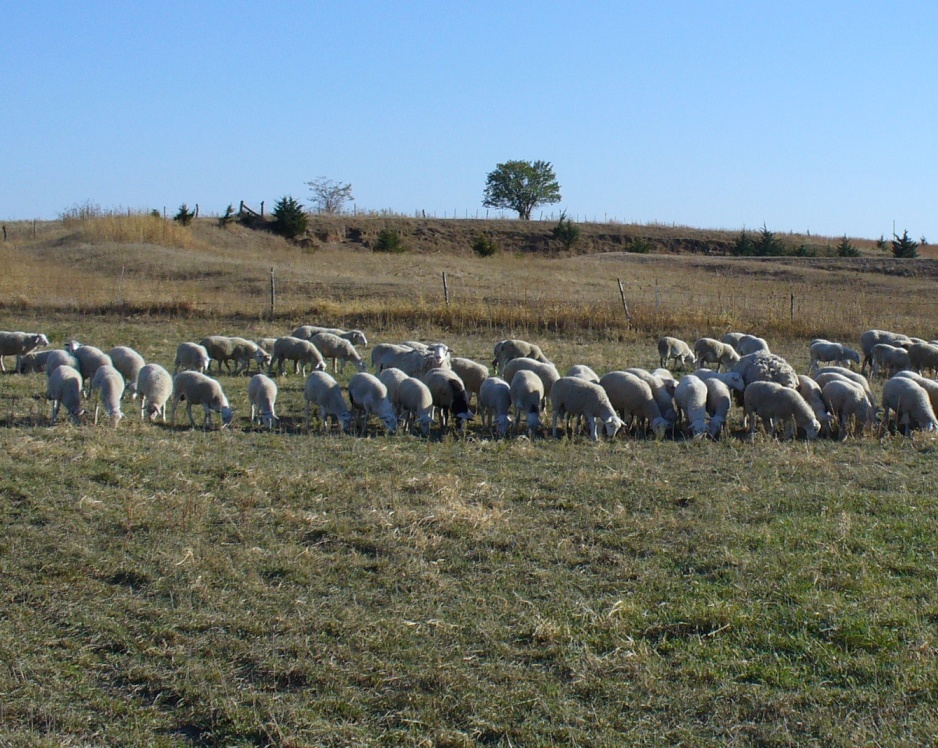 stories to a public increasingly disconnected from where their food comes from. I learned so much and wanted to share.
Dr. Candace Croney from The Ohio State University shared that animal welfare defined to most of us in production agriculture is stewardship-our animals are entrusted to us, use is acceptable, and we have the obligation to treat those animals humanely. She defined animal rights as animals have certain characteristics similar to humans (ex. mental capabilities) and thus have rights. Relationships with pets have become the new paradigm regarding how all animals should be treated. A key message driven home to me was we need to consider how we say our message. So often we position animal care as an economic issue instead of an ethical one. We say things like “We take care of our livestock because if we didn’t, we wouldn’t make any money”…so people focused on animal rights hear from that message the reason we care for animals is for profit…which leads to the next thought that if profit drops, care for the animals is potentially at risk. We instead need to address ethical issues and find ways to connect with the public meaningfully. Charlie Arnot from the Center for Food Integrity said it this way, “We need to first communicate ethics, then science, then economics”.
I also have been guilty of saying “we just need to provide more education about what we do”. But that again isn’t completely correct. While the science of why we do what we do is important to us, ethics are more important to the general public. In a survey from the Center for Food Integrity, when asked what factors influence confidence that food comes from humanely treated farm animals, the fact that the producer worked with a veterinarian ranked first in increasing their confidence, but the fact that what the producer did was science based ranked dead last. Instead of first going to science, begin with showing we’re interested in doing what’s right. For instance, tell the person thank you for his/her question and that you can tell he/she cares for animals as you do too. Then go on to explain why you do what you do to care for your animals rather than provide a data dump of scientific facts. Science can be mixed in, but show the ethics of what you do first. Go beyond the traditional “food, shelter, water” as that doesn’t resonate; it’s expected as that’s what we also provide to our pets. Train people who work for you and make sure they truly do care for the animals as you train them. Determine the message for your operation. The best part is this is free; with good people it just requires a change in commitment and being consistent with your message.
I also appreciated so much of what Trent Loos, Nebraska Rancher and host of “Loos Tales” radio show said. “The message we leave out is why we have animals and agriculture”. The vast majority of the public cares about reasonably priced, safe, healthy food for their families. Our message should be that “we convert animal resources into human resources such as food, fiber, pharmaceuticals, fuels, and products to improve human lives”. It’s a matter of changing our terminology and way of thinking. We shouldn’t say we “slaughter” animals in the U.S….instead “we respectfully harvest plants and animals.”
With the growing disconnect between the general public and where food comes from, we need to be ready to tell our story anytime/anywhere. I’ve often caught myself saying “it’s been busy” when asked how things have been going. I’ve been retraining myself to continue for 20-30 seconds explaining what I’ve been doing which usually sparks a conversation about something regarding agriculture. Part of my reason for this was to help people better understand Extension, but in doing this, I can also help people better understand production ag today. Whether it’s in the line at the grocery store, at church, at a ball game, or wherever, we all have the opportunity and responsibility to share with those around us our agricultural story because no one else can tell your story for you. As Trent Loos said in closing, “If it is to be, it’s up to me”.
Discussion Topic-Your Planting Progress
Planters have been rolling and corn has gone in the ground quickly in the past week. Please provide an update on your planting progress-and a general location of where you farm! If you are on Twitter, or even if you’re not, if you go to http://www.twitter.com and search for #plant11, you will see a variety of perspectives of how the planting season is going for producers throughout the United States. Happy Planting!


 JenResources