Category Archives: Irrigation Scheduling
Online Irrigation Cost Calculator
Have you ever wondered what fair price could be charged for the water your pivot delivers to an adjacent neighbor’s field? Or have you wondered what it would cost if you changed to a different fuel source?
The Irrigation Cost calculator was first developed by Tom Dorn, retired Extension Educator, and was a tool I used and recommended to farmers and landlords in various situations such as those above. The tool has now been redesigned as an online tool with updated numbers built in. Data is entered by you for your operation and calculations are made on a remote server. You can then choose to save your data for later reference or to input various options to compare costs. Calculated output includes fixed and variable costs calculated per-acre and per-acre-inch of water applied. The following information is from Roger Wilson, Extension Farm Management Specialist and Budget Analyst.

To use this tool, you’ll need to gather some key information:
- Operating data such as interest rates, wage rates, area irrigated and inches applied, diesel price or electricity rates, and drip oil price. (Energy costs may be estimated from pumping lift, system pressure, and pumping plant efficiency or from historical data such as past energy costs, past fuel prices or electrical rates, and past application rates.)
- Ownership costs such as the estimated replacement price, expected life and the salvage values for the well, pump, power plant, gear head, and sprinkler system.
Fair Share Feature for Adjoining Parcels
After these costs have been calculated, you can use the “Fair Share” feature to estimate the cost for running a center pivot over adjacent land. Additional data needed for these calculations are the number of adjacent acres to be irrigated and the estimated acre inches that will be applied. The “fair share” can be calculated on the added acres irrigated or on the amount of water applied. This feature has two components: fixed and variable costs. The fixed cost is an annual cost and the variable cost is for acre-inches of water applied.
User Guide
The Irrigation Cost Calculator web page includes a video on how to use this tool.
Mobile Apps for Irrigation Management
Earlier this year UNL Extension introduced three mobile apps to aid in irrigation management, which are described further in UNL CropWatch in the links below:
Agriculture Irrigation Costs App. Calculates ownership and operating costs for center pivot and gated pipe irrigation systems and the most commonly used energy sources. This tool is based on the same resource as the Irrigation Cost Calculator web tool described above. The Web app is a “quick and dirty” means to calculate costs, while the mobile app offers more options for testing and analyzing various options. The mobile app offers side-by-side comparisons for systems that use different energy sources, analysis of gated pipe as well as center pivot systems, separation of landowner and tenant costs, and calculating yield increases necessary to pay for application of an extra inch of water.
Irrigation Pumping Plant Efficiency. Helps you identify irrigation pumping plants that are underperforming and need to be adjusted, repaired, or replaced with a better design.
Water Meter Calculator App. Calculates the amount of water pumped by irrigation pumping plants and can store data such as field size (in acres), flow meter units, and allocation and annual irrigation caps for each field.
Center Pivot Irrigation Short-Course
Hope to see you in Clay Center on February 11 for this upcoming meeting!
(Please click on the picture to enlarge the text.)

Natural Resource District Updates
Rod DeBuhr with the Upper Big Blue NRD spoke at a few meetings recently. He shared there’s a lot of rumors floating around, but if you have questions, please just ask the NRD. There will be no well drilling moratorium and no restriction on adding new acres in the District. The only exception to this is if the allocation trigger is reached, there will be no new transfers. The UBBNRD encompasses 1.2 million irrigated acres and 57% of the water is used on only 29% of the acres; thus there’s still some inefficiencies within some producers’ operations. These are producers using, on average, more than 8” since 2007. The average water use since 2007 is just under 8” for the District.
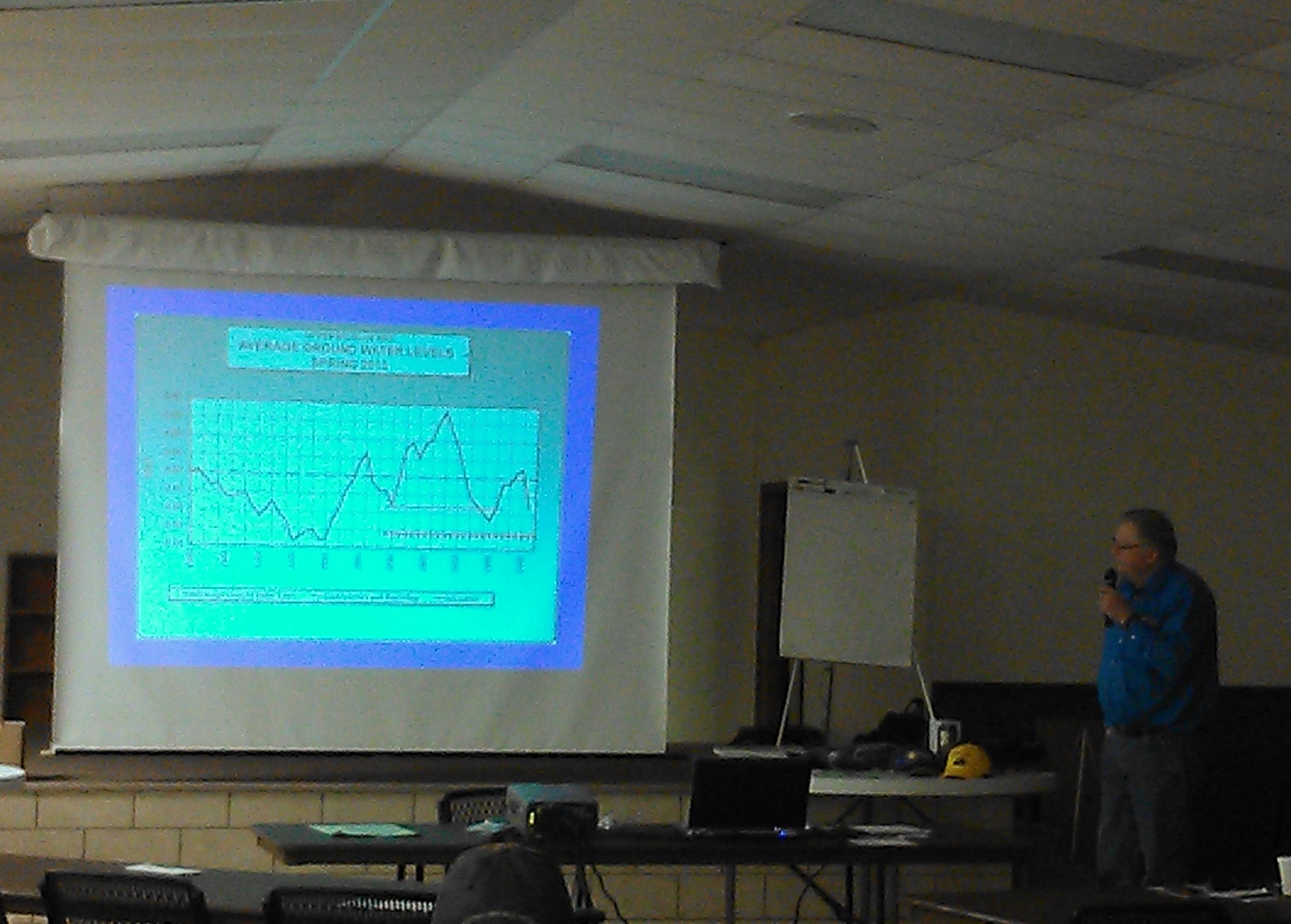
Rod DeBuhr from Upper Big Blue NRD speaks at the Hamilton Co. Ag Day in Aurora.
Flow meters are required on all wells by January 1, 2016 or by when an allocation is triggered-whichever comes first. The first allocation period is 30” of water for 3 years. They will then evaluate where the water levels are. If recovery doesn’t happen after the three years, then there will be a second allocation of 45” for 5 years.
For flow meter specifications: all new meters must record in acre-inches. They must also have an anti-reverse feature on them. They must be installed based on the manufacturer recommendations-no exceptions. Existing meters are grandfathered if they are determined to be accurate. There is no cost share on new meters, but there is some cost share for repairing old meters. Please contact the UBBNRD at (402) 362-6601 for questions or more information.
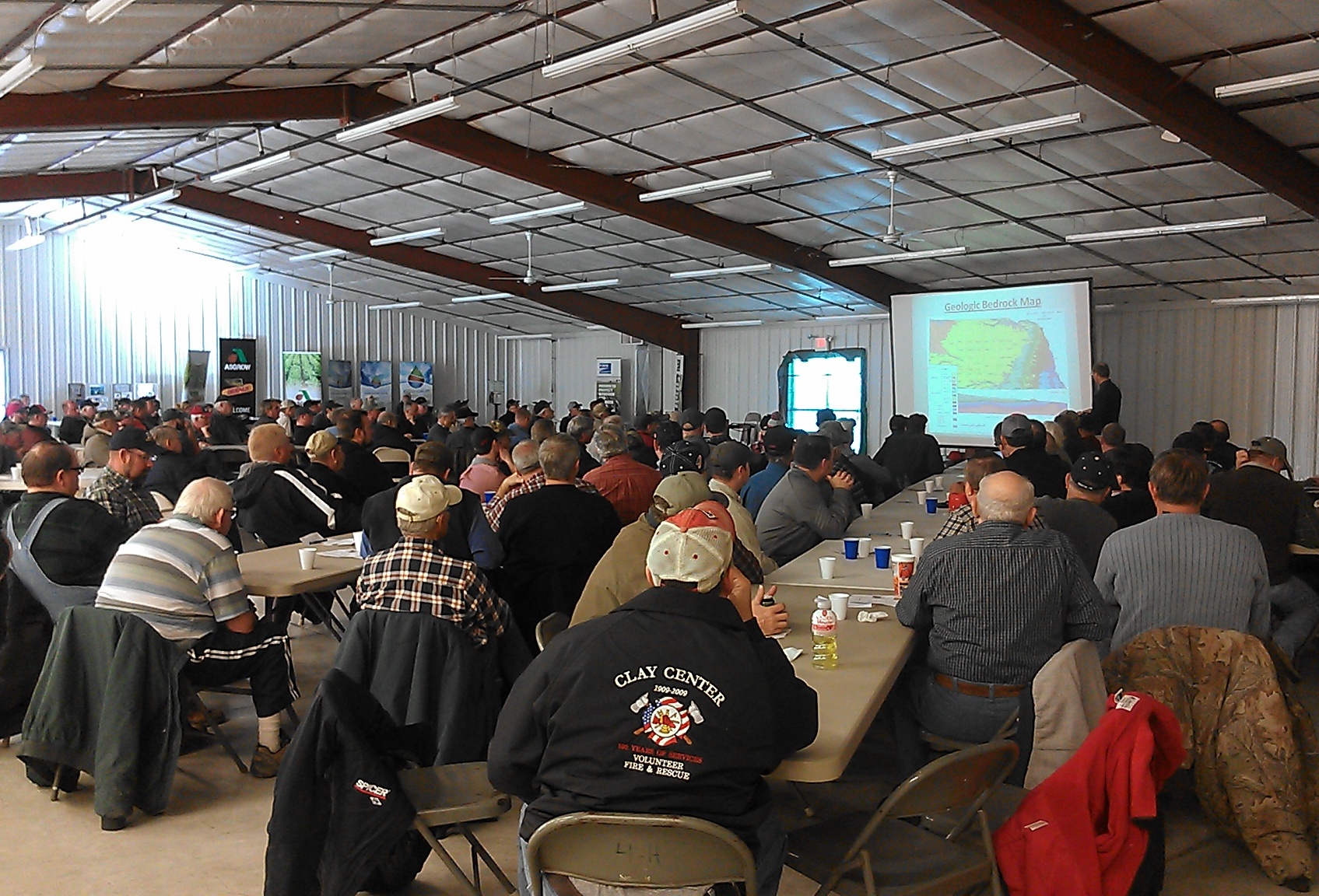
Little Blue NRD updates during the Soil and Water Conference in Clay Center.
Daryl Andersen with the Little Blue NRD also shared some information with me. These rules are effective as of January 17, 2014, which were put in place in 2006 or sooner. For well constructions and flow meter requirements as of Mar. 2006, new or replacement water wells to be used for domestic, stock, or other such purposes shall be constructed to such a depth that they are less likely to be affected by seasonal water level declines caused by other water wells in the same area.
Any new irrigation well or water wells for all other uses except municipal, domestic, public water supply, or livestock are required to have a minimum of 10 times the pipe diameter of clear space in the discharge pipe to allow for potential installation of a flow meter at a future date. There are some exceptions if a new meter is installed during the time of well completion; please contact the LBNRD at (402) 364-2145 for further info. Spacing between all new irrigation wells should be set at 1000 feet.
Nitrogen fertilizer restrictions include: Pre-plant anhydrous ammonia may not be applied prior to November 1. Pre-plant nitrogen fertilizers in liquid or dry forms may not be applied prior to March 1 except under the following conditions: a “Fertilizer Permit” will be required by the LBNRD prior to fertilizer applications, a nitrogen inhibitor will be required if applying over 20 lbs of active nitrogen/acre and an annual report will be required by March 15 of each year if receiving the “Fertilizer Permit.”
For the Clay/Nuckolls Water Quality Sub-Area: Two new rules were enacted March 1st, 2013 along with all of the prior rules. First, water samples need to be collected from all high capacity wells by the producer, delivered to LBNRD and NRD will analyze it for nitrates for 2013 and 2014 growing season. Second, water pumpage report is required from all wells for all producers in 2013 and 2014. Report can be hour meters, flow meters or other devices. Please contact the LBNRD for additional questions.
Soil and Water Conference
Hope you can join us for our Soil and Water Conference tomorrow in Clay Center!

Crop Update 6-20-13
The sun has been welcomed and crops are rapidly growing in South Central Nebraska! Corn right now is between V6-V8 (6-8 leaf) for the most part. Quite a few farmers were side-dressing and  hilling corn the past two weeks. It never fails that corn looks a little stressed after this as moisture is released from the soil and roots aren’t quite down to deeper moisture.
Installing watermark sensors for irrigation scheduling, we’re finding good moisture to 3 feet in all fields in the area. The driest fields are those which were converted from pasture last year and we want to be watching the third foot especially in those fields. Pivots are running in some fields because corn looks stressed, but there’s plenty of moisture in the soil based on the watermark sensor readings I’m receiving for the entire area. So we would recommend to allow your crops to continue to root down to uptake deeper moisture and nitrogen.
The last few weeks we observed many patterns from fertilizer applications in fields but as corn and root systems are developing, they are growing out of it. We’ve also observed some rapid growth syndrome in plants. This can result from the quick transition we had from cooler temperatures to warmer temperatures, which leads to rapid leaf growth faster than they can emerge from the whorl. Plants may have some twisted whorls and/or lighter discoloration of these leaves, but they will green up upon unfurling and receiving sunlight. This shouldn’t affect yield.
Damping off has been a problem in areas where we had water ponded or saturated conditions for periods of time. We’ve also observed some uneven emergence in various fields from potentially a combination of factors including some cold shock to germinating seedlings.
We began applying sugar to our on-farm research sugar vs. check studies in corn. We will continue to monitor disease and insect pressure in these plots and determine percent stalk rot and yield at the end of the season.
Leaf and stripe rust can be observed in wheat fields in the area and wheat is beginning to turn. We had some problems with wheat streak mosaic virus in the area again affecting producers’ neighboring fields when volunteer wheat wasn’t killed last fall. Alfalfa is beginning to regrow after first cutting and we’re encouraging producers to look for alfalfa weevils. All our crops could really use a nice slow rain right now!
Preparing Irrigation Scheduling Equipment
It’s wonderful receiving the rain we did, seeing how quickly planting progress came along, and how quickly corn is popping out of the 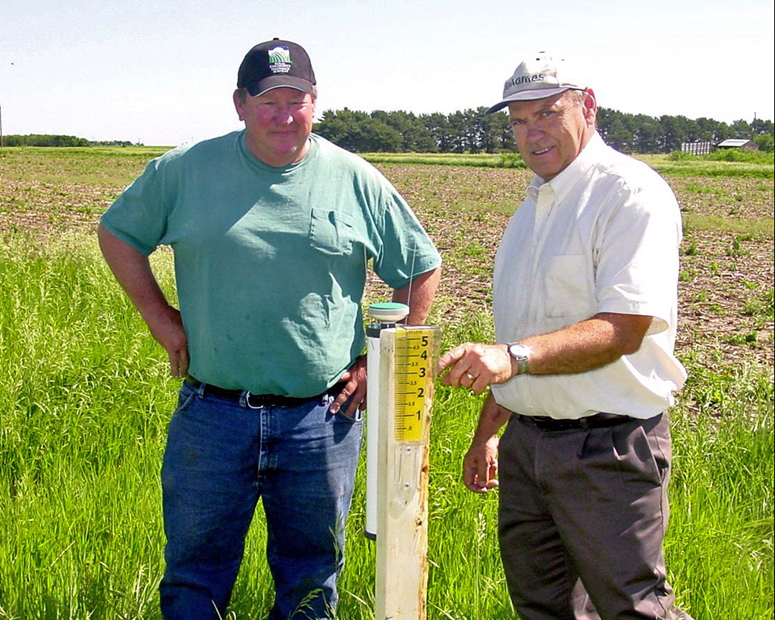 ground! Being mid-May, it’s time to get our Evapotranspiration (ET) gages out. A reminder to only use distilled water in the gages, make sure to fill up the ceramic top portion of the gage before inserting the stopper, and gently dust off the ceramic top and replace the white membrane and green canvas cover. We recommend replacing those membranes and covers each year so if you need a new one, please let the Natural Resources Districts (NRDs) or me know and we’ll get you a new one! For those of you recording ET information online, please be sure to do so consistently each week to help your neighbors and crop consultants.
Early after crop emergence is the best time to install watermark sensors. For those of you with watermark sensors, read them to ensure they read 199 kpa (dry). Then “prime” them first by soaking them for 24 hours in water to ensure all the air bubbles have been released. The sensors should have a reading of 10 kpa or below to be considered good. If they read higher than that, either continue soaking them another 24 hours and read them again, or plan that they no longer are reading correctly and replace them with others from the NRDs. Remember after soaking sensors that water moves up into the PVC pipe via capillary action, so be sure to dump the water out of the pipe  as well.
When installing the sensors, be sure to install them wet, drain excess water, and look for areas that are not compacted, avoid tractor wheel tracks, and look for even spacing of plants. Carefully install without breaking off any plants (thus easier when plants are small!). It’s also important not to install sensors into extremely wet fields. What we have found is that a thin soil layer can cover the sensor when pushing it into the soil of very wet fields. When that soil layer dries, it can provide a reading of 199 saying the sensor is dry when it truly isn’t. If this happens to you, simply remove the sensor, rewet for one minute and re-install. It should be acclimated to field conditions within 48 hours. If you have any questions regarding the installation process, please let the NRDs or your local Extension Educator know. You can also view videos of the installation process and receive additional information to answer your questions.
More on Last #Irrigation
It’s been a long irrigation season thus far, but we are so thankful for irrigation in this part of the Country during this drought of 2012! Questions continue to roll in regarding last irrigation for corn and soybeans. Corn at 1/2 starch only needs 2.25″ to finish up so it’s important to know what your soil moisture status is. For most irrigated producers, at 1/2 starch, you should be finished irrigating.
For soybeans at R5 or beginning seed fill, you still need about 6.5″ to finish out the crop. At R6 when the seeds are filling, that drops to 3.5″. At R7 when you begin to see leaves yellowing, that is beginning maturity and you are finished irrigating. They key is we don’t want to fill the profile going into the fall as we’d like to replenish the profile with fall and spring rains and winter snow. However, with soybeans, it’s also critical not to stop irrigating too soon during seed fill.
Gary Zoubek, Extension Educator in York County sheds more light in the following video produced by UNL’s Market Journal.
2012 Last Irrigation Scheduling
While farmers may be tired of irrigating right now, I think all who have irrigation are thankful for it in such a dry year. Honestly, thankfully with our irrigation we have some of the best looking crops in the Corn Belt right now. Even so, with corn that hasn’t been replanted nearing dent or stages of starch fill, you may be wondering how to schedule for your last irrigation.
For those of you in our Nebraska Ag Water Management Network using watermark sensors, the goal is to use them to determine when the soil profile reaches 60% depletion (for silty-clay soils in our area aim for an average of 160 kpa of all your sensors). You may be thinking, “An average of 90kpa was hard enough!” but as Daryl Andersen from the Little Blue Natural Resources District points out, you’re only taking an additional 0.30 inches out of each foot. So if you’re averaging 90kpa on your three sensors, you have depleted 2.34 inches in the top three feet so you still have 0.96 inches left (see the Soil Moisture Depletion Chart). If you add the fourth foot (using a similar number from the third foot), it would bring the water available to the plant up to 1.28”.
At beginning dent corn you need 24 days or 5 inches of water to finish the crop to maturity. If you subtract 1.28 from 5 you will need 3.72” to finish out the crop. Corn at ½ milk line needs 13 days or 2.25” to finish the crop to maturity-so subtracting it from 1.28 would be only 0.97”.
Soybeans at the beginning of seed enlargement (R5) need 6.5”. Soybeans in R6 or full seed which needs 3.5 inches yet for maturity. Subtracting off the 1.28” in the four foot profile would lead to 2.22”. The UNL NebGuide Predicting the Last Irrigation of the Season provides good information on how determine your last irrigation in addition to showing charts on how much water the crop still needs at various growth stages.
Several people I’ve talked to who have been irrigating using watermark sensors aren’t replenishing the second foot, so you may have a few rounds yet to go on corn and beans. For a quick way to know where you’re at, think about irrigating this way as explained by Daryl Andersen at the Little Blue Natural Resources District:
One way to look at this is by the numbers of days left. At 1/4 starch, there are about 19 days before maturity so you can let your sensors average 130kpa on the first week and 150kpa on the next week. If these targets are met during the week, you would put on about 1 inch of water. By going to these numbers, it might give you a higher probability for rain in the next couple of weeks. I’m hoping for many answered prayers that we will see rain in August!
#Crop Update
While every growing season is unique and there’s an element of risk involved, this year seems to take the cake. 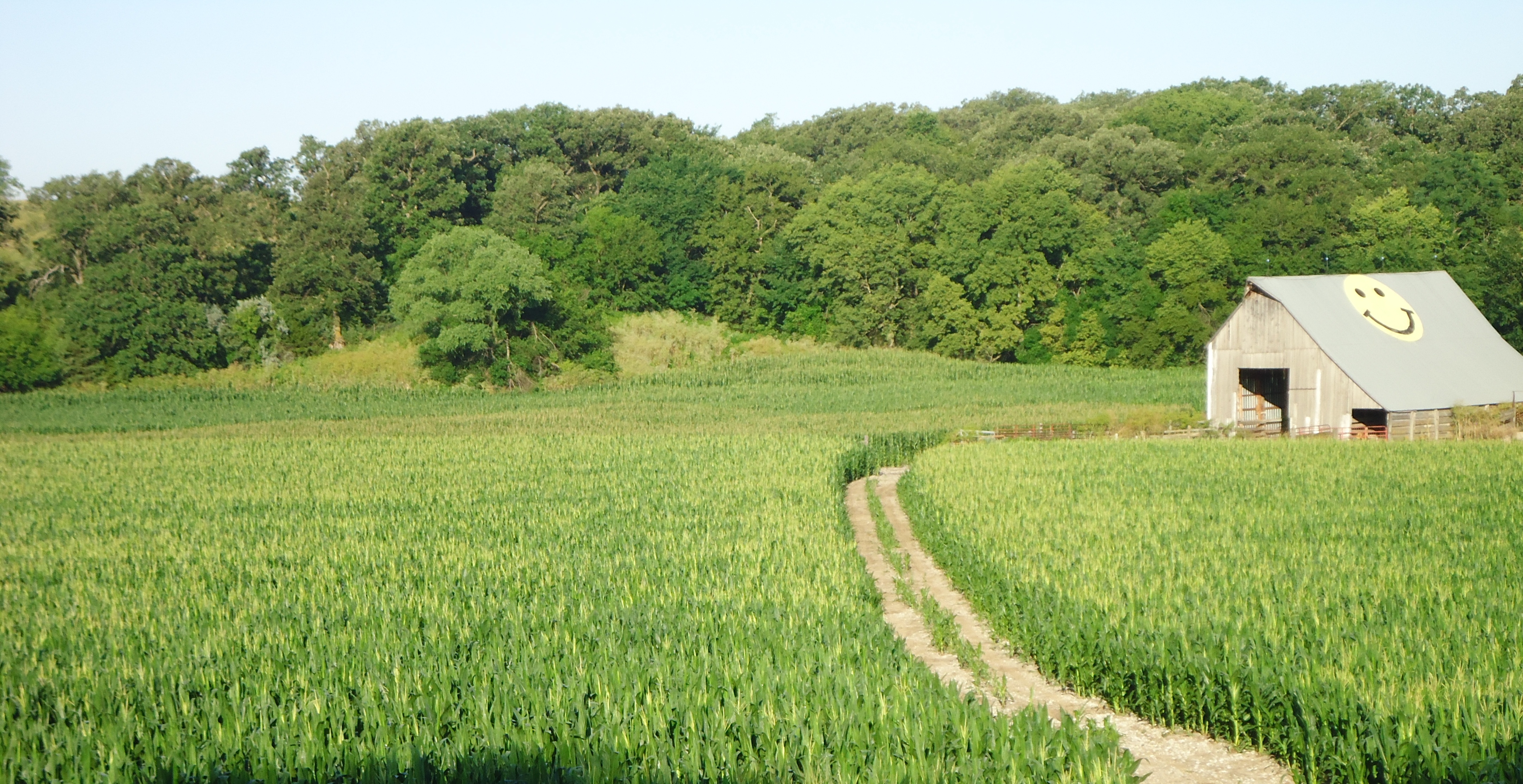

Drought conditions have affected much of Nebraska. In our area in south-central Nebraska particularly in our southern tier of counties, we’re seeing brown pastures and alfalfa that stopped growing. Wheat was harvested nearly a month early and yields range from 0-50 bu/acre depending on if it was hit by the hail storm Memorial Day weekend which totaled it out.
I’m unsure how many planting dates we currently have in Clay County! The spring planting season went so well with corn and many beans being planted in April. Soybeans planted in April that haven’t received hail are forming a nice canopy. Corn that hasn’t received hail should be tasseling by beginning of July. One Clay Co. field planted in March was only 3 leaves from tasseling when I took this picture this week and looks great (it’s probably 2 leaves by now!).  Adding another picture from a farmer friend Bob Huttes near Sprague, NE showing his field currently tasseled out and love the smiley face barn 🙂
But then there’s the hail damaged fields. The hail pattern has been fairly similar all year for this area of the State with some producers receiving four consecutive hail events on their fields. Every week of May was spent helping our producers determine replant decisions, particularly for soybeans…leaving irrigated stands of 85K and dryland stands of 60-65K when beans were smaller before stem bruising was so severe later. We would leave a stand one week and end up needed to replant after the hail hit again the following week. Some farmers got through the first two hail storms but the Memorial Day weekend storm did them in. I never saw hail like where ground zero of this storm occurred. After replanting after that weekend, they received yet another hail storm last week with the wonderful, much needed deluge of rain we received in the county. My heart hurts for these farmers yet for the most part they have good attitudes and are making the most of it. That’s the way farming is…lots of risk, thus an abundance of faith and prayer is necessary too. One farmer I talked to has had hail on his house seven times this year (including prior to planting).
Pivots have also been running like crazy prior to the rain last Thursday night where we received 3.30-4.40 inches in the county. Installing watermark sensors for irrigation scheduling, we were able to show the farmers that there was truly moisture deeper in the soil profile and attempted to convince them to hold off. It’s a hard thing to hold off on  water when the neighbors are irrigating, but several farmers who didn’t irrigate told me they were able to let the rain soak in and their plants
 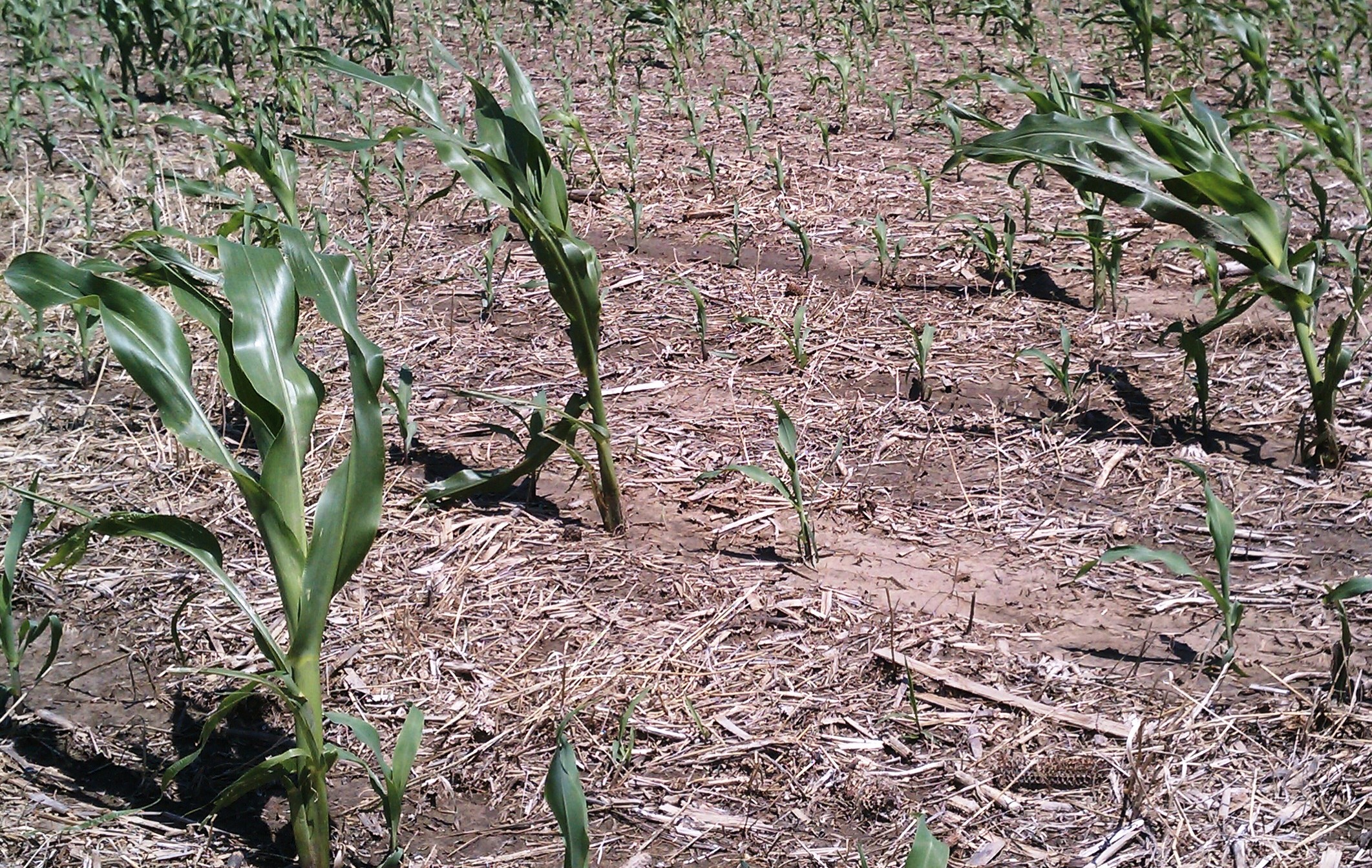 weren’t leaning after that rain because the ground wasn’t saturated prior to the rain event.
Crazy?
Crazy? Perhaps! Which according to one of my farmer friends is a little typical of me when I put my mind to figuring out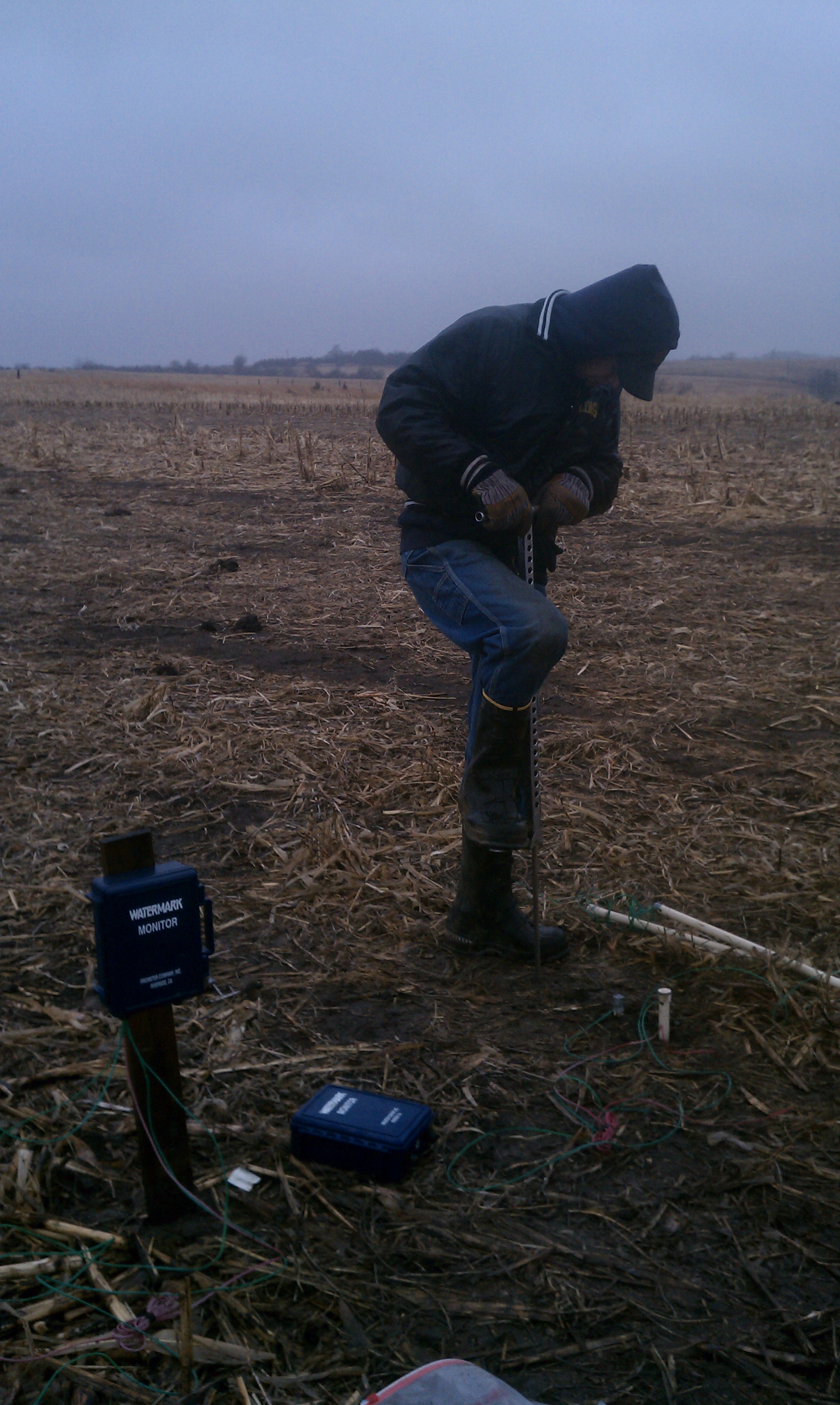 something. So I had been analyzing my crop water use data from my dryland corn, sorghum, soybean crop water use comparison study. It’s the one where we had coon problems this year and ended up trapping a skunk! I noticed how much the soil moisture profile had been depleted and knowing we’ve received minimal precip during fall and winter, I wondered what our soil moisture profile would be for dryland fields by planting. During a meeting yesterday I thought it would be good to install some watermark sensors to determine soil moisture profile recharge with the pending storm. Problem was I was at a meeting over 100 miles from my equipment and the pending storm was starting today. But I was still determined to get them in the ground as early as possible in order to measure the soil moisture status. So I woke up at 4:00 a.m. to heavy rain. Great! It was such a gorgeous day yesterday, and the past week…past month… The first thing my colleagues had asked me when I told them my idea was “Why didn’t you think of this sooner?” Answer: “Guess I needed a precipitation event!”
So I drive to the field in the rain, get the gear together and start installing the sensors. First foot went in easy with the rain that had soaked in. Then it seemed like I tried for 20 minutes (although probably not near that long) putting all my weight on the soil probe to get the 2nd foot in. Wind-driven rain soaked my jeans since I didn’t have rainpants on…fingers were numb from the cold. I  kept telling myself this will still hopefully be worth it! On the research data from this field, the second foot was driest of all the crops (was depleted well above plant available water). I got the third foot in and John, the man who farmed the field appeared.
While he thought it was crazy he graciously volunteered to help as he always does. He put in the rest of the sensors while I
hooked everything up.
The last several years we have been blessed to have a fully charged profile going into planting. Even with this rain/snow event, I’m not sure we will have that in dryland fields in this area of Nebraska. So I thought it would be interesting to know 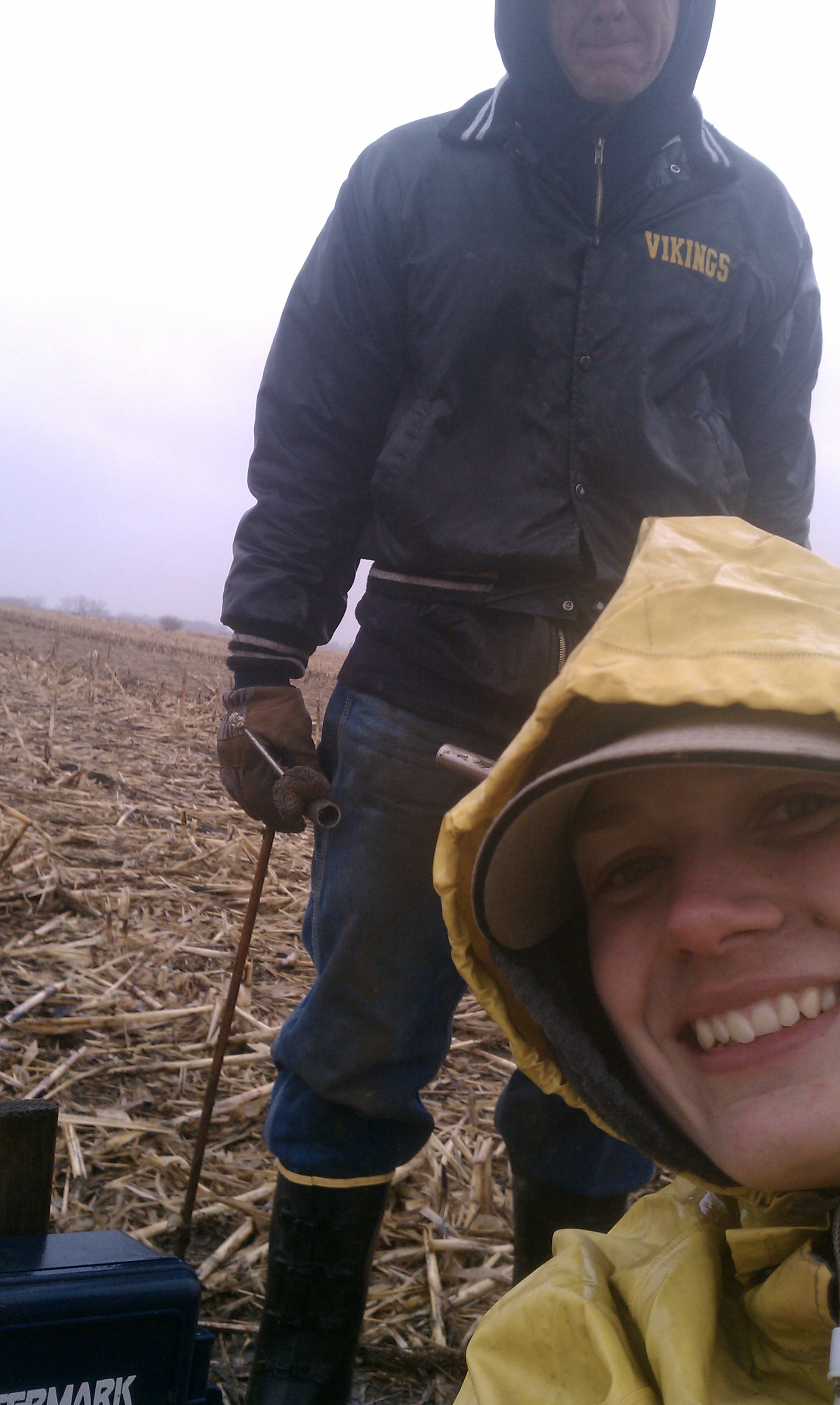 where we stood before planting and figured the farmers may want to know that as well. Perhaps a little crazy regarding installing the sensors on such a bad weather day but hoping the data in the end will benefit our farmers and be worth it!


 JenResources