Category Archives: Livestock
Avian Influenza-Nebraska Update
Dr. Sheila Purdum, Nebraska Extension Poultry Specialist asked us to share the following
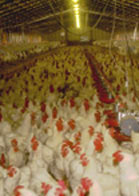
Photo courtesy Nebraska Extension Poultry website.
information about avian influenza. Unfortunately, Nebraska has HPAI H5N2 in a commercial flock of laying hens in Dixon County. This is the same virus that has been infecting turkeys in MN and WI and laying hens in the state of IA for the past 3 months. It is a deadly flu virus to poultry, killing as many as 90% of the flock within 3 days of the first symptoms. The major source of the virus has been migrating waterfowl, but it is believed to be airborne now traveling on numerous vectors to include people’s clothing, vehicles and other animals that may have come into contact with migrating waterfowl excrement, dust, etc.
Biosecurity:
The good news is that Biosecurity measures such as disinfecting all equipment coming into contact with your bird’s environment will help keep it out of small flocks. It is highly advised that backyard flock owners move their birds into indoor shelters and keep them away from interaction with migrating waterfowl on ponds. Simply do not share pasture or space, water with wild birds. This may be hard for some backyard folks, but they are just as susceptible to this nasty virus as the big producers.
USDA is working quickly on an Avian Influenza vaccine; it does have some problems matching strains to what the outbreak virus is (just as in human vaccine development). One other positive outcome is that this strain of AI is not harmful to humans; it is species specific to birds. The USDA/APHIS website provides current updates about outbreaks.
Infected birds that do not perish by natural causes are euthanized when a premise is tested positive and birds are composted on site. If backyard flocks have high mortality, we urge you to call the Nebraska Department of Ag at 877-800-4080.
What if I purchased chicks from a local farm store?
All of those chicks should be clean; breeders could not sell chicks from positive flocks
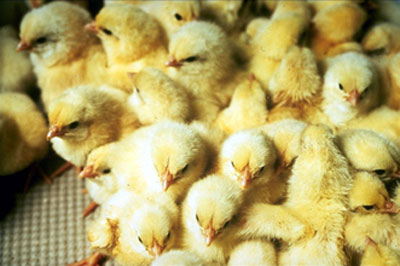
Photo Courtesy Nebraska Extension Poultry website.
according to State and National regulations. The virus can incubate and live in an environment for up to 3 weeks before the birds become sick. That is why Biosecurity is the best precaution. Do not visit your neighbors flock, live bird auctions or parks with migrating birds, stay in a high awareness alert to protect your birds. If you have questions, please feel free to call Dr. Sheila Purdum, Extension Poultry Specialist, 402-472-6362; spurdum2@unl.edu.
Poultry Sales:
Dr. Dennis Hughes, Nebraska Department of Agriculture State Veterinarian has shared that swap meets, exotic sales and live bird auctions east of Highway 281 will not be permitted to sell poultry until further notice. In addition, poultry from east of Highway 281 will not be permitted to be sold at swap meets, exotic sales and live bird auctions anywhere in Nebraska until further notice. Questions on this topic may be directed to Dr. Tom Schomer at (402) 471-2351.
County Fairs and Other Shows:
Your local County Extension Office and/or FFA Advisor will keep you updated regarding the status of County Fair 4-H/FFA poultry shows. For those coordinating additional upcoming poultry shows, they would appreciate you informing them. While they have not enacted a ban on poultry shows at present time, they would like to process the risk associated with each show on a case by case basis and help you determine the best course of action for your event.
They ask that you please report a contact name, phone number/email address, the name of your event, date and location via email to Jeanne Egger at NDA via email at jeanne.egger@nebraska.gov or by calling (402) 471-6880.
Nebraska’s Advantage
This week, I’d like to share some information that came out in a white paper from the UNL  Agricultural Economics Department on the special relationship we have here in Nebraska between crops, livestock, and biofuel production capacity not found in other parts of the U.S. to the extent we have here. It’s called the “Nebraska Advantage”.
I think it’s important for all of ag industry to realize we need each other as it seems we sometimes forget how inter-dependent we are. Crop producers need the livestock and ethanol industries as they are a high percentage of our end users. Yet many times I hear of crop producers fighting livestock expansion or livestock coming into an area. The purpose of the white paper was to share the numbers of where Nebraska livestock, grain production, and ethanol production currently stands, and what Nebraska could gain if we worked to increase livestock production in-state where we have a wealth of resources with our crops, water, and biofuel production.
Nebraska currently ranks 1st in irrigated acres, 1st in commercial red meat production and is tied with Texas for cattle on feed, 2nd in corn-based ethanol production, 3rd in corn for grain production, 4th in soybean productions, 6th in all hogs and pigs, and 7th in commercial hog slaughter, and 9th in table egg layers. However, in reading this white paper, one quickly realizes we’re not taking advantage of the tremendous grain production capacity here in the State.
We export over 1/3 of our annual corn crop, at least half of the in-state production of distiller’s grains (a co-product from ethanol production that is fed to livestock), and more than 80% of our soybean meal output. Corn and soybean production have increased in our State by 50 and 25% respectively, which is a blessing due to our irrigation capacity. But increasing amounts of this grain are being shipped out-state instead of benefiting rural economies in Nebraska if it was used in-state for value-added livestock production and processing instead.
In the white paper, graphs are shown comparing Nebraska to neighboring states. These graphs show Nebraska lagging neighboring states in growth of the livestock industry. For example, while Nebraska overall increased in hog production, the inventory increased 17.2% during the first half of the decade, but declined 11.8% in the second half. In comparison, Iowa realized an increase of 31.5% within the decade. What was really interesting to me is the fact that Nebraska exports 2.5 million pigs annually to neighboring states to be finished and shipped back to Nebraska for processing, showing potential for growth in the market hog sector. The dairy sector has also declined in herd numbers in Nebraska compared to other states and Nebraska’s poultry industry (mostly egg laying hens) has declined over the past decade in spite of constant numbers across the U.S.
When one looks at Nebraska’s economy, cash receipts from all farm commodities totaled over $25.6 billion in 2012 and livestock/livestock product sales was 45% of this total ($11.6 billion). Increased employment, local tax revenue, value-added activity, and manure for fertilizer are all economic benefits of livestock expansion. The paper stated,
A base expansion scenario that includes a 25% increase in market hogs, a doubling of dairy cow numbers, a ten percent increase in fed cattle production and a tripling of egg production, along with the associated processing industries, has the potential to provide an additional 19,040 jobs, with labor income of almost $800 million and value-added activity of over $1.4 billion. This activity has the potential to generate over $38 million in local tax revenue. While this amounts to a fairly small percentage of Nebraska’s total economy, these impacts will occur almost entirely in non-metropolitan areas of the state and would be quite beneficial to rural economies.
Livestock development has been held back by various issues and policies including: limitations on corporate farming activity in Nebraska, state and local permitting processes, nuisance roles and lawsuits, and issues/concerns from the general public and interest groups. The final conclusion of the paper was that significant growth in employment and economic output throughout Nebraska is dependent upon these issues being overcome.
I would challenge all of us to keep an open mind when producers desire to diversify by including livestock in their operations or through livestock expansion. In many cases, doing so allows another person to come back to an operation, or allows someone to get started farming, which in the long run benefits our rural economies. It’s ok to ask questions, to become more educated. It’s through these questions that one learns how production practices have changed to ensure the health and welfare of our livestock and in odor reduction from the facility and manure application. You can read the entire white paper contents here.
Cow-Calf College
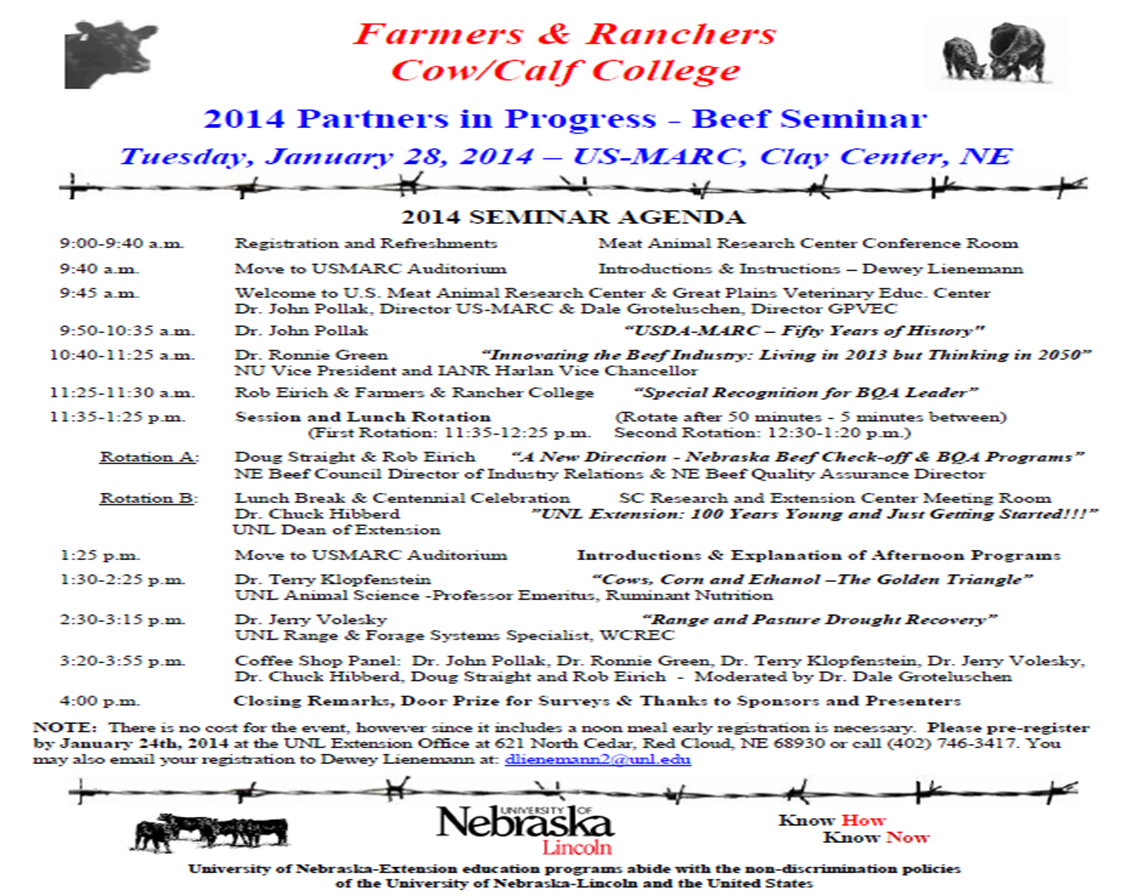
This looks like an excellent workshop for anyone in cow-calf production. Hope to see you there!
(Click on the agenda below to enlarge the view).
Soil and Water Conference
Hope you can join us for our Soil and Water Conference tomorrow in Clay Center!

Toothless grins…Fun Fact Friday
Welcome Dr. Lindsay Chichester, UNL Extension Educator, to the blogging world! Here is her first post regarding a “fun fact Friday” on how cattle eat!

Did you know…
Ruminant animals (animals that have one stomach with four compartments and chew their cud; includes cattle, sheep, goats, lamas, etc. – will explain more later) do NOT have teeth on their upper jaw?
Well, technically they have premolars and molars in the very back of their mouths on the upper and lower jaws, but no teeth upper front teeth. Instead they have a dental pad, which would be hard, slick surface.
 (Photo: Virginia cooperative Extension)
So how do they eat? Glad you asked! The part of their mouth where the upper teeth would normally be is called a dental pad. When they take a bite of grass they wrap their tongue around it and use the dental pad and their bottom teeth to bite it off.
So how do the young animals nurse you ask… They wrap their tongues around the mother’s teat and use pressure from…
View original post 31 more words
Mobile Ag Apps from UNL
This week I saw an article from agriculture.com that had ranked UNL’s Market Journal app as the Number 1 agriculture app! I’ve also felt it was the 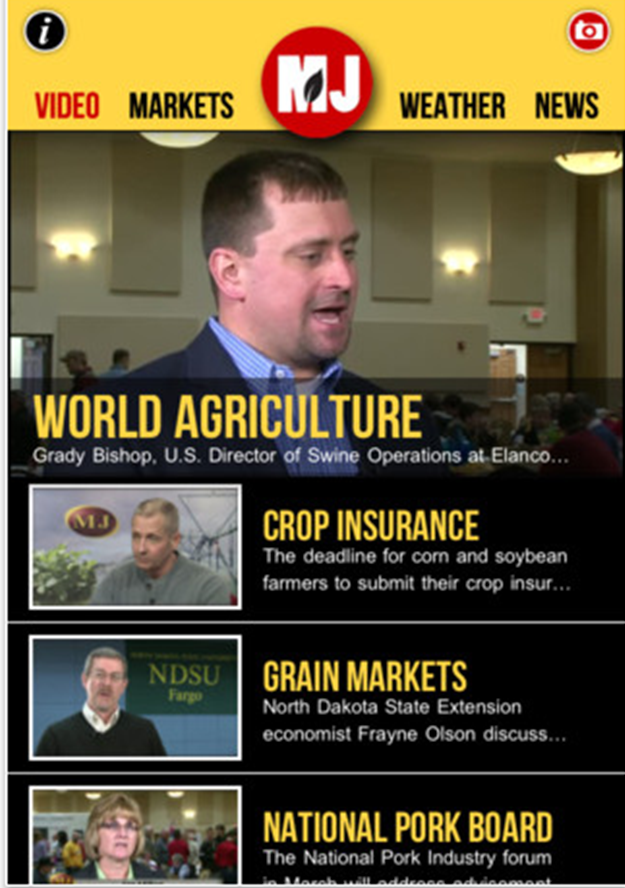 best ag app from UNL providing markets, each week’s show segments via YouTube, weather, and all the CropWatch articles in a one-stop app.
So being snowed in right now, I thought it would be a good time to share some new apps developed by UNL. The newest ag apps are for livestock. Some of you are in calving season and UNL Extension just released the NUBeef-BCS (body condition scoring) and NUBeef-Anatomy apps that may be helpful. They are available on the Apple App Store and will be via Google Play shortly.
NUBeef-BCS allows producers to visually assess their cow herd using a number system that objectively describes the amount of condition or fat reserve of the animal. Body condition score describes the relative fatness of a cow based on a nine point scale. When using the NUBeef-BCS app, producers can simply take photos of their beef cows and then score cows at important times throughout the year, such as at weaning and before the start of calving and breeding season. Taking pictures of the same cow multiple times throughout the year allows producers to better manage the herd according to Rick Rasby, UNL Beef Specialist. He said one of the challenges during winter is producers want to score body conditions, but cows have their winter hair coats. The app includes drawings of cows in different body condition scores that also can help with that. An added component to the app is an education component and is designed for instructors to use at all levels-from high  school, junior college, and four-year colleges. The app has a group of cows that have already been body condition scored that can be pulled up and used to practice scoring.
The NUBeef-Anatomy app provides visual and text information about the muscles and bones of the beef carcass. The user can navigate through the carcass by displaying cross-sections and then touch any muscle or bone to display the respective physical and chemical properties. Check out the NUBeef YouTube channel for more info. or watch Feb. 1’s segment of “Market Journal”.
A listing of all mobile apps from UNL Extension can be found here.
Drought Dichotomy
We often say water is the lifeblood of agriculture. In a drought year like this, that truly is the case! A case study showing the impacts of irrigated agriculture to Nebraska this year can be found here.
Interesting is the dichotomy we’re experiencing in south central Nebraska where irrigated fields that were truly fully irrigated may have some of the best yields producers have experienced while in so many areas of the State-even neighbors a few miles away-are experiencing the worst year they have ever faced.
Dryland yields have been all over the board mostly depending on tillage type. Irrigated yields that were truly fully irrigated have been outstanding. Hybrid Maize predictions for our area had been good all year for fully irrigated corn and it looks like they are even better than the long-term average predictions!
Yet, as I drive around the countryside I can’t help but wonder at how many corn stalks are already being disked under. At a time when we’ve had several fires in our own State of Nebraska…when we have farmers and ranchers suffering trying to find forage for their livestock. We are so blessed to have irrigation here and that buffers our producers from weather extremes. But let’s not forget about the others who are hurting right now! I would ask our producers with irrigated fields to please consider leasing your stalks for grazing or baling them this year to help those in need of forage.
Research from UNL shows that cattle and cornstalks go well together.
Some producers worry about compaction but in a dry year like this, compaction is essentially a non-issue-at least this fall. UNL research from 1996-2011 showed the effects of fall and spring-grazing on subsequent corn and soybean yields. On average, yield of the following soybean crop was increased by about 2 bu/ac with fall-winter grazing, and 1.3 bu/ac with spring grazing, compared with no grazing of corn stalks. Yield of corn as the second crop after grazing was not significantly affected resulting in an average of 1-3 bu/ac yield increase depending on fall or spring grazing. Check out this study and all our resources to help with drought decisions.
An upcoming Webinar called Cornstalk Grazing-Understanding the Values to Cattle Producers and Corn Farmers scheduled for Oct. 2 from 12:30 to 1:10 p.m. will provide additional information. If you are unable to view it, it will be recorded with all our Beef Webinars.
So while irrigation has provided life and good yields to many producers’ crops in the area, let’s not forget about our neighbors who are less fortunate. Please consider leasing your corn stalks or baling them to help others in need of forage for their livestock! You can connect with other producers by checking out the Hay and Forage Hotline at 800-422-6692. This hotline lists hay and forage including cornstalks that is available via sale or donation.
Additional Resource: How much to charge for cornstalk grazing?
Protecting #Nebraska #Ag & #Farm Transition
A few weeks ago I shared some thoughts with you regarding what I learned from an animal welfare conference. We have an opportunity to hear more in at a much closer location-Sutton Community Center in Sutton-on March 12th at 6:00 p.m. Dewey Lienemann, UNL Extension Educator will be presenting on “Protecting Nebraska Agriculture” following a meal sponsored by the Sutton Chamber of Commerce Ag Committee as well as area Cattlemen Associations, Breeders & Feeders, and Ag Producer groups. Anyone interested is invited to attend-and I would encourage anyone who possibly can to attend. This topic not only affects livestock producers, it affects crop producers, and consumers as well. It’s very important to understand how various interest groups are attacking animal agriculture and why and how we in rural America can share our stories. Please pre-register by contacting Tory Duncan at (402) 773-5576 or ccntory@gmail.com or Todd Mau at (402) 773-5224 or todd@toddstrailers.com.
Another opportunity for learning more about family farm transition is with the last Farmers/Ranchers College program this year. It will be March 15 in Friend at the San Carlos Community Room (next to the Pour House) with meal beginning at 6:00 p.m. (Registration at 5:30 p.m.) The program entitled “Discussing the Undiscussabull” will be presented by Elaine Froese from Manitoba, Canada. Froese’s expertise in helping families get unstuck is sought after across the country. She has worked with families in business for over 20 years and is now coaching the next generation. Elaine believes that change is an opportunity, not a threat…she has practical tools to help people discuss the “undiscussabull” to make their dreams come true. In order to save your spot and reserve a meal, registration is needed by calling the Fillmore County Extension office at (402) 759-3712. The Farmers & Ranchers College is sponsored by area agribusiness, commodity groups in collaboration with the University of Nebraska-Lincoln Extension.
This is a great blog post from Chris Chinn, a farmer in Missouri, who shares why her family raises pigs the way they do to protect them and keep them comfortable. You can read additional blog posts from her at http://chrischinn.wordpress.com

(Disclaimer: The intent of this blog is to help people outside of agriculture to understand why some farmers choose to raise their animals indoors. What works on my farm may not work for another farmer, each farm is different, as are the genetics of hogs. My intent with this post is to help people understand why some farmers use modern technology on their farm. Our family changed the type of hog we raise to be a leaner hog with less body fat because of consumer demand. With that change came additional challenges to raising this type of pig in harsh weather conditions. That is why we chose to move our animals inside of barns because the lean type of hogs we raise can not endure the weather as well as hogs with more body fat. This is not meant to be an indictment of farmers who choose to raise their hogs outdoors.)
———————————
Today
View original post 1,295 more words
Cornhusker Economics Conference
The Cornhusker Economics Conference will focus on the ag outlook and management decisions for farmers and ranchers at  Clay Center on February 29th at the Clay County Activities Building at the Clay County Fairgrounds. The program will run from 10:00 a.m.-2:30 p.m. with registration beginning at 9:30 a.m. The conference will cover key topics affecting farm management and production decisions for 2012. It is offered by UNL Extension and the UNL Department of Agricultural Economics and is sponsored in part by funding from the Nebraska Soybean Board.
Dan O’Brien of Kansas State University will share his insight on grain and oilseed outlook and risk management decisions in today’s uncertain markets. While market volatility shows the need for sound hedging strategies, concerns about futures market performance and the recent MF Global bankruptcy affecting hedge margin accounts raise questions about the best path ahead for managing market risk. O’Brien will bring his experience and analysis of futures market performance to bear on the issues and discuss implications for producer decisions.
Shane Ellis, livestock marketing specialist at Iowa State University, will discuss the outlook for livestock markets and producer profitability. With outlook for meat demand and continued reductions in cattle supplies, the market fundamentals look strong, but must weigh against grain supplies and feed prices. Ellis will bring his expertise to the situation and provide guidance for producer marketing and production decisions in 2012.
The land market has also been moving in the past year and UNL Extension Educator Allan Vyhnalek will use his local knowledge and analysis to discuss land markets and leasing arrangements with implications for producer decisions. The closing session will feature a focus on agricultural policy and the direction for new farm programs. Brad Lubben, policy specialist, will discuss the policy outlook in Washington and the major policy developments that could affect agriculture in 2011. Then, Lubben will team with UNL Extension educators to discuss specific directions for the new farm bill and implications for farm programs, conservation programs, and risk management decisions.
There is a $25 registration fee to cover programming expenses for speakers, materials, and the noon meal. Please RSVP to Jenny Rees at the Clay County Extension Office at (402) 762-3644 or jrees2@unl.edu by Feb. 27 so we can obtain a meal count. Hope to see you at the excellent conference!


 JenResources