Category Archives: Uncategorized
Research Before You Retweet: Gardening in the Age of Social Media
Elizabeth does a great job explaining why it’s important to know the source before sharing information online. Great explanations for why we should/should not use some of the household remedies we see online!

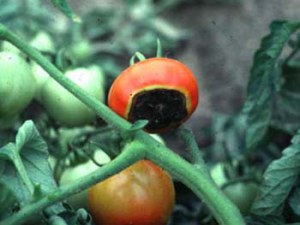 Blossom end rot on tomato. Maintain consistent moisture. Try mulching tomatoes instead of reaching for the Epsom salts.
Without a doubt the interest in gardening and landscaping has been on the rise for many years. In order to find information on how to garden in the past, you had to know who to ask or what book to look in. Today the places to find information are endless. Pinterest, Facebook, Twitter and the internet all have gardening information that is easily shared among friends and followers alike. Sometimes these ideas are tried and true while others are more “too good to be true.” I might not be the first to say it, but you can’t believe everything you read on the internet.
Through my job with Nebraska Extension, I educate people using science-based information that comes from research. This ensures the information that I give out has been researched by…
View original post 502 more words
NE Ag Water Management Network
With increasing cost of production, the Nebraska Ag Water Management Network is another way to help reduce energy costs while conserving water for the future. If you’re not already scheduling your irrigation based on soil moisture status, consider joining us by working with your local Extension Educator or Natural Resources District this growing season!

Planting has been well underway and hopefully we will receive some timely rainfall with little need to irrigate. If you have irrigated ground and are looking for ways to save money, reduce nutrient loss and use less water, consider joining the Nebraska Agricultural Water Management Network, or NAWMN. I’ve been in Extension for nearly ten years and a program I’ve been involved with that has been a very rewarding program and made a positive impact for many is the Nebraska Agricultural Water Management Network, or NAWMN. Evaluation results have shown a one to two inch savings of irrigation since it’s inception. In 2005, only a few producers in the Upper Big Blue NRD, (shortly followed by the Little Blue NRD) were participating, but as of last fall, this program has reached 1,229 in 18 NRDs and 73 of 93 counties. The Network has been having significant impacts on both…
View original post 182 more words
NeATA Conference in Grand Island Will Keep You Up To Date on Emerging Ag Technologies
One of my favorite winter conferences! Interested in ag technology? Be sure to check it out!

If you are using technology in your farming operation or business, the NeATA conference is one you should attend.
Keep up with emerging ag technologies for your farm at the 2015 Nebraska Agriculture Technology Association Conference, Feb. 4-5 in Grand Island.
Constant technology advances in precision agriculture are transforming today’s farms. The 2015 Nebraska Agriculture Technology Association (NeATA) Conference on February 4-5 at the Mid-Town Holiday Inn in Grand Island, NE will focus on the latest products, practices, and services available to producers in managing tomorrow’s farm. The symposium registration starts at 8:30 am on Wednesday, Feb. 4 and the conference registration starts at 7:00 am on Thursday, Feb. 5.
NeATA is Nebraska’s newest grassroots agricultural-based non-profit associations. The association was founded by innovative Nebraska farmers and agribusiness representatives that share a common desire to stay abreast of emerging agricultural technologies. The annual symposium and conference is co-hosted by NeATA…
View original post 211 more words
THE DAY THAT COULD START YOUR STORY IN CASNR….
Great opportunity to learn more about career opportunities and majors at UNL!

 Experience the Power of Red — Spring Edition

Thursday, April 2, 8:30am-12:00p.m.
An event where you’ll learn how the College of Agricultural Sciences and Natural Resources (CASNR) prepares students for careers in everything from animals to plants, soil to climate, golf to business, mechanization to leadership, and food to forensic science.
You’ll meet faculty, staff and current students to get the scoop on what life at UNL is really like. Explore campus in person and get a true sense of the UNL CASNR experience.
Schedule:
- 8:30 a.m. Registration/Browsing Session
- 9:15 a.m. Welcome and Overview
- 9:45 a.m. Move to First Session
- 10:00 a.m. First Session
- 10:30 a.m. Move to Second Session
- 10:45 a.m. Second Session
- 11:15 a.m. Lunch/Wrap-Up/Scholarship Drawing
- 12:00 p.m. East Campus Tour (optional)
- 1:00 p.m. City Campus Experience/Tour (optional)
Register:
Please register by March 26 at http://go.unl.edu/springday
Questions:
For more information contact us at (800) 742-8800, ext. 2541 or lfrey2@unl.edu.
Don’t Forget the Fruit
 Apple tree. Photo courtesy ext100.wsu.edu
You know the saying; the apple doesn’t fall far from the tree. Even though apple and other fall fruit harvest is nearing its end, that doesn’t mean that the work is over. Fall sanitation is a key part of fruit management. A little extra work now could ensure a successful growing season next year.
Make sure your fruit trees are ready for the winter to come. Start by making sure that your tree goes into winter with an adequate amount of moisture. The recommendation for trees is to have about 1” of supplemental water per week. This is about enough water to get the top 8” of the soil moist. Fruit trees do not require much fertilization, especially in the fall. As long as the fruit tree is planted in a healthy soil, it will not require fertilization. In the fall we want trees to…
View original post 525 more words
Farmers & Ranchers College 2014-15 Programming Year
The Farmers & Ranchers College was formed in January, 2000 with the purpose of providing high quality, dynamic, up to date educational workshops for area agricultural producers in south central Nebraska  through a collaborative effort between business, industry and higher education leaders. Furthermore, the Farmers & Ranchers College will provide the tools necessary so that agricultural producers will be able to respond positively to these changes using a profitable decision making process.
The Farmers and Ranchers College is a unique opportunity to educate agricultural producers in south central Nebraska. Approximately three hundred producers from fourteen counties and three states participated in the 2013-2014 Farmers & Ranchers College programs. Producers attending these workshops managed over 184,000 acres. Participants (21%) surveyed indicated an average of $11.00/acre of knowledge gained from participating for a potential impact of $2 million.
The thirteenth annual Partners in Progress- Beef Seminar featured a variety of industry…
View original post 266 more words
“Worm” Invasion (Millipedes)
It’s the time of year for milipedes (locals call them wireworms but they are not true wireworms) to migrate into homes and garages! Brandy VanDeWalle, Extension Educator, shares more information in this post.
During this time of year I receive calls about worm-like, dark brown to black creatures that are invading people’s houses or garages. Most likely these are millipedes. Millipedes are not harmful in the yard, but can be a nuisance with the first spell of cool temperatures in fall. Millipedes will  invade houses (sometimes in large numbers) to find warmth on concrete in and around garages and houses. At times, millipedes can become so abundant; they may constitute a “millipede invasion” entering homes and other buildings. Once they reach indoors, millipedes will die – no sprays are necessary.
Millipedes (sometimes called “wireworms” which are the larval stage of a beetle that feeds on plants in farm fields) have two pairs of legs per body segment. They are usually brown to black in color with an elongated body that is round. Millipedes have no poison claws or legs. Once disturbed, they usually…
View original post 212 more words

Dumping Discover
Dr. Lindsay Chichester’s latest post. Please know what you’re really supporting (check out her reference links) when you use your HSUS Discover Card.

Dear Discover Card,
I was shocked and saddened to hear that you had entered into a relationship with the HSUS (Humane Society of the United States) after six years together. I even called one of your customer service reps hoping they would tell me you had revoked your new relationship status (or at least change it to “it’s complicated”). The HSUS promotes itself as an animal cruelty prevention organization, and unfortunately many people donate to them believing they are helping animals in need. In actuality, in 2011 HSUS spent LESS than 1% to help shelter animals in need! If people made donations to their local animal shelters, the donations would be way more effective and helpful.
Discover Card, you should also be aware that the American Farm Bureau reports that approximately 97% of all farms and ranches in the U.S. are family owned, not factory farms as is suggested…
View original post 255 more words

Oysters… Fun Fact Friday
Some great information from Dr. Lindsay Chichester on oyster farming in Alabama.
This past week 1,300 agricultural focused extension folks from around the nation gathered in Mobile, Alabama for our annual conference. There are always great presentations, posters, vendors, and conversations that provide educational opportunities. But we also have a chance to go on a day tour to learn more about something in the area. This year I selected an oyster and crawfish tour. Certainly not something we have much of in Nebraska, but it was very interesting. Today I want to share with you some of the fun facts I learned about oysters.
— Oysters are animals and can be grown in off-bottom gardens. Off-bottom means the oysters are grown in baskets, bags, cages, etc. that are suspended in the water, versus on the bottom of the water source. Off-bottom gardens protect the oysters from predators and helps keep them safe from getting buried in bottom of the water sediment.

Oyster…
View original post 285 more words
Soybean Management Field Day
Plan to attend the soybean management field day near Shickley this year! Great information for your operation!
Each year Soybean Management Field Days is held at 4 different locations across Nebraska. This year, Fillmore County is fortunate to host one of these programs. On August 13, 2014 at the Stengel farm near Shickley, with registration at 9:00 a.m. and the program running from 9:30 – 2:30 p.m. this educational event will occur. One hour presentations will occur aimed at providing important research based data to soybean producers.
Specifically, topics will include:
- Herbicide applications, water quality and resistance management (demonstrations of herbicide drift with discussion on how to mitigate drift with new herbicide-resistant traits, how weed growth affects herbicide performance, etc.)
- Growth development and growth enhancement products (soybean growth and development, how yield is made and soybean responses to plant density and planting date)
- Multiple soybean input study that includes row spacing, fungicides, insecticides and nutrient management (soil fertility management for soybeans, seed treatment products, risks associated…
View original post 180 more words


 JenResources