JenResources 7/27/25
White Mold in Soybeans Questions: There’s no need to worry about spraying if you don’t have a history of this disease in your fields. If you did have white mold in 2023, there’s potential for it in 2025. There’s also a lot of confusion about what white mold looks like. If one is in a corn/soy rotation, corn residue in a soybean field often has a “white fungal” growth on it this time of year. That’s due to saprophytic fungi doing their job in decaying that organic material; nothing to worry about! There’s also many types of mushrooms that are involved with decaying organic material that one might find in a field. Seeing mushrooms does not mean they’re going to create white mold. The fungus that causes white mold of soybeans creates mushrooms from black sclerotia that look like mouse droppings. When you scout within a soybean canopy, the mushrooms will be attached to the sclerotia on the soil surface. They also have a specific look to them. You can learn more from Dr. Dylan Mangel, Extension Soybean Pathologist, in this CropWatch article: https://go.unl.edu/opv3.

County Fairs: Thanks to all who made the Seward and Fillmore County Fairs a success! This week is the York County Fair; the website that contains the schedule of events and ability to purchase tickets is at: http://www.yorkcountyfair.com/. For those interested in exhibiting items in Open Class, you can find the Fair Book in the Extension Office or online at: https://go.unl.edu/c2qn. Entry times are Tuesday, July 29 from 6-8 p.m. and Wednesday, July 30 from 8-11 a.m.
Testing Moisture in Forages: Dr. Mary Drewnoski sent out the following info. after a summer grazing field day, “accurate moisture testing is key to preventing spoilage and heating in hay and to ensuring proper fermentation in silage. Below are a few options, along with pros and cons:
Koster Moisture Tester
How it works: Uses a small scale and heating unit to determine moisture by weight loss.
Pros: High accuracy (considered the “gold standard”). Works for hay, silage, and other forages.
Cons: Slower process (20–60 minutes per sample). Requires a power source.
More info & instructions: UTIA Publication (PDF)
Where to buy: Koster Tester Website or search online for deals. Price is now around $500 (double a few years ago when I bought mine).
Hay Windrow Moisture Testers
How it works: Dish-style handheld electronic probes for quick readings in windrows or chopped samples.
Pros: Fast and easy to use in the field. Measures a wider range of moisture (13–70%) compared to standard bale probes, making them suitable for silage.
Cons: Less precise than Koster. Can require good sample prep for consistency.
Where to buy: There are mean options on Amazon or a simple google search with this term will give you option. Price range: $200–$400
DIY Option: If you already have a hand held bale probe, here’s a way to adapt it: Progressive Forage Article
Microwave Oven Method
How it works: Drying a forage sample in the microwave to measure weight loss.
Pros: Very low cost (just need a microwave and scale). Works for both hay and silage.
Cons: Time-consuming and requires caution (fire hazard if overheated and results in potential for increased error). Not as convenient for field testing.
Directions: UNL CropWatch Article


Crop Update 7/21/25
Crop Update: Pollination is occurring and with the news on social media, received a number of calls regarding corn tassels this week. Last year, I had seen some “tassel wrapping” in a few hybrids but hadn’t said anything as I didn’t receive calls on it. This year it’s far more widespread throughout the country. What is meant by tassel wrapping is the last few leaves are tightly wrapped around the emerging tassel so that only a small portion of the top is pollinating and showing. As I’ve watched these tassels the past two years, they try hard to emerge from the leaves. Some hybrids are able to push out of the leaves better. Some will push out through the side of the leaves. The tassels then look strange with what parts are able to shed pollen once they emerge from the wrapped leaves.
In some of the hybrids, there’s enough pollen being shed from refuge plants and the tassel tops, that they should still pollinate ok. There’s a few with less pollen shed, yet there’s also corn pollinating in nearby fields. Hopefully there won’t be pollination issues. It will be important to watch your specific fields for pollination.
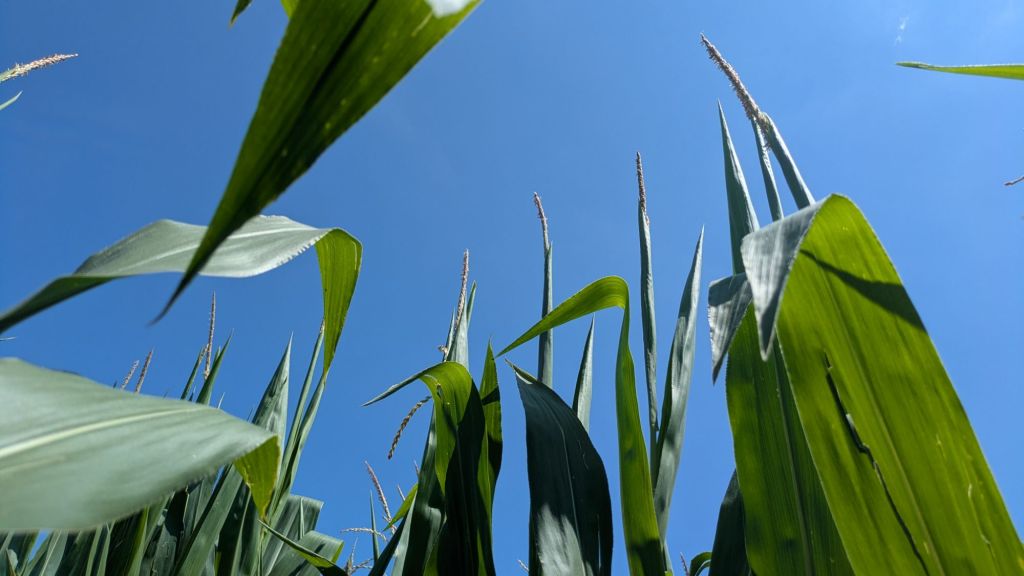


No one likes to see these things happen. There’s been a number of things shared as to what’s going on. Some are calling this environmental. I’ve heard a number of people talking about either generic dicamba or status applications to corn. I’ve been in the fields looking at this for 10 days and would encourage you to walk into the signed plots of the different companies and local County Corn Grower plots. If this was an environment or dicamba issue alone, entire counties of acres would be impacted because of being in a similar environment and because of how much dicamba is used in post-herbicide applications. This unfortunately appears to be genetic as I’m only seeing it in specific genetics. When across companies, they’re genetically related.
Southern rust was also found in Nebraska last week and in our area, it was found in Butler and Polk counties even though Butler isn’t lit up on the map. It’s at low incidence and not a level to spray yet. I’m still saying to wait till at least milk if you’re still planning on a fungicide app to reduce potential pathogen resistance and for best economic thresholds: https://corn.ipmpipe.org/southerncornrust/.
Summer Grazing Field Day: Alex Daake in the Utica area is hosting a field day on Tuesday, August 5th from 4-6 p.m. at 4136 Superior Rd, Utica. He took a pivot and divided it into quarters. One quarter is soybean, corn, grazed mix for 1 year, grazed mix for 2 years. Cereal rye is also taken for seed after the grazing. He rotates the quarters each year. The field day will primarily focus on how Alex is grazing covers, the cover crop mixes used, and how he feels it’s improving the soil. Come learn about what he’s doing, why, and the economics. On the quarter with corn was 2 years of previous grazing. He has an on-farm research nitrogen study on that ranging from 0-150 lb N/ac. He is also using satellite imagery from Sentinel Nutrient Mangement to determine which plots, if any need additional nitrogen. It will be a great afternoon of learning and sharing! Please RSVP to me at jrees2@unl.edu or 402-440-4739 if you’re interested in attending. Cookies and drinks will be provided.
South Central Ag Lab Field Day will be held Thursday, August 7th near Clay Center from 8:45 a.m.-3:10 p.m. (Reg. 8:30 a.m.). The day is designed so you can pick and choose which topics you’d like to attend. More info. at: https://enreec.unl.edu/south-central-agricultural-laboratory-field-day/.
JenResources 7/14/25
It was a blessing to get away for the national ag agents conference and then on vacation! The keynote speaker was Dwayne Fisher who is the VP Marketing and partner at Champion Produce Sales in Idaho. His speech was about relationships. My takeaway from him was, “The more, more, more is creating less, less, less when it matters most, most, most. When we don’t feel we have time for one more thing, pause and take time to do something for someone else. (Regarding people)-Notice them, Value them, Serve them, Encourage them. We can’t replace Relationships.” This was a helpful reminder and “shot in the arm” for me; hopefully, helpful in some way for you too.
For the ag tour, I learned about wool production and marketing and toured a sheep ranch that was 45 miles from Yellowstone National Park in the mountains. The rancher shared the challenges of grazing thousands of sheep in the mountains with wolves and bears migrating from the park and killing sheep. The specific wolves and bears have to be tracked and ID verified before they can be eliminated. They work with experts to use drone technology and game cameras to help identify the specific animal. At the wool-buying stop, we learned that China dictates the market based on weekly wool sales in Australia. Australia sells more wool in one week than what the U.S. sells in 1 year. The take-home from the wool-buying stop was to buy more natural fibers like wool and cotton.
Fungicides: Received many questions last week on fungicide applications to corn and soybeans. First, tar spot is still at low levels where it’s been found in fields and hasn’t hit the 5-7% thresholds. It prefers temps in the 60’s-70’s, which to me explains why we’ve mostly seen it get worse in fields at the end of the growing season. I realize a lot of fungicide is going on corn. Economically and threshold-wise, I’d wait as long as possible before applying a fungicide. The research from Indiana showed that it was still economical to apply through milk-early dough stage. Waiting will allow for residual for when you may need it later in the season if tar spot or southern rust take off. There won’t be residual left for those making apps now. Just for consideration as the economics don’t justify multiple applications.


For soybeans, if the field had never had white mold in the past, I would not worry about a fungicide for white mold. If it’s a seed corn/soybean or corn/soy rotation field and had white mold in the past, one could aim for one fungicide application at full flower (R2). If you’ve had 2 years of corn followed by beans this year, you probably don’t need a fungicide. And, if you planted soybeans green into a small grain, again, you shouldn’t need a fungicide as we’ve seen small grains keep white mold at bay. I realize I’m more conservative with recs compared to most, but this is based on economic thresholds and understanding the pathogen and crop rotation history. Also, a reminder if you’re interested in using plant nutrition in either corn or soy for on-farm research, please let me know.
Summer Grazing Field Day July 24 will be held at Eastern NE Research & Extension Center near Mead from 9 a.m.-2 p.m. (Registration at 8:30 a.m.). The cost is $20 and they are requesting RSVP for lunch count. More info here: https://beef.unl.edu/news/summer-grazing-field-day-strategies-beat-slump/. The day will be casual and discussion-based. Take a look at the summer phase of a double-crop annual forage system—where warm-season forages like sudangrass (with or without sunnhemp) are being grazed by both cow/calf pairs and stockers. Additional topics include:
- How to manage warm-season annuals to get the most out of them
- What the performance data says (ADG, stocking rate, carrying capacity)
- How the economics compare between cow/calf and stocker systems
- New prussic-acid free sorghum-sudangrass variety
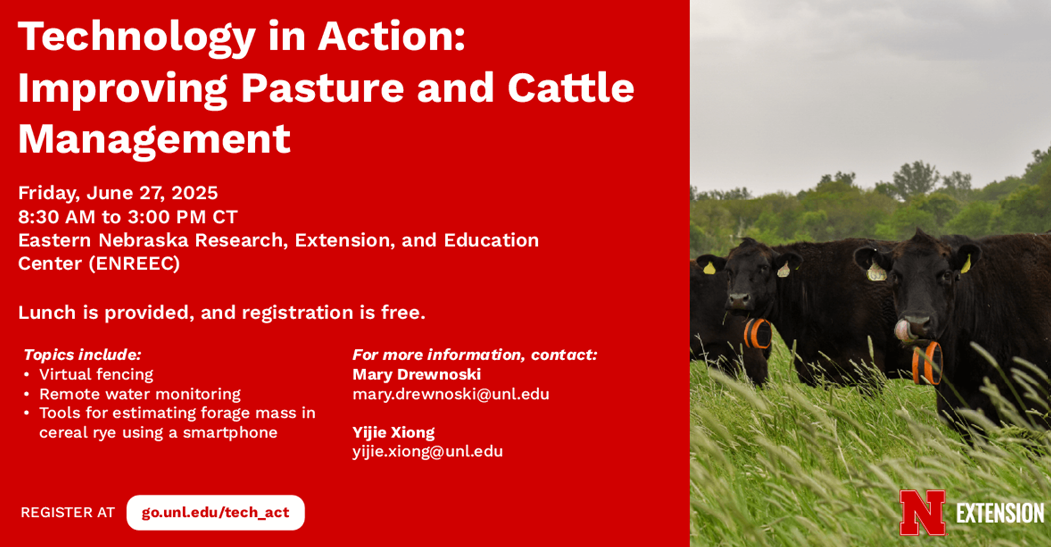
- Virtual fencing in action

Plant Nutrition and Disease
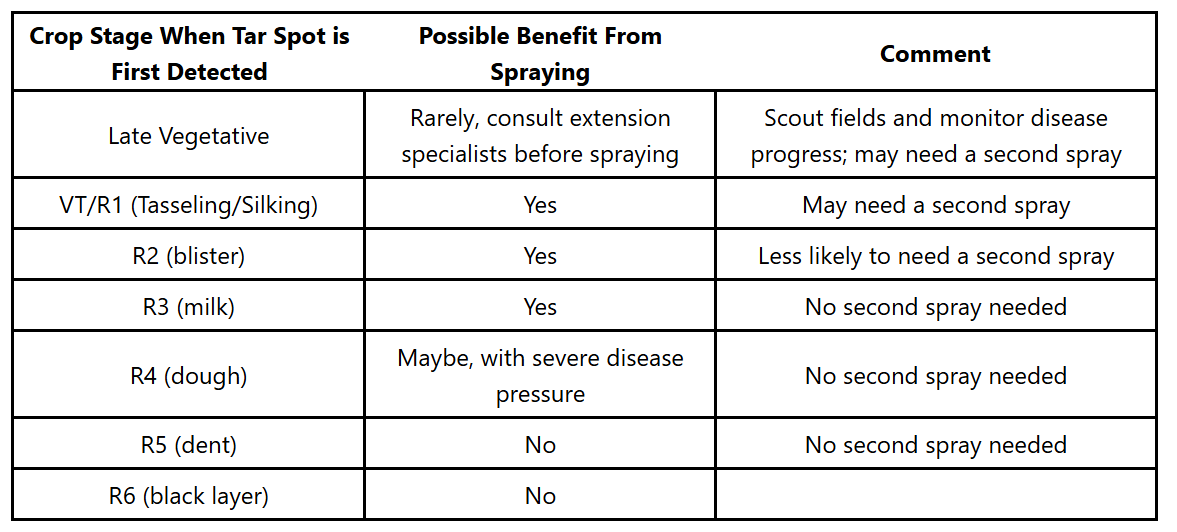
Tar spot of corn was found in several Nebraska counties. We are not recommending fungicide applications at this time due to the research from Purdue University and other states. They found it best to wait till disease severity was 5-7% and corn was from tassel to dough stage of development. More info. at: https://jenreesources.com/2025/06/17/tar-spot-of-early-corn-update/.
What to do now:
1-Scout fields and wait till a 5-7% threshold on leaves before applying fungicide
2-Observe fields as to which hybrids have more tolerance to tar spot
3-When irrigating, consider less frequent and deeper irrigations, https://go.unl.edu/vipj
4-Consider plant nutrition?
In managing pests and pathogens, few mention plant nutrition or alternative options. Healthy humans and animals are less prone to disease; why not the same with plants? A book called “Mineral Nutrition and Plant Disease” shares published research on roles of minerals in aiding or managing disease. It was written by Dr. Don Huber, Professor Emeritus of Plant Pathology from Purdue University and there’s an updated version that I have.
There’s a lot of unknowns about tar spot and its control. Dr. Huber shared that the tar spot lesions contain oxidized manganese in addition to the fungal spores. Several journal articles referenced the black “freckles” in Goss’ wilt and the vascular plugging in the systemic version also contain oxidized manganese. When manganese is oxidized, it creates a manganese deficiency in the area which doesn’t allow for photosynthesis. The area runs out of energy and can’t defend itself resulting in disease expansion. Many of us in ag understand that micronutrients are chelated in plants in the process of applying specific herbicides. Companies have developed products to help with chelation and to stimulate plants sooner from the shut-down that occurs from applying herbicides.
I’m wondering about the opportunity to use plant nutrition right now to help stimulate plant defense mechanisms? We may need fungicide at some point, but we don’t right now. I have no research on this, but to me, it makes sense. When we have early symptoms of a cold, we’re told to take zinc to stimulate our defense system. Manganese and Zinc both travel in the xylem and they aid in plant defense signaling. Addition of zinc and copper in particular can reduce manganese oxidation, aiding in plant defense responses. Thus, wondering if zinc, copper, and manganese may help with preventing and fighting tar spot? Boron and sulfur could play a role too. The addition of Calcium increases the oxidation, so it shouldn’t be used alone for this situation. Manganese, Zinc, Copper, Boron, Sulfur all aid in defending plants against pathogens.
If you’re interested in trying something in plant nutrition and would like to work with me via on-farm research, please let me know. I also need to share that many plant pathologists disagree with the thought of using plant nutrition: https://cropprotectionnetwork.org/publications/mythbusting-tar-spot-separating-fact-from-fiction.
For those in industry, many of you have products in trials that reduce the chelation processes and/or that help stimulate plants after being shut down (ex. from 10 days to 2-3 days) after a pesticide application. I’m curious if aiding crops out of chelation/shut down sooner helps with reducing pest/pathogen pressure? How can we better share what we observe with each other?


Tar Spot of Early Corn Update
Received several calls about tar spot yesterday and today. As of right now, it’s been confirmed by UNL at LOW incidence (1-2 lesions per leaf) in Saunders, Pierce, and Clay (on 6/16/25), Polk, and Seward Counties (on 6/17/25). I really appreciate Craig Anderson and Mike Byers bringing me leaf samples to confirm. I also appreciate those who were calling to hear of any confirmations from leaf samples.


There’s a lot of fear surrounding this disease, and still some unknowns. We haven’t seen tar spot in Nebraska this early. It would be helpful if consultants/agronomists would confirm samples to Dr. Tamra Jackson-Ziems, the UNL Plant and Pest Diagnostic Lab (tar spot testing is free), or a local Extension Educator so that we have the most accurate information to provide. Tamra will update the tar spot map at: https://cropprotectionnetwork.org/maps/tar-spot-of-corn.
We are NOT recommending fungicide application in fields where tar spot is confirmed in these early vegetative stages.
Reasons for not applying fungicide now:
1-Economics: Corn economics are already a struggle. When tar spot appeared in the early vegetative stages, research from Dr. Darcy Telenko’s lab at Purdue University showed it wasn’t economical to apply at V6-V7 as it didn’t suppress disease enough. It was economical when the corn reached tassel stage or beyond. I show the research data below and you will also see the chart on the website link I shared above. In this post, Dr. Telenko shares 7 years of experience dealing with tar spot when it occurs early in the season and how to make fungicide decisions.
*Some Quick Tips & Tools for Preparing for Tar Spot in Corn-Dr. Darcy Telenko
*Tar Spot: What to look for in corn and making an informed fungicide application-Dr. Darcy Telenko
*Crop Disease Forecasting Tool for Tar Spot
2-Applications: Dr. Tamra Jackson-Ziems shared that some products say “no more than 2 applications per year”. Using those active ingredients now would mean you could use them again around tassel but no later when you may need the fungicide to finish the season. (See Dr. Telenko’s posts above).
3-Resistance management and integrated pest management. The photo below shows the economic threshold is 5-7% leaf severity for tar spot before it’s economical to spray. We’re a long way from that threshold on leaves confirmed for tar spot thus far. Avoiding unnecessary fungicide applications and using two modes of action when fungicides are applied may help in delaying resistance.
What to do now:
1-Continue to scout fields and wait till a 5-7% threshold on leaves before applying fungicide (see photo below)
2-Observe fields as to which hybrids have more tolerance to tar spot
3-When irrigating, consider less frequent and deeper irrigations
4-Consider plant nutrition? Manganese, Zinc, Copper, Boron, Sulfur all have a role in defending plants against pathogens. Will share more thoughts in another blog post.
Slide courtesy of Dr. Tamra Jackson-Ziems, UNL and Dr. Telenko, Purdue University. Fungicide application at V6-V7 resulted in negative economic return and similar disease pressure as the non-treated areas. Best fungicide timing for disease suppression occurred from tassel to milk and for economic return from tassel to dough.
Crop Updates 6/16/25
Wheat stem maggot in corn and herbicide injury issues have been my top questions the past few weeks. A team of us wrote a more detailed article of what we’re seeing and recommending regarding wheat stem maggot in CropWatch: https://go.unl.edu/atx9. Regarding herbicide injury, it perhaps is amazing this doesn’t happen more with all the traits we have. As spraying season continues, please double check fields for which traits are present to ensure the wrong herbicide isn’t applied to create potential crop injury. The one that has happened the most this season is glufosinate (Liberty) applied to non-Liberty link corn. The growth stage timing and rates of those applications make a huge difference on what we’ll see on corn survival.
Also, please always be checking growth stage of plants inside the field prior to herbicide applications. Crops have shorter internodes early on making them somewhat shorter than what we might expect. With June 21 coming this weekend as the longest day of the year, I’m anticipating we’re also going to see some blooms by this weekend/early next week with as many soybeans went in early this year.
As side-dress applications of nitrogen have been made in fields, it made me think of more on-farm research studies we’re conducting this year that might be of interest. They all involve using plant-based sensing from Sentinel Nutrient Management (also known as Sentinel Fertigation). Since not everyone who has irrigation systems wants to apply nitrogen through their system and because we have plenty of non-irrigated acres in the state, On-Farm Research is working with Sentinel to sense what the crop needed for side-dress applications this past year. There’s also opportunity for those with hi-boy machines to use this technology to apply nitrogen later in the season.
You’ve heard me share the on-farm research results about nitrogen savings using this sensing technology. In our area of the state, growers have used this technology in corn, soybean, and seed corn. This year, I know of growers also trying it in wheat and sorghum.
For on-farm research, I’m super excited to learn more from three studies that have had a history of cover crops and grazing! Each year, growers ask when to expect the nitrogen and other nutrients to be released from cover crops. Journal articles fairly consistently mention a 6-week time-frame. It ultimately depends on the Carbon:Nitrogen (C:N) ratio of the covers and rainfall to activate the biology. I’m excited to see if we can capture this time-frame better through satellite imagery using Sentinel Nutrient Management. The goal would be to see if we could better time nitrogen applications in addition to rates better using sensing technology.
Another question growers have asked is “how do we know how much nitrogen to credit after grazing cover crops?”. We hope to better answer this on two fields this year using sensing technology. Two of the on-farm research studies are following “Regen Years” where the land was planted to multi-species cover crop mixes and grazed all year instead of taking crops for grain. One is irrigated while the other is non-irrigated and both have nitrogen rate ramps associated with them. We plan to have a field day on the irrigated site in late July and will share more details later. Looking forward to what we will learn and sharing the results!
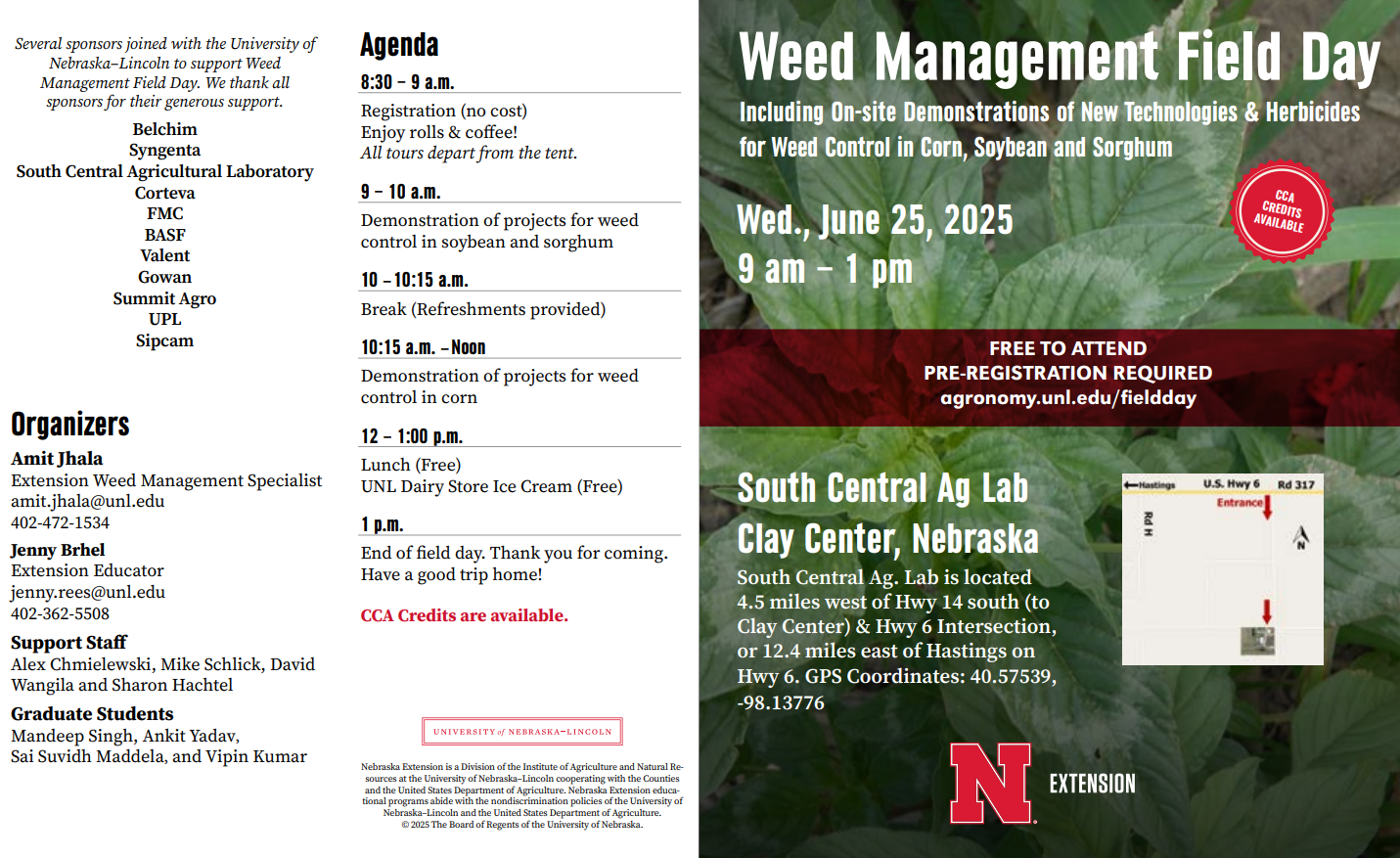
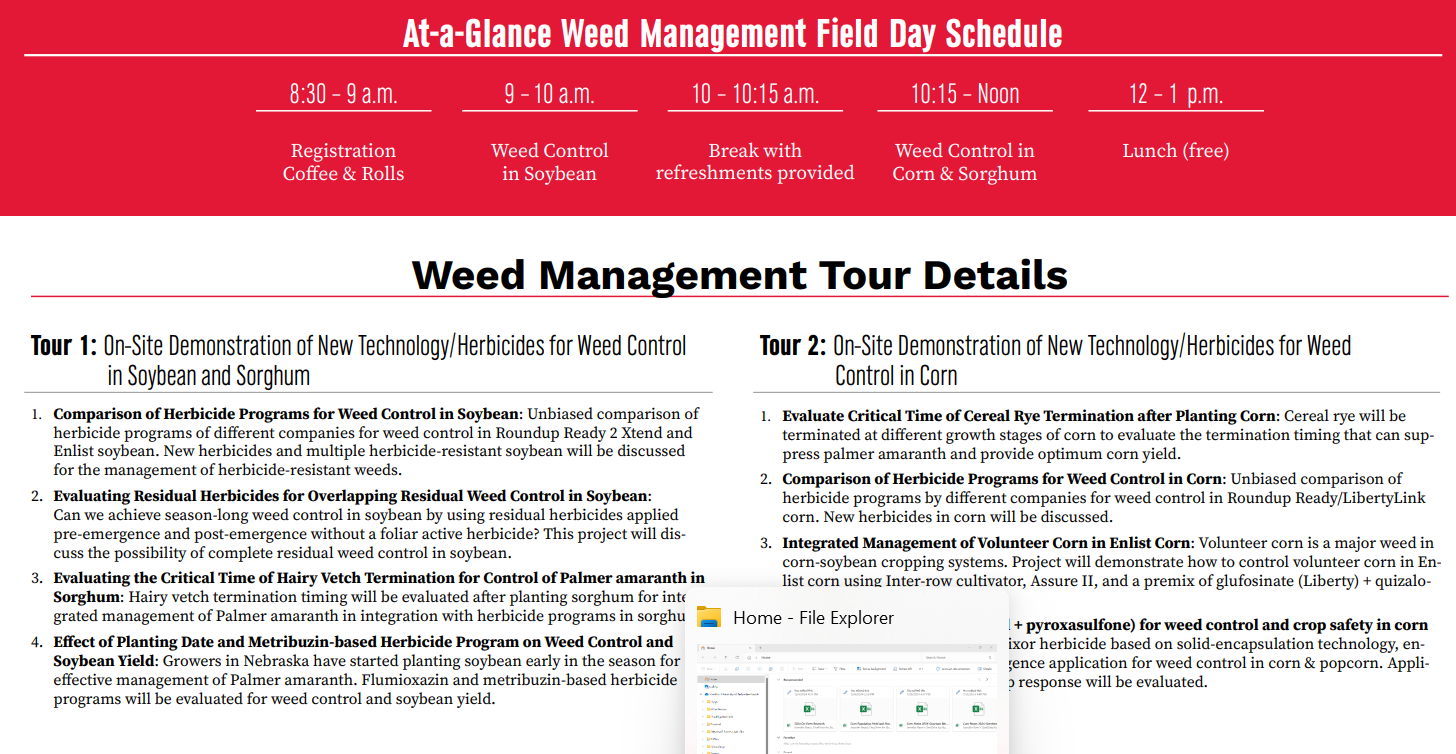
Reminder: June 25 Weed Management Field Day at UNL’s South Central Ag Lab near Clay Center, NE. Details at: https://go.unl.edu/qemk.

JenResources 6/8/25
Wheat Stem Maggot in Corn: Been seeing and hearing of some wheat stem maggot in corn for some fields where corn was planted green into rye. While I see this to a small extent each year, the last time we heard widespread reports was in 2017 (photos and info. at: https://jenreesources.com/2017/06/05/corn-concern-in-wheatrye-cover/). Symptoms include the corn whorls of plants looking wilted. Pulling out the whorl and carefully unfurling it may reveal the light-green maggot. Some key points: the maggot will move from dying rye or wheat into healthy corn. It will not move from plant to plant in corn unless the entire corn plant dies. What we have normally seen is the maggot kills the main stem of the corn plant; however, the plant produces tillers which then produce ears (not typical tiller ears). Because of that, replanting is not recommended. Our Extension Entomologists also don’t recommend spraying an insecticide once the maggots are in the whorls because they won’t have activity against the maggots inside the corn. There are no published thresholds for the maggot once it gets into the corn plant. Here’s an article UNL researchers published on timing and use of insecticides in cover crop/corn systems: https://www.mdpi.com/2075-4450/13/4/348.
Regen Ag Field Tours: A series of Regen Ag tours are available June-August. For now, I’ll share on two of them. On June 11, Doug and Traci Steffen are hosting a compost and covers tour on their farm near Crofton, NE from 1-3 p.m. RSVP at https://practicalfarmers.org/field-days.
On July 8 from 10 a.m.-Noon, Junior Pfanstiel is hosting a covers and corn tour on his farm near McLean, NE. Lunch is also included. Junior alternated 4 rows of corn with 4 rows of multi-species cover crops throughout his field with the goal of obtaining the same yield on fewer acres while also having grazing acres. Please RSVP to: (402) 254-6758.
Roundup: Homeowners, Please read the active ingredients on jugs before purchasing and using Roundup products. I’ve had several situations where homeowners have bought “Roundup” thinking it was the traditional “glyphosate”, but instead the active ingredient was “triclopyr”. The problem? They work differently. Glyphosate is a non-selective herbicide that doesn’t move in the soil or from plant to plant. It only works on the plant it comes in contact with. Triclopyr is a growth regulator herbicide (same family as 2,4-D and dicamba) that mostly affects shrubs, stump treatment, and broadleaf weeds. It has minimal activity on grasses. It has soil residual activity, on average for 30 days, but can be as much as nearly a year depending on how the microbial life break it down. It can volatilize (move off-target to other broadleaf plants after application) and it can be excreted through the roots of plants that were sprayed to nearby, non-sprayed plants impacting them.
Because of this, some people who have used Roundup containing triclopyr have reported issues with growing vegetables, flowers, their grape vines, raspberries, and around fruit trees. Triclopyr symptoms on plants looks like a “strapping” of leaves where they become bubbly and elongated, but it’s a different look than 2,4-D damage. Plants grown in soil treated with triclopyr may have kinked stems and appear stunted. More info. on triclopyr: https://purduelandscapereport.org/article/the-summer-of-triclopyr-mounting-evidence-for-off-target-damage/. A great resource explaining all the different “Roundup” products on the market: https://www.purdue.edu/fnr/extension/when-roundup-isnt-roundup-purdue-landscape-report/.


Early Corn Growth Stages
Determining Corn Growth Stage: Grateful for the rain showers! With the cooler weather, corn plants appear shorter due to shortened internodes but are further along in development than one may think. Correct growth staging of corn using the collar method is important. Some herbicides have application restrictions of V8 (8 leaves), particularly when certain adjuvants are used. These restrictions are in place to protect developing corn ears.
Be sure to growth stage plants correctly counting collars (leaves pull away from the main stem like a collar around one’s neck). Start counting leaves at the base of the plant with the smallest rounded-tip leaf with a collar as #1. From there count every leaf with a true collar. Leaves that are still wrapped in the whorl around the main stem without exposed leaf collars are not counted. Plants around V6 (6 leaves) start losing the lowest leaf.

The growing point emerges above ground between V5-V6. After that point, splitting the stalk becomes the most accurate way to determine plant growth stage when lower leaves are absent. To stage using this technique, dig a plant inside the field (past the endrows) without breaking the stalk. Carefully split the stalk down the middle through the root ball. At the base of the stalk is an inverted triangle that contains Nodes 1-4 (but they can’t be differentiated). Next look for the white area above that (about ½-3/4”) followed by the next visible band. The white area is the internode with the band being the 5th node (V5). There’s about an inch of internode between V5 and V6. After that, internode length is more dependent upon air temperature instead of soil temperature. Every leaf is attached to a node. Pull off the fully collared leaves and follow them back to where they break off at a specific node. Count the nodes on the stalk to the highest collared leaf that breaks off at a node to determine the growth stage. Once you determine the correct growth stage, you can consider painting a known leaf stage on certain plants (ex. paint the 6th leaf) and then count successive leaves from there when the field is checked. This avoids you having to split more stalks in the future.

Crop Share Survey: The economics team is asking landowners and tenants for input into a Crop Share Survey to better understand lease structure, shared expenses, and educational needs for those utilizing crop share leases in Nebraska: https://go.unl.edu/2025cropshare.
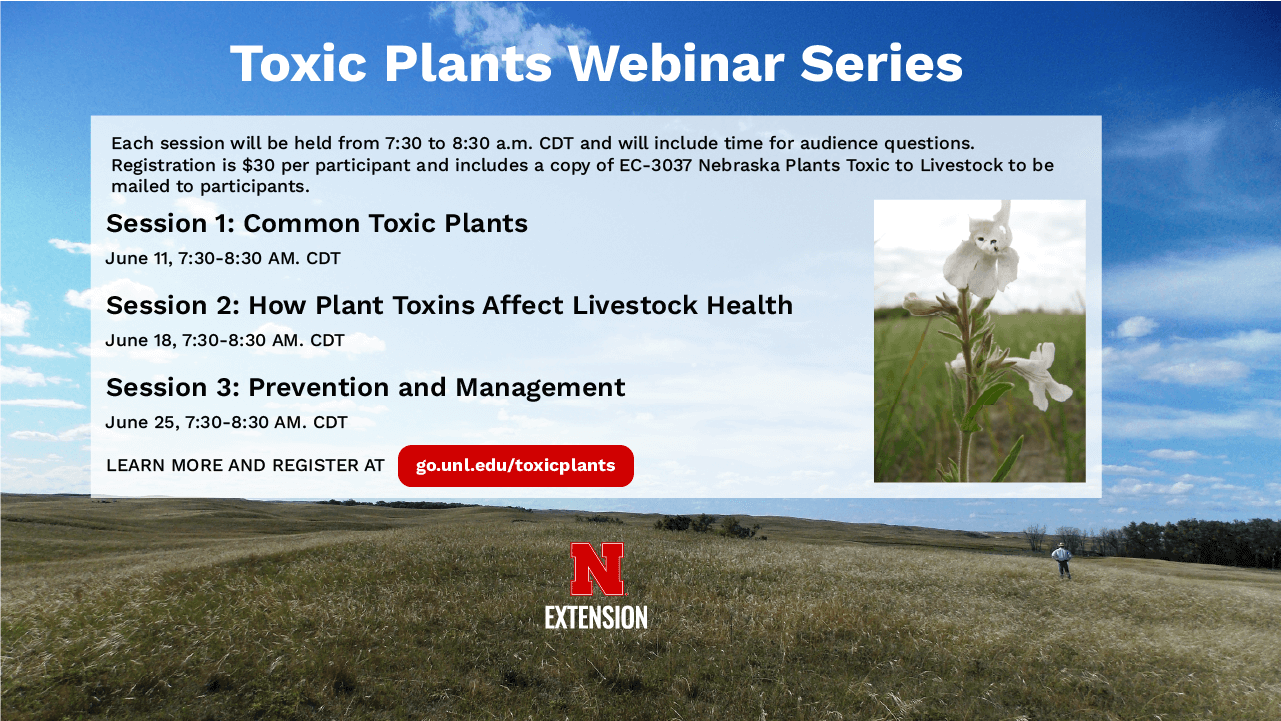
Toxic Plants Webinar Series regarding how the plants impact livestock health will be held June 11, 18, and 25 from 7:30-8:30 p.m. each evening. More info. and register at: go.unl.edu/toxicplants
June 17-18 Tractor Safety Training in York: This is an opportunity for youth to learn how to safely operate farm machinery and receive a farm husbandry certification if they’re 14-15 years old. For more information and to register, please visit: go.unmc.edu/tractor-safety-training
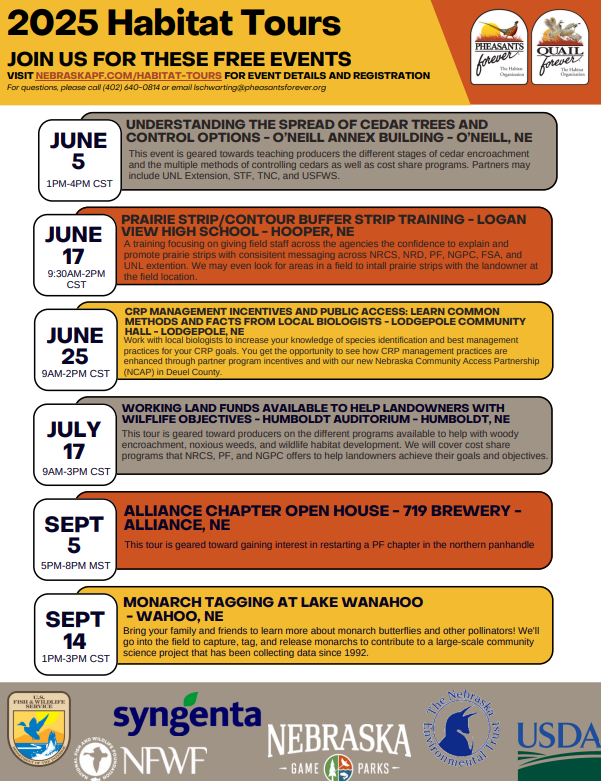
June 17th Prairie Strips Tour: Pheasants Forever is hosting a field day at Logan View School near Hooper in conjunction with UNL Extension from 9:30 AM to 2:30 PM, focused on prairie strips and their role in agricultural productivity and natural resource outcomes. RSVP at: nebraskapf.com/habitat-tours.
June 25 Weed Management Field Day will be held from 9 a.m.-1 p.m. (Reg. 8:30 a.m.) including lunch at UNL’s South Central Ag Lab near Clay Center. The event is free but pre-registration is needed for lunch count at: https://go.unl.edu/qemk. The event will demonstrate weed control options in soybean, corn, and sorghum. Management options that will be demonstrated include: various herbicide programs including ones with overlapping residual, timing of hairy vetch termination for weed control in sorghum, planting date and metribuzin based herbicide program in soybean, termination timing of cereal rye after corn planting, volunteer corn management in Enlist corn, and evaluating Surtain for weed control and crop safety in corn and popcorn.
Compost Extracts Part 2
With Memorial Day this weekend, grateful for all those who gave the ultimate sacrifice for our freedom and to the families left behind.
Last week, I shared some information on compost extracts. Curt Arens, editor of Nebraska Farmer magazine, responded sharing an article he wrote of a group in northeast NE working with compost extracts: https://www.farmprogress.com/soil-health/1113f1-1400-slideshow.
The “why” behind using compost extracts is to build a diversity of locally grown biology. The goal is to reduce synthetic nitrogen and other nutrients on their farms by allowing the biology to process the currently unavailable nutrients in the soils. The hope is to also increase microbial activity to naturally ward off insect and pathogen pests to reduce chemicals in the system.
The extraction process of removing the microbes from the compost has been done a number of ways. One farmer used 5 gallon buckets of compost, paint screens, water in a stock tank and an air hose to agitate. I’ve seen other farmers agitate and screen 5 gallon buckets of compost various ways into cleaned out plastic totes or cone bottom tanks. Extraction equipment can also be purchased. It does take time and is often made the morning or night before of planting and/or foliar application.
A tool I use more often is my microscope. Until a few years ago, I never thought to look at soil under my microscope; it takes practice and time. It’s opened my eyes to a whole new world of understanding and questions. With the compost extracts, I’ve seen great diversity: bacteria are common, but also fungal spores, amoebas (protists), and nematodes. I’ve learned by dunking seeds and looking at how chemical seed treatments interact and don’t interact with biology. I’ve looked at various products from a jug. I’ve dunked roots of young seedlings. It’s incredible how some biological products provide much life to the roots with microbial diversity while also viewing how chemical seed treatments did their job and the minimal associations with microbes formed. It’s a tool that I think more farmers would find helpful if time was scheduled to observe and learn.
The on-farm research studies with compost extracts were complicated studies including various nitrogen rates. So, I will share highlights and you can view the full reports beginning on page 162 of the 2024 on-farm research book.
Seward Study 1 (pg 171): In this 3-year study, the grower had two years of corn and one year of soybeans with a Check treatment, compost extract treatments, Pivot Bio (in the corn years) on the same strips. In 2022, there were no yield differences between the Check and the two compost extract + 106 lb N/ac nitrogen rates. In 2023, there were no yield differences for any of the treatments in spite higher and lower N rates. In 2024, there was no yield difference between the Check and Johnson Su compost extract areas. Encouraging is no lower yield with the reduced N and compost extracts.
York Study 2 (pg 167): In this 2-year study, there were no yield differences between any treatments in 2023 in spite of a 20% reduced N rate. The grower questioned if he was going low enough with N, and in 2024, did a nitrogen ramp study with compost extract. There were no differences between the 190 lb N/ac full N rate, 120 lb N/ac reduced N rate, and 120 lb N/ac + compost extract. Analyzing just the 120 lb N/ac rate vs. 120 lb N/ac + compost extract resulted in the a significant yield advantage to the compost extract, which was encouraging to the grower.
Lancaster Study 3 (163): In this non-irrigated study, nitrogen was the primary limiting factor amongst the treatments. The conclusion was biology needs moisture in the midst of drought.
Grateful for all who gave the ultimate sacrifice for our freedom!
Compost Extracts Part 1
During the winter months, farmers often called asking if we had research on X biological product. I heard a few of them deem 2025 as “the year of the biologicals” with how often different products would show up in ads and be discussed in meetings. It seems like the majority of companies are adding some type of biological or biostimulant to their product line. Why? I think mostly because there may come a day when we have to rely less on chemicals for ag production. We also have an increasing number of growers who are trying to reduce the amount of chemicals and synthetic fertilizer they use. Maybe there’s something to “it feels right or good” as well.
While we don’t have research on the majority of the products on the market, we are gaining more on-farm research results in homemade biologicals called “compost extracts”. If you search for this term, you will find the terms “compost extracts” and “compost teas” which are often mentioned for gardening settings. In recent years, some farmers seeking a regenerative ag path are trying this on a commercial scale for ag as well. I’ve been following Jay Young for years (YoungRedAngus on YouTube) if you want to learn more about what he’s doing.
Compost is defined by Merrium-Webster as: “a mixture that consists largely of decayed organic matter and is used for fertilizing and conditioning land”. There’s many different methods of making compost and various materials can be used. Gardeners may use materials like vegetable scraps, coffee grounds, egg shells, leaves and grass clippings. Farmers may use materials like manure, straw and hay, deceased animals, leaves, and wood chips. For ag, you may hear terms such as turned compost, windrow compost, Johnson-Su compost…there’s a number of methods that farmers are using to make compost on their farms.
Compost is known to improve soil by adding organic material, nutrients and micronutrients, soil microbes and earthworms. Hundreds to a thousand pounds of compost would be added to ag ground to improve it. Most farmers don’t have that amount nor access to that amount of material.
Thus, the interest in “compost extracts” and “compost teas” in which a small amount of compost (2 lb/ac) is used. The compost is added to water in a tank with a way to agitate it to allow the nutrients and microbes to move into the muddy water solution. For compost extracts, the solution is agitated for 20 minutes to 2 hours (depending on the farmer’s system), filtered, then the liquid is pumped to a tank for the farmer to apply to the field.
We’ve had 7 on-farm research studies in this part of the state using compost extracts as seed treatments, applied in furrow or via foliar application thus far. We kept these studies (other than seed treatment) on the same strips over time. The growers have appreciated “growing their own biological diversity” with costs ranging from $1-6/ac, depending on what else is added. Their desire is to use the extracts to lower nitrogen and other fertilizer use in addition to reducing chemical apps on their farms.
I only have room to share on the compost extract seed treatment for this column. The grower has used compost extracts for years and chose to do a seed treatment study in 2024. The corn had a commercial ShieldCoat seed treatment. He compared that to the ShieldCoat + compost extract seed treatment. This field was impacted by greensnap in July and also Fusarium crown rot. The compost extract seed treatment (215 bu/ac) statistically out-yielded the Check (206 bu/ac). The cost of the compost extract was estimated at $1/ac. There will be another compost extract seed treatment study in 2025. To determine the quality of his compost, the grower sent it in for DNA analysis from Biome Makers and it was microscopically analyzed by Living Soil Compost Lab LLC. This study can be viewed in more detail on page 167 of the 2024 On-Farm Research Results Book.


 JenResources