Watering in Winter
Wow-what unbelievable weather we’ve had! The warm, dry weather has been great for our cattle producers but hopefully we get some spring rains to recharge our soil profile for the crops and pastures. Today feels more like winter!
With the warm weather last weekend, I spent some time watering shrubs and evergreen trees since I planted several shrubs this fall and it’s been dry. If feasible, it is fine to water during winter, particularly if you have fall-planted trees, shrubs, or perennials or evergreens in windy locations or along the south sides of homes. If established plants were well watered during summer and fall, most should be fine since they are dormant and temperatures are cool. If we do not get much winter moisture, early spring watering will be important.
Kelly Feehan, UNL Extension Educator, says that some precautions are needed when watering during winter. She says to only water when the soil is not frozen and when air temperatures are around 45 degrees Fahrenheit or higher. Water early enough in the day for water to soak into the soil so it does not pool and freeze around plants overnight. Ice forming on or around plant crowns can cause damage. If you decide to water, keep in mind plants are dormant and not using much, if any, water so while it is a good idea to moisten the soil six to eight inches deep, heavy or frequent watering is not needed.
The roots of plants are not as hardy as the above ground portions. If there is an open winter with little snow cover and temperatures turn quite cold, roots can be killed by cold temperatures. Cracks in soil allow colder air to penetrate and increase this risk. Moist soils do not develop cracks and remain warmer than dry soils. Ultimately, we’ll just have to see what the remainder of the winter and the spring will hold.
Fall herbicides & Grazing Corn Stalks
With the increasing problem of controlling weeds such as marestail (horseweed), UNL has recommended using fall applied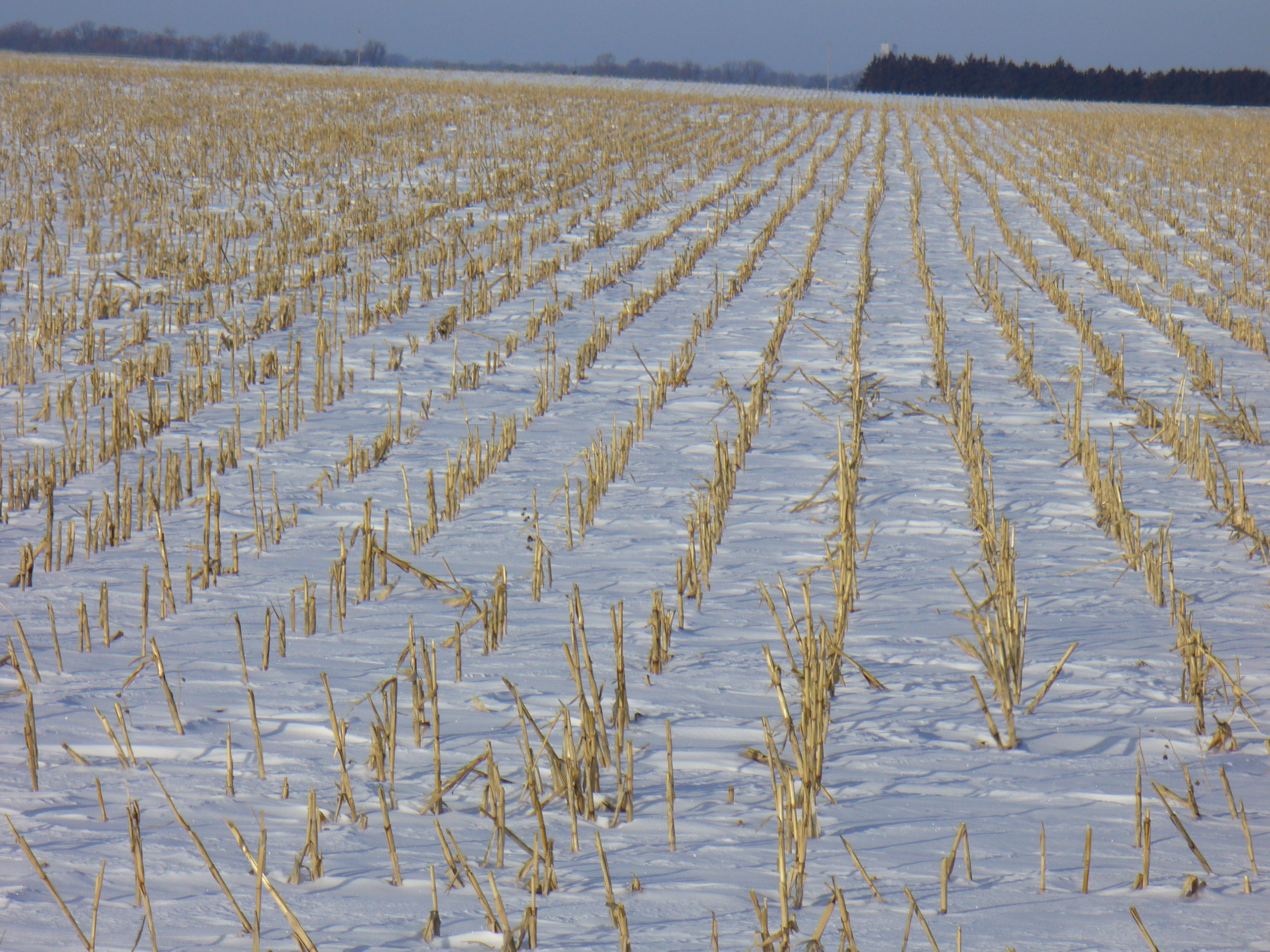 herbicides to help control this in addition to winter annual weeds. This practice usually does help with weed control, but I hadn’t thought about the considerations when grazing corn stalks until I received a recent question on it. The farmer wanted to see if it was safe for his cattle to graze corn stalks after a fall herbicide had been applied. The label wasn’t clear so he gave me a call.
I won’t provide information for the various herbicides that can be applied in the fall, but I will recommend that if you are planning on having your cattle graze stalks, that you check to see if a fall herbicide was applied and check the pesticide label to determine if there are any grazing restrictions with that pesticide.
If the label doesn’t specify any restrictions, then it should be ok. If you want to be on the safe side, a rule of thumb many chemical reps use is to use the pre-harvest interval for the amount of time to wait before grazing stalks. Some labels will say that residue should not be grazed or baled and fed to livestock. Sometimes studies were actually conducted to know there is a safety concern. In other cases, the chemical company may not choose to conduct all the studies the EPA required for labeling due to high costs. If that’s the case, the EPA requires the strongest restrictive language be placed on the label. Regardless, if it says there’s a grazing restriction on the label, the label needs to be followed. Your cattle may not be affected by grazing stalks where a chemical with a grazing restriction is on the label, but there may be other concerns such as problems with the chemical affecting the calf or being retained in the cow’s milk.
I’m still recommending utilizing our corn stalks by grazing and utilizing fall-applied herbicides for weed control. I just also recommend you check the pesticide labels on fields where a fall herbicide has been applied to determine any grazing restrictions or safety concerns.
Farm Research
Every winter, producers in our Greater Quad County on-farm research group meet to discuss the past year’s results and to 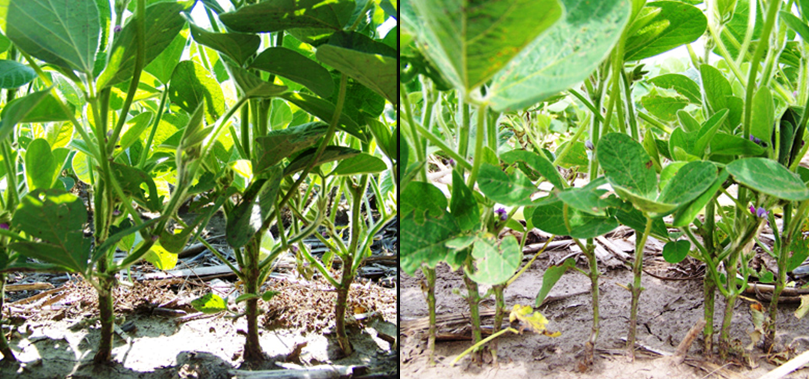 brainstorm which projects they wish to test the following year. Very popular studies from the past few years include soybean planting rates and planting dates and corn planting rate studies. These studies are randomized and replicated and conducted on full-length farmers’ fields.
Every year we share on-farm research results with our clientele. These results are often the highlight of many programs as the research is being conducted on your peers’ farms. Whether during pesticide trainings, crop production clinics, Extension news columns, Market Journal, or the Nebraska Farmer, these results have been presented and you as our clientele have preliminarily showed that you were interested in changing your farming practices as a result of what you learned.
Now, we’d like to see how many of you did change your practices as a result of this information. Please go to: http://www.surveymonkey.com/s/TPCJCGF and fill out a very short survey to let us know what you have changed in your farming operation. Your comments will help us in estimating the value of these on-farm research efforts to you and to our farmers who are faithfully conducting these studies. You can also find the direct link off the http://clay.unl.edu home page if you’d rather just click on it there. Please do take a few minutes to fill out this survey for us-it’s much appreciated!
Also, anyone interested in conducting on-farm research is welcome to attend our Greater Quad Co. results meeting on December 20 at 1:00 p.m. at the 4-H Building in York. We will also have some UNL researchers share results with the group. Please let me know if you plan to attend!
Protecting Shrubs/Trees from Rabbits
Hope you all had a wonderful Thanksgiving with family and friends! As I looked into my backyard this weekend, I realized I needed to protect the new shrubs I planted from rabbit damage this winter. Kelly Feehan, Extension Educator in Platte County shares some good information on how to do this. She says trees are at particular risk when they are young and the bark is thin. Feeding by rabbits on tree trunks can girdle and kill a tree; or stress a tree and increase susceptibility to insect borers, disease and decay. Ideally, place at least a two foot tall cylinder of one inch mesh poultry netting (chicken wire) or hardware cloth around tree trunks. A cylinder of black plastic drain tile, cut to length and slit down one side also works well.
Most multi-stemmed shrubs will survive having the majority of their stems removed. However, desirable bud, flower and/or fruit development may be harmed. While rabbits will nibble the tips of shrub stems growing through poultry netting or above snow, a two foot high cylinder still provides helpful protection.
Taste and odor repellants are another method used on landscape trees and shrubs. They can be effective if rabbit populations are not too high and when rabbits have another source of food to turn to. The effectiveness of any repellent will be reduced by time, wind and moisture. Repellants need to be reapplied according to label directions.
Taste repellents make plants less tasty for rabbits and are typically applied directly to plants. Examples are those containing capsaicin or hot pepper extract such as Get Away™ or Scoot™. Their effectiveness tends to be short-lived and requires reapplication. Odor repellents keep rabbits away from an area by fear or foul smell. They are typically applied to soil in the perimeter area and/or on plant foliage to repel rabbits. Check the label for proper application rate, method and site before applying any repellent. Most cannot be used on plants used for human consumption. A wide variety of active ingredients are used for odor repellants, including: ammonium or potassium salts of soaps (M-pede™; RoPel™), eggs (DeFence®), zinc dimethyldithiocarbamate (Earl May® Rabbit Scat), predator urine (Shake-Away™), or garlic (Sweeny’s® Deer & Rabbit Repellent ). Naphthalene is another ingredient in commercial repellents (Dr. T’s™, Enoz Skat™) but the alternative chemical, paradichlorobenzene (found in many moth balls) is illegal for use outdoors. Some concern also exists over the safety of napthalene products. There are no toxicants (poisons) registered for rabbits in Nebraska.
It is not recommended to provide an alternate source of food for rabbits to try and reduce damage to desirable plants. Providing other food, such as clover or alfalfa, may simply attract more rabbits and lead to increased damage. Rabbit numbers may be reduced by removing brush piles and tall weeds, particularly those located near new windbreaks. Mow to remove vegetation within three to four feet of recently planted trees and shrubs. Although rabbits eat most plants, especially when food is in short supply; a partial list of plants most often eaten by rabbits can be found in the Managing Rabbit Damage Nebguide available at local Extension offices or at http://www.ianrpubs.unl.edu/sendIt/g2019.pdf.
If a plant is killed by rabbit feeding, consider replacing it with a plant on this list. Keep this in mind though; rabbits do not read our lists!
Thanksgiving Reflections
Thanksgiving is upon us and every day I’m reminded I have so much for which to be thankful! It seems like there’s such a rush to go from Halloween to Christmas and it’s sad to me that Thanksgiving seems to be lost in the shuffle. Today as I gather with my family, I’m thankful for so many things God has blessed me with: salvation, my wonderful family, all our men and women serving overseas, my home/career/dogs, wonderful food and our farmers who grow it, so many things! May you have a blessed 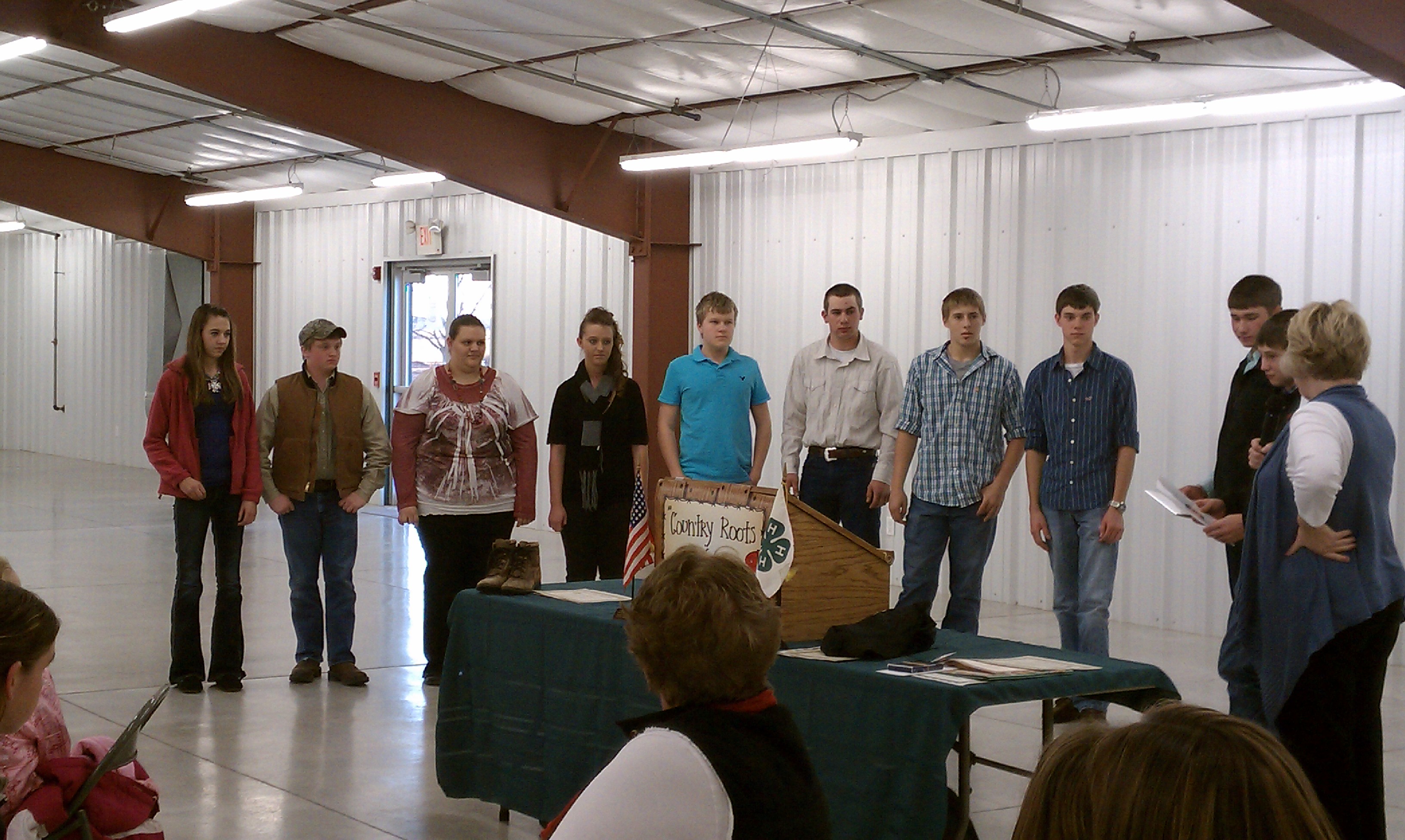 Thanksgiving reflecting on the blessings in your life as well!
Sunday night was our 4-H Achievement program. Watching the youth receive their awards, I was thankful for the parents, grandparents, leaders, and volunteers who helped those youth achieve success in their projects. I’m thankful to work in a county with such wonderful people! Every organization or board our office works with understands that the 4-H program and fair are about the youth-developing life skills and successful young people for the future. I’m so thankful for these relationships and the fun we all have at 4-H activities and the fair! I’m also thankful for all the sponsors of our 4-H program and the youth and parents appreciate you as well! It was a great night with a great turnout and a nice conclusion to the 2011 4-H year.
Speaking of being thankful, IANR released a special feature entitled “Feeding the Future”. It shares a Thanksgiving message from Dr. Ronnie Green and how IANR’s research, teaching, and extension efforts are helping to ensure success in feeding the future throughout Nebraska and around the globe. Check it out here: http://www.unl.edu/ucomm/ucomm/special/20111115/
Upcoming Farming Workshops
Let the season of Workshops begin! Hope you are able to attend!
***Nov 30-Farmers and Ranchers College with Dr. David Kohl: “Global Economic Impacts on the Farm and Ranch” will be the topic of Dr. Kohl’s presentation on November 30th from 1:00-4:00 p.m. at the Bruning Opera House in Bruning, NE. There is no fee.
***Nov. 30-Specialty Crops Grants Available: The U.S. Department of Agriculture (USDA) provided a grant to the Nebraska Department of Agriculture (NDA) to administer a project that is designed to provide small, competitive grants, in amounts of up to $4,600, to a limited number of Nebraska specialty crop growers for the sole purpose of extending the growing season for specialty crops. Growers who want to be considered as a potential project applicant for the 2012 year can find more info. and complete the application by Nov. 30th at: http://www.agr.ne.gov/promotion/2011_specialty_crop_block_grant_program.pdf
Farmers wishing to apply and needing assistance with the application process and writing their proposal are welcome to contact NSAS through healthyfarms@gmail.com or the Nebraska Cooperative Development Center with Elaine Cranford at, ecranford2@unlnotes.unl.edu
***Dec. 2-Symposium to Feature Fruit and Vegetable Production, Marketing Strategies: Fruit and vegetable growers are invited to attend the Tri-State Fruit and Vegetable Growers Symposium Dec. 2 from noon to 5:15 p.m. at Stoney Creek Inn, 300 Third Street, in Sioux City, Iowa. Featured speakers include South Dakota State University Professor of Forestry John Ball with an overview of specialty crops and Tim Vala of Vala’s Pumpkin Patch near Omaha providing marketing tips. Growers can choose from a variety of fruit/vegetable production and marketing sessions led by university extension horticulture specialists and experienced local growers. Topics include fruit trees, aronia berries, grapes, ethnic vegetable varieties, organic insect and pest control, and community supported agriculture strategies. The symposium is planned in partnership with University of Nebraska-Lincoln Extension, Iowa State University Extension and Outreach and South Dakota State University Extension. Cost is $25 for the first person and $15 for the second person participating from the same farm or business until Nov. 23. Cost at the door is $30. For more information or to register call ISU Extension in Woodbury County at 712-276-2157 or visit http://www.flavorsofnorthwestiowa.org.
***Dec. 3-Explore Farming Class Planned: Do you have dreams of self-sufficiency and living off the land? Are you a budding entrepreneur? If so, you may wish to attend the free Explore Farming Class at UNL Extension in Lancaster County on December 3, 2011 from 10 – noon. This two-hour seminar will help you think through the resources, skills, and time you will need to launch a successful farm business. Local farmers and participants in the Community CROPS Growing Farmers Training Program will be on hand to answer questions. Information about various training opportunities in the 2012 season will also be available. The class is free, but you must register to attend. To register, simply send your name and phone number to warren@communitycrops.org. For more information, check out this website: http://www.communitycrops.org/
***Dec. 5-Summit on the Proposed Revised 2011 P-Index: A Dec. 5 University of Nebraska-Lincoln Extension Animal Manure Management team workshop will help those who work closely with livestock operations and their nutrient management plans. The “P-Index Summit” will be at the Nielsen Community Center, 200 Anna Stalp Ave. in West Point, Neb. The program will be from 9 a.m.-3 p.m. Central Time. Topics include: the science and history of the P-Index, discussion on proposed revisions, case studies illustrating the differences between the 2007 and 2011 versions and discussion of livestock environmental issues of interest. CCA continuing education units will be available.
For more information and to register, contact Leslie Johnson at 402-584-3818, email ljohnson13@unl.edu. Registration is $20 per participant if sent with your registration or $25 at the door. The use of a computer with Microsoft Excel is necessary; please bring your laptop as there will only be a few extra computers. To save time the day of the event, old and new versions can be downloaded at http://go.unl.edu/847 These workshops are sponsored by the UNL Extension AMM team which is dedicated to helping livestock and crop producers better use the state’s manure resources for agronomic and environmental benefits. For additional information and other resources for managing manure nutrients, visit http://manure.unl.edu.
***Dec. 6-Landlord/Tenant lease workshop: I can’t stress enough for you to consider attending this workshop and it is recommended that the landlord and tenant attend together! Cash Rental rates for farmland has nearly doubled in the past 6 years. Volatility in the grain markets is wilder than ever. These and other land lease issues will be discussed Tuesday, Dec. 6th at the Adams Co. Fairgrounds in Hastings. The program begins with registration at 5:00 p.m. and concludes at 9:00 p.m. The main purpose of these workshops is to help with establishing and maintaining positive farm leasing relationships. A meal and handouts will be provided. The workshop is free to participants because it is sponsored by the Nebraska Soybean Board. Participation is limited, thus you will need to pre-register to reserve your spot. To pre-register, please contact the UNL Extension Office in Adams County at 402-461-7209.
***Dec. 9-10-Returning to the farm: If you are considering a family member returning to the farm in the future, please consider attending this returning to the farm program! It will be held Dec. 9-10 and Jan. 6-7 the Holiday Inn Downtown in Lincoln and it is required that you attend both weekends and that all members of the farm management team attend. Bringing a young person into a farm/ranch operation presents challenges. However, the business operation can accomplish numerous goals by helping the young person get a solid start in the operation, keeping the farm/ranch in the family, and ensuring a comfortable retirement for all involved. Blending a variety of talents and personalities into one farming or ranching operation takes planning, communication, and management. The Returning to the Farm program is designed to assist families and operations in developing a financial plan and successful working arrangements that will meet the needs of multiple families. For more information call 800-472-1742 or check out: http://agecon.unl.edu/rtf.
2011 Corn Yield Predictions
Harvest is nearly complete! In early August, I shared a post regarding in-season yield predictions from the Hybrid Maize model. At that time, I showed how 2011 predicted yields had been tracking with the 30 year long term average yields up until early August. At that point, the 2011 predicted yields took a steep drop due to high night time temperatures. High night time temperatures don’t allow for the corn plant to shut down at night. The plant engages in respiration, essentially burning sugars that should be converted into yield.
Some interesting things happened with the weather this year to make yields more favorable than what once was predicted. While silking to beginning dent occurred in 20 days or less in several Nebraska fields this year, the weather cooled off during the filling process. Some fields stayed at ¼ starch for nearly three weeks. Looking at fields, kernels continued to get deeper, heavier, and expand to help cover some of the pollination problems observed earlier in the year. During this time, yield predictions from the Hybrid Maize model showed that yields had the potential of returning close to the long-term median yields and it was interesting watching the trendlines move back up toward normal. This seemed to be truer for 113 day hybrids vs. 110 day hybrids.
For example, a 110 day hybrid planted April 15 at 32,000 seeds/acre showed a predicted yield of 227 bu/acre compared to 240 bu/acre long-term median. But a 113 day hybrid planted the same day showed a predicted yield of 244 bu/acre compared to a 248 bu/acre long term median yield.
So what happened in your fields? While yields have been decent, on average, I’m not seeing the trend towards the long-term median yields in our area in general. Dryland yields I think have been better than expected but irrigated yields potentially not as good as anticipated by many.  Hybrid Maize predicts yields based on perfect conditions-nothing limiting and no pest/disease issues. In many fields, corn was planted then sat in cool, wet soils. We had stand losses due to Pythium in some fields or due to loose residue that was piled in areas of fields after heavy rains. We also had varying degrees of pollination problems and the high night temperature stresses which reduced yields. Regardless, yields are still very good in spite of another interesting growing season! Please share what you’ve been seeing for yields in your fields!
Table 1: Hybrid Maize 2011 Predictions from Simulations (through Oct. 30, 2011)
Date RM Population Long-Term Median Yield 2011 Predicted Yield
Apr. 15 110dy 32,000 240 bu/acre 227 bu/acre
Apr. 15 113 dy 32,000 248 bu/acre 244 bu/acre
May 1 110dy 32,000 241 bu/acre 234 bu/acre
May 1 113dy 32,000 260 bu/acre 245 bu/acre
May 10 110dy 32,000 244 bu/acre 235 bu/acre
May 10 113dy 32,000 258 bu/acre 258 bu/acre
Visit from Chinese Agronomists
Last week I had a neat experience in speaking to a group of agronomists from China about Extension. They are in the U.S. for 10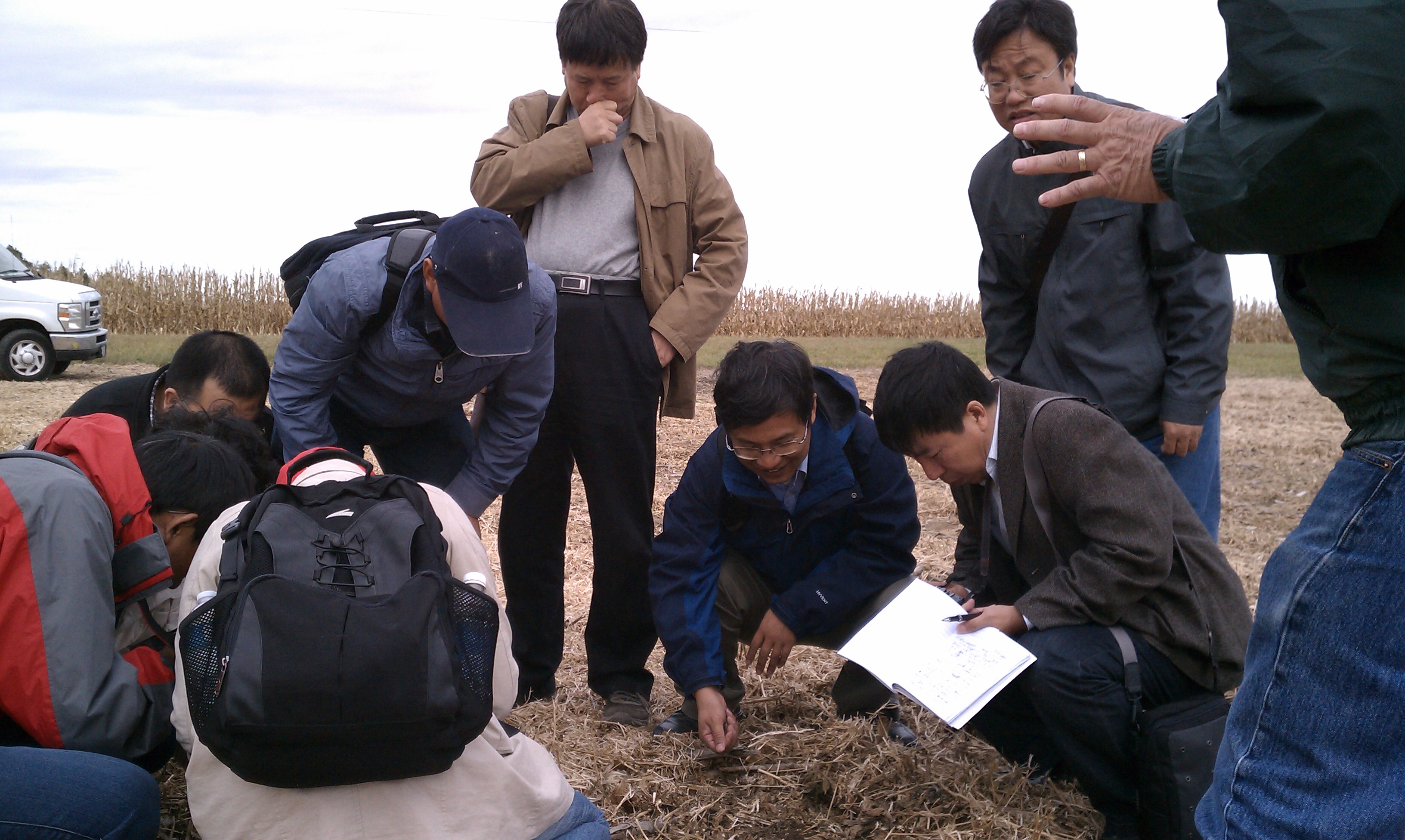 days and are interested in high yield corn production. I scrapped the presentation I had been asked to present as they had so many questions about our Extension system. So we started in a discussion…how do we set up a field day/meeting in Extension? How do we let farmers know about them? How do we decide what to talk about? Thus ensued a discussion of farming in China vs. farming in Nebraska. In China, many of the fields are hand-planted and less than 10% of their farmers have internet connectivity. In Nebraska, we’re seeing the trend of larger equipment and the majority of our farmers are connected to the internet. I suggested that they start with field days and meetings which shared the research-based information they are generating at their research sites. Advertise to farmers via word of mouth, radio, newspapers, direct mailings, or brochures/flyers left at common gathering spots. Once they have the people at the meetings, they can follow up with a survey to determine needs assessment for what the farmers would like to know more about in the future to determine future meeting topics.
Extension in Nebraska has greatly changed in my 7 years regarding how we share information. We are challenged today to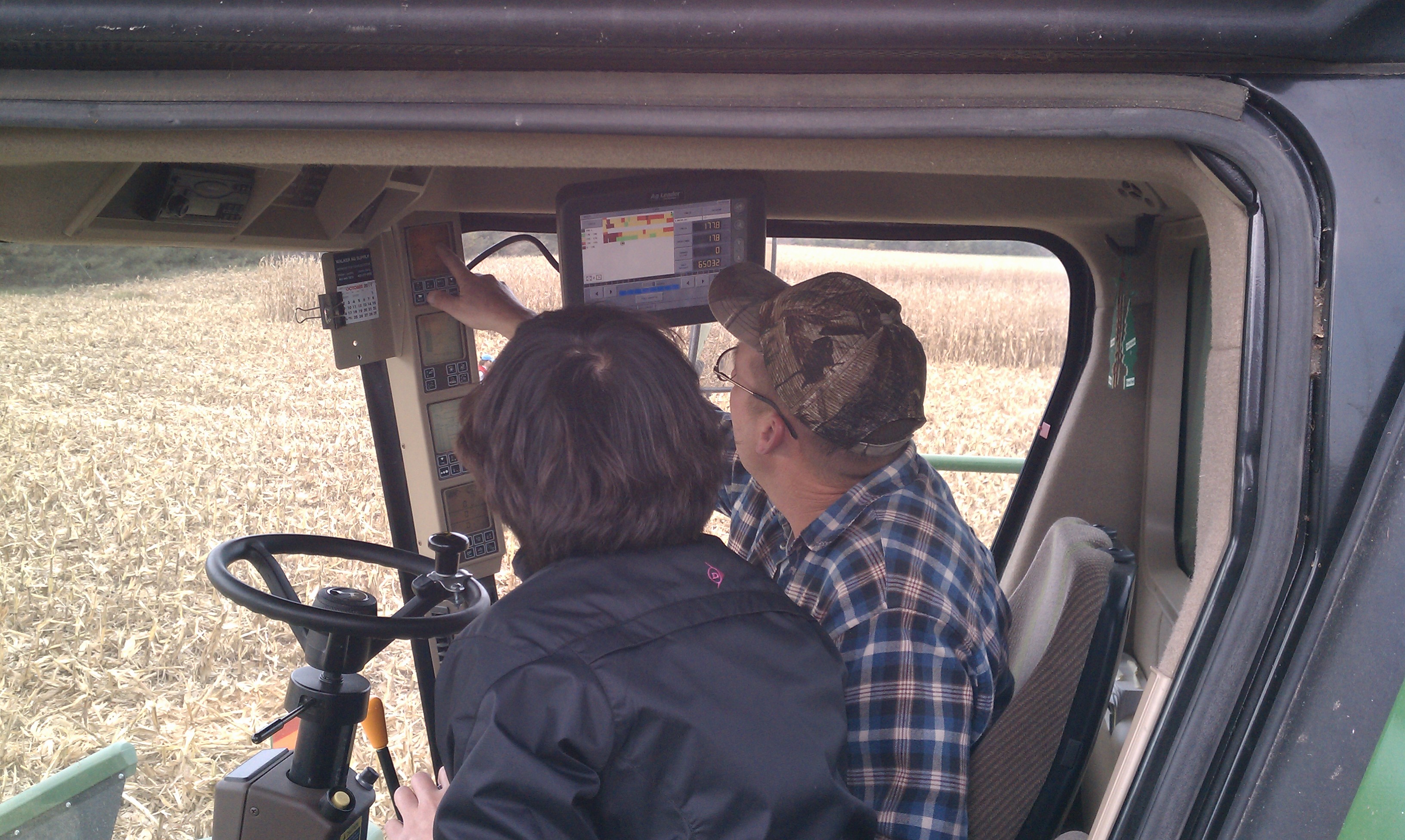 reach a broad audience who on one hand primarily finds information from newspapers to the other hand, primarily from the Web-and everywhere in between! This year, I’ve worked at trying to share the same information 7 different ways to reach a broader audience. I showed the agronomists from China the impact of the Web and social media in sharing information in Nebraska. They were amazed!
We then went on a tour where they were able to view harvest. It was fascinating watching them excitedly discuss and question no-till farming as they were digging through residue and in the soil. They also predicted corn yields by measuring and counting and comparing that to the combine yield monitor. Some enjoyed getting into the combines and learning about the precision ag tools available to farmers. It was a neat experience and I learned much from our visitors as well!

National 4-H Week and Reflections
Happy National 4-H Week! Thank you to all the volunteers and supporters that make 4-H in our area counties and the State a success; we wouldn’t have the 4-H program without numerous volunteers such as many of you reading this!
A few weeks ago, I was attempting to explain not only Extension but 4-H to a group of people who didn’t understand either. A survey found that nearly 96% of people recognize the name 4-H but only 35% recognize Extension. That’s why at our County fair, I put up the large red flags to help people make the connection between Extension and 4-H. I think many in our county are familiar that 4-H has to do something with the fair, but it’s so much more than that! Essentially 4-H is a youth development program coordinated by land grant universities such as UNL through the Cooperative Extension System. The National 4-H site at http://4h.org states that “4-H fosters an innovative, “learn by doing” approach with proven results.” A study conducted by Tufts University found that youth involved with 4-H are nearly two times more likely to get better grades in school, are nearly two times more likely to go to college, 41% less likely to engage in risky behaviors, and 25% more likely to positively contribute to their families and communities.
The 4-H pledge explains what the 4 H’s stand for including pledging our:
*Heads to clearer thinking
*Hearts to greater loyalty
*Hands to larger service
*Health to better living….for our clubs, communities, country, and world.
I remember reciting this pledge at every monthly meeting at a 4-Her. I’m so thankful for the numerous volunteers-particularly the amount of time our club leader invested into the youth in our club-teaching us to sew and the importance of straight seems, cook the 4-H way, model sewn garments, importance of volunteering and community service, and teaching us parliamentary procedure by empowering us as youth to run and conduct meetings. I’m thankful for volunteers who spent each week during the summer teaching me about weeds, trees, and horticulture ID….skills I use nearly every day of my Extension career and as a homeowner. While we often worked on them last minute and weren’t thrilled about doing them, I’m thankful my mom required us to do 4-H presentations each year to develop public speaking skills. I’m thankful my grandma taught me how to make homemade bread and rolls and that so many volunteers worked with me on my 4-H Jr. Leader projects to help me develop leadership skills. I’m also thankful for the Extension staff at the office while I was growing up-they were always so friendly and helpful and modeled the way for me in my career today.
Thinking about my 4-H experiences reminds me that you are encouraged by the Nebraska 4-H Foundation to share your 4-H story! Some have asked me what this means. Essentially, any of us who have went through the 4-H program or volunteered with the 4-H program has a story to tell about how 4-H has benefited us or how we’ve seen the program benefit others. It may be a funny story or a serious one. The best part is that it’s YOUR story and the 4-H Foundation wants to hear them to help with promoting 4-H! The deadline is November 30th and you can find more information at: http://www.ne4hfoundation.org. Thanks again to everyone involved with helping or supporting the 4-H program and to the 1 in every 3 Nebraska youth currently involved with the 4-H program!
Water Jamboree & Removing Irrigation Scheduling Equipment
Last week was fun and somewhat exhausting teaching with my colleagues in Extension and several area Agencies at the Water Jamboree at Liberty Cove in Lawrence. Water Jamboree started over 15 years ago to teach 5th and 6th graders about the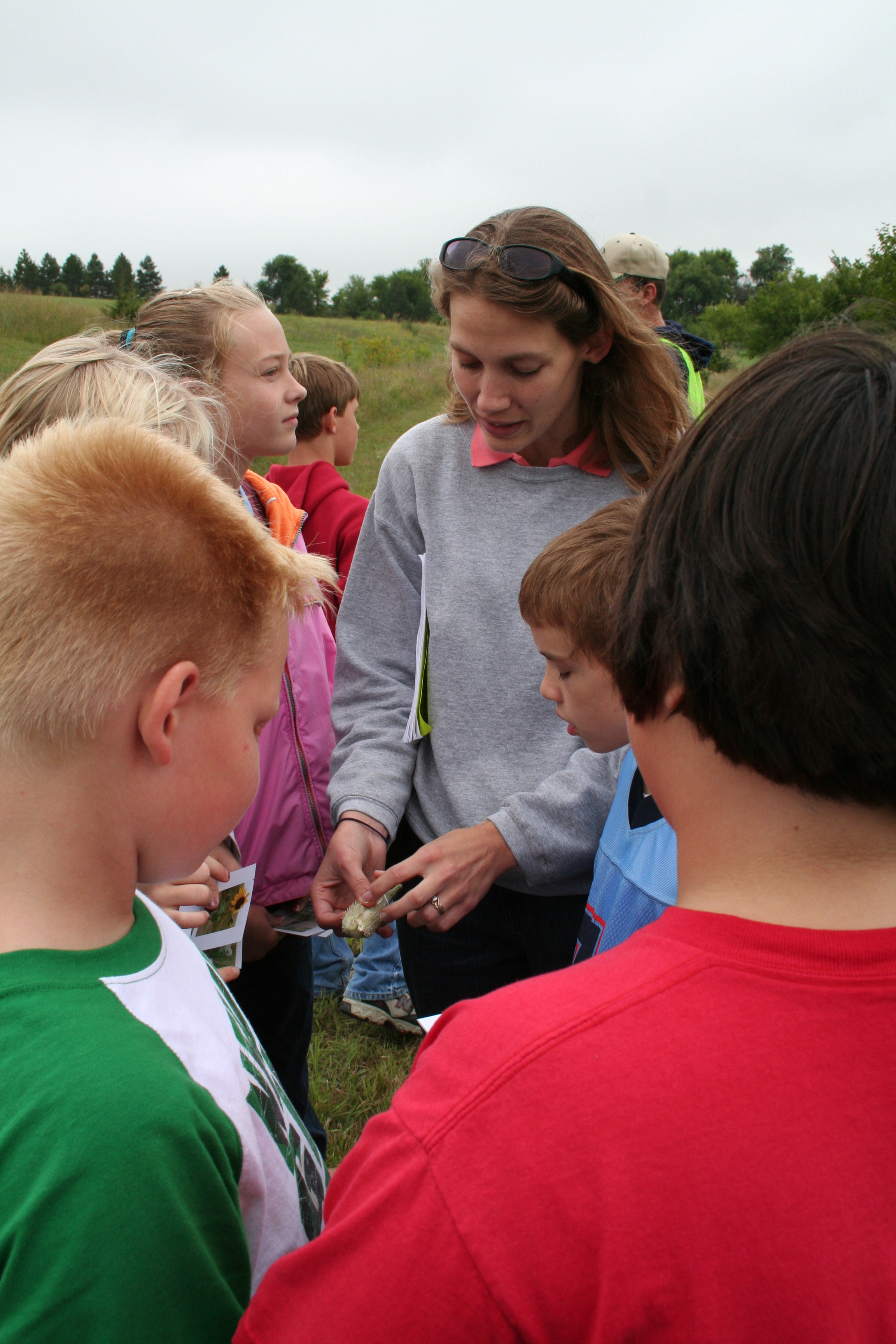 importance of water and water-related subjects. Nearly 800 youth learned about where water goes when it goes down the storm drain, about irrigation and siphon tubes, the aquifer, life inside and outside of the lake, mosquitoes, water movement, and much more. Holli Weber and I utilized the nature trails through the tallgrass prairie to teach a session on life outside the lake focusing on the importance of plants as buffers to filter chemicals and allowing youth to run through the trails doing a photo ID scavenger hunt of the area plants (also to burn off energy!). While I’ve done this session the past 5 years, this year I took time to show the youth specific characteristics to ID grasses. God created each plant unique and I was showing them how Indiangrass has rabbit ears when you pull the leaves back from the stem…or the M/W on the smooth brome leaves. It was fun watching the youths’ faces light up and then try to find these and other characteristics for themselves while on the trails. It was a great day, although I really don’t know how teachers do it day in and out! I wish I could’ve attended something like this when I was young! A special thanks goes to Marlene Faimon at the Little Blue NRD for coordinating this each year.
After Water Jamboree, I headed to my research plot at Lawrence. It’s been a trying year of coon damage and most recently a skunk inside our traps instead of the coons (and it still smelled like skunk out there!). Anyway, I was pulling watermark sensors and the 1st and 2nd foot ones were really rough but the 3rd and 4th feet came out easily. So just a reminder, when pulling watermark sensors, clamp a vice grip below the cap, twist and pull up. I’ve taken out hundreds of these and have only pulled apart four. If your sensor won’t pull up, simply take a spade and dig around the sensor and also bring a jug of water with you. This is the first time I’ve had to dig sensors out but the water really helped as I got it to run down the tube, it eventually loosened at the base to pull out easily without removing the sensor from the pvc pipe. Sensors can be gently washed with a hose or in a bucket of water using your fingers to gently clean them-don’t use a brush. Allow to dry and store in your shed, garage, basement, etc. Also a reminder (although I should’ve done this during the cold of Husker Harvest Days), to get your ET gages inside. Pour out the water and empty the ceramic top by pulling out the tube and then store that inside where it won’t freeze during the winter.


 JenResources