Blog Archives
National 4-H Week and Reflections
Happy National 4-H Week! Thank you to all the volunteers and supporters that make 4-H in our area counties and the State a success; we wouldn’t have the 4-H program without numerous volunteers such as many of you reading this!
A few weeks ago, I was attempting to explain not only Extension but 4-H to a group of people who didn’t understand either. A survey found that nearly 96% of people recognize the name 4-H but only 35% recognize Extension. That’s why at our County fair, I put up the large red flags to help people make the connection between Extension and 4-H. I think many in our county are familiar that 4-H has to do something with the fair, but it’s so much more than that! Essentially 4-H is a youth development program coordinated by land grant universities such as UNL through the Cooperative Extension System. The National 4-H site at http://4h.org states that “4-H fosters an innovative, “learn by doing” approach with proven results.” A study conducted by Tufts University found that youth involved with 4-H are nearly two times more likely to get better grades in school, are nearly two times more likely to go to college, 41% less likely to engage in risky behaviors, and 25% more likely to positively contribute to their families and communities.
The 4-H pledge explains what the 4 H’s stand for including pledging our:
*Heads to clearer thinking
*Hearts to greater loyalty
*Hands to larger service
*Health to better living….for our clubs, communities, country, and world.
I remember reciting this pledge at every monthly meeting at a 4-Her. I’m so thankful for the numerous volunteers-particularly the amount of time our club leader invested into the youth in our club-teaching us to sew and the importance of straight seems, cook the 4-H way, model sewn garments, importance of volunteering and community service, and teaching us parliamentary procedure by empowering us as youth to run and conduct meetings. I’m thankful for volunteers who spent each week during the summer teaching me about weeds, trees, and horticulture ID….skills I use nearly every day of my Extension career and as a homeowner. While we often worked on them last minute and weren’t thrilled about doing them, I’m thankful my mom required us to do 4-H presentations each year to develop public speaking skills. I’m thankful my grandma taught me how to make homemade bread and rolls and that so many volunteers worked with me on my 4-H Jr. Leader projects to help me develop leadership skills. I’m also thankful for the Extension staff at the office while I was growing up-they were always so friendly and helpful and modeled the way for me in my career today.
Thinking about my 4-H experiences reminds me that you are encouraged by the Nebraska 4-H Foundation to share your 4-H story! Some have asked me what this means. Essentially, any of us who have went through the 4-H program or volunteered with the 4-H program has a story to tell about how 4-H has benefited us or how we’ve seen the program benefit others. It may be a funny story or a serious one. The best part is that it’s YOUR story and the 4-H Foundation wants to hear them to help with promoting 4-H! The deadline is November 30th and you can find more information at: http://www.ne4hfoundation.org. Thanks again to everyone involved with helping or supporting the 4-H program and to the 1 in every 3 Nebraska youth currently involved with the 4-H program!
Water Jamboree & Removing Irrigation Scheduling Equipment
Last week was fun and somewhat exhausting teaching with my colleagues in Extension and several area Agencies at the Water Jamboree at Liberty Cove in Lawrence. Water Jamboree started over 15 years ago to teach 5th and 6th graders about the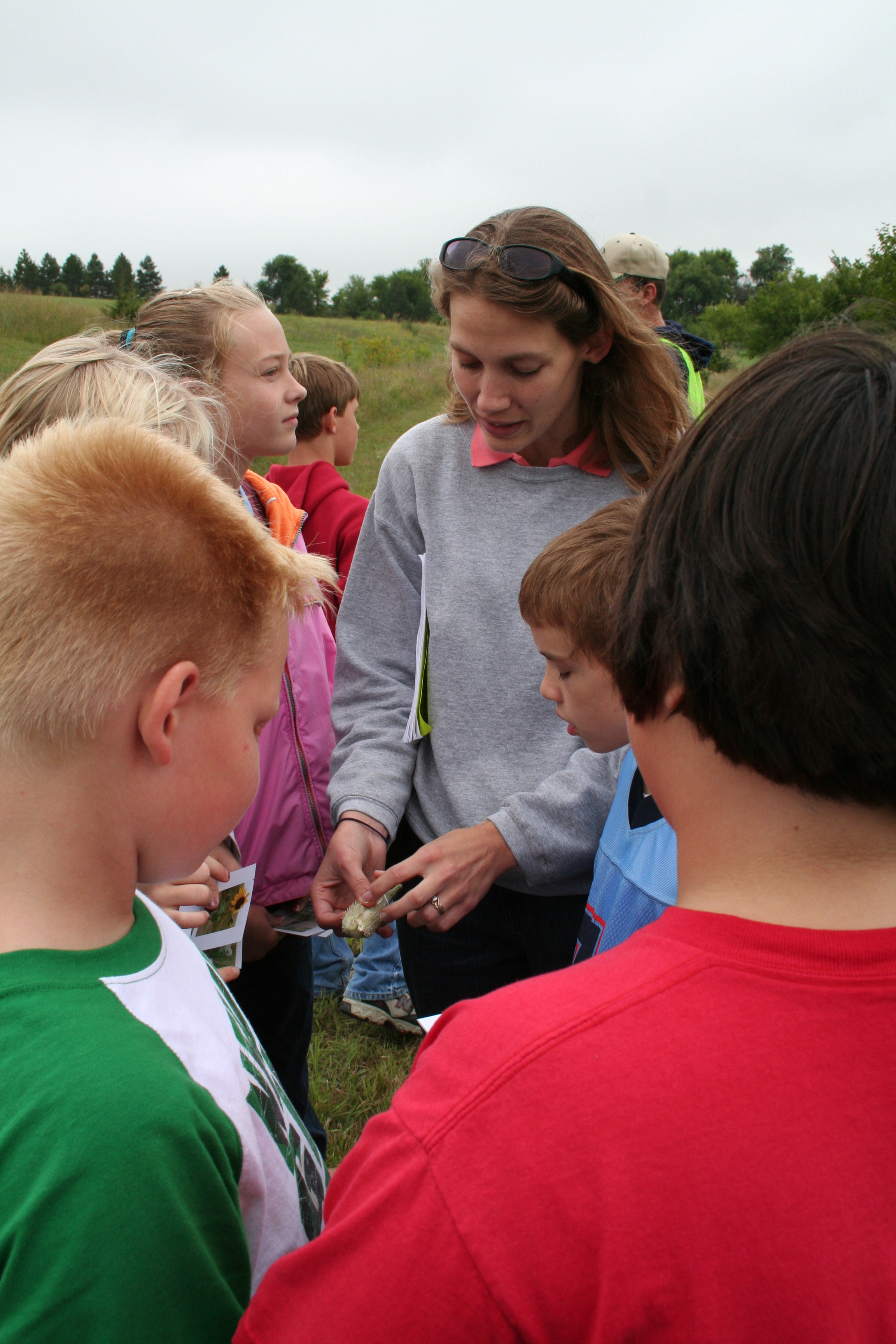 importance of water and water-related subjects. Nearly 800 youth learned about where water goes when it goes down the storm drain, about irrigation and siphon tubes, the aquifer, life inside and outside of the lake, mosquitoes, water movement, and much more. Holli Weber and I utilized the nature trails through the tallgrass prairie to teach a session on life outside the lake focusing on the importance of plants as buffers to filter chemicals and allowing youth to run through the trails doing a photo ID scavenger hunt of the area plants (also to burn off energy!). While I’ve done this session the past 5 years, this year I took time to show the youth specific characteristics to ID grasses. God created each plant unique and I was showing them how Indiangrass has rabbit ears when you pull the leaves back from the stem…or the M/W on the smooth brome leaves. It was fun watching the youths’ faces light up and then try to find these and other characteristics for themselves while on the trails. It was a great day, although I really don’t know how teachers do it day in and out! I wish I could’ve attended something like this when I was young! A special thanks goes to Marlene Faimon at the Little Blue NRD for coordinating this each year.
After Water Jamboree, I headed to my research plot at Lawrence. It’s been a trying year of coon damage and most recently a skunk inside our traps instead of the coons (and it still smelled like skunk out there!). Anyway, I was pulling watermark sensors and the 1st and 2nd foot ones were really rough but the 3rd and 4th feet came out easily. So just a reminder, when pulling watermark sensors, clamp a vice grip below the cap, twist and pull up. I’ve taken out hundreds of these and have only pulled apart four. If your sensor won’t pull up, simply take a spade and dig around the sensor and also bring a jug of water with you. This is the first time I’ve had to dig sensors out but the water really helped as I got it to run down the tube, it eventually loosened at the base to pull out easily without removing the sensor from the pvc pipe. Sensors can be gently washed with a hose or in a bucket of water using your fingers to gently clean them-don’t use a brush. Allow to dry and store in your shed, garage, basement, etc. Also a reminder (although I should’ve done this during the cold of Husker Harvest Days), to get your ET gages inside. Pour out the water and empty the ceramic top by pulling out the tube and then store that inside where it won’t freeze during the winter.
Farm Safety During Harvest
Combines have been rolling in the area soybeans and dryland corn. This is a busy time for farm families, but don’t let the rush to get the crop in compromise safety. Farming is one of the most hazardous occupations in the U.S. Here is a quick list of reminders for a safe harvest season.
It’s important to teach children these safety tips so they learn safety by habit as they live and work on the farm. Keep children and grandchildren away from equipment and machinery. Children who are involved in operating machinery and equipment should be properly trained by an adult on each piece they operate. It is always fun for kids to ride in the combines, or on the tractor fenders, but if there is not an extra seat and a seatbelt, it’s not a good idea. Tractor operators can be distracted by these extra riders and not keep their full attention on operating the equipment. All it takes is a sudden stop or swerve for the extra passengers to be thrown off or more serious injuries to occur. Keep kids out of grain wagons and bins and always be watchful for children and adults when moving machinery.
Double check to make sure all machinery is working properly and that safety shields are in place. When moving equipment, especially grain augers, watch for power lines, keeping equipment at least ten feet from them. Don’t get into grain wagons or bins while the grain is moving. Many people have seen the demonstrations of how quickly a person can be sucked under the grain and suffocated. Probably the hardest one to follow, yet easiest safety tip to do is to shut down moving equipment when it gets plugged. It only takes a few extra seconds and is well worth it to save a limb. People who think “nothing will happen to me” are those at the greatest risk for something to happen because they do not practice safety as they should. Farm accidents happen so quickly; don’t let them happen to you or your family!
Try to move equipment during the daylight hours. If you must move equipment at night, make sure tractor lights are working properly and slow moving vehicle signs are visible. It may even be helpful to put lights on grain wagons or on equipment you are pulling for other drivers to see them in time. You may have someone follow you in a vehicle with flashers to warn others of a slow moving vehicle ahead. Be cautious of other drivers as they get anxious to pass, especially if they try to pass while you intend on turning. For all of us on the road, it’s important to slow down and stay alert when we encounter harvest equipment on the road. During this Farm Safety Week, I’m wishing everyone a safe and bountiful harvest!
Inspiring Young Nebraskans-HHD 2011
Last week was busy with Husker Harvest Days-the coldest one I can remember! It’s always fun for me to see many familiar faces-like a big reunion! The theme at the IANR booth this year was “Inspiring Young Nebraskans”. This theme was important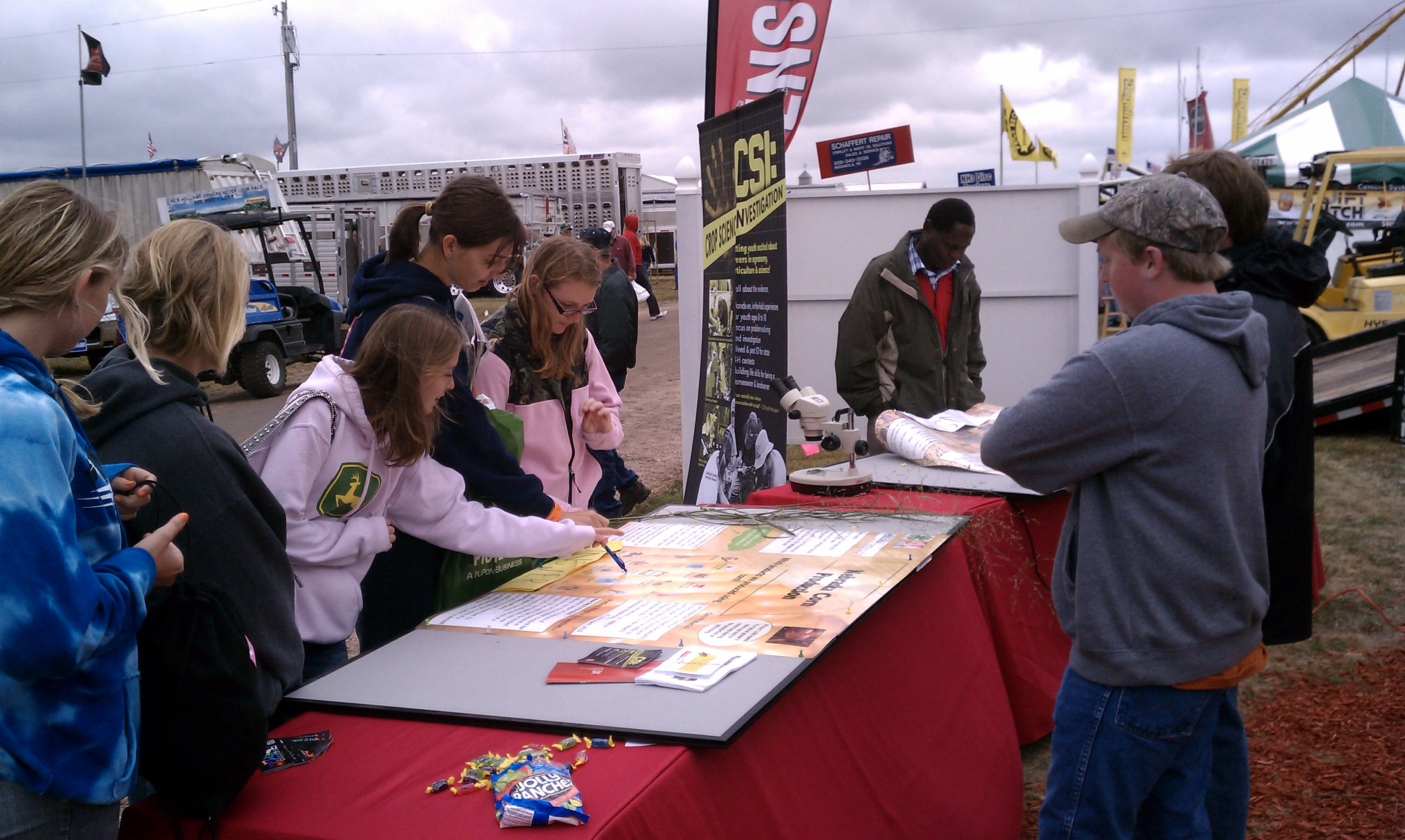 to showcase how IANR is influencing our youth from early childhood development to entrepreneurship activities and future careers. A statistic that may surprise you is that over 144,000 Nebraska youth (nearly every 1 in 3 youth in the State) is involved with 4-H. That’s something we would like to continue to grow as I think any of you who have been involved with youth programs whether 4-H, FFA, or scouts can attest they build life skills! The goal of this year’s exhibit was to show how IANR is impacting youth to hopefully keep more local youth here in Nebraska.
The first exhibit dealt with UNL Extension’s focus on Early Childhood Development which focuses on youth ages 5 and under by helping childcare providers, babysitters, and parents understand brain development and UNL’s research in this area. An alarming statistic is that up to 25% of children are not ready to begin school. The second exhibit was Teaching Science through Soybeans in which an iPad app was created for youth to drag and drop items into grocery carts to learn from where their food comes. There are many additional activities involved in the partnership between the College of Ag Sciences and Natural Resources, UNL teacher education, and local schools.
The third exhibit showcased the Unique Role of Teachers in Rural Communities and a research grant obtained by UNL to study the best strategies for supporting rural teachers in reading (K-3) and science education (6-12). Robotics is a curricula exploding with interest amongst youth in the State and was the fourth exhibit. “Bots are Hot” but they’re not only toys, they’re teaching technology to our youth with Nebraska being the leader in this National Science Foundation initiative. The fifth display showcased Youth-Adult Partnerships in which youth are encouraged to define and address community issues in addition to helping provide youth a voice and responsibility in their communities by working with adults. Connecting the Dots for Nebraska Youth was the sixth display in which an iPad app was developed for youth to link actions and personal choice to his/her future success in a college or career. So often we showcase projects in 4-H, but we’re striving consciously link them with future careers-to show youth how their 4-H projects truly are their first class at the University of Nebraska!
The seventh exhibit showcased Public/Private partnerships in which UNL Extension is working with Nebraska businesses to create opportunities for young Nebraskans across the State. Entrepreneurship was the focus of the eighth display with the goal of building a strong root system for homegrown Nebraska businesses. Reid Ely was front and center on that display banner with his asparagus and Ashley Nunnenkamp helped in the booth as part of the Paul Engler Agribusiness Entrepreneurship Program at UNL. Market Journal taped their latest show there and the Mobile Diagnostic Lab had interactive displays this year on Soybean Cyst Nematode kits for FFA youth, Pine Wilt Nematode, Biological Invaders, and Crop Science Investigation (CSI) for youth. I was thankful for the Clay and Fillmore County youth who helped us in our CSI display as youth can better inspire their peers to be involved!
Like in the past, a Web site was developed and rolled out at Husker Harvest Days. To find out more about what UNL Extension is doing in the child and youth area, please check out our latest Web site at http://child-youth.unl.edu.
Nebraska State Fair Reflections
Every year I look forward to the Nebraska State Fair. As a youth, that was often our family vacation. We would participate in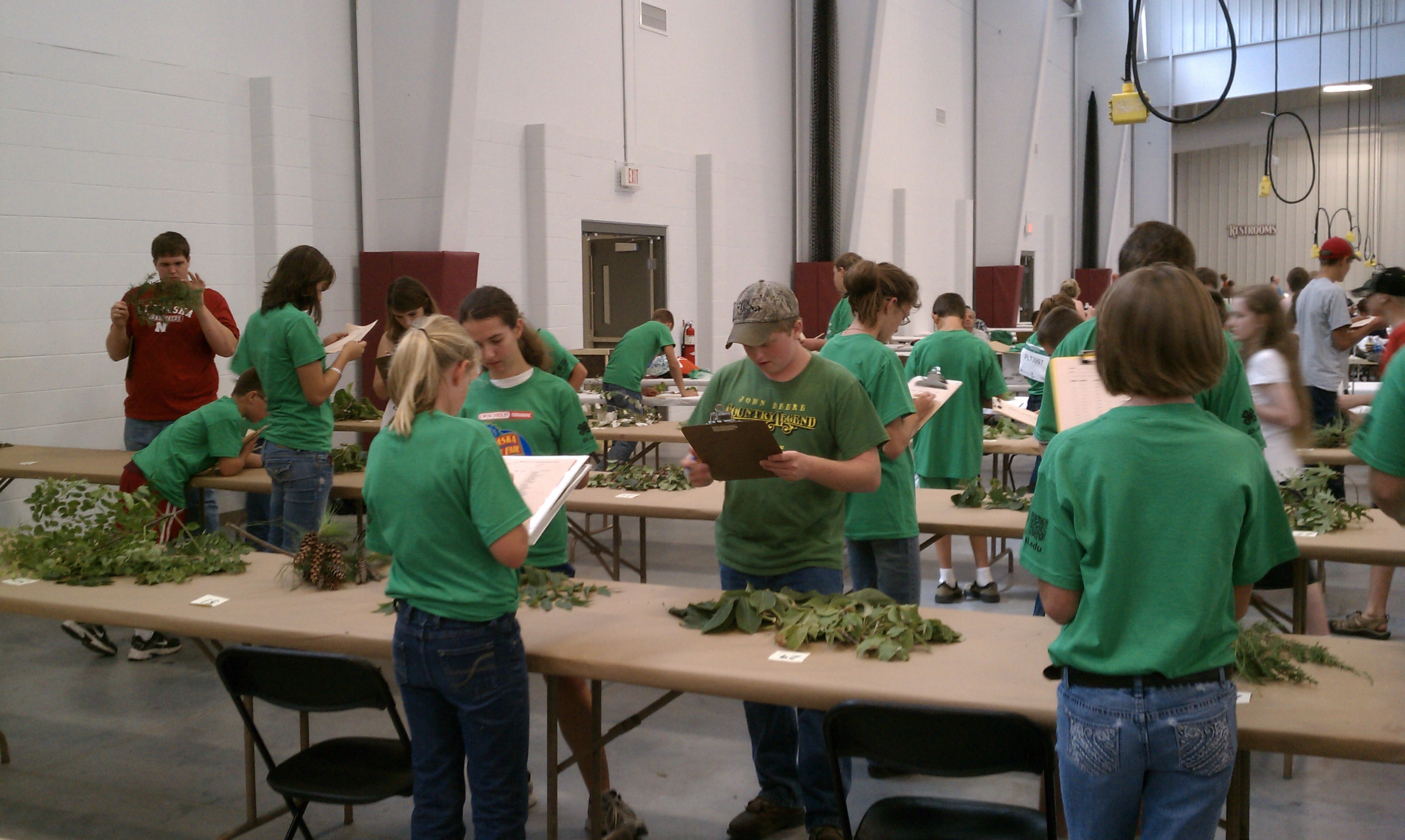 the State 4-H Weed, Tree, and Horticulture ID contests; present 4-H presentations; model our sewn garments; and view all the exhibits that made it to the fair in addition to getting ideas for the following year. State Fair was always a memorable family experience for me!
This year, I was so excited for the State Fair to begin! It was exciting seeing so many entries moving into the 4-H/FFA building to be judged and then seeing them displayed! Walking across the Fairgrounds in Grand Island, one can’t help but feel a sense of agriculture and pride in Nebraska’s agricultural roots. The facilities are absolutely amazing and our livestock numbers continue to climb.
The first weekend I enjoyed watching 4-H youth compete in the same plant ID contests when I was in 4-H…contests which provided me a love for plants and ability to identify them which helps me in my Extension career. These plant ID contests build life skills that these youth can use for numerous jobs but also as future home-owners. I was so proud of our area youth who placed so high in these contests-all the practicing paid off and they did very well. But in spite of ribbon placing, the most important fact is that they’re building life skills and learning!
The second weekend started off by catching the end of the Quilts of Valor presentation. The Quilts of Valor project is one in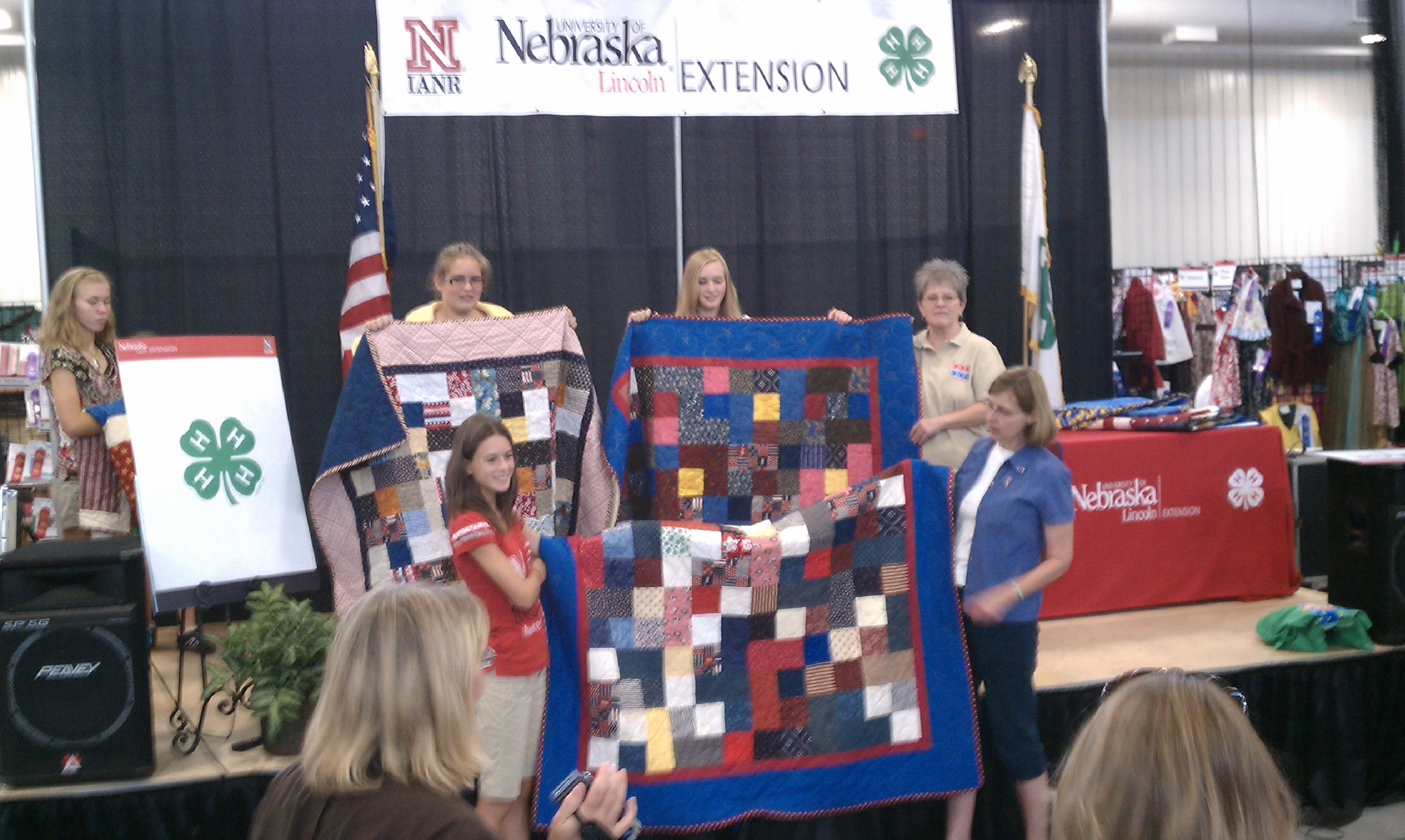 which Nebraska 4-Hers made and donated quilts to wounded soldiers. Over 40 quilts were made by Nebraska 4-Hers and it was touching seeing them displayed. It is neat seeing our youth develop life skills in quilting and giving back in such a special way!
I also enjoyed working with the swine show again and was also superintendent of the livestock premier exhibitor contest. We were anticipating 60 4-H and FFA youth competing in the 4 large animal species but around half of them actually competed due to so many shows at the same time. Premier Exhibitor allows youth to showcase their skills and knowledge in areas besides showing their animal. For instance, the majority of their score comes from an interview in which they share their knowledge of their livestock project and are asked questions about the livestock industry. They also take a written exam and participate in a skillathon in which they ID livestock breeds, feeds, equipment, and conduct other related activities. I was so proud of these youth for working so hard and participating in these events. Again, these are life skills that they are building-the essence of what 4-H and FFA programs are about.
While many long days and late nights were involved and much walking which was great exercise, the 2011 Nebraska State Fair was a great experience and huge hit with attendance numbers projected to be up 8%! Our 4-H and FFA youth overall did an excellent job representing 4-H, FFA, their families, their knowledge and skills learned, and Nebraska in general. Regardless of ribbon placing, they made us proud and while I’m glad this year’s Fair is over, I will be ready for next year’s Fair when it rolls around!
Last Irrigation Scheduling
With corn in various stages of dent and starch fill, you may be wondering how to schedule for last irrigation. For those of you in our Nebraska Ag Water Management Network using watermark sensors, the goal is to use them to determine when the soil profile reaches 60% depletion (for silty-clay soils in our area aim for an average of 160 kpa of all your sensors). You may be thinking, “An average of 90kpa was hard enough!” but as Daryl Andersen from the Little Blue Natural Resources District points out, you’re only taking an additional 0.30 inches out of each foot. So if you’re averaging 90kpa on your three sensors, you have depleted 2.34 inches in the top three feet so you still have 0.96 inches left (see the Soil Moisture Depletion Chart). If you add the fourth foot (using a similar number from the third foot), it would bring the water available to the plant up to 1.28”.
At beginning dent corn you need 24 days or 5 inches of water to finish the crop to maturity. If you subtract 1.28 from 5 you will need 3.72” to finish out the crop. Corn at ½ milk line needs 13 days or 2.25” to finish the crop to maturity-so subtracting it from 1.28 would be only 0.97”. Taking into account the good potential for rainfall and what moisture is in the profile, you should be done irrigating corn. Soybeans at the beginning of seed enlargement (R5) need 6.5”. Most soybean fields that I’ve looked at are in R6 or full seed which needs 3.5 inches yet for maturity. Subtracting off the 1.28” in the four foot profile would lead to 2.22”. If we don’t get a few more rains then beans may need one more round. The UNL NebGuide Predicting the Last Irrigation of the Season provides good information on how determine your last irrigation in addition to showing charts on how much water the crop still needs at various growth stages.
Daryl Andersen explains how to use this information in a simplified way. One way to look at this is by the numbers of days left. At 1/4 starch, there are about 19 days before maturity so you can let your sensors average 130kpa on the first week and 150kpa on the next week. If these targets are met during the week, you would put on about 1 inch of water. By going to these numbers, it might give you a higher probability for rain in the next couple of weeks. ET rates this summer have been running less than 0.25” per day for the most part, so with the humidity we’ve had, the crops have not been using much water, which has really helped our dryland corn again in areas where we aren’t receiving rain events.
Soybean Management Field Days
Every year I look forward to attending the Soybean Management Field Days! I enjoy hearing the latest research-based information and seeing so many of our clientele who attend. We have an excellent opportunity for the Soybean Management Field Days to be held at South Central Ag Lab near Clay Center on August 16th! I would encourage you to register and to go! If you’ve been to the field days before, changes have been made so that all the demo plots are now research plots-so all the trials will be harvested, data collected, and shared in future meetings and field days. The theme this year is “Growing Nebraska’s Future” and the event will focus on staying competitive in a global marketplace, increasing profits and meeting the world’s growing food and energy needs starting in Nebraska.
Topics include: nutrient management and high yield alternatives; pest management and yield enhancement products; weed management; and marketing and risk management. In addition, UNL Extension’s BIT Mobile will be on hand for participants to visit and learn how to optimize irrigation efficiency and energy use with the SoyWater program. If you have unknown crop problems, please bring along your samples for agronomists and plant disease and insect specialists to look at for no charge.
The field days are sponsored by the Nebraska Soybean Board in partnership with UNL Extension in the University’s Institute of Agriculture and Natural Resources and are funded through checkoff dollars. The efforts of the checkoff are directed by the United Soybean Board promoting effective, efficient, farmer-driven programs. The field days begin with 9 a.m. registration and conclude at 2:30 p.m. Free registration is available the day of the event; it would be helpful to RSVP for meal count to 800-529-8030 or you can let me know by replying to this blog or emailing me at jrees2@unl.edu. More information can be found at http://ardc.unl.edu/soydays. I hope to post the pod cast of this event shortly, but am still working on how to do this!
Predicted 2011 Corn Yields
Well, it was great to take a week off and the weather sure was nice in Colorado! It seems like it was a poor week to miss in regards to crop happenings, though. Several of you have been asking for a month now for me to run the Hybrid-Maize model for 2011 corn yield predictions and I just haven’t taken the time to relearn how to input the current weather file and run the simulations-but I did tonight.
In my May 1 post, I was showing impact of planting date on yield- essentially we weren’t seeing much based on the models. At the time I showed potential yield results of: 113 day hybrid planted April 15 vs. May 1 vs. May 10, the frost risk increased from 10%, 17%, and 21% respectively with average yields in a “perfect year-no limiting conditions” of 248, 254, and 244 bu/acre respectively. For a 110 day hybrid planted the same days, yields ranged from 233, 242, and 243
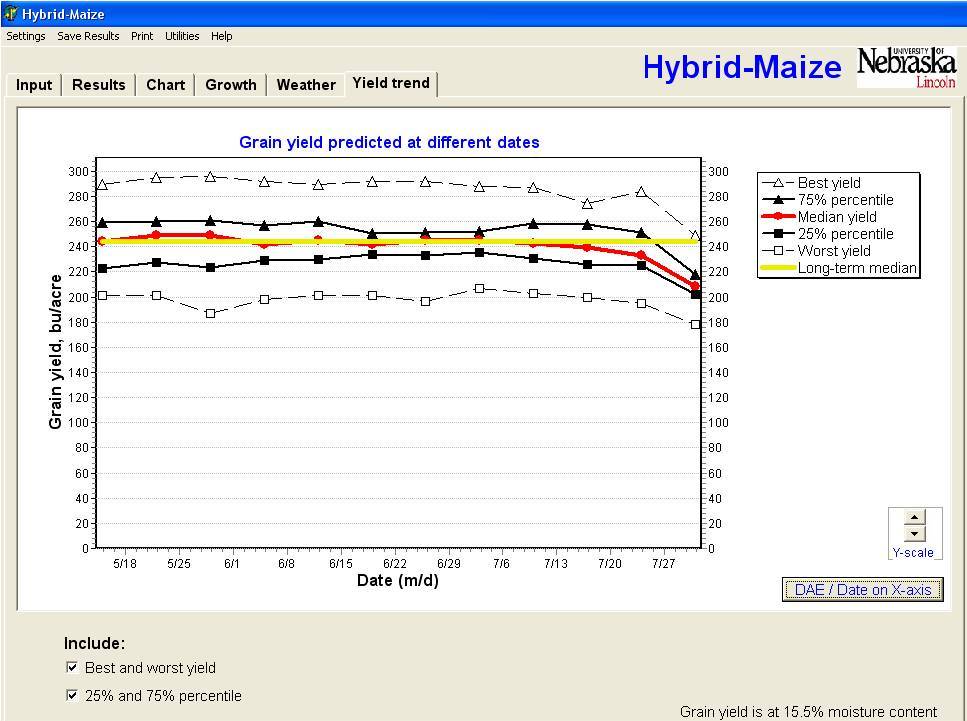 bu/acre respectively with frost risks of 3%, 10%, and 17% respectively. Granted this is just a model and can’t predict perfectly what will happen.
Again, I’ll repeat it’s just a model and is looking at “a perfect year with no limiting conditions”. I already knew we wouldn’t be looking at record yields. The corn had looked even and good for the most part once it got taller, but it hid the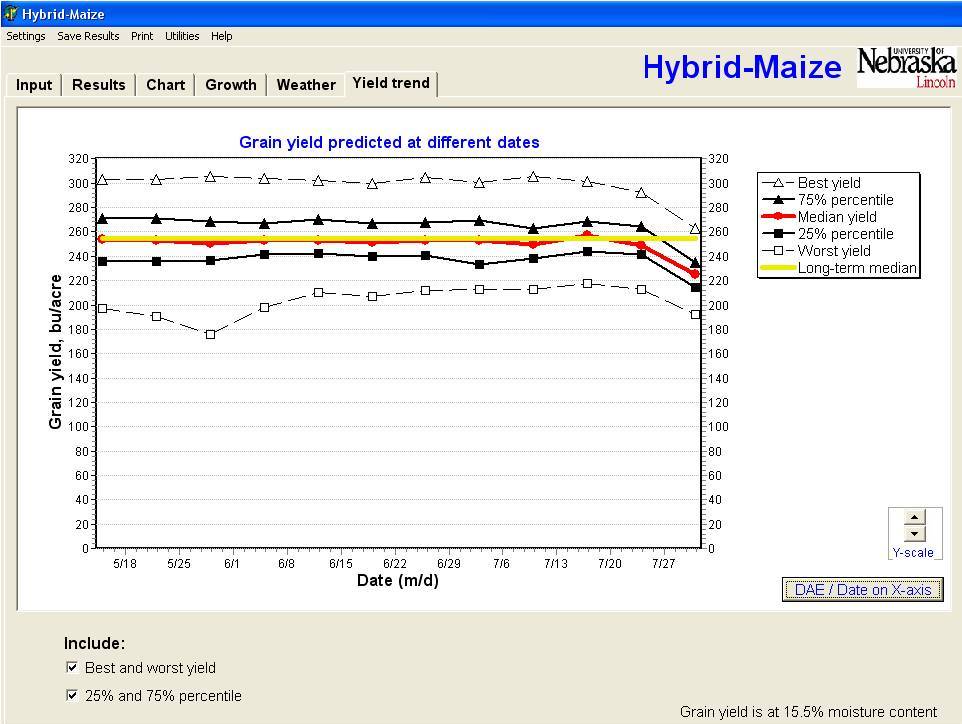 many problems including stand problems from rain washing, residue, Pythium, greensnap, etc. Looking at the actual weather data (from Clay Center, NE station), night time temperatures were really high and may have led to the sharp predicted drop off in yields. I remember well the one hot, dry, non-humid week in August 2010. The model showed a sharp yield reduction then and the corn essentially shut down after that. I hope it doesn’t shut down after last week. The other caveat is that I used “generic” hybrids, did not input specific GDD’s or silking dates, and a planting population of 32,000 plants/acre. Changing any or all of these factors can influence what the model predicts for yield.
Prior to last week, the average yield for 2011 based on Clay Center weather data was tracking at or slightly above the long term 30 year average yields which were similar to the predicted yields I listed above when I ran the simulations for planting dates. For the 2011 season, a 113 day hybrid planted April 15 vs. May 1 vs. May 10 based on in-season weather conditions at this point may yield 221, 225, and 236 bu/acre respectively. A 110 day hybrid planted the same days based on in-season weather conditions at this point may yield 214, 208, and 225 bu/acre. I don’t mean to get anyone
 bummed about this year’s crop-again, this is just a model! I’m just sharing as several have asked me to and it did such a good job of predicting in-season yields last year. It’s also predicting maturity really early-within the first two weeks of September this year which can affect grain fill and ultimately yield as well.
CropUpdate 7-18-11
While it may be strange, I love the smell of corn pollinating and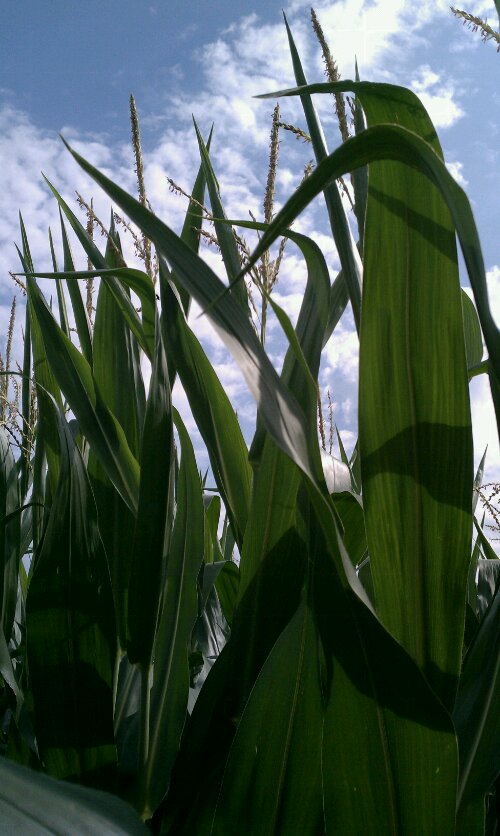 don’t mind walking fields this time of year! Summer is flying by but it seems like it’s taken a long time to get to tasseling in our fields this year. Now that corn is tasseling, we can take into account the third foot root zone for irrigation scheduling. There still is moisture to consider in the third foot so continue to check your readings on your irrigation scheduling tools and now take averages for all three feet. You may be surprised as some of you won’t need to water till end of July/beginning of August! If you have any questions about your irrigation scheduling tools, please continue to call any of us Extension educators or the NRD personnel as we want to help you and work with you now to answer them.
Disease just isn’t an issue so far in fields, so for those of you who purchased fungicide, wait till disease is present when you may need it. UNL research by Dr. Tamra Jackson has proven yields are just as good with delayed fungicide applications as they are at tassel. The longer you wait to use it for gray leaf spot, the more chances you will have residual for southern rust when it comes in. While corn prices are high, you want to keep as much of that money as you can! I don’t recommend fungicides on soybeans as we don’t have the disease to warrant it. If you did pre-pay fungicide for soybeans as well, the timing of that application should be R3 (beginning pod).
Soybeans are approaching beginning pod for many of you. For soybeans, this is a critical time for moisture in addition to seed fill at R5. Many irrigation systems were running on beans last week and I just cringed because the time we don’t want to water soybeans is full flower or (R2). The reason for that is because it can create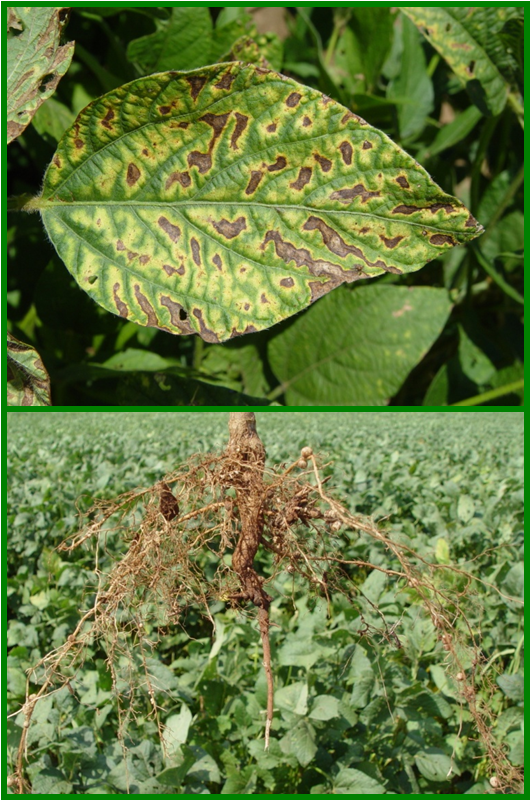 disease issues. We’ve seen a large increase of sudden death syndrome (SDS) the past few years in our county. Part of that is due to early planting in cold soils, but irrigation during flowering can also play a role. The major disease that occurs when irrigating during flowering is sclerotinia stem rot (also known as white mold). While we have very few cases of this in the area, this disease is one that you don’t want to get started in your fields. Like the fungal pathogen causing SDS, the fungal pathogen causing white mold is soil borne. Thus, once you have it, you can never get rid of it. White mold gets started during R2 when flower petals begin to die and the fungus develops on those dead petals. Wet, humid conditions during flowering are key to fungal development, so in the future, avoid irrigating beans during the flowering stages to avoid problems with these two diseases.
County Fair Reflections
A HUGE thank you to all the Fair Board members, 4-H Council, leaders, youth, parents, volunteers, Clay County News Staff, and Extension staff that made the 2011 Clay County Fair a success! 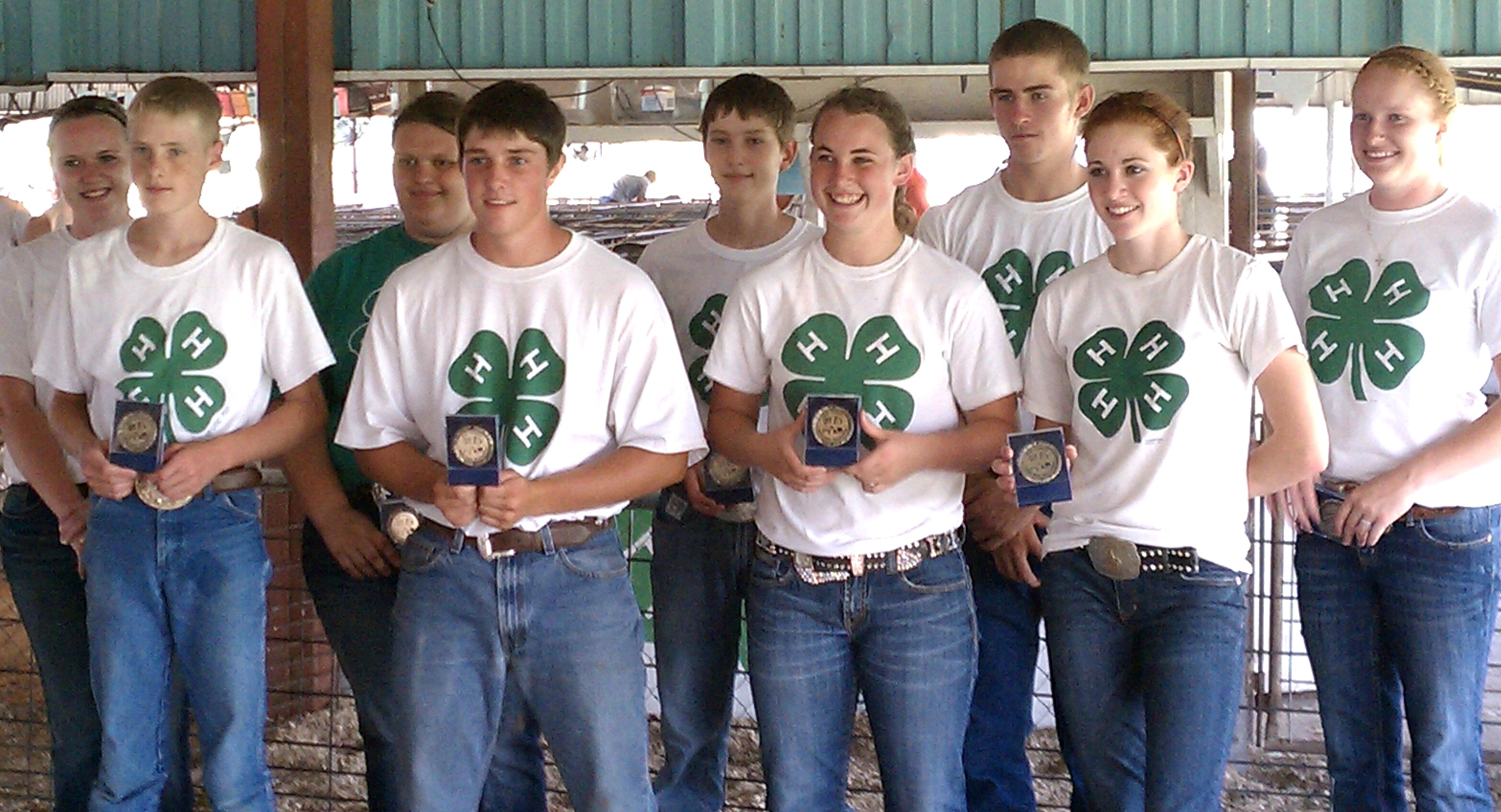 Words can’t really express my appreciation. Driving home every night, I had time to reflect on each day so I decided (for all you farmers) I’d give you a break from irrigation scheduling : ) and provide some reflections from the county fair.
I love watching the fairgrounds come alive…to see the barns and buildings filling up and the excitement of the youth and parents.  While it’s a lot of work, I really love fair week and I’ve always appreciated our county fair in Clay County. I appreciate that the focus is on the youth and families-exactly where it should be; we truly have something special here! There was several times in conversation a person this week would say “I haven’t been to the fair in X years” to which I’d respond “Welcome back!”. For those of you reading this and can identify with that statement, I’d really encourage you to come out next year-because you truly are missing out on something special.
Every year different things stand out as I’m sure they do for the youth and parents as well. This year, these are some of my reflections looking back:
*Deanna and Holli working so hard to prepare before fair while Cindy and I continued programming right up to fair. Everything was ready to go and we felt prepared for everything this year!
*The Fair Board Members working so hard before fair, deciding not to run me over before fair : ), and cheerfully picking up trash each morning and doing various tasks throughout fair.
*All the Superintendents, 4-H Council members, and Leaders pitching in wherever needed-how you all organized your volunteers to make the shows, exhibit judging, and the food stand run so smoothly.
*Kurt and Amy-the FFA Advisors from Sutton and Sandy Creek becoming so involved this year-it was great having them as a part of our team!
*The adults and youth who pitched in to clean out horse stalls Wednesday night before the fair.
*The beautiful day for the poultry/rabbit show outside and the youth excited to show their bucket calves and do their interviews on Thursday.
*The family fun night on Thursday night-I love seeing all the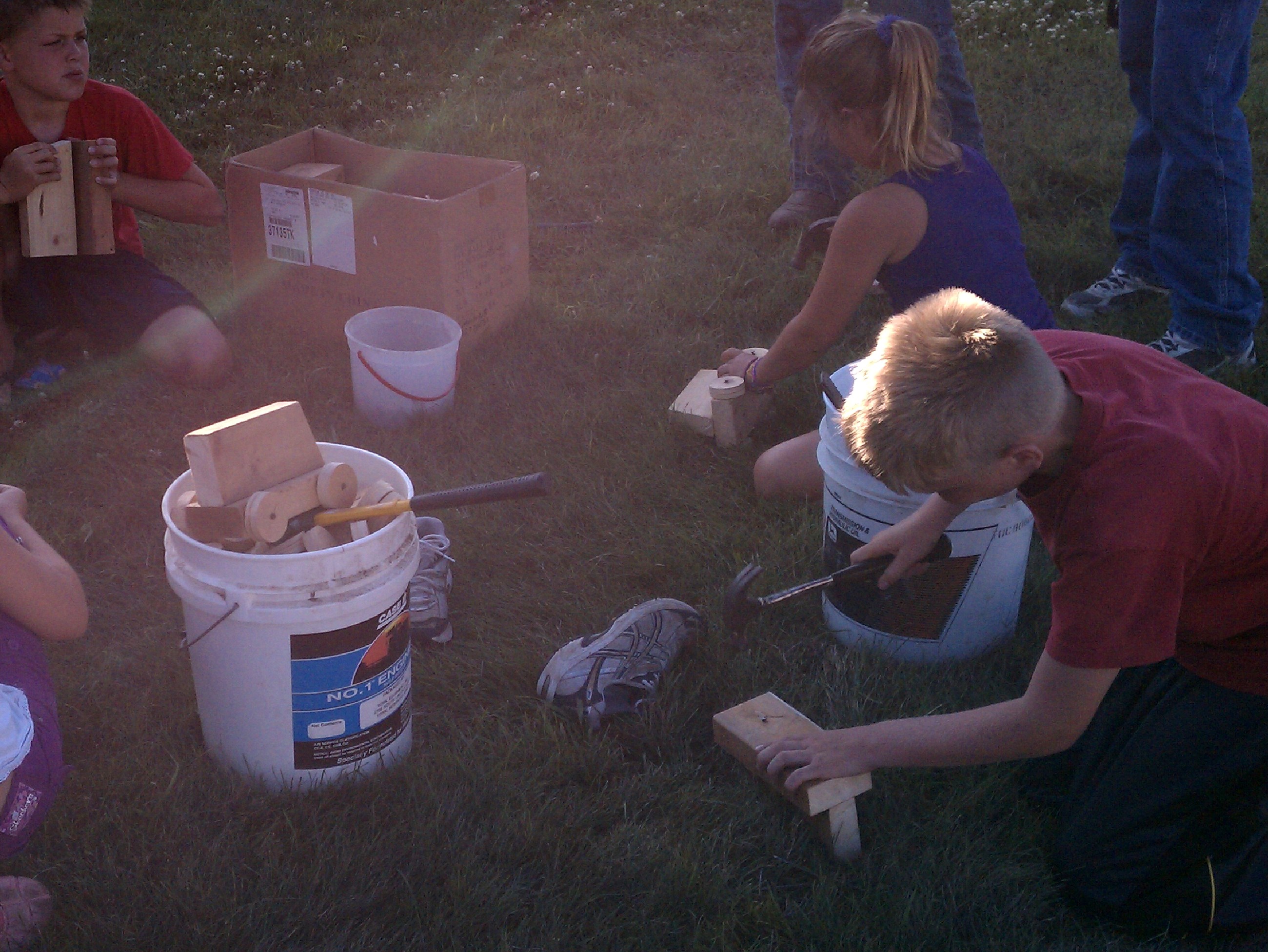 families come out and see what the 4-H clubs come up with each year! Games, face painting, campfire, and all the work that went into pre-cutting the wheels and blocks to make small vehicles out of wood-a really cool and fun night!
*Beautiful morning for the hog show and the horse shows running so smoothly.
*The sheep and meat goat judge working so well with the youth – frankly all our judges did a great job with this-it’s where the focus should be-but the sheep/meat goat judge was exceptional!
*The beef judge commenting the quality of our breeding beef can compete with any show anywhere; just watching our youth building their herds for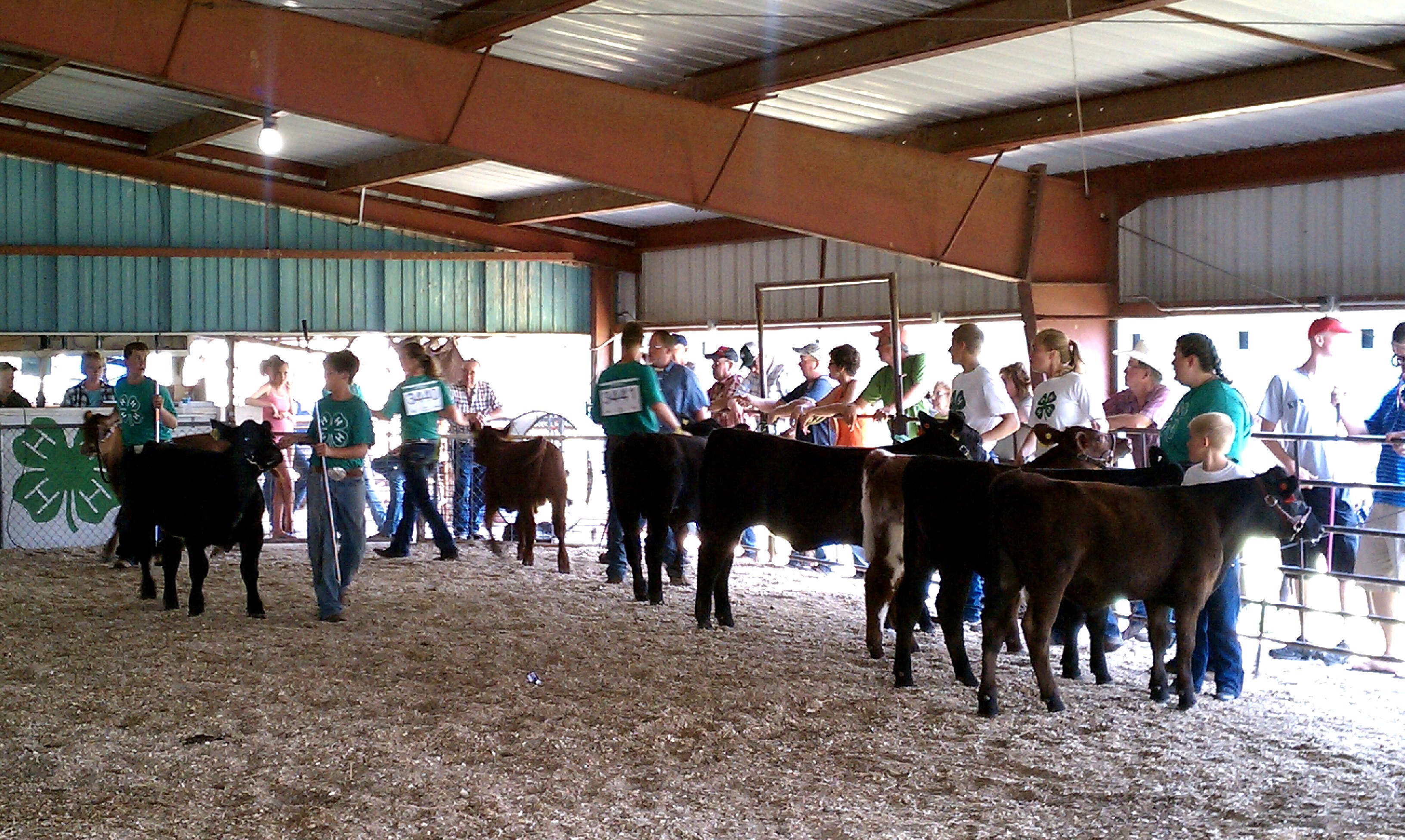 the future with hopes of coming back-that is exciting!
*The awesome buyers at the livestock auction, the excellent job that Bruce McDowell did as always and that Lonnie Stripe did as well, and a smooth-running auction!
*The dedication of the Clay County News staff-especially Tory who endured all the shows in order to capture those special moments and feature stories!
*The way so many swine families stuck around at the end to clean up the swine/sheep barn and help me put things away this year so I didn’t have to do that myself. I really appreciated that!
*There are many moments but for the sake of space, THANK YOU ALL for making the Clay Co. Fair a success!


 JenResources