Blog Archives
Visit from Chinese Agronomists
Last week I had a neat experience in speaking to a group of agronomists from China about Extension. They are in the U.S. for 10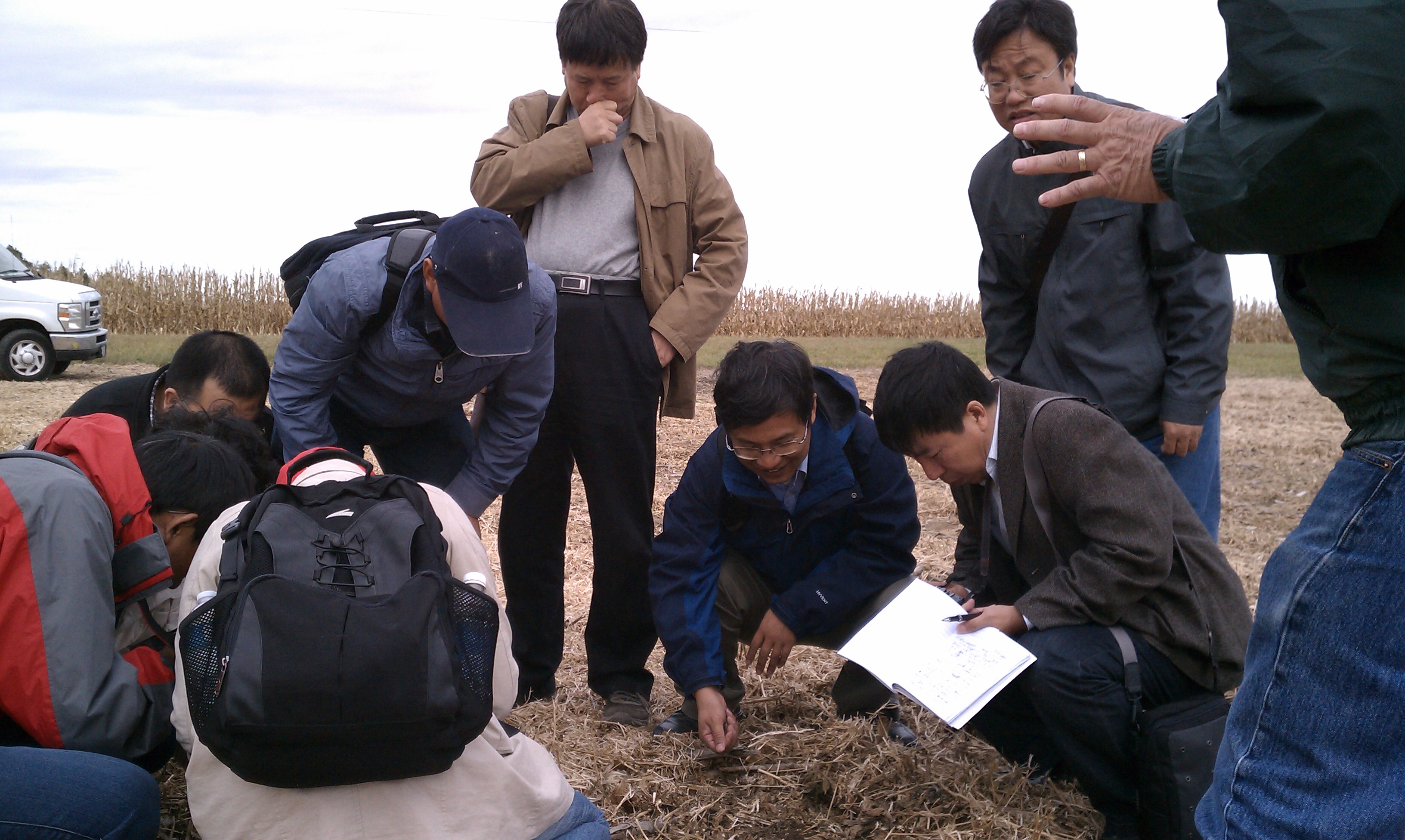 days and are interested in high yield corn production. I scrapped the presentation I had been asked to present as they had so many questions about our Extension system. So we started in a discussion…how do we set up a field day/meeting in Extension? How do we let farmers know about them? How do we decide what to talk about? Thus ensued a discussion of farming in China vs. farming in Nebraska. In China, many of the fields are hand-planted and less than 10% of their farmers have internet connectivity. In Nebraska, we’re seeing the trend of larger equipment and the majority of our farmers are connected to the internet. I suggested that they start with field days and meetings which shared the research-based information they are generating at their research sites. Advertise to farmers via word of mouth, radio, newspapers, direct mailings, or brochures/flyers left at common gathering spots. Once they have the people at the meetings, they can follow up with a survey to determine needs assessment for what the farmers would like to know more about in the future to determine future meeting topics.
Extension in Nebraska has greatly changed in my 7 years regarding how we share information. We are challenged today to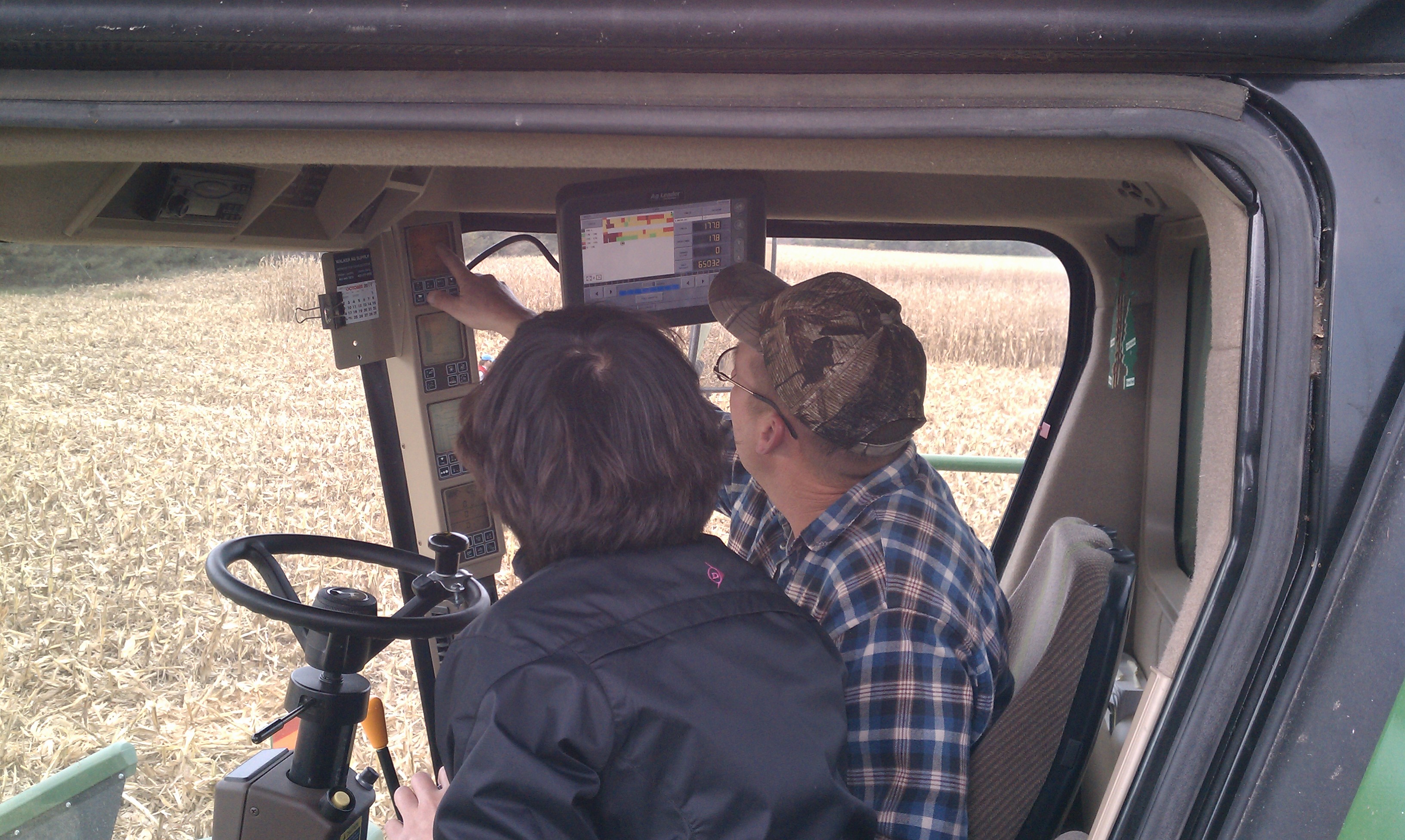 reach a broad audience who on one hand primarily finds information from newspapers to the other hand, primarily from the Web-and everywhere in between! This year, I’ve worked at trying to share the same information 7 different ways to reach a broader audience. I showed the agronomists from China the impact of the Web and social media in sharing information in Nebraska. They were amazed!
We then went on a tour where they were able to view harvest. It was fascinating watching them excitedly discuss and question no-till farming as they were digging through residue and in the soil. They also predicted corn yields by measuring and counting and comparing that to the combine yield monitor. Some enjoyed getting into the combines and learning about the precision ag tools available to farmers. It was a neat experience and I learned much from our visitors as well!

Last Irrigation Scheduling
With corn in various stages of dent and starch fill, you may be wondering how to schedule for last irrigation. For those of you in our Nebraska Ag Water Management Network using watermark sensors, the goal is to use them to determine when the soil profile reaches 60% depletion (for silty-clay soils in our area aim for an average of 160 kpa of all your sensors). You may be thinking, “An average of 90kpa was hard enough!” but as Daryl Andersen from the Little Blue Natural Resources District points out, you’re only taking an additional 0.30 inches out of each foot. So if you’re averaging 90kpa on your three sensors, you have depleted 2.34 inches in the top three feet so you still have 0.96 inches left (see the Soil Moisture Depletion Chart). If you add the fourth foot (using a similar number from the third foot), it would bring the water available to the plant up to 1.28”.
At beginning dent corn you need 24 days or 5 inches of water to finish the crop to maturity. If you subtract 1.28 from 5 you will need 3.72” to finish out the crop. Corn at ½ milk line needs 13 days or 2.25” to finish the crop to maturity-so subtracting it from 1.28 would be only 0.97”. Taking into account the good potential for rainfall and what moisture is in the profile, you should be done irrigating corn. Soybeans at the beginning of seed enlargement (R5) need 6.5”. Most soybean fields that I’ve looked at are in R6 or full seed which needs 3.5 inches yet for maturity. Subtracting off the 1.28” in the four foot profile would lead to 2.22”. If we don’t get a few more rains then beans may need one more round. The UNL NebGuide Predicting the Last Irrigation of the Season provides good information on how determine your last irrigation in addition to showing charts on how much water the crop still needs at various growth stages.
Daryl Andersen explains how to use this information in a simplified way. One way to look at this is by the numbers of days left. At 1/4 starch, there are about 19 days before maturity so you can let your sensors average 130kpa on the first week and 150kpa on the next week. If these targets are met during the week, you would put on about 1 inch of water. By going to these numbers, it might give you a higher probability for rain in the next couple of weeks. ET rates this summer have been running less than 0.25” per day for the most part, so with the humidity we’ve had, the crops have not been using much water, which has really helped our dryland corn again in areas where we aren’t receiving rain events.
Predicted 2011 Corn Yields
Well, it was great to take a week off and the weather sure was nice in Colorado! It seems like it was a poor week to miss in regards to crop happenings, though. Several of you have been asking for a month now for me to run the Hybrid-Maize model for 2011 corn yield predictions and I just haven’t taken the time to relearn how to input the current weather file and run the simulations-but I did tonight.
In my May 1 post, I was showing impact of planting date on yield- essentially we weren’t seeing much based on the models. At the time I showed potential yield results of: 113 day hybrid planted April 15 vs. May 1 vs. May 10, the frost risk increased from 10%, 17%, and 21% respectively with average yields in a “perfect year-no limiting conditions” of 248, 254, and 244 bu/acre respectively. For a 110 day hybrid planted the same days, yields ranged from 233, 242, and 243
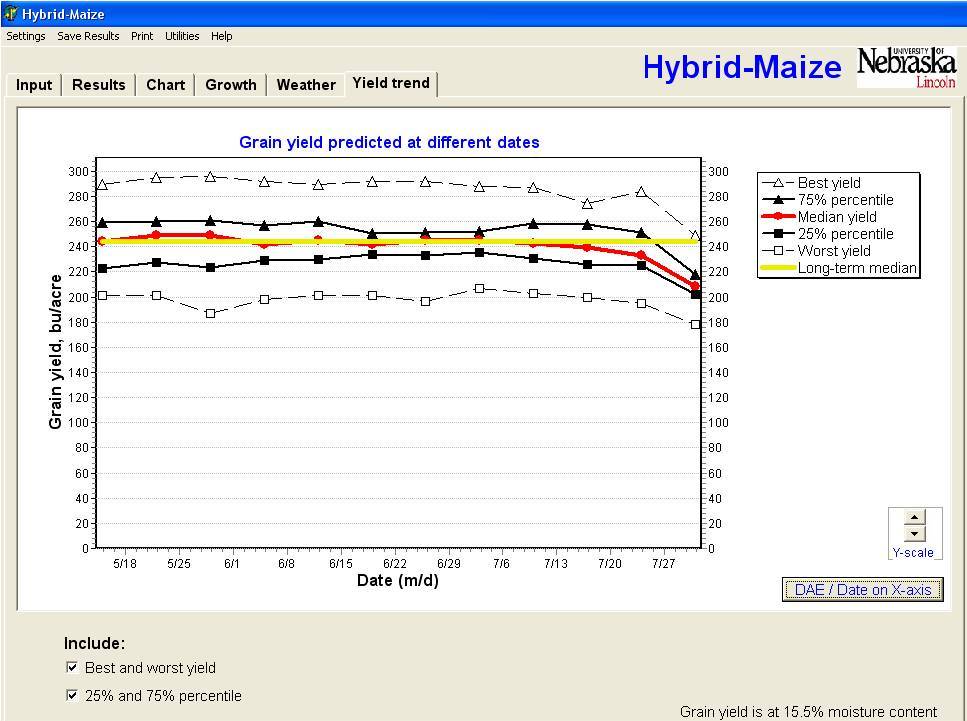 bu/acre respectively with frost risks of 3%, 10%, and 17% respectively. Granted this is just a model and can’t predict perfectly what will happen.
Again, I’ll repeat it’s just a model and is looking at “a perfect year with no limiting conditions”. I already knew we wouldn’t be looking at record yields. The corn had looked even and good for the most part once it got taller, but it hid the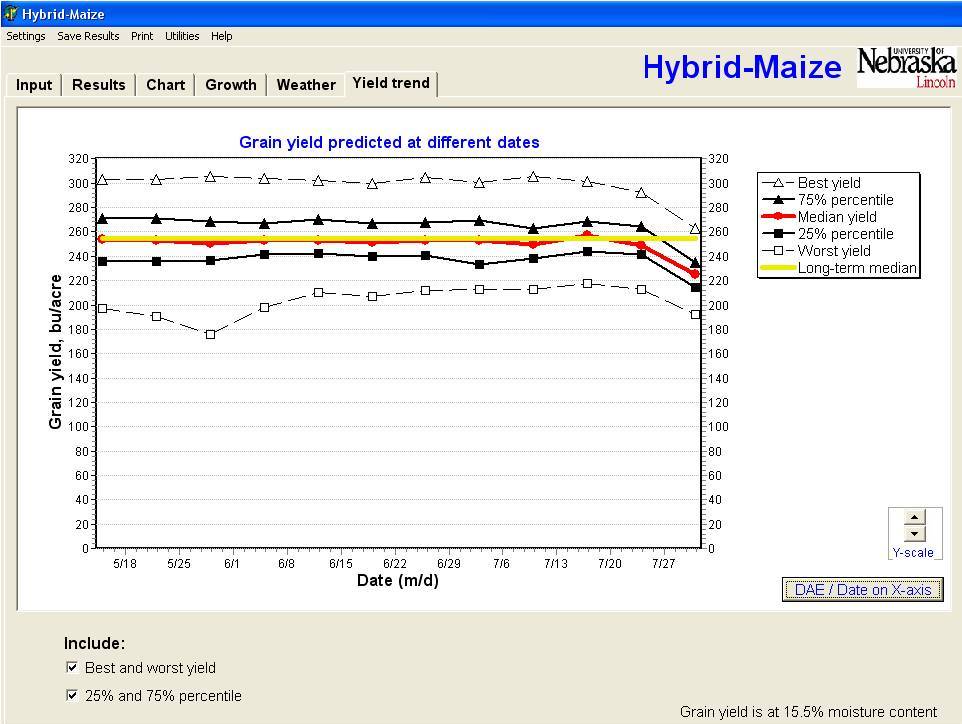 many problems including stand problems from rain washing, residue, Pythium, greensnap, etc. Looking at the actual weather data (from Clay Center, NE station), night time temperatures were really high and may have led to the sharp predicted drop off in yields. I remember well the one hot, dry, non-humid week in August 2010. The model showed a sharp yield reduction then and the corn essentially shut down after that. I hope it doesn’t shut down after last week. The other caveat is that I used “generic” hybrids, did not input specific GDD’s or silking dates, and a planting population of 32,000 plants/acre. Changing any or all of these factors can influence what the model predicts for yield.
Prior to last week, the average yield for 2011 based on Clay Center weather data was tracking at or slightly above the long term 30 year average yields which were similar to the predicted yields I listed above when I ran the simulations for planting dates. For the 2011 season, a 113 day hybrid planted April 15 vs. May 1 vs. May 10 based on in-season weather conditions at this point may yield 221, 225, and 236 bu/acre respectively. A 110 day hybrid planted the same days based on in-season weather conditions at this point may yield 214, 208, and 225 bu/acre. I don’t mean to get anyone
 bummed about this year’s crop-again, this is just a model! I’m just sharing as several have asked me to and it did such a good job of predicting in-season yields last year. It’s also predicting maturity really early-within the first two weeks of September this year which can affect grain fill and ultimately yield as well.
CropUpdate 7-18-11
While it may be strange, I love the smell of corn pollinating and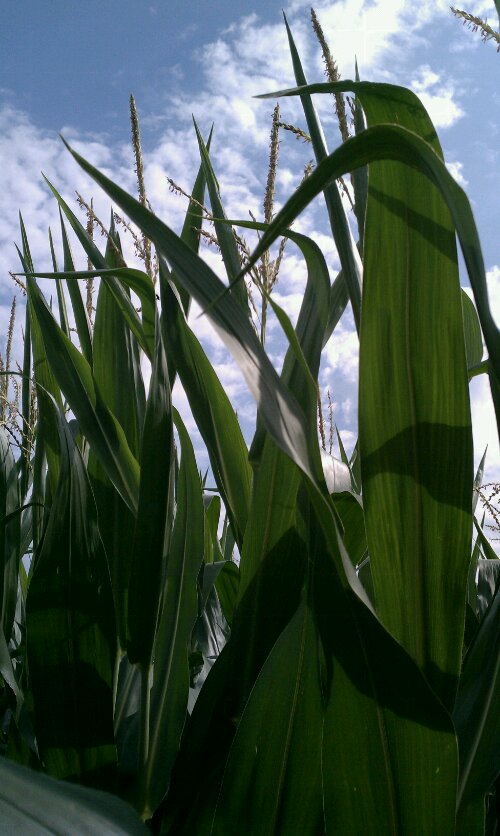 don’t mind walking fields this time of year! Summer is flying by but it seems like it’s taken a long time to get to tasseling in our fields this year. Now that corn is tasseling, we can take into account the third foot root zone for irrigation scheduling. There still is moisture to consider in the third foot so continue to check your readings on your irrigation scheduling tools and now take averages for all three feet. You may be surprised as some of you won’t need to water till end of July/beginning of August! If you have any questions about your irrigation scheduling tools, please continue to call any of us Extension educators or the NRD personnel as we want to help you and work with you now to answer them.
Disease just isn’t an issue so far in fields, so for those of you who purchased fungicide, wait till disease is present when you may need it. UNL research by Dr. Tamra Jackson has proven yields are just as good with delayed fungicide applications as they are at tassel. The longer you wait to use it for gray leaf spot, the more chances you will have residual for southern rust when it comes in. While corn prices are high, you want to keep as much of that money as you can! I don’t recommend fungicides on soybeans as we don’t have the disease to warrant it. If you did pre-pay fungicide for soybeans as well, the timing of that application should be R3 (beginning pod).
Soybeans are approaching beginning pod for many of you. For soybeans, this is a critical time for moisture in addition to seed fill at R5. Many irrigation systems were running on beans last week and I just cringed because the time we don’t want to water soybeans is full flower or (R2). The reason for that is because it can create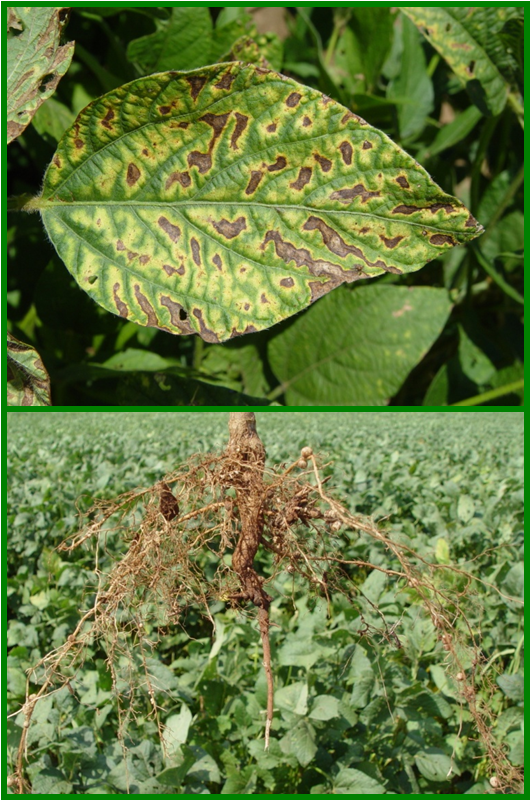 disease issues. We’ve seen a large increase of sudden death syndrome (SDS) the past few years in our county. Part of that is due to early planting in cold soils, but irrigation during flowering can also play a role. The major disease that occurs when irrigating during flowering is sclerotinia stem rot (also known as white mold). While we have very few cases of this in the area, this disease is one that you don’t want to get started in your fields. Like the fungal pathogen causing SDS, the fungal pathogen causing white mold is soil borne. Thus, once you have it, you can never get rid of it. White mold gets started during R2 when flower petals begin to die and the fungus develops on those dead petals. Wet, humid conditions during flowering are key to fungal development, so in the future, avoid irrigating beans during the flowering stages to avoid problems with these two diseases.
Rootless Corn Syndrome
Heavy rains in previous weeks have washed soil away from developing roots in some fields. Plants now up to 4-5 leaf stages in affected areas are hanging on by the main radical root. Some plants haven’t been able to survive while others have. Looking closely, brace roots are developing at the crowns of affected plants and eventually, they will begin to kink themselves to pull the plants upright again. There’s not much to do in this situation, but if you have the ability to get soil built up around the root base by cultivating, that can help. If not, an irrigation or rainfall may also help.
Often I see rootless corn syndrome as a problem with smaller plants-3 leaves or less-in which the seed was planted shallow to allow for planting in wet soils. Windy conditions and lack of soil moisture near the surface can allow for poor root development leading to rootless corn syndrome. Thus, I recommend planting corn 2″ deep and not planting shallow to avoid this problem later on.
Discussion: Irrigation Scheduling
I’m adding this post as a discussion topic as we get into the growing season for producers to post their irrigation scheduling questions or to share what their sensors and ET gages are reading. With the Nebraska Ag Management Network, we’ve learned that producers often need other producers to check their readings with-kind of like a support group for producers involved with this effort. That’s because it’s hard to not irrigate when neighbors are irrigating and your irrigation scheduling tools are telling you that you don’t need to irrigate! We’ve had some good discussions in the past so I look forward to the discussions this coming year!


 JenResources