Blog Archives
This is a great blog post from Chris Chinn, a farmer in Missouri, who shares why her family raises pigs the way they do to protect them and keep them comfortable. You can read additional blog posts from her at http://chrischinn.wordpress.com

(Disclaimer: The intent of this blog is to help people outside of agriculture to understand why some farmers choose to raise their animals indoors. What works on my farm may not work for another farmer, each farm is different, as are the genetics of hogs. My intent with this post is to help people understand why some farmers use modern technology on their farm. Our family changed the type of hog we raise to be a leaner hog with less body fat because of consumer demand. With that change came additional challenges to raising this type of pig in harsh weather conditions. That is why we chose to move our animals inside of barns because the lean type of hogs we raise can not endure the weather as well as hogs with more body fat. This is not meant to be an indictment of farmers who choose to raise their hogs outdoors.)
———————————
Today
View original post 1,295 more words
Cornhusker Economics Conference
The Cornhusker Economics Conference will focus on the ag outlook and management decisions for farmers and ranchers at  Clay Center on February 29th at the Clay County Activities Building at the Clay County Fairgrounds. The program will run from 10:00 a.m.-2:30 p.m. with registration beginning at 9:30 a.m. The conference will cover key topics affecting farm management and production decisions for 2012. It is offered by UNL Extension and the UNL Department of Agricultural Economics and is sponsored in part by funding from the Nebraska Soybean Board.
Dan O’Brien of Kansas State University will share his insight on grain and oilseed outlook and risk management decisions in today’s uncertain markets. While market volatility shows the need for sound hedging strategies, concerns about futures market performance and the recent MF Global bankruptcy affecting hedge margin accounts raise questions about the best path ahead for managing market risk. O’Brien will bring his experience and analysis of futures market performance to bear on the issues and discuss implications for producer decisions.
Shane Ellis, livestock marketing specialist at Iowa State University, will discuss the outlook for livestock markets and producer profitability. With outlook for meat demand and continued reductions in cattle supplies, the market fundamentals look strong, but must weigh against grain supplies and feed prices. Ellis will bring his expertise to the situation and provide guidance for producer marketing and production decisions in 2012.
The land market has also been moving in the past year and UNL Extension Educator Allan Vyhnalek will use his local knowledge and analysis to discuss land markets and leasing arrangements with implications for producer decisions. The closing session will feature a focus on agricultural policy and the direction for new farm programs. Brad Lubben, policy specialist, will discuss the policy outlook in Washington and the major policy developments that could affect agriculture in 2011. Then, Lubben will team with UNL Extension educators to discuss specific directions for the new farm bill and implications for farm programs, conservation programs, and risk management decisions.
There is a $25 registration fee to cover programming expenses for speakers, materials, and the noon meal. Please RSVP to Jenny Rees at the Clay County Extension Office at (402) 762-3644 or jrees2@unl.edu by Feb. 27 so we can obtain a meal count. Hope to see you at the excellent conference!
Nebraska State Fair Reflections
Every year I look forward to the Nebraska State Fair. As a youth, that was often our family vacation. We would participate in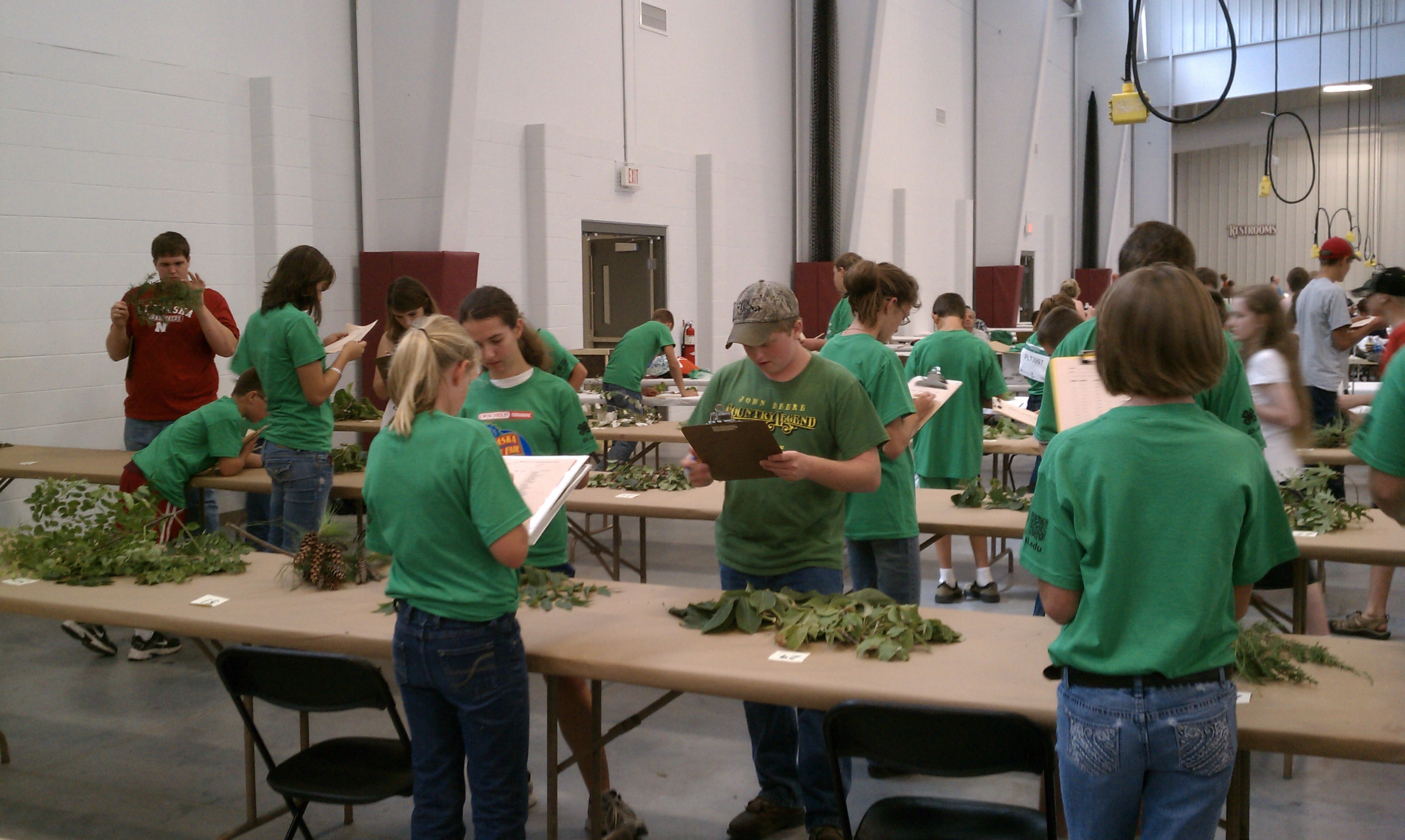 the State 4-H Weed, Tree, and Horticulture ID contests; present 4-H presentations; model our sewn garments; and view all the exhibits that made it to the fair in addition to getting ideas for the following year. State Fair was always a memorable family experience for me!
This year, I was so excited for the State Fair to begin! It was exciting seeing so many entries moving into the 4-H/FFA building to be judged and then seeing them displayed! Walking across the Fairgrounds in Grand Island, one can’t help but feel a sense of agriculture and pride in Nebraska’s agricultural roots. The facilities are absolutely amazing and our livestock numbers continue to climb.
The first weekend I enjoyed watching 4-H youth compete in the same plant ID contests when I was in 4-H…contests which provided me a love for plants and ability to identify them which helps me in my Extension career. These plant ID contests build life skills that these youth can use for numerous jobs but also as future home-owners. I was so proud of our area youth who placed so high in these contests-all the practicing paid off and they did very well. But in spite of ribbon placing, the most important fact is that they’re building life skills and learning!
The second weekend started off by catching the end of the Quilts of Valor presentation. The Quilts of Valor project is one in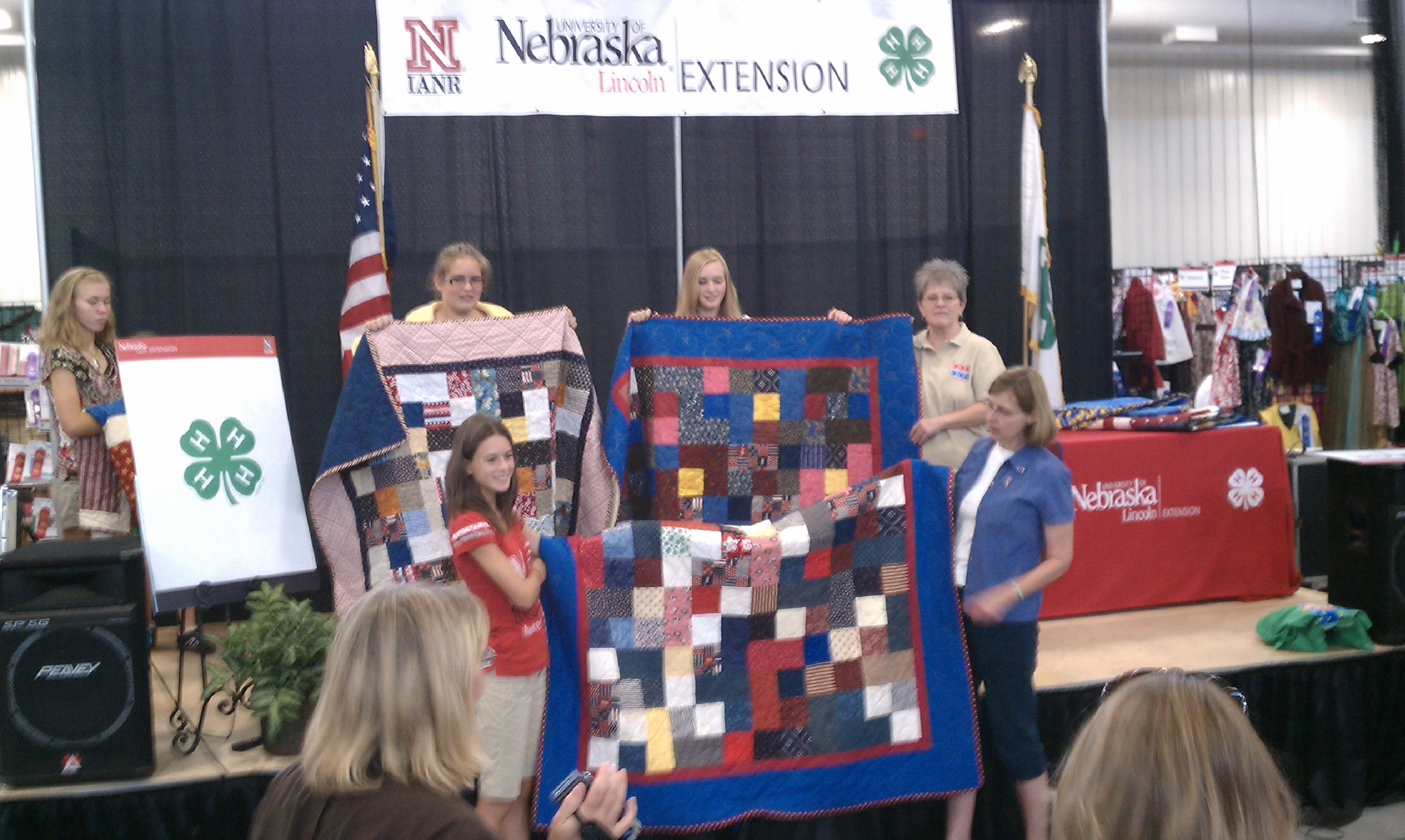 which Nebraska 4-Hers made and donated quilts to wounded soldiers. Over 40 quilts were made by Nebraska 4-Hers and it was touching seeing them displayed. It is neat seeing our youth develop life skills in quilting and giving back in such a special way!
I also enjoyed working with the swine show again and was also superintendent of the livestock premier exhibitor contest. We were anticipating 60 4-H and FFA youth competing in the 4 large animal species but around half of them actually competed due to so many shows at the same time. Premier Exhibitor allows youth to showcase their skills and knowledge in areas besides showing their animal. For instance, the majority of their score comes from an interview in which they share their knowledge of their livestock project and are asked questions about the livestock industry. They also take a written exam and participate in a skillathon in which they ID livestock breeds, feeds, equipment, and conduct other related activities. I was so proud of these youth for working so hard and participating in these events. Again, these are life skills that they are building-the essence of what 4-H and FFA programs are about.
While many long days and late nights were involved and much walking which was great exercise, the 2011 Nebraska State Fair was a great experience and huge hit with attendance numbers projected to be up 8%! Our 4-H and FFA youth overall did an excellent job representing 4-H, FFA, their families, their knowledge and skills learned, and Nebraska in general. Regardless of ribbon placing, they made us proud and while I’m glad this year’s Fair is over, I will be ready for next year’s Fair when it rolls around!
Llama-4-H Experience
Saturday was a neat day at the Clay County Fairgrounds starting with the 5K and 10K runs in which I heard 65 people ran or walked in! It was exciting to see the crowd that turned out to watch this first year event and hopefully it’s conducted again because it seemed like a success for the first year! After the road race, it was our Regional 4-H Dairy Cow and Goat show. That’s always an enjoyable show as it is laid back and fun-but it’s also a reminder that fair is just around the corner!
Following the dairy show, we tried something new. Some 4-H families adopted some rescue llamas so they were hoping to show them. While livestock isn’t my strong suite, I know nothing about llamas so we opted for an exhibition this year. A 4-H Club from Polk County generously came down and ran the exhibition for us.
It was interesting watching showmanship as the youth held the halters high but not close to the llamas’ mouths and they never changed sides when the judge walked past. Probably the most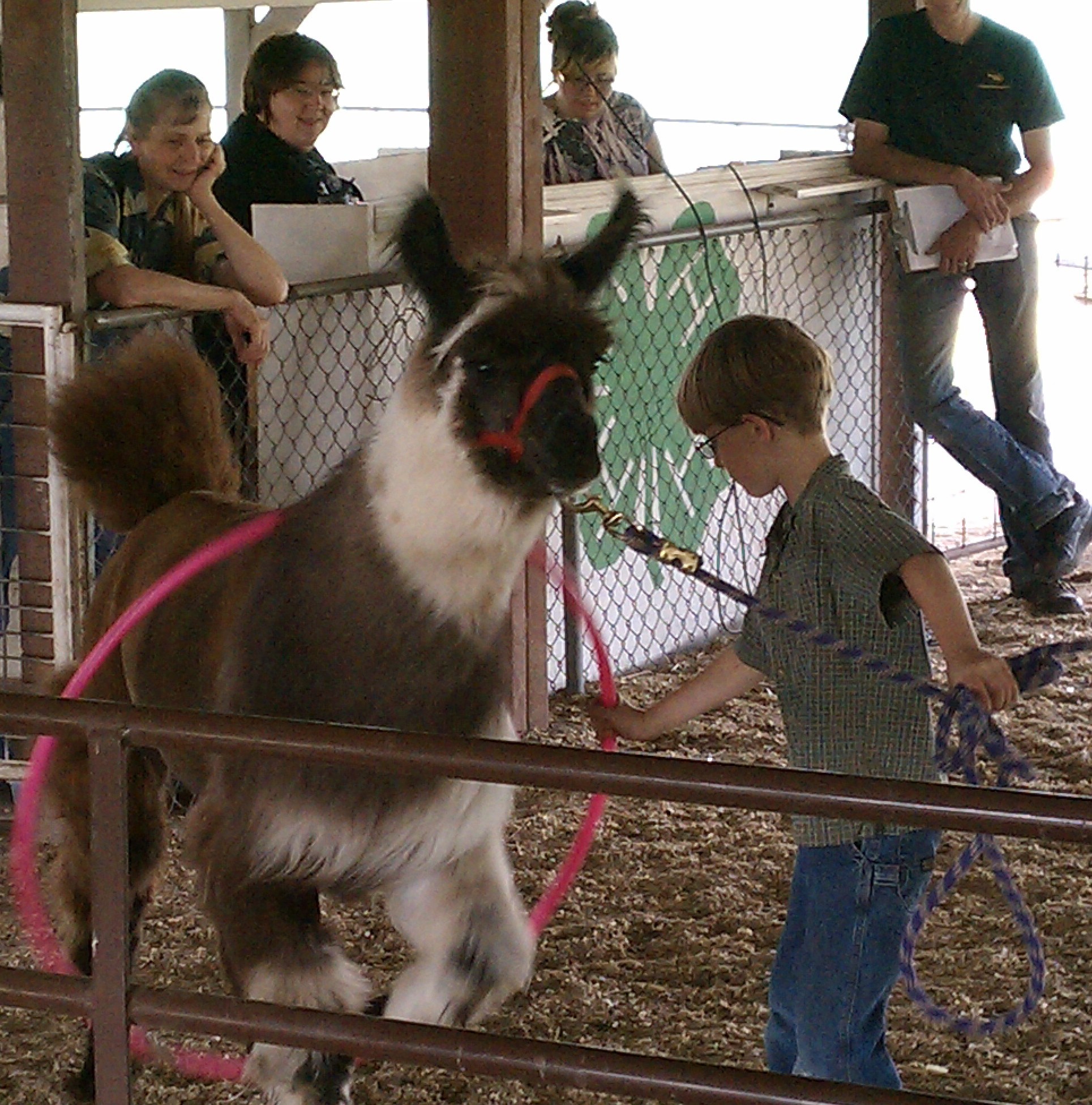 interesting part was watching the obstacle course. Essentially it’s like a glorified trail’s course for horses, only more interesting! Youth had to pick up a hula hoop and put it around his or herself then have the llama essentially walk through it. The llama had to back between logs, walk over bridges, change pace, and in different spots it had to put two feet in a ring laying on the ground and the youth had to do things like show the judge the llama’s hooves or teeth! Needless to say, it was very interesting and I think everyone watching learned a great deal!
Telling our Ag Story
On Wednesday I had the opportunity to attend a conference for UNL and ISU Extension Educators regarding animal rights and animal welfare and the importance of how we tell our agricultural stories to a public increasingly disconnected from where their food comes from. I learned so much and wanted to share.
Dr. Candace Croney from The Ohio State University shared that animal welfare defined to most of us in production agriculture is stewardship-our animals are entrusted to us, use is acceptable, and we have the obligation to treat those animals humanely. She defined animal rights as animals have certain characteristics similar to humans (ex. mental capabilities) and thus have rights. Relationships with pets have become the new paradigm regarding how all animals should be treated. A key message driven home to me was we need to consider how we say our message. So often we position animal care as an economic issue instead of an ethical one. We say things like “We take care of our livestock because if we didn’t, we wouldn’t make any money”…so people focused on animal rights hear from that message the reason we care for animals is for profit…which leads to the next thought that if profit drops, care for the animals is potentially at risk. We instead need to address ethical issues and find ways to connect with the public meaningfully. Charlie Arnot from the Center for Food Integrity said it this way, “We need to first communicate ethics, then science, then economics”.
I also have been guilty of saying “we just need to provide more education about what we do”. But that again isn’t completely correct. While the science of why we do what we do is important to us, ethics are more important to the general public. In a survey from the Center for Food Integrity, when asked what factors influence confidence that food comes from humanely treated farm animals, the fact that the producer worked with a veterinarian ranked first in increasing their confidence, but the fact that what the producer did was science based ranked dead last. Instead of first going to science, begin with showing we’re interested in doing what’s right. For instance, tell the person thank you for his/her question and that you can tell he/she cares for animals as you do too. Then go on to explain why you do what you do to care for your animals rather than provide a data dump of scientific facts. Science can be mixed in, but show the ethics of what you do first. Go beyond the traditional “food, shelter, water” as that doesn’t resonate; it’s expected as that’s what we also provide to our pets. Train people who work for you and make sure they truly do care for the animals as you train them. Determine the message for your operation. The best part is this is free; with good people it just requires a change in commitment and being consistent with your message.
I also appreciated so much of what Trent Loos, Nebraska Rancher and host of “Loos Tales” radio show said. “The message we leave out is why we have animals and agriculture”. The vast majority of the public cares about reasonably priced, safe, healthy food for their families. Our message should be that “we convert animal resources into human resources such as food, fiber, pharmaceuticals, fuels, and products to improve human lives”. It’s a matter of changing our terminology and way of thinking. We shouldn’t say we “slaughter” animals in the U.S….instead “we respectfully harvest plants and animals.”
With the growing disconnect between the general public and where food comes from, we need to be ready to tell our story anytime/anywhere. I’ve often caught myself saying “it’s been busy” when asked how things have been going. I’ve been retraining myself to continue for 20-30 seconds explaining what I’ve been doing which usually sparks a conversation about something regarding agriculture. Part of my reason for this was to help people better understand Extension, but in doing this, I can also help people better understand production ag today. Whether it’s in the line at the grocery store, at church, at a ball game, or wherever, we all have the opportunity and responsibility to share with those around us our agricultural story because no one else can tell your story for you. As Trent Loos said in closing, “If it is to be, it’s up to me”.


 JenResources