Blog Archives
Christmas Plant Tips
This week, sharing some information on Christmas plants from my Extension horticultural colleague, Kelly Feehan. Before I do that though, I’ve been asked by a couple of Extension specialists to consider a soybean project that has different experimental treatments for soybean gall midge, stem borer, frogeye leaf spot, and white mold. The project would be conducted in small plots on the edge of an interested farmer’s field taking no more than 1-2 acres total. Can be irrigated or non-irrigated and can have history of one or more of the above-mentioned pests in the field. I’m on the fence regarding participating and want to gauge farmer interest. So, if this is something you’re interested in learning more about, please contact me this week and I’ll provide details for consideration.
Live Christmas Trees: Kelly shares, “Just a reminder to daily check live Christmas trees for their watering needs to avoid a fire hazard. For safety, start with a fresh Christmas tree and don’t let the basin run out of water. Use at least a one-gallon capacity tree stand and check the stand daily for adding water. A fresh tree whose trunk has not sealed will take up water quickly. The rule-of-thumb is a tree will use one quart of water per day for every inch of trunk diameter near the base. If you have a tree with a 3-inch base, it can use 3 quarts of water per day. The trunk should have been freshly cut at a slant just prior to putting it in the stand.
Once a Christmas tree stand runs out of water, how long does it take for the trunk to seal so it will no longer take up water? If the water drops below the base of the cut trunk, a seal of dried sap can form over the stump in four to six hours. This seal will prevent the tree from absorbing water, even if the tree stand is refilled; leading to tree drying and increased fire risk.
If a tree stand dries out and a seal forms on the tree base, the tree can be taken out of the stand and a fresh cut made; or one-half inch deep holes drilled into the trunk one-half inch apart; which might allow the tree to begin absorbing water again. This is not very feasible; so be diligent and don’t let Christmas tree stands dry out for a safe holiday season. Also, when watering, nothing needs to be added to water in the tree stand to promote freshness.”
Christmas Cactus: Kelly shares, “To keep Christmas cactus blooming as long as possible, place it in bright but indirect light. Too much sun can cause leaves to turn yellow. Keep soil or potting mix constantly moist but not waterlogged. Even though they are cactus, they are jungle natives and prefer just moist conditions with indirect light. Avoid fertilizing Christmas cactus during the winter; but do fertilize every other week from spring through fall. Plants seem to flower best if they are a little pot bound; but if roots become over-crowded in the container, blooming will decrease. If you haven’t repotted in several years, or you notice a decrease in flowering from the previous year, repot the plant into a slightly larger pot, but wait until spring. If possible, move the plants outside for summer. Keep in a shady area as Christmas cactus will not tolerate full sun.”
Poinsettias: Kelly also shares, “It’s Poinsettia time. Hard to believe these bright, colorful plants originated from a weed. And amazing what plant breeding and good marketing can do. To enjoy your Poinsettia as long as possible, place them in an area with bright sun for at least half the day. If possible, provide a night temperatures in the 50’s or 60’s. This is often the most challenging condition to meet in the home, but keep plants as cool as possible at night. If plants are near a window, don’t let the leaves touch cold window panes; and keep Poinsettias away from warm or cold drafts. Poinsettias need to be well-watered. Because they are in a light weight soil-less mix, they will dry out quickly. Allow the soil to dry slightly between watering; then water thoroughly until water runs out of drainage holes. Be sure to punch holes in decorative foil wraps to prevent soggy soil conditions or at least pour excess water out of the foil after each watering.”

JenREES 12/23/22
Hope you have a blessed Christmas and wishing you joy, peace, and hope this Christmas season! A reminder for holiday food safety tips, please check out: https://food.unl.edu/article/holiday-food-safety-tips. This week going to share some info. on a number of Christmas-related plant topics that were written by Extension Horticultural Educator Kelly Feehan.
Live Christmas Trees: Just a reminder to daily check live Christmas trees for their watering needs to avoid a fire hazard. Kelly shares, “The rule-of-thumb is a tree will use one quart of water per day for every inch of trunk diameter near the base. If you have a tree with a 3-inch base, it can use 3 quarts of water per day. The trunk should have been freshly cut at a slant just prior to putting it in the stand. If the stand is empty for more than six to eight hours, the tree’s pores plug up again. Water uptake is much reduced and the tree dries out sooner. If a tree stand dries out for half a day or more, the only thing that can be done is to remove the tree from the stand and recut the base; which is not a fun task with the lights and ornaments. When watering, nothing needs to be added to water in the tree stand to promote freshness.”
Christmas Cactus: Kelly shares, “to keep Christmas cactus blooming as long as possible, place it in bright but indirect light. Too much sun can cause leaves to turn yellow. Keep soil or potting mix constantly moist but not waterlogged. Even though they are cactus, they are jungle natives and prefer just moist conditions with indirect light. Avoid fertilizing Christmas cactus during the winter; but do fertilize every other week from spring through fall. Plants seem to flower best if they are a little pot bound; but if roots become over-crowded in the container, blooming will decrease. If you haven’t repotted in several years, or you notice a decrease in flowering from the previous year, repot the plant into a slightly larger pot, but wait until spring. If possible, move the plants outside for summer. Keep in a shady area as Christmas cactus will not tolerate full sun.”
Poinsettias: Kelly also shares, “It’s Poinsettia time. Hard to believe these bright, colorful plants originated from a weed. And amazing what plant breeding and good marketing can do. To enjoy your Poinsettia as long as possible, place them in an area with bright sun for at least half the day. If possible, provide a night temperatures in the 50’s or 60’s. This is often the most challenging condition to meet in the home, but keep plants as cool as possible at night. If plants are near a window, don’t let the leaves touch cold window panes; and keep Poinsettias away from warm or cold drafts. Poinsettias need to be well-watered. Because they are in a light weight soil-less mix, they will dry out quickly. Allow the soil to dry slightly between watering; then water thoroughly until water runs out of drainage holes. Be sure to punch holes in decorative foil wraps to prevent soggy soil conditions or at least pour excess water out of the foil after each watering.”
Amaryllis: Finally Kelly shares, “Amaryllis is a popular holiday plant. It is easy to grow and blooms well indoors with large, colorful blossoms. For these reasons, the National Garden Bureau has named 2023 as the Year of the Amaryllis. The plant we call Amaryllis and enjoy during winter is actually Hippeastrum. It is a member of the Amaryllidaceae genus and this is likely why it is called Amaryllis. If you received an Amaryllis bulb as a gift, plant it in a container that has drainage holes and is one to two inches larger than the bulb. Use a well-drained potting mix and plant so the top one-third of the bulb remains above the soil. Water to moisten the potting mix but then wait for signs of growth before watering much. Once growth begins, keep the soil barely moist. After a flower stalk forms, the soil can be kept uniformly moist but avoid overwatering. Amaryllis need very bright light for blooming. Place them in or near a south window.”

JenREES 12-13-20
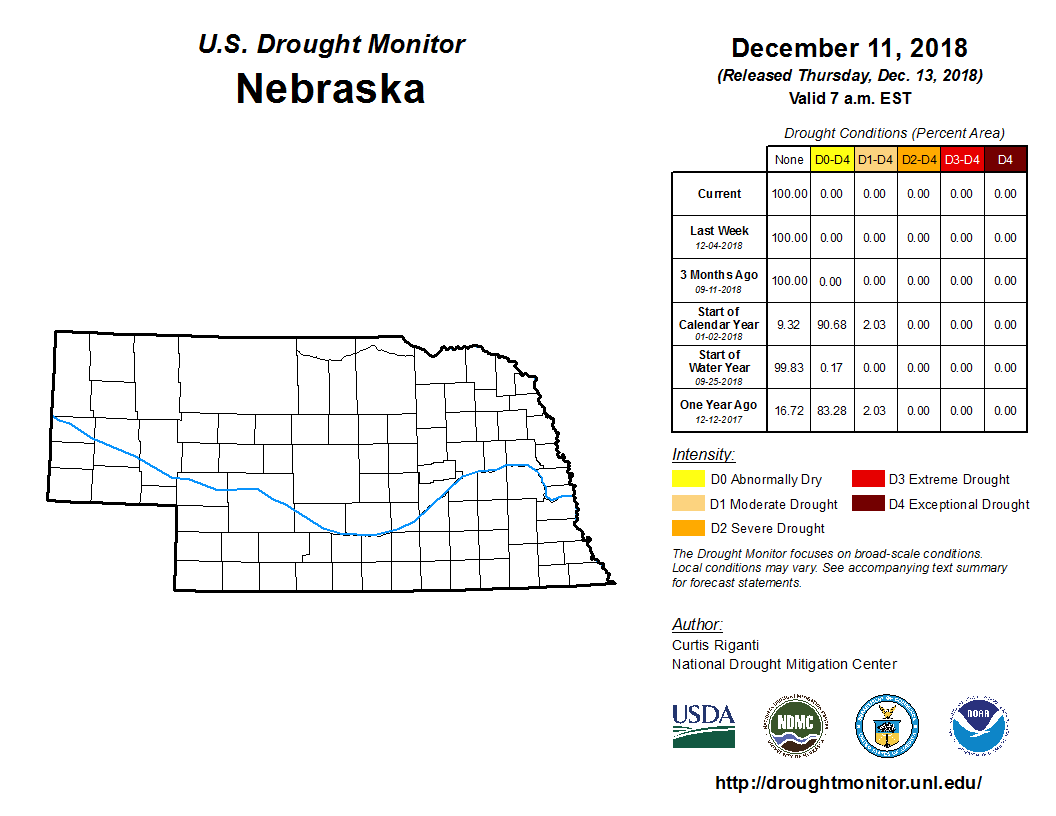
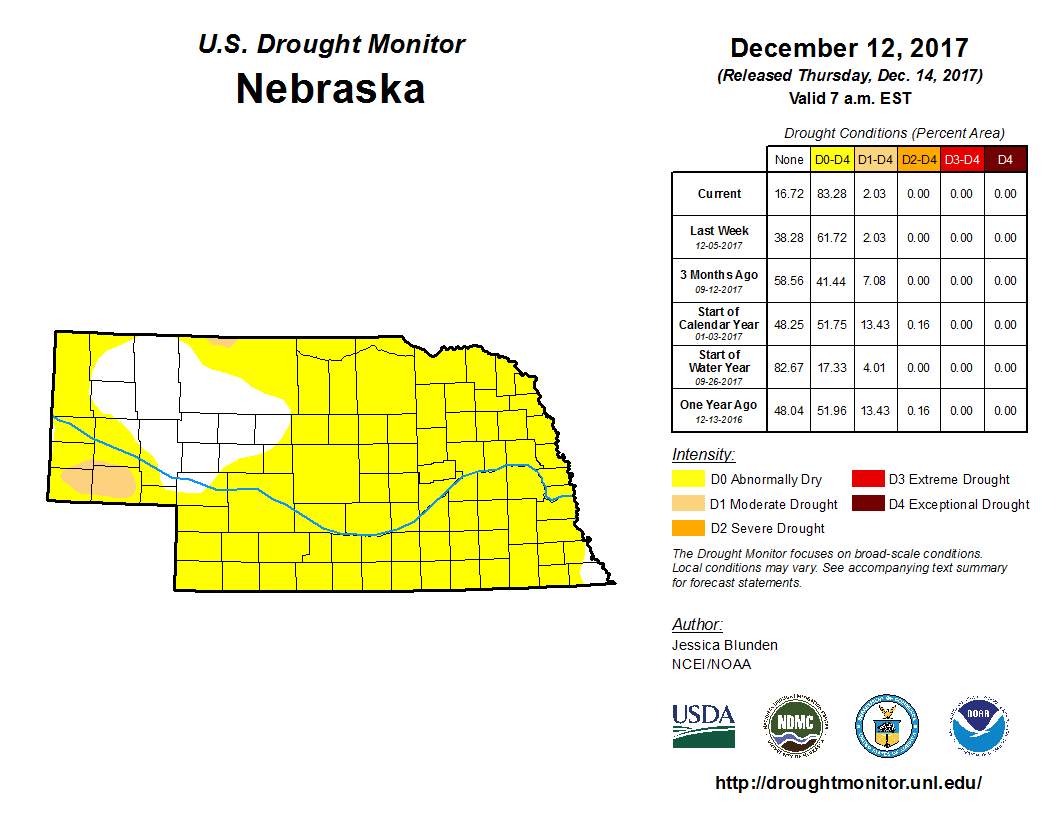
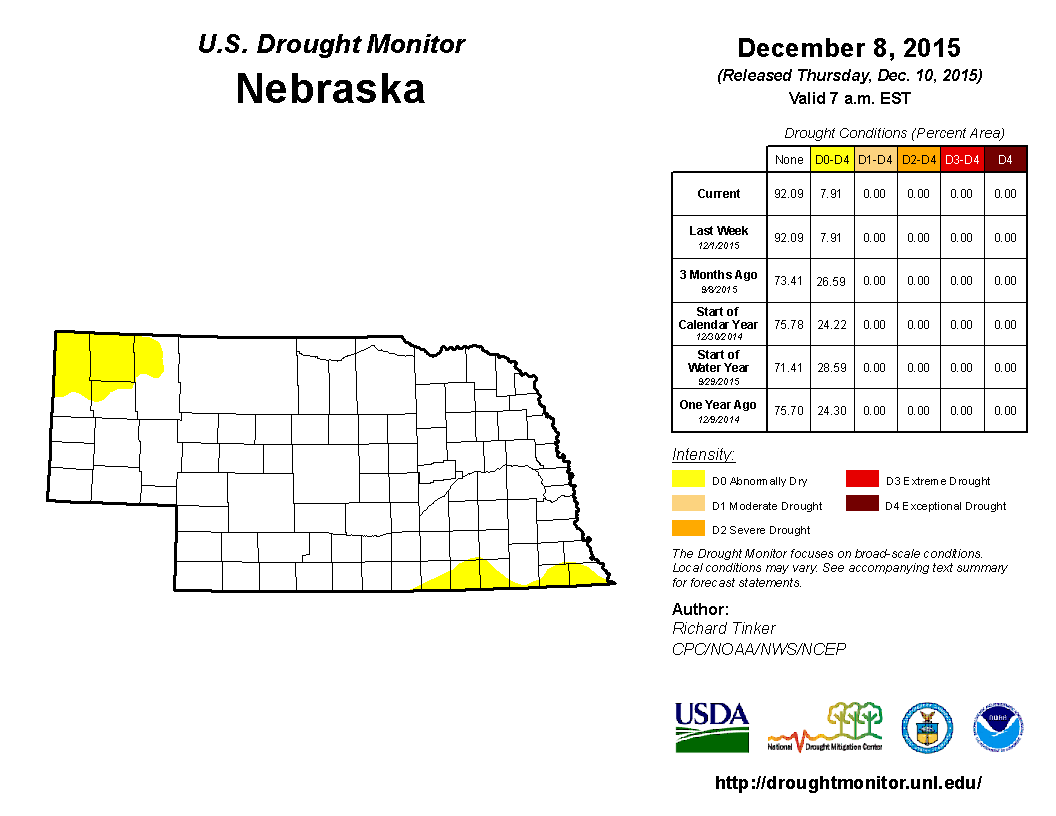
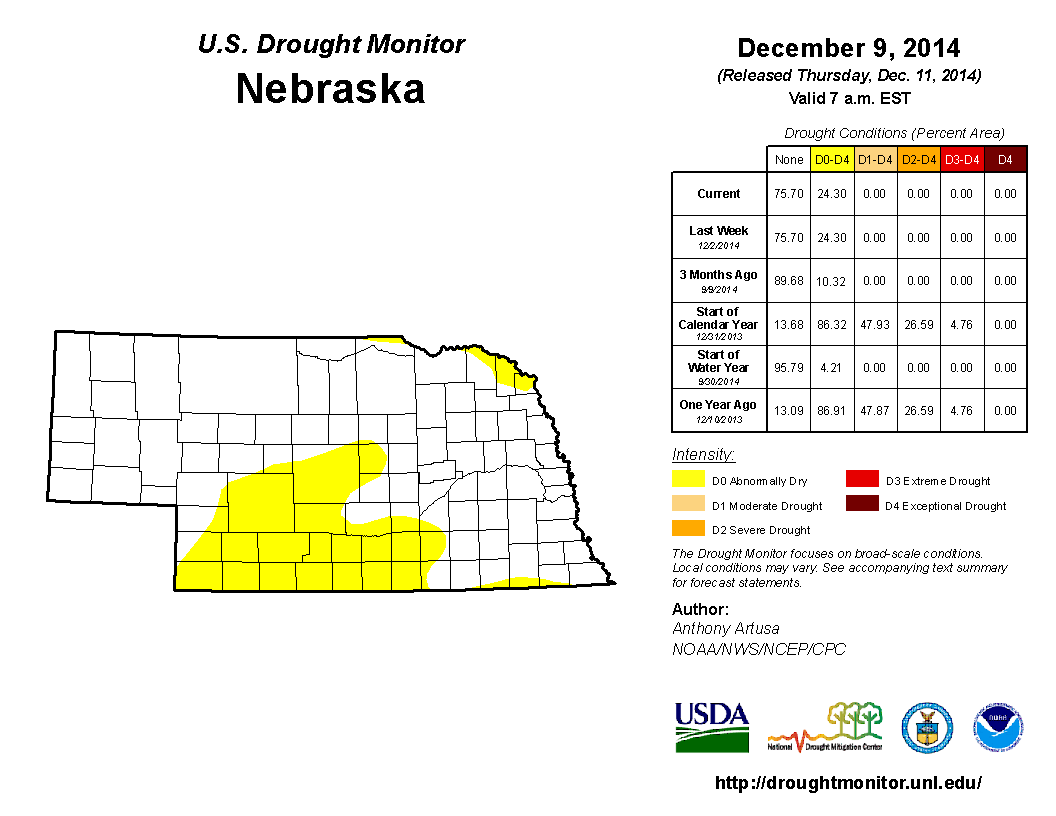
The sun glistening on the snow holds such beauty after a warm, dry beginning to December! Moisture is very much needed! For curiosity sake, I looked at the Drought Monitor for this past week and compared it to the same week in previous years. The pics are shared at jenreesources.com and it’s quite interesting comparing and thinking back through the years. Hopefully we can receive more precipitation prior to planting season.
If you missed it, the Farmers and Ranchers College program featuring Dr. David Kohl and Eric Snodgrass can be found for 30 days at: https://www.youtube.com/watch?v=9cFKs13i_Ak. I appreciate how Eric shares global weather and climate information in an easy to understand way! He also shared an interesting story of how El Nino is related to the Christmas season, so you’ll have to watch the recording to learn that. Some stats he shared for the State of Nebraska: June was the 18th driest on record followed by the wettest July on record. That was followed by the driest August on record with September as the 18th driest on record (would have been driest but thankfully we received precipitation after Labor Day weekend). He looked at weather data from 1901-2020 for Nebraska and the U.S. which showed a trend of 2.5” precipitation gain from April-October (with higher gains as one goes east in the U.S.). He also looked at the past 40 years which showed heavy rainfall events (more than 2” per event) has tripled.
There was an effort my colleagues began a few years ago called “Weather Ready Farms” https://weather-ready.unl.edu/. It was designed to improve or increase resilience towards the impacts of extreme weather on Nebraska’s farms. A number of things go into that with some examples at the website. A few examples of things farmers have done since the 2012 drought and the 2019 floods include keeping the ground covered with residue and cover crops to help reduce evapotranspiration, increase water infiltration, and reduce wind/water erosion as we experience these more extreme events.
BeefWatch Webinar Series is designed to highlight management strategies in grazing, nutrition, reproduction, and economics to increase cow/calf and stocker production efficiency and profitability. More information and registration for the BeefWatch Webinar Series can be found at: https://beef.unl.edu/beefwatch-webinar-series. Dates are January 5, 12, 19 and 26 with each webinar beginning at 8:00 p.m. CST. The focus for January’s webinar series is “Preparing and Managing for the Calving Season”. Jan. 5: Preventing calf scours (Is there a way to reduce the likelihood of calf scours without adding additional vaccines or other cash expenses to your current program?)
Jan. 12: Calving tool box and record keeping (favorite tools and tricks for smoother season)
Jan. 19: Calving complications and when to call the vet
Jan. 26: Cow nutrition needs at calving and in early lactation
Poinsettias: Kelly Feehan shares the following, “It’s Poinsettia time. Hard to believe these bright, colorful plants originated from a weed. And amazing what plant breeding and good marketing can do. To enjoy your Poinsettia as long as possible, place them in an area with bright sun for at least half the day. If possible, provide a night temperatures in the 50’s or 60’s. This is often the most challenging condition to meet in the home, but keep plants as cool as possible at night. If plants are near a window, don’t let the leaves touch cold window panes; and keep Poinsettias away from warm or cold drafts. Poinsettias need to be well-watered. Because they are in a light weight soil-less mix, they will dry out quickly. Allow the soil to dry slightly between watering; then water thoroughly until water runs out of drainage holes. Be sure to punch holes in decorative foil wraps to prevent soggy soil conditions or at least pour excess water out of the foil after each watering.”





Picking Poinsettias
Ever wonder about picking the perfect poinsettia? Check out these tips from Elizabeth Killinger at UNL! She even includes information on caring for your poinsettia and the debate on whether or not they are poisonous!

 Thanksgiving has passed and before too long it will be time to decorate for the holidays. No holiday decorating would be complete without poinsettias in the house. These plants are a part of most holiday traditions, but do you know what it takes to pick out the best one and makes it last long into the new year?
Poinsettias are as interesting as they are beautiful. These plants originated in Mexico and are a member of the Euphorbiaceae family which secretes a milky sap when wounded. The poinsettia bloom is actually a tiny yellow flower located in the center of all the color. The brightly colored red, burgundy, or pink parts that look like ‘petals’ are actually called bracts. Bracts are a type of modified leaf which change color based upon day length.
Picking out the perfect poinsettia doesn’t require too much research. Start by purchasing fresh, healthy looking plants…
View original post 486 more words


 JenResources