Blog Archives
JenResources 3-22-26
Happy Spring! And in saying that, it’s concerning seeing blooms on our apricot tree already and a tick from the pasture. It all seems so soon and we’re very dry. With that said, I would encourage on warm days without wind to water evergreen trees. We normally don’t recommend to water lawns in March but with as dry as the soil is, it may be helpful to water them once a week. Pushing a screwdriver into the ground will help measure the depth of soil moisture.
Wildfire Support: We were asked to share that Hot Meals USA needs help serving meals to hundreds of first responders and survivors of the Morrill and Cottonwood wildfires. They are also looking for drivers to deliver meals to Ogallala and donations for meals. Website: https://hotmealsusa.org
- Volunteer signup (please scroll down to the later dates listed): https://www.signupgenius.com/go/60B084DAEAA29A0FF2-62991726-feeding?useFullSite=true#/
The following article: https://go.unl.edu/fw06 shares a number of resources with direct links for those who want to donate hay or need hay, for monetary donations, and also for resources through the Rural Response Hotline (800) 464-0258. Nebraska Cattlemen https://www.nebraskacattlemen.org/disaster-relief-fund and Nebraska Farm Bureau https://www.nefb.org/disaster also have disaster relief funds. Extension Educator TL Meyer shares the following “livestock recovery and documentation after the wildfire”: https://go.unl.edu/6yiv.
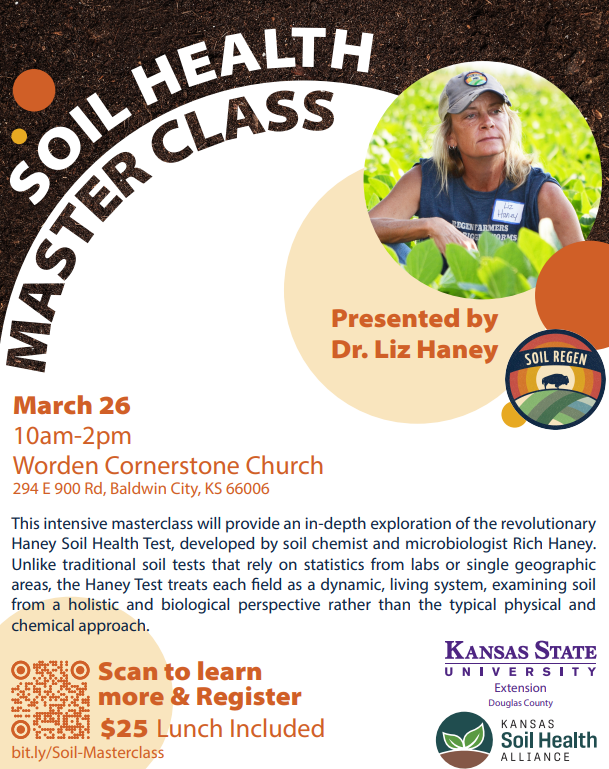
National Soil Scientist Dr. Liz Haney to Lead Soil Health Masterclass in Kansas on March 26 from 10 a.m.-2 p.m. at the Worden Cornerstone Church near Baldwin City. This event is open to farmers, agronomists, crop consultants, conservation professionals and anyone interested in soil health and regenerative agriculture. Hosted by the Kansas Soil Health Alliance, this in-depth workshop will focus on biological soil testing approaches that evaluate soil as a living system rather than relying solely on conventional chemical extraction methods. Unlike traditional soil tests, these approaches measure microbial activity and plant-available nutrient pools that soil organisms are actively cycling. The result is a clearer understanding of how much fertility the soil is already providing. With fertilizer prices continuing to fluctuate and margins tightening, understanding soil function is becoming increasingly important for producers looking to improve efficiency while maintaining productivity. Lunch is included with registration. Please register here: https://bit.ly/Soil-Masterclass
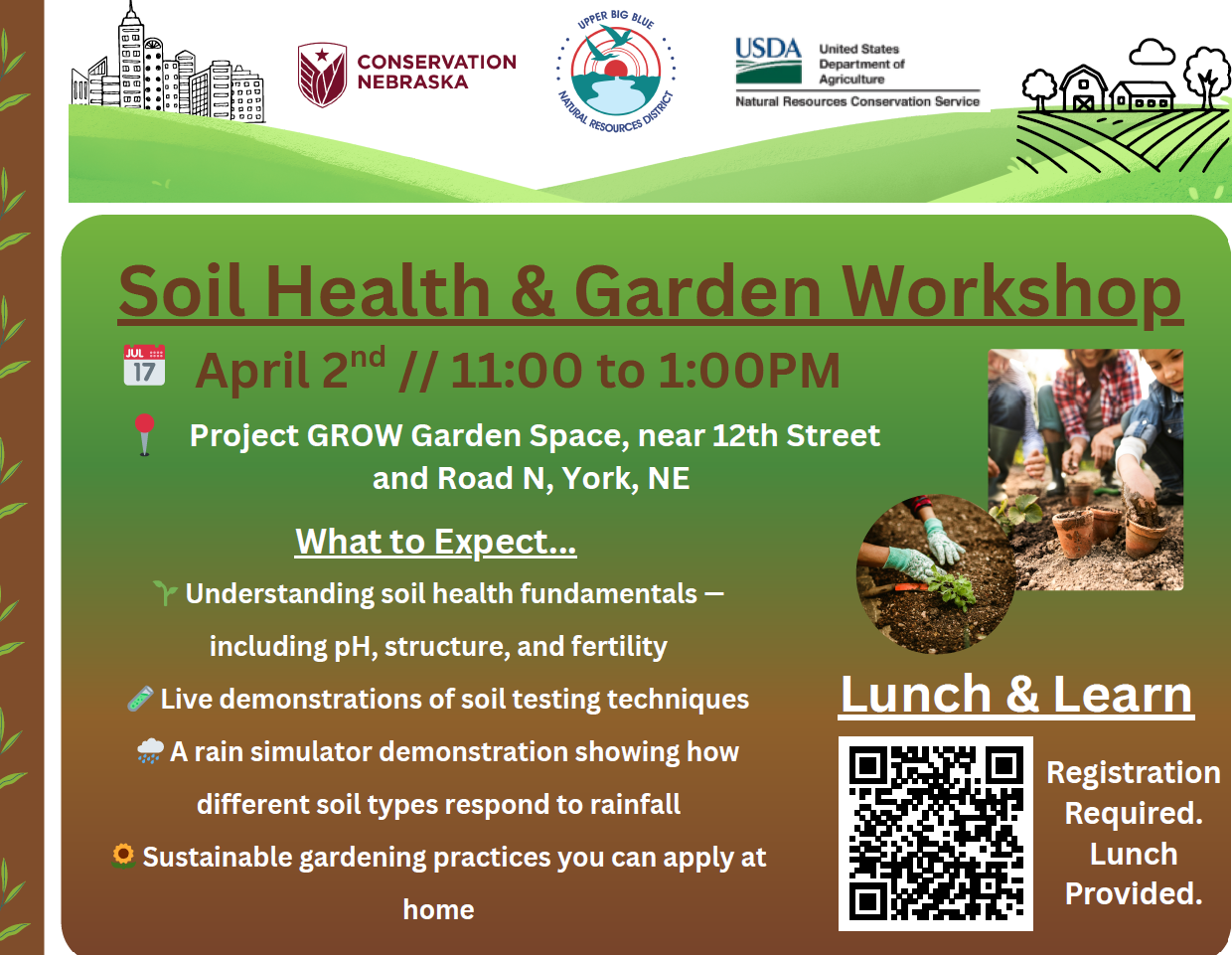
Soil Health & Garden Workshop will be held on April 2nd from 11 a.m.-1 p.m. at the Project Grow Garden Space near 12th St. and Rd N in York. Lunch is included and there’s no charge, but registration is required to the Upper Big Blue NRD at 402-362-6601. On a first come, first serve basis they are doing in-person soil testing for the first 20 attendees. They will be testing for pH and heavy metals. Any soil samples submitted beyond the first 20 will only receive pH testing. Instructions on soil collection will be sent to registered attendees. This free community event is designed to educate and engage participants in understanding the importance of healthy soil for productive gardens and sustainable landscapes. Whether you’re a seasoned gardener or just getting started, you’ll gain practical knowledge and hands-on experience. Topics include: Understanding soil health fundamentals — including pH, structure, and fertility; Live demonstrations of soil testing techniques; rain simulator demonstration showing how different soil types respond to rainfall; Sustainable gardening practices you can apply at home or in community spaces; and Opportunities for community engagement and knowledge sharing.



 JenResources