Blog Archives
Planting Cover Crops into Storm-Damaged Fields
A common question lately has been “I’m considering planting cover crops into areas of corn and soybean fields with hail damage. What are my next steps?”
First, it’s important to consult your crop insurance provider to determine if you can do anything before the adjuster examines the field.
 In some areas hail stripped corn and soybean plants to the ground, leaving just stems standing. Cover crops offer an opportunity to rescue nitrogen already in the field to achieve other goals.
Next, look at your cover crop options, based on potential herbicide carryover from the previous crop and what your end goal is for the cover crop.
Herbicide Carryover
Herbicide carryover from the corn or soybean crop also can be a concern. Check out the herbicide carryover replant options in UNL Extension’s Guide for Weed Management with Insecticide and Fungicide Information on pages 160-171.
To determine if herbicide carryover is a concern for your fields, first check the herbicide label(s) for potential problems. If a rotation (waiting) interval is a concern, contact the chemical manufacturer and explain your conditions. Although the label is the law, companies have conducted extensive research on their products. Sometimes, they can give you a percentage survival chance for planting a crop within a cropping interval. Producers will assume the risk if the germination of the next crop is severely affected, but it may be worth a small calculated risk to potentially get a cover crop established.
Home germination tests also can be conducted. (Planting delays with cover crops, though, may be a concern). Simply take soil samples from the hailed fields and place into containers such as plastic cups with holes in the bottom. Plant about 20 seeds per cup of whichever cover crops you are interested in and wait 7-14 days to determine percent germination. If you don’t have seed, check a cover crop seed supplier to request some free seeds for testing.
Select Seed to Match Your Need
Know what your goal is for the cover crop in order to determine what to plant. Do you want to capture the nitrogen already in these fields? Both legume and non-legume cover crops can capture soil profile nitrogen in their plant tissues for release in subsequent seasons. Late summer or early fall seeded cover crops favor the brassicas (turnips; oilseed radishes including Tillage Radishes®; and canola) for nitrogen trapping for the next crop. Oats make a good complement to seed with the brassicas, since the oats provide quick, weed-suppressing biomass while taking up excess soil nutrients. These plants can survive a light frost and keep on growing.
If reducing compaction is your concern, turnips may help with surface compaction while radishes provide a longer taproot to work through deeper compaction.
If forage is needed for haying or grazing, good choices would be winter annual grasses such as cold-tolerant “winter” oats, cereal rye, winter triticale, and winter wheat. Winter legumes such as yellow sweetclover and winterpeas also may be included in a mix with winter triticale to increase protein content; however, these legumes will need to be planted before early September to provide grazing benefits.
Corn and soybean fields also can be used for forage instead of grain. Silage is probably the best option when the moisture drops to 60%. Currently, the immature hailed corn fields are still about 80% moisture, so producers will either have to wait for the crop to dry or mix dry forages such as straw with the wetter silage in the right proportion. Conversely, if the plants get too dry, it will be hard to pack the silage. To check the moisture, harvest several stalks and chop into smaller pieces with a corn knife, and then test for moisture content. Usually, the feeding value of immature, hailed silage is similar to prairie hay based on nutrient content.
Grazing the hailed fields is another option. However, acidosis may be a concern if cows graze primarily on the immature ears. Cows should be fed some grain for a few days prior to turn out on the hailed fields to help their rumens adjust to a higher carbohydrate diet.
Haying and earlage also may be options, but forage curing is difficult with the cooler days, especially if ears don’t dry well on damaged stalks. Bruce Anderson, UNL Forage specialist, says that it takes 10-14 days longer to dry the damaged corn stalks after crimping than drying cane hay. So, the risk for mold potential on the forage is higher than moving the forage into silage.
Thanks to Todd Whitney, UNL Extension Educator, for his contributions to this article!
Also check out:
Storm Damage Update #1-Soybeans
It’s been five days and soybean fields that were the greatest affected by the storm are now near-brown. Planting some type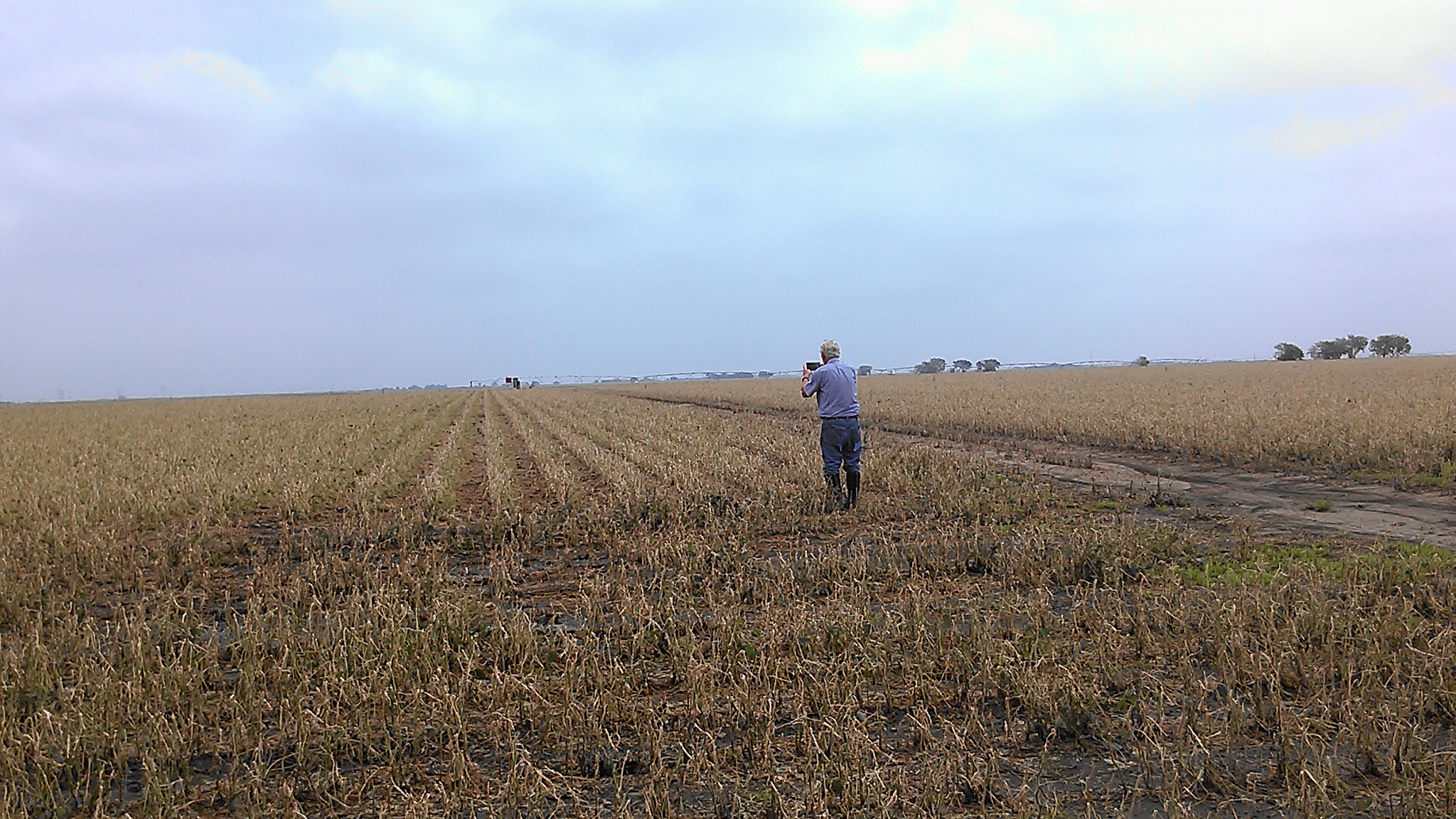 of cover crop in these fields can allow for grazing opportunities as well as reduced soil erosion as there are many months before planting season next year. I’ll talk more about cover crop research in another post.
For fields that still have some leaves and some green to them, there are several criteria to look at when assessing hail damage to soybeans. These include determining plant stand, percent leaf defoliation, percent nodes cut off or broken over, and amount of stem damage. Determining percent leaf defoliation and subsequent yield reduction based on growth stage in indeterminate soybeans can be seen in the chart below. Most of our soybeans were between R4-R5 which is a critical time for yield loss in soybean. The remaining charts can be found here.
| % Leaf Defoliation | |||||
| Growth Stage | 20% | 40% | 60% | 80% | 100% |
| % Yield Reduction | |||||
| V2 | 0 | 0 | 0 | 1 | 2 |
| V6 | 0 | 0 | 1 | 3 | 5 |
| R1 – R2 | 0 | 5 | 7 | 12 | 23 |
| R3 | 3 | 6 | 11 | 18 | 33 |
| R4 | 5 | 9 | 16 | 30 | 56 |
| R5 | 7 | 13 | 23 | 43 | 75 |
| R6 | 16 | 11 | 18 | 31 | 53 |
| R7 | 1 | 2 | 4 | 6 | 8 |
Dr. Jim Specht, UNL Soybean Physiologist, shared some recent research data that may be of interest. He said R5 is  also critical in that stem node number accrual (including new petioles with leaves and nodes on branches) ceases at R5. This occurs because the developing “sink” of newly developing seeds in the pods is a significant draw on the plant’s photosynthate. This draw is so powerful that very little other vegetative activity dependent on photosynthate is permitted.
With our current situation, Jim wasn’t sure if because of hailed off pods and seeds, if that “sink” to source signal would cease to exist resulting in new petioles and leaves. He didn’t think this would occur for two reasons:
1) Indeterminate main stem apices are not responsive to photoperiod induction, and might re-initiate new nodes, but since most of the indeterminate apical stem tips were hailed off in many fields, that possibility is unlikely.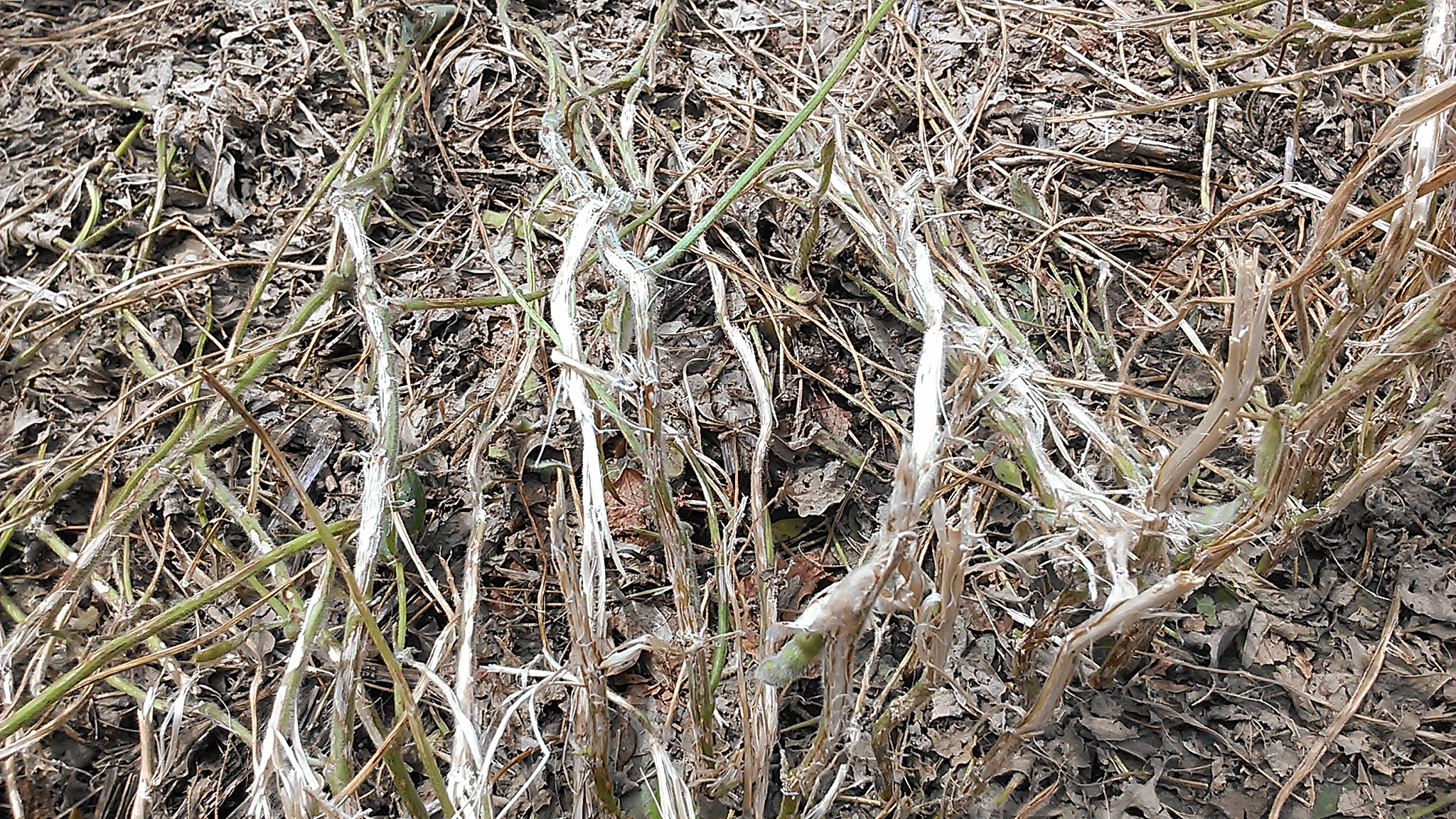
2) During stage V0 to V1, all original lateral meristems in nodes 0 on up to about stem node 6 were cell clusters committed to vegetative phase development such as branches. Photoperiod induction, which occurs as soon as soybean plants of the maturity groups grown in NE attain the V0-V1 period, transduces in all other single-cell meristems in the lateral apices to become flowers (not branches). Thus the reason why we typically see the first soybean flower on about the 6th node or so. No more branches will form at higher main stem nodes the rest of this season under this scenario.
Soybean lateral apices will continue to be programmed to become flowers, because the days are short at all times during the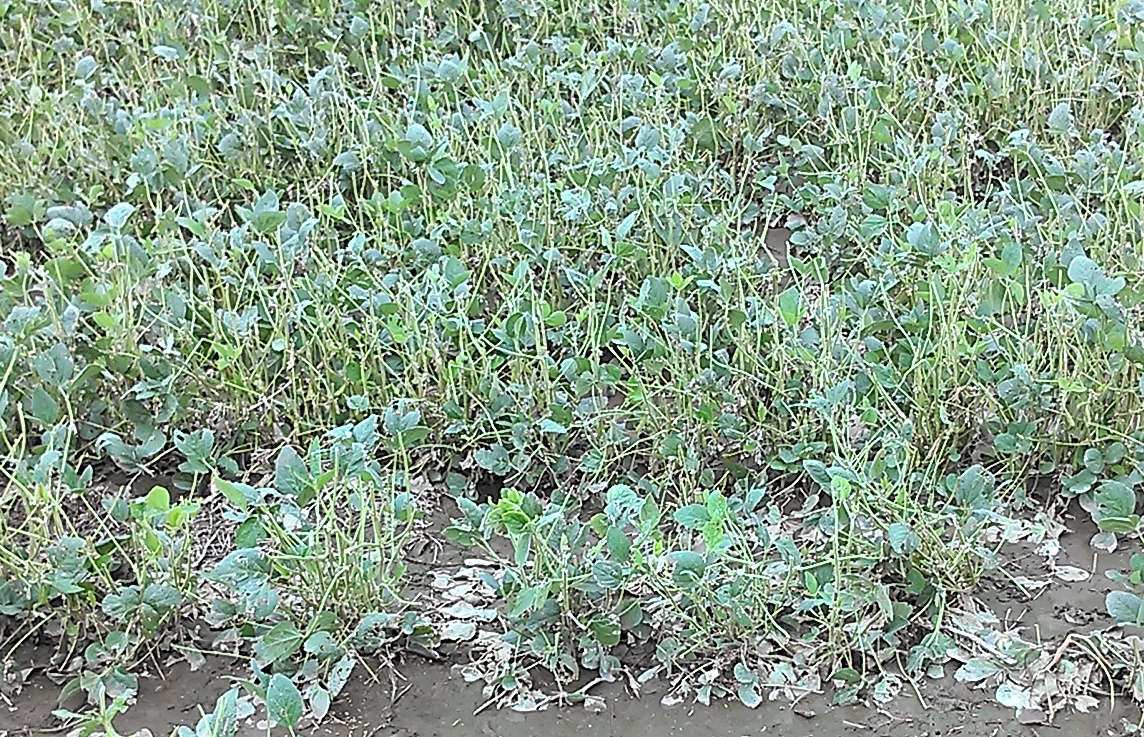 season from planting to maturity, for soybean varieties adapted to and sold in NE. Research has shown it takes about 28 to 32 days after the transduction of a lateral apical single cell (to transduce it into a floral pathway) before the flower tracing to that single cell appears. Any flowers appearing soon after the hailstorm would have had to have been cell clusters in transit before the hailstorm date (from a zero-day single cell transduction to a 28-32-day later observable flower). Thus, truly “new” flowers emanating from single-cell apical transduction to a floral state the day of the hailstorm would be appearing at the end of August or beg of September, and would not have sufficient time to become pods (with seeds) before the usual date of a fall frost.
Overall, Jim says at soybean stage (R5), it is hard for a soybean plant to recover from a hailstorm, and what recovery is possible is going to have to hurry given the approach of fall. Special thanks to Dr. Jim Specht for his insights into this post!
Reflections: After the Storm
It’s been an interesting few weeks. Last week I was continuing to receive calls about considerations for drought damaged corn. Then southern rust arrived in the area earlier last week. Followed by the tremendous August 1 storm that affected so much of our County.
Numb…..
is how I’ve felt these past few days-and I can’t imagine how difficult it is for you whose crops were affected! It’s just a sickening feeling walking into field after field and driving around the County seeing the storm damage every day. I’m so sorry for those of you who have lost your crops! As I look at the crops, though, I’m a little puzzled at the way things are laying, the twisted plants….things aren’t all adding up for “straight-line winds”.
In spite of how difficult things look right now, I can’t help but wonder if we were spared from something much greater?
The follow passage in the Bible has been my go-to during times of drought and difficult times in farming. I was going to share this in a drought post…but I feel it still applies with as many partial and total crop losses we’ve experienced in the area.
Though the fig tree should not blossom and there be no fruit on the vines,
Though the yield of the olive should fail and the fields produce no food,
Though the flock should be cut off from the fold and there be no cattle in the stalls,
Yet I will exult in the Lord, I will rejoice in the God of my salvation! Habukkuk 3:17-18
In the midst of trying to provide advice, it’s nice to know that God has everything already figured out and that He’s always in control. Even in the midst of this, He is always good!
Storm Damaged Crops
The rain was welcome on Thursday but the wind and hail damage that came were devastating to a good portion of the County. I’m so sorry to all of you affected….for some of you, this is two years in a row of severely hail damaged or totaled out crops. We are thankful the damage wasn’t worse. You can see more pictures here.
So the big question is what do you do now? Ultimately, each field will need to be assessed on a case by case basis. The following are our NebGuides for hail damage to corn and soybeans. For the most part we were in brown-silk to blister for corn and late pod-beginning seed in soybean (R4-R5). The concerns I have right now are stalk quality, disease, grain filling, and the amount of diseased grain we may have due to mushy areas on hail-damaged cobs right now. Several years ago, we watched how severely hail-damaged corn a little later in the season turned brown and died. We also know that southern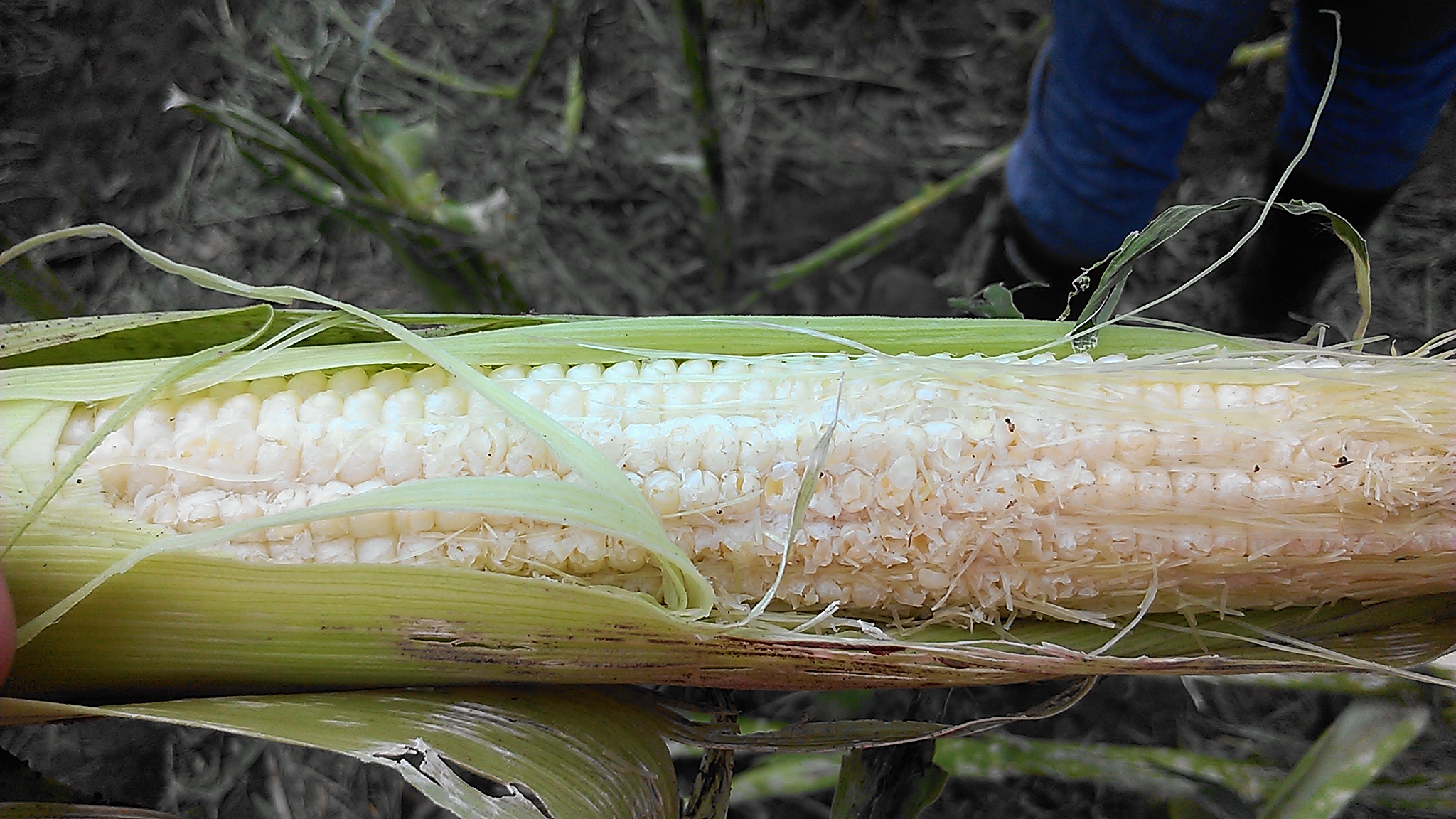 rust is in the area and while much of the leaf tissue in the County is damaged, it is still in the County in other fields and south of us. The Puccinia polysora fungus that causes southern rust, when severe enough, will infect and cause pustules on the stalks. With the wounding and low leaf area for photosynthesis, stalk strength is a concern and fungicides may be a consideration depending on potential yield loss-again need to assess on a field by field basis.
I talked with a number of people on Friday regarding thoughts on silage, green chop, haying/baling, planting cover crops, etc. Dr. Bruce Anderson, UNL Extension Forage Specialist, said the most common salvage operation for corn damaged by hail, wind, drought, or other calamities is to chop it for silage. Don’t be in a hurry, though. Standing corn currently could be over 80 percent moisture. The easiest way, and maybe the best way, to lower moisture content is simply wait until some stalks start to turn brown. Waiting also allows surviving corn to continue to add tonnage.
But in some of our damaged fields, I don’t think we can wait to make silage. Bruce also shared you can reduce moisture by windowing the crop and allow it to wilt one-half to one full day before chopping. You also could mix grain or chopped hay to freshly chopped corn to lower the moisture content. It takes quite a bit of material for mixing though – about 7 bushels of grain or 350 pounds of hay to lower each ton of silage down to 70 percent moisture from an original 80 percent moisture. That’s 7 bushels grain or 350 pounds of hay for each ton of silage.
Or, you can allow that windrowed corn to dry completely and bale it as hay. Be sure to test it for nitrates before feeding. Grazing might be the easiest way to use damaged corn, and this is a good way to extend your grazing season. You might even plant some corn grain or sorghum-sudangrass or oats and turnips between rows to grow more forage for grazing if you can wait until late fall before grazing. Be sure to introduce livestock slowly to this new forage by feeding them before turning in to reduce the chances of digestive problems. Also, strip graze the field to reduce trampling losses and get more grazing from the corn.
Crop Update 6-20-13
The sun has been welcomed and crops are rapidly growing in South Central Nebraska! Corn right now is between V6-V8 (6-8 leaf) for the most part. Quite a few farmers were side-dressing and  hilling corn the past two weeks. It never fails that corn looks a little stressed after this as moisture is released from the soil and roots aren’t quite down to deeper moisture.
Installing watermark sensors for irrigation scheduling, we’re finding good moisture to 3 feet in all fields in the area. The driest fields are those which were converted from pasture last year and we want to be watching the third foot especially in those fields. Pivots are running in some fields because corn looks stressed, but there’s plenty of moisture in the soil based on the watermark sensor readings I’m receiving for the entire area. So we would recommend to allow your crops to continue to root down to uptake deeper moisture and nitrogen.
The last few weeks we observed many patterns from fertilizer applications in fields but as corn and root systems are developing, they are growing out of it. We’ve also observed some rapid growth syndrome in plants. This can result from the quick transition we had from cooler temperatures to warmer temperatures, which leads to rapid leaf growth faster than they can emerge from the whorl. Plants may have some twisted whorls and/or lighter discoloration of these leaves, but they will green up upon unfurling and receiving sunlight. This shouldn’t affect yield.
Damping off has been a problem in areas where we had water ponded or saturated conditions for periods of time. We’ve also observed some uneven emergence in various fields from potentially a combination of factors including some cold shock to germinating seedlings.
We began applying sugar to our on-farm research sugar vs. check studies in corn. We will continue to monitor disease and insect pressure in these plots and determine percent stalk rot and yield at the end of the season.
Leaf and stripe rust can be observed in wheat fields in the area and wheat is beginning to turn. We had some problems with wheat streak mosaic virus in the area again affecting producers’ neighboring fields when volunteer wheat wasn’t killed last fall. Alfalfa is beginning to regrow after first cutting and we’re encouraging producers to look for alfalfa weevils. All our crops could really use a nice slow rain right now!
Weed Science Field Day
Hope to see you at this weed science field day at UNL’s South Central Ag Lab near Clay Center on July 2nd! No charge. Please RSVP to (402) 762-4403. More information at: http://scal.unl.edu.

Storm Damage to Crops
Memorial Day storms hit us again this year, this time with the EF2 tornado in Edgar. I checked NE Rain, and for the month, Clay County  received between 5.9-9.7″ of rain with nearly 3/4 of that coming in the last 6 days !
Even with the saturated soils and localized flooding, there is still potential for drought. It was this way last year at the end of May before the rains shut off in early June.
I’ve received questions regarding potential storm damage to crops. Normally I’ve found that waiting a week helps with determining regrowth and decisions. Overall, we’re fortunate that crops were so small. Much of the corn was V1-V3 and the soybeans were anywhere from not planted to cotyledon stage. The majority of damage occurred where emerged plants were silted over with soil and/or residue, standing in water for periods of time, of left with stems due to high wind and/or hail.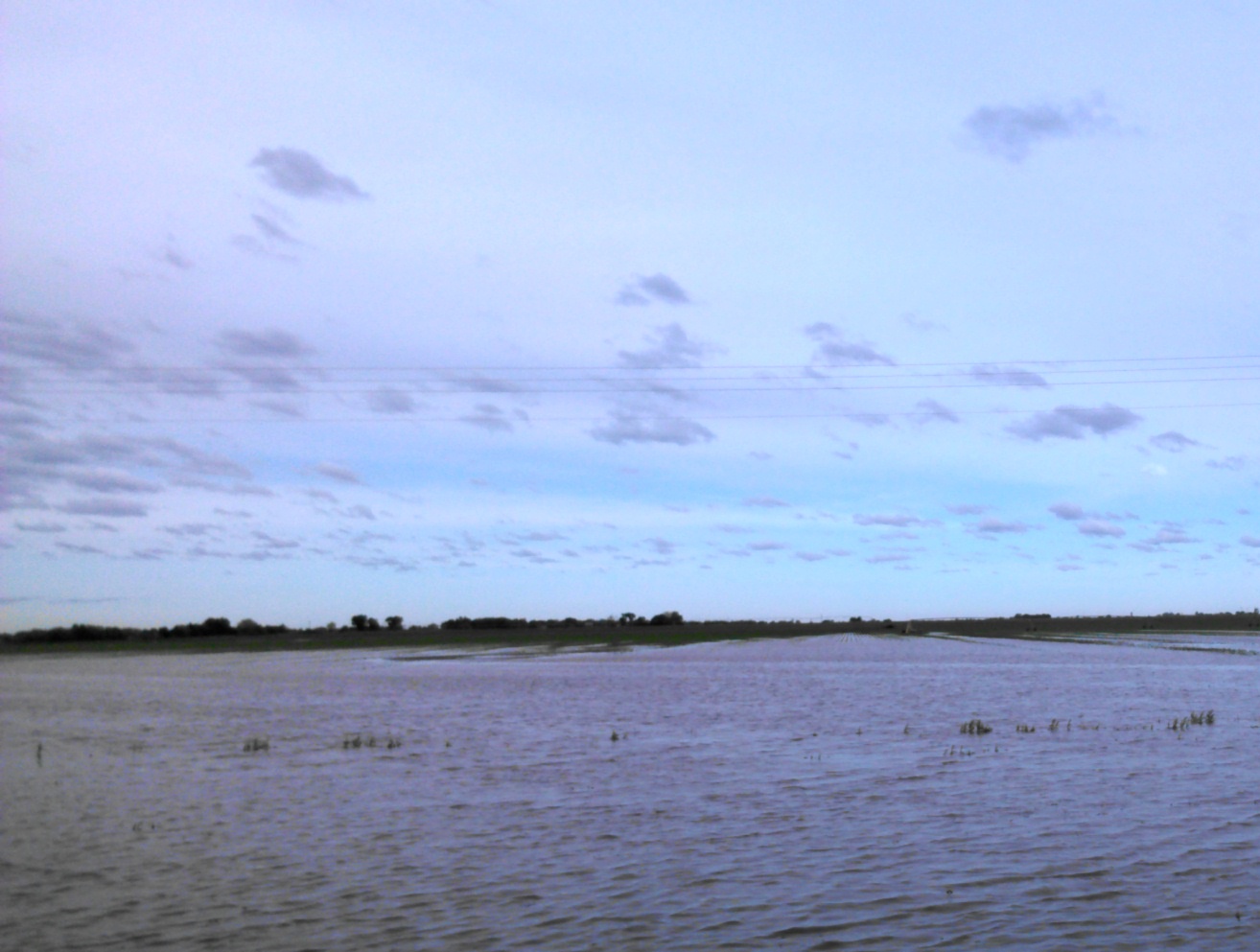
Corn Decisions
According to Purdue University Agronomist, Bob Nielsen, it takes around 48 hours for oxygen to be completely depleted from saturated soils. Plants that are emerged above the water have a better chance of survival than those below it; however, it’s hard to tell exactly how long plants can survive in those conditions. We also have several areas where plants were standing in water for a few days, the water receded, and now they’re standing in water again. Only time will tell how those plants will fare.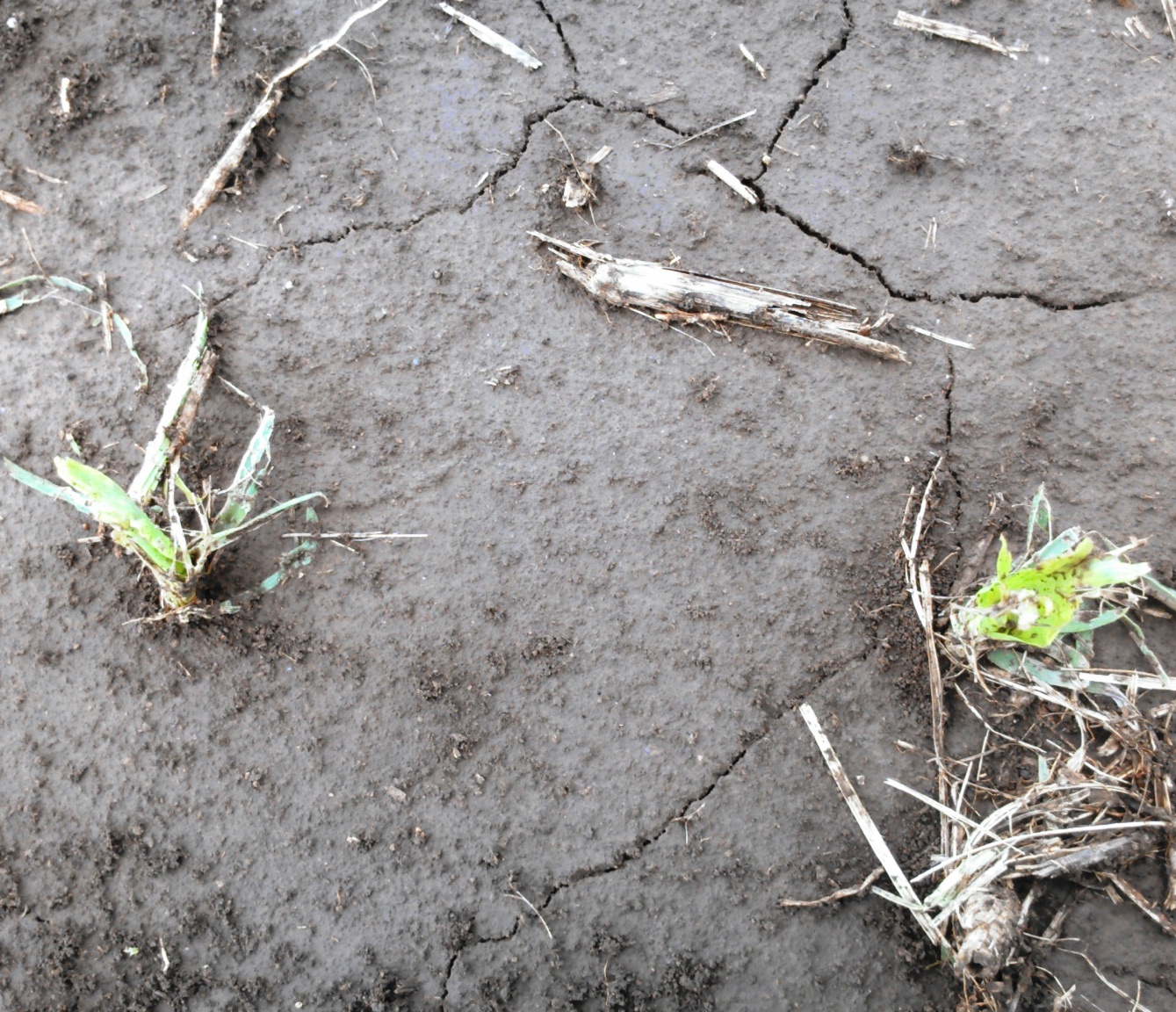
Because the growing point of affected corn plants is below ground, in many situations, plants should recover if the growing point remained healthy. Hopefully only small areas will need to be replanted. For crop insurance decisions and options, please check out the following CropWatch article.
Soybean Decisions
Some emerged soybeans that were at cotyledon stage have been reduced to stems leaving gaps between healthy plants. Soybean plants can compensate for reduced populations; however length of gaps and final stands do need to be assessed for replant decisions. UNL on-farm research has shown less than 1.4-2.0 bu/ac yield difference between planting 90,000 and 180,000 seeds/acre. (See report.) In our research, 90% of the planted stand was achieved at both seeding rates in irrigated 30-inch rows in no-till and ridge-till fields.
Consider what was found in 2006 in one dryland field in Nuckolls County where seeding rates of 100,000, 130,000, and 160,000 seeds/acre were planted. This  field was at the cotyledon stage when it was hailed. Some plant stands dropped to 67,000 plants/ac. Yield was 4 bu/ac less than in the 160,000 seed/acre planting that had a final stand of nearly 98,000 plants/ac. The average yield in the field was 40 bu/ac. While this is only one field and one year of research, it is an example of how soybean plants can compensate for reduced populations by branching and how August rains in dryland can still allow reasonable yields to be produced. Based on our on-farm research, leaving dryland stands of at least 65,000 plants/acre and irrigated stands of 90,000 plants/acre is likely a better choice than replanting, in the event that the gaps between plants are not large and are fairly even.
Many of the soybeans worst affected were reduced to stems. Last year we watched as soybeans continued to develop plumules after the hail events and soil crusting in our area. The plumule, which is the seedling stem tip and its undeveloped leaves above the cotyledonary node, may remain, but without the cotyledons to serve as a carbon and nitrogen source, development of new seedlings with small leaflets will be slow. These plants may not become competitive with surrounding plants in terms of pod and seed production. Therefore, when counting seedlings to determine plant stand, count only the seedlings that have at least one cotyledon. You can count seedlings missing cotyledons if they have large unifoliolate leaves that will soon unroll as in this picture.

In summary,
we will monitor damage early next week to help with replant decisions. Overall, I feel we are fortunate that the crops were so small and crop damage does not appear to be severe other than all the pivots that need to be replaced. We will also need to watch for potential disease damage in weakened plants. For crop insurance decisions and options, please check out the following CropWatch article.
Preparing Irrigation Scheduling Equipment
It’s wonderful receiving the rain we did, seeing how quickly planting progress came along, and how quickly corn is popping out of the 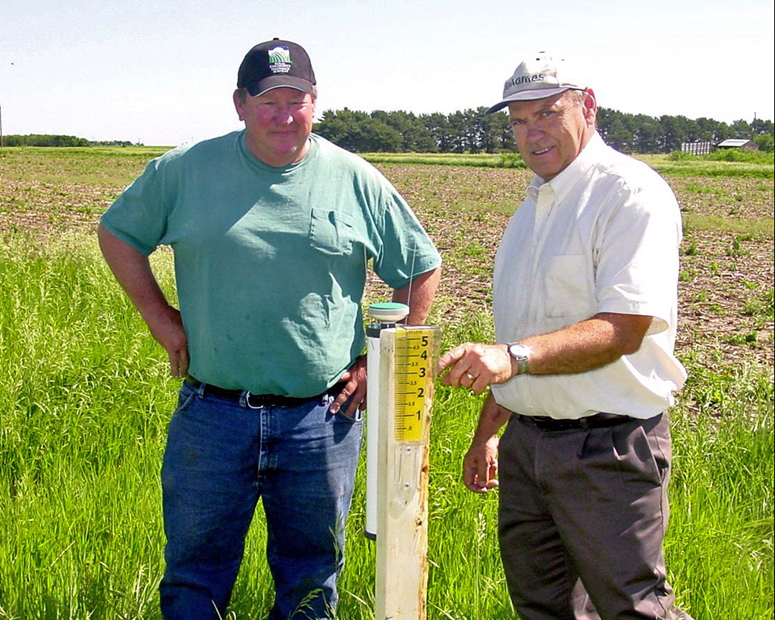 ground! Being mid-May, it’s time to get our Evapotranspiration (ET) gages out. A reminder to only use distilled water in the gages, make sure to fill up the ceramic top portion of the gage before inserting the stopper, and gently dust off the ceramic top and replace the white membrane and green canvas cover. We recommend replacing those membranes and covers each year so if you need a new one, please let the Natural Resources Districts (NRDs) or me know and we’ll get you a new one! For those of you recording ET information online, please be sure to do so consistently each week to help your neighbors and crop consultants.
Early after crop emergence is the best time to install watermark sensors. For those of you with watermark sensors, read them to ensure they read 199 kpa (dry). Then “prime” them first by soaking them for 24 hours in water to ensure all the air bubbles have been released. The sensors should have a reading of 10 kpa or below to be considered good. If they read higher than that, either continue soaking them another 24 hours and read them again, or plan that they no longer are reading correctly and replace them with others from the NRDs. Remember after soaking sensors that water moves up into the PVC pipe via capillary action, so be sure to dump the water out of the pipe  as well.
When installing the sensors, be sure to install them wet, drain excess water, and look for areas that are not compacted, avoid tractor wheel tracks, and look for even spacing of plants. Carefully install without breaking off any plants (thus easier when plants are small!). It’s also important not to install sensors into extremely wet fields. What we have found is that a thin soil layer can cover the sensor when pushing it into the soil of very wet fields. When that soil layer dries, it can provide a reading of 199 saying the sensor is dry when it truly isn’t. If this happens to you, simply remove the sensor, rewet for one minute and re-install. It should be acclimated to field conditions within 48 hours. If you have any questions regarding the installation process, please let the NRDs or your local Extension Educator know. You can also view videos of the installation process and receive additional information to answer your questions.


 JenResources