Author Archives: JenBrhel
Pivot Performance
Pivot Performance: As we think about and look at data from 2023 and at costs for 2024, something that has come up in a few conversations is pivot performance. Water covers a multitude of problems. The lack of moisture much of the past 2-3 years, the number of hail and windstorms, and the number of pivots and/or nozzles that were replaced are all factors to consider as you view yield maps and imagery. For example, in the rush of getting new pivots up and going, the wrong nozzles were placed on the wrong spans in some situations. It’s easy to do and can make a big difference in water output and distribution. It’s also easy to check to make sure nozzles are correct on the pivot by driving alongside of it and checking it with what the sprinkler package design says. Would encourage anyone who replaced pivots/sprinkler packages to add this to your checklist before irrigation season next year.
Another field I was checking fairly often in 2023 showed too much variability of plants in the field; imagery showed a problem too. I thought there was something wrong with the water output but was told that couldn’t be a problem. Turns out the wrong sprinkler package was put on that pivot after checking into it further; it can easily happen when several pivots are being replaced for the same farmers who get hit by these storms. Everyone is doing their best during these times of disaster events to keep ag going, yet mistakes can happen. I also think about how often a nozzle that was damaged gets replaced with whatever is handy vs. the correct nozzle, so that’s another thing to think about before irrigation next season.
My colleague, Bruno Lena in Platte County, received a Nebraska Soybean Board grant to work locally with growers on understanding their uniformity of water application. He worked with three growers and provided an excellent summary of what they did and their case study findings in the following CropWatch article: https://go.unl.edu/yfb8. The economics are also provided; it’s well worth a read.
Essentially he worked with growers on ‘catch a can’ tests where cups are mounted on stakes like electric fence posts and distributed evenly along a pivot. He and a team of colleagues worked together to collect the information. “Initially, pivots 1, 2 and 3 exhibited uniformity of water application (UWA) values of 78%, 59% and 23% with the old nozzles, as these pivots had received minimal maintenance attention since their initial installation. Growers noted that these pivots were 21, 34 and 38 years old, still equipped with the original nozzle package. Following the replacement of nozzles, all pivots demonstrated improvements. UWA increased to 92%, 90%, and 74% for pivots 1, 2, and 3, respectively. While pivots 1 and 2 met the manufacturer’s recommendation of at least 90% UWA, pivot 3 still fell short of the recommended values. Upon discussing this with the grower of pivot 3, it was revealed that the primary reason for the suboptimal UWA was the pumping capacity.”
Once the new sprinkler packages were installed, another thing Bruno and his team found were inconsistencies between the selected irrigation rate at the panel and the actual irrigation rate measured by the cups. The measured irrigation depth deviated from the depth selected at the pivot panel. One pivot was underapplying water by 0.19” and another was overapplying by nearly 0.38” each circle.
A father/son operation in York County had built their own catch a can system after working with Dr. Jim Specht and me on a project in 2022. They used it to test nozzle output on different pivots in 2023. On one pivot, they were aiming for 0.75” per circle yet the output in the cups was only 0.40” on average. That was a big realization to be underapplying by 0.35″/circle, especially in a year like 2023. They slowed the pivot down to get the application where it needed to be, and the father mentioned how grateful he was for doing that test. In a recent conversation, he mentioned it was a 30 year old pivot with an upgraded drive system (new center drives and gear boxes two years ago) that led to the gear ratios being different than the original. That was something they didn’t account for when using percentages on the computer printout, so another consideration. With many area pivots being completely new or upgraded in various ways the past few years, I mention all these examples for awareness and consideration as all these details can make a difference in pivot performance as you look at 2023 data and head into the 2024 season.
Christmas Plant Tips
This week, sharing some information on Christmas plants from my Extension horticultural colleague, Kelly Feehan. Before I do that though, I’ve been asked by a couple of Extension specialists to consider a soybean project that has different experimental treatments for soybean gall midge, stem borer, frogeye leaf spot, and white mold. The project would be conducted in small plots on the edge of an interested farmer’s field taking no more than 1-2 acres total. Can be irrigated or non-irrigated and can have history of one or more of the above-mentioned pests in the field. I’m on the fence regarding participating and want to gauge farmer interest. So, if this is something you’re interested in learning more about, please contact me this week and I’ll provide details for consideration.
Live Christmas Trees: Kelly shares, “Just a reminder to daily check live Christmas trees for their watering needs to avoid a fire hazard. For safety, start with a fresh Christmas tree and don’t let the basin run out of water. Use at least a one-gallon capacity tree stand and check the stand daily for adding water. A fresh tree whose trunk has not sealed will take up water quickly. The rule-of-thumb is a tree will use one quart of water per day for every inch of trunk diameter near the base. If you have a tree with a 3-inch base, it can use 3 quarts of water per day. The trunk should have been freshly cut at a slant just prior to putting it in the stand.
Once a Christmas tree stand runs out of water, how long does it take for the trunk to seal so it will no longer take up water? If the water drops below the base of the cut trunk, a seal of dried sap can form over the stump in four to six hours. This seal will prevent the tree from absorbing water, even if the tree stand is refilled; leading to tree drying and increased fire risk.
If a tree stand dries out and a seal forms on the tree base, the tree can be taken out of the stand and a fresh cut made; or one-half inch deep holes drilled into the trunk one-half inch apart; which might allow the tree to begin absorbing water again. This is not very feasible; so be diligent and don’t let Christmas tree stands dry out for a safe holiday season. Also, when watering, nothing needs to be added to water in the tree stand to promote freshness.”
Christmas Cactus: Kelly shares, “To keep Christmas cactus blooming as long as possible, place it in bright but indirect light. Too much sun can cause leaves to turn yellow. Keep soil or potting mix constantly moist but not waterlogged. Even though they are cactus, they are jungle natives and prefer just moist conditions with indirect light. Avoid fertilizing Christmas cactus during the winter; but do fertilize every other week from spring through fall. Plants seem to flower best if they are a little pot bound; but if roots become over-crowded in the container, blooming will decrease. If you haven’t repotted in several years, or you notice a decrease in flowering from the previous year, repot the plant into a slightly larger pot, but wait until spring. If possible, move the plants outside for summer. Keep in a shady area as Christmas cactus will not tolerate full sun.”
Poinsettias: Kelly also shares, “It’s Poinsettia time. Hard to believe these bright, colorful plants originated from a weed. And amazing what plant breeding and good marketing can do. To enjoy your Poinsettia as long as possible, place them in an area with bright sun for at least half the day. If possible, provide a night temperatures in the 50’s or 60’s. This is often the most challenging condition to meet in the home, but keep plants as cool as possible at night. If plants are near a window, don’t let the leaves touch cold window panes; and keep Poinsettias away from warm or cold drafts. Poinsettias need to be well-watered. Because they are in a light weight soil-less mix, they will dry out quickly. Allow the soil to dry slightly between watering; then water thoroughly until water runs out of drainage holes. Be sure to punch holes in decorative foil wraps to prevent soggy soil conditions or at least pour excess water out of the foil after each watering.”

Fruit Flies and Fungus Gnats
Hope you had a blessed Thanksgiving! For whatever reason, I’ve received a number of questions about “tiny flies” in homes “flying around their faces” in the past 10 days. All had different situations but each situation led to the culprit being either fruit flies or fungus gnats. So, sharing on the differences between the two insects and some strategies for management should you or someone you know also end up dealing with them. The first key is identification with the second being locating where the pest is breeding and eliminating that source before seeking to trap and eliminate them.
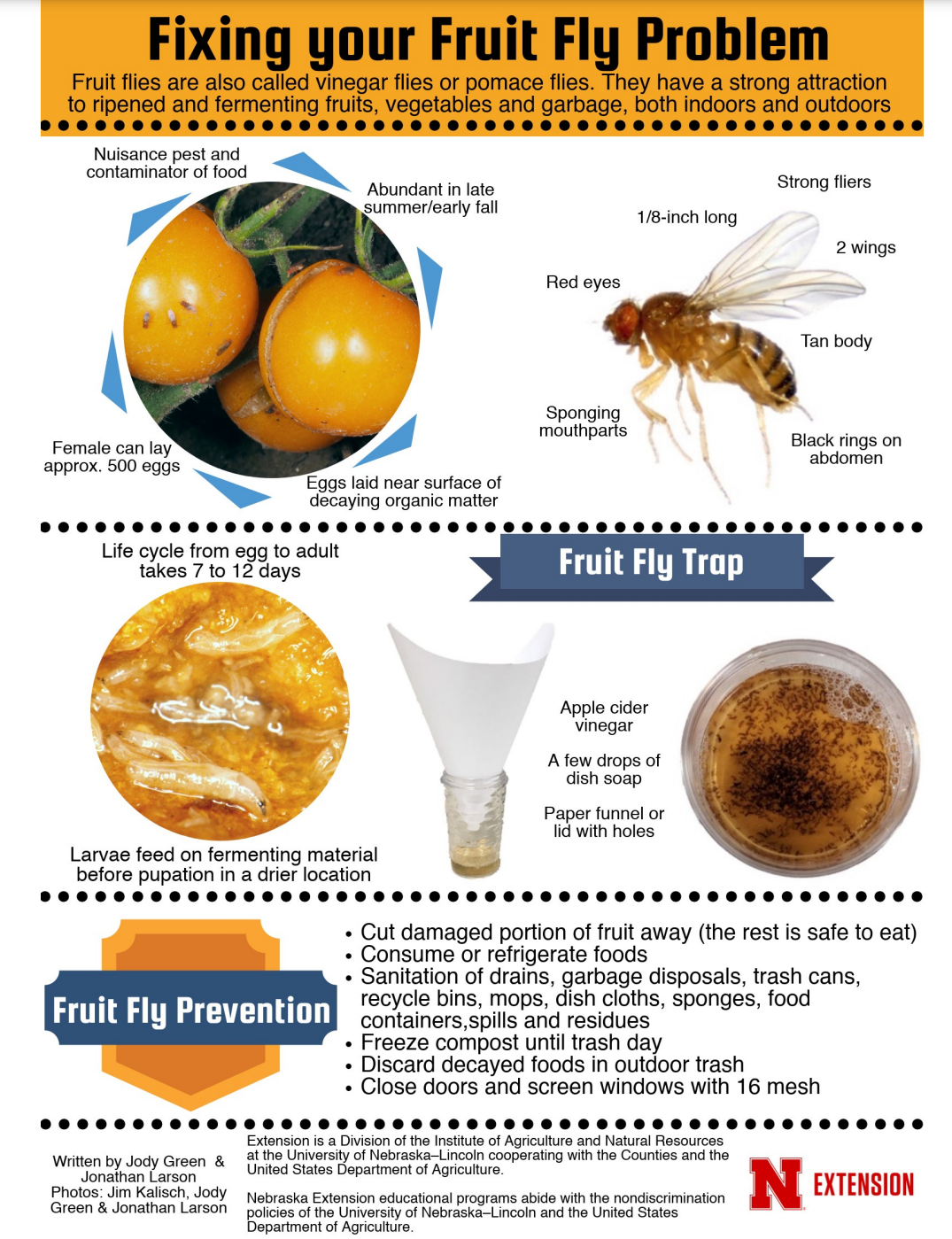
Fruit Flies: Jody Green, Extension entomologist, shares, “Fruit flies are 1/8-inch long and typically have red eyes. They are one of the smallest and most common flies in homes or anywhere food ripens, rots and ferments. Fruit flies begin as eggs before they hatch into legless larvae or maggots. The maggots enter a pupal stage to develop into mature, winged adult flies. They are active year round indoors, but their life cycle will slow in cooler temperatures. Under optimal conditions in the summer, they can complete their life cycle in 7–10 days. Prior to pupation, the maggots will migrate to a drier location nearby. Adults are good fliers, attracted to lights and therefore found flying around people’s faces away from the source of the infestation.”
We commonly see fruit flies in the summer as garden produce gets picked or bought, ripens on counters, and especially as bananas and tomatoes get overripe. However, fruit flies can be attracted to other places beyond the kitchen counter in our homes. These places can include: anywhere where non-refrigerated produce is stored like pantry and cupboards (ex. potatoes); trash, compost, recycled collection areas (ex. pop cans, discarded food containers); lunch boxes and forgotten storage containers; drains and garbage disposal (these can be called fruit or drain flies but need drain sanitation or there’s natural products on the market for purchase); any type of pet food bowl/terrarium; and anywhere a moist film of fermenting material remains such as on mops and dishcloths. Determining the breeding site in your particular situation is key to helping eliminate the fruit flies.
Once the breeding site is eliminated, homemade traps can then be used to trap and remove any additional fruit flies from the home. I was recommending vinegar water in a bowl or cup and discarding each day so no larvae were able to hatch and crawl out. In following up, most said that did the trick. Extension entomologists shared two other trap options using home-made items that you can keep for up to one week on the kitchen counter.
1-Using a salt shaker, fill ¼ full with apple cider vinegar, add 2 drops of dish soap, and replace cap or use a paper funnel. Discard within 7 days.
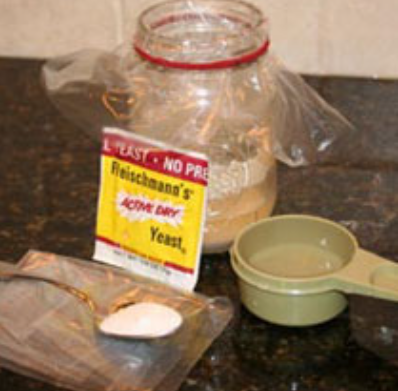
2-“Use a one-pint glass jar. Add 1/4 – 1/3 cup of warm (not boiling) water. Sprinkle a package of activated dry yeast over the water. Add one teaspoon of sugar to activate the yeast. Swirl the yeast liquid. In a few minutes, the sugar will cause the yeast to foam and expand and start producing CO2. Take a small plastic bag (like a sandwich Baggie®) and place over the mouth of the jar with one corner reaching into the jar. . Poke a small hole (no more than 1/8-inch diameter) in the corner of the bag with a pencil. Secure the bag around the rim with a rubber band or canning ring. Fruit flies will immediately be attracted”-Barb Ogg. Be sure to discard the trap in seven days.

Fungus Gnats: These can be confused with fruit flies but they complete their life cycle in the top layers of soil of house plants, especially when they are overwatered. Jodi Green shares, “Adults are grayish-black, about 1/8-inch long and have one pair of wings. Females lay 100–150 eggs in moist potting soil and the larvae feed and develop on the fungi and organic matter. Fungus gnat larvae are white, slender, legless maggots with translucent bodies and dark heads. Larval feeding sometimes includes gnawing on the roots and stems of plants. In warm conditions, overlapping generations may occur, producing large populations which can cause spotting, curling, yellowing or plant death. After pupating in the soil, they emerge as winged adults, bothering people by flying around faces, lights, windows and food items. In order to eliminate a fungus gnat infestation, the life cycle must be broken. This can be done by removing the fungus in which they breed, while simultaneously reducing the number of breeding and egg-laying adults. A non-chemical approach is to reduce the topsoil moisture by less frequent watering, drying out the soil and changing the plant medium to provide better drainage. To catch flying adults, yellow sticky card traps are available at garden stores and placed at the soil surface. In addition, there are biological control products such as the microorganism, Bacillus thuringiensis (Bt), which is applied to the soil to kill larvae after ingestion. Bt is selective to insect larvae, non-toxic to humans, pets and contains no harmful residues.”
Gratitude and Thanksgiving 2023
Gratitude and Thanksgiving: What a beautiful fall! It’s been a few years since I remember having the fall colors or the length of beautiful weather we’ve had this year. Grateful also for a little rain this weekend.
This past week was our Extension Fall Conference where we got to spend time with colleagues across the state. I walked in the door and was kindly told about Paul Hay’s (Extension Educator emeritus in Gage County) unexpected passing. It was a shock for many of us that day, yet also so fitting that we could be together with Extension colleagues to share memories with each other through laughter and tears. I’m so grateful for the talented new colleagues who’ve joined us. Throughout the conference we kept stressing how much Extension is like a big family. I’m grateful for that as well. It’s genuinely hard to be an Extension professional and not care about people. As I sat today at Paul’s funeral with numerous pews full of current and former Extension employees, I found myself once again grateful for my Extension family. I was also grateful to celebrate a life well lived. Anyone who was fortunate to know Paul knew he was legendary and such a gift to us all!
I’m also grateful for all the farm families I’ve had the opportunity to serve and the relationships built through the years with them and ag business professionals. So often this past year when I’ve been frustrated with work things, one thing that helped me stay encouraged was gratitude to work with great colleagues and serve great people!
I think many of us are grateful for the end of this growing season! During harvest I was telling everyone that “every field harvested is one field closer to being done with the end of this year!” Perhaps that was a bad attitude to have; I think it’s honestly where many of us were. I’ve never experienced anything like this past year, nor honestly, been so wrong about crops in my life (regarding how long the drought-stressed corn survived vs. me thinking it should have died). But I learned a lot and thank you for being patient and gracious with me in this journey.
This year has most likely held highs and lows for all of us. Whether we’re currently on the mountain top or valley in life, we have so much for which to be grateful! Gratitude can produce joy even when we don’t feel very joyful. I can honestly say there’s times this year when I didn’t feel joyful and had to really dig deep to choose gratitude and joy. But choosing gratitude can allow us to find joy in everyday moments and also share joy with others. I think joy is something we all could use more of!
So, may we experience more joy in the everyday moments as we intentionally seek to live with gratitude. And, may we extend this joy via kindness, grace, compassion to others around us. As I was reminded again today that life is so short, may we also seek to live each day to the fullest. May we tell people how they’ve impacted us for good and thank them. May we tell people how much we care about them. Wishing everyone a very blessed Thanksgiving!
Thanksgiving Food Preparation Tips and Resources: https://food.unl.edu/article/thanksgiving-central.
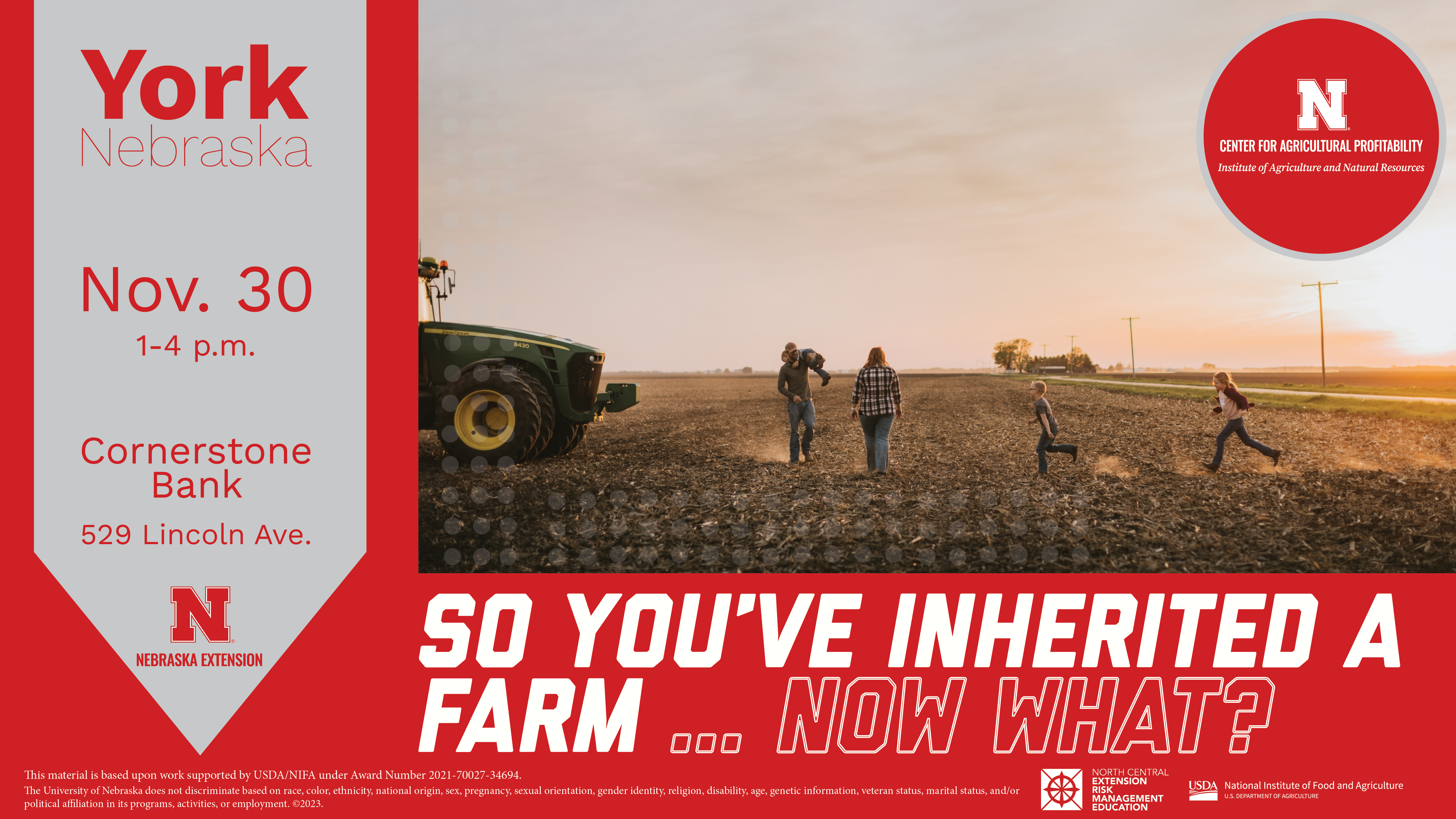
So You’ve Inherited a Farm…Now What? Reminder of this upcoming workshop November 30th from 1-4 p.m. at Cornerstone Bank (529 Lincoln Ave.) in York (Register at 402-362-5508). This workshop will cover Nebraska land industry topics for farms and ranches. Those include evaluating current trends in land values and cash rents, strategies for successful land transitions, lease provisions, legal considerations and managing communication and expectations among family members. Creating and adjusting estate plans will also be covered. The program is free to attend, and refreshments will be provided. Pre-registration is requested by one day prior to the workshop.
Successful Farming Workshop Nov. 30 from 9-11:30 a.m. via livestream link or in person at the Extension Office in Lincoln. Speakers include Brad Lubben with a farm bill update and Jeff Peterson on grain marketing. More info. at: https://lancaster.unl.edu/ag/successfulfarmerseries
My Nitrogen Challenge
My Challenge: This article was born from numerous conversations. I know reactions will differ; please hear me out. Last week I issued a challenge at the end of my blog post and in my weekly email. The challenge is to everyone with irrigated ground who applies fall anhydrous or spring pre-plant fertilizer:
- Leave 1 piece of ground with a base rate of 70-100 lb N/ac
- Goal is to apply the rest of N in season using a tool like Sentinel Fertigation that senses what the plant needs. I will share 2023 research results from area producers this winter. If you decide you don’t wish to try a tool like Sentinel Fertigation, you can apply the rest of N the way you’d like.
- Only asking to consider for 1 field. Are you willing to join me in this?
My Why: Pre-plant fertilizer is being applied now in fields, so wanted to share for consideration now. Every time negative news is published about the problem of nitrates in our State, I hear about it. Farmers are frustrated and seek to know how to respond. I can also appreciate the frustration. There’s agreement that not everyone in all occupations always do the right thing. There’s concern about increasing nitrates in various wells throughout the State. The other side – of all the farmers trying to do the right thing – isn’t also shared. Many of these farmers genuinely want to leave the land and water better for future generations. The legacy issue is often not mentioned in news articles. More data around soil nitrates in the upper 20 feet of soil profiles is needed to know the impact of current practices. Negative press builds cases for increased regulation. Conversations are occurring. I continue to hear most would prefer figuring out something locally than for regs to come from the state or nationally.
Since last winter, I’ve brainstormed on the nitrate topic with various commodity groups, farmer groups, during field/office/phone visits and while riding in combines during harvest. My questions to everyone included, “What is Ag’s Solution?” “What is ag going to propose?” “Instead of the current headlines, what do you want the headlines to say?” …. How would you answer these questions?
Several suggestions have been made. The discussions have been difficult. Part of this is because there’s so many soil types, Agri-eco zones, farming practices in Nebraska for any one solution. And, honestly, another part is that ag is so divided (till/no-till, cover crops or not, etc.), which also frustrates me, because blaming and divisiveness doesn’t allow for uniting around a cause. Often the end conversation response was, “I/we really don’t know what will work or what else to do”.
I’ve shared On-Farm Research results from farmers’ fields in this part of the State on heavier textured soils showing there’s no one solution with nitrification inhibitors, nitrogen application timing, biological products. The most consistent thing I see is an opportunity around reducing nitrogen rates. I’m not saying there’s one solution. My challenge is around what I feel holds the most promise right now for irrigated ag in this area.
We can’t precisely know an amount of nitrogen to recommend for application to land using pre-plant soil tests and/or any nitrogen equation. They’re good tools. But, we don’t know how much irrigation will be applied in season nor how much mineralization will occur due to weather conditions. Soil agronomy needs biology in addition to chemistry and physics. That’s why I’ve been so supportive of the in-season sensing technologies where the plant tells us what it needs based on what is occurring in the soil. Project Sense was a UNL/NRD/Corn Board/USDA research effort using ground rig applications. I think it never took off because I’m unsure any Co-op or company took the idea on as a business. Would still be applicable.
The UNL pivot-based sensing research resulted in the graduate student forming the company I mentioned in my challenge called Sentinel Fertigation. If there’s other companies doing this, please consider them too. We had 5 on-farm research studies with Sentinel Fertigation in 2023 in York, Clay, Polk, and Butler counties where producers tested pie sectors of their nitrogen rate vs. what satellites were saying the plants needed. What I’ve heard is one field never triggered an additional fertilizer app in some sectors. Another field only had 90 lb N/ac total applied in some sectors. I don’t know the yield results yet, so this is a risk I’m taking in issuing this challenge. No technology is perfect; I heard them adjust as challenges occurred. The sheer research base and idea around this technology is what propels me to propose this challenge. This winter we will share the data and allow the producers to share what they liked/didn’t like. You can then decide if you’d like to try it in 2024. This also gives you time to get set up for fertigation. If you decide it’s not for you, apply the remainder of the N in that field however you’d like.
My goal is not to promote a company but an idea that makes the most sense to me of anything we’re trying. It’s the idea of a base rate and then allowing the plant to tell us what it actually needs based on the growing season it encounters. This could potentially lead to reduced nitrogen rates applied. There’s so much in ag we have to react to. Applying N in-season is also reactive. However, we can also be proactive in showing that farmers and agronomists locally want to keep looking for solutions by trying newer tools/technologies to see any impacts. Please contact me if you are willing to join me in this challenge.
For more info. I shared the Sentinel Fertigation research info. last winter here: https://jenreesources.com/2023/02/26/sensor-based-n-fertigation/
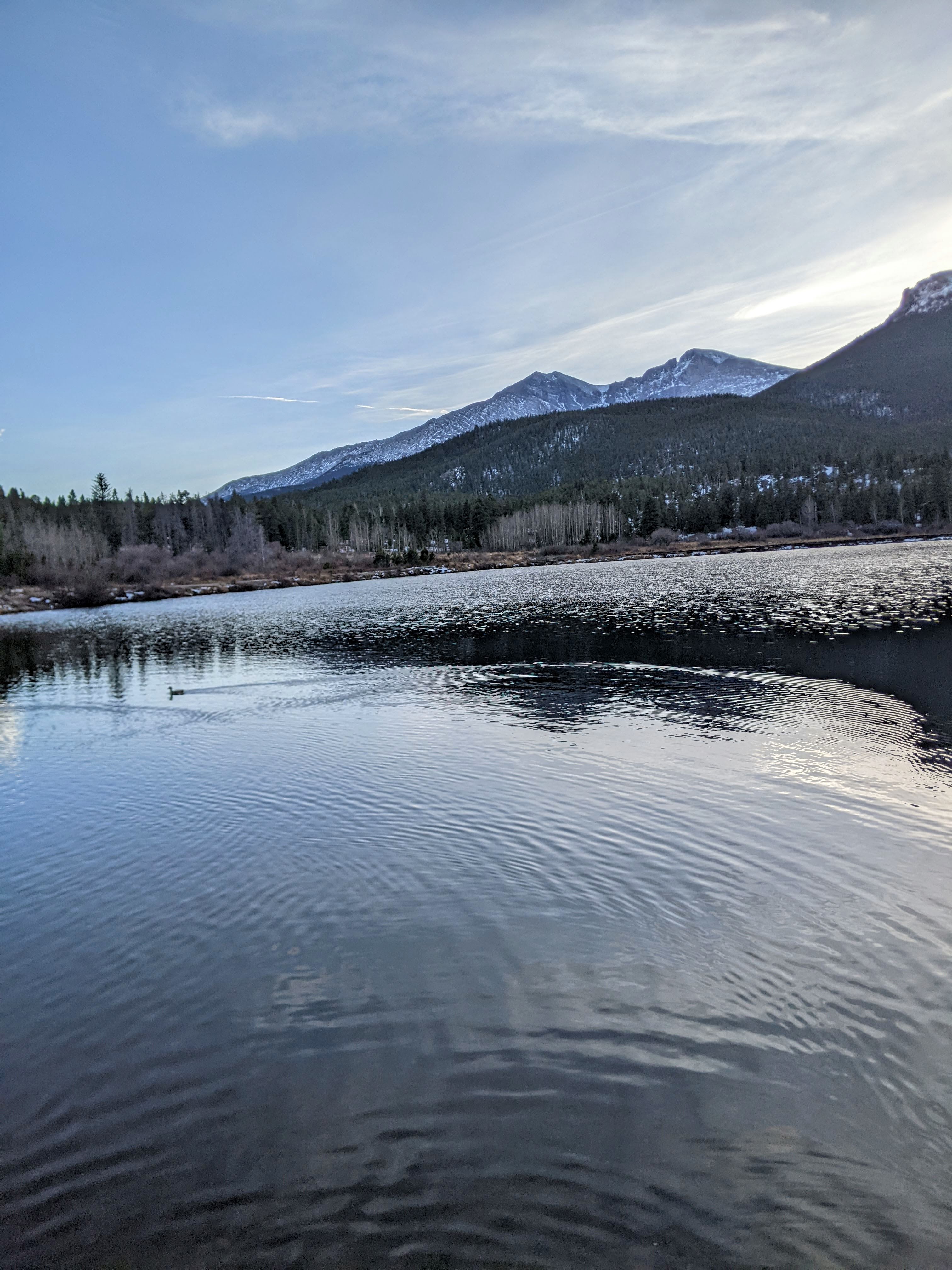
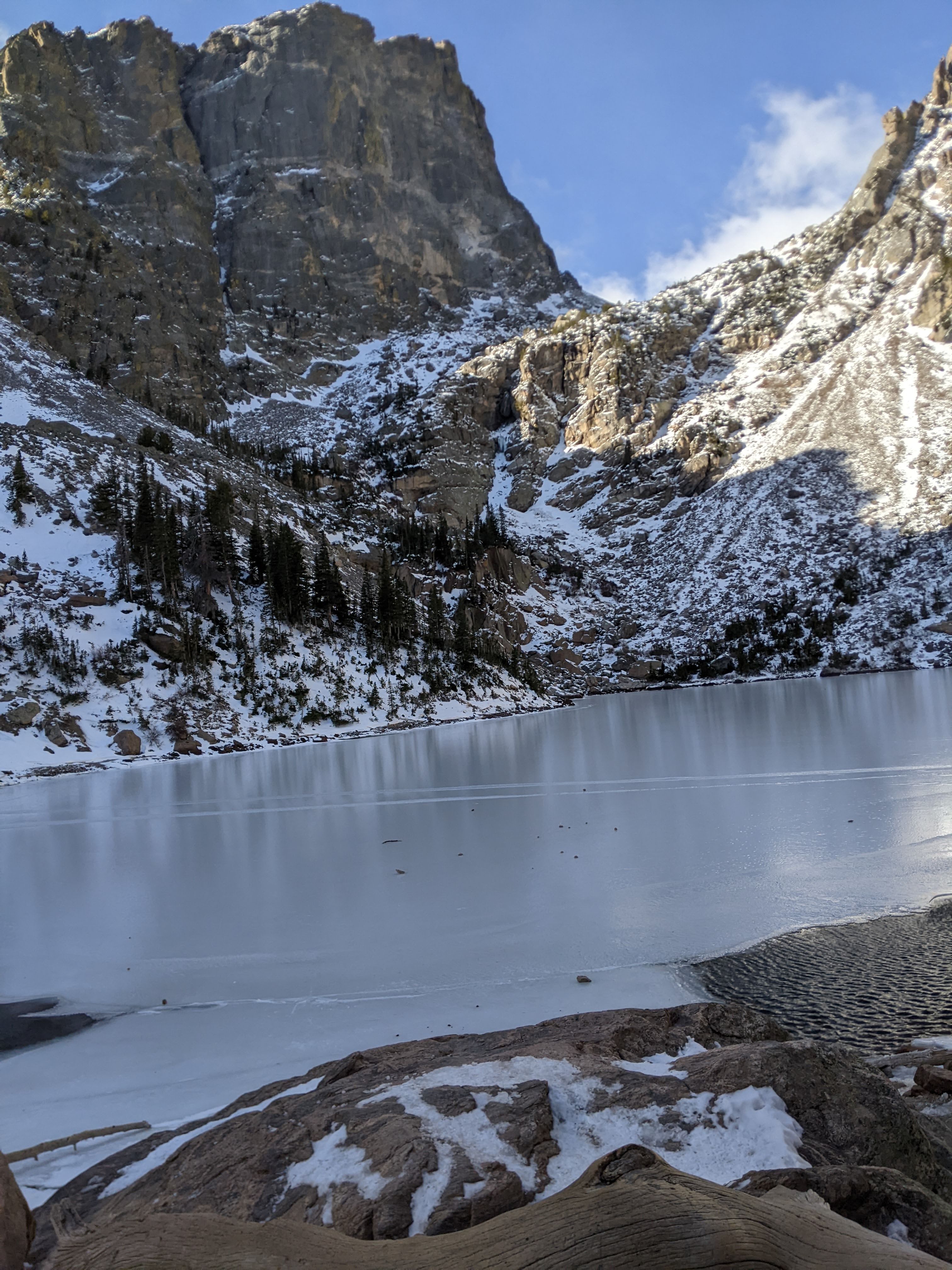

Was wonderful to get away for a couple days to hike in the mountains. Beautiful this time of year too!
Water and Cropping Systems Educators
Update on Extension Water and Cropping Systems Accountability Regions: We’ve been blessed with some tremendous hires into the Nebraska Extension system. I’m grateful. The region I now officially serve is York, Seward, and Fillmore Counties. I’m surrounded by really smart people, 3 of which are new hires. Please see their introductions below and please welcome them when you see them!

Dr. John Nelson (Lancaster, Cass, Otoe): John joined Nebraska Extension in April 2023 as the Water & Cropping Systems Educator for Lancaster, Cass, and Otoe counties, based out of Lincoln. I have a diverse background in agronomy and cropping systems research and extension in several areas around the country. I grew up on a family farm in Eastern Colorado and have remained involved throughout my professional career. I earned my bachelor’s degree in Soil & Crop Science from Colorado State, master’s degree in Crop Science from North Carolina State, and Ph.D. in Soil & Crop Science from Texas Tech. I worked as an Assistant Professor and Field Agronomist at the North Central Kansas Experiment fields for Kansas State from 2010-2013. While at K-State, I conducted research and extension programming in the areas of corn and soybean irrigation management, soil fertility, cover crops, precision ag, and water use in dryland cropping systems. I returned full time to the family farm in 2014 and remained there until joining Nebraska Extension this spring. My areas of interest include precision agriculture, irrigation and soil water management, cover crops/soil health, pasture management, and soil fertility. I am very excited to join Nebraska Extension and to develop beneficial research-based programs to meet the needs of the local producers. I can be reached at 402-441-7180 or jnelson158@unl.edu. Twitter: @NebWater_Crops

Dr. Travis Prochaska (Colfax, Butler, Polk): Travis “TJ” Prochaska, Ph.D., joined Nebraska Extension in July 2023. He is a native of Seward, NE where he grew up helping his family on the farm. He was an active member of Seward County 4-H and the Seward FFA Chapter. TJ received his B.S. from Concordia University Nebraska in organismal biology. He obtained his M.S. (2011) and Ph.D. (2015) from the University of Nebraska-Lincoln in the Entomology programs where his efforts focused on the soybean aphid (M.S.) and switchgrass and aphid herbivory (Ph.D.). From 2016-2023, Prochaska served as the Crop Protection Specialist for North Dakota State University Extension, located in Minot, ND at the North Central Research Extension Center. ND farmers work with up to 40 different crops, however, TJ worked with about a dozen of them in North Central and Northwest ND (Wheat, durum, sunflower, canola, pulses crops, soybean, etc.). He currently serves Colfax, Butler, and Polk Counites as Water & Cropping Systems Specialist within Nebraska Extension and resides in the Colfax County Office in Schuyler. Prochaska is excited to work with area growers and serving the great state of Nebraska! Go Big Red!

Dr. Matheus Ribeiro (Clay, Nuckolls, Thayer): Matheus was born in Brasilia, the capital city of Brazil where in 2004 he got his bachelor’s in Agronomy. After graduating, he was hired as a technical manager for an agricultural aviation company in Mato Grosso state. Matheus also served as a professor for the Agronomy Department of Mato Grosso State University for a couple of years. In 2010 Matheus completed his master’s degree in Agronomy at the University of Brasilia where he studied the effect of chemical fertilization on two-spotted-spider mite infestation and strawberry yield. In 2017 Matheus obtained his PhD in Entomology from UNL focusing on the risk of insecticide resistance development in North Central soybean aphid populations to thiamethoxam seed treated soybean. He continued in the Entomology department (Insecticide Toxicology Lab), as a postdoctoral research associate until the end of 2017. He later worked as a staff entomologist for a start-up company called Crop Enhancement Inc., where he was actively involved with research and development of a non-conventional plant protection product. Before returning to UNL in 2021, Matheus worked as an independent consultant, coordinating, and managing contract research operations in Central and South America on projects related to pest and disease management of soybean, coffee, and tomato. During the past two years, he worked as a postdoctoral research associate where he collaborated with several soybean gall midge, and alfalfa weevil management projects, as well as supported rearing efforts of monarch butterflies. Matheus joined Nebraska Extension on November 1 and will be serving Clay, Nuckolls and Thayer Counties as an Extension Educator for Water and Cropping Systems.
7 of the 13 crop and water systems educators in Eastern NE are new in the past year with several coming on board since July. Grateful for more help!

My Challenge:
My challenge to everyone with irrigated ground who applies fall anhydrous or spring pre-plant fertilizer:
- Leave 1 piece of ground with a base rate of 70-100 lb N/ac
- Goal would be to apply rest of N in season using a tool like Sentinel Fertigation that senses what the plant needs. Will share research results from area producers this winter. If you decide that’s not what you wish to do, you can apply the remainder of N the way you’d like.
- Only asking to consider for 1 field. Will share more in next week’s column.
- Soil Temps: https://cropwatch.unl.edu/soiltemperature
November 2023 Upcoming Events
Mending the Stress Fence are free webinars held on Nov. 1 and again on Nov. 29 at 12:15 p.m. It is important that we all learn how to manage our stress levels and reduce the effects of unwanted stress. Business owners, managers, farmers, and ranchers are no exception to experiencing stress. In fact, stress seems to be prevalent in rural communities at times. Too much stress can make us more accident-prone, and it can affect our overall health. This program provides information on identifying common stressors, recognizing stress symptoms, and managing stress. Register: https://ruralwellness.unl.edu/stressfence.
Bodily Fluid Clean Up Training Webinar will be held Nov. 1 from 2-4 p.m. The training is designed for employees in businesses, schools, child care facilities responsible for properly cleaning up bodily fluids, but anyone interested can attend. Certificates provided. Registration: https://go.unl.edu/ewat.
Cover Crop Grazing Conference will be held Tuesday, November 7th at the Eastern Nebraska Research Extension and Education Center near Mead. Registration and trade show are from 8:30-9:30 a.m. with program beginning at 9:30 a.m. Dr. Bart Lardner from the University of Saskatchewan will kick off the program sharing on annual forage production and grazing strategies and Dr. Mary Drewnoski will share more on this topic later in the day. The program also features a producer panel, field tours, and lunch and breaks. For more info. and to register, please visit: https://go.unl.edu/ys5b.
2023 Transition to Organic Farming Conference: Are you thinking about transitioning to organic farming or are a newly certified organic farmer? This one-day conference put together by a team of UNL researchers, extension personnel, and local farmers will have sessions on how to improve soil fertility, manage weeds, and develop resilient crop rotations for organic grain farms. Panel discussions with organic producers will be part of the program. Come, learn, and mingle with other growers, vendors, educators, and researchers. This event is held Wednesday, November 8th from 9:00 a.m.-3:30 p.m. (8:30 a.m. registration) at the Eastern Nebraska Research and Extension Center near Mead. There’s no charge. More info. and registration at: https://go.unl.edu/myu0.
So You’ve Inherited a Farm…Now What? will cover Nebraska land industry topics for farms and ranches. Those include evaluating current trends in land values and cash rents, strategies for successful land transitions, lease provisions, legal considerations and managing communication and expectations among family members. Creating and adjusting estate plans will also be covered. The program is free to attend, and lunch or refreshments will be provided at each location. Pre-registration is requested by one day prior to each workshop. Programs in this area of the State include:
- November 30th from 1-4 p.m. at Cornerstone Bank (529 Lincoln Ave.) in York (Register at 402-362-5508).
- December 13th from 10:30 a.m.-2 p.m. at the Extension Office in Beatrice (402-223-1384)
- Jan. 24th from 1-4 p.m. at the Extension Office in Hastings (402-461-7209)
- Feb. 6th from 10:30 a.m.-2 p.m. at the Extension Office in Lincoln (402-441-7180)
- Feb. 21 from 1-4 p.m. at the Extension Office in Central City (308-946-3843)
Tax Strategies for MidWestern Farm and Ranch Women: An upcoming virtual workshop series for Midwestern farm and ranch women will teach the basics of tax planning for agricultural operations. Men who are interested may also attend. Hosted by women in agriculture extension programs at UNL, K-State and Purdue University, the three-part series will be held from 6:30 to 8 p.m. Central time on Tuesday, Nov. 28, Dec. 5 and Dec. 12. A comprehensive range of tax topics relevant to agricultural producers in Nebraska, Kansas and Indiana will be covered, including an introduction to income taxes, completing Schedule F forms, claiming deductions, tax strategies to shift income and lower tax bills, and compliance requirements. More info. and registration at: https://wia.unl.edu/taxes.
Farmers and Ranchers College: Dr. Kohl is returning to the Opera House in Bruning on Dec. 7th at 1 p.m. The title of his presentation is “Economic Shockwaves: Challenges and Opportunities”. You can RSVP at 402-759-3712.



System’s Approach to Soybean White Mold
Grateful for seasons, for fall, and that we have such beautiful fall colors this year! For whatever reason, it just doesn’t seem like we’ve seen colors like this for a few years and several have commented about the beauty this year. May we take time to notice the beauty around us each day! Also grateful for harvest being completed or nearing completion for many! Each day is one day closer to the end!

White Mold in Soybean: Sclerotinia sclerotiorum (the pathogen that causes white mold) impacts over 400 plant species from 75 families including soybean, dry bean, potato, sunflower, peas. Host weed species include: pigweeds, velvetleaf, henbit, lambsquarters, ragweeds, nightshades, mustards, sunflower. Cover crop hosts include: peas, lentils, turnips, radishes, collards, common vetch, (alfalfa and clover to a lesser extent). Just reading all that is discouraging. The fungus survives in a hard, black structure called a sclerotia that looks like mouse/rat droppings and can survive in the soil for 5 years (3 years in no-till fields). Frequent irrigation, plant wetness/fog/cool conditions at flowering (like we had in 2023), narrow rows, high plant populations, and cooler weather conditions of 46-75F allow the sclerotia to develop apothecia (look like circular tan mushrooms). Under a specific pressure, the apothecia shoot spores into the canopy where they infect the soybean plants whenever they land on senescing soybean flowers.
Flowering occurs from R1-R5 in indeterminant soybeans. Thus, why white mold is difficult to control and why we can see it develop so late into the year. The fungal infection moves from the flower into the stem, disrupting water transport. Thus, why you will often see plants that look wilted as an early symptom even before you see the signs of the white fungal growth. Wilting of plants leads to premature death impacting yields like we saw with large yield hits this past year. New sclerotia are formed within and also stick out of the plant stem and pods. They fall to the ground and the cycle continues when a susceptible host is grown.
So, what do we do about it? The following information is for fields that have a history of white mold. I’d suggest looking at this from a system’s approach. One piece is to consider varieties with disease resistance. I won’t argue that’s important. However, I’m honestly hesitant to start there as I’m unsure we have strong disease packages. And some defensive varieties give up too much yield. This is my perspective and I don’t expect people to agree. For now, I suggest finding the strongest yielding genetics first because there’s large yield variation in soybean.
From there, it becomes managing the other factors that can aid in disease. Manage weeds and avoid susceptible cover crops in the field. Crop rotation is not effective if it’s only a 2 year corn/soy rotation. While I realize they won’t work for everyone’s operation and they take more management, using small grains like cereal rye before soybeans is a tool that can help with both weed and disease suppression and doing so adds another crop to a 2 year rotation. Avoid irrigation at flowering (I realize 2023 was tough) and seek to irrigate deeper and less frequent.
There’s also tradeoffs within the system regarding row spacing for weed or disease control. Results from 18 site-years of research from Wisconsin, Michigan, Ohio, Indiana, and Iowa showed:
- If planting in row spacings of 15 inches or less and in fields with a history of white mold, use a seeding rate no greater than 110,000 seeds/ac.
- If planting in fields with a history of severe white mold, widen the row spacing to 30 inches and use a seeding rate no greater than 110,000 seeds/ac. UNL research shows you don’t give up yield with final plant stands at 100,000 plants/ac.
- Fungicide applications remain an effective tool for reducing white mold levels if applied between the R1 (most effective) and R3 (less effective) growth stages. Fungicides provide 0-60% control. They’re most effective if sprayed below the canopy.
- Not all fungicide products are equally effective at controlling white mold, with Endura® remaining the most effective product if applied between the correct growth stages.
- Consider downloading the Sporecaster app for white mold to better time fungicide apps based on weather conditions (found to be 81.8% accurate).
Most biological control agents should be applied at least 3 months before flowering for fungal colonization. Biological control agents and seed treatments such as Heads Up® were shown as effective tools to reduce severity of white mold and SDS based on Iowa State research. Plant nutrition is also showing promise and that’s something I’d like to try next year with a few growers; please let me know if you’re interested. Hydrogen peroxide products had little to no success in Wisconsin research (provided only 4 hours of activity killing spores). None of the things mentioned here are exclusive, but a combination of many of these factors as a system’s approach can help in the battle against white mold.
To view tables of the fungicide research results for white mold go to: https://cropprotectionnetwork.org/publications/modern-integrated-management-practices-for-controlling-white-mold-of-soybean
Soybean Seed Size and Yield Impacts
Soybean Seed Size and Yield: Dr. Jim Specht, Emeritus UNL Soybean Physiologist, wrote a couple articles for CropWatch (https://cropwatch.unl.edu). One contains a quick method to determine yields using seed size just prior to harvest. The other is about water stress timing. Sharing key points that applied to soybean yields in our area of the State this year when it came to weather, soy development, seed size, and yield. This doesn’t reflect disease impacts.
During soybean reproductive development, three stages — R1-R2 (flowering), R3-R4 (podding), and R5-R6 (seed-filling) — occur successively during July and August in the growing season. Soybean yield is ultimately a function of two components: the harvested seed number (in terms of unit land area), and the seed mass (weight of the average harvested seed). Seed number is set during the R1 to R4 stages of flowering and podding, though abortion of pods or seeds in those pods can occur in the later R stages. Seed mass (i.e., size) is set during the R5 to R6 stages of seed-filling, as the seeds undergo enlargement until the R6 stage ends at the onset of the R7 (physiological maturity) stage.
Jim and colleagues conducted a 3-year study in the 1980’s looking at the drought-stress sensitivity of seed number and seed size during different R stages. It involved 14 Group 0-Group 4 soybean varieties using seven treatments — each consisting of a single irrigation application, but each treatment differed with respect to the R stage coinciding with the single irrigation event.
When the single irrigation was applied during flowering, they saw a substantial increase in seed number, yet also a lower seed mass compared to the control rainfed treatment. This indicated that when water stress is mitigated during flowering (but not thereafter), soybean plants will set more seeds, but also end up making those seeds smaller when water is not adequate thereafter. We normally don’t recommend irrigation during flowering to avoid disease onset, but this year was a year where irrigation was necessary in many fields in this part of the State.
In contrast, when a single irrigation is applied during seed-fill (R5-R6), fewer seeds are set (and/or retained) due to prior water stress, but the mass of those fewer seeds is optimized due to the late-applied single irrigations that mitigate any coincident water stress.
They also found a response pattern coinciding with an irrigation event occurring at R3.5 and R4.5 (podding) that showed plants in that stage are conditioned to enhance seed mass while still increasing seed number to some degree. Irrigating at this stage resulted in the highest yields among treatments. Thus, why we typically encourage first irrigation of soybeans at R3 in our silt-loam soils. Additional research in the early 2000’s verified this.
However, it wasn’t reality for us to start irrigating at R3 this year. Many were irrigating since planting or as early as V2 with gravity irrigation after ridging tiny beans. The research also showed a full-season multiple irrigation treatment that resulted in maximized seed number, but seed mass was not increased beyond the increase achieved with single irrigation at R3.5. Thus, by irrigating all season (or in a season where rainfall provides no water stress), seed number (which is set before seed mass) is prioritized by stress-free plants relative to optimization. As we think about this past year, many fields may have experienced moisture stress at some point and all experienced heat and other environmental stresses.

Many soybeans that were early planted and early maturing experienced the stress of a hot and dry late June as flowers began setting which transitioned into a mostly wet/cool July during the seed number setting stages of R1-R2 (flowering) and R3-R4 (podding). The transition to a dry/hot August during the seed mass setting stages of R5-R7 (seed-filling) resulted in a reduction in the size of the harvested seeds, which means that more (small) seed will be required per pound. Thus, impacting yield. In comparison, the later maturing beans (including early planted ones), were in those flowering and podding stages longer to take advantage of the cooler conditions. They were also in the seed fill stages into mid-September during a period of cooler temperatures. Thus, I’ve heard better yield and seed size with Group 2.8-Group 3.1 beans.
While the weather is outside our control, I hope this is helpful in thinking through this past year. For risk mitigation going forward, I think it shows the importance of planting varying maturity groups to help spread risk with variations in weather conditions each year.
Prussic acid test strips: I ordered a roll of these, so if you’re grazing sorghum species, it’s a quick way to determine the presence of prussic acid, especially with light frost events. Otherwise, we recommend to pull cattle for at least 5 days post-freeze. They’re in York Ext. Office right now, so please call if you want to pick some up.
The following is how Dr. Jim Specht walks through determining soy yields just prior to harvest using seed size. These photos are via Dr. Specht.


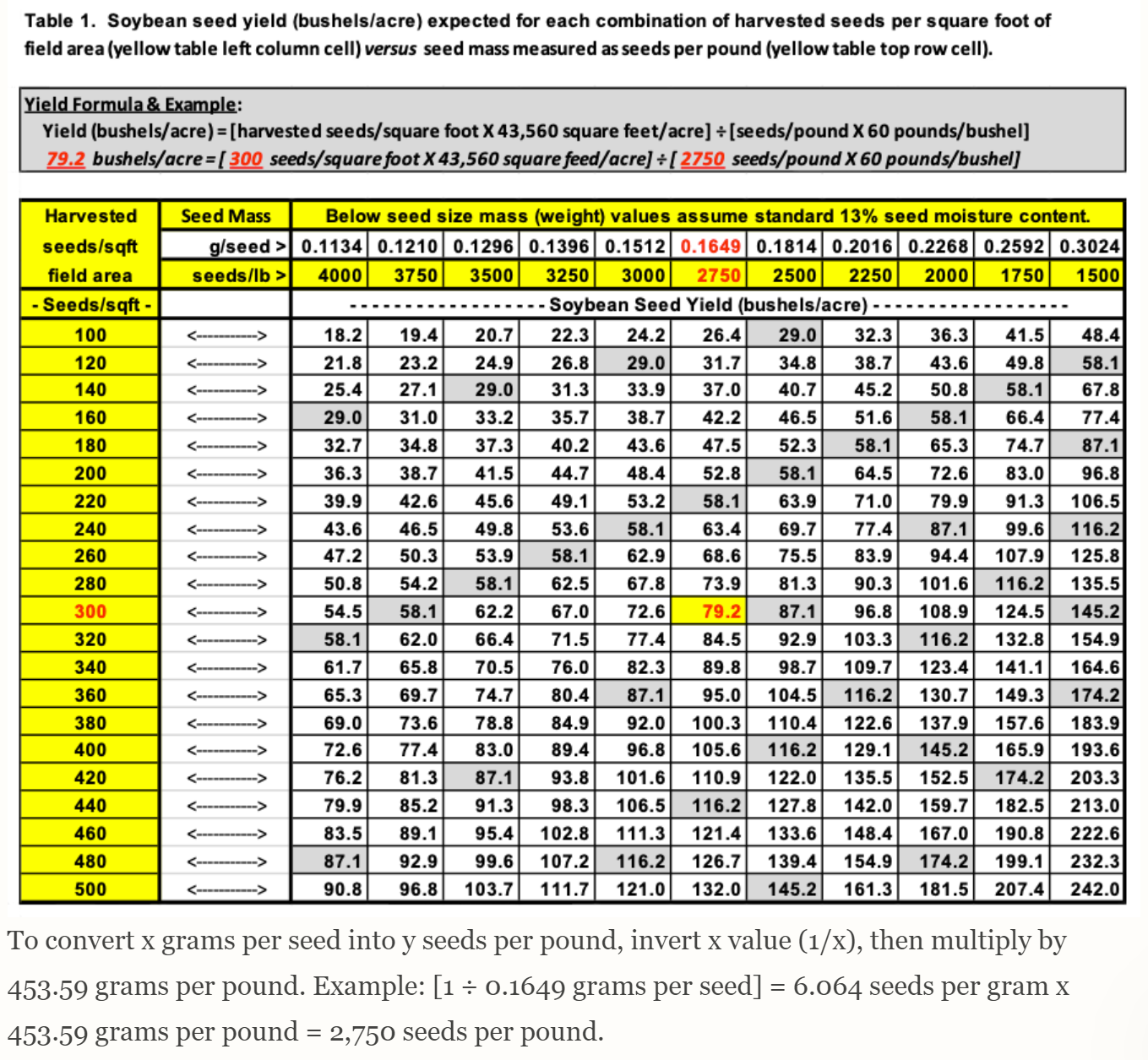
Looking at the above chart, Alex Harrell from Georgia who reported a record soybean yield of 206.8 bushels/acre in 2023 suggested that the harvested seed in field likely had a seed mass of around 1,675 seeds/pound. Thus, a large seed size with (doing the math) around 477 seeds per square foot on a plant population of 77,000 plants/ac.

JenREES 10/8/23
Soybean Cyst Nematode: 2023 was a year for soybean diseases. I’ve been thinking about the soybean disease problems we’ve had and am planning a series of columns to talk through thoughts on management. Will focus on soybean cyst nematode for this week.
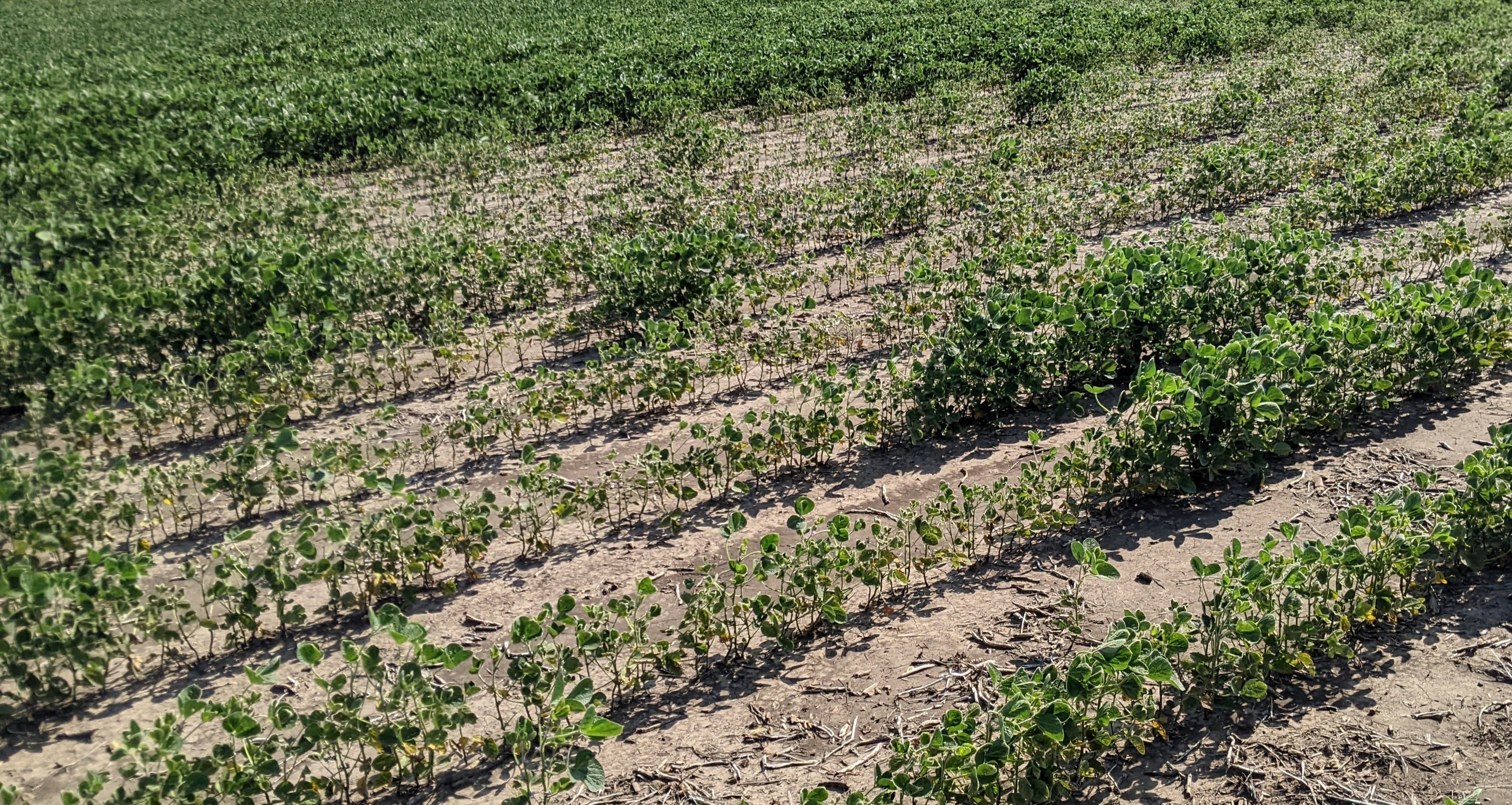
After soybean harvest is a prime time to sample for soybean cyst nematode as they’ll be at their highest levels in the soil. Soybean cyst nematode (SCN) is considered the #1 soybean disease in the U.S. as it can rob yield (up to 40%) with or without the presence of symptoms on soybean plants. When symptoms are present, they can include patchy areas of fields that may contain chlorotic and/or stunted plants. Digging up plants and carefully looking around the roots, one may observe tiny white specks that look like sand grains. With closer observation, if it is SCN, the specks will appear lemon-shaped as the female soybean cyst nematode. Technically, when the female body turns brown and dies is when it is called a ‘cyst’. Each cyst protects and contains up to 400 eggs each. When soybean is planted, juvenile nematodes hatch from eggs within the cysts during the right moisture and temperature conditions. The nematodes migrate to soybean roots where they infect, feed, breed, and then females produce new cysts full of eggs. This lifecycle occurs 3-4 times during the summer, thus, SCN populations can rapidly increase in a field in one year.
I saw that this year, a handful of times. Most field situations didn’t only have SCN as the problem, but I saw SCN populations rapidly increase from the first time fields were sampled to the next time. As you or agronomists are taking soil fertility samples this fall, split part of the 0-8” (or 0-6”) sample for testing for SCN. Or, take the soil sample in areas where the yield monitor showed yields were very low, patches where you saw disease, or field entryways. It’s also wise to take a sample from a good portion of the field for comparison. In soybean fields, take the sample a few inches off the old soybean row. However, SCN samples can also be taken from corn or other crop fields to help inform decisions if rotating to soybean next year. Place the sample cores (12-20 in total) in a plastic bucket, mix, then place in your sampling bag. I use quart-sized ziplock type bags, but there’s also SCN sampling bags available at local Extension Offices or directly from the UNL Plant and Pest Diagnostic clinic (402-472-2559). Label the bag with your contact info., field name, and that you want SCN analysis. Also be sure to fill out a completed sample submission form requesting SCN analysis and mail the samples to the UNL Plant & Pest Diagnostic Clinic (1875 North 38th Street, 448 Plant Science Hall, Lincoln, NE 68583-0722). There’s no charge for the sample analysis thanks to the Nebraska Soybean Board and your checkoff dollars. Knowing if you have SCN is the first step in management. Will share more on management in future columns.
Caring for Drought-stressed trees/shrubs: With the continuing dry conditions, this is a critical time to prepare woody plants for winter and prevent winter injury, especially to evergreens. Dry fall conditions can reduce the number of leaves, blooms and fruits trees produce the next season. Trees often delay the appearance of drought-stress-sometimes months or years after the stress occurs. Drought-stressed trees are more susceptible to secondary attack by insect pests and disease problems, such as borers and canker diseases, which can cause tree death. When watering, moisten the soil around trees and shrubs, up to just beyond the dripline (outside edge of tree leaf/needle canopy), to a depth of 8 to 12”. Avoid overwatering; but continue to water until the ground freezes as long as dry conditions persist. Use a screwdriver pushed into the soil to gauge the depth of watering.
Cedar beetles (Cicada parasite beetles): Have gotten a few calls about numerous beetles on ash and other trees that were crawling on them and flying around. The ones I’ve received samples of are cedar beetles, also known as cicada parasite beetles, which were new for me to learn about. They are about one inch long, and dark brown or black. The males have short, comb-like antennae. The beetles are harmless to trees and are laying eggs in the bark cracks. Larvae hatch, travel down tree cracks and burrow through soil looking for cicada nymphs to feed on their blood. So, they’re considered a parasite of cicadas, not of trees, and no control is needed.

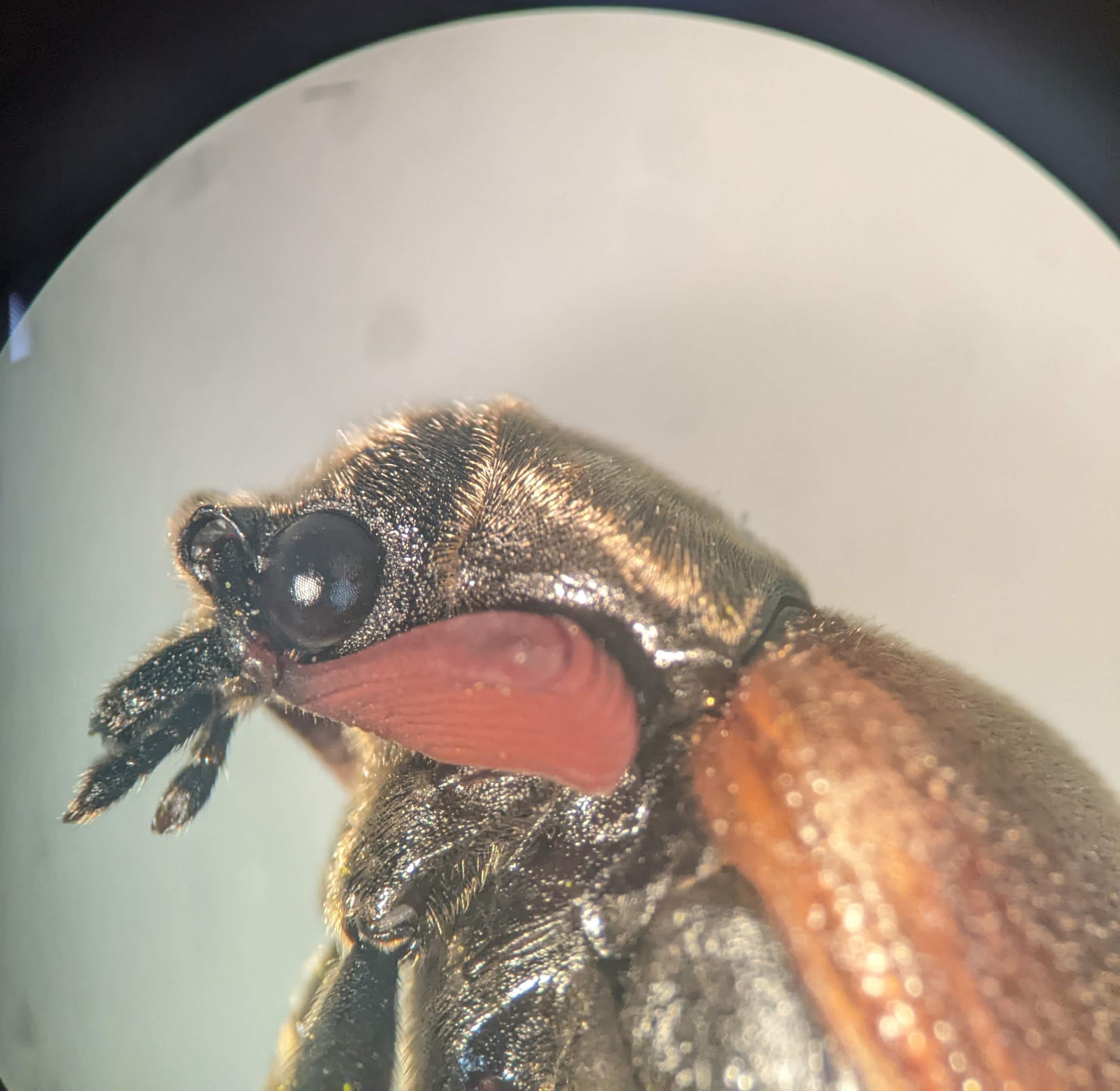

Cedar beetles/Cicada parasite beetles


 JenResources