Category Archives: Crop Updates
JenREES 7/2/23
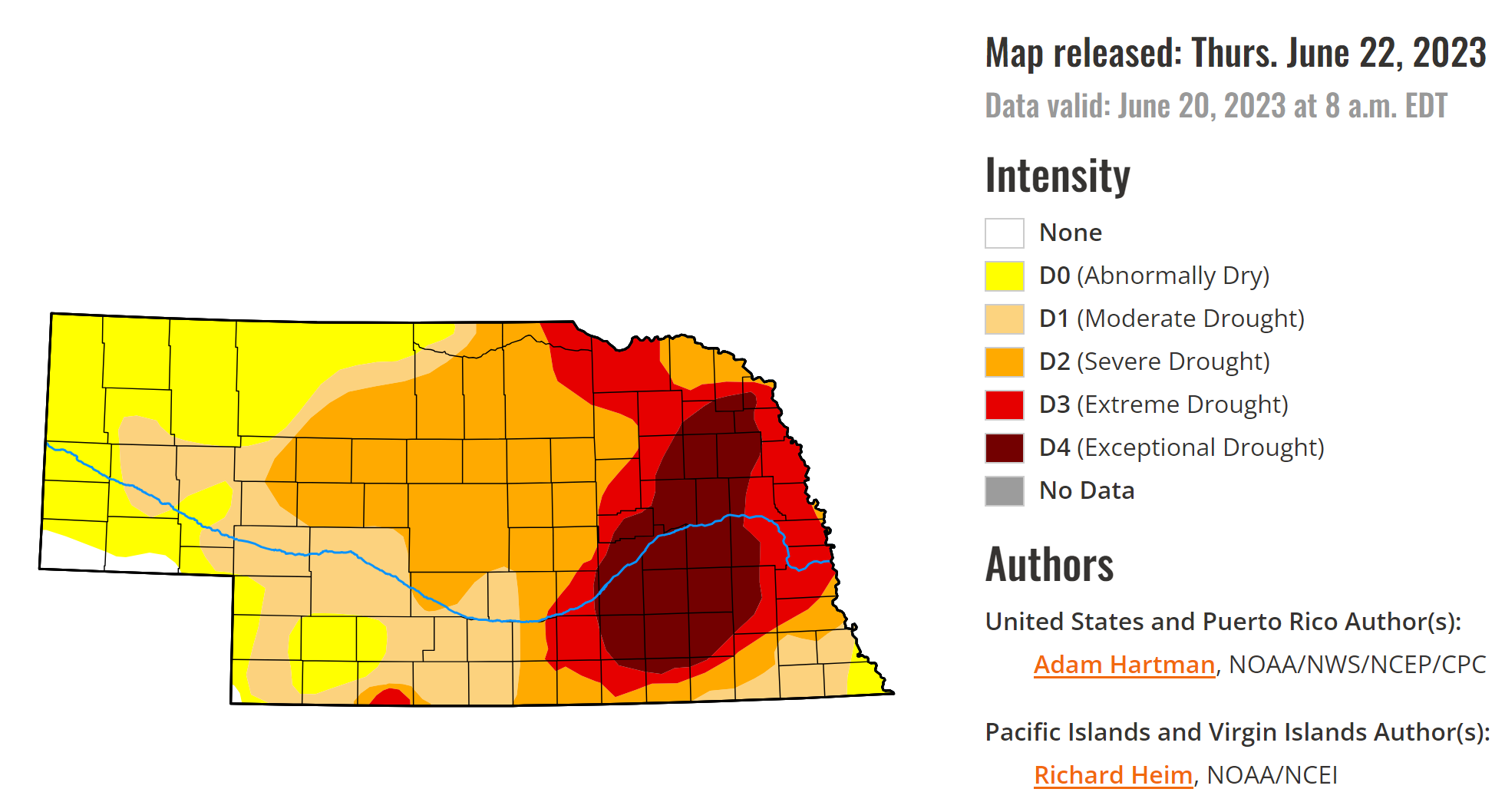
This week thinking about gratitude. In spite of difficulties, we’re truly so blessed! Grateful for freedom as we celebrate this 4th! Grateful for all the smiles I saw towards the end of last week from farmers/families who had received some rain…whether it was 0.20” or over 1” over the few days. I think many of us just needed to feel/see/smell how fresh everything is after it again! Grateful for whatever corn unrolled! It’s so hard for those who still keep missing rain with how spotty it is. The mental toll is real with the stress and exhaustion so many producers are experiencing. I also feel for those who live in parts of the State/other states who got such bad hail and wind…I know many of you can empathize with them too.
Last week there were those desperate for forage for livestock who decided to graze non-irrigated acres. I sent out an email mid-week about crop insurance and grazing info. Won’t share all that here; it’s in this article: https://go.unl.edu/dhi9. First talk with crop insurance before making any decisions on drought or other disaster-impacted acres. If those acres are used before talking with insurance, a ‘0’ could be assessed for your 2023 APH which stays with you for 10 years. Loss will be assessed via stand reductions (minimal loss) or the permanent wilt method. The permanent wilt method assesses plants firing, lower leaves crumble easily in one’s hands, leaves don’t unroll at night, and plants don’t respond to moisture. Farmers also may have the option to leave strips that will be assessed at harvest (like you did with last year’s hail) if you prefer that.
Grazing makes the most sense to me on these acres desired for forage. Check for any herbicide restrictions then check with crop insurance. If the corn is released for grazing, there will be nitrates. We aren’t as concerned about grazing corn higher in nitrates prior to ear development compared to if the grazing would occur after an ear was put on. Protein is higher when grazing corn in these vegetative stages. Don’t turn livestock out empty. Providing plenty of fresh water will help reduce nitrate risk. Cattle should self-adapt by eating the tops of plants first and then will be more adapted to eating the higher nitrate areas lower in the plant. Don’t strip graze; allow open access to the field to allow more time for cattle to self-adapt to the nitrates. You can consider supplementing hay, grain, or both. There’s thoughts a little grain may be beneficial to provide energy to offset nitrates. We’re all learning so please share your observations. Additional forage info. here: https://go.unl.edu/dhi9.
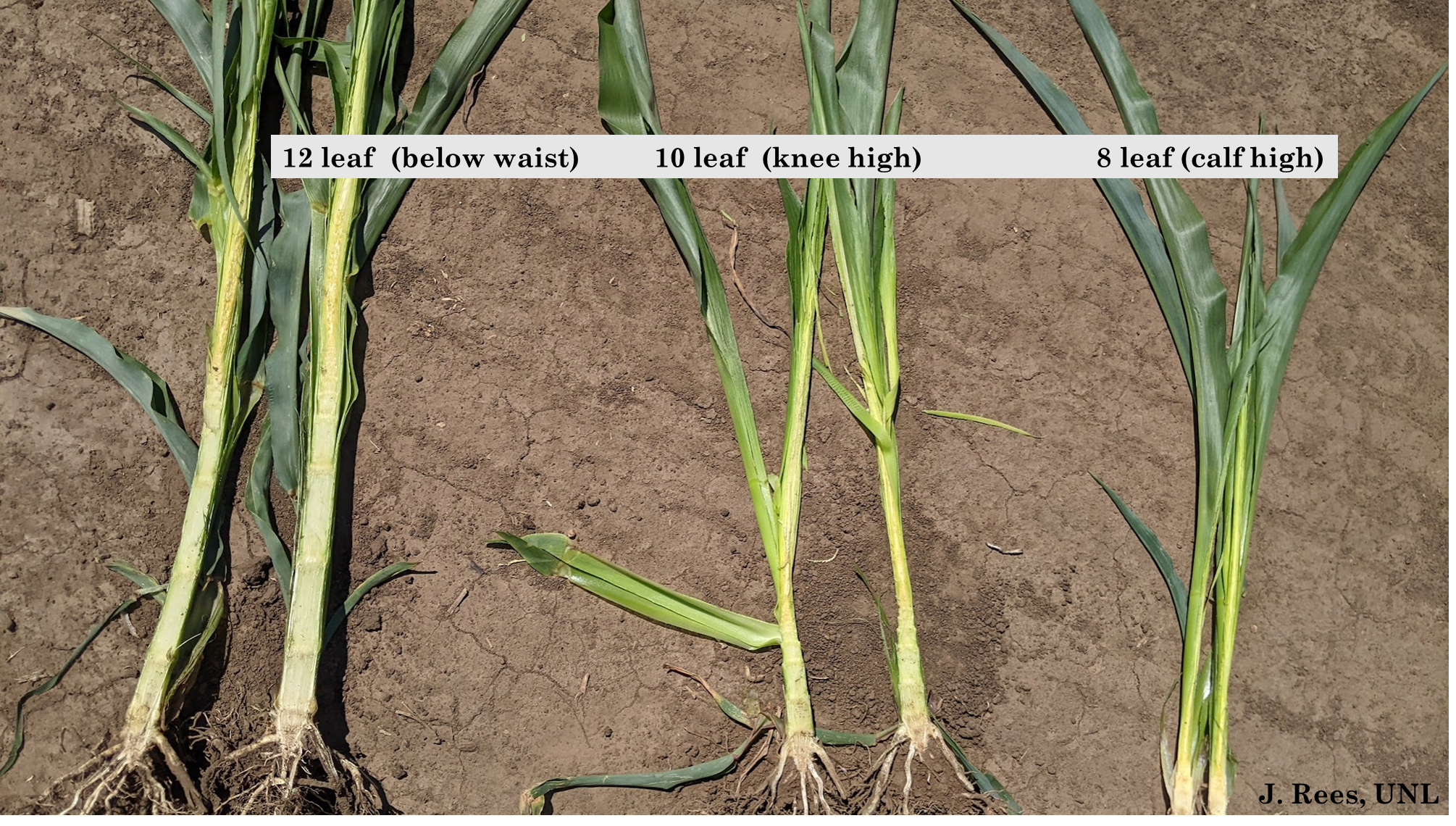
Last week I investigated any potential in non-irrigated corn to better determine when it was done. Photos at jenreesources.com. Corn that is silver/gray and never unrolled with the rain is obviously done. But I was also grateful to see how much corn did unroll when it looked so toasted last Wed.! While very short, some put on several stacked leaves. There’s also a lot of corn rolled again after minimal rain. As I dissected plants in fields throughout the York/Seward county area that were at least 10 leaf (whether these plants were around knee high or above waist high), I found the primary ears and saved them. Carefully dissecting them, I then put them under the microscope. In all fields I was finding 10-16 rows around! So, I was wrong! A few weeks ago I shared I didn’t think we’d have more than 4-8 rows around on these very stressed plants during that 5-8 leaf development time-frame. I’ve wrestled this week in sharing this as I didn’t know if it would provide encouragement or discouragement. We’ve got a long way to go with receiving adequate moisture to get to pollination, timing of pollen-shed/silking coinciding, etc. Yet, I also felt sharing could provide some hope and much-needed encouragement of some potential for those who got some rain and saw leaves unroll. Hopefully this info. does a little of the latter for you. For me, no matter what happens, with my faith, it gave me such an awe of the Creator in seeing these tiny kernels.
As tasseling approaches in irrigated fields, think through your decisions regarding costs. You’ve put a lot of money already into irrigation with a long season ahead. I’m always the outlier on this, but consider if/when you really need fungicide/insecticide apps instead of automatically applying. Delaying till needed buys you time with the residual. Also, please take at least 10 minutes a day to stop and take a break with positive activity to refresh one’s mind. Maybe even jot a few things down you’re grateful for each day? Sometimes stress can lead to unwise decisions-please take care of yourselves!
In case Japanese beetles explode this week, here’s a printable resource for homeowners in advance: https://go.unl.edu/bke4.
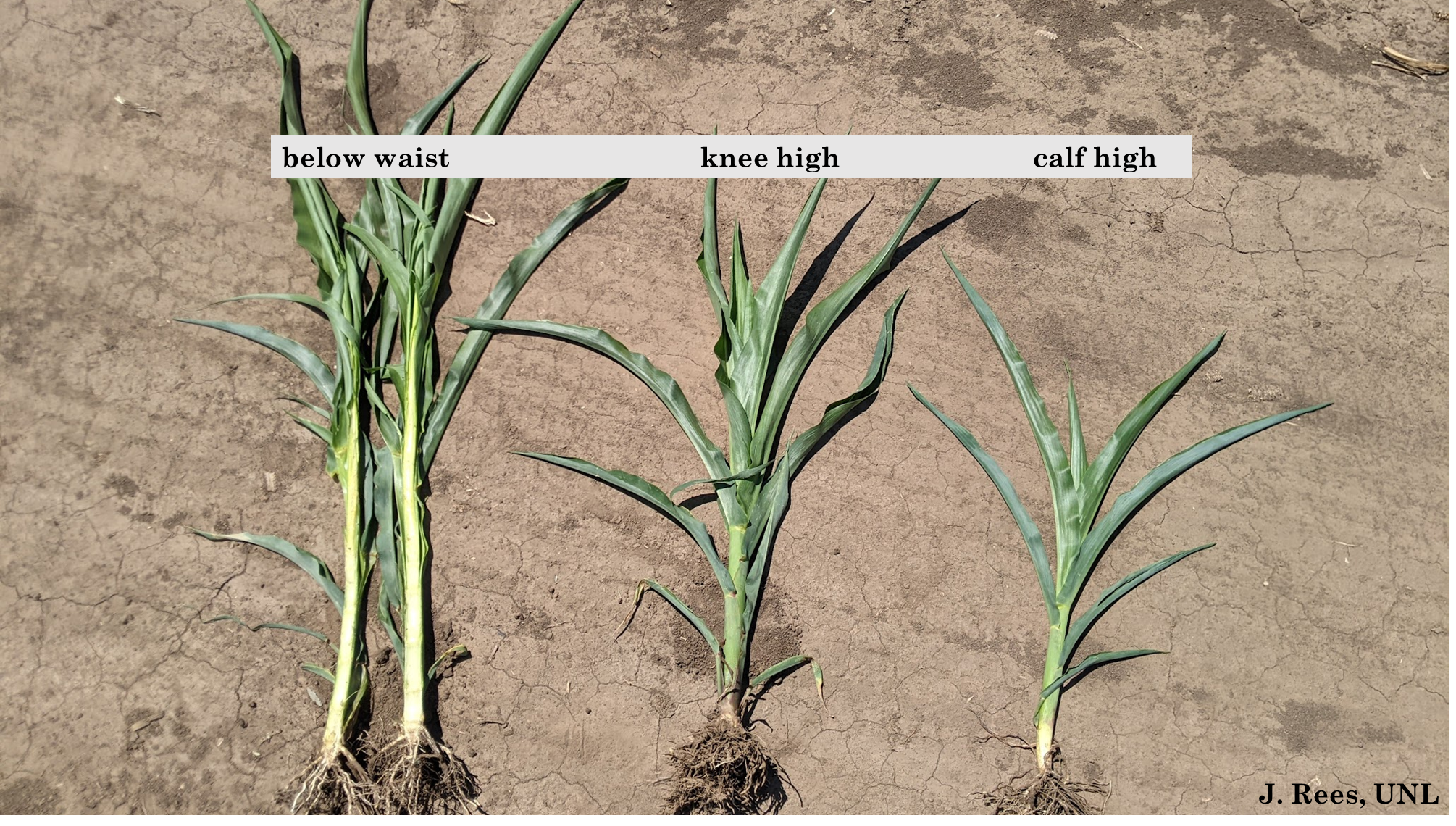
A tale of three corn plants from the same non-irrigated drought-stressed field that were rolled for well over 20 days. These are heights on me so much shorter for all you taller individuals!


JenREES 6/25/23
Crop Updates: Irrigated crops are moving along with corn approaching the late vegetative stages and many beans in beginning to full flowering. Spidermites in stressed fields; no point doing anything. Small grasshoppers and Japanese beetle adults starting to emerge…sorry everyone, I groaned too!
Soy Problems: Past 10 days received calls and texts from a large area regarding soybean often having yellowing to some extent, growing slowly, some with stacked internodes and some dying. Chem may not have broken down with the dry conditions from last year’s corn herbicides. Most situations had some type of Group 27 chemistry and yellowing of newer trifoliates and buds could be seen. In irrigated fields, the soybeans are growing out of it with water and time. In non-irrigated fields, the drought isn’t helping with plant metabolism and breakdown of herbicide.
Also, a number of reports of soybean plants dying. Work through each situation to determine if herbicide carryover, drought, seedling disease, other issues, or a combination of factors are the issue. Many times I’m seeing a combination of factors. Seeing some plants in non-irrigated situations have a red lesion on the stem with rotted roots, which can be an indication of Rhizoctonia root rot (disease that occurs with stress, particularly herbicide injury and drought). Some soybeans dying in irrigated situations were replanted beans that didn’t have a seed treatment fungicide on them and they have characteristic phytophthora root rot (dark lesion from soil line up and rotted roots), sometimes also in combination with herbicide carryover symptoms. Many have mentioned beans are short and not growing quickly. Dry conditions and often also Group 15 products can result in slowed growth as the beans are trying to metabolize those products. Most are aware of the heart-shape/club shape as normal to leaves of beans from metabolizing Group 15 products.
Crop Insurance Question: Several asked about gravity irrigated soybeans that are too small to ridge in gravity irrigated fields and pivot corners if they could just change the designation to non-irrigated beans. Another consideration, some wells are sucking air and they’re concerned about keeping pivots going. In talking with someone from crop insurance, he said that designations are based on whatever the intent at planting was and that can’t be changed. However, they are receiving the same questions and being unable to ridge beans can be an insurable cause of loss, so please talk with your crop insurance agent about your specific situation.
Irrigating Beans: Glad to see moisture has been pushed into the third foot in more corn fields. Typically we’d avoid irrigating soybean at flowering to avoid disease onset such as sudden death syndrome and white mold, but this year depends on your current soil moisture status, if it’s canopied or not (less favorable for disease if it isn’t yet), and the disease history of the particular field. If there’s no subsoil in bean fields with minimal canopy cover, I’ve been saying to irrigate deeply and less frequently during soybean flowering.
ET (Evaporation from the soil surface and Transpiration of water through the leaves) has been higher in our area this year. Factors that contribute to ET include humidity, temperature, wind, cloud cover. We’ve had low humidity (unusual for us-thus lack of rainfall), intense sun with minimal cloud cover, and a few days with some wind. Knowing ET helps one understand how the crop uses water to better schedule irrigations. UBBNRD sends out ET info. from the York 2W mesonet station; please let Terry Julesgard know if you’d like to receive it. Otherwise ET info. at: https://cropwatch.unl.edu/gdd-etdata.
Forage insurance webinar on June 29th at Noon. Info. at: https://go.unl.edu/k6s7.
Weed Science Field Day June 28th at South Central Ag Lab near Clay Center where a number of corn and soybean herbicide programs are showcased. Herbicide programs with planting green, interseeding cover crops also shown. 9 a.m.-1 p.m. (Reg. at 8:30 a.m.). RSVP: https://agronomy.unl.edu/fieldday
Graze Master Event June 28-29th in Seward County featuring tours of area producers’ operations and many speakers. Info. and RSVP: https://www.grazemastergroup.com/events.
Tomato leaves curling: Lots of reasons. Lower leaves curling often due to heat/water stress. Upper leaves curling could be virus, insects, or herbicide damage. Look at all plants in the garden. If only tomato plants impacted, and only certain ones with upper leaves, most likely a virus-remove those plants. If upper leaves curling due to growth regulator (2,4-D/dicamba) injury, I say remove any current fruit on the plants and just keep watering to dilute it in the plant. If new growth in several weeks looks normal, you can eat new fruit. More info. from Backyard Farmer video: https://youtu.be/gsaWvzghaYQ.
Please take care of yourselves! Recent webinar recording about stress: https://go.unl.edu/5oje Nebraska Rural Response Hotline: 1-800-464-0258.


JenREES 10/16/22
Frost Damage Update: Prior to the Oct. 8 frost, I did a driving tour to check where any replant fields were at. I wanted to have an idea of what potential yield loss we were looking at in the area. Around 85% of the corn surveyed in the York/Seward/Hamilton/Clay area pre-frost was in the ½ milk stage. Around 10% was ¼-1/3 milk stage while the remainder was either just at beginning dent or at ¾ dent.
So, I knew we were mostly looking at these stages when it came to yield loss when I wrote last week:
- Beginning Dent: Leaves & Stalk killed = 40% yield loss; Leaves only killed = 27% yield loss (23% via National Crop Insurance Services 100% leaf loss at this stage)
- ½ milk: Leaves & Stalk Killed = 12% yield loss ; Leaves only killed = 6% yield loss (8% yield loss based on National Crop Insurance Services 100% leaf loss at this stage)
Looking at fields this week, the top half of plants in all corn fields were frost damaged with leaves turning gray/green. Fields that were earlier than ½ milk and/or that had been recently irrigated before the frost, had green leaves from the soil line up to the ears. I also observed that most of the corn moved another 1/4 milk along from what I documented prior to Oct. 8. Milo fields also ranged in the amount of leaf area killed as one looked at canopies within fields. Soybeans that had leaves were protected by shelterbelt areas, but otherwise turned color for the most part. In a couple fields that were further behind, the pods/seeds are turning to a light green/yellow, so will see what happens with the bean color over time. Leaf area that was not killed in all these crops will succumb with expected temps Sunday-Tuesday.
With the winds last week, I was concerned about stalks and ears, as were a few people who asked me what it was looking like. I am concerned about stalk quality going forward. Thankfully, right now, stalks are holding up well. Tops blowing out is fairly hybrid specific or observed more in non-irrigated ground. Frost damage to premature corn can also lead to pinched ear shanks as the ears turn down prematurely, increasing the potential for ear drop. So far, fortunately also seeing ear shanks firmly attached with ears firmly attached in husks.
I know we want to get the corn as dry as possible in the field. Just want to caution you to keep an eye on the stalks and ears and plan to harvest at higher moistures if needed.
Grain drying resources with charts:
- Drying binned corn with natural air: https://cropwatch.unl.edu/drying-binned-corn
- Drying corn using heat: https://cropwatch.unl.edu/cw-09-11-3-drying-times-corn-heated-aeration
- Bin drying soybeans: https://cropwatch.unl.edu/bin-drying-soybeans
Would documenting test weights be of value to you? Was thinking about what could be learned with this frost. I can’t document yield loss because we don’t have any corn that wasn’t damaged, but I can document what happens with test weights. Wondering if the info. could be helpful in the future since I’m not aware of recent data? So, I plan to drive the same route as we get closer to black layer and grab ear samples for test weights. The only thing I won’t know is hybrids on all the fields, but will document them where I know them. If you’d like to help, if you knew where your corn was at pre-frost, simply add in what the test weight, moisture, and hybrid was at the following link and I’ll share the anonymous data after harvest: https://forms.gle/x9VhbyMeA5qNku1YA. If you have other ideas how to improve this or something else I should be thinking about for information, please let me know!
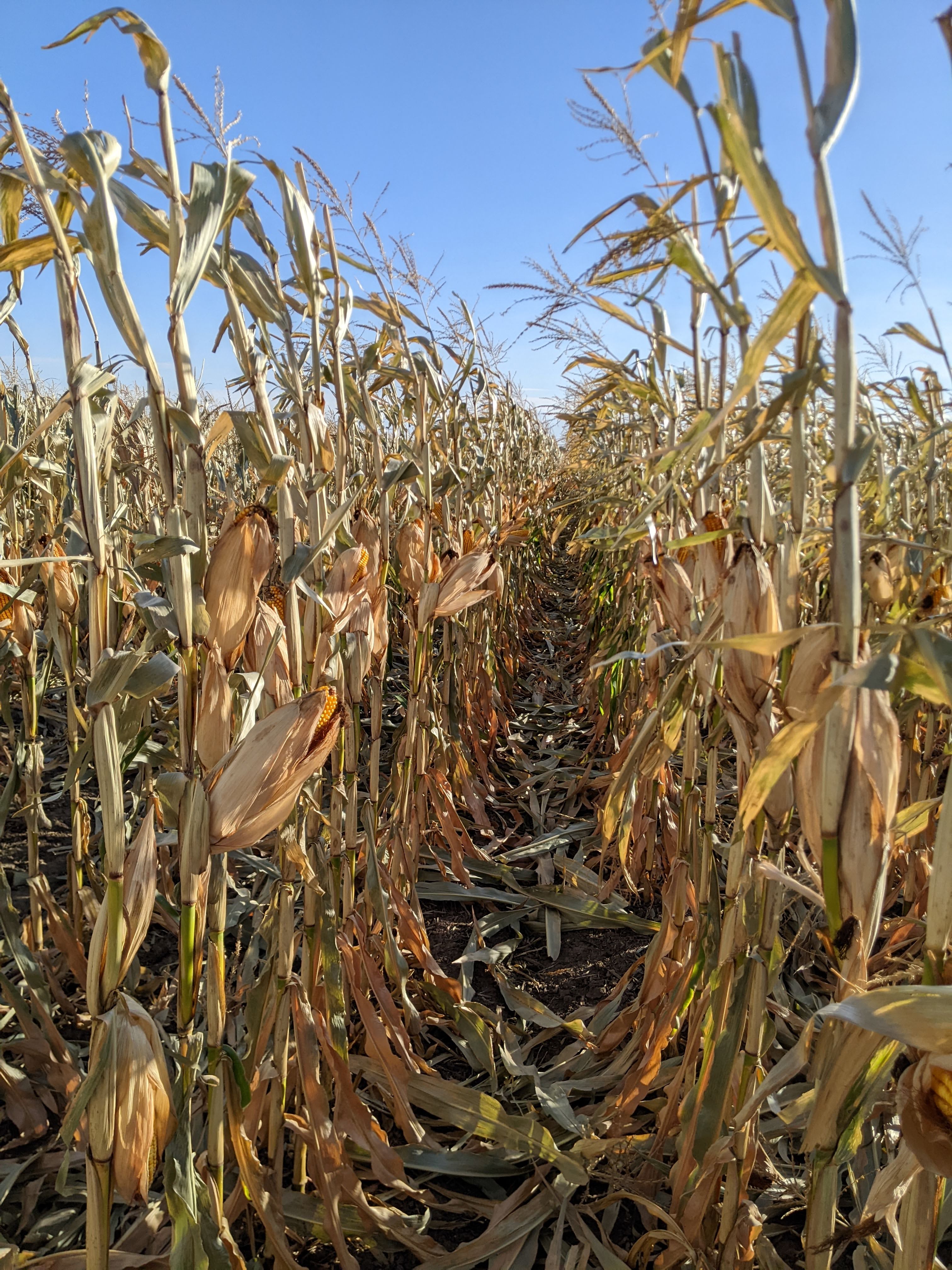
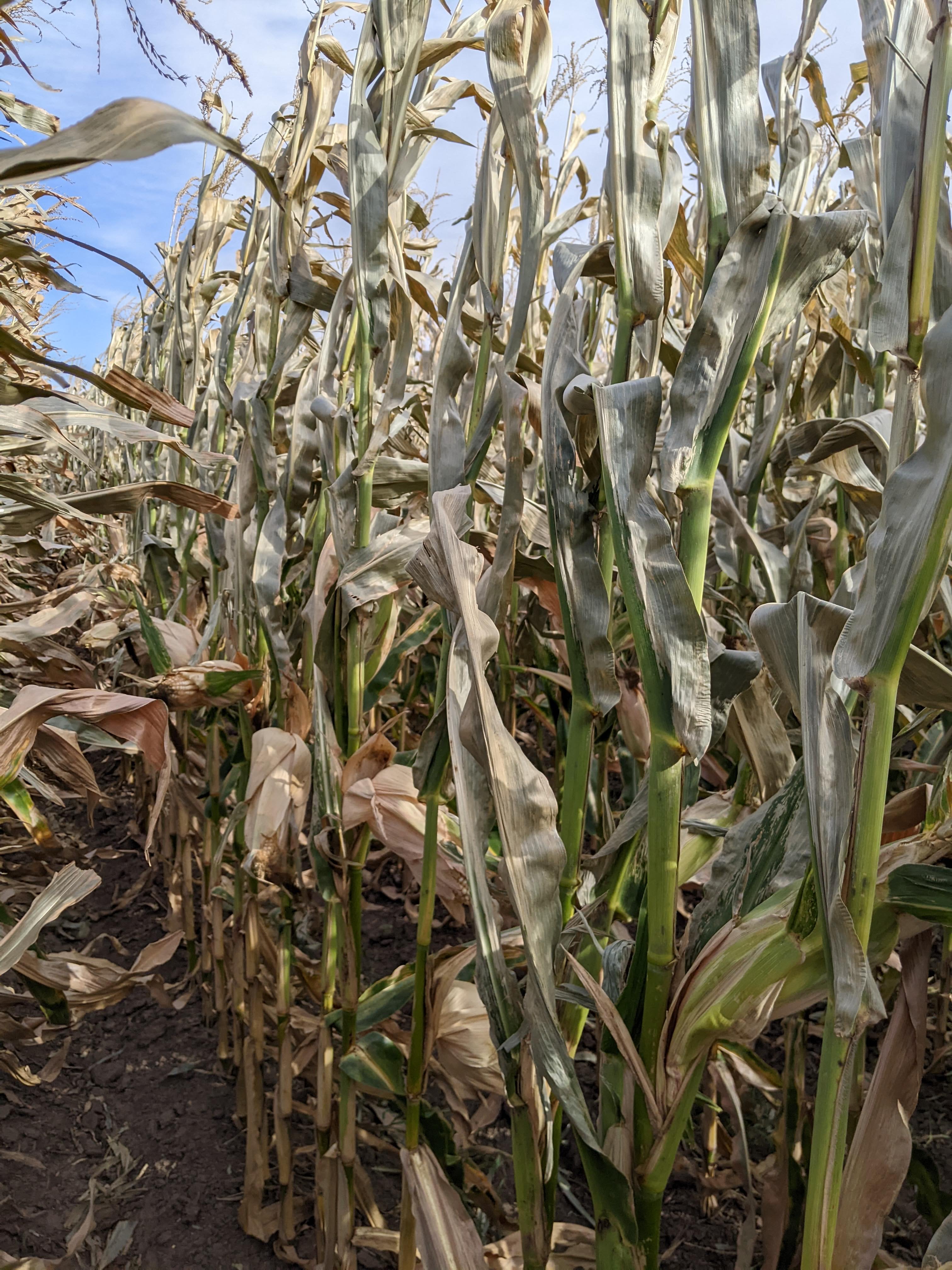
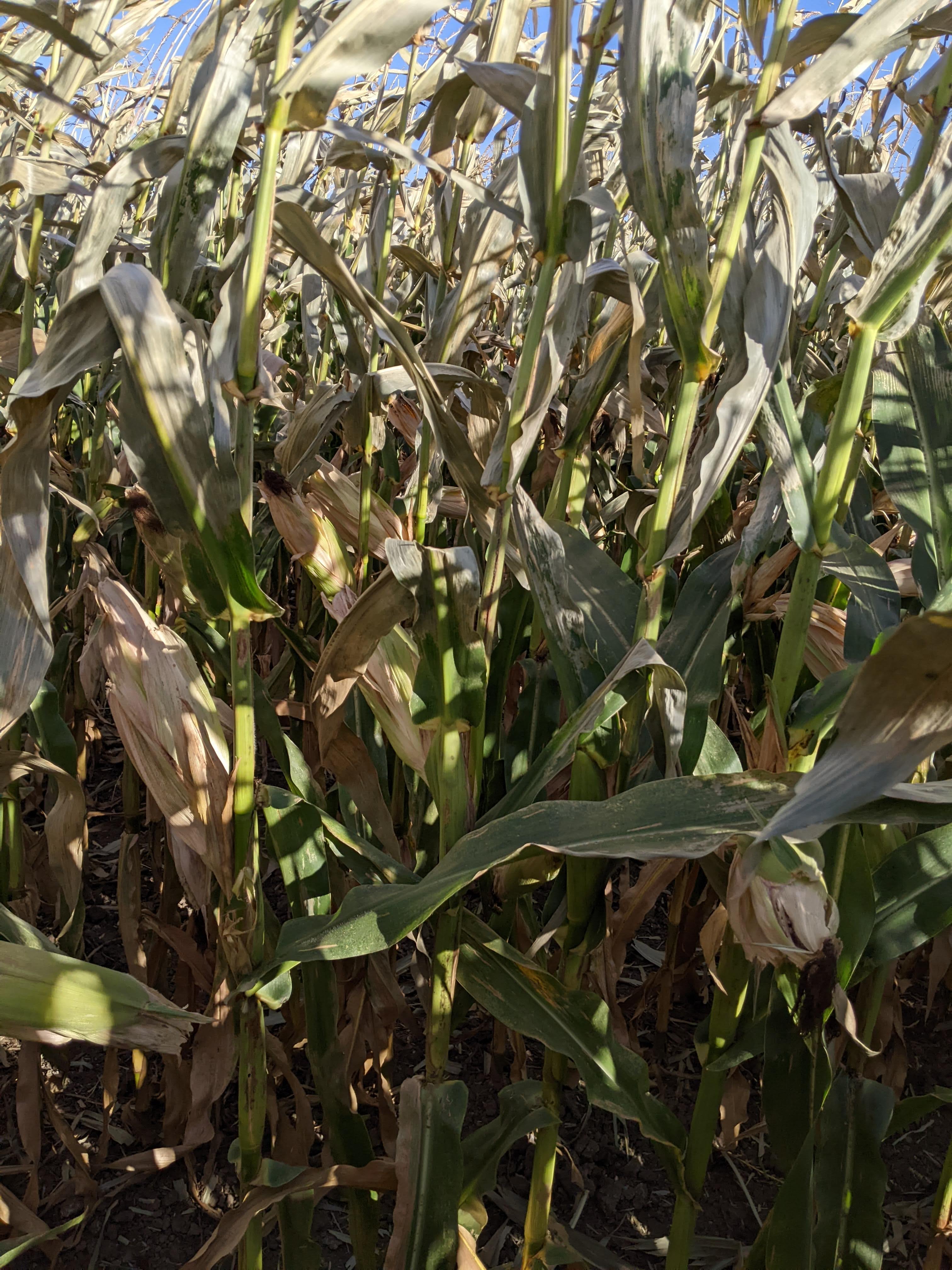

Greenness remaining in fields varied depending on crop stage pre-frost and soil moisture level. Minimal greenness remained in non-irrigated (far-left) to green from the soil line to ears in the two right-photos. Ears are turning down in fields that were more impacted by frost and most likely we will see ears turning down more this coming week. Watch stalks for stalk rot and watch for potential ear drop in fields.
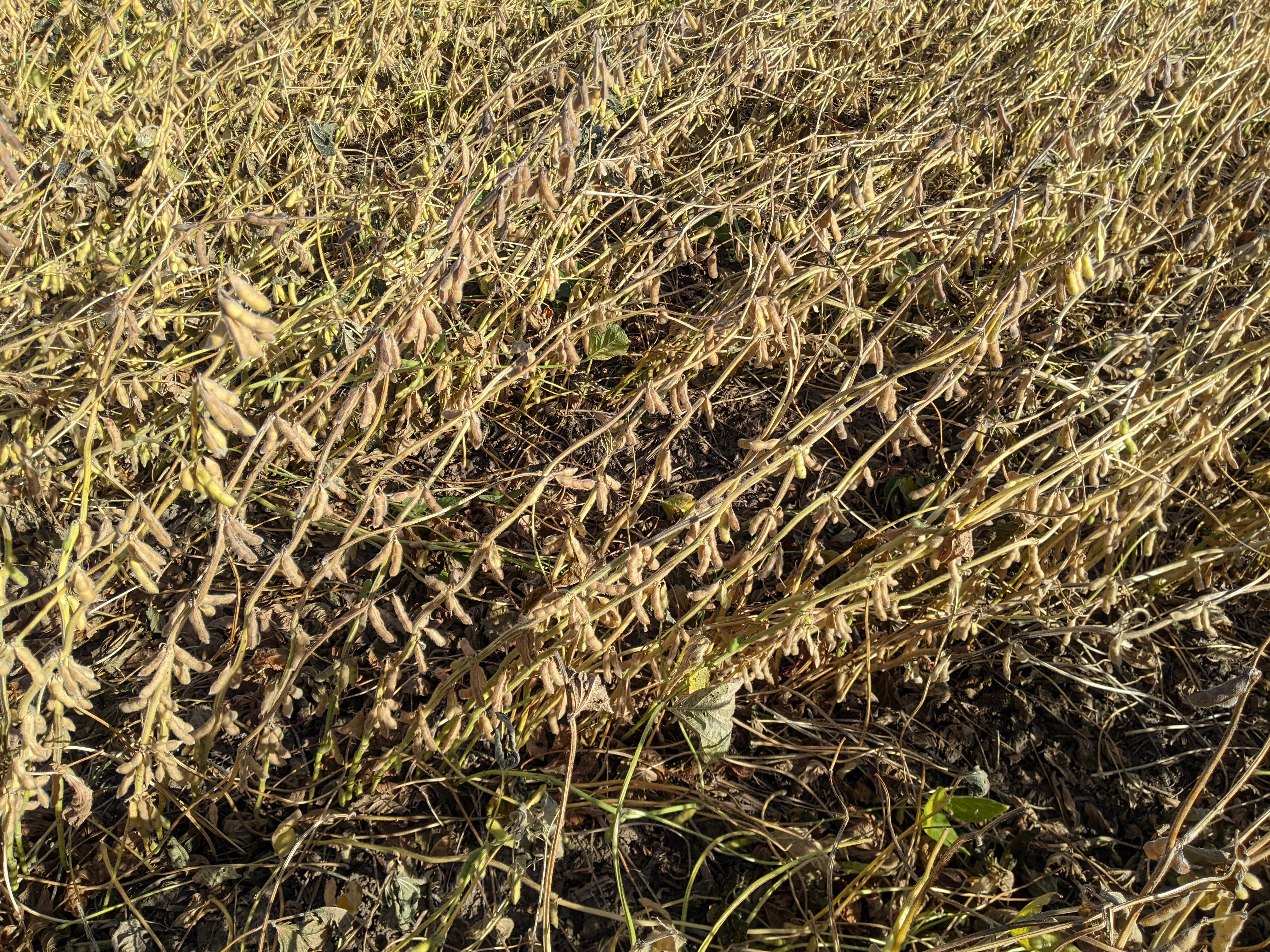
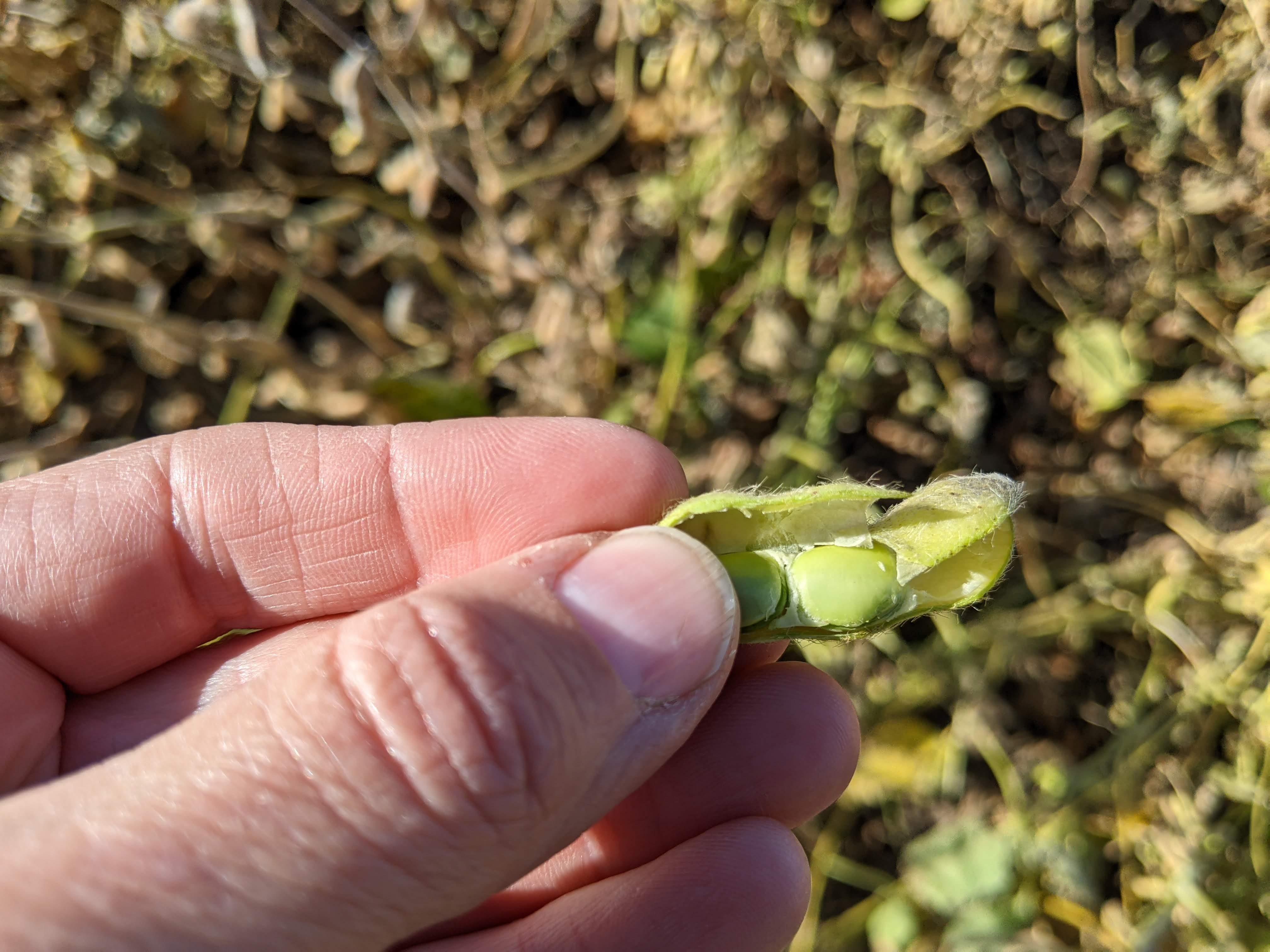
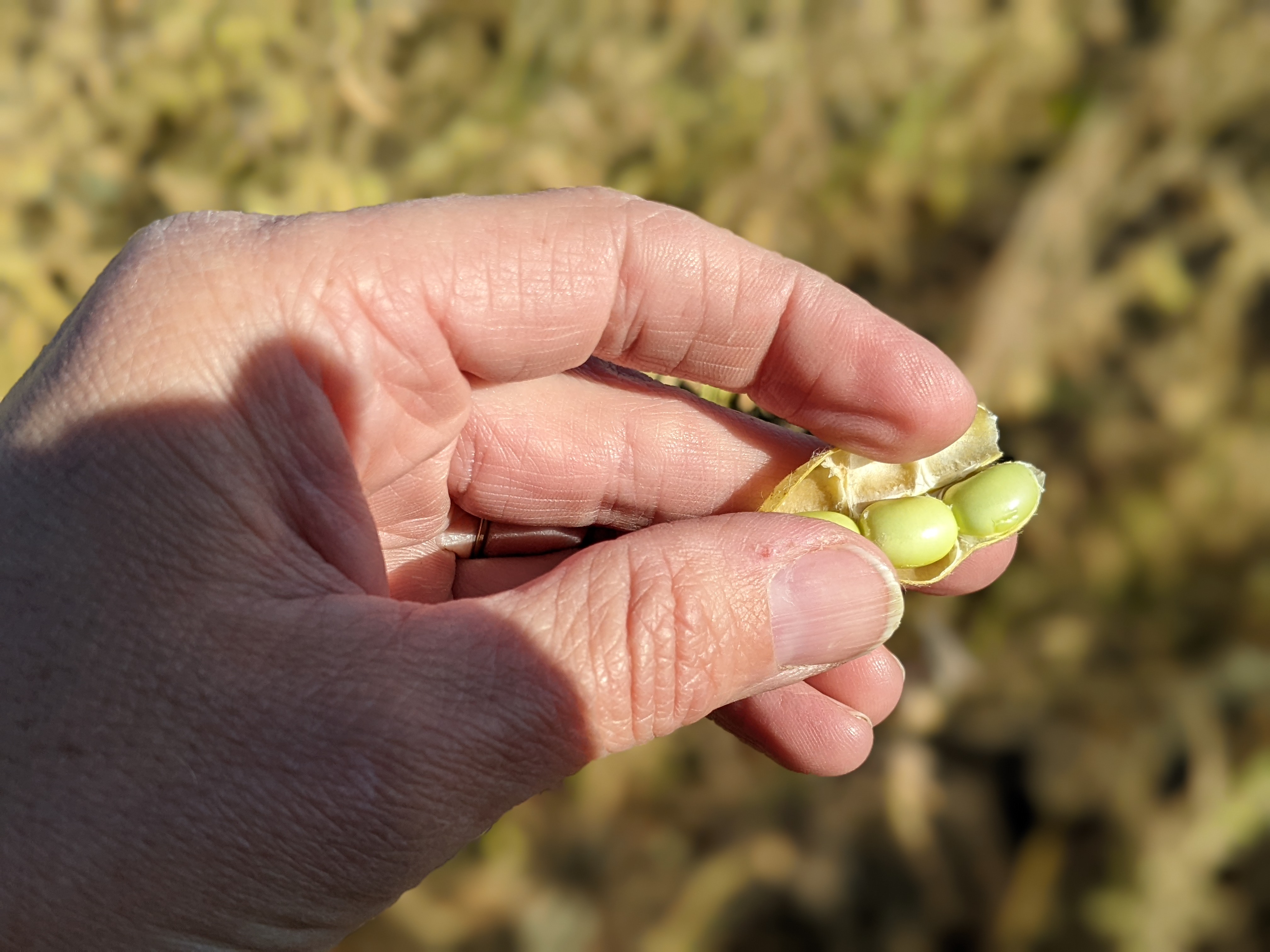
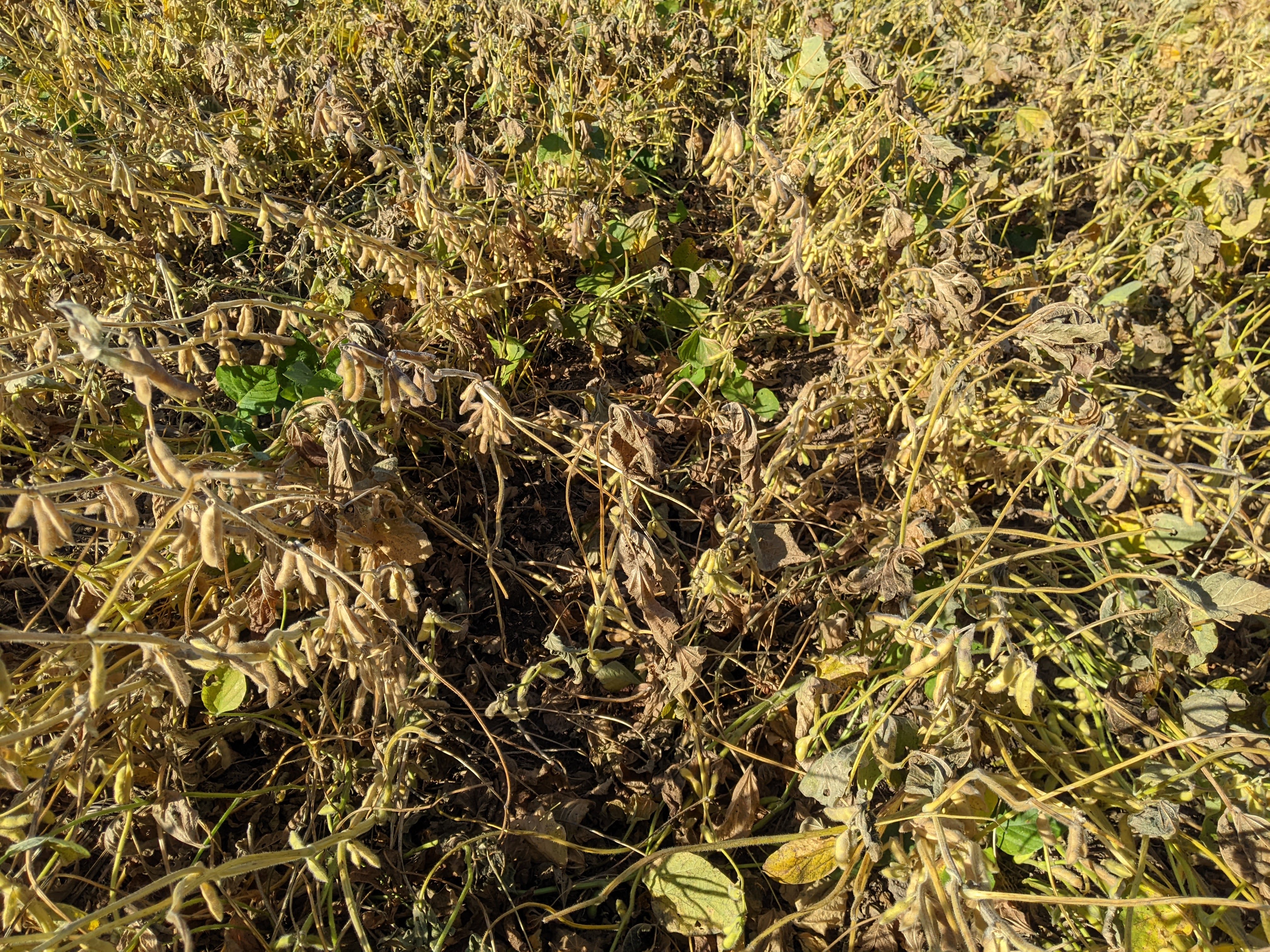

I didn’t pop into many soybean fields but this is the range of pods/seeds coloration that could be expected in those that were greener with leaves remaining on them. These beans were still filling and pods were changing color. Several sources say the seed greenness should lesson over time if the stem was not completely froze (which was observed this past week with green color lessening) and/or with aerated storage after 4-6 weeks.


Milo also showed damage to leaves but often remained green deeper within the canopy of fields as one went into the fields. Most of the milo was past hard dough stage pre-frost.


Other observations last week: Wasn’t happy to see ear worms survive the frost in some ears (but the ones I found didn’t survive me 🙂 ). Drifts of soybean leaves in ditches are a common site with the very windy days.
JenREES 10/9/22
The sun came up with vapors from frosty plants filling the air as it warmed. I know there’s nothing we can do about the frost, but I appreciate it’s still hard. What we can do is know what to expect next from these replant crops. Lots of information below. A blessing is the warmer predicted temperatures for this week.
Conditions vary due to location, hills/valleys, soil moisture, etc. Temperatures at 31F for a few hours can kill leaves while temperatures at 28F for a few minutes can kill the plant, including the stalk of corn and soybean. Four hours at 24F or lower will freeze the growing point at the top of alfalfa and 26F will kill milo (sorghum). Frost symptoms of water-soaked leaves and/or stems will begin 1-2 days post-frost but it can take as much as 5 days before we see the extent of the damage. One thing I’ve thought about is how we’re blessed with irrigation. I know everyone was tired of irrigating, but many pivots ran before this frost. A higher soil moisture content can allow radiant heat from the soil to potentially keep the canopy warmer than the air temperature outside of the canopy. Hopefully that helps reduce frost impacts.
Corn: If only leaves are killed, the ear will continue to fill because the stalk can continue to move carbohydrates to the ear. If only partial leaves are killed, photosynthesis will continue at a slowed rate. If the stalk dies, yield loss increases. In all these cases, stalk quality will be compromised and with these large ears, be aware of plants going down. Check for stalk rot and harvest timely. Estimated yield losses based on research conducted in 1984 where they used 80 and 105 day hybrids:
- Beginning Dent: Leaves & Stalk killed = 40% yield loss; Leaves only killed: 27% yield loss (23% via National Crop Insurance Services 100% leaf loss at this stage)
- ½ milk: Leaves & Stalk Killed = 12% yield loss; Leaves only killed: 6% yield loss (8% yield loss based on National Crop Insurance Services 100% leaf loss at this stage)
The kernels will eventually form a black layer when there’s no longer nutrients from the placental cells where the kernel tips are attached to the cob. The pre-mature death results in lower test-weight grain (low 50’s to high 40’s) that can be chaffy. Test weights below 53 lb/bu rapidly reduce storage life. Plan on moving low test-weight corn to market before summer and aerating it frequently before then. Kernels can be smaller than normal, misshapen, and may break easily when handled. Grain moisture content will be greater than 35%. Grain drying rates can range from 0.83 to 1.16% moisture less/day when whole plants die prematurely. Research found it took 4-9 more days of field drying to the 22-30% moisture range when corn was frozen before black layer compared to ‘normal’ maturity.
The outer kernel portion will dry slower than the inside part, thus grain moisture will be deceiving. Plan on grain being 1-2% higher than hand-held grain moisture testers. Also plan to dry frost-killed corn 1-2% lower than 14-15% and cool the grain as quickly as possible.
For those planning to dry corn, Peter Thomison from Ohio State shares, “Dry frost-damaged corn at reduced air temperatures (below 160 °F) and store at 14 percent (or lower) moisture. Dry corn as gently as possible, even if it is tempting to crank it up for higher dryer capacity. Also, use slow cooling methods after gas-fired drying to minimize quality problems. If possible, aerate stored grain to cool it to 20 to 30F for winter storage (in the upper Midwest).”
It’s not recommended to make silage from frost-damaged corn because of the excessive moisture in the plant and lower quality. Low test-weight corn and sorghum can be fed to livestock; more information on that here: https://go.unl.edu/0q8i.
Soybean: A killing freeze for soybean is considered 28F. Temperatures below 32F can injure leaves and stems/pods/seeds are injured at 30F. More leaves present can maintain more radiant heat keeping the canopy warmer. If at least one pod was mature on a soybean stem, the remaining seeds on the stem should mature fairly normally with normal colored beans. If just the leaves were froze, but stems remain intact, the beans should continue to fill. I have seen soybean pods that were green in color during a frost result in both round, green-colored beans, or remain green, lima-shaped beans. The beans will be similar to corn in that hand-held moisture testers will read 1-2% low compared to what they actually are. Depending on the percent of green beans at harvest, one may choose to bin the beans and aerate them to allow a reduction in the greenness and moisture in them over time before marketing.
Milo: If the grain hadn’t reached physiological maturity (usually around 40-45 days after flowering), there can be reduced grain yield and reduced test weight when temperatures reach 28F for around 2 hours. Sorghum plants aren’t normally completely killed by frost until temperatures reach 26F. K-State research found yield reduction to be around 20% when the grain is at hard dough stage. They also found a 6.5-27% reduction in grain weight at hard dough and 27-52% reduction at soft dough.
If grazing sorghum forages, it’s best to keep livestock out of them from the first light frost to full hard frost and allow the tissue to completely dry for 5-7 days post hard freeze to avoid prussic acid poisoning.
Alfalfa: Prior to the frost, several had asked about taking another cutting of alfalfa. We don’t recommend that within 6 weeks of a hard frost (24F for 4 hours). One can take a cutting after a hard frost. One can also take a cutting in mid-October even if a hard frost hasn’t yet occurred. The goal with this final cutting is to limit any new regrowth so the plant spends its energy preparing for winter dormancy. I haven’t checked where we’re at, but there’s also a way to consider this final cutting using GDD. Please let me know if you have questions on that and I can share more.
Resources:
Purdue: https://www.agry.purdue.edu/ext/corn/news/timeless/FrostFreezeImmatureCorn.html

JenREES 9/4/22
Crop Updates: Weed control has been a challenge in these hail-damaged fields. If needing a harvest aid for corn, 2,4-D or Aim can be used after beginning dent. Glyphosate and Gramoxone can’t be used till black layer. All need to be applied at least 7 days prior to corn harvest. For soybean, don’t go too early. Sharpen is the most commonly used with a 3 day pre-harvest interval and we say to apply at the combination of these things: 65% of pods are brown, there’s more than 70% leaf drop, and seed moisture is less than 30%.
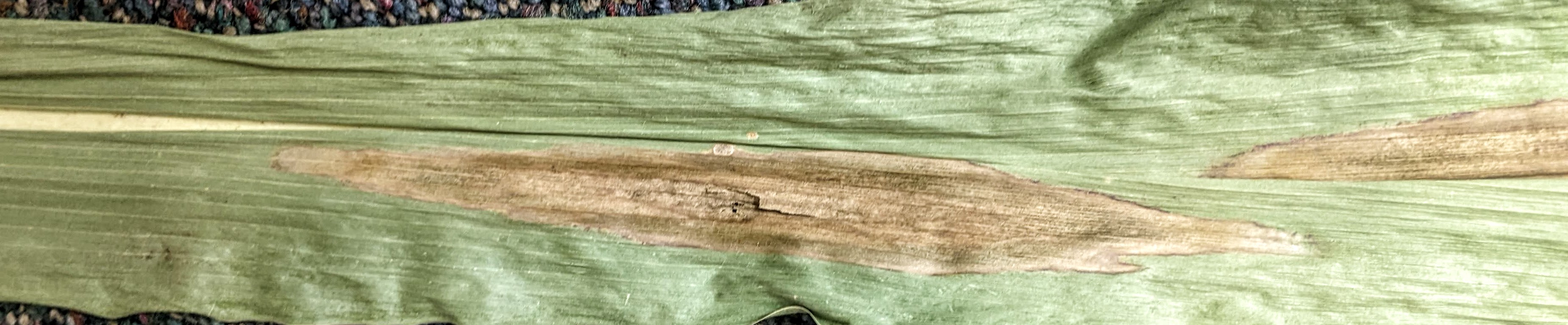
For a few weeks many have observed corn plants rapidly dying in the area, both in irrigated and non-irrigated fields. There has been some Goss’s wilt (leaf version) out there, but I’ve seen more instances of dying leaves being called Goss’s when it’s not. And, that’s an important diagnosis as you think about hybrids for the future. For Goss, look for a shiny, almost varnished appearance on the lesions. In the very edges where the lesion is more ‘water-soaked’ and light-green in color, you should often see the presence of black specks that look like pepper. Some lesions being confused with Goss’ are actually northern corn leaf blight, but it doesn’t have a shiny varnished appearance and will have cigar-shaped lesions usually between the midrib and leaf edge. These lesions can eventually blight entire leaves and may be what’s occurring in some hybrids.
I have seen some anthracnose top die-back in some fields (look for top leaves flagging bright yellow and senescing from top towards middle of plant). I’ve also seen a lot of crown rot in fields…since early this growing season. At that time, it wasn’t something we considered for replant because it doesn’t usually kill plants then. It does hinder water and nutrient uptake at this point in the season, and I think that’s the greater issue combined with higher soil temperatures (up to 8F higher than normal) and water stress. There’s nothing we can do about any of these problems, but you can take note of hybrid differences right now. If you want to see if crown rot is playing a role, dig up a plant with leaves that are rapidly dying and slice the stalk open. For crown rot, you will notice a browning in the crown area and sometimes even up higher on the internodes. Fields that received hail damage and weren’t replanted are also showing greater rot into the stalks where you can see the original hail stone damage that penetrated.
Irrigation: I know you’re weary of irrigating. The blessing of this slow fill period is packing on weight with deeper kernels. We’ve known for some time that we will most likely be irrigating replant crops while harvesting. Some need this replant crop to fill contracts while others are trying to get by without many additional inputs. For several weeks I’ve thought about ‘how much yield do we give up if we stop irrigating at X’. Was thinking about this for those who get tired and are ready to shut off early and for the replant corn if shutting off early can move it along/get it to dry down faster. Wasn’t sure how relevant this thinking was till two farmers asked me. So, the following is combined from ISU’s ‘How a Corn Plant Develops’, ‘Last irrigation of the season’ NebGuide, and info. from some plant breeders if it can be helpful for your decision making going forward. The caveat is that hybrids differ, thus the range, so perhaps also talk with your seed dealer. For corn:
- Beginning dent needs 5.0” water, around 24 days to maturity, 25-55% yield loss potential.
- ¼ milk needs 3.75” water, about 19 days to maturity, 15-35% yield loss potential.
- ½ milk needs 2.25” water, about 13 days to maturity, 5-10% yield loss potential.
- ¾ milk needs 1.0” water, about 7 days to maturity, around 3% yield loss potential.
I don’t have the same numbers for soybean, but in much of the soybean replant, I’m seeing beans that either caught up to the old stand development stage or are up to 3 stages behind it. The biggest thing I’ve seen in replant soybean in the past is having beans at a variety of development stages at harvest…from lima beans to dry bbs, particularly when later maturity groups were planted as replant compared to the original maturity group. Regarding all who ask me if this replant corn crop will make it, for now, let’s just leave it that I genuinely hope and pray it does! Each day is one more day closer!


Crown Rot: Was seeing this early on in the growing season in the below-ground nodes (left triangle area) and seeing quite a bit now as well (right). Regardless of the specific pathogen causing this, what we observe this time of year is leaves rapidly dying and rotted crowns on plants such as what you see in the plant on the right. This plant is actually rotted to the vascular bundles in the crown area with rot progressing up the plant into subsequent internodes and nodes.



JenREES 8/21/22
Corn Silage Resources: For those making corn silage this year, hopefully the following resources can be of help. The multiplier for corn silage value from UNL is 7.65 times the market value of corn grain.
- Making corn silage considerations: https://go.unl.edu/qven
- Estimating a fair value for standing forage (including silage): https://go.unl.edu/sy6j
- Value of Standing Forage excel spreadsheet (scroll to mid-page): https://cap.unl.edu/forage

Spidermites: I’m hoping that the cooler weather and either rainfall/irrigation are helping a beneficial fungus help us in the battle against spidermites. Last week I was showing growers how to distinguish this via a hand lens. We mostly have two-spotted spidermites in fields, which are yellow with two black spots on them. Anytime they start looking different (darker, cloudy, white) where the spots are no longer visible, it can be an indication that they are infected and will die. Unfortunately I didn’t grab any pics from the field. The economic threshold from Colorado State says spraying is no longer beneficial past hard dough. I can appreciate that’s hard with the severity in some upper canopies, so here’s hoping the cooler weather helped with the battle.
Pollination: I sure appreciated seeing and smelling all the pollen shed in these replant fields last week! It was perfect weather for it, hopefully a bright spot in the midst of a difficult situation. Been hearing and seeing complaints about poor pollination in non to less severely hailed areas. I don’t remember smelling pollen this year like I normally do in July, but I also admit most of my time has been spent in this large replant area this year. The following is about poor pollination, not kernel abortion.
What I’ve learned from Dr. Tom Hoegemeyer and Dr. Roger Elmore about corn pollination through the years: Heat over 95F depresses pollen production with prolonged heat reducing pollen production and viability. When soil moisture is sufficient, one day of 95-98F heat has little or no yield impacts. After four consecutive days, a 1% yield loss can occur for each day above that temperature with greater yield loss by day 5 or 6. High humidity, without a drop in humidity during the day, can delay pollination or prevent pollen from leaving the anther sacs. Pollination mostly occurs between 8:30 a.m. and noon. When the temperature is 90°F to 95°F, the pollen is eventually killed by heat and is seldom viable past 2 p.m. Pollination typically occurs over a span of six to ten days depending on variability of growth stages in the field.
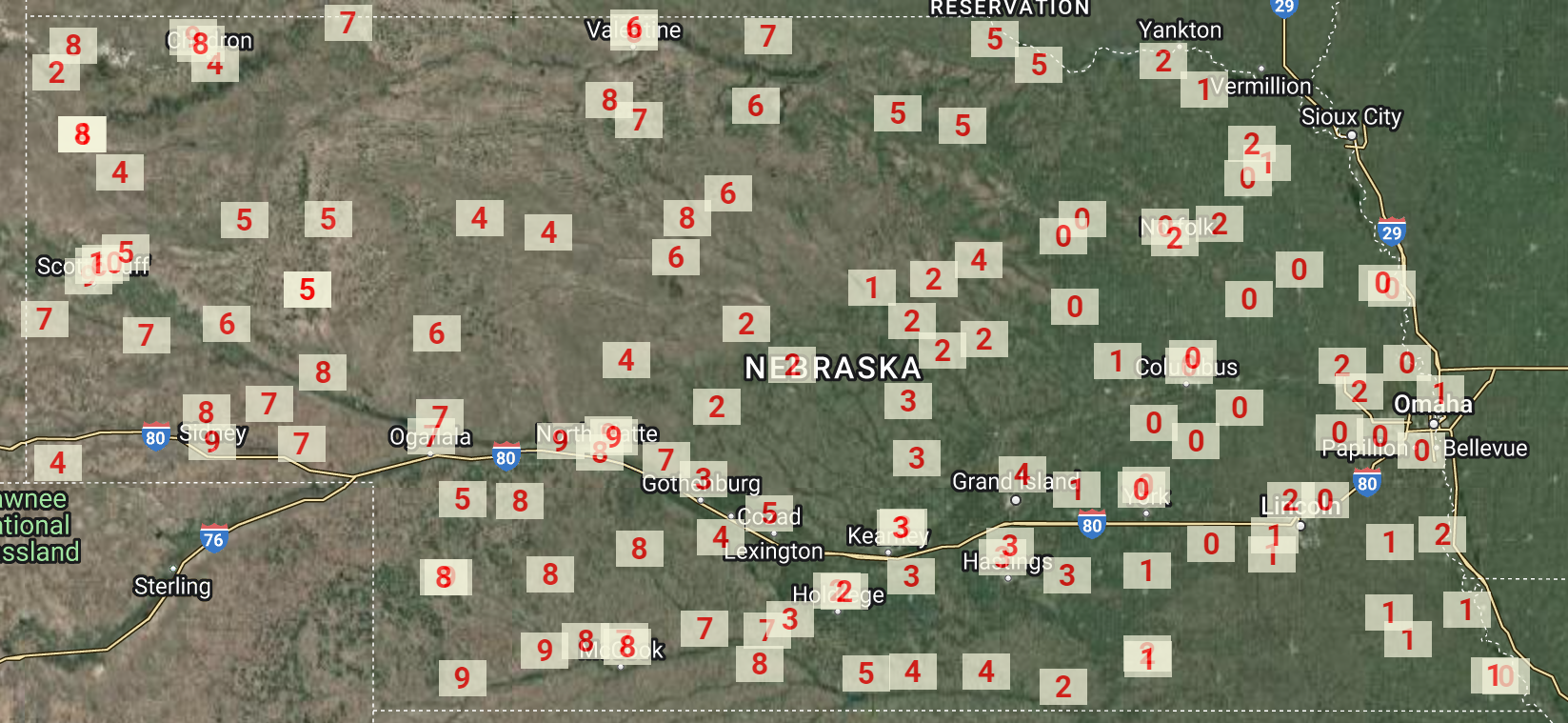
So, I did some digging into weather data. I don’t have all the tools that you may have, so do something similar for your operations based on the timing of when your specific fields were pollinating and where you’re located. First, I did a general map of Nebraska showing the number of days over 95F from July 9-19, 2022. The eastern 1/3 of the State only had 0-1 days that fit this criteria.
Perhaps bigger factors may have been humidity and timing of silk emergence compared to pollen shed? We’ve had high humidity. For pollen shed to occur, relative humidity needs to drop between 50-65% and the pollen is no longer viable at 30%. As I look at weather data for different locations in the area, many places had over 65% relative humidity as an average for the day for at least 5 days in the time period listed above. It really comes down to at what time the relative humidity dropped enough during the day to release viable pollen. It’s possible that for several days, the anther sacs dropped without releasing pollen if the humidity didn’t drop in the morning. I also remember mentioning in July about how extra long the silks seemed this year prior to pollen shed. That can be a problem, particularly for pollination on the lower end of the ear. The first silks that emerge from the husk are attached to kernels at the base of the ear and they begin to form 8-10 days prior to R1. Silks then continue to emerge sequentially up the ear with the ear tip silks emerging last. Silks are receptive to pollen anywhere along the silk, but after 10 days, the silk senesces (and they’re most receptive to pollen in the first 4-5 days of emergence). Some drought tolerant hybrids may have genetic X environmental responses which trigger silks to emerge 4-5 days prior to any pollen shed (which can result in poor pollination). Older silks can also get covered up by newer silks and miss exposure to pollen. Drought stress adds an entire other complexity to this discussion. Japanese beetles clipped silks in some areas, but it sounded like most were sprayed timely or the silk clipping occurred after the silks had pollinated (turned brown). I don’t know the specifics of every individual situation. These are some thoughts to consider if you’re dealing with pollination issues this year.
JenREES 7/31/22
Fair Time! It’s fair time for both York and Seward counties. While unfortunate that the fairs are the same time (August 4-7th), there’s great opportunities at each one! Come on out to view the 4-H and FFA exhibits, eat great food including BBQ/steak fry served by various local commodity groups, enjoy the entertainment, and catch up with friends and neighbors from across the counties. Please view the schedule of events for Seward Co. at: https://sewardcountyfairgrounds.com/countyfairinfo/ and York Co. at: http://www.yorkcountyfair.com/.
Also, we know the weather greatly impacted gardens. I’m asking for York Co. fair that 4-H/FFA/Open Class participants still bring your produce even if it isn’t ‘market ready’. So, bring your green tomatoes, small peppers, etc. as we’d still appreciate your entries!
Crop Update: Tar spot was found on a leaf in a Saunders county field this past week. Very low incidence in the field and we’re not recommending fungicide for it at this time. Southern rust was found in northeast Kansas this past week, but hasn’t been detected in Nebraska yet.
Have had a number of comments this year about herbicides not seeming to kill palmer as in the past. Some common threads so far have been specific nozzle types used, weeds that had received hail at some point and potentially ‘hardened off’, and also some questions about water quality (pH, hardness) and any impacts there. If you’re noticing/hearing anything specific that worked or really didn’t work this year, I’d be interested in knowing it so I can keep compiling a list of considerations for weed scientists and ag industry to talk through this winter.
Also have received some questions/comments regarding irrigating shallower or deeper. We’ve been saying to get around as fast as one can if you are applying fungicide and/or insecticide through the pivot (0.15” and no more than 0.25”). For fertigation, we’d say 30 lb/ac can be applied in 0.25” and 50-60 lb/ac in 0.5”. Otherwise, we would recommend putting on closer to an inch at a time (depending on what the ground can take in without running off). This is also true for managing disease, particularly white mold in soybean and if tar spot in corn gets established years down the road (it’s better to reduce the frequency for leaf wetness when we irrigate).
Spider mites: Hot, dry weather has increased spider mite activity in crops (also FYI in gardens). Our Extension entomologists updated a CropWatch article that has more info. and a table with products listed for crops: https://go.unl.edu/9v6u. They write, “For effective control, spider mites must come into contact with the miticide. Since mites are found primarily on the underside of the leaves, they are difficult to reach with low volume applications. Using three or more gallons of water per acre by air to carry miticides may increase effectiveness. Aerial applications are generally more effective if applied very early in the morning or in the late evening. Applications made at these times avoid the upward movement of sprays, away from the plants, on hot rising air.
Eggs are difficult to kill with pyrethroid or organophosphate miticides, so reinfestation is likely to occur 7- 10 days after treatment as a result of egg hatching. The reinfestation is frequently heavy because natural enemies have been reduced or eliminated. A second application may be necessary to kill newly hatched mites before they mature and deposit more eggs.
Miticides with activity against eggs and immature stages include Zeal, Oberon and Onager. In many cases, especially with the twospotted spider mite, slowing the rate of population increase is all that can be accomplished with a miticide application.”
Also, I’ll speak more on this next week, but Soybean Management Field Days are quickly approaching Aug. 9-12. More info: https://go.unl.edu/xukf.



JenREES 7/24/22
Even though few, the raindrops Saturday night were so refreshing after a hot week! I don’t know that it’s even really that hot compared to past years, but the sun seems extra intense to me this year. Cooler temps are welcome this week!
Crop Update: There is very little disease pressure thus far in both corn and soybeans. For corn, the most common thing I’ve seen this year is physoderma brown spot/purple leaf sheath, which is something we don’t worry about in Nebraska. Bacterial leaf streak is common on certain hybrids as always and is one we don’t worry about. A fungicide will not help against it and won’t protect against it. Gray leaf spot is very minimal to date in lower canopy, if it can be found. Same for common rust. The closest southern rust has been found is in southern Arkansas. So short story, fungicide isn’t necessary yet unless one is saving a trip for corn insects. For corn insects, there are still hot areas of Japanese beetles feeding on silks in addition to corn rootworm beetles. Spidermites are also flaring in some fields. Also be aware that spraying a fungicide can flare corn leaf aphids as it kills the fungus that attacks them.
For soybean insects, there’s still some Japanese beetles feeding and some spidermites flaring. For disease, have seen very minimal phyllosticta leaf spot and frogeye leaf spot and not anything close to levels for spraying. Seeing lots of phytophthora root rot this year in fields that is continuing to kill plants and there’s nothing we can do about that this year. Fields with a history of white mold may have been sprayed to help reduce disease pressure.
Tar spot has not been found in Nebraska yet this year. A great resource to track diseases such as southern rust and tar spot is: https://corn.ipmpipe.org/diseases/. Click on the disease of interest to see a U.S. map of where the disease has been found. Suspect samples can be submitted to the Plant and Pest Diagnostic lab in Lincoln for free. You can also get your samples to me locally if you’d like. There’s been a lot of confusion so far with insect “poop” and tar spot. A quick field test is to either get your finger wet or spit on the leaf and rub the spot to see if it comes off. Physoderma and tar spot won’t rub off but insect excrement will.
Fungicides and insecticides are helpful when we need them. Everyone’s trying to make the best decisions possible. Concerned we let fear of ‘protecting the crop’ drive decisions. Crop prices continue to be volatile and economics should be considered. Sometimes fields are sprayed a second time when disease comes in later once the residual wears off (regardless of product and because the product only makes it so far into the canopy unless chemigated). In terms of resistance management, we have fewer modes of action with fungicides than herbicides available to us, and we use those same modes of action in all our crops. We already have resistance to the quinone outside inhibitor (group 11 formerly strobilurin) class of fungicides to frogeye leaf spot in soybean. Concerned it’s only a matter of time before this impacts us on the corn side too.
I realize I’m continually an outlier in saying to wait and not automatically apply at tassel. Based on the Nebraska research (shared last year here) and observation I feel we can wait till disease pressure warrants applications and allow them to help with stalk strength. I also realize this column would’ve been more timely last week with the spraying that’s occurred.
South Central Ag Lab Field Day Aug. 4 will begin with registration at 8:30 a.m. with program from 8:45 a.m.-3p.m. at the South Central Ag Lab near Harvard/Clay Center. There are several tracks to choose from throughout the day including the latest in weed, disease, insect, nutrient, irrigation management, and soil health. Free lunch and CCA credits available. More info. and RSVP at: https://go.unl.edu/scalfieldday.
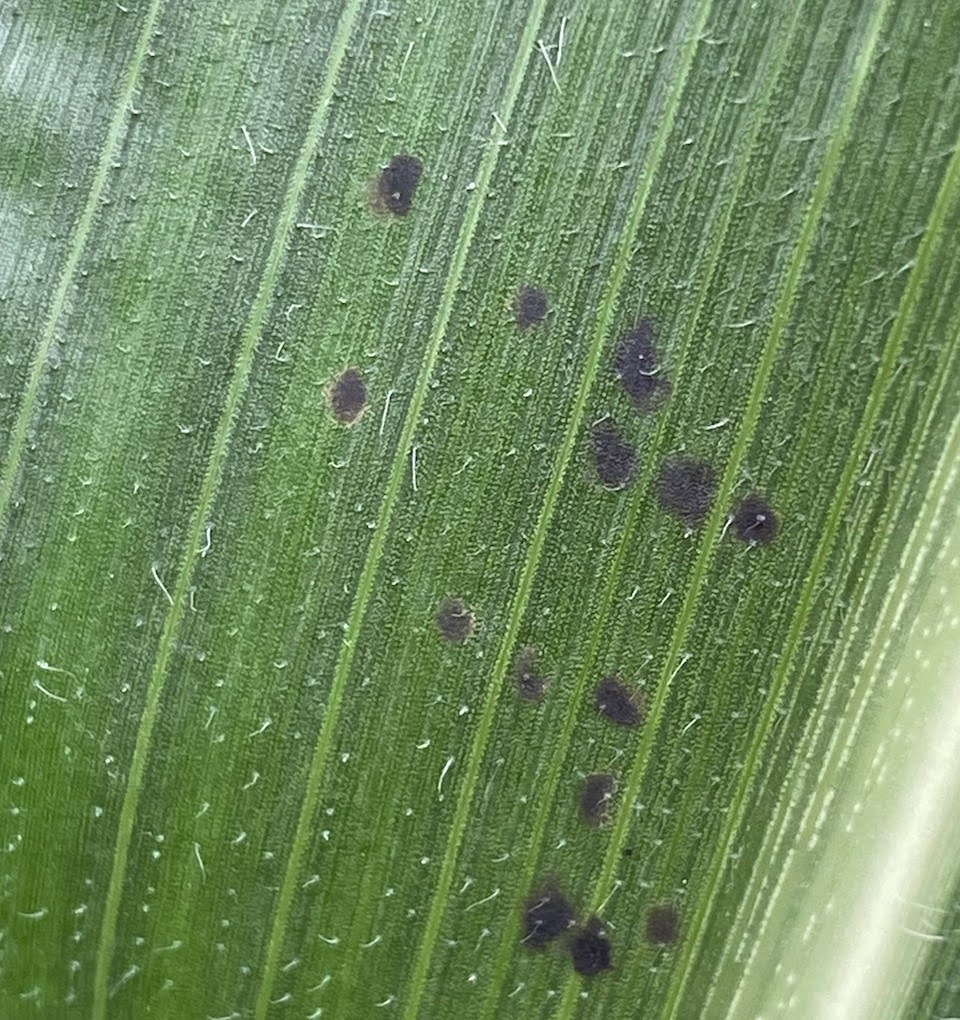


The first picture on the left has been common of both physoderma brown spot and insect poop. With physoderma brown spot, most often these purplish spots are more prevalent on the midribs, leaf axils, and leaf sheaths (as seen in the middle photo). Often the spots outside of the midrib are more yellow/tan in color and are often confused with southern rust. Photo 3 on the right-hand side was tar spot that was found in Oct. 2021 in York Co. Would recommend getting your finger wet or spitting on the leaf and rubbing the spot to make sure it’s not insect poop as several samples looking like the first photo have been that instead. Physoderma won’t rub off and neither will tar spot. Feel free to submit any suspect samples to the diagnostic lab for free.
JenREES 7/10/22
Grateful for some rain last week! Hail damaged trees (particularly evergreen trees) need water now to help them heal all the open wounds on the branches, stems, trunks.
Western Bean Cutworm Moths should be around 25% flight for corn nearing or tasseling in much of the area. It was predicted for Guide Rock on July 5, York on July 10, and Clay Center on July 11. This CropWatch article shares dates to watch for around the State: https://go.unl.edu/nmye.
Japanese Beetle Control: I posted a second blog post last week on organic and conventional control products that are sold in this area at local farm stores, lawn/garden centers, Wal-Mart, and Ace. You can print it out from the font page of the York Co. Extension website: https://go.unl.edu/bvqf.
Even after applying pesticides, beetles will continue to emerge and fly in from grassy areas (ditches, lawns, pastures) for a good 4-8 weeks. Plants that are being chewed on elicit responses signifying they’re in trouble. It’s those responses that signal other beetles to come. Even though linden, fruit, and other trees and plants are rapidly defoliated, they should not die. On younger trees that were hail damaged, I’m unsure if the hail + the beetle defoliation is too much stress for survival; we will have to see. I’m also unsure if we will see new leaves in general after beetle defoliation this year or not; trees are super stressed already from all the hail damage. I’m observing new leaves are very slow coming back on broadleaf trees post-hail and that was before we also had the beetle defoliation.
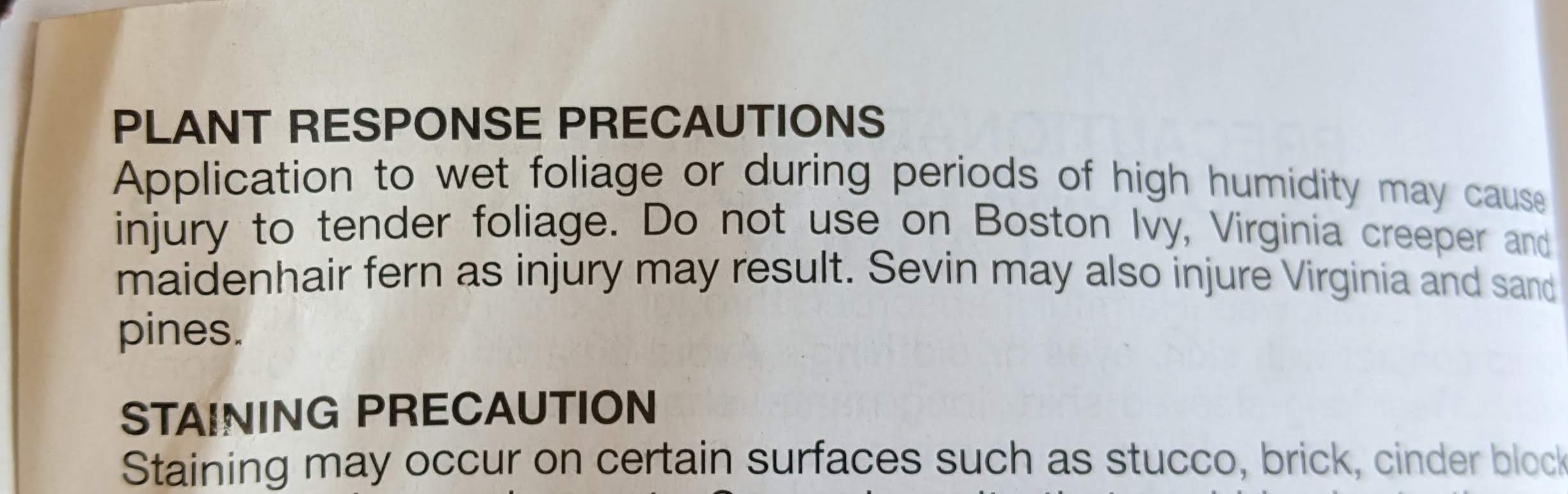
I probably should’ve realized this, but another thing I learned this week is there’s two formulations of ‘Sevin’ being sold. I don’t mention that on the print-out mentioned above. One is the traditional carbaryl that lasts 5-7 days. The other is zeta-cypermethrin which has a residual of 14 days (farmers would recognize this ingredient in Hero and Mustang Maxx). I’m not sure why the company branded both products the same name. The Sevin carbaryl product says it will ‘cause damage to boston ivy and virginia creeper’…both of which are favorites of Japanese beetles. So, that was something new I learned by reading the labels and being called out to an unfortunate incident with boston ivy. I didn’t see that same warning on the Sevin zeta-cypermethrin product, but please check it for yourself if you use it.
Japanese beetles are in corn and bean fields as well. Watch silk clipping in corn and pod clipping in beans (seeing both occurring). Tasseled corn threshold: three or more Japanese beetles per ear, silks have been clipped to less than ½ inch, and pollination is less than 50% complete. Soybean has 20% defoliation once flowering occurs. It’s been interesting seeing beetles defoliating palmer, waterhemp, smartweed, etc. Too bad we couldn’t train them to just eat the weeds!

Hail Damage and Corn Pollination: This one is just hard and I’m genuinely hoping this isn’t as big of an issue as what it looks like. For corn that was V9-V11 during the June 14th storm, check the tassels and the ears. What I’m seeing in fields that were severely stem bruised but not totaled, are ears that are hip high on me with silks that are up to 5” long right now. Tassels are mostly 1-2 leaves from tasseling. Opening up the leaves shows severely damaged tassels with minimal to no anthers. Some anthers are trying to pollinate within the leaves (pics on my blog). It’s normal for silks to emerge before tassels as that’s what breeders have bred corn to do. It’s not normal for the tassels to emerge this much later than the silks and to be so severely damaged. It will be something to watch in all the hail damaged fields that were kept from June 14 storm to see if the pollination timing is impacted in them as well. What I’m recommending is for now, check your fields and take pictures of the tassels and ears for documentation of any problems if crop insurance can’t come out. I’m hoping I’m wrong and that we can still get some decent pollination in these fields.
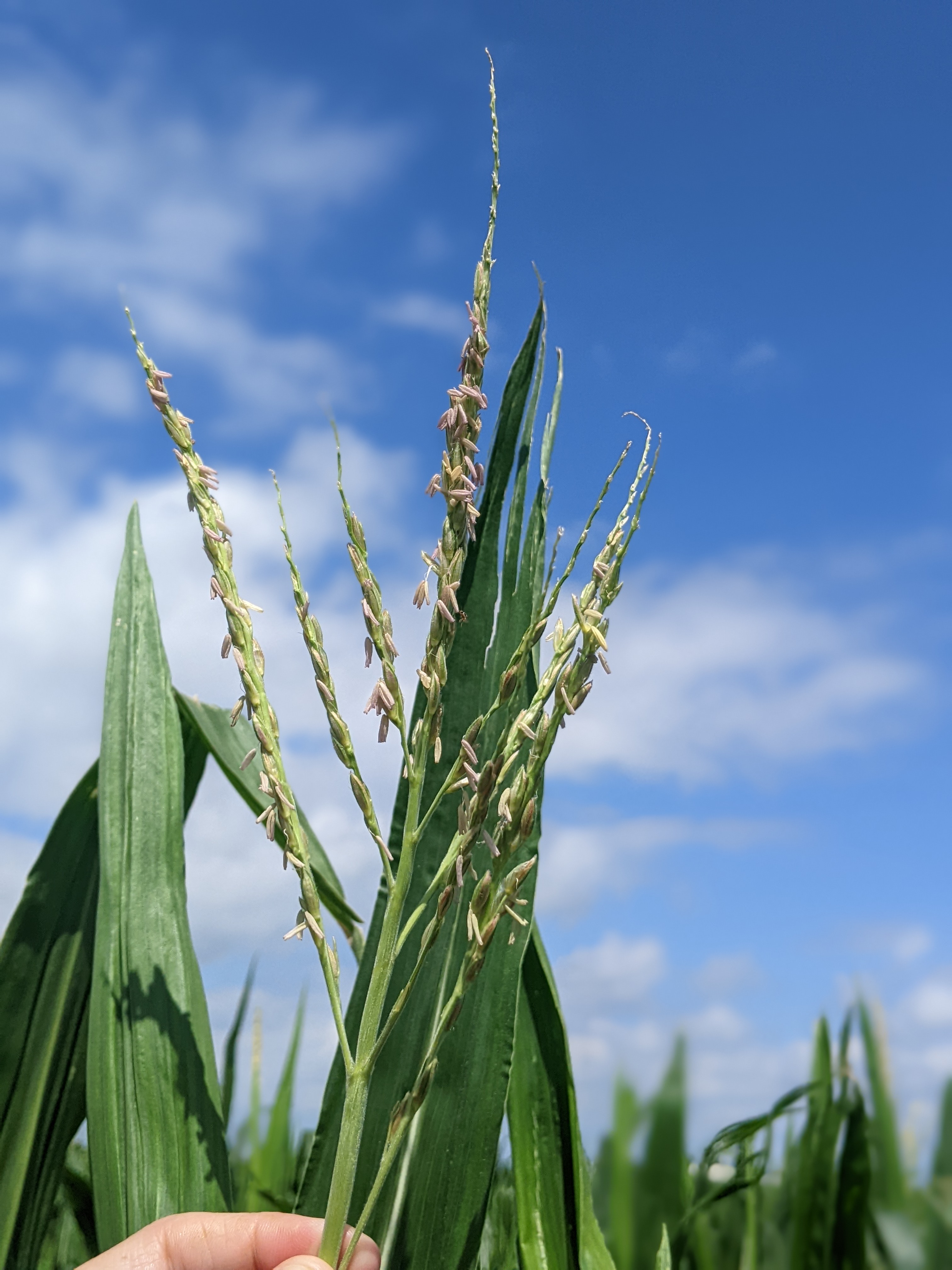


This is one of a few fields looked at that was between V9-V11 during the June 14th hailstorms. It had severe stalk bruising at the time and around 22-24K for population. Long silks with very few tassels out. Top left tassel was a decent tassel found that was out. Most tassels are within 1-2 leaves of emerging, are severely damaged from the hail, and some were shedding what pollen they were producing while inside the leaves (bottom left photo).
JenREES 5/30/22
Thankful today for all those who paid the ultimate sacrifice for our freedom, that our flag is still flying and for the freedoms we still have. May we never forget freedom isn’t free.
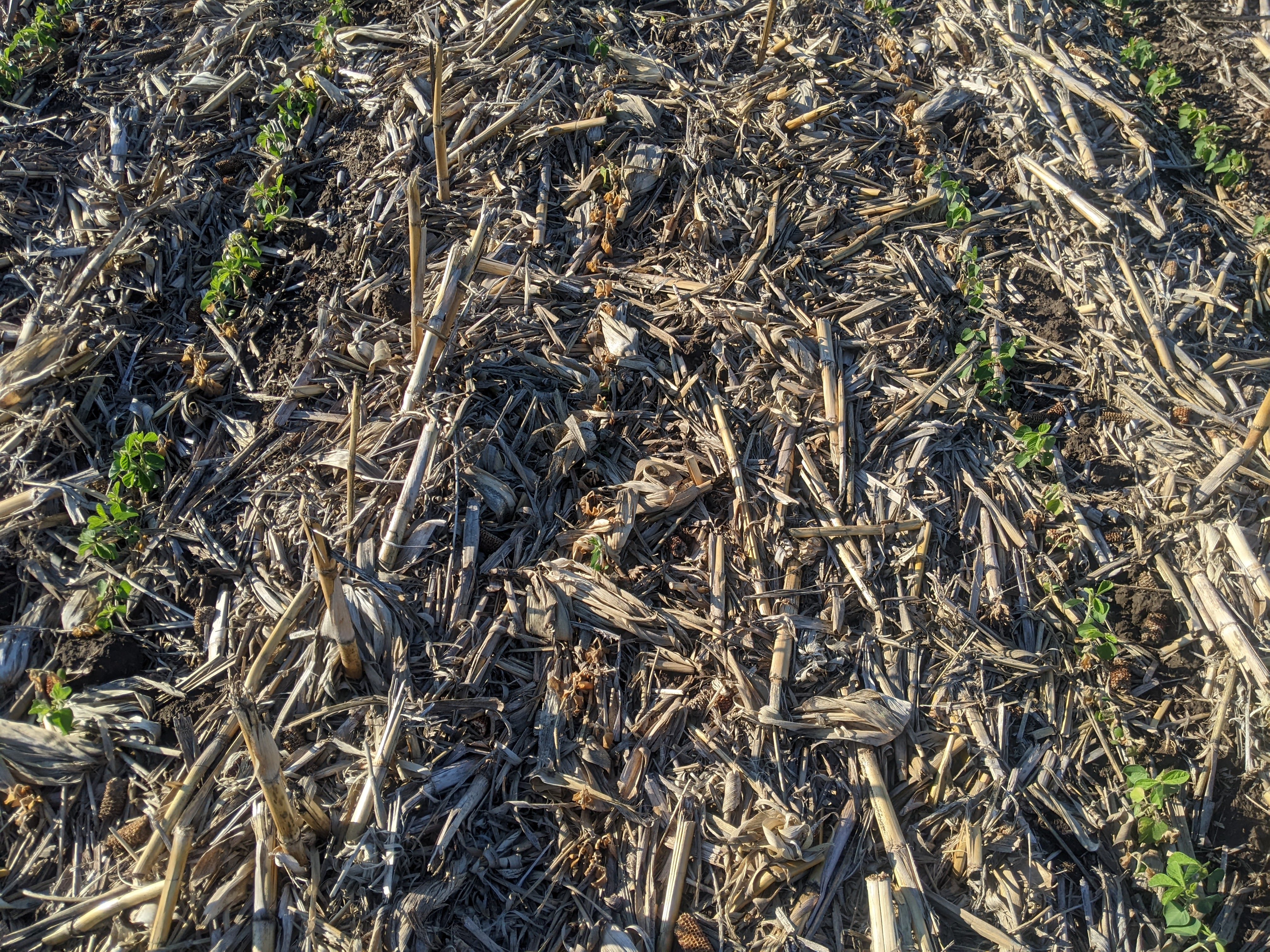
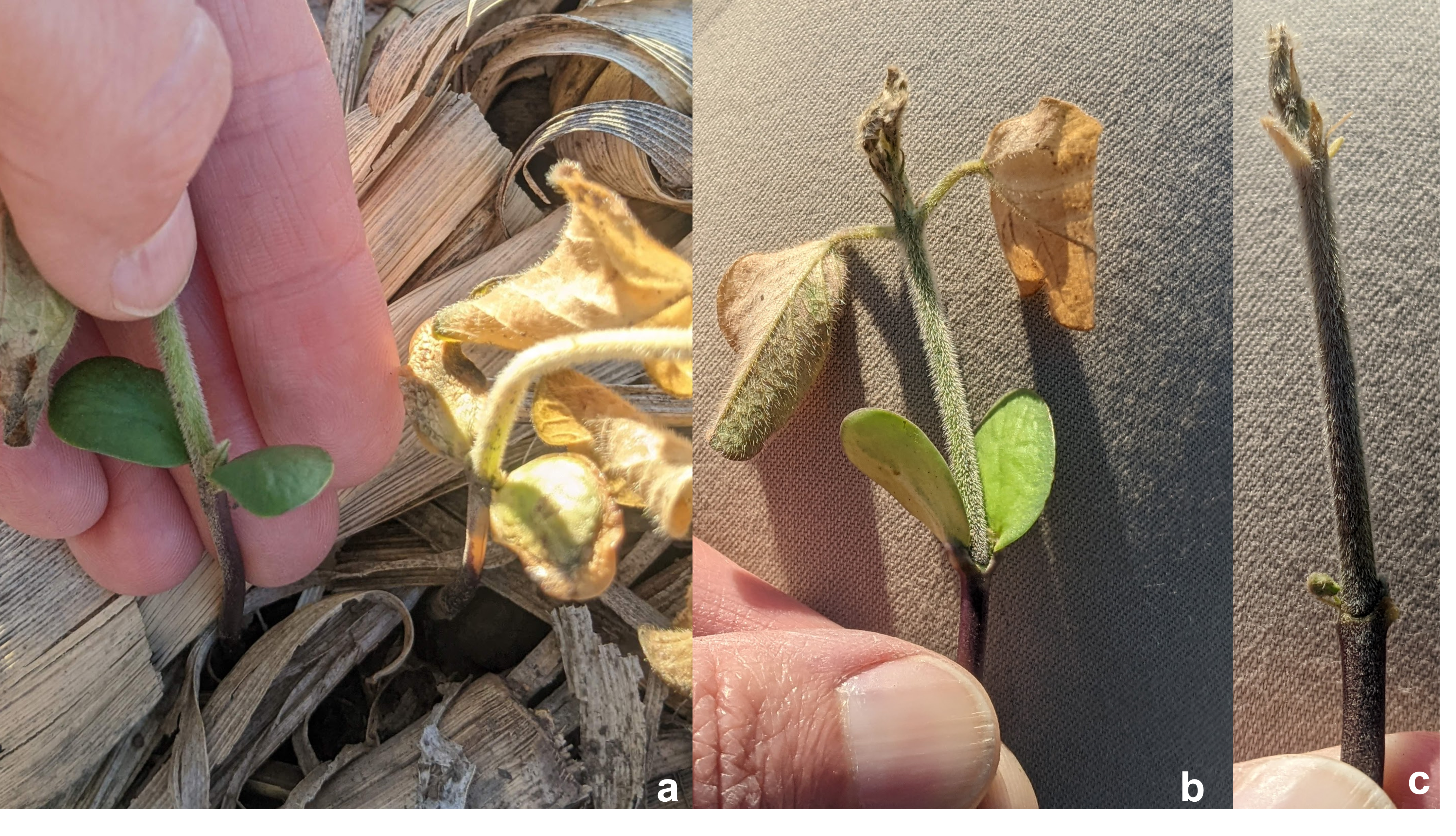
Frost Damage: Looked at a lot of fields this past week for frost damage, particularly bean fields. A key for evaluation is making sure the hypocotyl (the portion below the stem) is still firm and not pinched in any way or soft. Then exam the cotyledon area as there is an axillary bud next to each cotyledon which can shoot new branches. The rest of the upper-most plant may die, but as long as the cotyledon area is healthy, the plant should live. I have pictures to show this at jenreesources.com and we go into more detail in a CropWatch article at: https://go.unl.edu/e3si.
There’s a lot of situations with one or two rows damaged, but the damage alternates between the two. There’s many situations where there’s several rows of beans missing in patchy areas of drilled or planted fields (however, it’s not the entire row in any field I’ve looked at). Some of the patchy areas of fields are between 30-65K while other portions of fields are 100K or over. Beans are incredible at compensating and they will branch to compensate for no plants in an adjacent row. I just keep wondering about damaging the yield potential already there from these early planted beans to slot more in. I realize I would leave things at a lot less population than many are comfortable with and our recommendation is to leave fields with at least 50K. One needs to consider history of weed control in these fields as well. Each decision to leave a stand or replant is an individual and field-by-field one. I still am encouraging anyone who wishes to slot some in to consider planting a strip, leaving a strip, and alternating that at least 3 times. (Or if you’re drilling beans, you may need to make a round instead of a pass). The goal is to get two combine-widths from each planted/drilled area. This at least would be a way to see for yourself if slotting the beans in made any difference for you and please let me know if you are interested in doing this! If you do slot beans in, we’d recommend going with as similar of maturity as what the original maturity was until June 15. Ultimately, I just wish you the best in the decisions you’re making.
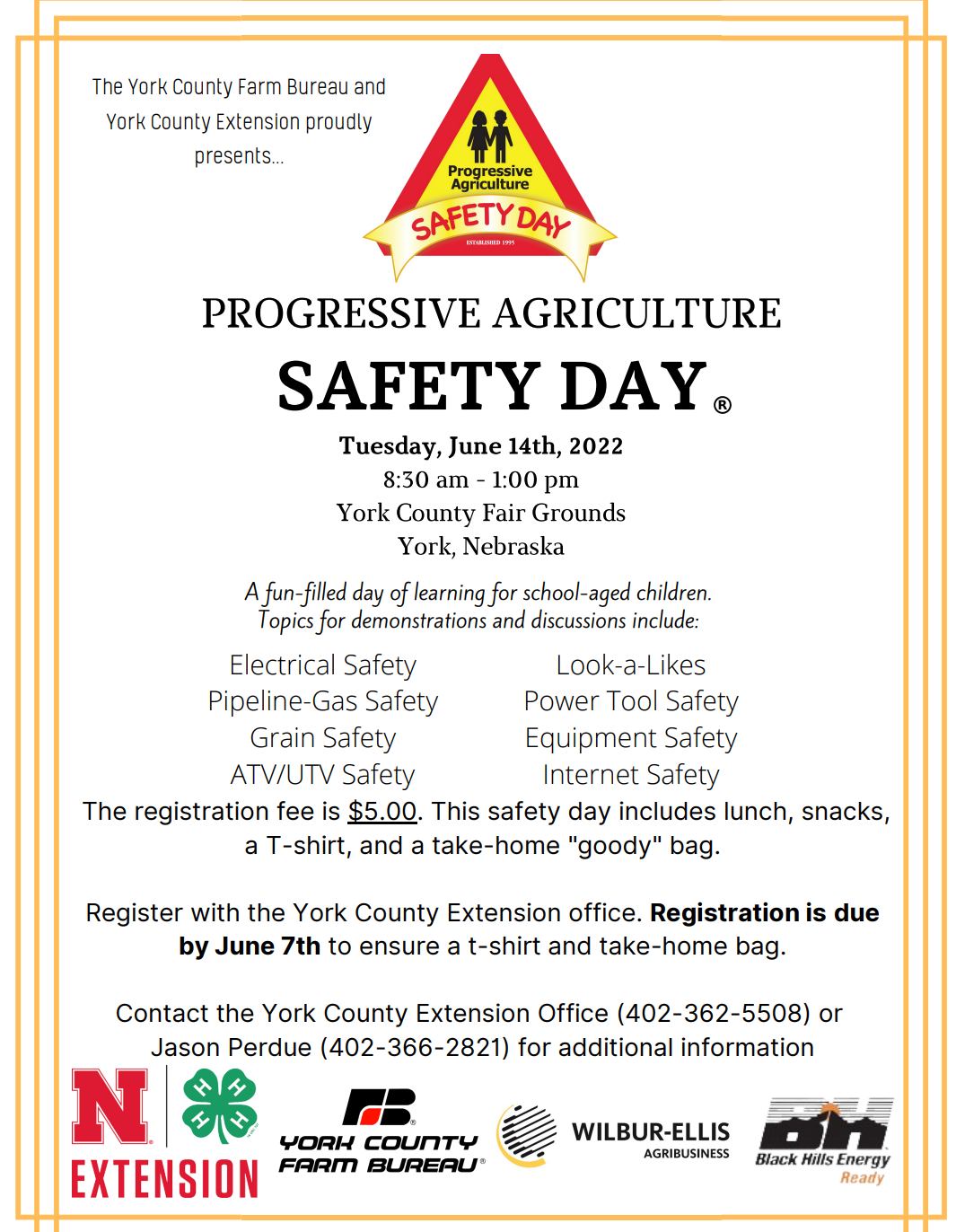
York County Progressive Ag Safety Day will be Tuesday, June 14th, 2022 8:30 am – 1:00 pm York County Fair Grounds York, Nebraska. This is a fun-filled day of learning for school-aged children. Topics for demonstrations and discussions include: Electrical Safety, Pipeline-Gas Safety, Grain Safety, ATV/UTV Safety, Look-a-Likes, Power Tool Safety, Equipment Safety, and Internet Safety. The registration fee is $5.00. This safety day includes lunch, snacks, a T-shirt, and a take-home “goody” bag. Registration is due by June 7th to ensure a t-shirt and take-home bag. Please register with the York County Extension office at (402) 362-5508. Sponsors include York County Farm Bureau, York Co. Extension, Wilbur-Ellis, and Black Hills Energy.
Weed Management Field Day will be held June 29 at South Central Ag Lab near Clay Center. Growers, crop consultants and educators are encouraged to attend. The field day will include on-site demonstrations of new technology and new herbicides for corn, soybean, and sorghum. An early morning tour will focus on weed management in soybean and sorghum followed by a tour of weed management in field corn. Field experiments will provide information for weed control options with various herbicide programs.
Three Certified Crop Advisor (CCA) Continuing Education Units are available in the integrated pest management category. There is no cost to attend the field day, but participants are asked to preregister at http://agronomy.unl.edu/fieldday. A brochure with more info. is located at the website. The South Central Agricultural Laboratory is five miles west of the intersection of Highways 14 and 6, or 13 miles east of Hastings on Highway 6. GPS coordinates for the field day site are 40.57539, -98.13776.




 JenResources